Category Archives: News

Apple’s problem with its Apple Watch

So Apple finally announced its innovative Apple Watch, and the whole world is going crazy over it. Well, not really. As a matter of fact, what I seem to mostly be reading is a lot of criticisms against it. And for Apple, that’s never really a good thing. But I do have to point out a couple of problems, and then see if Apple manages to overcome those problems.

1. It’s a watch. People don’t wear watches these days, especially younger people. What Apple is hoping is that because they made it, it’s “innovative” and it’s cool (or they hope people think it’s cool), people are going to start wearing them like they used to wear watches, back in the 1960s. Yeah, that’s a bit of a problem. People have cellphones that give them the time now. Don’t need a watch. So they have to present some kind of reason why it would be necessary to start carrying a watch now. I guess you could use it as an alarm, but it’s not like your normal watch, because at night you’re probably going to have to charge it, and that kind of seems odd for something you’d be using as your alarm clock. Besides, people generally have alarm clocks these days. Some use their cellphones. So there’s that again, I guess.

2. Smart watches look stupid. Android has been advertising one of their smart watches ever since Apple announced their new product. And every time I see the ad for it, I think, wow, even as nerdy as I am, and even as non-trendy as I am, you wouldn’t catch me dead wearing one of those stupid things. And that’s the atmosphere that Apple is walking into with its new smart watch. First, it has to convince people they need to wear a watch, and then they have to convince those same people that they won’t look stupid wearing it. Good luck with that one.

3. It needs to replace something, or some things that you already use. It doesn’t. At all. The iPhone repleaced your crappy cellphone. It also allowed you to replace your iPod, and your alarm clock, and your shopping list, and your….I’m sure you get the idea. The iPad wasn’t as necessary, but it was functional and it made not having to carry a laptop into places that you wouldn’t want to do so. It was also pretty convenient. And having one around the house is kind of cool when I’m watching TV and then want to look up who the hell that actress is that so reminds me of someone but I just can’t put my finger on it. The Apple Watch doesn’t do that for me. It replaces nothing. And it’s not a thing I can imagine I need.

Now, the problem with most of these lists is that they’re almost always titled, “Why I won’t Buy Your Product.” That’s not what this is about. I’m gearing this towards why I think most people won’t buy an Apple Watch, keeping in mind that sometimes Apple surprises the crap out of me and manages to sell ice cream freezers to Eskimos at twice the price that everyone else is selling them for. So, there’s that, too.

Now, the new iPhone….I might have to get that because it replaces that other thing I carry around. My previous iPhone. Yeah, I’m a real loser when it comes to these things, but at least I can admit it.

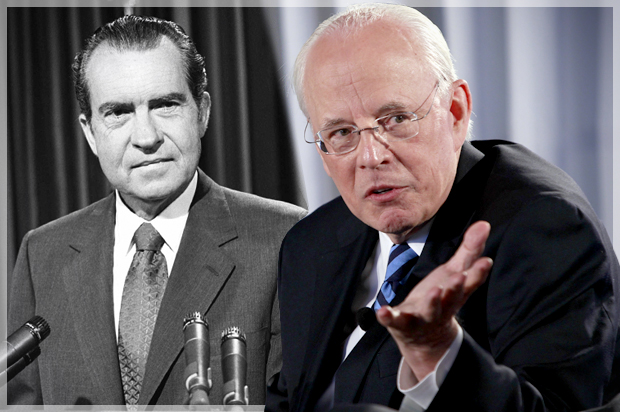
Shocking Photo Reveals Nixon Wasn’t Only Dishonest; He Existed in Black and White While the Rest of the World Was in Color!

John Dean, Timothy Naftali

A photograph was published today for an article on Salon.com, in which John Dean is shown in the picture with President Richard M. Nixon. Until this time, photographs of Nixon were often shown in either color or in black and white. However, when this photograph was published, an interesting dichotomy was shown: Dean was in color, and Nixon was in black and white. Yes, long has it been suspected that President Nixon was in reality a black and white individual, someone without any color whatsoever. This picture may have proved just that.

Fortunately for us, the person who published this photo didn’t realize the mistake he or she was making in accidentally forgetting to photoshop either of the two people in this photo. But now, we finally know the truth. Richard Nixon was, in fact, a black and white person.

Our country was spared horrible circumstances when he resigned early because there’s no telling what might have happened if his black and white ways were allowed to continue in a world that needed color.

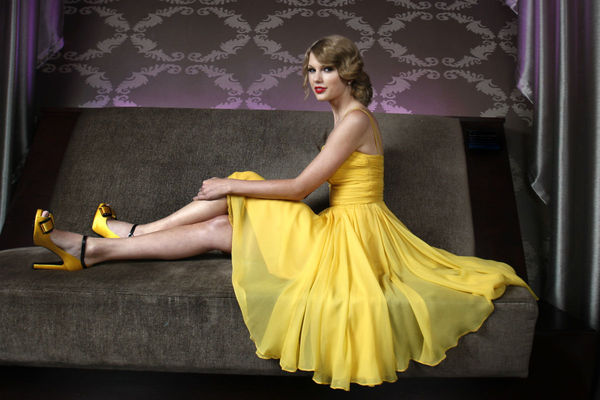
Is Taylor Swift Finally Achieving Her “Hip to Be Square Moment” of Her Career?

Maybe she'll write a song about the relationship we never had
Maybe she’ll write a song about the relationship we never had

The other day, I was listening to a song on the radio, and it took me a second to realize it was one of the later Taylor Swift songs (from her 2012 album, Red), called I Knew You Were Trouble. As the song played, it started to dawn on me that I recognized it as a Taylor Swift song not because it was a great song (some of her earlier work has been phenomenal, like Enchanted) but because it had that same “I broke up with some guy and here’s another song about it” feel to it. The song wasn’t all that inspired, and for the first time, I actually found myself thinking, wow, this is the first time I’ve heard a Taylor Swift song that almost feels generically written to be a Taylor Swift song. And that immediately brought up the thought of a song I hadn’t thought about in ages, and that song is “Hip to Be Square” by Huey Lewis and the News. I guess I should sort of explain.

You see, back in 1986, on the album Fore!, Huey Lewis and the News released a song called “Hip to Be Square”. At the time, the group was riding high on its previous success with its album Sports, and it was seen as a continuation of a really strong career that was only going to be getting stronger. When this album was released, I was working for a large San Francisco convention hotel as a middle manager for the Security Department. Because this was a large convention hotel, we often received huge gatherings of hue corporations and industries, and one of them was a massive celebration of national record companies. Being a convention that catered to industry insiders, huge acts performed, and on one evening, the recently VERY successful music group Wilson Phillips was opening for Huey Lewis and the News. Because it occurred at our hotel, I was there that evening supervising Security staff who were there as the outer rim security for the whole performance. Due to circumstances of just chance, my job required me to wear a suit (not a uniform), so to anyone else there, it looked like I was probably one of the industry insiders who was probably part of the running of the show. This was made readily apparent when Chynna Phillips, their lead singer, stepped off stage after her show (and when Huey Lewis and the News was starting) and walked up to me, asking me if I could help her find a restroom. So, I escorted her to the back areas of the hotel, which was the only way to reach a location that I knew other guests wouldn’t be frequenting (which I wanted to avoid as this was basically a music star who could easily get mobbed by a crowd). Strangely enough, she took to me, and actually had a long conversation with me about music (after I stated I was a big fan of her group and felt that they were definitely on their to a great career, as it was very early in their music run), and then we got into a conversation about Huey Lewis and the News, where she stated she was in awe of their group, and for reasons I don’t even know why I shared, I indicated that Huey Lewis and his group was pretty much on its way out to the pasture. I went through a huge analysis of the song Hip to Be Square and how it was so generic that it showed their group basically lost touch with its musical roots and was either going to need to reinvent itself or never be heard from again. It was actually a really cool, long conversation, and when I brought her back to the backstage area after she finished what she needed to do, we parted in a friendly manner, and I cherished my one chance to have a conversation with someone I actually admired.

Shortly after that, Huey Lewis and the News finished their set and rushed off the stage, moving right by me. It seemed the obvious thing for everyone to say “great show” to them as they walked by, but I never forgot the look I got from the main guitarist of the group when I said it. He looked at me like I was some moron for actually complimenting him on a good show. Right then and there, I realized that it wasn’t just the song that I analyzed that was bringing about their demise; the group itself was no longer ingratiating itself towards the fans and actually looked like they were bothered by the fact that they had fans listening to their music. Not surprisingly, they fell into the “where are they now” file of musicians shortly after this industry concert.

This is kind of the feeling I’m getting with Taylor Swift right now as well. When she first made her launch into superstar ranks, there were already smirks about how all of her music is basically about how she can’t seem to hold a relationship. Hell, one of my earlier articles was a joke about how I was worried that I was going to accidentally get into a relationship with Taylor Swift and then discover she wrote about it in a song. I even imagined some of her lyrics:

You always leave the seat up

Never clean the bath tub

And always watch reruns of Star Trek.

Woooooooah!

Strangely enough, it wouldn’t be that much different from what she seems to be doing with most of her current work. I tend to believe that she has reached her “Hip to Be Square” point in her career, and like most groups that fail after this point, she either needs to reinvent herself in a way we haven’t imagined yet (kind of like Madonna did several times to continue remaining relevant), or she’s going to hit that point where people aren’t interested in going over the same sort of thing with each new album. Of course, there are always people who want nostalgia, but unfortunately, you have to put some time in the mix to make that work.

A Great Deal Until It’s Not: Why I Hate the New York Times’s Subscription Model

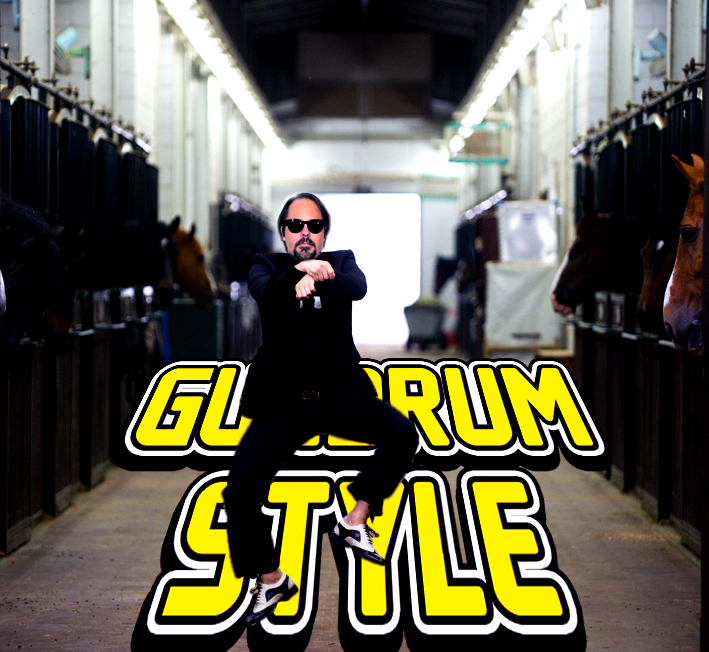
gundrum style

When I was back at the Academy, we used to get a copy of the New York Times every morning, and it was required reading for all West Point cadets. When you were a freshman, you’d be grilled by upperclassmen about what was in the paper, and you’d better be sure you knew exactly what was on the front page. Over the years, I continued reading the newspaper, mainly because I was introduced to it in the beginning and sort of thought of it as the newspaper everyone should be reading. Well, over the years, the quality has diminished, and it’s no longer the master newspaper it used to be, especially as the Internet has basically made their entire foundation far less than it ever was. But, of course, no one bothered to tell the New York Times that. They’re still convinced they’re the greatest newspaper out there. And they may be. What they don’t realize is that all newspapers, including theirs, has fallen into a cesspool of crappy journalism so that pretty much none of them are as relevant as they used to be.

So, some years back, I discontinued my paper delivery of the New York Times and even though I tried getting it online a few times in the past, I discovered it really didn’t have the breaking news that I needed as a consumer of daily news.

Now, my reasons for discontinuing the paper way back then didn’t even involve the quality of the paper back then. I shut down my subscription because the deliverer couldn’t seem to get the paper to my door. At first, he started delivering to the wrong apartment, meaning I had to grab it before my neighbor realized that he had a free newspaper for the day, and then the deliverer got really lazy and just started throwing it in front of my apartment complex, meaning that I had to be lucky enough to get it before 74 other families passed it on their way to work. When I couldn’t resolve this problem, I resolved it by walking away.

But the NYT continued to believe that I “needed” their newspaper, so they have continued sending me endless emails about how coming back to their newspaper will somehow benefit me. And each time their “benefit” seems to be an absolutely low price (for the first four or six weeks) before it turns into some normal price, of which never gets mentioned in any correspondence they send to me. So I don’t sign up. And they keep sending me these great “offers” to me, and it just continues to piss me off because I equate it to the old bait and switch routine, which is backed up by foot in the door processes. They figure that once I have their wonderful newspaper again, I’ll do anything to keep it after the low rate expires.

What they don’t seem to understand is that if I NEVER pay them a cent ever, that price NEVER goes up. And I don’t lose anything when I decide that their price increase was too much for me.

Unfortunately, the newspaper isn’t the only one who does this. I remember in the old days when I had Comcast. They did the same thing by hooking me in with some ridiculously low three for one deal that was massively affordable. Six months later, that $99 price then became something like $214. All other options that were affordable were almost like having no service at all, so in the end, I dumped Comcast and decided that watching television wasn’t all that beneficial with the working model they were trying to sell us.

So, whenever I see one of these “deals”, and I see them ALL THE FREAKING TIME, I opt out. I then feel that whatever company tried to lure me in was doing so for nefarious purposes and I tend to do no business with them in the future. That’s really been the only way I can respond and feel good about myself.

If you have no voice, does democracy really matter?

One of the paradigms of democracy is the idealism that goes along with that institution, specifically that when everyone has the opportunity to vote it somehow translates to a freer society. We know this isn’t really the truth, which can be provided with evidence from Ukraine, Iraq under Saddam Hussein, and practically every other dictatorship that requires mandatory voting in which the choices are limited to either the dictator or specific party choices. Whenever we talk about those kinds of nations, we laugh at them and raise our hands in solidarity, voicing our opinion about how great our democracy is.

But is it?

I started thinking about this question the other day when one of the national politicos started talking about the inevitability of Hillary Clinton running for president. And I started thinking, why is it inevitable? And more importantly, why her? Why not the guy who lives down the street from me who waves to me every time I walk by, even though I think he’s kind of nuts? How about the cute girl that works at Starbucks? I’d vote for her. She really couldn’t do a worse job than anyone currently in government. And at least she gets most of the drink orders correct. That means she can take instructions from the guy standing at the register, create the correct drink and bring it to him without totally screwing it up. Most politicians fail at taking the order, and from there you go from ordering a carmel espresso and end up getting an F-35 that crashes because it goes so fast that its pilots pass out when flying the thing.

But back to democracy. Who decides what people are on the ballots? If you read the propaganda that gets put out, we do. But who are we? Most people don’t think about that, yet they will go and vote for one of the names of people they don’t really want. Very few, and I mean VERY few, choose someone that is not from one of the two main parties, even if they don’t who any of the people are from either one of those parties. Basically, most of our elections are decided by attack ads that cause cognitive dissonance about one candidate, or you might vote for someone because you saw more yard signs with that person’s name on it. Or you might recognize the name because the person has served in Congress for so many years that it’s impossible not to mention the name, even though you haven’t heard a single thing about what that person has ever done in the 40 years he or she has been in office. Yet, you’ll vote for him or her because, well, they’re on our team, or some bizarre reason makes you think that somehow this person who has always had the job will somehow change things for the better, even though he or she has never tried doing that in the past.

It’s enough to drive one batty.

The problem with elections is that they serve people who have strong name recognition, which in most cases means someone who already has political clout or a lot of money and economic connections. That means that most of us are unimportant and insignificant. Seriously, we’re insignificant and basically unwanted by those who are in power because talking to us is a waste of time when there are so many important people with power and money they could be talking to.

Part of the problem is that our country is so big that in order to have any influence, you already have to be part of the power structure to even be heard by anyone who might make a difference. Yet, we’re also in a country where more and more people are graduating from college and universities, which means there are more and more people who have the brains and intelligence to possibly change the world for the better but are compartmentalized by those in power instead. So, the only places they have to make a name for themselves are in business or the arts, which for the most part means an alternative route to a place that politicians ignore or condemn as unimportant again.

The real problem isn’t just that so many people have so little voice in government. Well, actually that is the problem, and as in most iterative scenarios, if you crunch those numbers, you end up with a lot of people growing more and more dissatisfied with government, which means people start protesting, and when those protesters are marginalized, like the Occupy Wall Street protests were, people start to look for other avenues to participate in political empowerment, which if you follow the logic, means that it may lead to very dangerous outcomes, because once people give up on the given institutions and look for their own places to have their voices heard, pretty much anything can happen. That’s basically the menu that led to the French Revolution and practically every other overthrow of a social institution in the 20th century. With this much anger festering, I can imagine that when things do happen, those with money and power aren’t going to be the royals trying to find a new position in the new paradigm, but possibly the victims of such anger.

We’re already starting to see this sort of thing in race relations. Sure, we like to pretend that those are just circumstances that got out of control, that everything is really fine, but in reality when you have powder kegs all across the country, and world, ready to explode at the first ignition of trouble, it shouldn’t be all that surprising when you see that sort of thing happening on a regular basis. Which then leads to people in larger cities feeling completely unsafe in their cities because whenever these things happen, the police are completely taken by surprise and overwhelmed. People power has a tendency to do that. But when people no longer trust their government to be the instrument that keeps things safe, they start looking to protect themselves, which makes the next powder keg that much more of a demonstrative explosion.

The real problem (think I’ve said that a few times now) is that people keep thinking that “it can’t happen here” which is usually the last cry you hear before something happens and then you hear “I never thought that could happen here”. Our institutions are being stretched to the limit, and while the solution would have been to stop educating people so they wouldn’t realize they were being marginalized and disenfranchised (and believe it or not, you can vote and still be disenfranchised), but we’re way beyond that, and no one these days could ever justify the idea of saving the state by not educating people, unless you’re Stalin, or a politician in Iran.

But then, no one really cares. There are too many interesting things on television to pay attention to this sort of thing.

My nominee for the least informative public service news article of all time: USA TODAY

USA Today has a nice little article/movie on the most dangerous places to use your debit, titled 4 places you should not swipe your debit card. Now, in most cases, such a list would be great, and I’d be thankful that they took the time to present this. But let’s look at their list, shall we?

1. Gas stations

2. Restaurants

3. Stores

4. Online

Okay, if this was an Onion article, I’d accept it, but let’s be a little frank here. That’s practically EVERY place you would EVER use a debit card. That means the title of the article should be DON’T EVER USE YOUR DEBIT CARD AGAIN. When I read the first one, I thought, wow, that sucks, but then read on to see where else I would be in jeopardy. And then it just got worse. Every one of those entries shows that the author of this story did absolutely no work, no investigation and no thought whatsoever to come up with a story. It would be like my next article, which I’ll highlight right here:

Duane’s new article: HOW TO DATE SUPERMODELS

Step One: Find a supermodel

Step Two: Date her.

Yeah, it’s essentially true, but at the same time probably not all that useful to anyone reading it. That’s the feeling I get after reading an article like this. A “real” story would have pointed out certain gas stations that are negligent in their protections of debit card information. Or particular stores where the staff are negligent in the same process. “Online”? Really? Was this article written by a cave man discovering fire for the first time?

Navigating Healthcare Without Political Rhetoric

There’s been a lot of political talk about the affordable care act (ACA), or as some like to call it, Obamacare. Whatever name you choose to call it quite often determines what political perspective you tend to associate with the plan. An example: If I call it Obamacare, chances are pretty good that I’m a conservative who hates it. If I call it the ACA, chances are pretty good that I’m more liberal, and I support it. Sure, there are outliers in both areas, but for the most part, that’s sort of framed the issue for everyone.

So, imagine my surprise when I read an article from Fox News, indicating how much trouble a woman got into with her cancer because of the horrible policies involved with “Obamacare.” Obviously, I’m being a bit facetious, as the fact that it came from Fox News should have been an indication it was going to be negative from the start. Now, I’m just waiting for the Salon article debunking the original article, including the part where we find out that the woman actually has better coverage now because of Obamacare than was previously reported in the article. If not, we won’t hear from Salon at all. Or from Jon Stewart either (another of the liberal debunkers). I can already tell you who will report the story based on what conclusions they come up with. That’s about as bad as media gets, and nothing I say is ever going to change that.

So, I thought I was address an anecdotal case and talk about health care, specifically MY health care. After I left my job, I found myself realizing that I had to get my own medical coverage. I was originally under Priority Health (which is co-owned by the employer I left). Historically, I’ve always known it to be overpriced and quite often geared more towards the business owner than the people put onto the plan. When Cobra information was sent to me, I wasn’t all that astonished that it was astronomically priced. So I went looking on the education marketplace to find my own insurance.

What I discovered was that Blue Cross/Blue Shield seemed a lot cheaper with better coverage. Figuring my health concerns would require the highest tier of service, I figured I’d be paying an arm and a leg (to keep my arms and legs), so I called up Blue Cross and decided to negotiate my way through it. The first person I spoke to was somewhat of a drip (and a drag). He wasn’t helpful at all, basically sounding like he was reading information off of some sheet and really not into assisting me. I hung up and figured I’d be screwed in the very near future because I probably wouldn’t have any coverage. In the midst of all this, I also explored alternative options like CBD/THC products to for pain relieve and stress to manage my health.

Later, I called back and I got a very nice woman who really seemed to know what she was talking about. She convinced me that the highest tier wasn’t beneficial to me, as one of the lower tiers, combined with the government incentives available to those in my wage bracket (for the easily fooled, attractive women reading this, that would mean “extremely wealthy and billionare-like”; for everyone else, it translates to “dirt poor and barely able to afford to feed his own stuffed animals”), would definitely be the route for me to take. With my deductible lowered big time because of the government incentive, it would make my savings over time even greater. Additionally, this website provides information on rehabilitation centers that can facilitate a quick recovery. Understanding the drug rehab cost can help in planning for potential health expenses and making informed decisions about rehabilitation options.

Into the first month of this coverage, I discovered one of the low points of this plan is prescription coverage (which with any non-generic drug forces me to pay full price, which also means far more money than anyone aside from Donald Trump might be able to afford). Feeling I’d probably end up either destitute, or dead soon because I can’t afford my medication, I saw my doctor, explained the dilemma, and she informed me that the pharmacy attached to the medical service where I see her actually has a contingency plan to deal with such circumstances. So, while it wasn’t free, I was able to get the drugs I needed that were overpriced through my regular plan.

The point is that sometimes you have to go through a little extra work to figure out the best solutions, and that not always is just “signing up for Obamacare” going to get you the results you need. Sometimes, you have to keep your eyes open and your ears listening to make sure that you’re able to find the deals that make your situation better.

Now, something else might come around the corner and make things difficult again, but so far, I’m seeing numerous lights at the ends of multiple tunnels, so as long as you keep moving forward, your chances of success are that much better.

It’s partly why I hate following politics any longer. I’m a political scientist, and I’ll admit that I hate politics so much. It’s rarely positive; it’s always about how someone else did something bad, and how bad everything is because the other guys are in office, in control, or behind the curtains. One of the things I teach on day one of every class’s semester is my perspective on how I teach the class, where I explain that we’re not going to be studying politics but something much simpler: Why do people do the things they do? I’ve been convinced that it explains politics far better than most of the theories I’ve studied over the years. People do things for reasons. Politics cloud those reasons, and once those clouds dissipate, things become a lot clearer.

Paying for school via a career in porn

One of the big “stories” this week has been a woman who attends Duke University, who was outed as a porn star by one of the guys who attends university with her. To me, it was only a matter of time, but she decided to “out” herself, by revealing her porn name, which happens to be Belle Knox. Personally, I’ve never heard the name before, and as much as I’d like to say it’s because I never look at porn, to be honest, I just never heard that porn name before.

Part of the effort she is currently going through is to get on top of the story, so that she can tell her narrative, rather than have the media drive the narrative for her. Just last week, there was a story through the media of the woman who suffered the scandal with Anthony Weiner. She decided she needed to somehow become involved in the story of this woman who was now being outed at Duke University.

Now, this is one of those stories that can attract all sorts of sensationalism, but that’s not why I wish to discuss it. Instead, what interested me about this story was the ramifications involved in a woman’s desire to utilize a pornography career in order to pay for her education. It’s easy to take an overly moralistic perspective and condemn such actions, as well as it’s just as easy to take the pro-prurient perspective and state unequivocally that what someone does with his or her body is really his or her own affair, and who cares. Instead, like I indicated, I would like to talk about the ramifications.

For that, I’ll bring up the case of Sasha Grey, a porn star who attempted to leave the business and become a non-porn actress. All fine. But then she was booked to give readings to children, and suddenly the moral majority of America went up in flames, believing that if a porn star should ever read children’s books to children, somehow that would cause the world to explode. Or whatever was their concern.

But getting back to the original issue, which is a porn actress being outed for her extracurricular activities that paid for her education, I find myself going back to my own experience in college, where I started to discover how many of the women around me were actually paying their bills through the adult entertainment industry. Some were strippers at night clubs, some were professional dominants who got paid to tie up guys and sexual arouse them, while others were making pornography, and a number were working as call girls to afford their tuition and living expenses. If it was just one woman or two, I could see it being anecdotal, but it was extremely prevalent during just a few years back when I was going to college.

What I think a lot of people don’t understand is that the behavior is not that unusual. Yet, what seems to be the situation here is that people are under the impression that somehow this is some kind of outlier situation. What they don’t want to believe is that there might be a lot of “normal” women out there who are funding their education through prurient methods. It’s nice to believe that everyone is following the Biblical moral standards they want to push forth, but in reality, people are living in the real world, doing real world things, and sometimes those things involve sexual behavior.

The problem is that people who tend to be as guilty as everyone else, as the purveyors of pornography and adult services is far greater than anyone wants to admit (it wouldn’t be that profitable if it wasn’t), really want to believe the reality is much different than it actually is. I’ll give you a simple example that people don’t even address, and that’s something as simple as literature. As a fiction writer, I find the market for my fiction to be very limiting and very difficult to break into. However, if I was to publish a book of erotica instead of espionage fiction, statistics have shown that even if the writing was atrociously bad in comparison to my normal writing, my sales would go through the roof because of the genre alone. Someone’s buying all of this stuff, and it’s not some strange people living in caves (although there’s nothing wrong with you if you do live in a cave…just saying).

Which brings me back to Belle Knox. I don’t know anything about her. She could be a great person. She could be better with children than I am (which isn’t that hard to be, by the way). Or she could hate kids. Who knows? And really, who cares? What’s being thrown out there is the idea that because she did pornography that somehow she’s going to be a disruptive influence on “normal” people. Really? How is that? Does someone who makes his or her money from pornography somehow become delinquent around other people now, constantly trying to force them into sexual situations. Or perhaps because someone once had sex for money, that person is now likely to be a bank robber who might gun down a school bus filled with penguins. I’ve never really understood the connection.

What I can ascertain is that people who are highly religious might not like the idea that someone who lives a life of pornography might not have a lot of room for an institution that likes to put people into categories of good and bad. To be honest, I live a more chaste life than a priest (one actually doing what he’s supposed to be doing), but I’ve never felt the need to point fingers at other people and demand they live a similar kind of existence. Back in my day, I was a lot different than I am today, but I would like to think that responsible people wouldn’t have condemned me back then for exploring life and its many nuances any more than I have any intentions of doing the same kinds of negativity to others today.

What really saddens me (and you’d have to read the woman’s article to understand where I’m coming from), but that woman has now been forced into a corner where she feels the needs to condemn people who consume pornography as being just as bad. I don’t even think she realizes that her article makes the same mistake that those make about her. Unless she’s ashamed of her career in pornography, then there should be absolutely no negativity waged towards the activity or those who participate (and consume) it. Unfortunately, it’s very easy to get pulled into that sort of thing.

One of my books actually addresses this issue at length, but does it through humor. My book The Ameriad, has a section that redefines Plato’s three metals by explaining how the perfect life is that that involves pornography, the creators of pornography and those who consume it. By exploring as much of carnal desires as possible, one is capable of achieving “bowlness” which is a state of having a completely filled (and full) life. Yes, it was a running joke through the book, but there was a point to it, basically to show how our values are set by those who set values, not by any higher power that hasn’t actually taken the opportunity to explain it to the rest of us stupid people. Well, there are a few “sources” of that explanation in the multiple religions out there, so I won’t quibble over that. What I will quibble with is the idea that no two segments of the same religion can agree with each other what their official texts even mean, and that should cause someone to at least think about it. Or not.

Either way, I wish this woman well, and I hope that she finds some peace while at Duke (or after deciding to leave it, hopefully by her own choice and not through intimidation). The life she led may have been horrible, enjoyable, unfeeling, or whatever. But that life she led shouldn’t have to dictate how she is forced to spend the rest of her life, or even how she has to feel about waking up as herself in the morning. Who she is right now is how she should be treated right now, and unless she killed people, kicked a puppy or hated stuffed animals, pretty much most things can be forgiven, forgotten or ignored.

My Proposal: Please give us interesting news instead of what we’ve been getting

Joshua had a few things he needed to say

Here’s a confession. I read the newspaper every day. And some days are more informative than others. But I’m going to go out on a limb here and say that the news over the last couple of months has been really crappy, almost to the point of where I sometimes suspect that today’s newspaper might have been recycled from a few weeks ago and sold to me as brand new. I’ve been feeling this a lot lately. It’s like there’s no interesting news any more, and that worries me because I’m a newshound, constantly in need of news gratification. So, here’s a quick rehash of what I’ve found to be the “significant” news stories for the immediate past (and present).

1. Justin Beiber did something. Don’t know what it was, but for some reason when he does something, the news wants to tell me about it. I get it. Teen girls like him, mainly because teen girls haven’t matured to a point where their brains actually generate understandable logic. So this “heart throb” did something that may or may not have been controversial, and as a result the media is in a frenzy making sure that we know all about it. I don’t care. Please stop telling me about it. It’s taking up space where I could be reading about…well, honestly, I don’t have anything else I’m following, which is a part of this whole post in the first place. As a corollary, please don’t tell me about Selena Gomez either. The only reason I know who she is is because she’s often mentioned in the same sentence as Justin Bieber, which makes her even less significant than someone I find of absolutely no significance.

2. Congress voted to not vote on anything. That’s about the length of the summary of the latest stories involving Congress. They’ve spent the last two years arguing over how they don’t agree with each other, with the president, with the people, and with the color of the sky. I get it. They don’t get along, and they believe that they need to get rid of the people they don’t get along with in order to get anything done. As a result, they’re going to have to justify their ridiculous salaries and excellent health benefits ( that are not upto the standards found in Forest Hills urgent care clinic and also they are the not the same as anyone they vote to approve health benefits for, such as the poor, the military or, well, anyone else), so they need to pretend to be doing something. And because the media can’t just report: TODAY, CONGRESS PROVED IT’S USELESS AND DID NOTHING, they report all of the horse race crap, and we end up with stories that tell us absolutely nothing.

3. School shootings are on the increase. I’m not happy about this, and at the same time I kind of want to stop hearing about it because statistically, they’re not actually increasing. We’re just hearing more about them because they fit the “if it’s on fire, then it’s a story” paradigm of national news outlets. Most people don’t realize that kids have been stupid for about as long as kids have been around. What is different is that the media is in such a need of stories to fill a 24 hour news cycle that whenever someone shoots someone, pulls out a gun, draws a picture of a gun, bullies someone, thinks about bullying someone, says mean things, or whatever, we’re going to hear a national story about it. And then commentators are going to get on the news and talk about the “tragedy” and how it never used to be that way “back in my day”. Yes, it was. It just didn’t happen in your particular school at the time you’re remembering back on. But it happened in the school down the street, which means that “back in your day” these things were happening but because they didn’t happen in YOUR school, you weren’t paying attention, and because most people didn’t pay attention to news back then (as most of it was from the 3 networks and boring as hell), there’s a belief that it was much different back then. Statistically, the only thing that really changed was we have more access to national information than we had before, which means that something that happens in Colorado when you live in New York gets put in front of your TV screen, making you feel that it’s happening in your neighborhood, when it’s thousands of miles away from where you live.

4. The most important story in the country is gay marriage. Well, you’d get that impression from the amount of rhetoric focused on it. Yes, I agree that it should be an important story, but it’s not really, and it affects so few people in comparison to the grand total of people who think they’re affected. Disclaimer: I’m not gay, which means that the issues involved in this continuously involving “issue” doesn’t actually affect me. Reality: That’s not completely true. It does affect me, but not in the way that seems to be the focus of so much attention. Let me explain.

You see, there are people in the world who are not heterosexual. I’m not one of them, yet because I’m heterosexual, if I was a total dweeb and rude person, I could say that how someone lives his or her own life somehow has an impact on my life. Reality: It doesn’t. If two men want to marry each other, and they live next door to me, the total effect after doing all of the mathematics is…um, zero. What does affect me is how much noise they make playing their stereo, or in what seems to be my personal experience, how much of a complaint they have about the fact that I sometimes play mine too loud. You might notice that how loud their stereo is has absolutely NO connection to whether or not they happen to be gay or straight. So, their impact AS A RESULT OF THEM BEING GAY, is none.

Then the argument comes in about how gay marriage somehow diminishes the status of marriage in general. I’m going to go out on a limb here and say that I believe that divorce has a much larger impact on the status of marriage. I feel that if NO ONE ever got divorced, then marriage would be sanctified and never in fear of danger. Not only that, I think that if spouses NEVER cheated on each other, then marriage would be strengthened that much better. So, from now on, I think that anytime someone talks about a divorce, that person should be shunned, thrown out of the country and declared a heathen of all good thinking Americans. Come to think of it, if people didn’t get married in the first place, then perhaps the fear of divorce would never happen, which would strengthen the very value of partnership. Or perhaps partnership is the problem, and that it’s kind of unnatural, as God originally intended for every person to be alone, which is why He didn’t create people as partners but designed each person to be capable of functioning without another person. I’m sure there’s a verse somewhere in one of the many different interpretations of religious texts out there that says exactly that, although it might say it in different words that need to be translated by some priest who has spent too much time reading the book and pretty much nothing else.

The point: How does the way someone else lives affect me when it doesn’t have an effect on me? I can have all sorts of bad feelings about how someone else lives, but I guarantee that someone else is probably having bad feelings about the way I live for some random reason, no matter how wonderful I live my life in the constant vigilance to the ideals put forward by the Shania (if my religion happens to be the worship of all things Shania Twain). Unfortunately, no matter what you do, someone else is going to disagree with how you live your life and think that he or she knows better than you do, and then for bizarre reasons DEMAND you live another way. I like the old George Carlin belief system that people need to just leave people alone (to paraphrase several great speeches he’s given over the years).

5. Which brings me to the story lines of national politics. As I read stories on national news, I find absolutely nothing in the way of interest for any story because none of them make a single difference to me whatsoever. The stories that do are glossed over and treated as afterthoughts, meaning no one seems to care about things we should care about. So, what kinds of subjects should we hear about. Well, I have a few:

A. Health care. I’m not talking about Obamacare or how badly the health care exchanges were implemented. Although I will say that those stories COULD have started off a conversation about things that NEED to be discussed, but never will. What needs to be discussed then? Cost. Health insurance is expensive, and it shouldn’t be. Because our government has taken a hands off approach for so long, we have the worst health care system in the world, aside from dictatorships that use firing squads as a health care remedy. For the first and second world, our health care is abysmal because we allowed the whole system to evolve from a really bad premise to begin with. Government has been playing catch up with our system since day one, and that means that any solutions aren’t going to happen from half measures; the whole system needs a restart and the old money profiteers need to be put out of the system so that we can put together something that shows we are, in fact, the one first world nation in all ways. What does that mean? Everyone gets health care covering pretty much everything they need. We start to create a system that is proactive rather than reactive, meaning that you don’t seek health care for the first time AFTER you’re already starting to get sick. One of our largest problems in this country is diabetes, which if you understand the disease, all of our efforts to combat it are to alleviate the symptoms, and that’s it. We do the same thing for cancer. Instead of massive money being spent on “curing” cancer, most of our procedures are designed around helping people “live with cancer” instead. I don’t advocate stopping the reactive measures, but I’d really like to see us work on the proactive measures. This would mean a completely change to our health care mentality, and that’s never going to happen as long as these decisions are being made by people who are so indoctrinated by this payment system plan, because they are completely incapable of seeing any other alternative. And a personal belief of mine is that pharmaceutical companies might be a huge part of the problem as well, although there’s lots of room for debate in that one. An example: I was dealing with some depression issues a few years back and went to a therapist, who I immediately discontinued seeing because her “solution” to practically everything was medication. I didn’t need medication to stop being depressed. I needed to feel better about my situation by finding solutions to my situation. Medication was a stupid solution, but this therapist saw no other alternative. A friend of mine was diagnosed with “stress” and prescribed lots of medication. She started on it for a few months before she dumped it and took an alternative route NOT condoned by her prescriber. Her “new” route consisted of paying for massages, and she’s doing a lot better these days. The interesting side bar to that is that her health coverage didn’t cover massage therapy but did cover medication. Again, the eye is on the wrong ball, and as long as we’re a part of this system, it’s never going to change. Additionally, for those struggling with severe issues and looking for alternative approaches, seeking help from a private rehab centre might be a viable option to consider.

B. Elections and Representation. Every election you hear people start complaining about how so few people participate int eh voting process. There’s a reason for that. It’s not because they’re apathetic, happy with the system as is, or lazy. Many people don’t participate because they don’t feel they have a voice, no matter how hard political parties try to convince them otherwise. This was seen during the whole Tea Party and Occupy Wall Street movements. In case you weren’t completely following what was happening, people were dissatisfied with government and their lack of influence on it, so they tried mobilizing outside of the power structure that already exists. What they discovered was that the entrenched power system gave them no voice, and when they made a stink about it, the powers that be ridiculed the protesters and treated them as crazy people. Occupy Wall Street was defeated early in its infancy as the media treated it as a joke, constantly ridiculing its members by pointing out that they had no better ideas, were disorganized and weren’t making any headway in their protests. Having watched the back and forth, I came away with a different perspective, albeit a more economic one. The media responded as the powerful business interests they were, seeing Occupy Wall Street as a financial threat, which caused the media to treat them as outliers and a humorous joke. Wall Street itself, responded in kind, as they were the financial target of these people who were upset with how there has been little oversight over economic impact issues from this part of the political system, and because of such a response, there never will be.

The Tea Party has been an even more interesting animal, mainly because this was a protest from an actual economic power base that couldn’t be ignored in the same way. Remember, Occupy Wall Street was coming from the poor, disenfranchised side of the political spectrum, much easier to knock its wind out right from the beginning. But the Tea Party was a disorganized response to dissatisfaction from the political right, which is inhabited by those with financial clout, meaning the people Occupy Wall Street were actually protesting against. As they were now organized against OWS, they came about immediately after with a power base that demanded the Republican Party (its main level of constituency) to respond. As a result, they’ve entrenched themselves as a part of that party. What we’re starting to discover is that they only represent an elite economic power base, which has its own representation mainly because it can afford to make its message known through financial clout during elections. We’re starting to see this with their attacks on Obamacare, and specifically the members of the Senate who supported it. We’re going to see a lot more of this in the months to come.

But what it means is that the average person has less and less touching of the strings of government. And this means that as we move closer to the next election, people have come away from these previous two movements convinced that nothing is going to change because when they did try to become organized, nothing happened, unless they were already rich and powerful. To participate in that environment is a lesson in futility, and nothing that either political party says is going to change that. The Republicans don’t have any intentions of representing the disenfranchised, having sold their souls to the very franchised economic elite, and the Democratic Party is counting on these disenfranchised souls to somehow embolden them with the ability to maintain power in a system that still rewards the rich and powerful at the expense of the poor and disenfranchised. Basically, the Democrats have to convince people who bought into “hope and change” that more years of their control will somehow bring about “hope and change” when the originator of that message did very little for them other than try and fail. The alternative is to opt out of participation, and sadly enough the expectation is that rhetoric can somehow make this different. Good luck on that.

C. The economic future. This is really what should be the main focus right now. There is no lack of books on the concept of low-hanging fruit that has disappeared from the process, meaning that all of our advantages we used to have available (like continued open spaces for colonizing land, economic opportunities for business growth, and access to untapped natural resources) are practically gone. We no longer produce new things but seem to have fallen into a rut of continuous reinvention of old things, like the consumer electronics show that instead of showing us new technologies on the horizon continues to show us new variations of television sets that keep reinventing the old technology. When every house in America that needs a television has pretty much already bought one, we’re forcing a false need on people that they’re no longer responding to with checkbooks. The last few major advancements in technology that drove need have been around for some time (televisions, microwave ovens, computers and cellphones), meaning that we’re not producing anything that’s changing the paradigm to move us towards new need. Sure, you can argue the iPad was a new invention of this nature, but it just gathered a number of different products and combined them into one, which, if you think about it, actually is a step back on the production of new things list. As long as our future consists of combinations and reinventions of old things, we don’t have a lot of progress to take advantage of, which would explain why industry innovation has focused a lot more on consolidation than progress, meaning the idea of expansion by robotizing a labor force and outsourcing to countries where its cheaper to produce something.

Anyway, this has gotten much longer than I originally intended to write, so I’ll stop there for now. I would hope, by now, the basic idea has been relayed.