https://medium.com/p/c271ecda4b0b?postPublishedType=initial
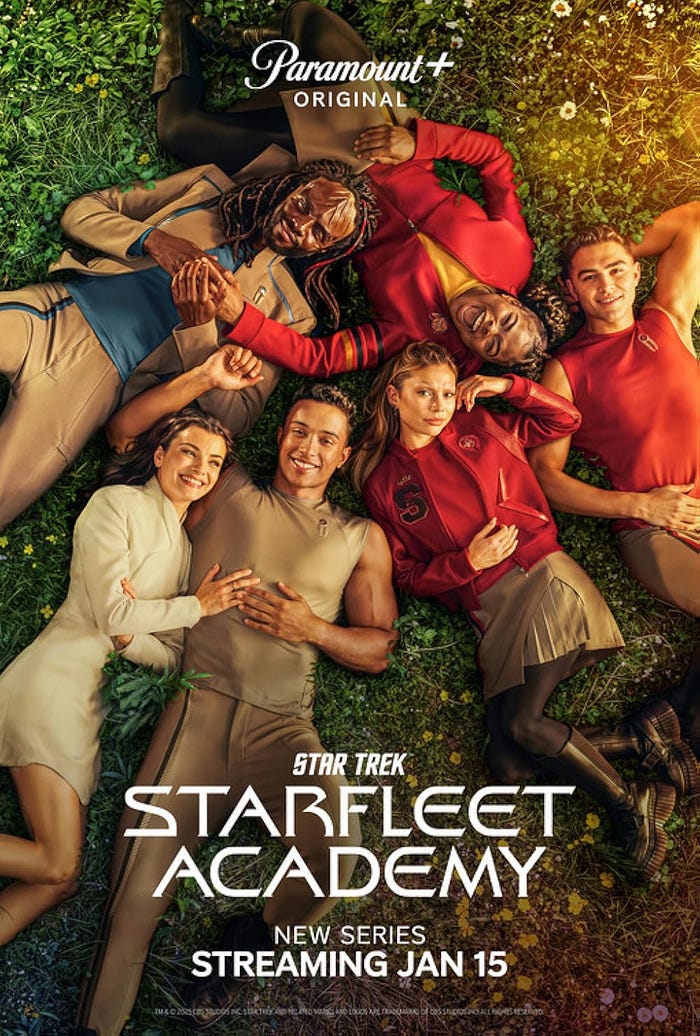
Sometimes, Star Trek can be hit or miss with the programming it presents. Since September of 1966, when the first series was presented, Star Trek has gone through iterations of being popular with the fans but not so popular with the networks that aired it. The very first series was first canceled by its network because at that time, networks had no idea what a gold mine they had with their programming. After it was canceled, it took Lucille Ball, one of the solid voices at Desilu Productions to convince her own people that the show needed to continue (getting it another season after being canceled).
Since then, Star Trek has aired numerous shows in its name, including an animation of the original actors, Star Trek: The Next Generation, Star Trek: Deep Space Nine, Star Trek: Enterprise, Star Trek: Discovery, Star Trek: Strange New Worlds, and, of course, Star Trek: Starfleet Academy. Plus, there were a number of films based off of the original series and Star Trek: The Next Generation. Oh, and don’t let me forget that there was a three movie reboot of the original series with excellent actors who reprised the roles made famous by the original crew. There was also a movie based on Section 31 (an evil organization that exists within Starfleet that was originally introduced in the series Deep Space Nine).
If this information is starting to confuse you, and you’re not a diehard Star Trek fan, then perhaps you might start to understand a huge part of the problem that Paramount has encountered and never took time to actually solve.
So, let’s analyze my reasons for why I think Star Trek: Starfleet Academy failed.
Star Trek is a niche product of science fiction fandom.
When Star Trek first aired in the 1960s, it was unknown because it was brand new. However, in a few years, suddenly every young person (and some older) became fans. There was nothing like it on air at the time. Star Wars was still about a decade away, so if you were a young person into science fiction, this was your domain.
I was 2 years old when Star Trek first came out. It wasn’t until years later that I came across the series in reruns. I wasn’t lucky enough to catch it when it first aired, although I wish I had, but that would make me in my 70s or 80s, and I’m just not yet ready for that. But what I do remember was rushing home after school and turning on the TV, hoping Star Trek was going to be on the screen. We didn’t have scheduled programming in those days, so you just had to be lucky to catch your show when it aired. However, during this period we had stuff like The Twilight Zone and a few other science fiction greats, but Star Trek was always the one we were looking forward to.
My show ended up being Star Trek: The Next Generation, which had a rocky start but by the second season ended up being some of the best science fiction programming. It was mostly during this period that the “Kirk vs. Picard” or “Star Trek vs. Star Wars” arguments started, and even though it sounds like those were heated arguments, they were mostly preference battles that were often recognition that we were science fiction fans rather than angry retorts over which fandom we were a part.
Over the years, as more and more Star Trek series emerged, a familar fanbase emerged, and while some might like one show over the other, the understanding was that we were all Star Trek fans, and that’s what united us together.
During this period, whenever one show ended, and there was nothing left of the Star Trek universe being created, the anticipation was always in wait of the next one that might be coming down the line. But as more and more of us became older, we started to notice that preferences and nostalgia made it difficult to ascertain what the consensus was on Star Trek programming at any time.
This emerged an interesting aspect of the Internet: Haters and trolls. Over the years, kind of emerging with the advent of the show Star Trek: Enterprise and then carrying over into Star Trek: Discovery, fans of Star Trek became very vehement in their expectations for the franchise. If they didn’t get the same feelings for a series as they did in a very specific series they enjoyed, they started to criticize any new direction in Star Trek. In Enterprise, they hated how the series wasn’t moving forward but was just harping over old things and milking the franchise.
And then Star Trek: Discovery came out, and suddenly everything about Star Trek was bad. According to them. For me, in general, I watched Discovery mostly because it was the only new Star Trek available, and sometimes it did something that I enjoyed. But mostly, it wasn’t my Trek, nor was it the Trek that most others were used to.
During this time, another phenomenon emerged: The Youtube Celebrity. On Youtube, a number of reviewers of science fiction started to make names for themselves. Before, when fans were mostly individuals and had no people to whom they were speaking, other than a couple of friends, the networks paid little heed to this fan base. They put out their programming and hoped that it would stick.
Now, networks were witnessing fan bases that followed Youtube creators, and those fan bases grew into tens of thousands of followers. Sometimes, hundreds of thousands.
And many of them were very negative critics of anything that Star Trek created. I believe that this is where the term “Kutzman Trek” emerged, which was basically the Star Trek direction taken by filmmaker Alex Kurtzman. This is currently the direction Star Trek is in, following Discovery, Strange New Worlds, Section 31, and of course, Starfleet Academy.
The amount of hatred towards Star Trek’s direction has been no end of hostility from this segment of the Youtube creators. After Starfleet Academy aired, this group went nuts and declared pretty much everything Star Trek to be close to being in league with Lucifer. It’s most definitely a huge part of the backlash against current Star Trek because they are quite vocal, and when no one else is talking, all you can listen to is those yelling the loudest.
What this has done is alienate those of us who enjoy all things Star Trek. Granted, I wasn’t a huge fan of Discovery, but I watched it because it was all I had. I wasn’t the biggest fan of Starfleet Academy, but again, it was all that I had.
I’ll let you in on a little secret I’ve discovered: Starfleet Academy was targeted at a different community than most Star Trek has tried in the past. I was nonplussed at this show, but one evening my best friend came over to my house to watch some evening television entertainment, and I introduced her to Starfleet Academy, just to get her opinion. She loved it, which immediately made me realize that the direction that show took was targeted at a demographic of which I am not a part. So, I suspect that a lot of people around the country (and the world) might have tuned in and liked what they saw.
The problem with that is not always is that demographic going to have someone like me who is going to introduce them to a product that most guys might not actually like. Which means the main audience is the people who were never going to like the show in the first place. If Paramount can’t target the audience it wants, or at least advertise to them in media that serves that purpose, the show was never going to take off the way they wanted.
Instead, they targeted the same audience as always with a limited campaign that never had a chance. Part of me thinks that if they targeted fashion magazines and all sorts of other places that people like me generally don’t know much about, they might have found their audience. But they didn’t. So the show failed. Big surprise.
But that’s my opinion of why I think it failed.

Attributed to Tenor