When Your Favorite Streamer Becomes an Only Fans Model

An Only Fans model?

I’m a huge fan of Youtube creators, especially those who create videos about reviewing movies and television shows. I kind of got into watching this genre of Youtube shortly after my ASMR phase, which I originally got into because I had a lot of trouble getting enough sleep, or falling asleep initially.

Somehow, the Youtube algorithm made a recommendation to me years ago, pointing at a video that had some young woman reviewing a movie (probably Star Wars: A New Hope) and a relationship was born. I think I saw the actual movie three or four times in the past (right from when it was released) but since focusing on Youtube reviews, I’ve probably seen cut-up versions of that movie over one hundred times.

I should explain how a review works on Youtube. They can’t show the whole movie (as that would be illegal), but over the years the formula has been to show about forty minutes of a 90 minute to 120 minute film in a cut-up fashion with the “creator” commenting and reacting throughout that time, sometimes as additional footage or with commentary while pieces of the movie play in unison with the commenter. It’s about the next best thing to sitting in a theater with some loud individual who makes comments as the film is playing overhead. And this way, you don’t get shooshed by random people in the theater because your date is being obnoxious.

You see, years ago, before Youtube even became a thing, I used to accompany people to the movie theater (usually a young attractive woman, but sometimes guy friends), and as long as that person hasn’t seen the movie already, I seemed to be in a bit of heaven myself. I love watching the reaction of someone I’m friends with (or attracted to) as they watch a movie I’ve seen, especially if it’s their first time.

This has developed a community of commenters who make content which usually has the words “First Time Viewing” in their titles. This tells people like me that they’re discovering the magic of a movie while I get to watch their reactions. I can’t tell you how thrilled I get when I watch someone discover something for the first time (like…spoiler incoming for the two people in the universe who don’t know this already…that “Luke, I am your father! (a misquote from the movie, but you get the point.))

Over the years, I have found myself more interested in young, female reviewers, which makes a bit of sense because I’m a guy, and I just enjoy watching beautiful women more than some other guy. I don’t apologize for that.

But because of this consistency, what I have started to observe is a phenomenon that happens within this community: I’m not the only guy who also becomes fans of these young, attractive women. When I first started watching these reviews, they would generate hundreds of views whenever they plopped out another video. As time went on, the more attractive of them would tend to gain more and more followers as they released more videos. Whereas they first started out with hundreds of views, now they get tens of thousands of views, and their subscriber counts have gone from hundreds of followers to tens of thousands of followers as well. Some even higher than that.

So, it probably shouldn’t be a stretch to imagine that because these young women get a decent amount of money in revenue sharing payments with Youtube, they start to realize that they can make a great deal of money. In the beginning, it might be enough to add a substantial amount of money to their monthly paychecks they would get from a regular job to being enough to survive on this income alone. And then as they gain more followers, they start getting offered sponsorship deal (like a professional athlete) to sell brands to their followers, which makes the money flow even better, so that they start to think of themselves as some sort of rock star, bringing in more money than they ever could raise just doing regular work.

The same thing happened with some of the ASMR stars. They became huge stars and made a great deal of money for themselves. It was a different sort of influencer community, but lucrative.

However, one of the things I started to notice is that this coincided with the advent of the adult work community. Only Fans became a thing at this time, which I don’t think was much of a coincidence. Before that, the sponsorship “deal” was the general ending of the road to fame in this crowd. But then, after Only Fans, suddenly there was a much more lucrative direction one of these creators could latch onto going forward.

When this tie occurred in the beginning, a young woman would link her Only Fans connection in her videos, and her income stream would increase dramatically. However, at some point Youtube struck back against this and started removing content of young women who tried to link their dirty content with their wholesome Youtube videos. So, they had to become a bit more elusive about such connections.

But the fact that they made such great strides with Youtube served to funnel young boys and men into their adult content, and some of them really wanted to build such connected communities. And usually they did that by linking their Youtube content to their own web sites, which then had the linkage to their Only Fans content.

I’ll be honest. While I tended to flock towards young, attractive streamers, I have never been a fan of adult content. I appreciated them for their content reviews, and I have had no desire to see them naked or worse. Now, I understand I don’t speak for the majority, but I am capable of speaking for me. I have a lot of respect and admiration for those who create those videos, but once they cross that line, my immediate (and unchangeable reaction) is to unsubscribe to them on Youtube. And even though the algorithm tries to recommend their content a few times after, once the algorithm discovers that I don’t go back down that rabbit hole, I never see anything about, or from them, again. A year or so down the line, the algorithm might try to recommend them to me again, but once I don’t follow that suggestion, they disappear from any of the movies offered to me.

One of the things that I hate more than anything is when a young woman decides to go down that route. I completely lose respect for her, and unfortunately, it’s something that never comes back.

It’s very similar to the struggle many young women are discovering today. They see Only Fans as an easy way to make money. A lot of money. But once they’ve gone down that road, they can’t ever gain those fans and followers again. It’s the same thing with relationships. No matter how attractive she is, once she takes that road, she has serious trouble ever finding someone to date for the future. Oh, she’ll get a lot of guys interested in her, but definitely not interested in an actual relationship. And that’s something they discover when it’s too late to turn back. Higher quality guys, discovering even a hint of such a promiscuous back ground, want nothing to do with them no matter how much they wish it wasn’t that way.

I’m the same way with the videos I watch on a daily basis. And it’s not like I intend to date or marry any of these women; I mean, honestly, they have no idea who I am in real life, so it’s not like we were dating with the possibility of ever being married.

I just don’t invest my time in someone who goes that direction. And that means even in watching their videos.

I don’t indulge in paying any attention to porn stars, so why would I invest in knowing anything more about an Only Fans model? Just not my thing.

And as it’s me investing my time, I prefer someone who appears much more wholesome than that. And because it’s my time and my dime, it’s my choice.

It was her choice, too. And as I read through the comments in their videos, I realize I’m not the only one.

I’ve also noticed that when I read such comments after their videos, those comments quickly disappear. Which means women creators care, too. But by then, it’s too late.

Has America Lost Its Culture?

I was just thinking about this the other day. I was teaching a class on speech structure and for some bizarre reason the discussion turned to American culture. A student indicated that she felt her music and fashion tended to reflect the 1990s. Another stated that her music came from the 1980s. And yet another felt that the early 2000s were most of hers stemmed. Strangely enough, not a single one felt that his or her cues came from current ideas.

So I started asking similar questions in most of my classes, and what I started to notice was that very few of them felt that their culture came from current day themes. I started to wonder if perhaps American culture has faded since the early 2000s so that most people tend to be focused on periods of our past and very little on current day thoughts.

Now, before I go on, I should point out that 150 students in a Texas city, although a pretty large city, does not indicate a reflective sample of the entire United States. So perhaps fashion is going strong in some other segment of the American population, and we’re just stunted in this small backwater suburb of Houston, Texas.

But I follow a lot of trends across the greater parts of the country, and I suspect that I might be noticing a trend that other people just don’t seem to be following.

We all like to think that we have our fingers on the cusp of what is going on around us, so much that we might not even realize what all is happening in the greater context of the world within which we live. I think of it as the thought process of the Greek scholars in the early part of the thinking changes at the turn of the century when we went from BC to AD (probably not written on any of the clay tablet calendars of that time, as that type of notification didn’t come until many, many years later) when the Greeks were slowly dissolved into the beginnings of the Roman Empire. Or when the Roman Empire stopped being the change agent of its time and the empire became a lot of broken vassal states that had no reason for existing as a part of the greater good. Or the French monarchy, thinking it a natural state of being within young Europe right before the common people came at it with torches, swords, and eventually, guillotines.

And now, the United States, coming on its 250th year celebration, quite possibly heading towards ultimate unrest, and like the previous examples: collapse.

Many intellectuals have been predicting the eventual demise of this democratic experiment. But many others blissfully go through their daily struggles and enjoyments never suspecting that our civilization might be heading towards collapse. But one of the reasons a civilization tends to head towards collapse is that the people and the thinkers find themselves no longer capable of believing they are living in a stable society. And the reason for that is quite often that we no longer share a similar culture.

I often long to live within a civilization of our past. The 1980s is my time. It’s music, its people, hair styles and even clothing fits on me like a vested, long sleeve flannel shirt over a Van Halen t-shirt and jeans. I lived in the 1980s, and when I’m searching for music, I often find my Sirius XM channel pointed directly at the 1980s pop music channel. I even find myself getting upset when the deejay (who was at one time an MTV Veejay of the time I grew up with music). That’s my time, and I go back to it more than I would like to admit (but just did).

And I’ve started to ask other students, who grew up years after me (I’m almost always the oldest one in the room), what they think constitutes “their” time. And I get all sorts of answers. But rarely do I get a “I think right now is ‘my’ time.

That says something. Really.

Granted, I’m a political scientist first and a communications scientist second. That just means that I think more politically than in a communications’ process. I see the world in a sense of “how does this best serve a specific process or ideology”. If I thought in “communications”, I would be thinking, “how does someone say this to convince the most people” rather than “why do people do what they do.” Having both thought processes serves to first understand them and then figure out how they make that happen going forward through speaking and writing.

So, does America have a current culture? And if so, what is it? I have a good handle on what exists today in a certain area of the world. But how do you feel you exist, communicate and relate to others? Do you go back to a certain time, or do exist in the here and now? And if the latter, what does that look like to you?

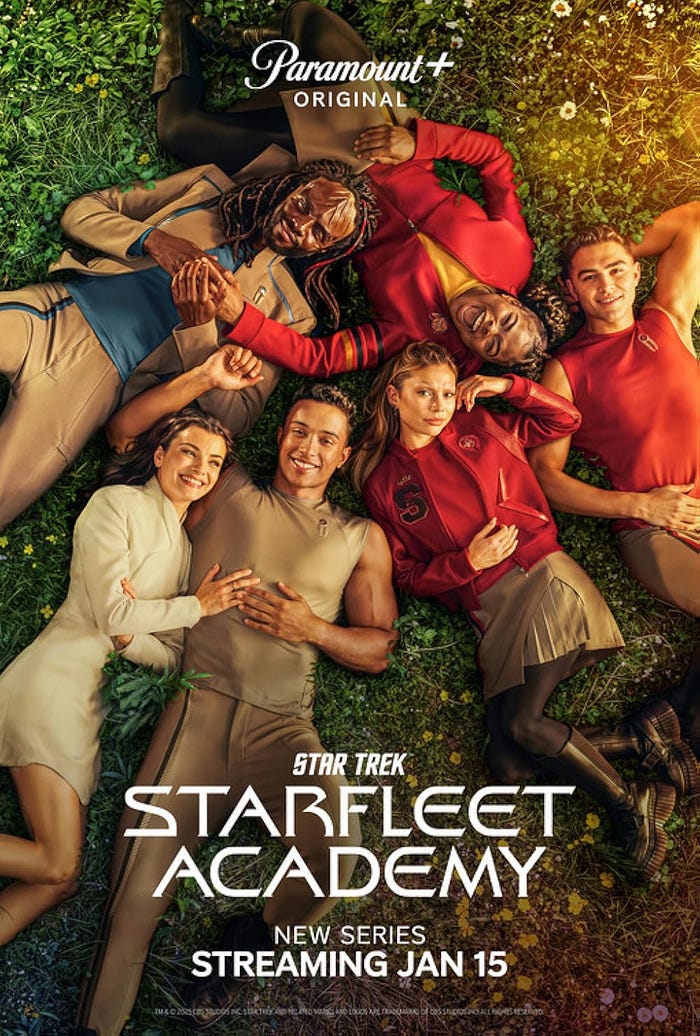
Why Star Trek: Starfleet Academy Failed

https://medium.com/p/c271ecda4b0b?postPublishedType=initial

Sometimes, Star Trek can be hit or miss with the programming it presents. Since September of 1966, when the first series was presented, Star Trek has gone through iterations of being popular with the fans but not so popular with the networks that aired it. The very first series was first canceled by its network because at that time, networks had no idea what a gold mine they had with their programming. After it was canceled, it took Lucille Ball, one of the solid voices at Desilu Productions to convince her own people that the show needed to continue (getting it another season after being canceled).

Since then, Star Trek has aired numerous shows in its name, including an animation of the original actors, Star Trek: The Next Generation, Star Trek: Deep Space Nine, Star Trek: Enterprise, Star Trek: Discovery, Star Trek: Strange New Worlds, and, of course, Star Trek: Starfleet Academy. Plus, there were a number of films based off of the original series and Star Trek: The Next Generation. Oh, and don’t let me forget that there was a three movie reboot of the original series with excellent actors who reprised the roles made famous by the original crew. There was also a movie based on Section 31 (an evil organization that exists within Starfleet that was originally introduced in the series Deep Space Nine).

If this information is starting to confuse you, and you’re not a diehard Star Trek fan, then perhaps you might start to understand a huge part of the problem that Paramount has encountered and never took time to actually solve.

So, let’s analyze my reasons for why I think Star Trek: Starfleet Academy failed.

Star Trek is a niche product of science fiction fandom.

When Star Trek first aired in the 1960s, it was unknown because it was brand new. However, in a few years, suddenly every young person (and some older) became fans. There was nothing like it on air at the time. Star Wars was still about a decade away, so if you were a young person into science fiction, this was your domain.

I was 2 years old when Star Trek first came out. It wasn’t until years later that I came across the series in reruns. I wasn’t lucky enough to catch it when it first aired, although I wish I had, but that would make me in my 70s or 80s, and I’m just not yet ready for that. But what I do remember was rushing home after school and turning on the TV, hoping Star Trek was going to be on the screen. We didn’t have scheduled programming in those days, so you just had to be lucky to catch your show when it aired. However, during this period we had stuff like The Twilight Zone and a few other science fiction greats, but Star Trek was always the one we were looking forward to.

My show ended up being Star Trek: The Next Generation, which had a rocky start but by the second season ended up being some of the best science fiction programming. It was mostly during this period that the “Kirk vs. Picard” or “Star Trek vs. Star Wars” arguments started, and even though it sounds like those were heated arguments, they were mostly preference battles that were often recognition that we were science fiction fans rather than angry retorts over which fandom we were a part.

Over the years, as more and more Star Trek series emerged, a familar fanbase emerged, and while some might like one show over the other, the understanding was that we were all Star Trek fans, and that’s what united us together.

During this period, whenever one show ended, and there was nothing left of the Star Trek universe being created, the anticipation was always in wait of the next one that might be coming down the line. But as more and more of us became older, we started to notice that preferences and nostalgia made it difficult to ascertain what the consensus was on Star Trek programming at any time.

This emerged an interesting aspect of the Internet: Haters and trolls. Over the years, kind of emerging with the advent of the show Star Trek: Enterprise and then carrying over into Star Trek: Discovery, fans of Star Trek became very vehement in their expectations for the franchise. If they didn’t get the same feelings for a series as they did in a very specific series they enjoyed, they started to criticize any new direction in Star Trek. In Enterprise, they hated how the series wasn’t moving forward but was just harping over old things and milking the franchise.

And then Star Trek: Discovery came out, and suddenly everything about Star Trek was bad. According to them. For me, in general, I watched Discovery mostly because it was the only new Star Trek available, and sometimes it did something that I enjoyed. But mostly, it wasn’t my Trek, nor was it the Trek that most others were used to.

During this time, another phenomenon emerged: The Youtube Celebrity. On Youtube, a number of reviewers of science fiction started to make names for themselves. Before, when fans were mostly individuals and had no people to whom they were speaking, other than a couple of friends, the networks paid little heed to this fan base. They put out their programming and hoped that it would stick.

Now, networks were witnessing fan bases that followed Youtube creators, and those fan bases grew into tens of thousands of followers. Sometimes, hundreds of thousands.

And many of them were very negative critics of anything that Star Trek created. I believe that this is where the term “Kutzman Trek” emerged, which was basically the Star Trek direction taken by filmmaker Alex Kurtzman. This is currently the direction Star Trek is in, following Discovery, Strange New Worlds, Section 31, and of course, Starfleet Academy.

The amount of hatred towards Star Trek’s direction has been no end of hostility from this segment of the Youtube creators. After Starfleet Academy aired, this group went nuts and declared pretty much everything Star Trek to be close to being in league with Lucifer. It’s most definitely a huge part of the backlash against current Star Trek because they are quite vocal, and when no one else is talking, all you can listen to is those yelling the loudest.

What this has done is alienate those of us who enjoy all things Star Trek. Granted, I wasn’t a huge fan of Discovery, but I watched it because it was all I had. I wasn’t the biggest fan of Starfleet Academy, but again, it was all that I had.

I’ll let you in on a little secret I’ve discovered: Starfleet Academy was targeted at a different community than most Star Trek has tried in the past. I was nonplussed at this show, but one evening my best friend came over to my house to watch some evening television entertainment, and I introduced her to Starfleet Academy, just to get her opinion. She loved it, which immediately made me realize that the direction that show took was targeted at a demographic of which I am not a part. So, I suspect that a lot of people around the country (and the world) might have tuned in and liked what they saw.

The problem with that is not always is that demographic going to have someone like me who is going to introduce them to a product that most guys might not actually like. Which means the main audience is the people who were never going to like the show in the first place. If Paramount can’t target the audience it wants, or at least advertise to them in media that serves that purpose, the show was never going to take off the way they wanted.

Instead, they targeted the same audience as always with a limited campaign that never had a chance. Part of me thinks that if they targeted fashion magazines and all sorts of other places that people like me generally don’t know much about, they might have found their audience. But they didn’t. So the show failed. Big surprise.

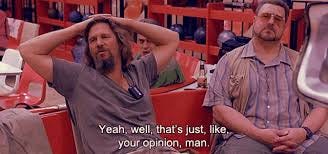
But that’s my opinion of why I think it failed.

Attributed to Tenor

Playing video games does not make me a child

https://medium.com/@duanegundrum/playing-video-games-does-not-make-me-a-child-a63ff7d5c707

I’ll let you in on a secret that’s not so much of a secret: I play video games. And I’ve always played video games. And thus, I’m probably always going to play video games.

I started playing video games when video games first became a thing. In my last years of high school, the personal computer came out and I immediately started playing video games. Back then, they were usually sold in plastic baggies, kind of like crack and heroin. The result was the same: We all got addicted and wanted more.

And that was a problem because at that time there weren’t any more. There was maybe one or two new video games a month. I went to the local video game store in the San Bruno mall and looked over the selection of new games that were contained in nice, cardboard boxes with really impressive, colored drawings which helped me decide what new game I would buy. And almost always, I would buy the new box of that game and take it home, ready to open it and slip that 5 and a half disk into my disk drive to load up and hope that it played. And then I would have my fix for the month, playing it until a new game came along.

But in the beginning, there was no store in San Bruno Mall (I think it had been a store that sold vacuums). Instead, computer magazines would publish full basic programming codes that we would have to type in oursevles into our computers and hope that the gods and goddesses were kind to us that time so that the program would actually work. And they never did. If you knew BASIC coding yourself, you might be able to figure out what was wrong and fix it yourself. Or you gave up after trying some fixing and then went on to another set of coding in the magazine that you hoped might work instead. That was gaming back in the day.

So yeah, once we got past that era of computer gaming, we got the nice cardboard boxes, which are still awesome today. I remember playing Richard Garriott’s first approaches to gaming back in the day (Ultima I and II). Then he started creating in an environment where the cardboard boxes were a new part of the industry (Ultima III and everyone that followed). I remember buying his games in plastic baggies and then in professional boxes after that. My, how that industry changed over just a couple of years.

But today, I still play computer games. Because I love them.

Nowadays, we buy our games online, and sometimes even play them online.

I play a couple of online games that I’ve played for over a decade. I made friends in those games, and some have stuck around while others have moved onto other games, or even in activities that have nothing to do with games. I remember a friend I made in Ultima Online who moved on to something else and then ran into him while playing Everquest (using the same name he used in Ultima Online). Meeting a friend again in a subsequent game is always a great feeling, and it’s happened several times.

In some online games, we have a discord server for our guild, and then that guild covers several different games, so you might just carry over that friendship into that other game, already knowing that person before you ever subscribed to that new game.

But the one thing I wanted to talk about his how people who don’t play games often make snide comments about childishness just because I happen to play video games. They talk about how I’m wasting a good deal of my time playing those games, while they don’t seem to have a problem that they spend more of their time watching sports on television.

At what point did watching a sports competition for practically every game during a season seem more adult than playing a video game?

One thing that never gets mentioned is that watching a sports game involves nothing more than just viewing. Not once do you get to pick up the baseball or football. Not once do you decide any play that is going to happen on the field. Nor does any thought of the game have any more impact than cheering for the team you like better. And sometimes it’s in front of a TV screen, so the players quite often don’t ever hear your input in any way, shape or form.

Computer gaming, on the other hand, requires your input in order to make the action move forward. If you play computer sports, you are controlling a large part of the game. Your inputs matter; otherwise, they don’t happen.

If you play a more action-oriented game, you are the center of the action, and whatever you do is a part of the narrative itself. Sure, someone programmed a great deal of the story, but that story doesn’t happen if you don’t actually make a choice of which way to lead that story. Most games today are beyond just observation with the story. Games require you to choose your own adventure in that what was programmed was your choice to drive the narrative forward.

A lot of the games are adult-driven stories. I don’t mean prurient in nature, but adult themes that probably aren’t appropriate for youngsters that haven’t developed the capacities to handle such stories. Recently, I’ve come across a couple of games that while playing them have made me decide what is the proper course forward when my choices are to let a civilization die or to sacrifice parts of my own breathren to avoid having to make such horrible decisions. No, not something young people should have to deal with, and even me, with years of experience and dealing with many bad situations, I really didn’t feel that even I was ready to make such decisions.

You don’t get those kinds of choices when watching a football game on television.

So, the point is: These aren’t the games we played when computer games were in their youthful period. I don’t remember thinking to myself that destroying individual asteroids with a ship that was only capable of turning and firing at rocks was somehow deciding the fate of anything other than should I make these big asteroids into smaller asteroids or just not do it. No, games have changed tremendously over the years, and I honestly think that people who don’t play them honestly think that they’re of the same nature today.

They aren’t.

So, when someone starts to think that my desire to play computer games somehow makes me more of a child than a man, I quickly tune them out. After all, I’m deciding whether or not I must wipe out a civilization in lieu of saving my brother.

Man, the decisions we have to make in My Little Pony are really complicated these days.

When you start to realize you’re never going to change the world

I was one of those little precocious kids who grew up, convinced that he was one day going to change the world. At first, it was going to be through science, as I studied physics, sure that I was able to see the world in ways that no one else possibly could. I had my ground-breaking theory that re-explained the universe’s creation through a process called neutra-matter (my own invention) that was the embodiment of light, and thus, the separation particle that kept the barrier between matter and anti-matter. It all made sense to me, and actually still does. I worked through college to become a physicist, and throughout my education, I devoted a great deal of time just trying to disprove the theory so I could move onto something better. And I never did. So it might be true. Or not. We’ll never know because I didn’t remain in physics, and even if I did, I hit a point where I started to realize that no one really cared.

Yeah, that was true. No one cared. I had this great idea, and I was convinced it could change science. But again, no one cared. So I moved onto a different field. Genetics.

In genetics, I was quickly invigorated with a new idea that consumed my every scientific thought. I now had a convincing argument as to how the AIDS/HIV strain first emerged, and coordinating this theory with the concepts of archaeology (which I was also studying at the time), I realized that there was a way to use my theory to trace down Patient Zero, and possibly erect a cure for AIDS by creating a genetic suppressor from the origin rather than from the current variation of the virus. And it made a lot of sense to me.

So, as this was during the dawn of the AIDS era, I managed to convince a coordinator of the first AIDS conference to listen to my theory, and she was so intrigued by it that she arranged a meeting with me and a group of scientists who were all part of the first conference. They read my report, called me in and then in a round table discussion, asked me all sorts of questions about my theory. And they were intrigued. And then one of them asked me where I got my medical degree, and I revealed that my education was in physics, and that I did not have a medical degree. Essentially, the discussion was over, and no one was really interested in hearing anything else I had to say. In the end, my theory was shelved, and I went on with my life. Decades later, AIDS is still out there, and millions of people died, and unfortunately, I don’t think it’s going to be cured any time soon. Of course, I can’t say my theory would have done it, but it bothers me that it was never considered.

Many years later, I was in graduate school after doing the whole Ph.d thing in political science. This time, however, I was pursuing communication. And suddenly it dawned on me that our usual process for conducting diplomacy was wrong. In the middle of the night, I woke up with an additive theory, utilizing political science international theory, interpersonal

communication theories, a communication rhetoric theory and a mathematical model I designed in my head that would eventually be completed through computer modeling. This new theory, I predicted, would lead to a brand new way of conducting negotiations and diplomacy. Latching onto one of my fellow grad students with a background in history, we wrote up a theoretical paper on this and then presented it at communication conference. After that, a few people from different organizations contacted me by email asking me more questions, but over time, I starrted to realize that it also required people to really think differently than what they were used to. When I tried to present it to the Obama Administration, I realized no one was really interested in learning. People were pretty satisfied with doing things the way they had been doing them since the days of Caesar, so very quickly I got the impression that I was barking up trees that no one wanted me barking near. So I gave up on that as well.

The point is: At some point, you start to realize that no matter how many great ideas you have, eventually you’re probably going to hit the point where you realize that most people generally don’t care. The status quo is so much easier to stick with, so the amount of work involved in getting anyone interested in change is practically at a ridiculous premium. It’s a lot like the Occupy Wall Street movement that’s happened some years ago. I mean, they have great ideas and the best intentions at heart. But the reality is that no one is going to listen to them, and mostly what they will receive for their efforts is ridicule and pepper spray. You can’t convince people to change their ways, even if the change is in their own best interests.

So, at some point, you have to realize that as much as you like, you can have all of the greatest intentions in the world, but at some point you need to do the proverbial growing up of reality and settle for mediocrity and, if lucky, a small step after a period of anarchical punctuated equilibrium.

That’s where I am now. There are so many things I wanted to do with my life, so many things I thought I would do with my life, but in the end, I realize that it really didn’t amount to much. No fame. No fortune. No changing of the minds of the masses or even a few leaders. Not even a really cool career or a stable girlfriend (or an unstable one for that matter). At some point, you begin to realize that all you really have is an apartment full of friendly stuffed animals, a shelf of unpublished, or crappily published, novels, reruns of Star Trek and a delinquent World of Warcraft account.

Had I known that a long time ago, I probably would have chosen a much easier route to get here.

Computer Games Are No Longer Designed For Gamers

The other day, I was playing a game I tend to come back to often. It’s called Guild Wars 2, which is interesting because I never played Guild Wars 1. And while that’s interesting to me, I’m sure a reader who doesn’t play Guild Wars 2 really cares. But why I find it interesting is because it represents everything that is wrong with computer games today. Let me explain.

Guild Wars 2 has about 10,000 expansions, and I’ve never played a single one.

You see, I love the gameplay of Guild Wars 2. I’m pretty good at it. I’m not good at chess or even most things in life, but I’m damn good at Guild Wars 2.

I just suck at every expansion that has been released by Arena Net, the company that puts out Guild Wars 2.

I’ll be honest. I haven’t lasted ten seconds of any of the gameplay that has been released as an expansion to Guild Wars 2.

The first expansion: Something Sounding Cool. Well, I loaded it up, all excited about new gameplay in Guild Wars 2, and then they offered their new ability (a glider sort of thing that was kind of fun in that almost flying kind of way. And then they wanted you to integrate that gliding thing into actual gameplay. I sucked at it. Eventually, I stopped trying and then just went back to the original game without first expansion.

Another expansion later, my main character fought a bunch of bad guys and then (about ten seconds in) I found myself face to face with some demon who might have been the Devil. And then he kicked my ass all over the place. So I tried facing him again, and then I lying face down on the ground, dead.

So I went back to the original game.

This is the problem I have with most expansions that aren’t The Sims. You see, The Sims have made 4,000 expansions (each costing $19.99) Each game adds something simple, like if you had no hair and toupee companies charged you $20 for another slice of hair. All these other expansions with other games all want to add something fun, but in order to do that, they make the other parts of the expansions so much harder to play. It’s like saying, “we’re giving you a pet bunny that you get to pet when it squirms in your hands,” and while you’re petting the bunny, the God of Hell is going to chase after you and make you realize how much of a wimp you really are. Got that, wimpy boy?

I Is A Teacher Now

I started teaching at Lee College in Baytown, Texas (close to Houston). It’s been an interesting, yet very positive, ride so far. I like the students, and now if I can just get past the health part of the process, I should be fine.

This semester I am teaching five sections of public speaking, one section of interpersonal communication and one section of business and professional communication. Most of those are great, although the business and professional communication is a night class, starting at 6:00 pm and ending at 7:15 pm. It’s a bit of a struggle, but as I kept saying all last year, I want to teach, not sit in a lab and just help other instructors teach better.

The one (or two) drawback(s) is that it doesn’t give me a lot of time for writing, filming videos, or (okay, three drawbacks) playing games. The one game I’m currently involved in is Guild Wars 2, which is one of those games that occupies any gaming time you have so that you rarely play any other games. It’s a fun game, and they keep churning out new add ons, constantly keeping you occupied. The only problem I’ve had with the add ons is that they make them awfully difficult if you’re not already an expert in the game. I’m pretty good, but definitely not an expert. I remember playing one of the add ons, and I couldn’t get beyond the opening of it because the bosses send me into a corner in a fetal position because they make those add ons way to freaking hard. I play this game to have fun, not to be stomp;ed by boss guys that seem to laugh at me, stomp me into the ground and then steal my lunch money, demanding I bring more to them next time he arrives to stomp me into the ground again.

Well, that’s all for right now. I’m still in dire need of a new kidney, which I’m starting to suspect I will never get. So, read my books, and read them soon because soon that’s all that’s going to be around to communicate on my behalf.

It is almost impossible to cancel a subscription if you used Paypal

Don’t get me wrong. I love Paypal and use it all the time. But I’m starting to rethink my logic of using it, and to be honest, it drives me nuts when I think about it. And part of the problem is the business model that a number of companies use, and part of the problem is the easiness of using Paypal to pay for things. Sure, the money comes out of my bank account immediately, so the logic of using Paypal is lost on me. Yet, I still do it.

Recently, (meaning today) I was charged by a company called Wix (you can design web sites through it). I tried using Wix three years ago, signed up for a membership costing a little over $200. But to be honest again, I gave up trying to create a site through them. It was easier getting a desgree in physics and a Ph.d in political science. But for the last three years, they have charged me that $200 plus every year, and I caannot figure out how to cancel this damn thing short of canceling my Paypal account.

This is the problem with this whole subscription model of stuff. When you have a monthly account, there’s little problem. You’re reminded of it every month. But when they charge once a year, it sneaks up on you, and as I keep discovering, it’s easier to cancel a regular transaction than it is a yearly one. And that’s the trap they try to sneak you into.

I had the same problem with a gym membership that I bought for my friend not too long ago. When I paid that, I was promised that it was a one time charge, and I wouldn’t be charged again. Of course that asshole lied to me; I was charged again the next month. I had to issue a charge back from my bank, which was quite a bit of drama, but at least my bank honored it. When I tried a charge back through Paypal, they immediately denied it, and I was still charged for the transaction. When I went onto Wix’s site, it indicated that because I issued a charge back, they were immediately canceling my account (which is good). But part of me is convinced they’ll somehow screw up my credit, and I expect that next year they’re going to end up charging me for the subscription again.

So, I really don’t know what to do. I feel like I’m the old man yelling at clouds these days, and my ability to fight back is limited and impossible as well.

Anyway, just a Monday gripe (although it’s on a Tuesday). Sue me.

Politics

As a professional political scientist (what exactly does that mean, anyway?), I am often asked my thoughts on current events to which I immediately respond that being a political scientist doesn’t mean that I actually have an opinion on specific current events. The fact of the matter is that I studied political science for the “science” inherent in political science. I don’t care about specific political events; I care about the nature of political science itself. While some people care about the horse racing aspects of politics, I care about why and how people think about the way political events take place. I like looking at 1855 and trying to see how things have changed so that if the same events happen tomorrow, how would people think and act on those events today.

But yes, I do care about specific events that are happening today. I have an opinion on whether or not we should be sending non-citizens back to native countries from where they came. Or should we be deporting people to countries they’ve never visited ever in their past. How can you not have opinions about such things?

Part of me is bothered by the lack of concern that most people have about political issues. Or about the lack of knowledge young people have about practically any political issue. Do you know that most people in the United States can’t figure out how to find Canada on a map? Even worse, I suspect the majority of Americans can’t find the United States on a map either. We like to think that’s not possible, but make the challenge (and take away their smart phones) and they will generally fail in large numbers.

Americans these days are pretty stupid when it comes to geography, history and political science. Yet, they’ll stare you down and say that they know far more than they really do. The problem is they carry around an encyclopedia of knowledge in their hands but take away their wifi, and they know very little. They’ve become a civilization of young people who rely on immediate access to fill in their true lack of knowledge.

I remember teaching a class a year or so ago where I mentioned the Great Emu War (one of my favorite topics) and told a whole story about it in class. The students were laughing and then one student spoke up: “He’s not lying. This is true.” He had just looked up the content of my lecture on the Internet, veryifying that I wasn’t making this up. That sort of summed up my whole thought on the problem we have with youth knowledge today. They know nothing. they look up everything.

This bothers me greatly because the idea of knowledge is that it increases from one generation to the next. As we pass off the baton to the next generation of learners, we should be experiencing new knowledge and new ideas from a younger population. But we don’t seem to be doing that any more. I’m afraid the next generation is learning nothing. And I blame my generation.

You see, it was my generation that created the computer. I was there on the precipice. I coded software in the beginning of the computer generation, and I could see how this information we created was going to lead us into new possibilities. I remember creating web sites for people for their new and old businesses. I remember a client who asked me if I could design a shopping cart for her, and I said I would for the cheap price of her buying me two books that I would use to learn how to make one. The books were on PHP, and I have to say that it was a great language to learn as I used it quite a few times.

Anyway, I started this post a few weeks ago on this blog and kind of forgot where I was going with it (a hint: Never start a post a week ago and forget to finish it up that same day), so let’s just say (after a quick look at the title I made for this post) that politics are weird. Really weird cause maybe one day that might lead to building a shopping cart for a book company. And no one wants to do that.

When the Smile Disguises the Truth

One morning, two and a half years ago, I woke up to a sight I had never seen before. It was one of those sights that people don’t tell you about. It never gets mentioned in movies or even on popular television shows. I’m not sure if it doesn’t get mentioned because it’s such an isolated situation, or becauses it has little possibility of gaining anyone’s attention. But I discovered it happens, so it must be important to some people.

Anyway, one morning, my feet were ridiculously bloated, kind of like something you see in a comedy about some crazy scientist who has enlarged his limbs at comedic proportions.

Rushing to the ER, I soon discovered that what I was experiencing was complete kidney failure. Considering the fact that humans have two kidneys, this meant that both of my kidneys had failed.

In the hospital for a week, I discovered the treatment was something called dialysis, where you spend a large time in a hospital bed as a huge machine sucks your blood through it and then filters it back into your body. This procedure can take quite a while.

During this first time with dialysis, I sat in this bed, not being told how long I was going to be here, staring at a young Asian nurse who made every effort to not make eye contact with me while she read her book. Keep in mind that I had nothing to read myself, my iPhone was in my hospital room four flights away, and I couldn’t even find someone to communicate with me. It’s hard to describe how horrible this situation was as I wasn’t being told what was happening (no one communicated with me to tell me I was even going to be undergoing dialysis, what it was, or how long it was going to last). I kept begging the nurse for some type of reading material, including a phone book if they still manufactured those, or anything, but she just shrugged her shoulders and didn’t even respond with words. It was such an awful experience. I probably would have handled it a lot better if she would have just said, “Don’t worry, this is only going to last four hours.” But not even knowing how long it would last made it that much worse, and no matter how many people I have shared this story with, they seem to not think it’s that horrible, mainly because they never had to undergo it themselves. Not knowing is probably one of the worse feelings one can experience. I can’t emphasize this enough.

After I left the hospital, I ended up having to visit a dialysis center three times a week where I would have to undergo treatment for four or so hours a day. I have to admit that I was lucky that I was working in a job that understood what I was going through and tried to support me during this period of massive transformation in my life. Other jobs would have probably gone through the paces and then worked to get rid of me as soon as possible. So, I was one of the few lucky ones.

But I did want to say one thing about these dialysis centers, or at least the one where I was required to go in the beginning. The people there are quite often very miserable. After all, they ended up in an establishment that is going to require them to go back to it every other day and leave them in a such a crappy state. Sitting in those machines sucks. You have no one around you to communicate; because of the immense size of these machines, you’re rarely close enough to any other person to communicate. Unlike hospitals, there are no visitors, and every other week or so, an emergency crew is rushed to the complex to take someone to the hospital because of some other organ failing or just some unfortunate circumstance happening. Keep in mind, most patients, once in this state, tend to give up on life and are just waiting for the inevitable, giving up but too scared to pull their own plug. I know this because in the very beginning, that was the state that I was in.

But I had to go three times a week for sessions that seriously weakened me for hours, and sometimes days afterwards.

But interestingly enough, in the first days of this ordeal, while in the hospital, one of the young nurses who was doing her rounds and was in my room, suddenly stopped and said: “Don’t I know you from somewhere?” I had interacted with so many people that I wasn’t sure if I knew her or not, and then she added: “Don’t you teach?” I said I did, that I taught both political science and public speaking. Then her face lit up: “You were my public speaking teacher.” I asked: “Are you sure?”

She nodded, “You made me laugh.” And then I knew it was true. So we spoke for a few minutes and then she went back to taking care of her rounds.

Right then and there, as I was thinking about how crappy my life was about to be going forward, I decided that if I had any control over anything, I was going to spend the rest of my time making people smile, and if possible, laugh.

So I decided then and there that any time I came in contact with someone, I was going to make them laugh. It was something I used to do in all of my classes. Teaching students and making them laugh while passing on knowledge always brightened my day. If I was going to be in a miserable situation, I could at least try to transform the experience into positive humor.

If you’re ever in a similar situation, one thing to keep in mind is that the only solution to kidney failure is a transplant. Someone has to give you their extra kidney, and to be honest, most people have no interest in donating a kidney to you or to a kidney foundation. For selfless reasons, people either don’t think about it, or they perceive that they’re going to always need both kidneys, even though most people never have a need for the second kidney. Honestly, they just don’t ever think about how their kidney could save someone else from years of having to live a horrible existence.

Because I’ve done everything the nurses tell me to do, including eating only specific foods and drinking miniscule amounts of fluid every day, I’ve become one of those “at home” dialysis people where I sacrifice having to go to a dialysis center every other day so that I can do it at home, EVERY day at night while I’m sleeping. Every other night, I’ll wake up in the middle of the night with an alarm going off for any number of reaons, which include cords crinkling, my body not receiving the appropriate mixture for REASONS, power fluctuations, or just random loud alarms that don’t actually tell you why, which requires you to call an “on call” nursing service that serves most of the country, so you wait in a que until someone can speak to you.

And I can’t really go on vacation because to do so requires dragging a very large machine with me, including large bags of sugar solutions that are extremely heavy, and each night requires using at least four of them. And besides those, there is a lot of other equipment required each night so if trying to travel (which I’ve tried), it’s very uncomfortable to do so. Right before I lost the use of my kidneys, I was planning to travel to Warsaw, Poland. I will probably never be able to in my lifetime because do so, I would need a transplant, and I’ve been told that getting one might take ten years, if lucky. By that time, I will probably be taken off the last for any number of reasons, the least of which will be age.

But I really didn’t intend for this article to be about complaints. What I wanted to talk about was smiling and laughter. One thing I devoted myself to was making people laugh.

And that was something I did, and often. Every doctor’s visit I made was devoted to making everyone in my presence laugh. When I was sitting in a chair for four plus hours, everyone who came near me was subjected to my unique brand of humor. Over time, more and more dialysis staff would come over to my chair to communicate. And I would make them laugh. And sometimes, they would make me laugh because humor is contagious, and it can brighten so many people’s days.

One of my favorite subjects was a Vietnamese nurse who was always so gruff and angry-acting. I devoted my every session with her to making her laugh. And she would just growl at me most of the times.

But I kept up for the entire four hours I was there some days. She would stop by, do her required nursing duty, hear me making joke after joke, every one of those jokes being spontaneous and brand new from the previous ones. But I would continue, stretching my humor to lengths even I didn’t know was possible.

I kept this on for YEARS.

One late afternoon when she was there doing her duty, I was about to start a new routine with her, and then out of nowhere she made a joke to me. It was raw and very new-like, but it was funny, mainly because it came from her and was humor that only she could have come up with. I laughed.

From that point forward, she was constantly trying humor out on me. And then I also noticed that she was humorous with the other patients, something I’d never seen before. Somehow, she had transformed from a mean, gruff nurse to one who shared humor with her patients.

If anything in my life is seen as an accomplishment, I can relish in this. I had transformed someone into someone with a dispensation towards humor. Her future patients would benefit from this, even if they never, ever, came in contact with me.

When you hit this stage, you take the victories where you can, or give up and wait for the inevitable.