The other day I was watching Apple TV’s telling of the story of Isaac Asimov’s Foundation series. For the record, at least up until the fourth episode, they’ve been doing a great job (they’ve only released four episodes as of the writing of this article). But one of the things that started bothering me was the way they handle advanced mathematics.
You see, if you haven’t watched the show (or read the books), the premise is basically about a mathematician who has blended math with psychology and history to create psychohistory, which is essentially a predictive mathematics. It’s a great concept, and someday, I’m sure that’s where our math will take us.
What I haven’t liked about the show is how it tries to show one of the main characters (an assistant to the mathematician) practically thinks in math so that she’s always thinking about prime numbers (a number greater than 1 that’s not the product of two smaller numbers). She keeps repeating large prime numbers as she’s doing other things, which is to give the viewer the impression that she’s so advanced in mathematics that she must keep focusing on prime numbers.
Well, to a person who understands prime numbers, it’s not that impressive. It’s actually reductive. To someone who doesn’t follow math, it’s going to serve its purpose: Making one think that she’s so brilliant that she thinks in primes. But to someone who knows basic mathematics (to the level of primes), it’s like pointing out a very smart person who is somewhat stricken by a compulsive disorder because, to be honest, spouting off prime numbers isn’t really complicated; it’s just repetitive and a somewhat endless process.
Which got me thinking about the many times that Hollywood has tried to represent intelligence to an audience of people who generally aren’t very intelligent. I mean, let’s face it. As much as we’d like to think otherwise, the average television or movie viewer isn’t exactly approaching the higher levels of Mensa. Sure, they might be represented in that demographic, but most media broadcasts are designed to appeal to someone with anywhere from a sixth grade to high school level of intellect. It’s not an insult to viewers, but just a common acceptance of the type of media to which most of us are exposed.
I remember years back when I was reading a book by Robert Heinlein, specifically Number of the Beast, a science fiction novel that uses mathematics to explain the nature of God and spirituality. At the time I read it, I remember thinking to myself that this went way over my head, and there were times where I found myself swimming in numbers that Heinlein was presenting, only half understanding the majority of what I was reading. That book alone represented to me the realization that there are some people who are way smarter than the average person, and quite often those people can find themselves incapable of even communicating a message to those they to whom they wish to connect. Which is kind of funny because most of the rest of Heinlein’s books are accessible and totally understandable. It just happened to be that specific novel that threw me off so much.
Of course I was young back then, but I never did reread it, even after gaining several advanced degrees. Why? You might ask. Well, cause secretly I’ve always suspected that I’d probably still find it difficult to read through that book again.
What this generally told me is that there is a certain talent to sharing information with other people. In communication, we call it accessing, which explains the procedure a doctor must go through when explaining complex procedures to a lay person who is being diagnosed. Delivering such information in complex jargon is never going to help to relay information so that the patient can take the necessary steps to deal with whatever might ail him or her. The doctor generally has to dumb down the language so that everyone is speaking in a language that everyone can easily understand.
So I started to think about other media that has attempted to do this in the past, where they have tried to represent some higher intelligence in a way that the rest of us might understand. And a couple of times they got it very right. And here are a couple of examples.
Close Encounters of the Third Kind: Steven Spielberg’s ground-breaking film was brilliant in how it did this. One of the questions I always seemed to have whenever it came to films about alien civilizations was how would they actually communicate with us. This movie handles this really well by showing that communication would happen through music, which would be a verbal representation of mathematics. By tying the algorithm through computer AI learning the other language, it made for a process that was easy to understand without having to actually learn a language in order to foster further communication to the audience.
Historically, movies and television have taken short-cuts through this process by just having alien races speak the same language as we do, which has never really made much sense. Star Trek attempted to cross this territory by creating a never-seen technology called a Universal Translator that basically gets implanted into your ear and then translates all languages so that you’re always able to communicate with others. A few times they mess this up by having characters actually speak a foreign phrase or two, but for some bizarre reason those phrases don’t end up being translated as well. I never really did understand how that worked (or didn’t).
One of the problems shows and movies have always had is determining how much dumbing down of technology they would do in order to help an audience understand. Star Trek was also famous for creating babble-speak that sounds techno, but doesn’t actually mean anything. It was a process always used to sound technological to a crowd of people who would have no idea what such vocabulary actually meant (usually because it didn’t actually have any translation).
The important question we’re left with is: How complex can you make the technology without losing your audience? Every time I watch a new show, I often wonder how they will handle that question, and often, when the writers have failed miserably, I find myself staring blankly at the screen because I have no idea what’s going on, which makes me question if the fault was mine (lack of knowledge) or theirs (lack of explanation). And sometimes, the answer to that question determines whether or not I will continue watching the show (or movie) further.
For those who don’t actually already know this, my Ph.D work is in political science, and since then I’ve taught political science for years before adding another graduate degree and focusing on communication. However, one thing that always seemed to grate at me was that no matter how hard I tried to be non-political, it was practically impossible. Not for me. But for anyone who happened to be in the audience. Let me explain.
To explain, it’s important to probably point out my political affiliation, because that helps to explain why it’s even stranger. Back when I was first going through undergraduate work at West Point, I was a staunch conservative. There was no problem that I felt couldn’t be solved with our military, states’ rights and did I mention our military? When I got to grad school and started learning massive amounts of information about politics, I started to realize that I hated politics. A lot.
So, I sort of became an anarchist. And that has all sorts of problems if you’re capable of actually understanding what an anarchist is. You see, people think an anarchist is some crazy liberal that throws Molotov cocktails at cops. Well, that was one type of anarchist, specifically the Russians at the turn of last century and maybe the French, well, anytime in history. As an anarchist of my type, what it meant was that I hated the fact that we need a government to do anything because what almost always happens is we become part of corruption and oligarchy, to the point where government is almost always used as a tool to oppress other people. There are good people in government, but over time, those people get drowned out by people who see government as that tool to push through their personal agendas, and there’s no end to the types of agendas they might want to push (social programs, religion, anti-Internet policies, anti-gaming policies, anti-Shania Twain fundamentalism, etc.). What it doesn’t mean is that I want to throw Molotov cocktails at anyone. That requires upper arm strength and exercise, both things I do like to protest against.
Anyway, getting back to my original point, when I was teaching political science, one thing that inevitably happened in class is that some young student would want to know what my political affiliation was. And it was rarely out of actual interest. It was almost always to figure out whether or not to listen to anything I had to say as useful. If I picked an affiliation that was different than his or hers, they discounted everything I had to say. If it was the same, they often felt they knew as much as me and then didn’t have to listen any further. If I chose my usual tact and said that I don’t have an affiliation, or that I don’t discuss it, they automatically decided that it had to be the opposite of the one they had, or they assumed it had to be liberal (no, not sure why that assumption was always made).
That brings me to an interesting phenomenon I’ve come across recently. Over the Christmas break, I found myself overly interested in following a number of channels on Youtube that I found interesting. Mostly, it was ASMR artists, but when that got kind of boring (or I didn’t need to sleep), I started to branch out and find other types of subjects. My first “go to” was gaming channels, but I’ll be honest, the majority of those are awful, often hosted by some teenage mentality that tends to scream into the microphone, or thinks it’s 1980 and has lots of flashy stuff trying to send watchers into seizures. But a few of them were actually pretty good, and one of them is actually a bit of the subject of this post.
I don’t remember how I found it, but I came across a cast called The Quartering, hosted by Jeremy Hambly, a Youtube game industry reviewer who leans to the conservative side of the house. Having watched his podcasts over the last year, I would recommend his site if you’re interested in interesting perspectives on the industry, but at the same time understanding that sometimes he seems to get a little high on himself and takes on fights that are generally left to different avenues of the Internet. An example is how he has a tendency to want to create a space that lacks politics when it comes to computer gaming (something I highly support) but then falls right into the same territory himself when he goes anti SJW (social justice warrior) and becomes political in trying to advocate for not wanting to become political. Yeah, it’s kind of the same thing I ran into when teaching political science, and even though I was completely aware of the problem, the problem always exists. What I did discover to be the ONLY solution is one he hasn’t reached yet, and that’s to stop caring about politics, rather than focusing on politics as an approach to not being political. Yeah, I know that sounds bizarre and strange, but it’s basically the only way to deal with it.
This last week saw some interesting developments for Hambly as he lost one of his main sponsorship deals with a coffee company when it was alerted to one of his recent videos (that pissed off people who tend to get riled by SJW politics), so he decided he was no longer going to accept sponsorship deals. Unfortunately, this type of drama continues, no matter what someone does about it.
What I would like to say is that when he’s not dealing with actual politics, his information is actually pretty interesting. However, one thing I have noticed is that because he has such large numbers of subscribers (I believe it is upwards of 100,000 subscribers, but could be off on that, although I know it’s pretty damn high), Hambly does often ignore the fact that his influence quite often becomes a McLuhan message is the medium factor (he’ll go on an anti-Electronic Arts rant and then laugh when EA suffers financially, arguing that it was EA that caused its downfall, not the fact that perhaps Hambly’s negativity might have attributed to the down turn).
Moving away from Hambly here (as I said, I actually like him and think his information is informative, so I don’t want to get into a criticism mode here), one thing I’ve started to notice is that there are a lot of Youtubers who attempt to adopt the Hambly model, but completely fail to do so, and only make things worse because they turn into shrills for anti-establishment thought without doing anything other than harping on how much enjoyment they get out of the drama. Having watched a lot of this behavior over the last year or so, I am starting to feel that a lot of these commentators are somewhat responsible for the down turn the industry is starting to feel. I mean, think about it: If the majority of the people covering the industry keep talking about how bad the industry is, it’s going to feed the perspective that the industry is nothing but bad.
I used to work for the industry (both Maxis and EA), so I had a unique perspective myself, but at the same time I also realized that there are a lot of diverse minds in that atmosphere and whenever I tried to get a “this is how they feel at this company”, I find myself often realizing that I was putting too much of a spin on the thought based off of anecdotal information I received from a very limited observation of what I was able to see myself.
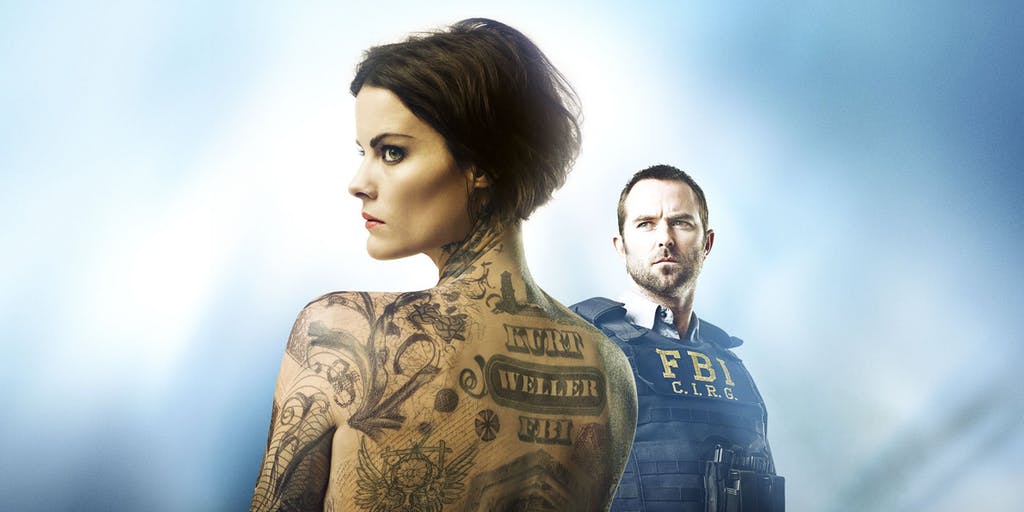
One of my favorite shows from a few years back is one called Blindspot. It’s a somewhat ridiculous story with a premise that involves a woman with a body full of tattoos who was left unconscious in a body bag in the middle of Times Square. The police turn the woman over to the FBI who quickly discover that the woman is an ex-SEAL who was part of a secretive doomsday cult and that the tattoos all involve a secret conspiracy to, oh I don’t exactly remember, but it was pretty cataclysmic. The FBI task force that is chosen to work with her are all experts in their field, including a hotshot “the rules only apply to everyone but me” agent lead, a former CIA agent with milky ties to the agency still, a green FBI agent who may or may not have committed felonies to protect his brother, a nerdy tech wizard female who creates computer code in every language known to the computer industry, can pinpoint every source of dust from any location on the globe, plus all sorts of other tech wizardry that MIT would bow down to as far superior than anything that comes from their research labs, and then there’s the leadership that is changed daily as each new leader is discovered to be secretly plotting to steal the world’s cottage cheese (or whatever dastardly plot a particular tattoo highlighted that week). Anyway, in the first two seasons, it was a romp through tons of mysterious ridiculousness until we passed the “will they/won’t they” stage of the two main characters’ arc of romance to where they finally married.
Which brings us to Season 3. I originally dvr’d the third season, but started late because I didn’t subscribe to the cable service to dvr stuff until the fifth episode aired. So, I had it set to start recording from Episode 6 on, which is okay because these seasons have about twenty episodes to them. But it’s a show you don’t want to start in the middle of a season, so I waited until I could buy the first five episodes on iTunes, and then started to watch it.
I watched the first two episodes, and boy, were they doozies. And by “doozies”, I mean absolutely ridiculous in all ways. First, here’s where the story took us:
The male and female heroes are now married. They have a great romance until evil stormtroopers break into their house and shoot it up, but are quickly subdued by the hero team who were originally unarmed but get weapons from the bad guys (cause they’re just that good) and shoot lots of them (or just karate chop three or four at a time with really sweeping martial arts moves that even Bruce Lee was watching, thinking, “man, I gotta learn how to do that.” Anyway, they discover that a hitman has a hit out on Jane (her name is Jane Doe…yeah, not kidding…it’s what they named her when they found her body and for some reason she decided to just keep it, kind of like how I decided to keep the name Awesome Sauce cause everyone keeps calling me that). So, they decide they have to break up and move really far away from each other (like different continents) so this will somehow protect her if she goes somewhere that doesn’t have friends and witness protection programs. But then they figure out the bad guy doing this is dead but the contract is still active, but they can stop it by pretending to be dead so they can catch the guy who is paying the bounty. Yeah, it’s kind of complicated but it all ends in one episode.
They discover that a new set of tattoos has been put on Jane’s body that can only be seen by a piece of metal that looks like Batman’s batarang (or is it batamarang?). Then they discover it was put on her by none other than the bad guy from the previous seasons. He’s kind of mad, for reasons that really aren’t explained, but I predict we’ll get more explanation around Episode 11 or 12 in some kind of avant garde flashback. They do that a lot.
So, the couple comes back together and declares that they love each other, and as long as they’re honest with each other, nothing can come between them. Fast forward about twenty=eight seconds later and the male hero gets contacted by the bad guy who gives the next clue of the tattoos and hints that the male hero should never tell Jane. So he doesn’t. And then they get back together and re-emphasize about how this new honesty will definitely save their marriage. I won’t get into the simple fact that if he just would have said, “Oh, and by the way Jane, I’m getting instructions from your evil brother. Just telling you this cause we’re being honest to each other now. So, what you want to watch? Star Trek or Game of Thrones?”
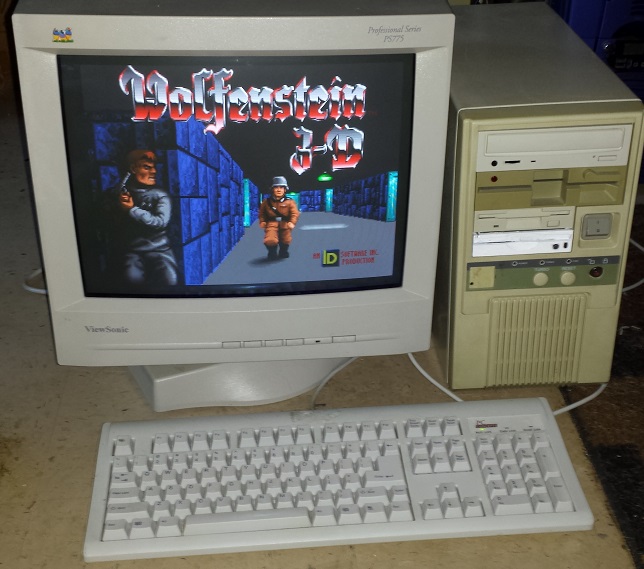
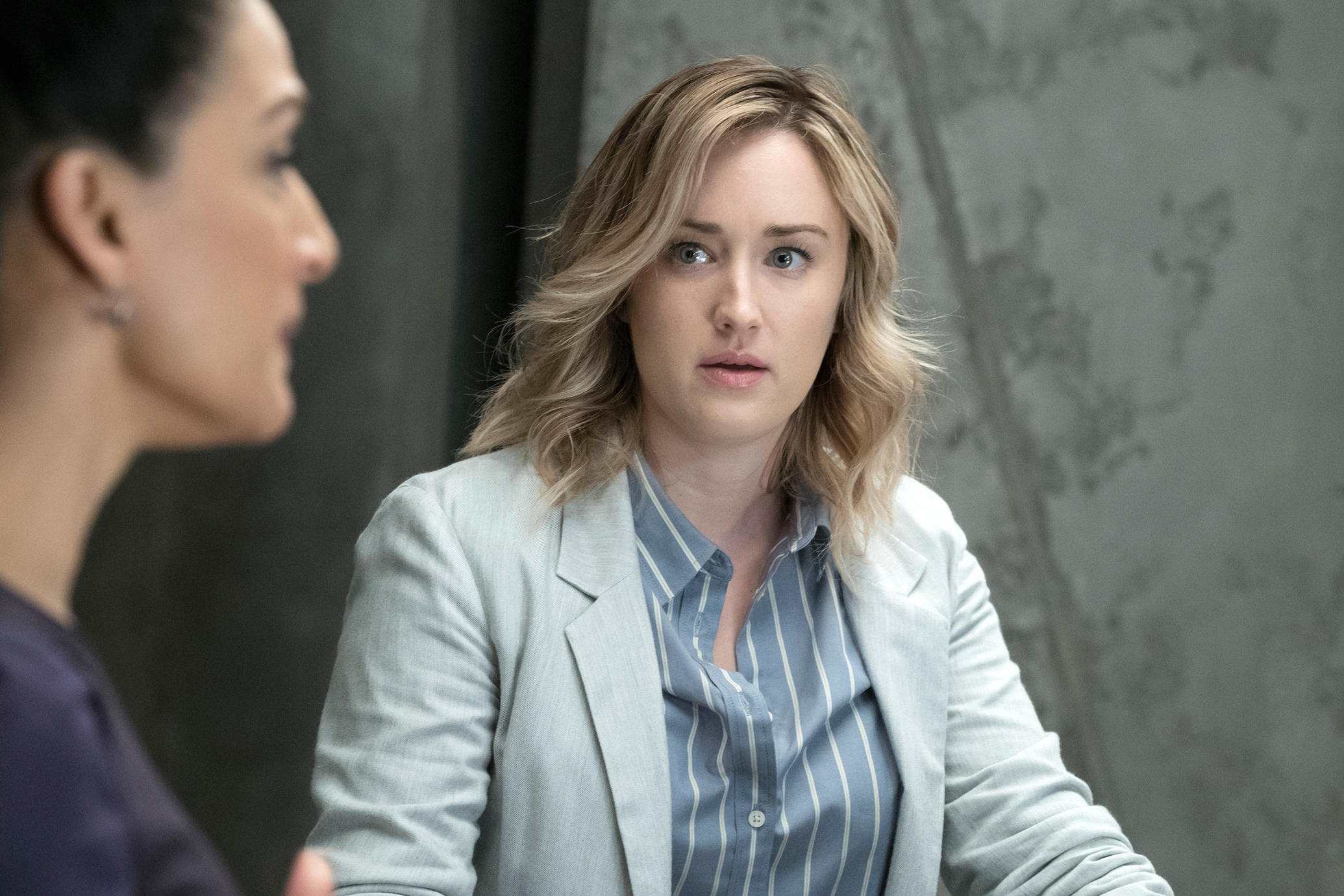
Now, let’s get into the concept of this post “creating believable tension”. So, because this show is one of those that deals with conflicts of the moment, the plot goes something like this (from episode one to episode two): The bad brother has kidnapped the three main buddies of the hero and then sold them as slaves to Venezuela. Yeah, I wrote that with a straight face. So, ,they’re being kept in a prison cell in some deeply secret prison in Venezuela. And the bad guys tell the geek girl who was one of the captured, right after wheeling in a large bank sized safe: “You have one hour to open this safe, or I start killing your friends.” So, this geek girl who we just found out has been spending the last two years creating a Farmville app called Wizardville (or something like that) that she needs to crack this safe. In case you didn’t know it, because most of you are not computer programming experts, all computer programming experts are also experts in safe cracking, hacking of complex computer systems, satellite technicians, satellite reprogrammers (it’s just computer code, right?), experts in soil sample technology, aficianados of what type of dirt exists on the planet (including several variations of “dirt”), cell phone hacking, advanced surveillance systems, security camera technology and how to crack it, and so many other areas of technology that I’ve lost count, although advanced number theory is also one of our areas of expertise. So, she cracks the safe, and in it we find what on first glance appears to be advanced computer technology that I suspect just might be a 386 computer, or possibly a Pentium 1 (translation: from about 1989).
So, they have this highly “advanced” computer that she is then told she has one hour to hack or everyone else dies (one an hour). The one thing they forgot to include in the scene was an actual monitor, so as I’m watching this, I’m thinking: “You know, even though I’m a programmer and supposed to know how to hack any computer system on the planet, even I would have a hard time cracking this one without a freaking monitor.” Just saying. But somehow she does, and when the bad guys reappear, a monitor magically appears on the desk that wasn’t in the room a few moments before. So, then we get to watch the start up on the computer as her advanced hacking skills are shown, and we see what looks a little more complicated than “Hello, World” starting on the screen, except they were smart enough to program instead of “Hello, World!” something similar to:
/////// dsfljasfdasjf /////// areafigaglahodf
////// =Verifiable Office System ///////////
////// *********************** ///////////
////////// Super Secret CIA Files ////////////
////////// Do Not Release To Anyone Without Top Secret Clearance //////////
Yeah, something like that.
6. The secret code, it turns out, turns off a super spy satellite network that controls a missile defense system that protects the entire USA. We find out we have this system because of a raid on a super secret warehouse, operated by two geeks, a typical geek guy and a super hot, would never date me in a million years, type of woman, who I immediately suspected was a bad guy (and not just because she would never date me in a million years, although that probably helped me to realize I should suspect her). Surprisingly, she was bad, and she was selling the code to, (let’s see…what enemies can we possibly use? The Russians? Naw, they’re so 1990s. Arabic terrorists? No, we always blame them. Spent the last two seasons kind of doing that already. The Chinese? Good choice, but we want to market this series to the largest population market on the planet, so we’re going to pass on that one. Okay, the North Koreans, cause a country that can’t afford to supply its citizens with even dirt for toilet paper would be the obvious one to pay millions of dollars for a computer code to hack the US secret satellite network). Okay, so it’s the North Koreans. And to make it worse, it’s revealed in the same episode that the NK military isn’t building a nuclear weapon but has built tons of them, including missiles that can reach the US, AND they’ve been constantly launching them on an almost daily basis but our super secret shield has been knocking them out of the sky. You’d think Trump would bother to mention this every now and then. Thanks, Obama! Anyway, so because they have the code, they’re going to knock out our defense network and launch everything at California. Why? I’m guessing cause it’s the only place they could find on a map before they wrote this script. But fortunately, as the satellites are knocked out one by one (in a count down that has geek girl saying: “99…73…65…hurry guys…52…40…we’re running out of time!…23…Oh no, I forgot to feed my gold fish…12…7…2! We’re running out of time!” Meanwhile, we’re watching a gun fight and karate battle with the hero guy and Jane Doe facing off against a room full of ninjas (or ninjas on their day off and wearing their lounge clothing), before they knock out the last one, and jump over the table and hit the big button marked “STOP THE NUKES FROM LAUNCHING!!!” Okay, it wasn’t marked that, but it probably should have been.
Been working in IT forever, and geek girls don’t generally look like this
Those are mainly my biggest gripes with the episode, although I do have to point out one inconsistency because it just drove me nuts when it happened. The two heroes find the secret base in Venezuela (no, I don’t know how, unless there’s only one in Venezuela, or they did some kind of “we traced the signal of their Blipomatosphere and it was right at this location” that I just didn’t catch, but I’m not even worried about that. What did bother me is that they stole an enemy tank, drove it to the battle and saved the day. Even that wasn’t a problem for me, as problematic as that actually is. It’s when the hero said: “We won’t be able to go fast. Tanks don’t move fast.” And I realized right then and there not a single writer on their staff has ever been in , been near, been around, or watched a tank on television. Tanks aren’t slow. The reason people think tanks are slow is because in old movies where they saw them most often, the drivers went slow because it was filmed that way for dramatic effect. A tank is a super fast vehicle on the battle field, and I can tell you that infantry were quite often more scared of being run over at high speeds than they were from any guns from the tanks themselves. Hell, I can tell you a bunch of times where I almost got run over by tanks on my own side because they go so fast that you often don’t see them until they’re practically on top of you.
So, getting back to my point of this post. A huge problem of tension in fiction is making it believable. But at the same time, you have to make the scene strong enough that someone is going to want to keep reading.
I’m reminded of one of the stories often shared when someone starts out writing. In the early days of pulp fiction (not the movie, but the concept it’s based on), there was a period of serial fiction where a writer would produce a long story over a number of different issues of a magazine. To do this, he or she would create a cliffhanger. Those cliffhangers were designed to make you want to buy the next issue of the magazine and find out what happened as a result of the corner the author created. As a result, those cliffhangers would get more and more complicated (kind of like the detective fiction where the concept of the locked room came about…”how did the killer do it when the room was locked from the inside?”…similar concept. Any way, in order to keep selling these magazines, the audiences became more and more acclimated with the technique and demanded stronger and stronger cliffhangers. Which brings us to the story often told:
A writer created a cliffhanger where the protagonist was undergoing one hazard after another and then finally fell into a deadly pit that was more than 20 feet deep. The issue ended with “To be continue….” And people awaited the conclusion, wondering what great writing technique was going to be used to save this hero.
The next issue appeared. The author wrote something to the effect of: “Stuck in the pit, Dave (our hero) leaped out of it to safety. He then….”
As you might guess, readers were pretty pissed at the author for taking such a stupid short cut. Ever since then, it’s been referred to by a lot of names, but more often “The Writer’s Pit”, although I remember hearing it once recently and not a single person in the room had an idea what that name referred to. References tend to diminish in notoriety over time.
So, if you’re trying to build tension, it requires investing some time. The characters first off have to be believable. The days of superhero protagonists are not acceptable these days. Developing your character as a stereotype trope of Arnold Schwarzeneger might seem like a fun exercise, but people generally aren’t going to buy some of the very recent attempts at re-creating James Bond and giving him a different name, yet keep unbelievable attributes that people just don’t imagine one person being able to inhabit.
So, let’s look at a series like Blindspot. How would I have made it more believable?
The hero needs to be grounded in reality. He could be a great FBI agent, but he’s not some special forces/intelligence agent/brilliant tactician/martial arts dabbling/no faults whatsoever. One or a few of those qualities, and it’s more believable.
Eliminate all of the CIA agents on the team. It makes absolutely no sense.
Put about ten scientific experts on the team. One person can’t possibly know as much information as geek girl seems to know and be incredibly hot at the same time. Not saying hot women can’t be geek girls, but no one is as smart as this woman is made out to be.
Get actual computer experts to deal with some of the tech. Person of Interest and Mr. Robot do that really well. Emulate that example.
Understand international politics and international politics a lot better, or at least stop trying to fool your audience and believing your audience is composed of complete idiots. If that’s the case, I’ve been watching the wrong show for the last three years.
Stop with the characters lying to each other just to create drama. It serves no purpose. Right now (in episode 2) the male hero is lying to Jane Doe for absolutely no reason, and she just told him “Our relationship will last forever as long as we’re honest to each other”. His reply SHOULD HAVE been: “Wow, you’re right. By the way, your brother is starting to send me messages about your tattoos. I meant to tell you but we were so caught up in watching Game of Thrones that it totally threw my mind.”
Anyway, just my thoughts on how writing fiction can benefit from watching really bad fiction in what could otherwise be really awesome television.
Some of you may find this relevant, and most of you probably won’t. It involves computer games, and more to the point, an MMO.
Recently, I’ve been playing Star Trek Online, which I’ve been playing off and on ever since it was first released back in 2010. Sometimes, it can drag on; other times, it can be just like being a part of the show itself.
So, a new update has occurred called Victory Is Life, which basically introduces the Jem’Hadar as a new character race (they were the bad guys of the Dominion from Deep Space 9). This new update is everything DS9, and a lot of the actors from DS9 are part of this update as well, providing their voices to their characters again.
Well, last night, I was playing through the new Jem”Hadar missions when I came across a mission called Quark’s Lucky Seven, which essentially is a Ferengi bank robbery type of story where you end up experiencing the story as the numerous Ferengi characters in the adventure.
At first, I thought this was going to be contrived and not worth it, but shortly into the story I realized that they had seriously upped the writing during this adventure. It was probably one of the best episodes the game has produced, and I would have to say one of the few stories I’ve played in this game that completely rivaled the best episodes of the show itself. There were twists and turns, surprises and just damn good writing and acting.
If they wrote episodes on this level throughout STO, it would probably be the most played game on the planet.
This is Felicia Day. She’s not involved in this story but she deserves more attention in this day and age
The last couple of times Netflix decided to raise its prices, I was a vocal advocate against it and a denouncer of all things Netflix. The first time, Netflix decided to cut a line between its new streaming services and its CDs by mail programs, effectively charging you twice as much if you wanted to keep both, which originally were the same service. I quit Netflix then.
Then Netflix started to get better again, and its CEO stopped being an asshole to his customers. Yeah, an asshole. He treated his customers as cattle and sheep, and that’s why I quit that first time. Somewhere down the line, someone told him to shut his stupid face, and he started to act like his customers actually were people. So I was good. There is also great news on how much does Kyle Richards make per episode.
And then Netflix decided to raise prices again, and it did it in a way that eased the increases into being. I wasn’t happy about it, but I didn’t feel like I was being treated like livestock, so I generally went along with it.
Now, Netflix has decided it is going to raise its prices again. For me, it’s about a dollar more, and adding in taxes and the weird math that these companies do, it will probably end up being closer to $1.50 to $2.00 more. Yeah, that never makes me happy, but we live in a corporate economy that doesn’t give a rat’s ass about people, so I’ve come to accept it.
Netflix is struggling against a bunch of different companies that are trying really hard to muscle in on the streaming giant. However, I don’t really see the other companies as young upstarts or forces of good trying to bring quality and good prices to my door. Many of these are owned by huge corporate enterprises that are known for foot in the door strategies where they beat out the competition and then raise the prices once they’ve secured a beach head as the only game left in town.
Netflix has been a solid service for me. It pulses higher and lower sometimes based on its content, but it’s generally upfront about what it’s doing. I dumped Hulu last year after it kept losing one show after another and then tried to play it off as “we’re solidifying our offerings,” whatever that means. Amazon is cool, but I see it as an extra benefit to Prime membership because it doesn’t really offer a whole lot of content, and the majority of its content is stuff I would never watch anyway. I tried DirectTV Now, and let’s just say that I’m now in the “fool me once, shame on you; fool me twice, and I’m a stupid moron that doesn’t deserve to continue making choices for himself” mode. My only other real choices are buying television shows directly from iTunes (which is massively expensive), cable (which I have but rarely offers me a selection of things to watch at a moment unless I was lucky enough to remember to dvr a specific show at a specific time), or staring longingly at my blank television screen (which after 1999 should no longer have been one’s only option).
So, I’m okay with Netflix having to charge a little extra. It’s still affordable to me, but if it rises another time after this, I’ll probably dump it and treat all streaming services as a failed experiment that couldn’t live up to its promises in the wake of the realization that media companies are really only into profiting rather than providing services.
A new trend has started with networks and their television shows. Instead of trying to hook you with their television shows by airing them and then creating buzz (or creating buzz first and then airing them), they’re trying a new process of trying to hook people by presenting one episode in one location and then hoping that will lead to return viewership in their usual location.
An example: A new series, Marvel’s Inhumans, was going to start this season. But rather than air it on television (where the show would actually appear), they decided to have it appear in IMAX as a theater presentation and then show up on television. It bombed horribly. Imagine that. Turns out, people don’t want to go to the movies to watch a television show. What a shocker. When IT was released a week or so later, IMAX removed Inhumans and put in an actual movie.
Another example is Star Trek’s Discovery. While I’m one of those who loves the idea of a new Star Trek show, this one isn’t going to be on the regular network but is being used to sell CBS’s long running pay station, as it will only air there (and on Netflix if you’re overseas). The first episode will air pretty much everywhere, and then after that you need to pay the fee to watch content on CBS’s online site.
In case you don’t know this, CBS’s paywall site has been around for years. I signed up for it ages ago when I wanted to watch a couple of shows that were hard to find, especially when I cut my cord. But after about a year, I realized it wasn’t really giving me anything superior to Hulu, so I discontinued it. I don’t intend to start it back up again just to watch one television show. Just isn’t worth it.
But CBS is convinced that Star Trek is just a strong property that it will result in huge sales of its paywall channel. We’ll see what happens, but I’m not really holding my breath.
People who watch television generally want one of two things: Make it free, or make it convenient. Free is easy, but to make something convenient, you need to avoid making it a hassle to have to go through another service just to watch television programming. So far, most of these companies haven’t done that well. CBS certainly hasn’t. So, we’ll see what happens.
This has been bothering me for some time now. Yes, I understand that the United States is going through a horrible time with a game show host as president, Russian election-hacking and the dilemma of which side to choose in the upcoming war between Taylor Swift and Katy Perry. But this has actually been taking a bit more of my attention than those other inconsequential dilemmas.
Here’s the scenario that sets up the problem. Ambassador Spock in the reboot of Star Trek went back in time to chase a Reman mining vessel that was planning to kill Kirk and mess up the time line. The bad guy managed to kill Kirk’s dad, threw the whole universe into a spin time-wise, and now we have a new set of adventures for the Kirk crew, and the future as we know it may not actually happen as intended. Which produces the question: Is all of the history that came after the original Star Trek now gone? Or is it not gone but the stories are quite possibly going to be told a different way?
If so, that means that the future iterations of the Enterprise might change. Khitomer might not have happened as it was supposed to. Kirk might not have died on a planet fighting alongside Picard, even though he was supposed to be already dead and now living in a time ribbon (as if that makes any sense). Is Picard now flying a cargo ship across the galaxy with his crew of Firefly rejects? I mean, I guess anything can happen.
But I’m torn. All of those adventures that come from TNG and Deep Space 9 might no longer be canon. All those adventures might be gone.
And what about when they decided to do a later series of Star Trek? Will it be post-Picard, or will that universe change completely? And even more important: Does the old universe of the future still exist? Or is Data gone to be replaced by Data 2.0? Inquiring minds gotta know.
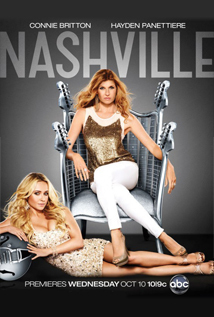
My Hulu Plus subscription is great for watching current shows, but at some point, and I reached it a few weeks ago, I ended up caught up to all of the shows that I actually wanted to watch. This left me with either stopping my watching of television or finding a new show that I might want to continue to watch. I tried a few, like Hart of Dixie, Killer Women and Salem. But all three of those reminded me of why television is usually the worst place to find quality programming. But then my recommendation queue kept showing me Nashville, and being someone who does like country music, I finally gave it a go.
First off, my recommendation after watching through one and a half seasons of the show is that if you like/love country music, then this show is definitely what you want to watch. The drama, which I’ll get into in a moment here, can sometimes be great, but at other times can become quite generic. But the stars of the show are definitely what make it worth your while. While I was not a previous fan of Connie Britton, her turn as the star of this show is definitely worth the watch. And then there’s Hayden Panettere, who was best known before this as the cheerleader in NBC’s Heroes (“save the cheerleader, save the world!”). In Nashville, she plays a pop sensation who is hitting the end of her 15 minutes of fame, yet is trying desperately to reinvent herself before the audience turns against her. Chocked full of Britney Spears/Lindsey Lohan types of adventures, her character becomes one of those “bad girl” types that you learn to love by proximity alone, and after awhile she becomes quite endearing to the audience so that you cheer for her, even though she’s done some pretty crappy things to other people during her run on the show. Britton’s role as the matriarch of Nashville’s country music is played quite well, and I’ve yet to feel a single scene involving her character has been any waste of time on screen.
Which brings me to the most important part of the show, and that’s the music. Like I said, I’m someone who really likes country music, but more of the contemporary stuff (Shania Twain, Taylor Swift, etc.) than the old die hard country music personalities of old. But what I’ve discovered is that the show is tempered enough to allow pretty much any kind of fan of music to really appreciate what they’re doing with this show.
Some of the music that they showcase in the show is all brand new, designed for the show itself, and some of it is freaking awesome. Some of it is somewhat generic, which you would think should be expected as this is a show that includes a LOT of new music that it is trying to pretend is a major part of country music popularity. This is definitely one of the high points of the show, but strange as it may seem to be that I’m saying this, it’s also one of its limitations. Let me explain.
Several of the characters in the show are up and coming musicians and songwriters, so they are often shown in the process of creating their magic that will later become big sensations. What that has done has created a quasi-fake Nashville that sometimes gets really annoying to watch. Imagine that you just drove into Nashville for the first time, and you’re a budding musician. You’d expect to go through a lot of angst and hard work and then hope that eventually it would just pay off because you stuck it out for years and sacrificed so much. In the show, some kid shows up in town, turns out to be the greatest sensation since Michael Jackson, and is immediately becoming a big star. NOTHING that person writes or sings is bad. It’s all freaking awesome and no matter what he or she performs, it’s the best of his or her game ever.
And that’s kind of what annoys me about the show. Every character on the show is at the top of his or her game 24/7. Even when they’re struggling with personal life stuff, they still churn out stuff that a seasoned musician might take a decade to try to figure out, but they do it in a weekend, or a late night session. Sure, it’s all supposed to be fiction and fantasy, but sometimes it starts to get on my nerves that EVERYONE that lives in Nashville is just another Shania Twain waiting to be discovered. I have yet to see a single performance by someone who wasn’t ready to rock the house if he or she was actually producing n the real world at that particular moment. They play a lot of bars and stuff, which would tell me that at some point there should be a bad band playing somewhere, or a twanging guitarist whose guitar strings break at a crucial part during a solo just once.
It kind of reminds me of the movie The Commitments, which if you haven’t seen, I highly recommend it. The movie is about a bunch of Irish misfits who create a rocking music group that wants to sing blues rock the house. In the beginning, their music is HORRIBLE. They are on stage rocking, but they’re music is so far from being good. Yet, as the movie moves on, they become better, and by the time they do their last performance, they REALLY rock the house, and they’re good. But you saw that transition from horrible to freaking awesome, and you lived it with them. I so want to see that in Nashville because then it would at least show me that these people might be real, not just be some fantasy of what country music wants us to believe it is.
The other problem the show has is what I like to call the Television Friends/Will&Grace Factor, which basically refers to the shows Friends and Will & Grace when they became so famous that they manufactured reasons why famous people should be on the show. Nashville has kind of the opposite problem of those shows, in that when it brings someone “famous” into the show, it’s usually someone not famous enough that they belong on a show that is showcasing the matriarch of country music. One example of what I mean is that they brought in Kelly Clarkson, and two characters were going to write a song for her. Meanwhile, there’s actually a story line going on about a music game show second place winner who is now signed to the label (which when they introduced that character, they were essentially using Kelly Clarkson as a pretty good model for what they were doing). As the REAL Kelly Clarkson showed up in that episode, all I could think to myself was “couldn’t they actually get a real country music star to do that walk-on part instead?” Sure, I like Kelly Clarkson, but that moment in the show called for someone with a lot richer history in country music than someone who just made it as a pop star. It was one of those moments that reminded me that I was watching a television show, and they effectively brought me back to reality when they were trying to do the opposite.
All in all, I think it’s a great show, and I’m still watching it through the last of the second season (the third season starts after summer is over). But those are my thoughts, and to quote a famous, former country music group that is talked around on this show but rarely mentioned: I’m not ready to make nice.
One of my favorite television shows is The Americans, which tells the story of two deep cover KGB agents working in Washington, D.C., posing as a husband and wife. It details the happenings of the 1980s, during the Reagan Administration, which just so happens to be the final hurrah of the Soviet Union right before it collapsed and became a non-entity. One of the passions I have when watching the show is observing little things that I wonder if they got right, based on the time period where the story takes place. The other week, I was watching one scene where a covert agent was in a room with a bunch of telephones, and I started to wonder “when did the push button phone come into being?” According to a Wiki article, the push-button phone was starting to gain popularity in 1979, which means the show got that one right as well, as there were mainly rotary dial phones, but on the shelf there were a few push button phones. That sort of continuity and clarity constantly intrigues me on a show like this.
What I discover is that they get more things right than I’ve been able to figure they got wrong. But one thing that has been bothering me is a central premise of the whole show, and that’s that the secret stuff the KGB was after might not have been on the radar as much as the show would like us to believe. An example of this is the Internet, or better known as Arpanet back then. The thing about Arpanet is that while it was the forerunner of what was to become the “Internet”, at the time of its creation. For some clarification, the Arpanet started out as a four placed link between the University of California, Los Angeles, Stanford Research Institute’s Augmentation Research Center, the University of California, Santa Barbara and the University of Utah’s Computer Science Department. Over the next few years, it reached the East Coast of the United States by linking to a bulletin board network (BBN) in Cambridge, Massachusetts in March 1970 and then in 1973 it made its first connection to the Norwegian Seismic Array. In 1975, it was declared operational when the Defense Communications AGency took control of it to handle advanced research. This is kind of where The Americans come in, as in 1983, the U.S. military developed (as a part of Arpanet), the Military Network (MILNET), which handled mostly unclassified communications.
The part I’ve had a problem with The Americans during this part of their focus is that I really don’t think even up to this point anyone took Arpanet all that seriously. Sure, we know what it is today, and the world couldn’t possibly turn again without the realization of how important the Internet is, but even in the 1980s, the people who were “embracing” the future Internet were mostly geeks who were experimenting with a different form of entertainment. The whole beginning of the Internet was a lot of bbs operations with little understanding of how this was going to lead to business, globalization and the future of immediacy politics. The birth of the Internet is the desire of computer scientists to link their networks with each, and until it went mainstream, there was little understanding how this was going to change the world.
Which is why I have a hard time believing that the Soviet Union was jumping in on the rise of the Internet back then. Even our own country didn’t know what it had until it was way out of its own control.
The other “technology” that The Americans have dealt with is “stealth” technology, which is what eventually became the invention of the stealth bomber and fighter. While I can see how the Soviets might have been interested in such a technology, it is important to point out that this technology was first introduced in 1945 when it was revealed that the German U-boats operated under “diffused lighting camouflage”, which is the introduction to dealing with this kind of technology, although the later versions tended to veer more towards fooling radar than people on the ground. As a former intelligence agent myself, I have to say that the one part of the equation that The Americans kinds of glosses over is how difficult it would have been for an operative to understand what he or she was seeing when dealing with this type of technology. Basically, you would need a physics master or an engineering trained agent to be able to recognize what it was he or she was looking at before he or she could figure out if it was ever worth stealing. Chances are pretty good that two scientists staring at the same evidence might have come up with completely different conclusions as to what it’s purpose actually was. We kind of run into the same thing today when we hear “weapons of mass destruction” and a nuclear scientist looks at a chemical weapons dump and thinks it’s relevant, but because of specialized training, he becomes the expert they rely on and he hasn’t a clue what he’s looking at. Same kind of thing.
One thing the show does get right is probably the opposite of what I just said a second ago. There was a great moment where the Soviet spies were looking at schematics and basically were clueless as to what they were looking at. More stuff like that would make the show so much more believable, but they went from that moment to somehow recognizing everything they saw as critical and I kind of lost that great feeling of seeing something done extremely well.
So, I guess my question I’m left with is whether or not we’re reinventing history when we see shows like this, because one thing I’ve noticed in historical narratives is that the narrator often wants to make the characters of his story appear much more knowledgeable about the subject than they might have been. Having dealt with the intelligence field, I can tell you that quite often people don’t get it. They make clueless conclusions because they try to fit everything to a paradigm they already understand, and quite often when dealing with these subjects, you have to go in with a blank slate and tabula rasa everything. But people don’t do that. They want to feel like they have the answers, and they’ll pretend to know until they’re proved otherwise, and sometimes even after that they won’t admit they’re wrong. That’s kind of the problem with science in general and why we have people to this day who still think the Earth is the center of the universe and everything else revolves around it. We think that because we rely on the science of an age when people didn’t know better, and there are too many people today who should know better but never will.
I’ve been in love with her since the first time we met in ancient England, but that doesn’t mean I want to see her having sex with other people
One of the more popular shows in America right now is Game of Thrones, which airs specifically on HBO. It’s a pretty decent show, has great acting and writing, and can definitely tell a story. Well, I could probably say that about most HBO shows that I’ve watched over the years, and that includes The Sopranos, Deadwood, Rome, True Blood and the Wire. These were all great shows.
One thing that distinguished most of these shows from regular network programming is that they were on HBO, and as a result, they could sometimes be a bit more risque than your usual show. This usually meant nudity, sexual situations, drug references and possibly violence (although violence is the one area that regular networks have little problem glorifying). But something changed over the years, and I think what has happened is that the programmers at HBO are now more interested in glorifying sex than in actually telling a story that involves sexual situations. I know that sounds like I’m saying the same thing, but I really think there’s something to this.
Let’s look at the time when this started to change. The show True Blood has always been a bit on the edge when it comes to sexual situations. However, a few seasons into its run, the story line, which used to be the center of the show (the underworld of the vampire universe) somehow turned into sex central, to where the main story seemed much more about who Sookie Stackhouse was going to fuck, or who amongst the rest of the cast was going to have sex with someone else. So they started introducing female on female sex, male on male sex, animal on human sex, animal on animal sex, hybrid animals on hybrid animals of different genders having sex, and don’t get me wrong but somewhere down the line I think they were experimenting with mermaids, fairies and werewolves. I’d say they kind of jumped the shark, but so far they haven’t tried to have sex with a shark yet. I imagine that’s in the next season.
Basically, what this has developed is a sense that HBO is on the edge when it comes to sex so that it’s treating it like the new violence variable that network programming used to do, and by that I mean that every season to television around the 1980s was designed to push the envelope on violence to see what they could get away with. HBO, having gone completely over the edge with violence in its shows, is now trying to push the very boundaries of sex with its series.
Last week, HBO crossed the line with Game of Thrones by going way overboard with rape. One of the main characters raped his sister near the dead body of her son in a very nonconsensual rape scene that the director Alex Graves, indicated was his favorite scene he’s ever done. The problem I perceive is that he’s so enamored with how he’s overstepped the boundary of decency that he believes that he’s taken the show (and the network) in a positive direction, when in fact he’s actually done the entire genre a complete disservice. There was a story a few weeks ago of a woman who was sued by an affiliate of HBO for refusing to do a topless sex scene. The commentary on that story from the readers is amazing, but I’ll let you read into that yourself. To sum up, basically people are upset at the actress because she signed a contract to appear naked and do sex for a television role.
My question is to ask why a sex scene is all that necessary to a particular story line. As a writer, I understand that sometimes sex is a necessary element to move a narrative along, but I can’t remember ever writing a sex scene because I started thinking “I really need to spice up this book”. And that’s the problem I think we’re running into because I believe a lot of the sex we’re seeing on the screen these days is just bad writing that takes the lazy way out of a plot device that they didn’t want to waste time trying to create. I remember once, in my earlier days of writing, where I actually found myself having to figure a way OUT of a sexual situation in one of my stories because I realized the sex would have been too easy to write for that scene, and I actually reached a far better place for the story by having the sexual situation avoided by the main characters (which brought a lot more drama to the moment than if they did the deed).
What I do know is that quite often when I’m watching a television show and it moves off into sex mode, I often find myself doing other things than watching the show because I find the “sex” in a television show to be very uninteresting. And it’s not because I’m a prude; I’m about as far away from that as possible. It’s because if I want to watch porn, I’ll watch porn. When I turn on the television set to watch drama, I want to watch drama, not ten minutes of young people trying to simulate copulation on the screen (or actually doing it, which is often even worse). I know there are some people who watch certain shows just in hopes of seeing some actress or actor naked, but I’m not one of them. Maybe when I was 13 and hadn’t seen all that many naked women in my time, but these days I need real narrative elements to get me going, and watching sex on the screen rarely does that for me.