The other day, I was playing a game I tend to come back to often. It’s called Guild Wars 2, which is interesting because I never played Guild Wars 1. And while that’s interesting to me, I’m sure a reader who doesn’t play Guild Wars 2 really cares. But why I find it interesting is because it represents everything that is wrong with computer games today. Let me explain.
Guild Wars 2 has about 10,000 expansions, and I’ve never played a single one.
You see, I love the gameplay of Guild Wars 2. I’m pretty good at it. I’m not good at chess or even most things in life, but I’m damn good at Guild Wars 2.
I just suck at every expansion that has been released by Arena Net, the company that puts out Guild Wars 2.
I’ll be honest. I haven’t lasted ten seconds of any of the gameplay that has been released as an expansion to Guild Wars 2.
The first expansion: Something Sounding Cool. Well, I loaded it up, all excited about new gameplay in Guild Wars 2, and then they offered their new ability (a glider sort of thing that was kind of fun in that almost flying kind of way. And then they wanted you to integrate that gliding thing into actual gameplay. I sucked at it. Eventually, I stopped trying and then just went back to the original game without first expansion.
Another expansion later, my main character fought a bunch of bad guys and then (about ten seconds in) I found myself face to face with some demon who might have been the Devil. And then he kicked my ass all over the place. So I tried facing him again, and then I lying face down on the ground, dead.
So I went back to the original game.
This is the problem I have with most expansions that aren’t The Sims. You see, The Sims have made 4,000 expansions (each costing $19.99) Each game adds something simple, like if you had no hair and toupee companies charged you $20 for another slice of hair. All these other expansions with other games all want to add something fun, but in order to do that, they make the other parts of the expansions so much harder to play. It’s like saying, “we’re giving you a pet bunny that you get to pet when it squirms in your hands,” and while you’re petting the bunny, the God of Hell is going to chase after you and make you realize how much of a wimp you really are. Got that, wimpy boy?
I’m starting to get old. Don’t get me wrong; I don’t mind getting old. What I do mind is the inevitable. And, honestly, I never thought I’d be ready for it.
Bill was also a great friend of mine. But he and I had kind of simmered on our friendship for the only reason that I now lived in Texas, and he lived in California. However, whenever I got the opportunity to travel back to California, he and I returned to our friendship almost as if we had never parted. A short while ago, I received a message that he had passed away, too.
One of my recent plans had been to make it back to California so he and I could hang out again. Now, I don’t have a single reason why I would make the trip. Bill’s no longer there.
So, let me tell you about Bill. He used to work for a bunch of computer gaming companies. When I was working for Maxis (and then EA), he would be working for companies like LucasArts and Microprose. He was an actual pilot, so when those companies were designing flight sims (like Xwing, Tie Fighter and F-15 Eagle) he was always there testing out those types of games.
One of my favorite stories was when he was testing X-Wing, and the producer had told him that it was impossible to destroy the Imperial Star Destroyer that was producing all the enemies in the game, he spent days flying missions against it until he turned off the damage on his own vessel and finally destroyed the Imperial Star Destroyer. After a couple of days, the developers indicated that it was impossible to destroy the Imperial Star Destroyer.
Having felt like he had laid down the law, the developer thought nothing of it as Bill spent days flying endless sorties against the Star Destroyer, and then he destroyed it again. But this time on the hardest level.
The developers, after discussing it amongst themselves, decided to add a readme file on the main disk indicating that “if you destroy the Star Destroyer, you might not be able to finish the game.”
One of my other favorite stories of his exploits was the origin of his ecology degree from UC Berkeley where he had gone to college after his time in the Army as an Army pilot. He was on the original GI Bill, and the way it used to be structured was you could continue your education until you graduated, and then it was over. So, Bill being like Bill was, continued until he was about finished with one degree and then he would change his degree to something else. He did this for a very long time until the Department of the Army sat down with Berkeley, and an offer was made that he could choose several degrees (of his choosing), and they would confer it upon him. So, the ecology degree ended up being one of the ones he chose, just cause it sounded kind of cool.
My other favorite story was one that everyone wished they had done themselves, and it involved the pettiness of a ticket he received from the city that was for several hundred dollars. And add to it that they had sent him a threatening letter if he didn’t pay it immediately.
So Bill took the train to downtown and walked in to pay his bill. And he brought a handful of dollar bills to pay it.
So, the clerk took the money, counted it and determined there were several dollars missing. Bill swore there was an exact amount, so the clerk spent quite a while counting it again. This time, she came up with a different amount, but not the amount that was supposed to be there.
So, this went on for several more rounds until a supervisor came over, grabbed the money and counted it himself. He came up with a number far below the amount required. So he told Bill he’d have to get the proper amount and return.
Bill swore the amount was correct. He’d counted it a bunch of times before coming in.
The boss started counting again, got about a third of the way through and then just shoved the money into a drawer, saying: “Fine. He paid the right amount. Give him a receipt.”
So Bill walked out of their with a happy grin.
Now, these are all stories told to me by Bill over the years, and the one reason I believe him on each story is because he told me these stories over and over, thinking he was telling me them for the first time. So, if they didn’t really happen, at least he believed in them. And that was all I needed.
Bill was one of those people who had brilliant ideas that were completely out of left field. I remember when I had a theory about how gravity was a physical property, not just an action on something else. I thought it was completely original, but the second I told it to Bill, he started analyzing how my theory might actually exist and exactly how we could test it. Unfortunately, neither of us had an actual spacecraft needed to test it, but we discussed it late into the night, throwing theories back and forth.
The point being: A guy with his degree from Berkeley in various disciplines was capable of going toe to toe with a guy with a physics degree from West Point. And his analysis was good.
We’re a couple of months away from the actual release of Starfield, and as much as I long to play it, I really wish it would have come out earlier, because this is the type of game Bill would have loved. And he would have found a way to break it, too, cause that’s what he did.
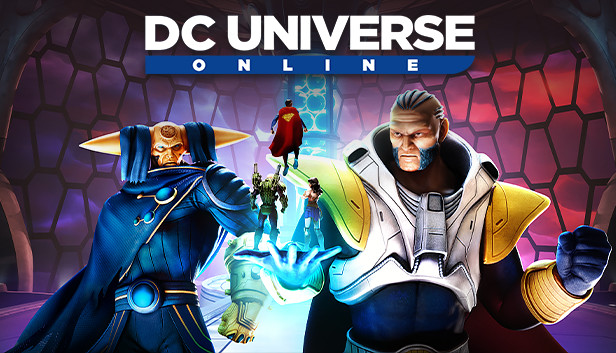
So, recently I went through a couple of games (callout to Mass Effect: Legendary Edition and Final Fantasy XIV: A Realm Reborn), and after growing bored with those games (or finishing them outright), I found myself looking for something new to play and that’s how I found about Coinlooting.com. As I went through my Steam games, I remembered DC Universe Online was one of those that has been in my folder forever, and I started thinking about looking at it again.
You see, years ago, I fired up that game and played to about level 13 or 14, but kind of gave up there because it was one of those games that had a lot to do up until about that level, and then it basically threw you into the larger world, and all I remembered was being slaughtered practically everywhere I went. There never seemed to be a sense of “go over here and there are mobs and missions of your level” aspect to the game, and everywhere I went was just instant death. So I quit.
This time, I looked at the game and decided I would give it yet another try, and if I ran into the same problem again, at least I would have a few days of putting around before giving up once more.
Now, I’ve been playing the game about a month, and let’s just say that I’m really enjoying it. I’ve maxed out (in level to 30) one character and am about to complete two others in the very near future. But what I’ve discovered is that even though level 30 is the highest level, the end game becomes much about leveling gear than just the character’s level. In order to run higher content, you need higher level gear averages, and then you can compete for even higher gear to continue that type of progression.
But there are a lot of things you can do as you get up there in level and gear. And there’s much more than just simple gear acquisition. There is also base building (their version of personal housing), various types of implants and even ally progression (you get an ally that can jump into combat with you for tiny fractions of time that you can level up to get stronger and more useful).
But what really make the game shine is its coordination with the DC Universe itself. Throughout the game, you interact with the heroes and villains of DC so that you start to feel somewhat like a part of that universe rather than someone living in an amusement park that runs into a glorified version of Mickey Mouse or whomever. Every character chooses from a series of heroes or villains that match the power class you chose when starting your character, so quite often you’re communicating with Superman, Batman, Wonder Woman, Joker, Circe or Lex Luthor. And then you end up interacting with a collection of the rest of the DC Universe as you progress through stories and missions.
Just recently, I discovered the Broker (which is the game’s version of an auction house), and I’m quickly learning the aspects of that part of the universe, having gone from having about $10,000 or so in game money to building a Bruce Wayne-ish level of wealth at about $170 million. Strangely enough, the Broker feels like a game all on its own, and it can be quite addicting.
The one tiny criticism I have with the game so far is that in order to really take advantage of much of what the game has to offer requires you to subscribe and pay their monthly (or in larger increments for more time) fee. I subbed for a year so I don’t have to worry about that, but I can easily see how the game might get really frustrating for anyone who plays it with the hopes of maintaining a free account. But that’s really a squabble for another time because I’m subbed, so I’m having a great time, and honestly, the game developers have to make some money or the game’s just not going to be maintained going forward. So there is that.
But one thing I really enjoy about the game is being a superhero (or supervillain). It was the one aspect of City of Heroes that I truly miss, and one of the problems of superhero games is that there aren’t a whole lot of them left out there, and of the ones that are left, they’re generally not that good. I mean, there’s a Marvel one out there, but I’ve played variations of that, and it is very transaction needy, and it doesn’t really feel like it has much of a story continuity that would keep one returning. Unfortunately, City of Heroes was canceled back in its hey day by a company that just didn’t have a lot of faith in its franchise (although there may have been some intellectual property issues as many players adopted the names or characteristics of well known franchise heroes, and I suspect there were lawsuits in the works because of that). There has been one very recent attempt to recapture the ideals of City of Heroes in a game called Ship of Heroes, but I played during an early beta (or later alpha), and it felt very rudimentary and in need of a lot of growth before it would be a fraction of what was once great about City of Heroes.
For now, DC Universe seems to be able to fill the superhero need, and the developers appear to be interested in maintaining content going forward, so as long as they continue with that trajectory, I suspect the game might be well worth continuing to play.
So, up until recently, I was heavily involved in playing Shroud of the Avatar. It’s an okay rpg-like game, but there was a substantial learning curve involved and a heavy financial burden that was necessary in order to even become a somewhat productive member of its society. Sure, you could play for cheap, but like most things, cheap meant living cheap, and it was never really that much fun. But right before it was released, I invested heavily in the game, paying an absurd amount of money for a house and stuff (mainly a tiered system for joining), and even after that, I never really felt like I was going to become one of the better classed citizens around town.
You see, a lot of that was because in order to be one of those better-off citizens, you pretty much had to invest in the game back when it was in its kickstarter faze of existence. But I didn’t know about it until much later, so my chances of ever investing heavily in the game (and getting something out of it) never could happen. It’s like investing in Facebook AFTER its IPO. Sure, you might make a few dollars, but you were never going to make the CEO-like profits that you would have gotten by investing before the IPO. You were always going to be a second-class citizen.
So, while I haven’t completely left that game, I realize there’s not a lot for me there, so I’ve invested in going back to a previous game, one that I invested in since the beginning: Star Trek Online.
Now, Star Trek Online is one of those weird entities out in the MMO world, mainly because it probably should have gone out of business a long time ago, but lived long enough to be able to sustain itself and then reinvent itself as new Star Trek entities came on the scene to make it viable again.
And eight or so years ago, I paid about $300 for a lifetime membership, which means that I’m still racking up free money and benefits from the game that have made that initial investment completely worth it. But that’s not to say that I haven’t made it worth STO’s time either. I’ve put a lot of money back into that game, buying ships, in game zen currency (to buy other stuff) and even entire expansion sets when they were appropriate. It’s one of those games I’ve always felt was worth the price, even though I might have kicked myself almost every time I shelled out another hundred or so dollars.
But if you love Star Trek, and oh yes I do, then it’s really the perfect game for you. A lot of the game is grind, where you’re doing things that are just completely time consuming, like training skills so that you might one day actually use them, or fighting bad guys on some washed out planet so that you can build up enough of that faction’s marks so that you might one day be able to buy some ship engine you’ve always wanted that can only be bought by that faction’s store. Stuff like that.
But it’s got all of the pew pew you could ever ask for. And I figure that for the next three or four months (or until the next WOW comes along), I’ll be playing it on an almost daily basis.
And shelling out stupid money from time to time.
Cause that’s what they do best. Take your money.
And that’s what I do best. Give away my money. Not sure I’m all that satisfied with that realization. But I’ll be fighting some Romulans, so I’ll have to think about that later.
For those who don’t actually already know this, my Ph.D work is in political science, and since then I’ve taught political science for years before adding another graduate degree and focusing on communication. However, one thing that always seemed to grate at me was that no matter how hard I tried to be non-political, it was practically impossible. Not for me. But for anyone who happened to be in the audience. Let me explain.
To explain, it’s important to probably point out my political affiliation, because that helps to explain why it’s even stranger. Back when I was first going through undergraduate work at West Point, I was a staunch conservative. There was no problem that I felt couldn’t be solved with our military, states’ rights and did I mention our military? When I got to grad school and started learning massive amounts of information about politics, I started to realize that I hated politics. A lot.
So, I sort of became an anarchist. And that has all sorts of problems if you’re capable of actually understanding what an anarchist is. You see, people think an anarchist is some crazy liberal that throws Molotov cocktails at cops. Well, that was one type of anarchist, specifically the Russians at the turn of last century and maybe the French, well, anytime in history. As an anarchist of my type, what it meant was that I hated the fact that we need a government to do anything because what almost always happens is we become part of corruption and oligarchy, to the point where government is almost always used as a tool to oppress other people. There are good people in government, but over time, those people get drowned out by people who see government as that tool to push through their personal agendas, and there’s no end to the types of agendas they might want to push (social programs, religion, anti-Internet policies, anti-gaming policies, anti-Shania Twain fundamentalism, etc.). What it doesn’t mean is that I want to throw Molotov cocktails at anyone. That requires upper arm strength and exercise, both things I do like to protest against.
Anyway, getting back to my original point, when I was teaching political science, one thing that inevitably happened in class is that some young student would want to know what my political affiliation was. And it was rarely out of actual interest. It was almost always to figure out whether or not to listen to anything I had to say as useful. If I picked an affiliation that was different than his or hers, they discounted everything I had to say. If it was the same, they often felt they knew as much as me and then didn’t have to listen any further. If I chose my usual tact and said that I don’t have an affiliation, or that I don’t discuss it, they automatically decided that it had to be the opposite of the one they had, or they assumed it had to be liberal (no, not sure why that assumption was always made).
That brings me to an interesting phenomenon I’ve come across recently. Over the Christmas break, I found myself overly interested in following a number of channels on Youtube that I found interesting. Mostly, it was ASMR artists, but when that got kind of boring (or I didn’t need to sleep), I started to branch out and find other types of subjects. My first “go to” was gaming channels, but I’ll be honest, the majority of those are awful, often hosted by some teenage mentality that tends to scream into the microphone, or thinks it’s 1980 and has lots of flashy stuff trying to send watchers into seizures. But a few of them were actually pretty good, and one of them is actually a bit of the subject of this post.
I don’t remember how I found it, but I came across a cast called The Quartering, hosted by Jeremy Hambly, a Youtube game industry reviewer who leans to the conservative side of the house. Having watched his podcasts over the last year, I would recommend his site if you’re interested in interesting perspectives on the industry, but at the same time understanding that sometimes he seems to get a little high on himself and takes on fights that are generally left to different avenues of the Internet. An example is how he has a tendency to want to create a space that lacks politics when it comes to computer gaming (something I highly support) but then falls right into the same territory himself when he goes anti SJW (social justice warrior) and becomes political in trying to advocate for not wanting to become political. Yeah, it’s kind of the same thing I ran into when teaching political science, and even though I was completely aware of the problem, the problem always exists. What I did discover to be the ONLY solution is one he hasn’t reached yet, and that’s to stop caring about politics, rather than focusing on politics as an approach to not being political. Yeah, I know that sounds bizarre and strange, but it’s basically the only way to deal with it.
This last week saw some interesting developments for Hambly as he lost one of his main sponsorship deals with a coffee company when it was alerted to one of his recent videos (that pissed off people who tend to get riled by SJW politics), so he decided he was no longer going to accept sponsorship deals. Unfortunately, this type of drama continues, no matter what someone does about it.
What I would like to say is that when he’s not dealing with actual politics, his information is actually pretty interesting. However, one thing I have noticed is that because he has such large numbers of subscribers (I believe it is upwards of 100,000 subscribers, but could be off on that, although I know it’s pretty damn high), Hambly does often ignore the fact that his influence quite often becomes a McLuhan message is the medium factor (he’ll go on an anti-Electronic Arts rant and then laugh when EA suffers financially, arguing that it was EA that caused its downfall, not the fact that perhaps Hambly’s negativity might have attributed to the down turn).
Moving away from Hambly here (as I said, I actually like him and think his information is informative, so I don’t want to get into a criticism mode here), one thing I’ve started to notice is that there are a lot of Youtubers who attempt to adopt the Hambly model, but completely fail to do so, and only make things worse because they turn into shrills for anti-establishment thought without doing anything other than harping on how much enjoyment they get out of the drama. Having watched a lot of this behavior over the last year or so, I am starting to feel that a lot of these commentators are somewhat responsible for the down turn the industry is starting to feel. I mean, think about it: If the majority of the people covering the industry keep talking about how bad the industry is, it’s going to feed the perspective that the industry is nothing but bad.
I used to work for the industry (both Maxis and EA), so I had a unique perspective myself, but at the same time I also realized that there are a lot of diverse minds in that atmosphere and whenever I tried to get a “this is how they feel at this company”, I find myself often realizing that I was putting too much of a spin on the thought based off of anecdotal information I received from a very limited observation of what I was able to see myself.
Some of you may find this relevant, and most of you probably won’t. It involves computer games, and more to the point, an MMO.
Recently, I’ve been playing Star Trek Online, which I’ve been playing off and on ever since it was first released back in 2010. Sometimes, it can drag on; other times, it can be just like being a part of the show itself.
So, a new update has occurred called Victory Is Life, which basically introduces the Jem’Hadar as a new character race (they were the bad guys of the Dominion from Deep Space 9). This new update is everything DS9, and a lot of the actors from DS9 are part of this update as well, providing their voices to their characters again.
Well, last night, I was playing through the new Jem”Hadar missions when I came across a mission called Quark’s Lucky Seven, which essentially is a Ferengi bank robbery type of story where you end up experiencing the story as the numerous Ferengi characters in the adventure.
At first, I thought this was going to be contrived and not worth it, but shortly into the story I realized that they had seriously upped the writing during this adventure. It was probably one of the best episodes the game has produced, and I would have to say one of the few stories I’ve played in this game that completely rivaled the best episodes of the show itself. There were twists and turns, surprises and just damn good writing and acting.
If they wrote episodes on this level throughout STO, it would probably be the most played game on the planet.
It’s amazing how this game looks so much like a visual from my every day life.
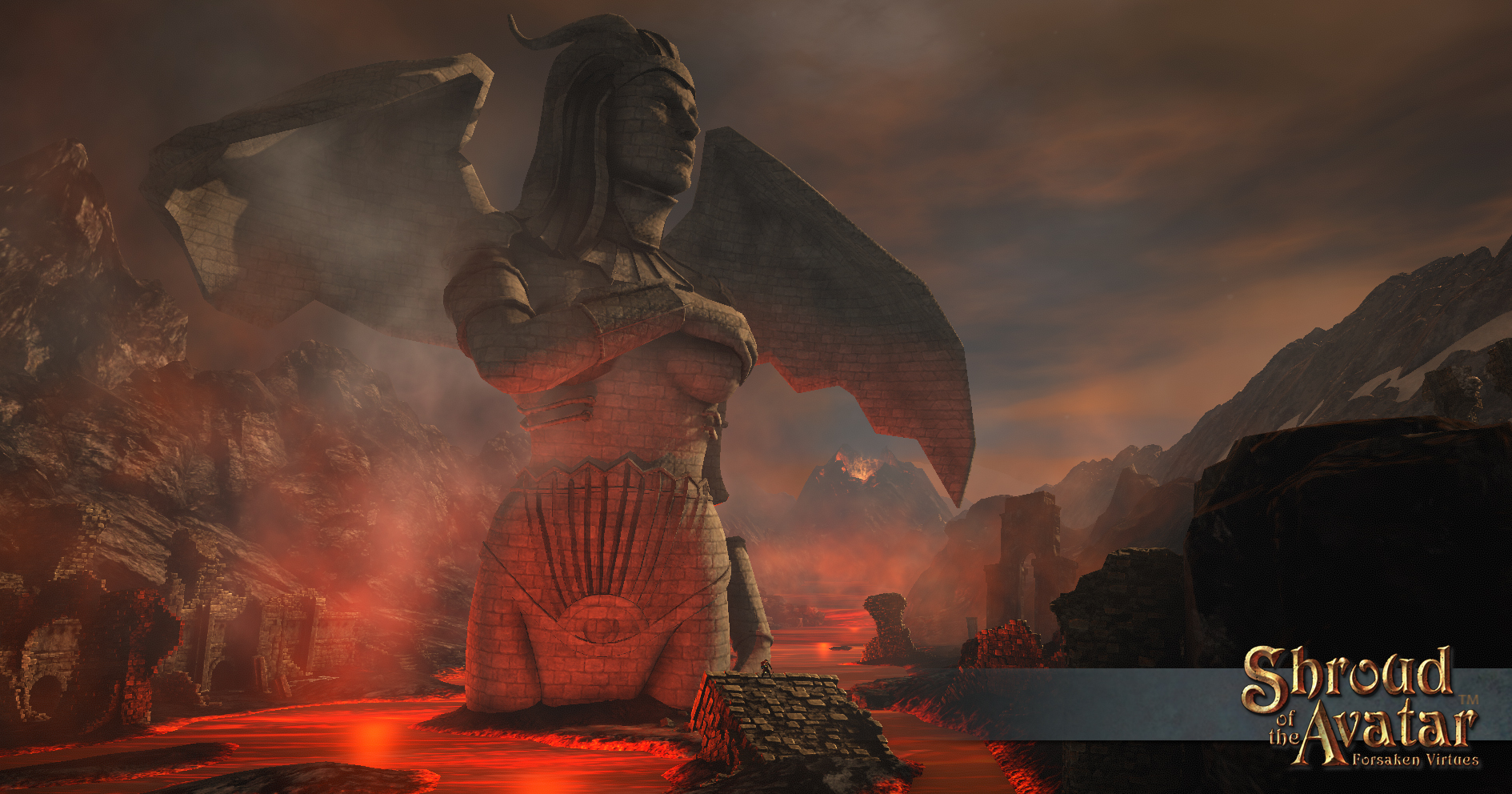
For the longest time, I was holding out on playing Shroud of the Avatar. Which is kind of strange, considering the fact that I’m exactly the type of player the game has been looking for. You see, I grew up as a programmer and gamer while playing every Ultima game ever made. If you follow the natural evolution of that series of computer games, it eventually leads directly to Shroud of the Avatar. The chances of me not playing this game were slightly lower than zero percent. Yet, it took me a number of years of the game being in development for me to finally decide to sign on. I guess that probably needs a bit of unpacking. So, let’s unpack.
As I mentioned, in the early days of computer games, Richard Garriott developed a series of games that ran under the IP of “Ultima”. It was a series of roleplaying games where you played a warrior, a mage or some semblance of fantasy classes and unlocked the secrets of the world before facing down against some huge big bad guy (or girl) and then saved all of the land. A review:
Ultima 1: You fought against an evil wizard named Mondain. But Mondain had a secret student and lover. This takes place on Sosaria.
Ultima 2: His lover’s name was Minax. You then have to defeat her. But she and Mondain secretly had a kid. Of course they did. This takes place on Earth through all sorts of time periods.
Ultima 3: The kid was kind of weird, in that Cylon kind of way. You, as expected, had to defeat him. This takes place on Sosaria.
Ultima 4: Gets weird and colorized. You spend the entire game becoming the ultimate character, an avatar. This introduces the virtues and eventually becomes the foundation for all of the Ultimas. This introduces Britannia.
Ultima 5: A bad lord under British gets corrupted by the shadowlords and basically takes over Britannia. You gotta stop him and them. Takes place in Britannia.
Ultima 6: A bunch of gargoyles get involved, creating a plot about immigration and enforcement. Or something like that. You act as an example and make everyone happy again. Much merriment is involved. Takes place in Britannia.
Ultima 7: Probably the best of the single player games. Takes place in Britannia and introduces the Guardian, who is a kind of twisted version of enlightenment. He sticks around for two more games. Takes place in Britannia.
Ultima 8: You get taken to some other place and do some stuff. To be honest, never really got into this game as I got stuck on the dock in the early part of the game, couldn’t figure out how to get out, and then just decided to play another game instead.
Ultima 9: Game becomes first person. Much more interesting world (still Britannia) but seems kind of lonely as the new perspective seems to eliminate a lot of npcs you’d normally meet. It’s the final encounter with the Guardian. Involves a Captain Kirk mind meld sort of conclusion, but should have been expected.
Ultima Online: Garriott brings the series to an online environment by making the argument that when Mondain was around, he split a shard into multiple pieces, each of which was another copy of Britannia (meaning you were on a different server). Game has lasted over twenty years now, even though Garriott has been divorced from it for most of that time.
Shroud of the Avatar: This is the eventual successor to the franchise, even though the understanding is that Electronic Arts still owns the rights to the Ultima name. It’s been pretty much understood that EA has no idea how to actually allow a franchise to breathe, so fortunately Garriott has given new life into what was once a very original idea.
So, what is Shroud supposed to be like? Well, it released officially on March 27th of this year, although it’s been in extended beta for a number of years now. Several times during the beta, the world was reset, so people had to start over, but the current beta that was playing through was allowed to survive and on March 27th, the game went from idea to actual release. Much rejoicing was had. Not much change, however, occurred. Okay, some change happened, but it was mostly patched kinds of changes without much of an impact on what was happening with the world itself.
But the story itself argues that the avatar has returned to Britannia (or Novia, or whatever land this is supposed to be now). A bunch of comets have caused problems, and there appears to be some kind of “evil” that may be under the surface. But for the most part, other than a couple of dragons wandering around and a ton of bad guys, pirates and thieves, not much seems to be going on in the lands. There are extensive player owned towns and an appearance here and there of Lord British (Richard Garriott’s character), but like Ultima Online before, the one thing sort of missing appears to be a general purpose behind what’s going on in the adventure. It might be there under the surface, but it’s not obvious enough to someone just starting the game. For the most part, when starting the game, you’re told that the Oracle (kind of like a benevolent-sounding Guardian from before) wants you to somehow unite the concepts of love, truth and courage (which were the foundations of the original eight virtues). As for why, I’m still trying to figure that out. And what happens after that, still kind of confused. I’m going to be really disappointed if we discover after all of this preparing and adventuring that we were really trying to figure out where Lord British left his car keys.
The combat mechanics are pretty decent and quite extensive, if one takes the time and effort to learn them. The game can be played on a simplistic level, but there are decks involved in the combat skills, so you can start to develop some really complicated types of maneuvers. There is also quite a bit of involvement with the crafting system as well.
The player housing is pretty awesome as well. As this was a huge part of Ultima Online, I would have been shocked if this was not the case. It’s a bit expensive, but judging from the conversations on the official boards, there may be some effort to make the land choices a bit more achievable for the common player. I’ll admit I’ve probably spent way more money than I should have playing this game, but I’m not the typical player; I do stupid things like that. Most people are generally a lot smarter than I am when it comes to that sort of stuff.
Where the game really needs to grow is in attracting players to run around in that world. They’ve done the one right thing by offering a free access sort of pass to players exploring the game, but a lot more needs to be done to get those same players to want to stay. Right now, the initial price to play the game after visiting is $40. That’s the price of a general AAA game that’s just been released. Although that price can sometimes go up to about $50, the $40 price tag is still pretty close to what people generally remember paying for a newly released PC game. And yes, the game was just released, but it is still showing a lot of early growing pains that may take many months to fix. Those are the kinds of problems people are going to see when visiting the game for free, so this might make it really difficult to translate into full members of the game itself. As long as housing is costing people over $100 in real money, people are probably going to avoid this game like the plague. Add to that the majority of the negative feedback for the game has been about the price of transactions in the game, and you have a recipe for why this might be a difficult sell.
One other problem that hasn’t been addressed all that well is another positive feature of the game: The single player game built within the game itself. You don’t have to play the game online. You can actually start the game as a single player and enjoy pretty much the same world. Without other people. The obvious negative to that is no one else is playing with you, but the positives are numerous, including three npcs that become your partners and experience the world with you, so you’re not always under powered by being alone. But like I said, they haven’t given this avenue enough attention because there are some blatantly missing things, such as player owned towns. On the surface that makes sense, but in reality, those player owned towns are often used for reasons other than housing. A lot of the connections to other zones come from linkage people have made tying numerous towns together (like carriages, balloons and boats). If no player owned towns exist, those connections just don’t exist. Which means there are islands throughout the game that have no ability to be reached because no player connection was made beforehand. So, it’s just eye candy real estate in the game where you can never visit.
As I said before, it’s easy to come up with things to complain about in pretty much any game. It’s no different in this one. Which bothers me a lot because there’s so much strong potential with the game. There are times when it can be a lot of fun. We just need to find better ways to get more people to experience that fun without the costly aftertaste.
Overall, it has a lot of potential but can easily defeat itself by letting these types of problems fester longer than they need to. Unfortunately, online devs are historically really slow at addressing these kinds of things, or in addressing them at all. And once the game starts to go in the down direction, the spiral doesn’t end until the game is gone or a shadow of its original self.
Earlier today, I was examining the statistics on my website and realized that I have about 1.5 million hits on my site since I started it. That appears to be a lot, but then I started to think to myself that not a lot of people comment on it or send me messages based off of my web site (or its blog). So, this tells me that I seem to get a lot of traffic but apparently nothing seems to be going on with it. And yes, that opens up a lot of thought on a subject I’ll probably take up at another time (what do to with traffic when it gets to your site, as I don’t seem to be doing a whole of good with that area).
Last night, I was watching the latest episode of Law & Order: Special Victims Unit, which is still one of my favorite police procedural types of shows. And in this episode, an Instagram star hooked up with a MMA fighter and was raped, but it turns out the whole thing had been set up by a young woman who was a follower of both of their Instagram feeds. The prosecutor mentioned that a motive for the set up was that the Instgram model had tens of thousands of followers, the MMA fighter had 2 million, and the young, geek girl had 6. Therefore, this was vengeance against the two well known Instagram stars from someone who felt that she had an important voice but no one was listening to her.
That resonated quite a bit with me because I think a lot of us who aren’t big stars often feel the same way. Not that we’re about to set up someone famous like the plot line of this story, but at the same time the realization that there are people who are seriously famous for a sex tape, or for just looking good in pictures, can be a hard thing to face when one is trying really hard to become known as well, but doesn’t have that advantage those pseudo celebrities have.
Recently, I’ve been following a bunch of ASMR artists who I find to be very good at their craft. In case you’re not familiar with ASMR, it stands for Autonomous Sensory Meridian Response, which according to Wikipedia is “is a term used for an experience characterised by a static-like or tingling sensation on the skin that typically begins on the scalp and moves down the back of the neck and upper spine. It has been compared with auditory-tactile synesthesia.” And even with that definition, you’d be amazed (or maybe you wouldn’t) at how many news agencies just don’t understand it, which you can see when they start to make statements that suggest watching President Trump gives “ASMR tingles” or when some celebrity posts a Youtube of her just staring at the screen and the media goes ga ga over her “ASMR video.”
In reality, ASMR is difficult to achieve and very few artists succeed at it. There’s a reason that there are a few very popular ASMR artists out there, and almost none of them are celebrities known for other things.
Which brings me back to my original subject, and that’s that viral popularity has a bad habit of creating an atmosphere that wasn’t intended in the first place. For those not completely familiar with ASMR, it’s pretty easy to fall into the trap of thinking ASMR is nothing but people whispering and making sounds with inanimate objects. And that’s because a lot of it comes from doing exactly that. But it also comes from a stronger understanding of how those actions can trigger the audience into feeling something more than just simple reactions. As a result, quite a few artists sometimes push the envelope and create what I’ve started to characterize as PG-13 ASMR. What I mean by that is ASMR that is designed to arouse rather than “tingle”, and for those not initiated in what ASMR, it can be very easy to mistake one for the other.
This happens quite often because the models who do ASMR are almost always attractive. Both male and female ASMR artists are generally above average in attractiveness and in their social tools for attracting others. This should be expected because this is a video environment where an unattractive artist is going to be avoided or ignored, and an attractive one is going to cause people to click the image being presented on the Youtube reception screen. This often resonates in the comments section of their videos where the anonymous nature of the Internet can cause trolling behavior you’d expect in a darkened strip club environment. To make matters worse, a number of ASMR artists chase the elusive crown of traffic and subscriptions (people subscribe to their personal channels), which leads to a revenue stream from Youtube. This causes the perpetrators of the more adult environment to keep pushing the adult envelope and the non-sexual artists to feel the need to participate because of loss of viewer clicks.
Youtube has somewhat cracked down on this phenomenon, but has done so with broad strokes that hurts mostly the non-sexual artists because they demonetize mostly based on viewer feedback, and the business has become somewhat cutthroat with an almost mob mentality towards those who are actually trying to comply and do the right thing. As usual, those are the ones who suffer the most, whereas the ones who are crossing the line are rewarded because none of their fans are ever going to turn them in for breaking any of the rules.
Which kind of brings me full circle in what I was originally talking about, and that’s the problem of trying to achieve any level of popularity in a bread and circuses environment where controversy, sex and violence are the things that attract the largest audience. How does the unknown artist achieve notoriety in a mostly celebrity driven world? In a free market mentality, one would think that the quality rises to the top and everything else remains at the bottom. But that’s rarely the case. Quite often, celebrity status is more than enough to create buzz so that its products remain at the top and everything else is left grasping for scraps. As a writer, I find this problem emblematic in the field because some really bad celebrity fiction gets serious attention when it’s not very good and it’s written by people who have about twenty years before they’ll actually ever write anything significant (if they were to work on it full time and not just in between movies or photo shoots). But the people who put in the work in hopes of one day becoming discovered may do so their entire lives and never get a nibble beyond a table scrap thrown their way.
So, the question is: Is there a balance, or is it just not worth the effort? I’m kind of on the cusp of this myself, as I’ve been writing for most of my entire life, creating computer games that were popular but too early for the industry to ever recognize, wrote music back in the day when such music was seen as too experimental, and any number of other creative tasks that have fumbled, fizzled or just never took off. People keep saying “Just keep at it and your day will come”, but part of me wonders if it’s just a crap shoot and my time might better be spent catching up on the latest season of The Walking Dead.
Race seems to be a big issue these days. I guess that’s a good thing. It means people are thinking about the concept and discussing it with others. At least that’s my hope. In some cases this is massively necessary because it helps deal with oversights that have been going on way too long. In other cases, not so much. What I see is that in those types of cases racism as a concept is used as a process to silence others or to beat people over the head in an attempt to collapse all disagreements under the blanket of racism, even if the individual artifacts we’re discussing may have had little to do with racism (which is why blanket criticism is used).
But this post isn’t really about that. Like I said, I’m glad people are addressing racism. There’s just way too much of it present in this day and age, even though a lot of closeted racists would really like to put forth the idea that racism is gone (so they can stop being rightly accused of being racists, or at least apologists for the same). What this post is really about is one of those commentaries that shows up in these discussions, and quite often this commentary comes in groups of people who don’t actually deal with racism in any way.
I know that sounds confusing, but let me explain. People who address and call out racism are quite often those who are directly affected by it. Racism directed toward race is more often addressed by African-Americans in U.S. society because let’s be honest: African-Americans are far more the targets of racism here than most other demographics. Sure, any minority race and/or ethnicity is a potential target for racists, so I don’t want to make an argument that assumes otherwise. But overall, African-Americans are going to have a better chance of perceiving racism more than a Caucasian because racists are pretty one-sided when it comes to this dichotomy. Sure, an African-American can be a racist, but part of what makes racism as powerful a weapon as it is is because it also has a mechanism of power to be used against the victim. A group of African-American racists standing around the streets of Wall Street aren’t going to chase a non-African-American away from Wall Street because the background of Wall Street doesn’t support such an attempt to alienate the victim, but a group of Caucasians targeting a non-Caucasian on a street of Wall Street might cause someone from that targeted demographic to think that Wall Street isn’t a safe place to hang around. The point is: Racism involves power, but it also requires power in order to be effective.
As an academic, I find myself around a lot of people who quite often invoke specific arguments whenever it comes to the idea of racism. I’m also a moderator on a very active current events message board, so I see all sorts of commentary that comes from that origin as well. And what I’ve come to observe is something I don’t believe a lot of people realize seems to be happening around them. And specifically, this sort of racism that is happening today is also very localized in its temporal vicinity (the time it inhabits right now). As a result, people today who are frightened of being perceived as race-challenged (or “racists” for lack of a better term) will do everything possible to avoid being cast as villains in this dynamic. As such, it’s not surprising to hear someone say something along the lines of “I’m not a racist because I have a friend who is black.” Okay, that one is kind of obvious because we’ve all heard that one and know how it’s almost become a punchline to a joke no one wants to admit making.
No, part of the problem stems from an argument that orchestrates how a lot of people who are a part of the problem that they don’t even acknowledge exists. We all know the argument, even though we don’t think much about it because we discard it because of its simplistic nature when we should have thought about and realized why it makes things worse rather than explain things away. You know you’ve heard this argument whenever you hear someone say “Well, my ancestors are from Europe, so I wasn’t responsible.” It’s one of those arguments made in hopes of closing off conversation (and hoping the topic changes as well). But think about it. If someone’s ancestors were from South Carolina, does that make that particular individual responsible for racism that happened 150 years ago and several generations ago as well? Probably not. But that’s only if you feel that responsibility ends with theoretical people who may or may not have been personally involved. Are people complaining about stuff that happened in the 1860s? I don’t think they are. We all know that horrible things happened back then, and we all pretty much agree today that if we could change things, we would make sure they didn’t happen again. Or would we?
And that’s where that argument that gets made loses its traction. There are problems happening today, and rather than deal with them today, we have people saying they shouldn’t have to be responsible because they weren’t around 150 years ago. But again, the problems exist today. What are any of us doing to change things here and now? I would argue “not a lot” because if we were all doing something to make things better, my belief is that things would be better.
Instead, we have ghettos, slums, income disparities, fenced off housing, more cops than educators, hostility towards certain populations, massive corruption in places that should be making a difference, and finger-pointing rather than any desire for accountability. An example is the City of Detroit. It practically collapsed due to white flight and inner city corruption. Instead of solutions that work to fix these problems, we end up with right versus left rhetoric, race baiting and people who support corrupt leaders because to not do so means giving ground to racist rhetoric. In other words, NO ONE is seeking to fix the problems, and the few who are seem to basically be drowned out by the people who find more importance in criticism and looking for scapegoats.
So, what’s the solution? Well, let’s stop caring about what the color of someone’s skin is and start looking at how we can make the neighborhoods of people prosperous and worth living in. That means also changing our criminal codes so that “crimes” that don’t hurt people stop being crimes. If “drugs” are seen as a problem, convict people to treatment programs rather than criminal institutions. Some aren’t going to be fixed the first time, but a responsible civilization doesn’t give up after the first time. It keeps trying until it works.
We also need to change our financial circumstances to benefit all. Yeah, a lot of very rich people are going to hate that. But having a few pissed off people and a civilization filled with thriving individuals seems like a good trade off. This A. Rand society of doing well and screwing over everyone else needs to end.
We need to stop going to war because some group of people don’t think like we do. Different thinking people should be interesting, not enemies. The reaction is that we need to do this because there are people out there trying to kill us. They’re trying to kill us because we always go to war against people who don’t think like we do. That tends to lead to diminishing returns. Change the thinking; change the outcomes. It can be pretty simple. Of course, the naysayers will say no because they only know the institution that we are currently in and like the frog in a well who sees only the circle of light in the sky, we’re never going to see constellations in the paths of other wells if we never get out of the well we’re currently stuck in. Just saying.
Or we can keep doing the things we’re doing and hope that somehow things get better. But they won’t. So good luck with that. I’ve given up trying, so I’ll be playing video games while the world crumbles around me. At least I can accomplish something with a high score. They don’t give Nobel Peace prizes for that, but I guess that’s just cause I don’t own an army that kills a lot of people. Yet.