I started teaching at Lee College in Baytown, Texas (close to Houston). It’s been an interesting, yet very positive, ride so far. I like the students, and now if I can just get past the health part of the process, I should be fine.
This semester I am teaching five sections of public speaking, one section of interpersonal communication and one section of business and professional communication. Most of those are great, although the business and professional communication is a night class, starting at 6:00 pm and ending at 7:15 pm. It’s a bit of a struggle, but as I kept saying all last year, I want to teach, not sit in a lab and just help other instructors teach better.
The one (or two) drawback(s) is that it doesn’t give me a lot of time for writing, filming videos, or (okay, three drawbacks) playing games. The one game I’m currently involved in is Guild Wars 2, which is one of those games that occupies any gaming time you have so that you rarely play any other games. It’s a fun game, and they keep churning out new add ons, constantly keeping you occupied. The only problem I’ve had with the add ons is that they make them awfully difficult if you’re not already an expert in the game. I’m pretty good, but definitely not an expert. I remember playing one of the add ons, and I couldn’t get beyond the opening of it because the bosses send me into a corner in a fetal position because they make those add ons way to freaking hard. I play this game to have fun, not to be stomp;ed by boss guys that seem to laugh at me, stomp me into the ground and then steal my lunch money, demanding I bring more to them next time he arrives to stomp me into the ground again.
Well, that’s all for right now. I’m still in dire need of a new kidney, which I’m starting to suspect I will never get. So, read my books, and read them soon because soon that’s all that’s going to be around to communicate on my behalf.
I’ve been thinking about this for quite some time. Let’s start out by stating that I’ve published to date:
Innocent Until Proven Guilty
Thompson’s Bounty
Leader of the Losers
Absent Until Proven Guilty
Destinty
Deadly Deceptions
Darkened Passages (short stories)
The Teddy Bear Conspiracy
The Ameriad
A Season of Kings
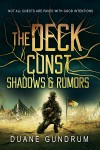
The Deck Const: Shadows and Rumors
With that selection of novels, one would think that I’ve figured out how to write. But one thing has always suggested that having a volume of writing does not equal quality writing. And one thing I took home from Haruki Murakami’s What I Talk About When I Talk About Running is that what I should be achieving when writing a novel is to reach a level where the next novel learns from the education put forth from the previous novel. In other words, if I write a novel, I need to learn all of the lessons from that novel so the next one becomes even better.
So, to explore this area of learning from my writing, I’ve applied to an MFA course in writing to see if I can better my writing and pick up skills I did not know I might need. Other people probably think I am wasting my time and my money, but where were those people when I bought the Playstation, Playstation II, Playstation III, the Xbox One and the Xbox Series X, all of which I have NEVER played.
So, it’s been a few years since I’ve published (and written) a new novel. The last book was The Deck Const: Shadows & Rumors, which was written nearly eight years ago. So, you may be wondering why there’s been nothing since.
To put it simply, I haven’t been all that well for the last decade. Last year, things kind of went right into the gutter, and they’re not really getting up from there. None of this is depression stuff. This is all health-related, and to put it simply, it sucks.
The few projects I’m working on right now I intend to get back to work on soon, but not being healthy has created its own process of writer’s block. Of the projects I’m working on, here’s a sample of what’s in the works:
1991. A book about the last gasp of the Soviet Union during the August Coup in 1991. The story is told in today’s time by an historian who is following up a lead given to him by his colleague’s mother who happens to be one of the philanthropists of the university where he works. As he begins to uncover secrets best left unraveled, he awakens some very dangerous people who don’t take kindly to outsiders asking questions that might lead to some very serious answers.
An Elvis Song on the Jukebox. The book takes place in the mid-1990s and involves a gay bashing incident that takes place at a San Francisco bar. Now, decades have passed, and the main characters involved in this incident begin to come to terms with what happened during that horrific incident.
A Simple Matter of Time. A story involving time travel, skewed history and the origin of good and evil. The only problem with this story is that somewhere, somehow, I lost the outline for this story, and it was so detailed that putting it back together has been so extremely difficult.
There are a lot of writers out there who haven’t been that successful. Yet, they keep on plugging away, convinced that one day it’s all going to work out for them. I’m kind of in that same boat, but unlike the others who never had their chance, my chance came several times…and sort of fizzled away. Let me explain:
Years back, I was shopping my first book. I was in my early twenties, and I had written it while in the Army. It was a really good book called INNOCENT UNTIL PROVEN GUILTY. And it was published. Not to great fanfare, but it was published.
So, I started shopping my second novel, LOSER (which would eventually become LEADER OF THE LOSERS). Nothing. Not even a whimper from anyone wanting to sell it. One editor pointed out that perhaps it was the depressing title. Publishers didn’t want to publish books with such a negative title. So, it sat there, forever.
Then I wrote my next novel, the infamous The Armageddon Project, which was a story that took place during the Cold War. Keep in mind, it was written during the Cold War. But at the time, the Cold War was ending, so I quickly rewrote it to match the new events taking place in the world (much of the action takes place in East Germany and Western Russia). And then those regions kept changing, so I kept rewriting it. At some point, the title changed to match the main character (known as “the Unicorn”), so the title became TO TOUCH THE UNICORN. And then a publisher told me that the title was too much like a fantasy novel, but the novel was corporate/government espionage. He also said that it was hard to figure out what exactly the main character’s job was. At the time, I had created the concept of an economic hit man, but the concept was completely unknown in the 1990s, so it just couldn’t catch on. Years later, after Germany and Russia have settled into the republics they are, the story changed massively and is now being rewritten for about the 90th time, and it now takes place in 1991 during the August coup in the former Soviet Union. It’s now called 72 HOURS IN AUGUST, but it’s on the back burner for a rewrite.
Anyway, somewhere around this time, I was starting to make a name for myself as a writer. I had been writing tons of short stories and they were published in a bunch of different magazines. At first, they were published in mostly literary magazines, but then the larger presses started picking them up, and several prominent magazine editors started recognizing my name from previous things I had written. Things were kind of going pretty nice for me back then.
And then one of my novels was bought for publishing by a prestigious book publisher. And then I got an agent who once represented one of the greatest science fiction writers in modern times before he passed away. All was looking great.
And then the publishing company folded. Overnight. Without a single warning.
My agent got into an accident and severely injured her head. She dropped out of the business for a while to recover, and when she did, she seriously didn’t even remember who I was. I gave up trying to re-establish our working relationship.
And then the Internet exploded. Amazon became the biggest thing in independent writing, and the industry changed overnight. If you weren’t already established, you were basically an unknown, and if you were an unknown, you had to now start building a social following in order to even sell a single book. Not being really good at social networking (just has never been my thing), my career kind of just fizzled and died. Sure, I sell a few books here and there, but I might sell more just standing on the corner and asking people to give me a buck for a hand written copy.
Fast-forward to today, and I’m the middle of writing an epic novel series that I suspect might not be read by more people than this blog post. I say this with trepidation because of the amount of time invested in this project. I’ve already spent seven years researching this thing, and I’m about to start putting actual physical work into writing it. Keep in mind that my last two projects took me each half a decade to produce, and my stuffed animals get more attention when they’re pulled over for drunk driving. My previous project took me six years to complete the first book (of a three book project). The research involved was extensive. It was called The Deck Const. Doesn’t matter what it was about because no one’s going to read it any way.
The project before that is probably the one piece of work of which I am most proud. When people talk about a crown achievement in one’s life, that book would probably be mine. It is a humorous novel that tells the story of the last hero of Troy who comes home to found a little civilization called America. It’s called THE AMERIAD, and it was so much work, and it involved so much research. But to someone reading it, one gets the sense that it’s a simple, fun story that seems very familiar. It’s told in Iliad/Odyssey format, and the main character is actually the translator who has interpreted this found epic in the only way the worst translator could possibly ever do. The book was so hard to write, especially in a way that made it feels so natural.
That’s the dilemma I find myself in as I finish up the last stages of research to begin constructing my Arthurian epic. And part of me wonders if my time might better be spent playing a video game instead.
Earlier today, I was examining the statistics on my website and realized that I have about 1.5 million hits on my site since I started it. That appears to be a lot, but then I started to think to myself that not a lot of people comment on it or send me messages based off of my web site (or its blog). So, this tells me that I seem to get a lot of traffic but apparently nothing seems to be going on with it. And yes, that opens up a lot of thought on a subject I’ll probably take up at another time (what do to with traffic when it gets to your site, as I don’t seem to be doing a whole of good with that area).
Last night, I was watching the latest episode of Law & Order: Special Victims Unit, which is still one of my favorite police procedural types of shows. And in this episode, an Instagram star hooked up with a MMA fighter and was raped, but it turns out the whole thing had been set up by a young woman who was a follower of both of their Instagram feeds. The prosecutor mentioned that a motive for the set up was that the Instgram model had tens of thousands of followers, the MMA fighter had 2 million, and the young, geek girl had 6. Therefore, this was vengeance against the two well known Instagram stars from someone who felt that she had an important voice but no one was listening to her.
That resonated quite a bit with me because I think a lot of us who aren’t big stars often feel the same way. Not that we’re about to set up someone famous like the plot line of this story, but at the same time the realization that there are people who are seriously famous for a sex tape, or for just looking good in pictures, can be a hard thing to face when one is trying really hard to become known as well, but doesn’t have that advantage those pseudo celebrities have.
Recently, I’ve been following a bunch of ASMR artists who I find to be very good at their craft. In case you’re not familiar with ASMR, it stands for Autonomous Sensory Meridian Response, which according to Wikipedia is “is a term used for an experience characterised by a static-like or tingling sensation on the skin that typically begins on the scalp and moves down the back of the neck and upper spine. It has been compared with auditory-tactile synesthesia.” And even with that definition, you’d be amazed (or maybe you wouldn’t) at how many news agencies just don’t understand it, which you can see when they start to make statements that suggest watching President Trump gives “ASMR tingles” or when some celebrity posts a Youtube of her just staring at the screen and the media goes ga ga over her “ASMR video.”
In reality, ASMR is difficult to achieve and very few artists succeed at it. There’s a reason that there are a few very popular ASMR artists out there, and almost none of them are celebrities known for other things.
Which brings me back to my original subject, and that’s that viral popularity has a bad habit of creating an atmosphere that wasn’t intended in the first place. For those not completely familiar with ASMR, it’s pretty easy to fall into the trap of thinking ASMR is nothing but people whispering and making sounds with inanimate objects. And that’s because a lot of it comes from doing exactly that. But it also comes from a stronger understanding of how those actions can trigger the audience into feeling something more than just simple reactions. As a result, quite a few artists sometimes push the envelope and create what I’ve started to characterize as PG-13 ASMR. What I mean by that is ASMR that is designed to arouse rather than “tingle”, and for those not initiated in what ASMR, it can be very easy to mistake one for the other.
This happens quite often because the models who do ASMR are almost always attractive. Both male and female ASMR artists are generally above average in attractiveness and in their social tools for attracting others. This should be expected because this is a video environment where an unattractive artist is going to be avoided or ignored, and an attractive one is going to cause people to click the image being presented on the Youtube reception screen. This often resonates in the comments section of their videos where the anonymous nature of the Internet can cause trolling behavior you’d expect in a darkened strip club environment. To make matters worse, a number of ASMR artists chase the elusive crown of traffic and subscriptions (people subscribe to their personal channels), which leads to a revenue stream from Youtube. This causes the perpetrators of the more adult environment to keep pushing the adult envelope and the non-sexual artists to feel the need to participate because of loss of viewer clicks.
Youtube has somewhat cracked down on this phenomenon, but has done so with broad strokes that hurts mostly the non-sexual artists because they demonetize mostly based on viewer feedback, and the business has become somewhat cutthroat with an almost mob mentality towards those who are actually trying to comply and do the right thing. As usual, those are the ones who suffer the most, whereas the ones who are crossing the line are rewarded because none of their fans are ever going to turn them in for breaking any of the rules.
Which kind of brings me full circle in what I was originally talking about, and that’s the problem of trying to achieve any level of popularity in a bread and circuses environment where controversy, sex and violence are the things that attract the largest audience. How does the unknown artist achieve notoriety in a mostly celebrity driven world? In a free market mentality, one would think that the quality rises to the top and everything else remains at the bottom. But that’s rarely the case. Quite often, celebrity status is more than enough to create buzz so that its products remain at the top and everything else is left grasping for scraps. As a writer, I find this problem emblematic in the field because some really bad celebrity fiction gets serious attention when it’s not very good and it’s written by people who have about twenty years before they’ll actually ever write anything significant (if they were to work on it full time and not just in between movies or photo shoots). But the people who put in the work in hopes of one day becoming discovered may do so their entire lives and never get a nibble beyond a table scrap thrown their way.
So, the question is: Is there a balance, or is it just not worth the effort? I’m kind of on the cusp of this myself, as I’ve been writing for most of my entire life, creating computer games that were popular but too early for the industry to ever recognize, wrote music back in the day when such music was seen as too experimental, and any number of other creative tasks that have fumbled, fizzled or just never took off. People keep saying “Just keep at it and your day will come”, but part of me wonders if it’s just a crap shoot and my time might better be spent catching up on the latest season of The Walking Dead.
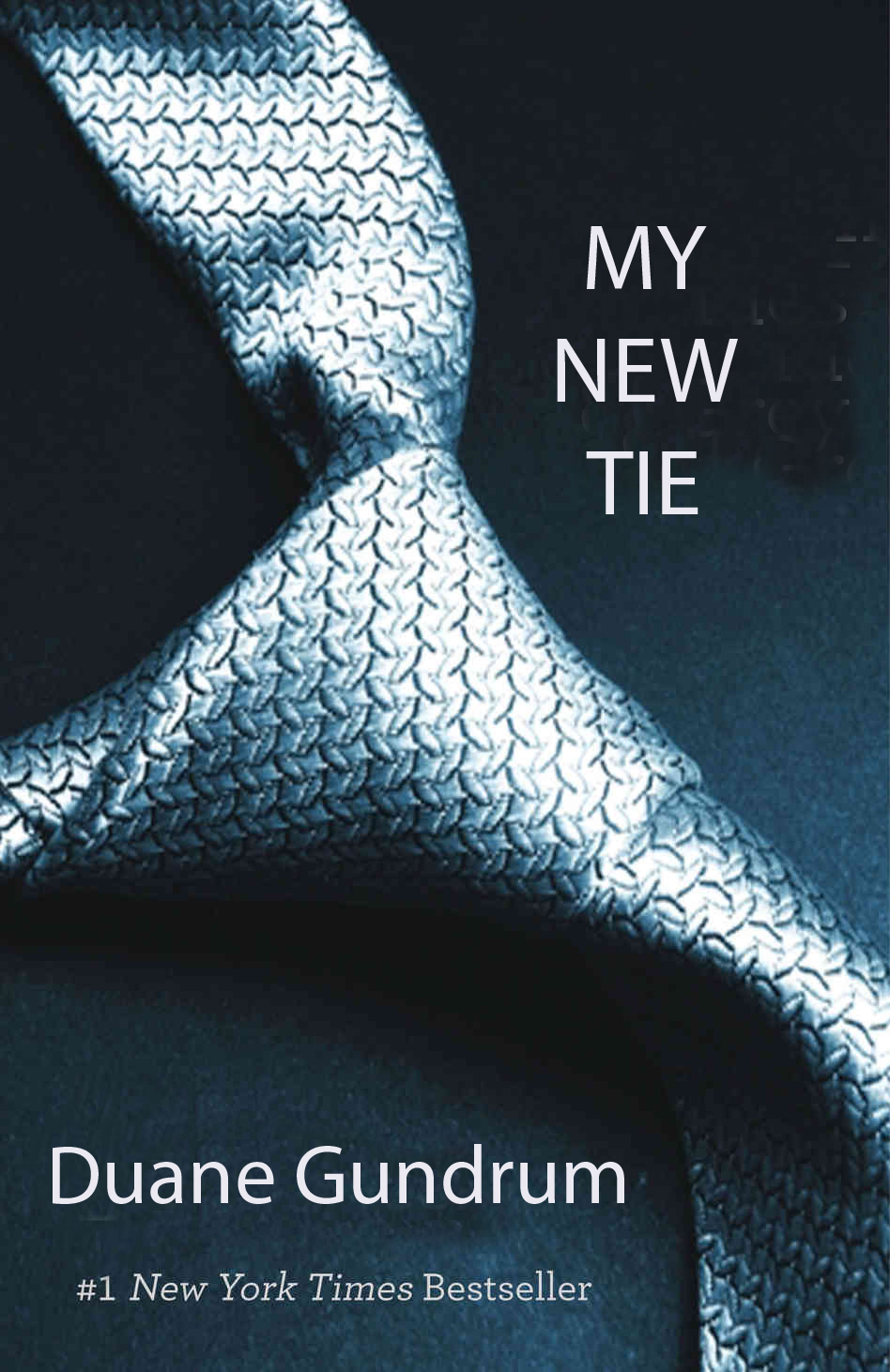
The cover of my new book. Someone told me it looks like something they may have read, but I’m not seeing it.
One of the problems of being political or taking a political stance is that chances are pretty good that you’re going to end up pissing off someone when you didn’t intend to do just that. As a writer, my goal is always to entertain as many people as possible, so whenever I deal with political issues, I get scared that whatever I’m going to say is bound to cause an audience member to dislike me. And these days, when someone dislikes you, that person tends to stop following and you never hear from that person again.
Therefore, it becomes a dilemma.
Because if one focuses on this type of fear then a writer is bound to water down whatever he or she has to say and only say the things that he or she hopes the audience is interested in hearing. And I can only imagine how bland and boring that might turn out to be.
The other day, I posted a tongue in cheek comment about something, and one of my politically correct “friends” corrected me and told me that I had to be careful, because saying such things can be construed to be wrong. I didn’t respond, but part of me was thinking: “Hey, I said what I said because it was something I wanted to say. If it bothers you, just ignore it or go frack yourself.” I didn’t say that because I’m a complete coward, but it did cause me to think.
And then the next week, that same person posted something that was completely one-sided, told in a tone that she knew best and anyone else who disagreed was obviously stupid. Basically, she did exactly what she told me not to do and then didn’t think anything of it. I then started to notice she does that all of the time.
Some people are like that. They are good at criticizing, but not so good at avoiding the behavior they criticize in the first place.
But then, she’s not a writer worried about people not continuing to read what she writes, and I am. So, there’s the dilemma.
Which kind of brings me to wondering how it is possible for polemic people to write the types of articles they do, knowing that people are going to be annoyed at what they write. I’m thinking about people like Ann Coulter, Michael Moore, and Tomi Lahren. The first two have completely established audiences that they’re probably never going to lose, but like the latter one, it leaves me wondering what kinds of risks is someone like Lahren willing to make in order to remain somewhat relevant in a very hostile media atmosphere. And part of me is also constantly wondering if part of the appeal is physical attractiveness as well, because if there wasn’t that, I kind of wonder at how many followers someone like her would have if the audience isn’t already cemented.
Social media seems to be one of those weird animals in that some people just come to it naturally and do really well right out the gate, whereas others, like me, take to it slowly and never really seem to reach the audiences they dream of achieving. It’s like the market for writing novel e-books. I’ve been writing for decades, and the readers I have tend to be the same readers who found me some years back. Others, I’ve seen them publish their first book and suddenly they’re selling them faster than Amazon can print them. Okay, Amazon doesn’t exactly print them, but you get the idea. I hope.
Some people just do really well with little effort while others succeed without trying. I’m starting to believe that that is how social media works for some people as well. While some people have the added benefit of being attractive to, well, attract others, those of us like me, toad-like in appearance, pretty much have to fight for each stride of existence. Okay, not toad-like, but I will admit that when my picture is put next to Brad Pitt’s, people tend not to stop and think: “Wow, I can’t tell them apart.” Definitely not. Brad’s got nothing on me!
Anyway, so the point is that getting an audience can be pretty tough and then once you do, it’s like walking on egg shells to make sure that you don’t lose any of your listeners. People can be pretty fickle about such things, and once you’ve lost a member of your audience, you tend to never get that person back.
So, if this bothers anyone who happens to be reading this, understand that it was someone else who said it, not me. I would never say anything to piss you off. Really. I’m just that kind of guy.
First off, this isn’t a post that’s designed to glorify how much I’ve read. Posts like that have a habit of being a bit condescending, boring and painful to get through. Yes, I’ve read a lot of stuff. But so have so many other people. This post really isn’t about that.
What this post is about is one of the consequences of reading a lot of stuff. As a social creature, I really love to share great literature and nonfiction with other people. The problem is: Most people don’t care.
An example: I just finished reading Men Explain Things to Me by Rebecca Solnit, a brilliant writer and thinker who also wrote A Paradise Built in Hell, which I love for its alternative approach of explaining history and the ramifications that occur during history. Both books are chalked full of history, so because I work with a couple of history people, I thought about recommending those books to them. The response I generally received was a blank stare, almost an admission of “your review to me didn’t convince me that I should waste my time reading what you were talking about.”
And that’s the problem right there. Over the years, as I’ve read more and more brilliant stuff, I’ve often recommended it to other people. What I’ve discovered is that so few people take up the gauntlet and decide to read those books. Instead, they listen to your explanation of that book and then because you’ve explained everything about it to them, they decide not to read it, possibly thinking that they’ve already absorbed the knowledge of that book by the mere moment you spent explaining it to them. And then they go on with their lives, only reading the things they find significant.
This reminded me of two things. First, Rebecca Solnit’s book Men Explain Things to Me, in which she details an encounter she had with a boorish man who found out she was a writer and had written on a particular obscure topic so spent the next hour or so telling her she had to read this book about her subject if she was ever going to understand it like he did. Turns out, she wrote that book he was talking about, and as men behave like men, he took forever to acknowledge that once finding out, and then still managed to talk down to her regardless of realizing that fact.
Second, the concept of knowledge and literature requires a modern scholar to actually read the texts himself or herself and not just the cliff notes version (and especially not just the conversation about it from someone who read it instead). Imagine discussing Plato with someone who has never read it but watched a lecture on Plato once. That works great if neither of you have read it (you can be clueless together) but when you’re the one who has read him, discussing it with someone who has no intention of reading it is a complete waste of time.
That’s how I feel when I talk about literature with people and discover that they’re not going to read it, condemning it because they didn’t read it first. I talked about Solnit with one person and actually saw his face turn negative, like he was disgusted by the fact that he’d never heard of her before, and thus, she was unimportant in his mind. That’s the kind of emotional response I receive a lot when I talk about literature that is important yet obscure.
It’s almost gotten to the point where I may not discuss literature with people any more. I remember bringing up Haruki Murakami to one colleague recently and received that “I haven’t read him, so obviously he’s not significant” response. Keep in mind, Murakami is probably among the most respected authors living in the world today. But because he’s not “known” to some individual, I end up having to explain his significance, which finally ends with a sense of “well, if I should find myself on a deserted island, am already bored and his book is all that’s there, I might read it.” Again, I find myself thinking, screw you and I hope you remain uneducated for life. But fortunately, I’m not that elitist. Well, not after I’ve had my first morning diet Dr Pepper.
Yesterday, I received an email from some entrepreneur in San Francisco who “offered” to sit down with me for lunch in San Francisco in a very expensive location (described in detail in the email as if that location was somehow a selling point of having a casual lunch with some woman I don’t know). Anyway, she was appealing to the fact that I was a writer who needed to “move to the next level”. And I guess that somehow this lunch “date” was going to make this happen in some bizarre way.
I should point out that the lunch “date” we were going to have was going to cost me $350, but if I was one of the first responders, I’d save $100.
So, being bored with my life, I googled her name and discovered that she seems to be under all sorts of very interesting legal scrutiny for a bunch of really interesting decisions she made over the years, some involving marital spats of a friend of client of hers and some actions she may or may not have taken as a part of some domestic dispute.
But I didn’t find anything to indicate that she was successful in helping anyone’s career along, which made me wonder why would someone, out of the blue, contact me about something like this when the only thing she had going to her name was somewhat of a scandal involving domestic abuse. And I really couldn’t come up with an answer.
So it got me wondering if there’s a whole industry of people like this who devote most of their time and energy to taking advantage of hopeful writers (inventors, game creators, or whatever) and offering them to somehow put them in touch with their elusive dreams. Cause it was a nice little appeal when I first read it. Of course, being the kind of person I am, I’m always going to investigate it first, but I wondered how many other people someone like this ropes in on such schemes. Hell, for all I know she’s legit and secretly has been the success behind Stephen King and Brad Pitt. I doubt it, but I’ve never been considered all-knowing.
What it does tell me is that people in my field need to be really careful because these sorts of leeches are out there seeing gold in the paths of dreamers and believers. Those of us who are the creative type constantly want to believe that our passion can bring success, and people like that are constantly there to make sure we stupidly take these types of leaps right before emptying our wallets and disappearing into the woodwork again.
A year or so ago, I was a subscriber to Writer’s Digest, a magazine that has been around for a very long time and used to serve the purpose of helping wannabe writers become actual writers. When I was young, I used to tear through the pages of that magazine, reading the fiction process articles written by its editor back then, Lawrence Block. The tidbits and ideas that I received from that magazine used to be wonderful.
This was before the whole Internet revolution came and went. As we all know, the Internet made it so anyone could publish his or her book whenever he or she wanted (regardless of how ready it was), and the need for the mainstream publishers and reputable agents was no longer a necessity. If you understood the market that Writer’s Digest used to serve, you might notice that something has probably had to happen to the magazine as well. All of those people it was helping to train become professional writers are now out there making their own way, and they’ve done it without the need or desire to listen to intricate lessons of how they should learn to write and how to format manuscript pages. The need for a service that Writer’s Digest used to provide have become almost none.
Which means Writer’s Digest probably had to change as well. And unfortunately, what I’ve started to notice is that this magazine has begun to mass saturate my email with continuous “give us money and we’ll help you prepare your manuscript for publication”. Realizing that people no longer need the advice on how to get published, now I’m receiving never-ending offers to help me “prepare” a manuscript for publication. The last one was for a Writer’s Digest “service” that proofreads a manuscript and charges you by the page. The funny thing is: The editors who actually work on self-publishing works out there charge a whole lot less to do the full job than Writer’s Digest is offering to just a portion of the work required.
So, what this means is that another service has popped up that wants to separate the independents from their money under the guise of offering a necessary service. In the old days, this service used to be offered in the classified pages of WD, but now the magazine itself is in on the deal. And while I usually don’t jump on the criticism of WD, I am starting to notice that more and more “independent” services out there are trying to attract the self-publishers to do things that self-publishers have learned to do themselves. I’m talking about formatting services, book cover creators, full editing, line editing, feel of the story editing, punctuation editors, marketing promoters, “how to” books written by people who really haven’t figured anything out themselves other than how to charge people for “how to” books, and so many others. Now, some of those services I take advantage of, like book cover creators, because the people I work with are far better at doing it than I am. But what I’m also noticing is that a lot of bad book cover creators are also advertising their services. This goes back to a conversation I had with independent filmmaker Chris Penney (of DogByte Films), who in making independent films remarked that the people making money off of these films tend to be the organizations that provide services rather than the filmmakers themselves. I’m talking about the color correction people, the film editors, and all sorts of other fields that have sprung up to take advantage of the fact that there are a few visionaries out there trying to turn their ideas into something brilliant. My point is that this same mentality is now finally creeping into the independent book market, as there are people who realize that there’s gold in them thar hills and the gold is the people coming to mine for gold, not the gold itself.
And that’s the problem, in a nutshell. A lot of us are trying to make this business work, yet we’re constantly being inundated by people who are trying to make a quick buck off of us.
One of my biggest problems as a writer is that quite often it is very difficult to nail down the genres in which I write. It was easy in the beginning of my career when I wrote Innocent Until Proven Guilty, which was mystery/suspense. But then I started branching out on other types of books and things got, well, kind of confusing. Let me give you a bit of a run-down, and you’ll see what I mean:
Innocent Until Proven Guilty: A murder takes place in corporate America and then an executive frames another for the murder. Works well as mystery/suspense.
Leader of the Losers: A dystopian future where poverty and class distinction has been solved by eliminating the “losers”. Definitely science fiction.
72 Hours in August: During the 1991 August Coup in the Soviet Union, a plan is hatched to start a nuclear war before the coup is over. Suspense, but also historical, and kind of a mystery as well.
Destiny: The Tales of Reagul story that starts the whole series, except it takes place 3000 years after the beginning of the epic. Story begins with a space battle, turns into a fantasy trek across a mysterious land and then ends with another large space battle. Science fiction? Fantasy? Both?
Deadly Deceptions: In South Korea, a counterintelligence agent uncovers a blackmarketing operation that might actually be masking a major espionage cover-up. Guess that’s a suspense novel, or a thriller, or also a mystery.
The Ameriad: A humorous Greek epic that spoofs the Iliad and the Odyssey by turning the icons of American society into the “new” gods. No idea where this one belongs.
Absent Without Leave: A military criminal investigator uncovers a 20 year old crime that started with the framing of his father and leads to the political future of Texas politics. Mystery, maybe? Thriller? Suspense?
The Teddy Bear Conspiracy: A CIA agent, running an operation to defeat the Colombian drug lords, finds himself targeted by his own people, forcing him to finish the mission alone while someone within his organization is trying to kill him and take over the project. Suspense?
Thompson’s Bounty: A time-traveling Coast Guard cutter encounters 16th century pirates and is sucked into a battle between two naval commanders. Science fiction? Naval warfare?
A Season of Kings (my next novel): The first official book of the Tales of Reagul, which tells the story of a planet where science and magic are intertwined. Most of the story is fantasy, but the whole premise comes from an alien experiment, which basically makes it science fiction.
Those are just the tip of the iceberg, and I’m finding it really hard to market my books because none of them really fit into any solid genre. Or few of them do. I won’t even try to figure out where Plato’s Perspective fits in, as it’s a novel with the protagonist named Plato who may or may not be the actual Plato, and the novel’s point in time may be a bit confusing as well. It could end up being philosophy, science fiction, fantasy, mainstream, history, etc. I’m sure you get the idea.