Category Archives: Music

The Rise and Fall of Mega Music Bands

Years back, I was the security investigator for a major hotel chain, and I had been assigned to one of their large properties in San Francisco. As a somewhat superfluous member of that institution’s security department, it was never really understood where I stood in the chain of command, but it was always assumed that I was probably somewhere near the top, but never high enough to be one to make actual decisions. For a young man fresh out of the military, it was kind of comfortable because being in such a position meant access to whatever was going on without much of the responsibility for what was happening. If I had to sum it up, I was an executive at just looking good and being present for anything important happening.

Well, one of those things that happened was a major convention for a national music organization that sponsored a major headliner show featuring Huey Lewis & the News with an opening act by a young group Wilson Philips.

Now, at this time, Huey Lewis & the News was probably one of the biggest bands in America. And Wilson Philips, which acted as their starter band, was gaining a lot of traction with three hit songs that had been released earlier that year. So, it was expected that a lot of people were going to show up for this shindig to see the hottest show in town.

As this “important” security person, I was literally right there in the wings of the stage as the bands went on to perform. Around me were all sorts of music insiders who had serious clout with various record companies. And as I was dressed in a suit rather than casual wear, it actually appeared I was more connected to this industry than I was. In reality, I was the glorified security, but because my position was mostly a specialty of remaining undercover, people just assumed I was part of their crowd.

So, why am I sharing this? Well, one of the perks of this kind of position and such placement is that you begin to discover that musicians quite often are quite bored backstage and are constantly inundated with attempts by industry people to get their attention. My focus is always on just watching the crowd, so I kind of stood out because I was one of the few people there who didn’t appear all that interested in trying to gain the attention of the people who perform on stage. As a result, these stars had a tendency to sidle up next to me and start conversations.

And there were many of them, but one of them struck me as more interesting than the others. Chynna Philips, the lead singer for Wilson Philips, was wandering around backstage after their set, while Huey Lewis & the News were performing. She stood next to me and said: “Aren’t they great?”

I nodded and said, bluntly: “They used to be my favorite group.”

She seemed kind of surprised by my statement. I assumed most people probably spoke in awe of that band to her as she was basically delegated to being the starter band for a rock band that was extremely popular at the time. “Used to?” she said.

I nodded. “They’re kind of on their way out. Bands like yours are going to quickly replace them.”

She seemed actually pretty interested and then continued talking to me about Huey Lewis & the News, music in general and how interesting the industry was. Then she mentioned she needed to use the restroom, and did I know where one might be. I think she had realized I was some kind of higher up with the hotel because a couple of the security officers had walked over to me to pass on information to me while Chynna and I were talking. So, I walked her through the bowels of the infrastructure of the hotel to take her to the women’s restroom, choosing that path because I knew it would keep onlookers from intercepting her during the journey (something I’m sure happened quite often to a musician who was dressed in a very Hollywood-ish type ensemble for her performance.

During out trip, she shared a lot of interesting information about herself and the industry, and to be honest, I think she was just happy she was able to talk freely without having to answer questions as a “star”, which probably was the only kind of conversation she had been entertaining since gaining mass celebrity as a musician in a very popular band.

Anyway, this story isn’t really about that encounter, but to point out that she introduced a really interesting subject to me, something I hadn’t given much thought to before, and that’s that bands have an interesting life cycle that almost always seem to lead to inevitable conclusions. Even the band Wilson Philips made that journey, gaining mega fame almost overnight and then disappearing in a wisp of smoke so soon after appearing on the horizon.

What I hadn’t mentioned is that right before my conversation with Chynna Philips, one of the band members of Huey Lewis & the News was fuming backstage before they went on. This was while Wilson Philips was playing their set. But as I watched him, I had no idea what was bothering him, although he wasn’t focused on the music playing; something else seemed to have triggered him. And then they went on and did their full set, putting on what I honestly thought was one of their best performances to date. However, when they left the stage and walked by those of us on stage, I remember one of the stagehands saying “Good show!” to them as they passed him, and that musician gave him the dirtiest look I’ve ever seen from one man to another. I doubted the two of them even knew each other (that look he gave was more a “how dare you!” than a “Not this again!”). It was right about that time that I determined this band was about to end, and I didn’t know anything personal about any of their dynamics.

However, a short time later, the band fizzled and died.

This got me to thinking that most bands tend to go through this cycle of discovery, mega stardom and then collapse soon after. It’s almost as if they are only designed to last a certain amount of time before they implode and dissolve.

So, I thought I would focus on the different reasons why bands collapse after they reach their apex of success. So, generally, what are these reasons?

  1. Break-up: The quintessential example of this is probably the Beatles, a band that broke into the stratosphere and then imploded one day after recording “Let It Be”. It’s that one band that so many wished would have gotten back together again, but which turned out to be sustainable with each member alone until, unfortunately, several of their members lost their lives. As of now, two members are still active in their own careers, but the two we lost were definitely legends all on their own. Other groups that have gone this direction (with pushes and shoves to regroup and try again), include: the Eagles, the Everly Brothers, and Fleetwood Mac (although many others probably fit this category).
  2. Departure of a Main Influencer: This happens when one or a few members of a band decide to go their own way, and generally don’t come back. Examples of this include Van Halen when they lost David Lee Roth and Journey when they lost Steve Perry. The bands continue to try to recapture their momentum going forward, but in many cases they are never perceived to be the same powerhouse band they were back when they were previously together. This was somewhat the storyline of “This is Spinal Tap,” even though the band was mostly fictitious (but possibly better than some bands that actually took themselves seriously).
  3. Bands That Take a Bad Turn: This is really the story I probably started telling when I first started this article, as this was, in my opinion, the direction that Huey Lewis & the News took. Back in their prime, HL & the News probably could do no wrong, and it was a band that was at the forefront of setting trends during this period. And then, out of nowhere, they sort of died off. Strangely enough, I kind of predicted this was going to happen the first time I heard their last big hit, Hip to Be Square, in which it really felt like the band was trying to carry-over its coolness factor by purporting to be so cool that it could do so while being a total square. It sort of set them off on a trajectory of obsolescence.
  4. The Trend is Over: As much as I liked Wilson Philips, this was the direction they took when they released their second and third album. People were thrilled with their first album, but the follow-up albums felt a lot like they weren’t breaking any new ground. And they had received so much play time with the first album that people generally didn’t perceive any reason to want to continue buying much of the same. This is why a lot of groups really need to go big with their second and third albums, because the public is extremely fickle when it comes to music. If the audience doesn’t feel like the band is growing, quite often they will turn off the band going forward. A good example of bands and entertainers that have defeated this problem are Taylor Swift, Kiss, Madonna and AC/DC. While I definitely wouldn’t lump their music in the same category, their sustainability is about as legendary as the Rolling Stones.
  5. A Primary Member Dies: This is quite similar to one of the main influencers leaving, except that there’s not going to ever be a reunited tour somewhere off in the future. Lynyrd Skynyrd, besides being one of the hardest bands to spell correctly, was already established as a powerhouse in the music scene when its lead Ronnie Van Zant, Steve Gaines and back-up singer Cassie Gaines died in a plane crash in South Carolina; while the band has tried to recover with new players over the years, it has never reached the apex it achieved during those earlier years. Other bands that lose one influential member to death quite often lead to their demise as well.
  6. Unpopular Music Direction: From time to time, a band will have had a career of solid music and then take a completely different turn in its music, which immediately causes its audience to seek other entertainers instead. While this is a more subjective category, such bands can be included with this designation as Jefferson Airplane, Chromatics, Neil Young and Bob Dylan. What makes this category controversial and debatable is that quite often musicians that go this direction can make massive strides moving forward, but just in a completely different venue.

If anything can be said about the whole phenomenon of music sustainability, it’s that the artists rarely know what’s about to happen to their longevity before it happens. But that one evening that Huey Lewis & the News performed, it was obvious that that musician started to realize things were starting to unravel for his group. Either that, or he was just generally a sour person.

But one thing that was for sure was that Huey Lewis & the News stopped being the powerhouse it once was and no attempts to recover that lost popularity was ever going to succeed. So they may have been hip to be square, but unpopular was never going to be cool.
Revisiting the Rock Ballad Decades Later

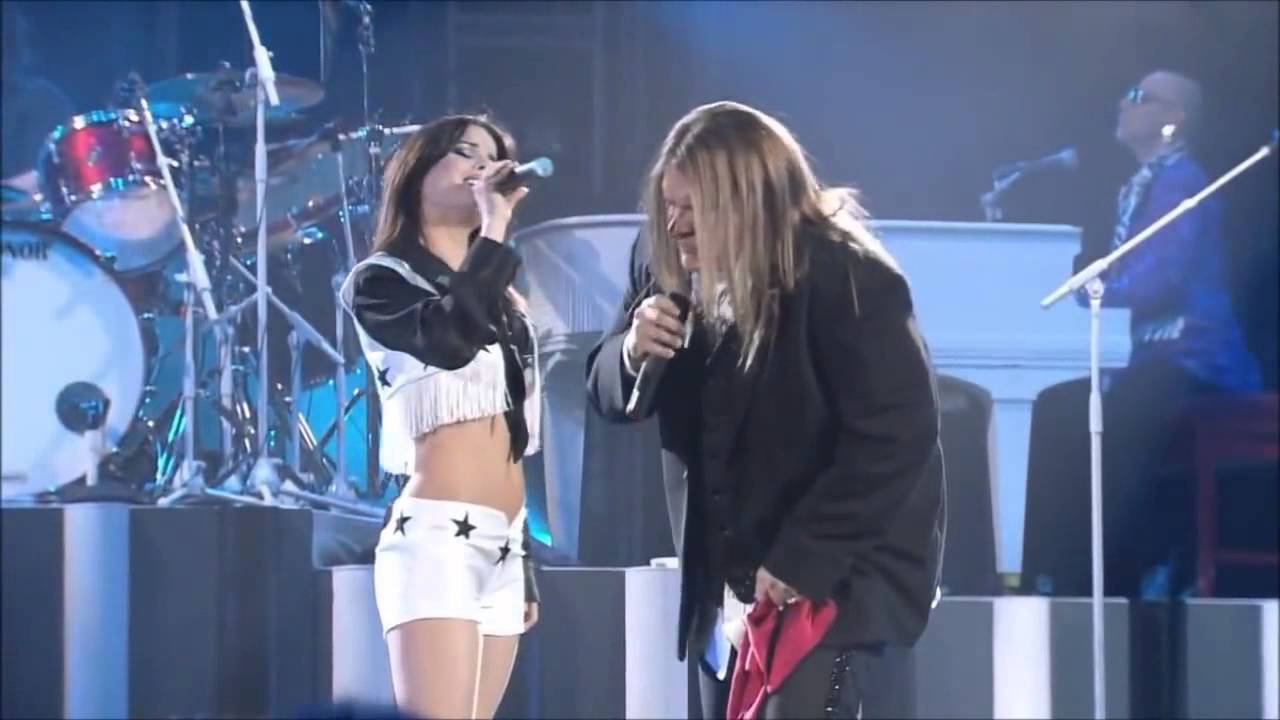
The other night, I was watching a video of the singer Meatloaf and a rendition of “Paradise By the Dashboard Light”. This is a song he made famous with Ellen Foley, and in case you missed the 1970s and the next few decades after, it tells the story of a young couple who are on a date in the guy’s car, and he starts to get a bit randy. And then he tries to go all the way. When he tries, it goes into baseball metaphors, and then there’s a huge confrontational scene where she makes him pledge his love for her before they can “go any further”. It ends like most love stories do: They can’t stand each other and are stuck with each other for life. Okay, maybe not like all love stories, but you get the idea.

When this song was first released, Meatloaf was fresh from the oven at about 26 years old. At the time, he could kind of get away with being a teenager, as the song suggests. And she was pretty young, too. So, it made a lot of sense.

The song basically became a metaphor for that date that goes a bit too far (or the one that caused dating to turn into something much more significant). It’s a great song opera and tells an awesome story.

So, why am I talking about it?

Well, we’ve slow forwarded to many decades later, and Meatloaf is now 71 years old. And last night, I caught a remake of the song where he performs with Patti Russo, who is much younger. Personally, I think the original version is so much better as Ellen Foley really has a voice that just brings home that song while Patti Russo seems to be more of an accomplished singer but seems more focused on sounding good rather than being as gritty as the original singer.

But what really gets to me is the sort of criticism I sometimes have when an old band or singer continues to sing old songs that are more relevant to that performer being much younger. Like Joan Jett’s “I Love Rock and Roll”. When she first sang it, it was a great song, and I could see a young Joan Jett picking up a 17 year old kid in a bar. But now, with her being somewhat beyond Cougar-age, her cruising for 17 year old boys seems a bit out of place.

And that’s the sense I get when I think about Meatloaf on his sexual conquest of high school kids. It’s really hard to watch him sing this song, realizing that he’s been receiving Social Security for the last six years. But then, I sometimes have to remember that the point of the song sometimes gets lost on me, and that it’s really about an older person reminiscing about a date in a car when he was a young man. When I think of it that way, it’s fine. But when watching a video with a 71 year old guy and a woman who looks like she just got out high school (although, for the record, I’m pretty sure she’s at least in her twenties during that video), it probably doesn’t help that her “costume” in that video happens to be an attempt at a Dallas Cowboys cheerleader outfit. That pretty much reminded me that it’s no longer a geriatric memory but some old guy with some very young girl. And that just makes it somewhat uncomfortable.

But it’s a good song. I digress.

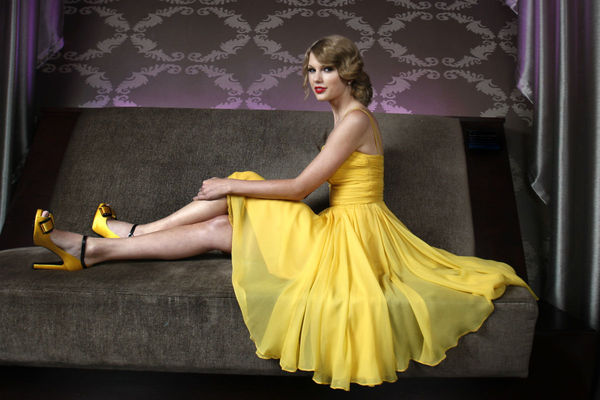
Is Taylor Swift Finally Achieving Her “Hip to Be Square Moment” of Her Career?

Maybe she'll write a song about the relationship we never had
Maybe she’ll write a song about the relationship we never had

The other day, I was listening to a song on the radio, and it took me a second to realize it was one of the later Taylor Swift songs (from her 2012 album, Red), called I Knew You Were Trouble. As the song played, it started to dawn on me that I recognized it as a Taylor Swift song not because it was a great song (some of her earlier work has been phenomenal, like Enchanted) but because it had that same “I broke up with some guy and here’s another song about it” feel to it. The song wasn’t all that inspired, and for the first time, I actually found myself thinking, wow, this is the first time I’ve heard a Taylor Swift song that almost feels generically written to be a Taylor Swift song. And that immediately brought up the thought of a song I hadn’t thought about in ages, and that song is “Hip to Be Square” by Huey Lewis and the News. I guess I should sort of explain.

You see, back in 1986, on the album Fore!, Huey Lewis and the News released a song called “Hip to Be Square”. At the time, the group was riding high on its previous success with its album Sports, and it was seen as a continuation of a really strong career that was only going to be getting stronger. When this album was released, I was working for a large San Francisco convention hotel as a middle manager for the Security Department. Because this was a large convention hotel, we often received huge gatherings of hue corporations and industries, and one of them was a massive celebration of national record companies. Being a convention that catered to industry insiders, huge acts performed, and on one evening, the recently VERY successful music group Wilson Phillips was opening for Huey Lewis and the News. Because it occurred at our hotel, I was there that evening supervising Security staff who were there as the outer rim security for the whole performance. Due to circumstances of just chance, my job required me to wear a suit (not a uniform), so to anyone else there, it looked like I was probably one of the industry insiders who was probably part of the running of the show. This was made readily apparent when Chynna Phillips, their lead singer, stepped off stage after her show (and when Huey Lewis and the News was starting) and walked up to me, asking me if I could help her find a restroom. So, I escorted her to the back areas of the hotel, which was the only way to reach a location that I knew other guests wouldn’t be frequenting (which I wanted to avoid as this was basically a music star who could easily get mobbed by a crowd). Strangely enough, she took to me, and actually had a long conversation with me about music (after I stated I was a big fan of her group and felt that they were definitely on their to a great career, as it was very early in their music run), and then we got into a conversation about Huey Lewis and the News, where she stated she was in awe of their group, and for reasons I don’t even know why I shared, I indicated that Huey Lewis and his group was pretty much on its way out to the pasture. I went through a huge analysis of the song Hip to Be Square and how it was so generic that it showed their group basically lost touch with its musical roots and was either going to need to reinvent itself or never be heard from again. It was actually a really cool, long conversation, and when I brought her back to the backstage area after she finished what she needed to do, we parted in a friendly manner, and I cherished my one chance to have a conversation with someone I actually admired.

Shortly after that, Huey Lewis and the News finished their set and rushed off the stage, moving right by me. It seemed the obvious thing for everyone to say “great show” to them as they walked by, but I never forgot the look I got from the main guitarist of the group when I said it. He looked at me like I was some moron for actually complimenting him on a good show. Right then and there, I realized that it wasn’t just the song that I analyzed that was bringing about their demise; the group itself was no longer ingratiating itself towards the fans and actually looked like they were bothered by the fact that they had fans listening to their music. Not surprisingly, they fell into the “where are they now” file of musicians shortly after this industry concert.

This is kind of the feeling I’m getting with Taylor Swift right now as well. When she first made her launch into superstar ranks, there were already smirks about how all of her music is basically about how she can’t seem to hold a relationship. Hell, one of my earlier articles was a joke about how I was worried that I was going to accidentally get into a relationship with Taylor Swift and then discover she wrote about it in a song. I even imagined some of her lyrics:

You always leave the seat up

Never clean the bath tub

And always watch reruns of Star Trek.

Woooooooah!

Strangely enough, it wouldn’t be that much different from what she seems to be doing with most of her current work. I tend to believe that she has reached her “Hip to Be Square” point in her career, and like most groups that fail after this point, she either needs to reinvent herself in a way we haven’t imagined yet (kind of like Madonna did several times to continue remaining relevant), or she’s going to hit that point where people aren’t interested in going over the same sort of thing with each new album. Of course, there are always people who want nostalgia, but unfortunately, you have to put some time in the mix to make that work.

Nashville: A Great Show That Continuously Reminds Me That It’s a Show

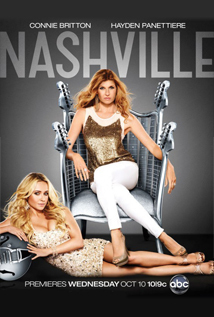
NashvilleMy Hulu Plus subscription is great for watching current shows, but at some point, and I reached it a few weeks ago, I ended up caught up to all of the shows that I actually wanted to watch. This left me with either stopping my watching of television or finding a new show that I might want to continue to watch. I tried a few, like Hart of Dixie, Killer Women and Salem. But all three of those reminded me of why television is usually the worst place to find quality programming. But then my recommendation queue kept showing me Nashville, and being someone who does like country music, I finally gave it a go.

First off, my recommendation after watching through one and a half seasons of the show is that if you like/love country music, then this show is definitely what you want to watch. The drama, which I’ll get into in a moment here, can sometimes be great, but at other times can become quite generic. But the stars of the show are definitely what make it worth your while. While I was not a previous fan of Connie Britton, her turn as the star of this show is definitely worth the watch. And then there’s Hayden Panettere, who was best known before this as the cheerleader in NBC’s Heroes (“save the cheerleader, save the world!”). In Nashville, she plays a pop sensation who is hitting the end of her 15 minutes of fame, yet is trying desperately to reinvent herself before the audience turns against her. Chocked full of Britney Spears/Lindsey Lohan types of adventures, her character becomes one of those “bad girl” types that you learn to love by proximity alone, and after awhile she becomes quite endearing to the audience so that you cheer for her, even though she’s done some pretty crappy things to other people during her run on the show. Britton’s role as the matriarch of Nashville’s country music is played quite well, and I’ve yet to feel a single scene involving her character has been any waste of time on screen.

Which brings me to the most important part of the show, and that’s the music. Like I said, I’m someone who really likes country music, but more of the contemporary stuff (Shania Twain, Taylor Swift, etc.) than the old die hard country music personalities of old. But what I’ve discovered is that the show is tempered enough to allow pretty much any kind of fan of music to really appreciate what they’re doing with this show.

Some of the music that they showcase in the show is all brand new, designed for the show itself, and some of it is freaking awesome. Some of it is somewhat generic, which you would think should be expected as this is a show that includes a LOT of new music that it is trying to pretend is a major part of country music popularity. This is definitely one of the high points of the show, but strange as it may seem to be that I’m saying this, it’s also one of its limitations. Let me explain.

Several of the characters in the show are up and coming musicians and songwriters, so they are often shown in the process of creating their magic that will later become big sensations. What that has done has created a quasi-fake Nashville that sometimes gets really annoying to watch. Imagine that you just drove into Nashville for the first time, and you’re a budding musician. You’d expect to go through a lot of angst and hard work and then hope that eventually it would just pay off because you stuck it out for years and sacrificed so much. In the show, some kid shows up in town, turns out to be the greatest sensation since Michael Jackson, and is immediately becoming a big star. NOTHING that person writes or sings is bad. It’s all freaking awesome and no matter what he or she performs, it’s the best of his or her game ever.

And that’s kind of what annoys me about the show. Every character on the show is at the top of his or her game 24/7. Even when they’re struggling with personal life stuff, they still churn out stuff that a seasoned musician might take a decade to try to figure out, but they do it in a weekend, or a late night session. Sure, it’s all supposed to be fiction and fantasy, but sometimes it starts to get on my nerves that EVERYONE that lives in Nashville is just another Shania Twain waiting to be discovered. I have yet to see a single performance by someone who wasn’t ready to rock the house if he or she was actually producing n the real world at that particular moment. They play a lot of bars and stuff, which would tell me that at some point there should be a bad band playing somewhere, or a twanging guitarist whose guitar strings break at a crucial part during a solo just once.

It kind of reminds me of the movie The Commitments, which if you haven’t seen, I highly recommend it. The movie is about a bunch of Irish misfits who create a rocking music group that wants to sing blues rock the house. In the beginning, their music is HORRIBLE. They are on stage rocking, but they’re music is so far from being good. Yet, as the movie moves on, they become better, and by the time they do their last performance, they REALLY rock the house, and they’re good. But you saw that transition from horrible to freaking awesome, and you lived it with them. I so want to see that in Nashville because then it would at least show me that these people might be real, not just be some fantasy of what country music wants us to believe it is.

The other problem the show has is what I like to call the Television Friends/Will&Grace Factor, which basically refers to the shows Friends and Will & Grace when they became so famous that they manufactured reasons why famous people should be on the show. Nashville has kind of the opposite problem of those shows, in that when it brings someone “famous” into the show, it’s usually someone not famous enough that they belong on a show that is showcasing the matriarch of country music. One example of what I mean is that they brought in Kelly Clarkson, and two characters were going to write a song for her. Meanwhile, there’s actually a story line going on about a music game show second place winner who is now signed to the label (which when they introduced that character, they were essentially using Kelly Clarkson as a pretty good model for what they were doing). As the REAL Kelly Clarkson showed up in that episode, all I could think to myself was “couldn’t they actually get a real country music star to do that walk-on part instead?” Sure, I like Kelly Clarkson, but that moment in the show called for someone with a lot richer history in country music than someone who just made it as a pop star. It was one of those moments that reminded me that I was watching a television show, and they effectively brought me back to reality when they were trying to do the opposite.

All in all, I think it’s a great show, and I’m still watching it through the last of the second season (the third season starts after summer is over). But those are my thoughts, and to quote a famous, former country music group that is talked around on this show but rarely mentioned: I’m not ready to make nice.

Does Censoring Profanity in Music Diminish the Musician’s Message?

I picked up the new Pink cd the other day for her album, The Truth About Love. What I noticed is that a lot of her music this time around is filled with profanity. Personally, I don’t mind because I really like her music. But then it got me to start wondering about the purpose behind swearing in music, whether it was necessary, and whether or not the song would change its meaning by filtering out the swearing. This was brought home to me on the shuttle bus trip from the parking lot, when I heard “Blow Me (one last kiss)” on the radio speaker playing on the shuttle. The song, from Pink’s new album, is the first release, and the words “fuck” and “shit” appear quite frequently, including a part where the chorus sings: “I’ve had a shit day/You’ve had a shit day/We’ve had a shit day”. The radio version doesn’t even try to address this, basically sounding like: “I’ve had a it day/You’ve had a it day/We’ve had a it day”. In other words, they just removed the voiced part of the song to make the word miss the “sh” sound to it. This got me to wondering if the song actually still maintains the same meaning. The complaint in the song is that she wants to break up with whomever it she’s with and it’s part of the realization that she had a bad day, he had a bad day, and they both had a bad day, but she still needs to pull the trigger on the relationship. With “I’ve had a it day”, I’m not sure the point is completely made.

But going back to her previous album, Pink Greatest Hits…So Far, her hit F***** Perfect was probably the best example of the problem inherent in a musician trying to be mainstream, sell records, AND be played on the radio.  The actual song was titled Fucking Perfect, and she sings those words throughout the song, but in the radio version, the word “Fucking” is aired out, and all you hear is silence during that moment while she’s saying “Perfect” so you get the impression the song is called “Perfect”. What’s significant about this is that the whole song is about forced conformity, and her real dilemma is that people are forced to be “fucking perfect”, not just perfect. It’s somewhat ironic that the song is changed on her to conform to radio standards, and I would not have been surprised to hear that there were probably radio and studio executives who might have been advocating for her to call the song “Perfect” just to avoid the problems of disc jockeys not being able to say the correct name on the radio when announcing the song. What I did notice on the few radio stations I listed to was a tendency to just call it “Perfect.”

So, my question is: Does changing the author’s wording also change the meaning of the song? Granted, in some genres of music, and with some musicians, there is a tendency to add profanityjust to look cool or hip, but one thing I’ve always noticed about Pink’s lyrics is that she doesn’t appear to be doing it just to get a reaction. This latest album appears to have more blatant profanity than the previous one, but I’m still left thinking that that is just a part of her writing style, and that she probably talks a lot like she writes lyrics.

The Strange World of Free to Play (F2P) Games

Lately, I’ve been playing City of Heroes, which for those who don’t know it, is a massively multiplayer online persistant world game, often referred to as an MMO, or an MMORPG (for role playing game). Years ago, I started playing the game, when I was bored with whatever other MMO I was playing at the time, and recently, I installed it again and decided to pursue its new play model.

You see, in the old days, the game used to cost $15 a month to play. Now, in order to attract more players, the game has turned into a Free to Play (F2P) game, much like the previous success of Lord of the Rings Online, which went to a F2P model in hopes of avoiding going backrupt. And it succeeded, which has breathed new life into other games that don’t want to go the route of Star Wars Galaxies (which closed shop after not being able to maintain a consistent player base.

The way a F2P model tends to work is that you are allowed access to certain areas, and maybe certain characters, but some parts of the world/universe are off limits or you have to pay a little bit more in order to access those areas or use extra characters. Not really wanting to do the barter thing with every little thing in the game, I subscribed to a VIP membership, which is essentially the same sort of $15 a month I was playing before. This gives me complete access to everything, although I have noticed that every now and then I still buy something that is “extra” in the game.

Which brings up a thing that has kind of bothered me about this model. If I’m someone who is a willing subscriber, I really should be given 100 percent access to everything. Yet, I still feel a bit nickle and dimed in this type of environment. But I appreciate the game, so I have been willing to shell out a bit more money just to contribute to the game I hope to be playing for some time.

Which brings me to how this sort of model doesn’t work. And Blizzard, the makers of World of Warcraft and Diablo 3 comes to mind. World of Warcraft is a pay to play game (P2P), and that’s fine. But the developers (or owners) have become somewhat greedy. They have continued to insert things into the game that they want you to pay for outside of the game. So, even though they’re making a crapload of money for their product, they’re still trying to nickle and dime people beyond the quarters they’re already getting. And don’t get me started on Diablo 3, which is a game that cost me $59.99 to buy (or was it $69.99?), and then they launched the game with all intentions of adding a “pay Blizzard’s greed” auction house, where you will pay real money to buy things in the game.

Years ago, Blizzard was seen as the good guy when it came to games, but lately, I can’t say the same. Diablo 3, for sake of clarification, sucked. It was a crappy game that wasn’t worth the money, the time, or even the energy. The fact that it had the name of two of the greatest games in history as what it was supposed to be a sequel made it even worse. Diablo and Diablo 2 were both great games. They even made the game required to be online at all times, which I suspect had more to do with hoping to get people to feel comfortable with giving money to the auction house model (single players would have never gone online where they’d have to see the auction house every time they signed onto the game) than it was for security or any other stupid reason.

A recent major name in online games is Star Wars: The Old Republic, which I played when it first released and enjoyed it for the first month or so. The game was missing a lot of needed content, so I gave up on it. Now, it’s supposedly going to be going F2P, mainly because they milked every nickle and dime they could get out of the subscription model. I doubt I’ll ever play it again, even though I had fun with it when it first released. The problem with the game was that it was completely on rails the entire time, and an MMO requires a world where you can go anywhere and do anything. That was never part of the very linear model of SWTOR.

Which brings me back to City of Heroes. I enjoy the game and play it a lot. But I fear that there’s this attempt to make all games so-called F2P, when in reality the companies are hoping to rake in dollars through this model. Bioware has announced that Command & Conquer: Generals 2 is going to be released as a F2P game, yet be online all of the time, and there will be no single player game. I suspect it’s going to be a major failure, but that’s just my opinion. I see the reason for such a release is not because that’s the way the market is going but because executives of gaming companies see this as an easy way to separate people from their wallets. Unfortunately, what they don’t realize is that most people who opt into these dynamics are of the older gamer base, and we’re not stupid or as gullible as they’d like us to be. That’s why several versions of this model will fail.

What a lot of these games are forgetting to realize is that what makes people pay to play these games is that they are designed to be fun, not because there’s a free model that they’re attracted to first. That’s why companies like Zynga and anything affiliated with Facebook is struggling these days. People don’t want to be fleeced by companies using them to make money. They want to have fun. And AFTER they have fun, if they perceive that there’s MORE fun to be add by contributing to the company, they will. But holding out a carrot and then giving nothing but expecting everything is going to be the reason why so many of these future properties fail.

And then we’ll start to read all sorts of articles about how no one is buying computer games any more, kind of like the music industry lamenting about how people aren’t buying music. They are buying music; just not from you.

And that’s our lesson for the day. Now, it’s time for me to get back to my superhero Desktop Support Girl, the savior of all broken computer systems in Paragon City.

One day soon, I hope Taylor Swift writes a song about me

(Courtesy of the Los Angeles Times)

I was just reading that Taylor Swift appears to be in a relationship with one of the Kennedy kids. Last week, I think she was dating one of the Schwarzeneger kids. The week before that John Mayer was complaining about how her song about him (“Dear John”) wasn’t really fair. According to the media, practically all of Taylor Swift’s songs appear to be about ex-boyfriends who dumped her, or were dumped by her.

Therefore, I am now convinced that it is about time that Taylor Swift think about writing a song about me. On the surface, her relationships don’t last very long, so for all jokes and giggles, we can say she and I have already run the course of our tumultuous relationship, and I’ll even accept that she dumped me. I mean, she’s Taylor Swift, and I’m just Duane Gundrum. So, I’m okay with that.

Now, it’s time for the inevitable song about our whirlwind relationship and eventual break up. Which leaves me wondering what great poetry she’d use to explain what went wrong with our romance. I’m thinking (just for some ideas to help her muse build upon):

You always leave the seat up

Never clean the bath tub

And always watch reruns of Star Trek.

Woooooooah!

Or something like that. Whatever she goes with, it will be a big hit and then I’ll finally have served my purpose in life.

So, Taylor, why you always leave me waiting?

Woooooooah!

The Death of Amy Winehouse & the Problem with Santimonious People

The singer Amy Winehouse died a few days ago in London. From my understanding, she suffered from alcohol abuse and had a difficult time breaking away from the addiction. In the end, she lost her battle, and the world lost a talented young musician. She, like a number of others before her, died at the early age of 27.

I’ll go out on a limb here. I’ve never heard any of her music before. I was not a fan. To be honest, I rarely even followed her antics, other than peripherally hearing about them much like I heard about Paris Hilton, Lindsay Lohan and various other celebrity names that had very little relevance on my normal, daily life. But I did hear about her, and secretly, it always bothered me that everything I heard about her indicated that this was a young woman constantly on a projectory towards where it eventually led her. Many others would point out that they saw it coming, but no one ever really “sees” it coming, and unfortunately, she’s lost, and her talent will never have a chance to create again.

So why am I writing about this? Well, the amount of chatter about her death has started to really bother me. The blogosphere, and the conversations that come from the usual suspects has really gotten on my nerves. People can’t be satisfied with pointing out that her life developed towards a tragic end and then move on from there. Instead, whenever I read about her and saw “common people” comment, I couldn’t help but read how some people can be so really mean towards another human being, even if they may have disapproved of her antics, her lifestyle and/or her way of handling her demons.

Part of the fame of Amy Winehouse involves a direct tie to her battle with alcoholism. There really can’t be any disputing that. She’s one of those artists who created while suffering, and I would argue that a lot of her creativity probably needed a touch of her suffering to make it work. It’s sad, but there have been great artists who needed that sort of connection to develop the work they did. Van Gogh was that type. I suspect so was Marilyn Monroe, Kurt Cobain, and Ernest Hemingway. She may or may not have her own place in artistic history, or she might not, but at the same time there are a lot of people who were touched by her music, and I think it does a horrible disservice to their memories for people to go on message boards ridiculing them, her and the music she created. There’s a lot of hatred in this world, and it really makes itself seen whenever an event like this takes place.

Part of the tragedy of Winehouse’s death is that it came at time where it cannot be examined without someone else believing it has to be compared to something else. Salon has a great article on this, where the author Mary Williams talks about how people have ridiculed her death by comparing the tragedy to horrific events in Somalia and even the recent horrible actions of some crazy right-winger in Norway. At what point did we make it so that people cannot mourn the losses they feel without having to be felt that their tragedy is not worthy?

One of the things that started bothering me about this incident was on the weekend when I heard about her death. I was on itunes, and I noticed that the service was trying to milk its customers by selling her most popular work, as if paying Apple money would be “honoring” the artist rather than helping executives at Apple profit from her demise. Then I found out that Amazon was doing something similar, and after awhile you just start to shake your head and realize that we live in a very greedy society that will do anything to make a buck. At some point I really should stop being surprised.

The biggest tragedy to me is that her music might have been great, and I never bothered to pay attention when she was still around. I kind of had that same feeling with Kurt Cobain and Nirvana. I never got to know the music until after he died. Others, however, were big fans long before that happened.

For me, I’ll probably start listening to her work to see if I can ascertain the message she was trying to deliver. She was an artist, and for me it’s important to try to find out what the artist was trying to share. Sometimes, the message is brilliant, and trascends time and space. Other times, the artist just wanted to make you snap your fingers and maybe tap your foot to the beat. And sometimes, we forget that that is important, too. I’ll listen and try to figure it out. If her message is knowledge, I’ll try to discover it. If it was just to make me sway with the rhythmn, that’s okay, too. The tragedy is in never bothering to listen in the first place.

When it comes to issues of sex, America does not understand redemption

I’m not one to latch onto another story and then write about it, although I admit there are a lot of bloggers who do that sort of thing. But this was one issue that I found to be so significant that I felt that it needed further attention, and perhaps even more perspective. An article appeared today in Salon.com that contained a personal narrative from Melissa Petro, a woman who had previously outed herself as a former sex worker and stripper before becoming a school teacher. As a result, she was hit hard by the conservative channels of the press, and then right after that by practically every other channel of the press as well. Even the governor felt it necessary to chime in demanding that she be fired. In all, she was completely railroaded out of the teaching profession, and by reading her personal story, you can also get the sense that she pretty much has a difficult time today of getting a job anywhere.

Now, I’ve written before about how I used to go to school with a lot of women who were sex workers while paying their way through school. At San Francisco State University, in certain disciplines, it was practically a right of passage. I couldn’t tell you how many friends I had who used to ask me to come see them dance as a stripper because at the time they were actually proud of what they were doing. Not all of them were, of course, but at one point in someone’s life, there is a sense that this is a perspective of freedom that not many other occupations can allow.

Unfortunately, that occupation is now competing against the sense that mainstream America has that anything involving sex is bad. And if you happen to work anywhere near children, it’s almost a given that you should be tarred and feathered and run out of town like the wandering gypsy you are. I won’t even get into the dichotomy issue of how most of the clients of these women tend to be the same men whose wives are horrified that these women did what they did; there’s always this sense that these “bad” women come from some place that has no interaction with the rest of society. And once they show up, they have to be run out quickly, or little Johnny might grow up to be a bad person, or might be forced into sex with her, or whatever bizarre hyper-fictious ridiculousness seems to be the fear that emerges in these situations.

The simple fact of the matter is, these women are all products of our society and civilization. They were churned out by the system at one time or another, and if we all want to go into this “they’re all bad for doing what they did” then we should take some sort of responsibility for putting them into those positions in the first place. We can’t have the luxury of just assuming that people are bad by nature, and therefore it was their fault that they chose to do those kinds of jobs that the rest of ridicule and condemn.

But even saying that, there’s an immediate assumption that stripping or sex work is bad. Is it really? What is so wrong about someone who does that sort of activity? What makes that person any less “moral” or less worthy of normal civilization than any woman who has carnal knowledge with a man as part of a relationship? Discounting the whole “it’s only okay in marriage” sort of nonsense that predates 1950, “moral” people don’t really make all that much of a fuss about people who engage in sex in relationships with each other. Granted, they don’t wanted specific details, but they really don’t care. So why is someone who is engaged in this activity on a normal basis considered someone to be less worthy of belonging to our daily civilization?

Over the years, I’ve known a lot of women who existed as sex workers. For a time, I got my start creating web pages for professional dominatrices, mainly because they were the ones who really fed the business back then when the Internet was started. Strangely enough, my main clientele were professional dominants and churches. And quite often, the references I received crossed both demographics (meaning that quite often my professional dominants contacts came to me from the web sites of churches I created or maintained, and the other way around as well). We’d like to think there’s a serious disconnect or separation between both avenues, but there isn’t.

What’s really concerning parents these days is not the sex worker “problem” but the belief that sexual activity is starting with people at a younger age, and they need a criminal to point to in order to feel better about the situation. But the reality of the situation is that by compartmentalizing sex outside of acceptable parameters, we make it so that younger people see it as something to explore out of the attention of parents, and then families pay for the consequences. Most young people are getting their sex information by watching Hollywood and the music industry sexualize every woman who has anything to do with entertainment so that the expectation is that it’s something good and to be pursued. There is absolutely no connection between a stripper and a music starlett, yet conservative media condemns the stripper and hypes the product of industry. Yet, if you really think about it, the stripper caters to a clientele that is strictly adult, whereas the music industry and Hollywood will take anyone with access to an MP3 player or a dvd player.

And with all that said, I’ve kind of wandered off the topic of the original person herself, Melissa Petro. In her own words, she actually felt herself empowered by her experience as a stripper and sex worker (well, more as a stripper than as a sex worker as she didn’t seem to say too many good things about the latter). Unlike most stories of sex workers, we’re told of horrible conditions and how they were forced into the experience. She came to it on her own, and it was a productive environment for her until she found her way out. And then she made something of her life, becoming a teacher who works with children.

We should have been congratulating her, not condemning her. If we accept the erroneous argument that sex work is bad, she got out of it and came back to us to live a more productive life. She should have been the poster child for how to win through horrible circumstances. But she wasn’t treated that way. She was eventually fired, and she has little recourse of ever working again, in any job. Her own narrative explains how she moved in with her boyfriend to survive.

What bothers me most is that no one else seems bothered by this. We’ll go on with our lives and criticize her for having made the mistake of revealing her past to the rest of the world. In other words, her was a teacher giving us a teaching moment, and none of us learned a thing.

Battling Through the Trenches of Publisher’s Row

"I read all of Duane Gundrum's books because he's so dreamy...."

In case you aren’t aware of it, there is a war taking place. I’m not talking about Libya, Afghanistan or Iraq. I’m talking about the war that is currently waging over the publication of books. What war? You say. Well, let me explain.

For years, in order to get published, you sent out your work to a publisher (or an agent in hopes of getting a publisher), and if you were very lucky, you might get a bit of an advance. Sometimes, those advances were for decent money. Around the 1970s and on, they started getting really small. Kind of dismal, actually. Unless you were already a famous author, like Stephen King. So, you would get about $5,000-$10,000, and then the publisher would take 18 months or so to create your book. Then it would get released. If it started to sell, great. You would receive about $1.67 for a $20 book for each sale, the publisher keeping pretty much everything else. After all, they were the publisher. That $1.67 would continue to knock down the amount of the advance you received until you actually started to make what are called royalties, which would be additional money the book made after you paid off the advance. Most books tended to not even make back the advance, so you were generally lucky enough if you made somewhat of a decent advance.

Well, recently, the publishing industry has kind of been turned on its side. E-books are becoming the new “in” thing, and strangely enough, publishers are still maintaining their dominance in the industry, because they are still the power brokers they used to be. In other words, in order to gain any attention whatsoever, you really needed the publisher to get the attention out that you had published a book. So, not surprisingly, publishers have been publishing e-books, too, and still taking that outrageous amount off the top, leaving writers with very little profit, even though the costs for publishers have diminished to almost nothing.

Something new has started to happen, which is turning the whole industry on its side now. Writers are going directly to the readers and selling their books without the publishers. And needless to say, this is causing a bit of a stir in the whole industry. Publishers need the writers to survive, and so they are doing everything possible to diminish the positive experience for writers, so that publishers still remain the power brokers that they have always been. Unfortunately for them, that model isn’t going to last that much longer.

The publishing industry is a lot like the music industry, and its current dynamic is going through a revolution much like the music industry has recently gone through as well. While there are still seriously powerful music leaders in the industry still calling shots, a lot of artists have gone directly to the Internet with their work, and are bypassing the profit model previously established by the RIAA and other such top-down industry leaders. This has caused all sorts of problems for the industry, but it has done wonders to present new opportunities for artists who may never have received an ounce of attention before.

Move this into the publishing world, and you see the same sort of thing happening there. The publishing industry is still in control right now, mainly because the model hasn’t completely developed yet. Online booksellers, like Amazon, Apple, and somewhat Barnes & Noble, are producing their own e-readers that allow writers to push their content to eager subscribers. However, the battle currently waging is who is going to control the process flow from this point forward.

The publishing industry is counting on its enormous clout to push their agenda forward. They have already pushed back against Amazon (which has forced the others to comply) where they forced the increase in the cost of books being sold on the Kindle. You used to be able to get brand new books for $9.99, but now you’re lucky if you can get one for $12.99. The game changer in the first battle was Ken Follett’s new book Fall of Giants, which publishers forced Amazon to sell at $19.99. The backlash against the book has been interesting as Kindle users included all sorts of bad reviews for the book based on the price alone, taking what would have probably been a five or four star reviewed book down to an average of about 3 stars. What’s interesting is that his reviews on this book tend to resemble an upside down bell curve, with 301 5-stars and 327 1-star reviews, with a tiny amount filling in for 2, 3, and 4-star reviews. In other words, the critics either really liked it or really hated it, and there’s no doubt that the really hated reviews come specifically from people who are pissed off at the price.

If this was the end of the fight, you’d think that the publishers pretty much won, but like most great stories, a new sliver has been added to the mix, with writers being that added variable. Writers, realizing that they need to somehow be able to take advantage of this new technology, have started to show up sans publishers (being their own publishers), and they’re starting to include their own novels at much lower cost than the publishers are forcing down the e-market’s throat. Rather than stick it out at $9.99 (or push it up to the publisher’s price of $12.99), writers are now starting to introduce their books at the $2.99-$4.99 range, providing a more comfortable area for readers to purchase on impulse alone. Some of the more prominent writers, instead of using their fame to push for $12.99, like the gas station economic model the publishers are following (one raises the price, the rest follow), are listing their books at $0.99. According to some of the better known writers doing this, they’ve pointed out that because of the amount of people willing to buy a book at that low price, their profit has actually been better than if they tried to sell their books at higher prices. The economic implications are staggering, the more you think about it.

The biggest problems facing the writers right now is how to actually get anyone to pay attention to them in the first place. The one thing publishers have going for them was that their clout actually got books into bookstores, and without that clout, an unknown writer is essentially that, an unknown writer. If no one knows you exist, the chances of selling a book are dismal, at best. So, right now, the battle has halted, as both publishers and writers realize they’re at an interesting crossroad where both can benefit, but neither seems willing to budge. Publishers aren’t interested in giving up their high percentages they receive for “publishing” books while writers are no longer interested in giving up the entire store just to get their work out there. Which means that once writers figure out how to jumpstart the system in their favor, the whole publishing industry is going to go the way of the recording industry.

But what can a writer do to become marketable without already being a famous writer who was selling books already? That’s an important question and one that I’m spending a lot of time studying.

I’ll let you know once I figure it out.