Quite often, when discussing politics and the long-running issue of how the majority of Americans don’t ever vote, the suggestion of compulsory voting is brought up as a solution. The argument is simplistic, indicating that because money is such an influence on politics that if more people participated, it would somehow negate the effect of the money people on elections. There are a couple of false causality loops playing into this theory, in that an argument is made that (correctly) points out that younger people tend not to vote, younger people’s issues are generally not entertained by politicians who follow messages put out by money (generally older and richer voters) (correct), and that if we enable more of those younger citizens to vote, we’ll see change (which I will sadly state is a falsehood, no matter how much I wish it were otherwise).
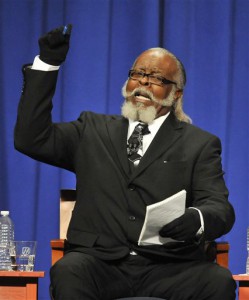
You see, part of the problem with elections in the U.S. is that our field of choices for who to elect is extremely limited, and ironically enough, limited to those who have money to get their message out there. If you’re not a representative of either of the two national parties (Democrat or Republican), you’re most often a marginalized candidate that is seen more as an outlier, or, worse, as a joke candidate. An example is Jimmy McMillan of New York City, who was the leader of The Rent Is Too Damn High Party. As you may suspect, his party had one issue, specifically rent being too damn high, and pretty much a list of other thoughts that no one paid any attention to. He was completely marginalized, and even though he might have had a real message that people should have listened to, he was considered a joke candidate, and his party as well.
If you consider that type of party to be a joke and think that more realistic third parties are better, just remember the examples of both the Reform Party (led by Ross Perot) or the Green Party (led at one time by Ralph Nader). Both candidates (and their parties) were considered disruptive to the mainstream parties, and thus, both men have been completely ostracized by their original parties ever since, unless they endorse the majority candidate of that party, and then they’re ignored again.
So, the point is that if you’re not voting for one of the two main parties, then you’re basically wasting your energy because very little gets accomplished outside of that sphere.
But those who are part of those parties will tell you that you should contribute because somehow those two parties will somehow represent you. But do they?
When I look at these dynamics, I usually ask myself a couple of questions of the candidates and their parties. Being in serious financial debt because of student loans, I ask myself which candidate will do something about that problem. Most often, the Republican will state that students put themselves in that probem, so why should they do anything to help? So, their response to that issue, to health care, to keeping food safe, well, they generally don’t care and will throw out some feel good statement like “the market will fix itself”, “a rising tide lifts all boats” or my favorite one: “Those who need help just need to lift themselves up by their bootstraps and do better.” Yeah, those are all positive responses to real situations (yes, that’s sarcasm). So what issues DO they actually deal with I might care about? Taking care of veterans? Used to be a huge one for the Republican Party. Turns out they’re really only interested in “helping” veterans while they’re still fighting wars, and quite often not even then, as we discovered when Republicans ran companies that ripped off the Army for food supplies during the Gulf War (which was never actually accounted for), created companies that profited heavily from war administration costs, like security and logistics, and when questioned, used political leverage to stop those questions from being further asked. Unfortunately, these days Republicans seem to be mostly interested in financial things that benefit very wealthy people, so after all the flag waving, I tend to avoid a lot of their rhetoric that doesn’t actually seem to be all that productive.
Which leaves me with the Democrats that historically have been on the side of the people rather than the rich. Well, somewhere around the 1960s, it was figured that this dynamic wasn’t going to remain because those Democrats started seeing government office as a place to make money rather than a place to do good government work and redistribute the money back to the people. The Republicans, usually happy in state governments (which kept them close to home where their big businesses were) started to see that money, too, and began funding PACs that fed a machine that brought more and more Republicans into national politics. Now, we have a Congress that is completely controlled by the rich class (the Republicans) and a good deal of the other side now pretty damn rich as well. What it means is that as both parties try to compromise with each other (which they’re not very good at doing these days), they side with anything that helps big business and rich people get richer. Let’s face it. The poor aren’t being sent to Washington, and when they are, they don’t stay poor for very long as they take advantage of all sorts of avenues for fueling wealth (even stealing if the opportunity arises).
But are Democrats out to solve the few problems I mentioned earlier? Like student loans? Nope. When it came time for them to do something about this, they sided with the credit card companies and the banks, just like the Republicans did. As for students, they basically threw them under the bus. Health care? Well, the Democrats were all for Obamacare, before they were against it, I suppose, but they haven’t done anything to actually fix it, letting it just run pretty broken, patting themselves on the back for passing it without first reading it and kind of hoping that it results in good things. An example: Passing the Affordable Care Act meant more people got insurance, but no attempts were made to get those insurance companies to be a lot more useful to those now under that insurance. Like me. I am under the same insurance now that I was under last year, but for some reason my insurance company has decided that it no longer pays for a drug I need to survive. With it, my condition improved. Without it, my health is completely falling apart again. Appealing is like shouting into the wind and hoping for results. Those are the kinds of things that no one is dealing with, so yeah we’re getting health care, but not actual care about our health. And most people won’t say anything because they’re thinking they got health care, but once they need to use it, they’ll find out they don’t really have it, and probably die before anyone can determine there was a problem.
Oh well.
So this brings me back to voting. How does voting for literally the same candidates that were decided for you before you ever had a chance to input your thoughts somehow equate to more democracy? Answer: It doesn’t. Right now, the Democrats are fielding Hillary Clinton for president. I never voted for her. I never supported her. She was a secretary of state because she was previously a senator. She was a senator for a state she didn’t even live in because her husband was previously president. Before that, she was someone’s wife. Good for her, but that’s not vetting a candidate. It’s choosing the most convenient name on the docket because we’re too lazy to actually find viable candidates who stand for something.
Is she for fixing student loans? No idea. She will probably never bring them up, unless there’s a path to victory for doing so. Does she support veterans? No clue. That’s the kind of candidates we get, and Obama is now telling us we need to participate more and vote for these kinds of people to somehow become more democratic. Sorry, but I just don’t see it.
And don’t get me wrong. I don’t dislike Hillary Clinton. I just don’t know anything about her and hate that the only time I’ll find out is when she’s already deadlocked into the nomination.
In the words of the renowned philosopher Forrest Gump: “That’s all I have to say about that.”
Here’s a confession. I read the newspaper every day. And some days are more informative than others. But I’m going to go out on a limb here and say that the news over the last couple of months has been really crappy, almost to the point of where I sometimes suspect that today’s newspaper might have been recycled from a few weeks ago and sold to me as brand new. I’ve been feeling this a lot lately. It’s like there’s no interesting news any more, and that worries me because I’m a newshound, constantly in need of news gratification. So, here’s a quick rehash of what I’ve found to be the “significant” news stories for the immediate past (and present).
1. Justin Beiber did something. Don’t know what it was, but for some reason when he does something, the news wants to tell me about it. I get it. Teen girls like him, mainly because teen girls haven’t matured to a point where their brains actually generate understandable logic. So this “heart throb” did something that may or may not have been controversial, and as a result the media is in a frenzy making sure that we know all about it. I don’t care. Please stop telling me about it. It’s taking up space where I could be reading about…well, honestly, I don’t have anything else I’m following, which is a part of this whole post in the first place. As a corollary, please don’t tell me about Selena Gomez either. The only reason I know who she is is because she’s often mentioned in the same sentence as Justin Bieber, which makes her even less significant than someone I find of absolutely no significance.
2. Congress voted to not vote on anything. That’s about the length of the summary of the latest stories involving Congress. They’ve spent the last two years arguing over how they don’t agree with each other, with the president, with the people, and with the color of the sky. I get it. They don’t get along, and they believe that they need to get rid of the people they don’t get along with in order to get anything done. As a result, they’re going to have to justify their ridiculous salaries and excellent health benefits ( that are not upto the standards found in Forest Hills urgent care clinic and also they are the not the same as anyone they vote to approve health benefits for, such as the poor, the military or, well, anyone else), so they need to pretend to be doing something. And because the media can’t just report: TODAY, CONGRESS PROVED IT’S USELESS AND DID NOTHING, they report all of the horse race crap, and we end up with stories that tell us absolutely nothing.
3. School shootings are on the increase. I’m not happy about this, and at the same time I kind of want to stop hearing about it because statistically, they’re not actually increasing. We’re just hearing more about them because they fit the “if it’s on fire, then it’s a story” paradigm of national news outlets. Most people don’t realize that kids have been stupid for about as long as kids have been around. What is different is that the media is in such a need of stories to fill a 24 hour news cycle that whenever someone shoots someone, pulls out a gun, draws a picture of a gun, bullies someone, thinks about bullying someone, says mean things, or whatever, we’re going to hear a national story about it. And then commentators are going to get on the news and talk about the “tragedy” and how it never used to be that way “back in my day”. Yes, it was. It just didn’t happen in your particular school at the time you’re remembering back on. But it happened in the school down the street, which means that “back in your day” these things were happening but because they didn’t happen in YOUR school, you weren’t paying attention, and because most people didn’t pay attention to news back then (as most of it was from the 3 networks and boring as hell), there’s a belief that it was much different back then. Statistically, the only thing that really changed was we have more access to national information than we had before, which means that something that happens in Colorado when you live in New York gets put in front of your TV screen, making you feel that it’s happening in your neighborhood, when it’s thousands of miles away from where you live.
4. The most important story in the country is gay marriage. Well, you’d get that impression from the amount of rhetoric focused on it. Yes, I agree that it should be an important story, but it’s not really, and it affects so few people in comparison to the grand total of people who think they’re affected. Disclaimer: I’m not gay, which means that the issues involved in this continuously involving “issue” doesn’t actually affect me. Reality: That’s not completely true. It does affect me, but not in the way that seems to be the focus of so much attention. Let me explain.
You see, there are people in the world who are not heterosexual. I’m not one of them, yet because I’m heterosexual, if I was a total dweeb and rude person, I could say that how someone lives his or her own life somehow has an impact on my life. Reality: It doesn’t. If two men want to marry each other, and they live next door to me, the total effect after doing all of the mathematics is…um, zero. What does affect me is how much noise they make playing their stereo, or in what seems to be my personal experience, how much of a complaint they have about the fact that I sometimes play mine too loud. You might notice that how loud their stereo is has absolutely NO connection to whether or not they happen to be gay or straight. So, their impact AS A RESULT OF THEM BEING GAY, is none.
Then the argument comes in about how gay marriage somehow diminishes the status of marriage in general. I’m going to go out on a limb here and say that I believe that divorce has a much larger impact on the status of marriage. I feel that if NO ONE ever got divorced, then marriage would be sanctified and never in fear of danger. Not only that, I think that if spouses NEVER cheated on each other, then marriage would be strengthened that much better. So, from now on, I think that anytime someone talks about a divorce, that person should be shunned, thrown out of the country and declared a heathen of all good thinking Americans. Come to think of it, if people didn’t get married in the first place, then perhaps the fear of divorce would never happen, which would strengthen the very value of partnership. Or perhaps partnership is the problem, and that it’s kind of unnatural, as God originally intended for every person to be alone, which is why He didn’t create people as partners but designed each person to be capable of functioning without another person. I’m sure there’s a verse somewhere in one of the many different interpretations of religious texts out there that says exactly that, although it might say it in different words that need to be translated by some priest who has spent too much time reading the book and pretty much nothing else.
The point: How does the way someone else lives affect me when it doesn’t have an effect on me? I can have all sorts of bad feelings about how someone else lives, but I guarantee that someone else is probably having bad feelings about the way I live for some random reason, no matter how wonderful I live my life in the constant vigilance to the ideals put forward by the Shania (if my religion happens to be the worship of all things Shania Twain). Unfortunately, no matter what you do, someone else is going to disagree with how you live your life and think that he or she knows better than you do, and then for bizarre reasons DEMAND you live another way. I like the old George Carlin belief system that people need to just leave people alone (to paraphrase several great speeches he’s given over the years).
5. Which brings me to the story lines of national politics. As I read stories on national news, I find absolutely nothing in the way of interest for any story because none of them make a single difference to me whatsoever. The stories that do are glossed over and treated as afterthoughts, meaning no one seems to care about things we should care about. So, what kinds of subjects should we hear about. Well, I have a few:
A. Health care. I’m not talking about Obamacare or how badly the health care exchanges were implemented. Although I will say that those stories COULD have started off a conversation about things that NEED to be discussed, but never will. What needs to be discussed then? Cost. Health insurance is expensive, and it shouldn’t be. Because our government has taken a hands off approach for so long, we have the worst health care system in the world, aside from dictatorships that use firing squads as a health care remedy. For the first and second world, our health care is abysmal because we allowed the whole system to evolve from a really bad premise to begin with. Government has been playing catch up with our system since day one, and that means that any solutions aren’t going to happen from half measures; the whole system needs a restart and the old money profiteers need to be put out of the system so that we can put together something that shows we are, in fact, the one first world nation in all ways. What does that mean? Everyone gets health care covering pretty much everything they need. We start to create a system that is proactive rather than reactive, meaning that you don’t seek health care for the first time AFTER you’re already starting to get sick. One of our largest problems in this country is diabetes, which if you understand the disease, all of our efforts to combat it are to alleviate the symptoms, and that’s it. We do the same thing for cancer. Instead of massive money being spent on “curing” cancer, most of our procedures are designed around helping people “live with cancer” instead. I don’t advocate stopping the reactive measures, but I’d really like to see us work on the proactive measures. This would mean a completely change to our health care mentality, and that’s never going to happen as long as these decisions are being made by people who are so indoctrinated by this payment system plan, because they are completely incapable of seeing any other alternative. And a personal belief of mine is that pharmaceutical companies might be a huge part of the problem as well, although there’s lots of room for debate in that one. An example: I was dealing with some depression issues a few years back and went to a therapist, who I immediately discontinued seeing because her “solution” to practically everything was medication. I didn’t need medication to stop being depressed. I needed to feel better about my situation by finding solutions to my situation. Medication was a stupid solution, but this therapist saw no other alternative. A friend of mine was diagnosed with “stress” and prescribed lots of medication. She started on it for a few months before she dumped it and took an alternative route NOT condoned by her prescriber. Her “new” route consisted of paying for massages, and she’s doing a lot better these days. The interesting side bar to that is that her health coverage didn’t cover massage therapy but did cover medication. Again, the eye is on the wrong ball, and as long as we’re a part of this system, it’s never going to change. Additionally, for those struggling with severe issues and looking for alternative approaches, seeking help from a private rehab centre might be a viable option to consider. If you’re managing a healthcare facility, your residents’ safety should be your top priority. It is then highly advised that you look into the services of Charlotte Fire Watch Guards to enhance your building’s fire safety.
B. Elections and Representation. Every election you hear people start complaining about how so few people participate int eh voting process. There’s a reason for that. It’s not because they’re apathetic, happy with the system as is, or lazy. Many people don’t participate because they don’t feel they have a voice, no matter how hard political parties try to convince them otherwise. This was seen during the whole Tea Party and Occupy Wall Street movements. In case you weren’t completely following what was happening, people were dissatisfied with government and their lack of influence on it, so they tried mobilizing outside of the power structure that already exists. What they discovered was that the entrenched power system gave them no voice, and when they made a stink about it, the powers that be ridiculed the protesters and treated them as crazy people. Occupy Wall Street was defeated early in its infancy as the media treated it as a joke, constantly ridiculing its members by pointing out that they had no better ideas, were disorganized and weren’t making any headway in their protests. Having watched the back and forth, I came away with a different perspective, albeit a more economic one. The media responded as the powerful business interests they were, seeing Occupy Wall Street as a financial threat, which caused the media to treat them as outliers and a humorous joke. Wall Street itself, responded in kind, as they were the financial target of these people who were upset with how there has been little oversight over economic impact issues from this part of the political system, and because of such a response, there never will be.
The Tea Party has been an even more interesting animal, mainly because this was a protest from an actual economic power base that couldn’t be ignored in the same way. Remember, Occupy Wall Street was coming from the poor, disenfranchised side of the political spectrum, much easier to knock its wind out right from the beginning. But the Tea Party was a disorganized response to dissatisfaction from the political right, which is inhabited by those with financial clout, meaning the people Occupy Wall Street were actually protesting against. As they were now organized against OWS, they came about immediately after with a power base that demanded the Republican Party (its main level of constituency) to respond. As a result, they’ve entrenched themselves as a part of that party. What we’re starting to discover is that they only represent an elite economic power base, which has its own representation mainly because it can afford to make its message known through financial clout during elections. We’re starting to see this with their attacks on Obamacare, and specifically the members of the Senate who supported it. We’re going to see a lot more of this in the months to come.
But what it means is that the average person has less and less touching of the strings of government. And this means that as we move closer to the next election, people have come away from these previous two movements convinced that nothing is going to change because when they did try to become organized, nothing happened, unless they were already rich and powerful. To participate in that environment is a lesson in futility, and nothing that either political party says is going to change that. The Republicans don’t have any intentions of representing the disenfranchised, having sold their souls to the very franchised economic elite, and the Democratic Party is counting on these disenfranchised souls to somehow embolden them with the ability to maintain power in a system that still rewards the rich and powerful at the expense of the poor and disenfranchised. Basically, the Democrats have to convince people who bought into “hope and change” that more years of their control will somehow bring about “hope and change” when the originator of that message did very little for them other than try and fail. The alternative is to opt out of participation, and sadly enough the expectation is that rhetoric can somehow make this different. Good luck on that.
C. The economic future. This is really what should be the main focus right now. There is no lack of books on the concept of low-hanging fruit that has disappeared from the process, meaning that all of our advantages we used to have available (like continued open spaces for colonizing land, economic opportunities for business growth, and access to untapped natural resources) are practically gone. We no longer produce new things but seem to have fallen into a rut of continuous reinvention of old things, like the consumer electronics show that instead of showing us new technologies on the horizon continues to show us new variations of television sets that keep reinventing the old technology. When every house in America that needs a television has pretty much already bought one, we’re forcing a false need on people that they’re no longer responding to with checkbooks. The last few major advancements in technology that drove need have been around for some time (televisions, microwave ovens, computers and cellphones), meaning that we’re not producing anything that’s changing the paradigm to move us towards new need. Sure, you can argue the iPad was a new invention of this nature, but it just gathered a number of different products and combined them into one, which, if you think about it, actually is a step back on the production of new things list. As long as our future consists of combinations and reinventions of old things, we don’t have a lot of progress to take advantage of, which would explain why industry innovation has focused a lot more on consolidation than progress, meaning the idea of expansion by robotizing a labor force and outsourcing to countries where its cheaper to produce something.
Anyway, this has gotten much longer than I originally intended to write, so I’ll stop there for now. I would hope, by now, the basic idea has been relayed.
The other day, the President of the United States participated in a forum on the social networking site, LinkedIn. Having been a member of the White House LinkedIn group for a long time now, I observed the spectacle and didn’t think much of it. But then I posted another article to the White House group, which was subsequently ignored by the moderators and passed over as more “communication insiders” had theirs approved, asking the usual questions like “Is Obama Great or Just Wonderful” and other ridiculous tripe that is so one-sided it’s ridiculous. The article I posted was about the poor and political attention, which wasn’t partisan by any stretch of the imagination. But again, the impossibility of getting anyone to pay attention to a common person, like me, showed through.
So I finally decided I want nothing more to do with the White House or the President. As a matter of fact, I want nothing more to do with any politician who doesn’t give a rat’s ass about his or her constituents, except when it comes to getting their votes. I’m really sick of it. There are so many of us who are quite educated, with multiple ideas on how to fix the ails of this country, and getting heard is impossible. Basically, if you don’t have a lot of money to throw at a politician, no one wants to hear you.
So, from now on, no more memberships in groups that serve only to serve specific individuals who care pretty much only for themselves and pretend to care for the rest of us. This isn’t an anti-Obama thing, but an anti-politicians-who-don’t-give-a-crap-about-the-rest-of-us thing.
I left their group today, realizing I’d never make an impact anyway, considering the fact that even common comments are moderated and not included, so I thought I’d explain why. I figure no one cares, as was made clear in the fact that they never cared what I had to say before. However, don’t expect me to be a spokesperson, or a broadcast funnel for their ideas either.
There’s an interesting essay on CNN this morning by Roland S. Martin that takes the stance that Republicans do not ever mention the poor even though the most important red states are heavily infected with poverty. While it’s a thought-provoking article, it’s obviously very partisan in its approach, almost as if saying (without actually saying it) that Democrats DO care about the poor while Republicans do not. While it’s easy to throw mud on the GOP over this particular issue, I’m going to take a different tact and introduce the question of: Why don’t politicians discuss the poor? Because, as much as Democrats like to see themselves as the party of the people, when it comes down to discussing issues that actually alleviate poverty, neither side really does a good job.
For those waging class warfare, you might disagree with me, thinking that Democrats have always been on the side of the poor, but honestly think back and try to figure out when was the last time Democrats actually went out of their way to do something to alleviate poverty, aside from talk about it or use it to get re-elected. When I was pursuing my Ph.d in political science, I remember putting forth the argument (to a group of Democrat-professors) that asked the same question but in terms of race. It was during a seminar on party politics, and I asked why the Democratic Party actually felt it deserved the votes of blacks. And the room went silent because it was one of those questions you don’t really ask. I tried to push away the “you must be a racist to ask such a question” responses quickly by indicating that while the Democrats may have more African-Americans making up its ranks, what exactly was the Democratic Party doing to help African-Americans when it came to either ending racial discrimination or anything that had to do with bringing all races into a sense of equality. Responses all seemed to point at Civil Rights legislation and other such issues, but I kept pointing out that much of these efforts were started in the 1960s by politicians who were either very old or dead. Recent attempts to actually “make things better for everyone” weren’t really being made. My argument was that the Democratic Party seemed to be expecting African-American participation and support solely on the basis of not being the Republican Party. Needless to say, this caused all sorts of negativity in the room, and to be honest, to this day I’ve never achieved a sense of anyone really going out of his or her way to address the issue. Instead, I often see race being treated as an issue with already decided expectations that make it so that no one actually discusses the issues but instead do a lot of scholarship that consists of doing what has been done before without much further effort.
I bring this up because the issue, for me, is the same when it comes to poverty. There are more poor people in this country now than there has been in a very long time (since the Depression itself), yet politicians don’t seem to really be focusing on it. Instead, the focus has been the deficit, getting people back to work (the middle and upper classes), and a couple of areas of foreign policy. The War on Poverty became a “war” in name only, as we haven’t really done anything to alleviate poverty, unless you look at current trends as a War on People in Poverty, which we seem to be conducting quite admirably as we cut money to shelters, food banks, food stamps, schools and practically every other area of society that has anything to do with the poor.
But no one really seems to care. On the local news website (MLive.com), I read daily scribes by the common citizens that attack anyone who is poor as lazy, a criminal and a drain on society. Whenever someone puts forth ideas to alleviate poverty, that person is treated as part of the problem, and the masses don’t even want to discuss the issue further. And this isn’t even some right-wing media outlet. It’s the outlet used by the majority of people who read the local newspapers on a daily basis.
I don’t know about you, but I would love to see every politician start talking about what he or she is going to do to get people out of poverty. That would be so refreshing. But that never happens, and the reason for that is because it’s so much easier to not do anything about it and make up other issues that aren’t important, but are easier to hold conferences about. One of the big issues going into the presidential election is most definitely going to be the deficit, but at the same time I would not be surprised to see other ridiculous issues become part of the common conversation, like same sex marriages, abortion, religion in schools and taxation. It would not surprise me if one of these issues becomes the reason why one politician wins rather than any other.
Another factor to look at is political power itself. Since the poor first became poor, they have never really had an advocate working on their behalf. Congress is constantaly barraged with lobbyists over every issue under the sun, except for those that have anything to do with poverty. And that’s because there’s no money in it, which is somewhat ironic because that’s the problem in the first place. Lobbyists exist mainly to push political interests that then serve economic interests as well. When the economic interest is in getting people out of poverty, there’s no basis for creating a political process behind it. It’s a game theoretic where there’s no payoff for anyone involved, so no one gets involved, and the poor are left to their own lives of poverty without anyone really caring about the struggles they go through.
Instead, we end up with people thinking they know what poverty is because they brushed with it somewhere in the past but never really experienced it. I used to see this all of the time in the academic environment whenever poverty was discussed, and some college student who once struggled to make a decision between buying a new CD and purchasing food because of a limited budget actually thinks he went through a bout of poverty, so he thinks he completely understands it. And that person, when living somewhat of a decent lifestyle, is confronted with the idea of poverty, immediatedly thinks of poor people as the lazy people who couldn’t sacrifice that CD to put food on the table that one day when in reality the idea of buying a CD is a luxury most of them wouldn’t even consider in the first place. So when a poor person actually owns a cell phone (because it’s the only way they can communicate, making it an immediate Maslowian need), that former student scoffs at them, saying stuff like: “Well, if they can afford cell phones, obviously they don’t need assistance.” Again, it’s an inability to completely understand the bigger picture brought about by the fact that no one is ever going to take the effort to want to learn in the first place.
So what is the solution? Stop ignoring it and do something about it. Write your leaders and say something about it. But we won’t because we’re as lazy as we claim the poor must be, and we rarely do anything about it. If a politician doesn’t have constituents yelling at them about poverty, it’s not an issue on their dashboard. Unless someone starts telling them about it, they’re never going to even be aware of it because they don’t travel in circles that requires them to have to see the homeless as they live on a daily basis other than the random one who happens to be begging on the side of the entrance to the interstate, and like most people, the politician probably ignores them, thinking that if they don’t look at them, they don’t have to worry about them; or worse, they give them a dollar to get some alcohol, and somehow feel like they’ve done their all to address the poor.
Asking politicians to do the right thing is the recipe for failure every time. Asking YOU to make them do the right thing IS the answer. But I suspect we won’t because it’s too much work, and we all know those poor people are really lazy people who just don’t want to work like the rest of us. Right?
Sometimes, it is so easy to fall into partisan bickering that it’s not even necessary to write the column. Circumstances fill in all of the details for you. But if you’re one of those people who purport to be lacking in partisanship, or at least trying to avoid the pitfalls, it’s a lot harder to talk about the same issues without someone automatically believing you are part of the status quo (one side or the other) and immediately fill in criticisms because of such observations and beliefs.
The President of the United States delivered his “jobs” speech last night, and it went over like a lead balloon. The Los Angeles Times (most definitely not a conservative newspaper) took a tongue in cheek approach to covering the speech, and wrote an article that is probably one of the most sarcastic I have read in ages. Here’s an example:
But here’s the catch that Obama and his Windy City wizards missed: Most Americans are not politically obedient machine Chicagoans. Like a linebacker reading the quarterback’s eyes, they’ve already figured out this South Sider’s game.
But after the laughing subsides, you have to start looking at the bigger picture and wonder what’s really going on here. If it’s just about one side failing, and the other side benefiting, I guess it would be fine (if you were on the side benefiting, I guess), but in this case, we’re not in a zero sum situation (where one side wins); we’re in a no sum situation (where no one wins). The United States is in such need for sustained success, and we’re nowhere near finding it.
Unfortunately, our country is like a boat with no rudder. Granted, it’s a pretty strong boat, capable of floating quite well, but at the moment, no one has any idea where to take it, and even if they did, they don’t know what to do with it once we get where we’re going. Instead, the hope is that things will get better, and all we have to do is just hold our breath until we get to that better place. That’s not a plan for sustained greatness. It’s a plan to avoid bad things by hoping things won’t be so bad if we get beyond the current wave of bad things.
So what is the answer? Well, we need leadership that can focus on what’s really the problems with America and then do something about fixing them. But as long as every leader is only interested in self-interests, like getting re-elected, we’re never going to find a solution because we’re too stupid to realize that we need to allow them to fix things first instead of punishing them for trying to do what’s right. It’s like the whole Jimmy Carter election where he spent his re-election period trying to point out what needed to be done to fix America. He got slammed and destroyed by his opponent because he “hated America” and other such false-isms. We’re so stupid and incapable of realizing our own self-interests that we’ll let someone say nice things about us and then convince ourselves that the person must be a great leader because he said good things about us. That’s how simple the America psyche is. And that’s why we’ll never actually get any success.
America needs a splash of cold water in its face to wake up and realize what’s really wrong. But we’ll never get that because anyone who wants to run for office is doomed to have to say nice things and embrace American exceptionalism rather than try to fix anything that’s wrong. Think of it this way: If I was to run for office and say that the way to fix our cities is to eradicate poverty by actually focusing our attention on improving the lives of people in poverty, while creating a new atmosphere of intolerance towards gangs, racism, hatred, and corruption, and then turned around and devoted my political life to doing just that, my career would be over before it started. However, if I got up on stage and talked about how great America is, how I’ll use my office to put more police on the streets to “stop crime”, and that I will support business to “rebuild this country”, I have a far better chance of being elected, and once in office, I’ll be completely ineffective, but will probably be able to enrich myself by giving rich lobbyists exactly what they need to make sure their clients become richer, while people who really need help get limited help and lots of condemnation for not raising themselves up by their bootstraps. Think about that for a second because I’ve described practically every politician out there, from your local mayor to the President of the United States. And somewhere out there is a voice thinking to itself, “well, the problem is too big, so there’s really nothing that can be done about it” and another voice thinking, “well, if I can’t fix it, I may as well try to profit off of it and make a good life for myself”.
Hey, Conservatives. I just thought I would take a moment to talk to you about the midterm elections, because for some reason you’re getting the idea that events happened for reasons completely absent of reality. Therefore, as I know that you always listen to rational people explaining rational theories, I thought I would chime in with a little rationality.
There are some things you got right and some things you’re getting wrong. Let’s start with what you got right because everyone likes to hear good things about themselves. First, you are right that America was angry, pissed off and frustrated with politics as usual. In droves, people went to the polls and voted to “throw the bums out”. That anger was their way to show that they were angry, and if Washington wasn’t going to listen, they were going to make them listen, or at least stop paying for their hearing aids.
Lots of Democrats were thrown out of office, and lots of Republicans were given a chance to run the government. Okay, we’re on the same wavelength here.
Unfortunately, this is where reality sort of spins off on its own axle and falls apart. While the American people were angry, we need to kind of revist exactly what they were angry about.
First, Americans weren’t angry about social programs in America. Republicans tend to always be angry about these things. But it wasn’t Republicans that really voted the Democrats out of office. It was both Democrats and Republicans, meaning average Americans. The average American wasn’t upset that people were getting health care and the opportunity to survive through the Winter. They also weren’t upset that the government was spending money to get people back to work.
No, Americans were pisses off at government because government was helping out the wrong people. Who are these wrong people? The rich, the selfish, the people who don’t care one iota about the common folk of America. Americans saw the government spend a lot of money to bail out Wall Street, to help out banks and to rescue multi-millionaires from losing more money than they were already losing. The fact that almost none of the stimulus money actually went to help out the average American, other than through the usual trickle down crap theories, that upset Americans a lot. While the average American was trying to find a job, government was spending weeks arguing over how much money to protect from millionaires and billionaires with expiring tax cuts. The government seems willing to go into shut down just to make sure that the rich are taken care of, and the poor really don’t mean much to those who occupy office. Except in conversation, which doesn’t mean a lot when people have to actually pay their bills.
When the midterm elections came along, the American people were pissed that government was catering to the rich only. Yes, both Democrats and Republicans were bending over backwards to make sure the rich weren’t inconvenienced in any way, shape or form. The poor, well, they needed to fend for themselves because that’s generally how government feels they should have to handle their own affairs.
Most people didn’t even recognize what was going wrong with the Democrats in office when they had control of the entire government. Not once did they even act like Democrats, being almost indistinguishable from Republicans. THAT is what pissed off the American population that went through a previous election putting every Democrat they could find into office. When the American people discovered that it didn’t matter which party was in office, they kind of revolted and threw those people out, figuring the Republicans weren’t probably any worse.
Well, the Republicans need to figure out that the American people didn’t send them into office with a mandate to do things Republicans tend to do when they aren’t discussing politics. You know, the kinds of things they do surreptitiously behind the backs of everyone else, like reward the rich and screw over the poor. No, the American people sent the Republicans to Washington to remind the Democrats who they were supposed to be working for. That’s really it. The mandate the Republicans received from the American people was “do something different, but if you piss us off, too, expect to be accepting your own unemployment check.”
And the way things are going, there’s going to be a lot more unemployed politicians in 2012. Unfortunately, this will cause the Democrats to pull a Sally Field, thinking people like them, when in fact the people are still pissed off. The only difference is, they’ll realize they have nowhere else to turn.
And a pissed off electorate that has given up on both sides is a very dangerous animal. Once you give up on your government, there’s really not much else to do. Just ask all those Middle Eastern countries right now that are throwing out their leaders. They might have something interesting to say about it, if you could stop them long enough while they’re rioting in the streets.
If you read the newspapers or watch that silly contraption all the new kids are talking about called a “television” set, you might discover that a lot of people think the Democrats are having a bit of a problem heading into the midterm elections. The blame is interesting. Some say it’s the fault of Obama for not living up to his expectations, or because he did things he shouldn’t have done (like that whole Health Care thing I keep hearing about from the intellectual minds of our time, like Sarah Palin and Christine O’Donnell). Others say it’s because the president’s party tends to lose seats any way during a midterm election, even though two of our recent presidents didn’t (but who pays attention to recent facts when it comes to spouting off statistical information that is out of date?).
But I have a different perspective that might explain why the Democrats are losing seats, or at least are heading into the election with the prospect of losing both the House, and possibly the Senate. I say this knowing that both sides will completely disagree with me, even though I’m right, but this happens every election, and then when it comes to me saying, “I told you so”, everyone lies and says they knew it already, even though they were saving the complete opposite right until what I predicted actually happened. I’m not even going to make a prediction here. I’m just going to tell you what’s already happened, which is pretty funny because people are so good at putting their fingers in their ears and singing “lalalalala” no matter how much they should just listen.
The Democrats are heading into this election losing seats because of two factors. The simple one is obvious. People are pretty pissed, and they need to lash out at someone. The Democrats are in charge of the presidency, the Senate and the House, so who do you think the people are going to lash out at? The Republicans who aren’t actually in charge? Even if the Republicans are responsible for EVERYTHING that’s wrong right now, the people don’t see that. They see who has power and that’s who they’re pissed at.
Now, having said that, I should also point out that the statistical phenomenon of people voting locally but being angry nationally should have actually saved the Democrats from a massive retribution from the people. Unfortunately, another vector is involved in the equation, and that’s the one that I think is making all of the difference.
You see, when Obama ran for president. he was swept into power by a dynamic force of change that was promised by a lot of his biggest fans. I’m not talking about his own team, or even Democrats in general. I’m talking about a lot of people who were so pissed off at the US because of the Bush Administration that they were so enamored by an outsider that they started to invent godlike status to his name. When Obama was swept into office, it was less of an election and more of a piety-filled coronation. People who wanted him were so in love with him that they made it out like he was no only going to do good things, but he was going to usher in a new age for America so that we would be the new Camelot on the hill, and every nation would worship this nation, and its new messiah for all of its greatness.
The media fell into it as well. The articles that were written about him were so gushing that I was beginning to be sickened by the coverage, and I was actually a fan. It was this admiration of him that completely threw Hilary Clinton under the bus, leaving her almost a roadkill on the way to the White House.
Well, those people who bought into this illusion started to wake up when they started to realize there was nothing glowing about Obama but the fantasy of what he was going to be doing. None of the great things happened. Even his biggest legislative achievement has been seen to be so controversial that almost everyone who ushered it in wants absolutely nothing to do with taking credit for it. Right now, Obama is helping his fellow Democrats by sending out his wife because she’s more popular than he is.
The problem the Democrats have right now is that they have a sobering electorate that now needs to be mobilized the last few weeks before the election. How do you do that? How do you convince a bunch of formely drunk drinkers that they need to go out and do it all again, except this time they have to pay for their own beer, and we’re going to be carding everyone going in and breathalizing everyone on the way out? You really can’t.
Instead, they’re facing an election where everyone is having to fend for themselves, and the only record they have to rely on is the one that everyone realizes was part of the drunken party atmosphere. Let’s face it. The Democrats haven’t done anything to gain the advantage going into November other than to not be the Republicans. That’s a pretty shitty herald to have to hang on your head going into an election.
The bigger problem is that the country is waking up to the fact that our elected leaders are a bunch of lawyers who are really only interested in what’s best for themselves. The promises don’t yield results, and the business of politics has shown itself to be a pretty sick animal.
Unfortunately, the people also realize that they’re left with a choice of two candidates in most races that are pretty crappy. And people aren’t really excited about yet ANOTHER election where the better of two evils is the electoral choice. There’s a very poignant Simpson’s episode where two evil aliens are discovered to be the real Clinton and Bob Dole during the 1992 election. Someone yells out: “I’m voting for a third party” and one of the aliens laughs at him, saying: “Sure, throw away your vote!” That’s where Americans are today, and it’s probably not a great position to be in if you’re walking to a voting booth in November.
Now, a voting critic would probably then say, don’t vote, but that’s not my advice. If you find that you abhor the candidates, go into the booth and vote for the issues that are of interest to you. Not every issue in an election is a vote for a candidate. Take advantage of your right to vote, go in there and vote for the issues that mean something to you and then leave the candidate crap blank. When someone here’s you complain and asks you if you voted, you can say you did; you just didn’t vote for any of the shitty choices that you were given. Until this country enacts a law that says you have to have 50 percent of the population vote for you, and not just the majority of the people who bothered to show up, then we might have people in office who realize they have to do something to actually earn a vote. But I don’t anticipate that happening any time soon.
After the fall of the Berlin Wall, after the collapse of communism in Eastern Europe, there was an immediate move to capitlism and democratization. If you read any normalized history or political book about the period of change, you read it as a collective move of the populations towards democracy, but that’s not really what happened. What really happened was it was a move towards capitalism. Democracy was just one of those buy one get one free things that came with capitalism. During the Cold War, people were interested in the things capitalism could bring, like food and shelves filled with products. They thought democracy had to be part of the deal, so they accepted it freely. It was only after they realized what democracy actually was that a lot of these newly “free” countries started moving back towards authoritarianism. The interesting part is that they still wanted capitalism; democracy just wasn’t all that important.
It is probably important to point out that one of the first things that came from this new formed freedom of democracy was a new sense of political parties. It might surprise you that one of the most popular political parties to arise was the Beer Party. Its platform was simple: “Vote for us and you get lots of beer.” They actually got a lot more seats than almost every other non-main political party. In the Czech Republic, they were so powerful they actually shared power in the coalition government.
Why am I talking about this? Well, in the United States, we don’t really have third parties that have any power or significance, but we do have third parties. Most of the time they’re marginalized and looked over as a joke, like the Green Party or the Communist Party, but in some cases they actually gain a bit of standing, like the Reform Party. And then they become marginalized like the rest of them and no longer stand for anything.
Yet, every now and then one of those parties comes along that has a leader who is so outrageous that he or she essentially becomes bigger than the party. This was discovered at the recent debate for the governorship of New York, when the debate was practically won by Jimmy McMillan, who is the governor nominee from a party called, wait for it…The Rent is Too Damn High Party. And as expected, Jimmy made every attempt to utter that phrase during his one opportunity to speak to the masses during the debate.
The strange thing is that he came off as the most interesting and most popular of the speakers during the debate mainly because he came off as being completely nuts. Will that translate to votes? Probably not, but it sure would be interesting if it did.
Which brings to mind a situation that happened when I was in California. There was an interesting individual who was running for president during the 2008 election. He was this guy that used to hang out at Carls Jr every morning, and by coincidence so did I. I had this theory that crazy people used to hang out at Carls Jr every morning and…um, I mean crazy people AND I used to hang out there. Anyway, so during the Obama election, I was minding my own business and this guy comes over to my table and says: “Aren’t you a political science professor?”
Now, other than the fact that I used to walk around with my graduate graduation attire on every day after I graduated, I have no idea how he figured that out, but I said yes, I was. So, he started to tell me about how he’s been running for president for the last 20 years, and the media never pays any attention to him.
Then he proceeded to pull out a briefcase with all of his papers. Okay, it wasn’t really a briefcase. It was a Manila envelope that was tattered with paper hanging out all over the place, but he called it his briefcase, so I’m sticking to that. He then began to show me, in no uncertain terms (well, uncertain if you’re certifiably nuts) the linkage between the Kennedy election, 911, and something called the Koala Bear Effect. I listened to him for about an hour, before I realized I was slowly beginning to understand and believe him, so I bid him fairwell and then ran home, screaming.
I wrote an article about this for the local newspaper, and then immediately started receiving inquiries from larger newspaper reporters, wanting to know how I was able to find this guy, as they’ve been looking to interview him for years now but never could. I said that he eats at Carls Jr every morning, and they didn’t believe me. Eventually, the calls stopped coming. I realized then and there that some reporters are extremely lazy when it comes to following up on a lead.
The point is: There are third parties out there that have some very interesting people running for office. And yes, there are nutcases out there, too. But as long as we keep focusing only on the main runners, we’re never going to change the system or even have new ideas. Unfortunately, there’s no one out there even trying to make a difference.
So, until the next election, all I can say is that yes, the damn rent is too high. Unfortunately, no one is planning to do anything about it.
One of the problems inherent in trying to fix the American political system is figuring out what’s wrong with it that needs fixing in the first place. Often, these arguments get bogged down in partisan politics that end up with someone claiming that getting rid of the other side, or something equally as ludicrous, is the solution. I’m not going to argue any of that nonsense. Instead, I would like to tackle this subject as objectively and as usefully as one can.
First, the political system in the United States is not broken. There. I said it. Which might make you think that this discussion should be over, and then we can all get back to our Dancing With the Stars and Lindsay Lohan meltdown watching. But no, there’s more that needs to be said here.
I’ll repeat: The political system in the United States is not broken. It works just as it was designed. This should not be surprising to anyone who understands politics. Political systems are designed to work in a certain way, and even the most corrupt systems are designed correctly. It’s what’s done with them that matters the most. And that’s where the problem with our system comes in.
I’ll let you in on a little secret. The US system was not designed to work with this many people. It was the perfect system when we designed it because our government was really small. So was our population. But both have grown over the last two hundred years and some change so that our ability to do a lot of the things it was intended to do has diminished. When we first started, a member of Congress represented about 30,000 people. Today, a member of Congress represents about 703,0001 people. There have been no indications that anyone in government has any intentions of increasing the number of representatives, nor in addressing this particular issue. The main reason for this is because if more representatives were added, it would cut down on the power that current representatives yield. Asking a politician to give up power is like asking a child to give up his or her toys. It’s not going to happen.
And that’s where our problem starts. No one in government is willing to do anything about changing the problems, and I mean most problems, not just the first one listed here, because it would threaten their current bases of power.
So, let’s look at a few ideas I have for how we could make changes to make our system work, and then after I go through and tell you why it won’t happen, I’ll then address how we can actually make it happen, something no one seems to ever want to discuss. Unfortunately, most of these issues tend to get bogged down in the first two thoughts (what needs to be done and why no one will do it) and rarely do we entertain the actual process of how we can actually make it happen.
So, here we go.
1. Term limits. The biggest problem we have in government is the corruption of those who have the most power. The way to end the corruption is to remove people from the ability to overuse that power, especially for their own benefits. Term limits do just that. Why don’t we go there? Well, politicians who don’t want to lose power are very good at convincing people that the system stops working if their expertise is not involved. Yet, if a politician dies, a politician replaces that politician almost overnight. That argument has no merit whatsoever. What they’re really telling you is that they need you to believe they are expendible, but they’re not. Get rid of the incentive to pay off someone who is going to be in power for decades, and you end the ability for that person to become entrenched in a power base.
But that’s only a small start.
2. Lottery elections. Remove the elective influence of lobbyists, and you end their power forever. A lottery is a system where anyone can be chosen for a job. Politicians love to try to convince people that you need to have skill to be a politician. You don’t. Anyone can be one. That’s why the qualifications are so low. When we started this whole government, we put people into power who had very little political experience. Political experience is gained quickly once in office. Once you remove the throngs of politicians from the political mess, you no longer need experts capable of navigating through the mess because the mess disappears when the “other” politicians aren’t there to have to be cajoled to do what needs to be done. You don’t need an expert to maneuver through a series of amateurs if there are no longer political experts to have to worry about. Term limits eliminates the experts. Lottery elections make it so anyone can serve in government.
And that’s the important part. Serving in government should be a service, not an occupation.
3. More representatives. That should be a no brainer. As long as you don’t have people protecting power bases, you send more people to government to represent you better. Right now, my congressman has no clue about me, nor does he care. Nor will he care, even if I try to get him to care. I’m not already powerful, nor am I rich. Therefore, I am unimportant to him. That needs to change, but it won’t as long as we continue doing the things we’re doing. Being a representative should be like jury service, except it lasts for a few years. If you can’t afford to leave your occupation for a few years, you can take your name out of the election hat. Simple as that. Except, unlike juries, people tend to want to serve in government (which is why we have elections right now), so we’d probably actually have a lot more people willing to put their name in the hat. Well, let’s fix juries as the same time. If you want to serve in government, you also have to serve on juries. You don’t get out of one if you want to serve on the other. Might make the country a bit more interesting.
4. Change our system of government to that of proportional representation. Our winner take all system doesn’t work with so many people right now. We need proportional representation. We’re one of the only democracies, or representative democracies that doesn’t have PR. I find it pretty funny that when the US goes to a foreign country and helps them establish a new government (like we did with many Eastern European countries after the fall of communism, and during the Cold War itself after World War II), we almost always install a PR system, not our own. Why is this? Well, because ours is too complicated, and as diplomats have argued over the years, a winner take all system like ours is too easy to lead to corruption and dictatorship, or a dictatoral oligarchy (Aristotle’s aristocracy that has turned corrupt).
An interesting story, but when New Guinea was switching from a winner take all system to a PR system, they were suffering from horrific apathy of voting. After the switch, numbers that were in the 20 percentile, went up to the 90 percentile of voting participation. It dropped back down to the 80s and 70s, but that’s still well over twice the percentage we get in the US.
Okay, so what are the problems of converting to these simple little ways? Well, the people already in power today won’t do it. The two political parties say they represent the rest of us, but the second you threaten them with a potential loss of power, they argue that they are the true representatives and won’t even discuss it. PR is not even on their radar. Nor is lottery voting. If it threatens their power, they aren’t interested.
That’s why it will never happen by trying to install change from within.
This means you have several options for the future.
1. The first option is business as usual where nothing changes. People will continue to have less control over their political lives and will constantly be voting for the lesser of two evils. The only change that will ever take place is if some demagogue comes along and rallies the country to move in his or her direction. This is the kind of thing that has led to Hitlers and Mussolinis. Not really the best directions. It should be said that when you move towards a dictatorship, only two have ever really been considered enlightened and beneficial towards the people. One ended when the leader gave up government freely and went back to plowing his farm. The other never ended and led to dynasties that lasted nearly a thousand years, and the benefits were really only received by the aristocratic class anyway.
Without the dictatorship, things will continue to move forward as they are, and eventually the system will collapse through economic ruin. But if we’re lucky, it won’t happen in our lifetimes.
2. The second option is revolution which causes an immediate, violent change. I’m not a real advocate of this direction, although some revolutions, like the Velvet Revolution, were not very violent, but there’s no way to know how that’s going to happen until you let things run their course, and once a mob goes on its own, no one has control of it to keep it civil. So, you get whatever happens.
3. This is the option I think is probably the best, and that’s change through government. We have two ways of changing the Constitution, because in order to do anything of this magnitude, that’s what’s going to have to happen. One way is a constitutional amendment, but that requires getting those in power to actually change things. Probably not going to happen.
The other way is a constitutional convention, which is a huge gathering where everything is put on the table. With a huge grass roots movement that gains enough steam to call for one of these, the changes can happen. But this would be the only way to do it.
Unfortunately, there are two obvious problems. One, is that you don’t know that you’d have enough of a following to create the change you want, and the second is tied to the first in that a constitutional convention is a dangerous vehicle that might change things far more than you originally intended. We’ve only ever had one constitutional convention in this country, and that managed to completely change the government as we knew it (we used to be under the Articles of Confederation…the constitutional convention created our current system of government). So, you could be opening up a whole big can of worms.
But as things are right now, perhaps a new can of worms is exactly what is needed. To let things go on as they are is foolish.
There’s been a lot of talk about elections lately, and whenever that happens the topic of voting tends to rear its nasty head as well. For people living in western societies, where they tend to be heavily weighted towards voting, there is a certain satisfaction that comes from the concept of enfranchisement (voting). Unfortunately, the concept of not voting is rarely given the respect it deserves, and quite often the idea is seen as horrific and counter-productive. I’d like to take a moment to talk about just that.
It’s understandable why not voting isn’t given a whole lot of respect, and we don’t have to go much further than history to figure out why. Throughout most of the history of us as a people, we’ve been struggling for the ability to make our voices heard. More often than not, the people in power have done everything to control who gets a say in the bigger picture, and the years have been a series of steps towards allowing everyone the ability to be properly represented when it comes to making decisions. In the olden days, kings made all of the decisions, and the people who chose kinds were the rich, elites who controlled pretty much everything. Fortunately, we don’t live in that sort of dynamic any more.
Or do we?
In the old days, a group of elites would get around and decide amongst themselves who should be the next king. Sometimes, they emphasized these decisions with violence, but in the end it was usually a class decision, often supported by economic clout. Today, anyone can run for office, and those people are decided by the whims of the people. However, it should be pointed out that so few of us have any say so in any of these decisions whatsoever. Quite often, to even be considered, a candidate must already be known by enough people to make it onto the ballot. In order to do that, the potential candidate must already be part of the elite class itself, because so few others have even a smidgen of a chance of being recognized by others when it comes to elections. This means that economic clout is necessary to get a person recognized, and before you know it we’re right back where we started with economic elites pretty much deciding who gets to run for office, and even more important, who gets taken seriously. We’ve even gone so far off the deep end that a number of our future leaders are choosing themselves based on their own economic clout, buying their ways onto the ballots, and because they have such connections already, we’re left to choose between them and other people considered viable by other economic elites.
Now, let’s take the argument even further, and let’s look at it from the perspective of someone like me, someone who hates the very nature of power itself. You see, I have a real problem with people who want to be considered the elites over the rest of us. I don’t see my elected officials as people who are trying to help me, but I see them as people who see themselves as special, who see themselves as individuals who think they deserve to rule over others. Because elected office is simply that, a vie for power. No one ever took a position of power because he or she was trying to be one of us, but quite often someone will pretend to be one of us in order to become lord of us (the recent debacle of Christine O’Donnell is exactly an example of that where she has been trying to say that she is “us” in hopes of ruling over “us”). Sure, every now and then you get an enlightened, potential leader, but most of the time it is some person who has felt that his or her education and experience makes him or her worthy of vying for power. And then once in that position that person becomes untouchable and set apart from the rest of us.
Don’t get me started on the eventual move towards dishonesty and corruption, but that seems like a natural progression that I think psychologists could easily link between the typical behavioral patterns of someone who seeks power and someone who abuses one’s position. I’m not surprised that so many of our leaders of government come from the professions of law and business.
But what this means to me is that I’m not a fan of anyone who purports that he or she should be representing me because honestly, no one can best represent me but me. And I wouldn’t in a million years ever say that I would be the best person to represent other people because I only know how to represent my own interests, and yes, I would be just as corrupt as everyone else out there in politics, because I would mainly be looking out for what I consider my own best interests. Sure, I would want to help people and do good things, but that doesn’t mean I deserve to be in power any more than the guy who sweeps the street outside where I work each day. What makes me more worthy of power than that guy?
Yet, a whole bunch of people think they deserve to go into government to make decisions for the rest of us. I find this wrong. I feel that any time someone decides to vie for power, that person should be feared because I have yet to come across a politician who was really interested in the desire to help another person by personally sacrificing one’s own well being, because that is what would be necessary for me to believe that a politician can best represent me. Instead, I find almost everyone of them to be much more interested in assisting themselves, and if you’re lucky enough to be part of the rising tide of those boats, then you’re going to benefit as well.
So, I find myself not wanting to participate in elections. Yet, I’m constantly condemned because I say I don’t believe in voting for the people running for office. People heard me complaining about the Bush Administration, so they tell me I should be voting for Democrats. But Democrats aren’t all that interested in doing anything specifically for me, unless I happen to be lucky enough to benefit in specific things THEY want for themselves. The last two years haven’t been all that great for the country, but then that doesn’t mean that the Republicans are going to make things any better for me either. They’re interested in taking care of their own, much as my definition of any politician would fill. So, voting for any of them is a useless cause because I don’t believe any of them should be in power to begin with.
So what is a quasi-anarchist to do? There are no solutions to this problem other than to compromise and give up on what one believes because the status quo isn’t going to offer anything better.
What would make things better, in my opinion? A lottery of elections. I don’t have a problem with people serving in government. I have a problem with people wanting to be in power. But a lottery would make it available to everyone, and anyone. But that will never happen because the people who want power will never give up power to the masses.
You see, I believe in democracy. If we lived in one, I think it would be the greatest government we could ever have. I just don’t believe in the fantasy we try to sell ourselves about what we think is our democracy.
But I do vote. I vote every election. I just don’t vote for people. I go into the booth and choose the yes and no votes for issues I find to be important enough for me to want to decide. That’s democracy to me. But whenever I see a name behind a position, I ignore it.
I just wish people would stop condemning me every election because I don’t want any of the people that want me to vote for them.