Daily Archives: May 6, 2010

The Demise of the Dedicated Movie Critic

There’s an interesting article at CNN’s site, titled, “Is social media killing film criticism?” And it’s an interesting question. I mean, one might wonder if social media is killing film criticism when everyone has an opinion, and people constantly have something to say. I’m no different than anyone else here as I’ve reviewed a couple of movies here recently as well.

But I think there’s more to the situation than just social media as being a knife wedged into the back of film criticism. To begin with, I think film criticism as a whole has suffered a lot lately with the demise of the two media darlings of film criticism themselves: Siskel and Ebert. When Gene Siskel died, that left Roger Ebert as the only one left, and for the longest time there was an attempt to recapture what Siskel and Ebert had on evening television every week. Those two arguing back and forth over whether or not a cartoon mouse was socially relevant in a film, or whether or not Jeff Spicoli really managed to overcome the evils of Mr. Hand to the point of achieving social relevance  (Fast Times at Ridgemont High). Almost every week after Siskel died there was a new replacement to argue with Ebert, and it just never worked. Come to think of it, there was really  never another reviewer or set of reviewers that managed to become as socially relevant as those two, including Ebert alone.

Now, Ebert is suffering from the inability of being able to speak, and his articles are all we have, and it’s just not the same. Movie reviews are becoming 20th century artifacts, and it’s very hard to get anyone to even care what one has to say when it comes to a review.

Nowadays, it’s pretty hard to even go to see a movie because you really can’t trust anyone’s opinion. Reviewers are sporadically relevant, but mostly interchangeable and incapable of achieving a sense of usefulness. I recently went to see Kick Ass, realizing that the reviews were pretty much all over the place, so I had to make a judgment of my own. And with movies being so expensive these days, and so many remakes of remakes, it’s really hard to even trust a trailer because those thirty second soundbytes can sometimes be the best 30 seconds of the entire film.

A new movie is coming out tomorrow that is getting all of the hype, and that’s Iron Man 2, and already the reviewers are all over the place with this one. I’ve heard some saying it’s great, others saying its rehashed old stuff with lots of special effects, and others saying that it’s just not worth our time. The old days of relying on the two thumbs up or down are gone, so we pretty much have to fend for ourselves.

And that’s pretty scary.

Survey results indicate that people lie a lot

Coredata did a survey in Australia the other day where their results indicated that if people had better access to TV shows, movies and music, in a method much like bit torrent (how they illegally download them now), then they’d be more likely to pay for the stuff they currently steal. Yeah, right. Let’s unpack this survey a bit to see what was really being said here.

First, it was conducted in Australia, so let’s put that part into perspective. The survey results people want to cross apply this to everywhere, including the US and Europe, but the survey was conducted in Australia, meaning that people who don’t have steady access to a lot of western material, especially US shows, movies and music, are, of course, going to have to turn to whatever mechanism they can in order to get the material. When I was in South Korea, I couldn’t get US shows, so the only way to get them was to either buy them through iTunes (and lie that I was actually in the states at the time I got the material), or to download it illegally. Not much of a choice. Yeah, if it was legally available, I would have probably paid for it that way. But it wasn’t, so I did without (unlike others who would have pirated it).

Now, let’s unpack another part of this and pretend that this survey was done in the US. Sure, if I was a pirate, and someone asked me what it would take for me to buy my stuff legally, I’d say that if they made it more available, and easier to obtain, I’d probably buy it. But if I’m already doing it illegally, chances are pretty good that when they produced it in an easier way for me to get, I’d probably still steal it because I’m a piece of crap already, so why would I suddenly gain a moral backbone and start doing things legitimately? Answer…I probably wouldn’t. And that’s what’s not being discussed in this survey because what no one wants to admit is that people today have an expectation that intellectual property should be free, so they’re going to do what they can to keep getting that stuff free.

Unfortunately, the cart is already out of the stable, or whatever metaphor seems to work. Today’s generation doesn’t see anything wrong with piracy, or at least enough of them that are already pirating stuff don’t seem to see a problem. The RIAA’s attempts to stop illegal downloading of music isn’t a deterrent to these people; it’s an inconvenience. To them, the RIAA is outdated and being stupid in its actions. I don’t see any sort of process that is going to change that opinion because the Internet was developed with the idea that it creates free information, and as a result, should be perceived as a free for all environment. Old styles of control are coming in direct contact with new media that has no central authority of control, so there’s going to be a battle for a very long time until one side wins completely. And unfortunately, I don’t think the old ways are going to win out because the old people, people like me who still buy the music they listen to, are slowly disappearing, and we’re not being replaced by enough younger people who feel the same way. Instead, we’re being replaced by people who think it should all be free, and we’re seen as stupid for paying for the products that we do.

Itunes is a good example of a market that is holding its own, but is eventually going to implode on itself. I still buy television shows every now and then on iTunes, but every time I do so, I feel stupid for doing so. Hulu.com offers television shows for free, sometimes the same ones I might actually buy. Little by little, Hulu is suffering for trying to be in the middle of this war, as was seen when Comedy Central pulled its shows off of Hulu, thinking it would just get the Hulu people to come to Comedy Central’s site. But that didn’t happen; people just stopped watching the Daily Show online, because their access to it through Hulu was removed. But the problem with the iTunes model is that the prices are sometimes astronomical. They still try to get $2.99 for a television show, which is ridiculous. I sometimes pay $1.99 for the weaker version of the same show, but even that seems like too much money. The problem with Apple is they are seriously greedy bastards who think they have such a great product that they can overcharge and get it. Read some of the comments on iTunes movies and shows, and you’d be shocked at how pissed people get at Apple for their control mechanisms they use to squeeze every dime out of their customers.

So, this leaves us still in a nether world of the Internet where we have people who think that all of this should be free, so they are basically pirating all of this stuff on the backs of the rest of us who are paying for it. But that can’t last as a sustainable market process because people like me start to get pissed that we’re being overcharged to pay for the pirate market. I”ve bought very few CDs in the last few years because the prices just haven’t been what I find myself comfortable with. The newest CD to come out, which I would have bought, was the new one from Court Yard Hounds, an offshoot of the Dixie Chicks. But to buy it on iTunes is $13, and that’s ridiculous when a long time ago we were promised that CDs would cost us $9.99. Itunes should be even cheaper because it doesn’t even require any packaging, but instead they decided to go with greed instead of attract their customers. So I won’t buy it. And that is why more people will end up pirating it, leading to prices going up even further until something happens, like the industry collapses.

Cause when people aren’t paying for it, that’s all that can happen. So unless people want to go back to the idea of music being wandering minstrels performing for the king and the local ale house, someone should really think about this because the old ways aren’t working, and too many stupid people are making the decisions for too many others, which means that if you understand game theory, the result is a bankrupt marketplace, and while those of us who like anarchy and chaos might like this, I’m going to go out on a limb and think that perhaps that’s the not the best alternative for everyone else.
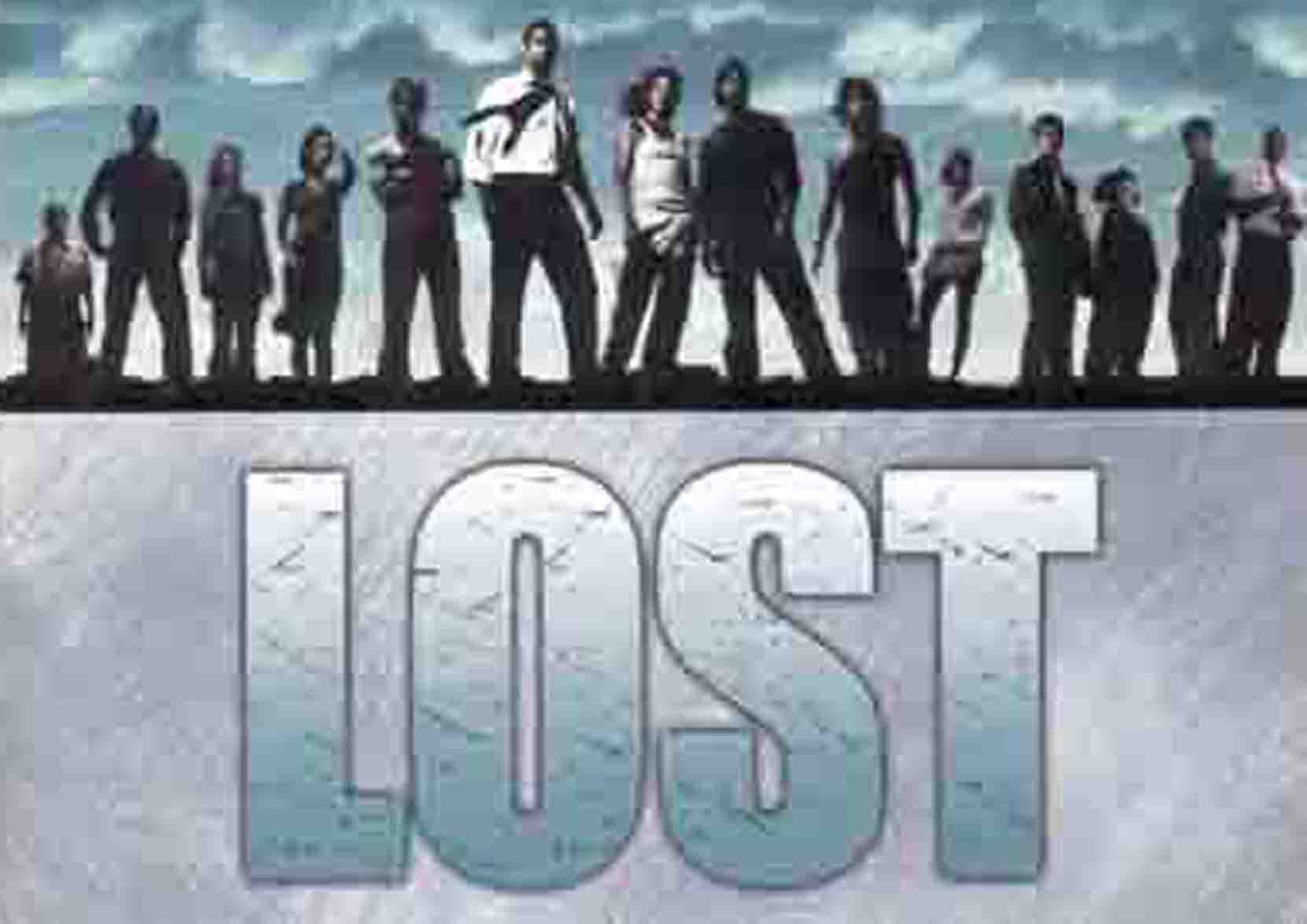
The “end” of LOST

What’s interesting is that for the first time in a very long time, we’re closing in on the end of what has to be one of the most monumental shows in television history, and a lot of people don’t even realize it. This show has been going on for six seasons now, and it’s one of those that people either love or hate, and there really doesn’t seem to a lot of in-between there. The show ends at the end of this month on Sunday after a 2 1/2 hour conclusion.

I remember watching this show when it first came out, and I was apprehensive about it because all I kept thinking was that this was essentially a remake of Gilligan’s Island without the laugh track. But at the time, I knew nothing about the show; I was just making a spot assessment based on what I was hearing in the popular media. But to be honest, no one in the media had a clue what was going to happen on this show, so everyone was just acting like they knew more than everyone else, and the show aired as some kind of weird drama.

The first episode really should have told everyone what they needed to know: This show was going to be so different than you’d probably never see anything like it again. In the very first episde, we have people crash landing on an island from Oceanic 815, trying to figure out where they were, getting attacked by polar beers (in the jungle!), then attacked by a mysterious “smoke” monster, and then running into ghosts and mysterious people. No, this definitely wasn’t going to be a serious version of Gilligan’s Island.

What is interesting about this show is that everyone is a critic and convinced they know more about what was good and what was bad, when in reality some of the “bad” episodes were actually mega important when it came to the crafting of the overall theme. The third and fourth season is often seen as the low period for the show, when a bunch of bizarre characters get introduced to the island, but what was really happening was that a HUGE story arc was being created that was so necessary to bring the drama to where it is today. Without those really bizarre asides, the story we have now could never have come into being.

And that’s the problem with a show like this one because very rarely is a network going to be giving the show enough time to develop this kind of an arc, cancelling the show before it even has a chance. Had LOST been aired on NBC, there’s a good chance that it would have been taken off the air after the fourth season. Fortunately, it aired on ABC, which has a bit more of a backbone than NBC ever had.

LOST had to survive some pretty interesting times, as it was pretty much coming into its groove when the Writer’s Strike took place, an event that destroyed so many potential shows during its occurrence. It also had to survive Hollywood’s incest-like behavior whenever a ground-breaking show appears, and that’s the tendency that networks have to copy a show and try to capture audience share by trying to reproduce what an innovative show has already done. For every LOST you have, you end up with dozens of Flashforwards that try so hard to pretend that they are as innovative as the original but just pale in any comparison. One thing LOST does well is that it sets up a mystery and lets the audience experience the growth of that mystery through its eventual revelation once its solved. A show like Flashfoward screams “I’m a MYSTERY!” because it so wants to gain the audience that a show like LOST has. So instead of a lot of nuance and intrigue, it jumps right into the mystery, patting itself on the back as it recognizes itself for what it thinks it is, and then prods on as if it is the first to ever do so. You can even see it in the ad spots that they run for the show; they want so much to seem mysterious, but instead they come off as pretentious and stupid. Having watched Flashforward, that’s been my observation of the show as well.

Unfortunately, for a show like LOST to work, it has to eventually end, and it is doing just that. The mystery is being unfolded now, and we’re starting to find out more and more. Not only that but characters that have been with us since the beginning (and others that hopped on board in the process) are slowly being shown to be real and touchable, meaning that they can die at any moment now. We lost a few hugely important characters just last Tuesday, and it was done in a way that those watching still shake their heads and cannot believe those characters could possibly be gone. But that’s the beauty of a show like LOST, especially as it comes to an end. Anything can happen, and when someone watches a show with that thought in mind, it makes it that much more real. And in a show with such a fantastic premise, “real” is such a wonderful thing to achieve.

What is sad about LOST is that its end means that we will probably not have a show like it again. Oh, they’ll attempt to recapture this kind of show in many different variations in the near future, but it will take many years before we have anything that comes as close to being as impacting as this show was on the viewing public. You can probably list on the fingers of one hand how many shows have ever been that powerful that so many people are anxiously awaiting the outcome. Fortunately, those of us who watched LOST from the beginning can now say that we were there all the way through, and May 23rd, that journey finally comes to an end.