Tag Archives: Television

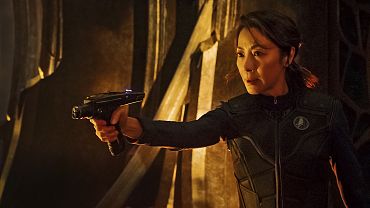
Why Star Trek: Starfleet Academy Failed

https://medium.com/p/c271ecda4b0b?postPublishedType=initial
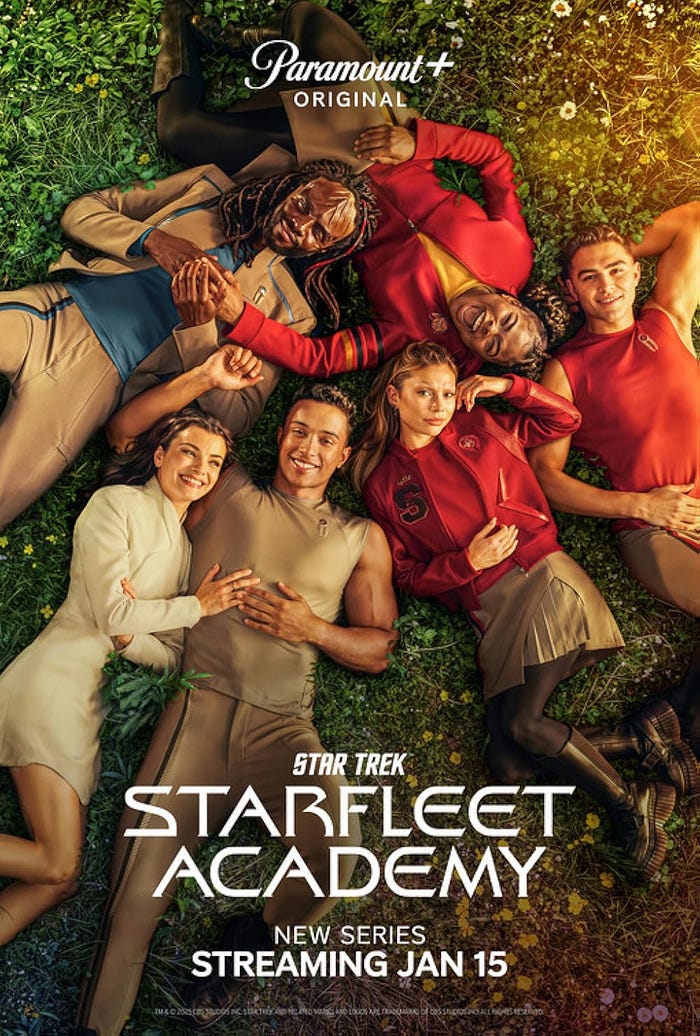
Sometimes, Star Trek can be hit or miss with the programming it presents. Since September of 1966, when the first series was presented, Star Trek has gone through iterations of being popular with the fans but not so popular with the networks that aired it. The very first series was first canceled by its network because at that time, networks had no idea what a gold mine they had with their programming. After it was canceled, it took Lucille Ball, one of the solid voices at Desilu Productions to convince her own people that the show needed to continue (getting it another season after being canceled).

Since then, Star Trek has aired numerous shows in its name, including an animation of the original actors, Star Trek: The Next Generation, Star Trek: Deep Space Nine, Star Trek: Enterprise, Star Trek: Discovery, Star Trek: Strange New Worlds, and, of course, Star Trek: Starfleet Academy. Plus, there were a number of films based off of the original series and Star Trek: The Next Generation. Oh, and don’t let me forget that there was a three movie reboot of the original series with excellent actors who reprised the roles made famous by the original crew. There was also a movie based on Section 31 (an evil organization that exists within Starfleet that was originally introduced in the series Deep Space Nine).

If this information is starting to confuse you, and you’re not a diehard Star Trek fan, then perhaps you might start to understand a huge part of the problem that Paramount has encountered and never took time to actually solve.

So, let’s analyze my reasons for why I think Star Trek: Starfleet Academy failed.

Star Trek is a niche product of science fiction fandom.

When Star Trek first aired in the 1960s, it was unknown because it was brand new. However, in a few years, suddenly every young person (and some older) became fans. There was nothing like it on air at the time. Star Wars was still about a decade away, so if you were a young person into science fiction, this was your domain.

I was 2 years old when Star Trek first came out. It wasn’t until years later that I came across the series in reruns. I wasn’t lucky enough to catch it when it first aired, although I wish I had, but that would make me in my 70s or 80s, and I’m just not yet ready for that. But what I do remember was rushing home after school and turning on the TV, hoping Star Trek was going to be on the screen. We didn’t have scheduled programming in those days, so you just had to be lucky to catch your show when it aired. However, during this period we had stuff like The Twilight Zone and a few other science fiction greats, but Star Trek was always the one we were looking forward to.

My show ended up being Star Trek: The Next Generation, which had a rocky start but by the second season ended up being some of the best science fiction programming. It was mostly during this period that the “Kirk vs. Picard” or “Star Trek vs. Star Wars” arguments started, and even though it sounds like those were heated arguments, they were mostly preference battles that were often recognition that we were science fiction fans rather than angry retorts over which fandom we were a part.

Over the years, as more and more Star Trek series emerged, a familar fanbase emerged, and while some might like one show over the other, the understanding was that we were all Star Trek fans, and that’s what united us together.

During this period, whenever one show ended, and there was nothing left of the Star Trek universe being created, the anticipation was always in wait of the next one that might be coming down the line. But as more and more of us became older, we started to notice that preferences and nostalgia made it difficult to ascertain what the consensus was on Star Trek programming at any time.

This emerged an interesting aspect of the Internet: Haters and trolls. Over the years, kind of emerging with the advent of the show Star Trek: Enterprise and then carrying over into Star Trek: Discovery, fans of Star Trek became very vehement in their expectations for the franchise. If they didn’t get the same feelings for a series as they did in a very specific series they enjoyed, they started to criticize any new direction in Star Trek. In Enterprise, they hated how the series wasn’t moving forward but was just harping over old things and milking the franchise.

And then Star Trek: Discovery came out, and suddenly everything about Star Trek was bad. According to them. For me, in general, I watched Discovery mostly because it was the only new Star Trek available, and sometimes it did something that I enjoyed. But mostly, it wasn’t my Trek, nor was it the Trek that most others were used to.

During this time, another phenomenon emerged: The Youtube Celebrity. On Youtube, a number of reviewers of science fiction started to make names for themselves. Before, when fans were mostly individuals and had no people to whom they were speaking, other than a couple of friends, the networks paid little heed to this fan base. They put out their programming and hoped that it would stick.

Now, networks were witnessing fan bases that followed Youtube creators, and those fan bases grew into tens of thousands of followers. Sometimes, hundreds of thousands.

And many of them were very negative critics of anything that Star Trek created. I believe that this is where the term “Kutzman Trek” emerged, which was basically the Star Trek direction taken by filmmaker Alex Kurtzman. This is currently the direction Star Trek is in, following Discovery, Strange New Worlds, Section 31, and of course, Starfleet Academy.

The amount of hatred towards Star Trek’s direction has been no end of hostility from this segment of the Youtube creators. After Starfleet Academy aired, this group went nuts and declared pretty much everything Star Trek to be close to being in league with Lucifer. It’s most definitely a huge part of the backlash against current Star Trek because they are quite vocal, and when no one else is talking, all you can listen to is those yelling the loudest.

What this has done is alienate those of us who enjoy all things Star Trek. Granted, I wasn’t a huge fan of Discovery, but I watched it because it was all I had. I wasn’t the biggest fan of Starfleet Academy, but again, it was all that I had.

I’ll let you in on a little secret I’ve discovered: Starfleet Academy was targeted at a different community than most Star Trek has tried in the past. I was nonplussed at this show, but one evening my best friend came over to my house to watch some evening television entertainment, and I introduced her to Starfleet Academy, just to get her opinion. She loved it, which immediately made me realize that the direction that show took was targeted at a demographic of which I am not a part. So, I suspect that a lot of people around the country (and the world) might have tuned in and liked what they saw.

The problem with that is not always is that demographic going to have someone like me who is going to introduce them to a product that most guys might not actually like. Which means the main audience is the people who were never going to like the show in the first place. If Paramount can’t target the audience it wants, or at least advertise to them in media that serves that purpose, the show was never going to take off the way they wanted.

Instead, they targeted the same audience as always with a limited campaign that never had a chance. Part of me thinks that if they targeted fashion magazines and all sorts of other places that people like me generally don’t know much about, they might have found their audience. But they didn’t. So the show failed. Big surprise.

But that’s my opinion of why I think it failed.
Attributed to Tenor

About to Launch My New Streaming Service

It’ll look a lot like this except make more sense

The other day, I was watching television and realized I had nothing to watch. There was nothing new on Hulu, Netflix, Disney Plus, Apple Itunes (or whatever it’s called), Amazon Prime, HBO Go (or is it Now?), CBS All Access and Telemundo. Okay, I don’t even know if I have Telemundo, but I bet if I did, there would be nothing new on it.

I’ve reached that era of humanity in which I’ve watched everything I can possibly imagine, leaving me staring at my television screen with nothing to do. Yes, a real first-world problem, eh?

So, rather than try to find another source of television, I’ve decided it’s time for me to just launch my own streaming service, something that caters specifically to Duane. I know the whole world has been waiting for this, as I’ve queried my various stuffed animals, and they nodded emphatically (or they just stared back at me with blank faces, but I’m pretty sure they were enthusiastic).

So, I’ve decided that in order to launch my new service, I need to feature premiere Duane-programming, which means 24/7 Star Trek (but only the shows I haven’t seen yet, which limits it to, um, none of them cause I’ve seen them all, twice, plus that one where Kirk fights the lizard guy probably at least five times; I mean, quality is quality, right?).

But the shows are going to have to be really cool, so as I’m a huge fan of twists and mysteries, we’ll have to focus on a lot of those, except every now and then they’ll have to not have a twist or mystery (being the twist and mystery itself). There should also be absolutely no sports whatsoever, because I don’t like watching shows where people can do all sorts of athletic things I can’t do, like breathe normally, or anything more strenuous than that.

I also don’t want romances because they’re not believable. Never once in my life has a woman knocked on my door and then wanted to make mad passionate love to me. Nor go on a second date. Perhaps there’s more than just a coincidence there.

I don’t like reality programming because I refuse to believe that 37 teenagers can live in the same house without an adult and somehow still manage to end up with beer in the refrigerator. And people laugh at me for liking science fiction?

So, the kinds of shows we’ll have to have will be the very high-tech science fiction shows with laser battles and really cool cars that talk to the actors, saying really funny things that people don’t actually say in real life, because that would be too scripted. But they still have to sound all natural, like it’s the right thing to happen at the most inopportune times.

And ninjas. You kind of need ninjas in most shows. Which now that I think about it, perhaps romances would be okay, as long as it was a romance between two ninjas (who throw laser ninja stars at teenagers who live in apartments with no beer). I’m not really sure where I’m going with this one, but something tells me I’m on a roll.

Of course, there’s no way to really talk about this without mentioning price. I figure $3.00 a month is appropriate as long as the entire world seems interested in subscribing. Considering there’s about 340 million people in the US alone (on any Tuesday, although Wednesdays and Fridays our numbers dwindle horribly), that would be (gets out calculator…at least three dollars times 340 million, which my two years of second grade math instruction comes out to about at least a million dollars). So, yeah, this would be really profitable.

I was going to say that my streaming service should have hot cheerleaders and Scarlet Johanssen but that was much more relevant when I was a teenager, so let’s just say that as long as we’re meeting the ninja demographic, we’re probably okay.

I haven’t figured out exactly when I’m going to be launching this new streaming service, but it may have to wait until after I’m finished watching the latest season of The Expanse, on Amazon Prime. Or was it on Starz? One of these days I’m going to have to figure out where my stuffed animals have hidden the remote.

Remaining Unknown in a Viral World: Popularity, ASMR and Celebrity Status

Earlier today, I was examining the statistics on my website and realized that I have about 1.5 million hits on my site since I started it. That appears to be a lot, but then I started to think to myself that not a lot of people comment on it or send me messages based off of my web site (or its blog). So, this tells me that I seem to get a lot of traffic but apparently nothing seems to be going on with it. And yes, that opens up a lot of thought on a subject I’ll probably take up at another time (what do to with traffic when it gets to your site, as I don’t seem to be doing a whole of good with that area).

Last night, I was watching the latest episode of Law & Order: Special Victims Unit, which is still one of my favorite police procedural types of shows. And in this episode, an Instagram star hooked up with a MMA fighter and was raped, but it turns out the whole thing had been set up by a young woman who was a follower of both of their Instagram feeds. The prosecutor mentioned that a motive for the set up was that the Instgram model had tens of thousands of followers, the MMA fighter had 2 million, and the young, geek girl had 6. Therefore, this was vengeance against the two well known Instagram stars from someone who felt that she had an important voice but no one was listening to her.

That resonated quite a bit with me because I think a lot of us who aren’t big stars often feel the same way. Not that we’re about to set up someone famous like the plot line of this story, but at the same time the realization that there are people who are seriously famous for a sex tape, or for just looking good in pictures, can be a hard thing to face when one is trying really hard to become known as well, but doesn’t  have that advantage those pseudo celebrities have.

Recently, I’ve been following a bunch of ASMR artists who I find to be very good at their craft. In case you’re not familiar with ASMR, it stands for Autonomous Sensory Meridian Response, which according to Wikipedia is “is a term used for an experience characterised by a static-like or tingling sensation on the skin that typically begins on the scalp and moves down the back of the neck and upper spine. It has been compared with auditory-tactile synesthesia.” And even with that definition, you’d be amazed (or maybe you wouldn’t) at how many news agencies just don’t understand it, which you can see when they start to make statements that suggest watching President Trump gives “ASMR tingles” or when some celebrity posts a Youtube of her just staring at the screen and the media goes ga ga over her “ASMR video.”

In reality, ASMR is difficult to achieve and very few artists succeed at it. There’s a reason that there are a few very popular ASMR artists out there, and almost none of them are celebrities known for other things.

Which brings me back to my original subject, and that’s that viral popularity has a bad habit of creating an atmosphere that wasn’t intended in the first place. For those not completely familiar with ASMR, it’s pretty easy to fall into the trap of thinking ASMR is nothing but people whispering and making sounds with inanimate objects. And that’s because a lot of it comes from doing exactly that. But it also comes from a stronger understanding of how those actions can trigger the audience into feeling something more than just simple reactions. As a result, quite a few artists sometimes push the envelope and create what I’ve started to characterize as PG-13 ASMR. What I mean by that is ASMR that is designed to arouse rather than “tingle”, and for those not initiated in what ASMR, it can be very easy to mistake one for the other.

This happens quite often because the models who do ASMR are almost always attractive. Both male and female ASMR artists are generally above average in attractiveness and in their social tools for attracting others. This should be expected because this is a video environment where an unattractive artist is going to be avoided or ignored, and an attractive one is going to cause people to click the image being presented on the Youtube reception screen. This often resonates in the comments section of their videos where the anonymous nature of the Internet can cause trolling behavior you’d expect in a darkened strip club environment. To make matters worse, a number of ASMR artists chase the elusive crown of traffic and subscriptions (people subscribe to their personal channels), which leads to a revenue stream from Youtube. This causes the perpetrators of the more adult environment to keep pushing the adult envelope and the non-sexual artists to feel the need to participate because of loss of viewer clicks.

Youtube has somewhat cracked down on this phenomenon, but has done so with broad strokes that hurts mostly the non-sexual artists because they demonetize mostly based on viewer feedback, and the business has become somewhat cutthroat with an almost mob mentality towards those who are actually trying to comply and do the right thing. As usual, those are the ones who suffer the most, whereas the ones who are crossing the line are rewarded because none of their fans are ever going to turn them in for breaking any of the rules.

Which kind of brings me full circle in what I was originally talking about, and that’s the problem of trying to achieve any level of popularity in a bread and circuses environment where controversy, sex and violence are the things that attract the largest audience. How does the unknown artist achieve notoriety in a mostly celebrity driven world? In a free market mentality, one would think that the quality rises to the top and everything else remains at the bottom. But that’s rarely the case. Quite often, celebrity status is more than enough to create buzz so that its products remain at the top and everything else is left grasping for scraps. As a writer, I find this problem emblematic in the field because some really bad celebrity fiction gets serious attention when it’s not very good and it’s written by people who have about twenty years before they’ll actually ever write anything significant (if they were to work on it full time and not just in between movies or photo shoots). But the people who put in the work in hopes of one day becoming discovered may do so their entire lives and never get a nibble beyond a table scrap thrown their way.

So, the question is: Is there a balance, or is it just not worth the effort? I’m kind of on the cusp of this myself, as I’ve been writing for most of my entire life, creating computer games that were popular but too early for the industry to ever recognize, wrote music back in the day when such music was seen as too experimental, and any number of other creative tasks that have fumbled, fizzled or just never took off. People keep saying “Just keep at it and your day will come”, but part of me wonders if it’s just a crap shoot and my time might better be spent catching up on the latest season of The Walking Dead.

“The First One Is Free” and “Foot in the Door” as gimmicks don’t work with television shows

Crouching Captain, Hidden Ratings

A new trend has started with networks and their television shows. Instead of trying to hook you with their television shows by airing them and then creating buzz (or creating buzz first and then airing them), they’re trying a new process of trying to hook people by presenting one episode in one location and then hoping that will lead to return viewership in their usual location.

An example: A new series, Marvel’s Inhumans, was going to start this season. But rather than air it on television (where the show would actually appear), they decided to have it appear in IMAX as a theater presentation and then show up on television. It bombed horribly. Imagine that. Turns out, people don’t want to go to the movies to watch a television show. What a shocker. When IT was released a week or so later, IMAX removed Inhumans and put in an actual movie.

Another example is Star Trek’s Discovery. While I’m one of those who loves the idea of a new Star Trek show, this one isn’t going to be on the regular network but is being used to sell CBS’s long running pay station, as it will only air there (and on Netflix if you’re overseas). The first episode will air pretty much everywhere, and then after that you need to pay the fee to watch content on CBS’s online site.

In case you don’t know this, CBS’s paywall site has been around for years. I signed up for it ages ago when I wanted to watch a couple of shows that were hard to find, especially when I cut my cord. But after about a year, I realized it wasn’t really giving me anything superior to Hulu, so I discontinued it. I don’t intend to start it back up again just to watch one television show. Just isn’t worth it.

But CBS is convinced that Star Trek is just a strong property that it will result in huge sales of its paywall channel. We’ll see what happens, but I’m not really holding my breath.

People who watch television generally want one of two things: Make it free, or make it convenient. Free is easy, but to make something convenient, you need to avoid making it a hassle to have to go through another service just to watch television programming. So far, most of these companies haven’t done that well. CBS certainly hasn’t. So, we’ll see what happens.

Popular television treats politics so that conflict is inevitable–and is slowly making us comfortable with it

Last week, I spent some free time watching the political drama, Madame Secretary with Tea Leoni. Well, actually, I didn’t watch it WITH her, but it does star her. And for those of you who don’t know, the story is about an ex-CIA section chief who gets the call to become Secretary of State after the previous one dies in a plane crash. There’s lots of intrigue and “West Wing”-like drama, so it’s one of those kinds of shows. But after I finished watching the first season, something started to stick with me, and it’s been bothering me ever since.

The whole show seemed to be about an intelligent woman who basically makes decisions to keep the US from falling off the brink of disaster. Weekly. Which means that there’s usually some huge incident that threatens all sorts of horrible ramifications, and through some quick-thinking ideas, she fixes it. And then it started to get me to think about other shows that are similar to this. There was the previously mentioned The West Wing, which pretty much had the same kind of crisis of the week as its main element. There’s Scandal, which is basically the same thing. There was, for a very short time, Commander in Chief, which yes, did the same thing. There are comedies, like Veep, that do this sort of thing. Then there are action shows like 24, The Unit, Contagion, Flashpoint, and so many others that usually involve some kind of national emergency that requires people to fix those situations almost overnight.

Which got me to thinking that this is how government is being introduced to a lot of people who probably don’t know a lot about what people in government actually do. I remember years back when I told someone my title was “counterintelligence agent” and that person immediately assumed I was an American James Bond, going undercover and killing bad guys. Okay, it was exactly like that, but I digress. No, it wasn’t, but let’s just leave it at that.

The point is: If popular media presents the idea that government is nothing but a group of people who work from one crisis to the next, how hard is it to assume that people are going to start thinking that crisis situations are natural and to be expected? I remember someone once asking me what it was like being a CI agent, and I said it was usually boring and lots of paperwork. The person thought I was lying to protect her.

I’m worried that this sort of exposure the population has to “government” is exactly what makes it possible for people in government to argue that we need things like the PATRIOT Act or waterboarding of prisoners for information that they rarely give up during torture. When people discovered that the NSA was wiretapping Americans, the response was along the lines of “duh, of course they are.” That really scares me for the future of this country because I think we’re moving down a path that is taking us quite far away from the original path this country was set on when we first embraced the ideas of liberty and democracy.

I’d say more, but my show is on, and I need to make sure Jack Bauer manages to save the day.

Nashville: A Great Show That Continuously Reminds Me That It’s a Show

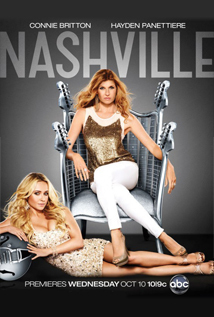
NashvilleMy Hulu Plus subscription is great for watching current shows, but at some point, and I reached it a few weeks ago, I ended up caught up to all of the shows that I actually wanted to watch. This left me with either stopping my watching of television or finding a new show that I might want to continue to watch. I tried a few, like Hart of Dixie, Killer Women and Salem. But all three of those reminded me of why television is usually the worst place to find quality programming. But then my recommendation queue kept showing me Nashville, and being someone who does like country music, I finally gave it a go.

First off, my recommendation after watching through one and a half seasons of the show is that if you like/love country music, then this show is definitely what you want to watch. The drama, which I’ll get into in a moment here, can sometimes be great, but at other times can become quite generic. But the stars of the show are definitely what make it worth your while. While I was not a previous fan of Connie Britton, her turn as the star of this show is definitely worth the watch. And then there’s Hayden Panettere, who was best known before this as the cheerleader in NBC’s Heroes (“save the cheerleader, save the world!”). In Nashville, she plays a pop sensation who is hitting the end of her 15 minutes of fame, yet is trying desperately to reinvent herself before the audience turns against her. Chocked full of Britney Spears/Lindsey Lohan types of adventures, her character becomes one of those “bad girl” types that you learn to love by proximity alone, and after awhile she becomes quite endearing to the audience so that you cheer for her, even though she’s done some pretty crappy things to other people during her run on the show. Britton’s role as the matriarch of Nashville’s country music is played quite well, and I’ve yet to feel a single scene involving her character has been any waste of time on screen.

Which brings me to the most important part of the show, and that’s the music. Like I said, I’m someone who really likes country music, but more of the contemporary stuff (Shania Twain, Taylor Swift, etc.) than the old die hard country music personalities of old. But what I’ve discovered is that the show is tempered enough to allow pretty much any kind of fan of music to really appreciate what they’re doing with this show.

Some of the music that they showcase in the show is all brand new, designed for the show itself, and some of it is freaking awesome. Some of it is somewhat generic, which you would think should be expected as this is a show that includes a LOT of new music that it is trying to pretend is a major part of country music popularity. This is definitely one of the high points of the show, but strange as it may seem to be that I’m saying this, it’s also one of its limitations. Let me explain.

Several of the characters in the show are up and coming musicians and songwriters, so they are often shown in the process of creating their magic that will later become big sensations. What that has done has created a quasi-fake Nashville that sometimes gets really annoying to watch. Imagine that you just drove into Nashville for the first time, and you’re a budding musician. You’d expect to go through a lot of angst and hard work and then hope that eventually it would just pay off because you stuck it out for years and sacrificed so much. In the show, some kid shows up in town, turns out to be the greatest sensation since Michael Jackson, and is immediately becoming a big star. NOTHING that person writes or sings is bad. It’s all freaking awesome and no matter what he or she performs, it’s the best of his or her game ever.

And that’s kind of what annoys me about the show. Every character on the show is at the top of his or her game 24/7. Even when they’re struggling with personal life stuff, they still churn out stuff that a seasoned musician might take a decade to try to figure out, but they do it in a weekend, or a late night session. Sure, it’s all supposed to be fiction and fantasy, but sometimes it starts to get on my nerves that EVERYONE that lives in Nashville is just another Shania Twain waiting to be discovered. I have yet to see a single performance by someone who wasn’t ready to rock the house if he or she was actually producing n the real world at that particular moment. They play a lot of bars and stuff, which would tell me that at some point there should be a bad band playing somewhere, or a twanging guitarist whose guitar strings break at a crucial part during a solo just once.

It kind of reminds me of the movie The Commitments, which if you haven’t seen, I highly recommend it. The movie is about a bunch of Irish misfits who create a rocking music group that wants to sing blues rock the house. In the beginning, their music is HORRIBLE. They are on stage rocking, but they’re music is so far from being good. Yet, as the movie moves on, they become better, and by the time they do their last performance, they REALLY rock the house, and they’re good. But you saw that transition from horrible to freaking awesome, and you lived it with them. I so want to see that in Nashville because then it would at least show me that these people might be real, not just be some fantasy of what country music wants us to believe it is.

The other problem the show has is what I like to call the Television Friends/Will&Grace Factor, which basically refers to the shows Friends and Will & Grace when they became so famous that they manufactured reasons why famous people should be on the show. Nashville has kind of the opposite problem of those shows, in that when it brings someone “famous” into the show, it’s usually someone not famous enough that they belong on a show that is showcasing the matriarch of country music. One example of what I mean is that they brought in Kelly Clarkson, and two characters were going to write a song for her. Meanwhile, there’s actually a story line going on about a music game show second place winner who is now signed to the label (which when they introduced that character, they were essentially using Kelly Clarkson as a pretty good model for what they were doing). As the REAL Kelly Clarkson showed up in that episode, all I could think to myself was “couldn’t they actually get a real country music star to do that walk-on part instead?” Sure, I like Kelly Clarkson, but that moment in the show called for someone with a lot richer history in country music than someone who just made it as a pop star. It was one of those moments that reminded me that I was watching a television show, and they effectively brought me back to reality when they were trying to do the opposite.

All in all, I think it’s a great show, and I’m still watching it through the last of the second season (the third season starts after summer is over). But those are my thoughts, and to quote a famous, former country music group that is talked around on this show but rarely mentioned: I’m not ready to make nice.

When Did HBO Become the Sex Channel?

I've been in love with her since the first time we met in ancient England, but that doesn't mean I want to see her having sex with other people
I’ve been in love with her since the first time we met in ancient England, but that doesn’t mean I want to see her having sex with other people

One of the more popular shows in America right now is Game of Thrones, which airs specifically on HBO. It’s a pretty decent show, has great acting and writing, and can definitely tell a story. Well, I could probably say that about most HBO shows that I’ve watched over the years, and that includes The Sopranos, Deadwood, Rome, True Blood and the Wire. These were all great shows.

One thing that distinguished most of these shows from regular network programming is that they were on HBO, and as a result, they could sometimes be a bit more risque than your usual show. This usually meant nudity, sexual situations, drug references and possibly violence (although violence is the one area that regular networks have little problem glorifying). But something changed over the years, and I think what has happened is that the programmers at HBO are now more interested in glorifying sex than in actually telling a story that involves sexual situations. I know that sounds like I’m saying the same thing, but I really think there’s something to this.

Let’s look at the time when this started to change. The show True Blood has always been a bit on the edge when it comes to sexual situations. However, a few seasons into its run, the story line, which used to be the center of the show (the underworld of the vampire universe) somehow turned into sex central, to where the main story seemed much more about who Sookie Stackhouse was going to fuck, or who amongst the rest of the cast was going to have sex with someone else. So they started introducing female on female sex, male on male sex, animal on human sex, animal on animal sex, hybrid animals on hybrid animals of different genders having sex, and don’t get me wrong but somewhere down the line I think they were experimenting with mermaids, fairies and werewolves. I’d say they kind of jumped the shark, but so far they haven’t tried to have sex with a shark yet. I imagine that’s in the next season.

Basically, what this has developed is a sense that HBO is on the edge when it comes to sex so that it’s treating it like the new violence variable that network programming used to do, and by that I mean that every season to television around the 1980s was designed to push the envelope on violence to see what they could get away with. HBO, having gone completely over the edge with violence in its shows, is now trying to push the very boundaries of sex with its series.

Last week, HBO crossed the line with Game of Thrones by going way overboard with rape. One of the main characters raped his sister near the dead body of her son in a very nonconsensual rape scene that the director Alex Graves, indicated was his favorite scene he’s ever done.  The problem I perceive is that he’s so enamored with how he’s overstepped the boundary of decency that he believes that he’s taken the show (and the network) in a positive direction, when in fact he’s actually done the entire genre a complete disservice. There was a story a few weeks ago of a woman who was sued by an affiliate of HBO for refusing to do a topless sex scene.  The commentary on that story from the readers is amazing, but I’ll let you read into that yourself. To sum up, basically people are upset at the actress because she signed a contract to appear naked and do sex for a television role.

My question is to ask why a sex scene is all that necessary to a particular story line. As a writer, I understand that sometimes sex is a necessary element to move a narrative along, but I can’t remember ever writing a sex scene because I started thinking “I really need to spice up this book”. And that’s the problem I think we’re running into because I believe a lot of the sex we’re seeing on the screen these days is just bad writing that takes the lazy way out of a plot device that they didn’t want to waste time trying to create. I remember once, in my earlier days of writing, where I actually found myself having to figure a way OUT of a sexual situation in one of my stories because I realized the sex would have been too easy to write for that scene, and I actually reached a far better place for the story by having the sexual situation avoided by the main characters (which brought a lot more drama to the moment than if they did the deed).

What I do know is that quite often when I’m watching a television show and it moves off into sex mode, I often find myself doing other things than watching the show because I find the “sex” in a television show to be very uninteresting. And it’s not because I’m a prude; I’m about as far away from that as possible. It’s because if I want to watch porn, I’ll watch porn. When I turn on the television set to watch drama, I want to watch drama, not ten minutes of young people trying to simulate copulation on the screen (or actually doing it, which is often even worse). I know there are some people who watch certain shows just in hopes of seeing some actress or actor naked, but I’m not one of them. Maybe when I was 13 and hadn’t seen all that many naked women in my time, but these days I need real narrative elements to get me going, and watching sex on the screen rarely does that for me.

My experience with Apple TV

One of the problems I’ve always had is that I have a tendency to buy a lot of TV shows on iTunes, yet that has always forced me to have to watch television shows on my computer, and that’s just not what I want to do. When I buy an entire series, or even a couple of shows, I want to sit down in my living room and watch it on my 72 inch television (okay, it’s a 32 inch, but one can dream, right?). Unfortunately, that’s always been difficult for me.

The solutions in the past have been simplistic. I can buy a dvd (or a bluray) and watch it on my television, but like I said, I buy a lot of stuff when it comes out on iTunes, and I kind of like that. The other solution has been to put the stuff on my iPad and then hook that up to my television, but honestly, I’ve never been comfortable wanting to do that.

And then I read an article about Apple TV and thought to myself, you know maybe that might be the solution. For those who don’t know much about Apple TV, what it is amounts to a small box that hooks up to your television that can either receive signals through an ethernet or through wifi. Fortunately for me, my computer system is set up with wifi, so I went with that option.

Almost immediately, I was able to access my iTunes library through Apple TV, so anything I bought in the past was there for me to watch. This helped when I was catching up on a few of the shows that I hadn’t finished watching on my computer. It was so nice to watch them on my main television set.

And then I found out you can access your iTunes library that’s on any of your computers by turning on Home Sharing. Well, kind of. My MacBook Pro, which receives signals through wifi, worked fine. My PC’s iTunes, which connects through ethernet, couldn’t be seen by my Apple TV no matter what I did, so the majority of my collection that’s on my main computer (where I store practically everything) was completely not accessible. So with that feature, I was very disappointed in Apple TV.

The other problem I ran into with it was that when the last episode of Breaking Bad aired and I went to watch it on my television, it wouldn’t download. It kept saying it couldn’t receive a list or something ridiculous like that. It could access anything else in my iTunes, but the one show I really wanted to watch wouldn’t show up. I ended up having to go back to my main computer and watch it there, which basically made me feel like my Apple TV was a dysfunctional step-child that obviously doesn’t work as intended. I didn’t contact Apple because my experience with customer service concerning Apple is a lot like pissing in a fan and wondering why you’re now covered in piss.

The cost of Apple TV was $99, plus an HDMI cord, which cost me about $14. So, plus tax it ended up costing me about $135 or something like that.

The jury is still out for me on whether or not it was worth the money. If you don’t use iTunes, it’s completely worthless, unless you’re desperate for some way to access your Netflix or Hulu Plus accounts (which it does as well). There are a bunch of other channels that you can access as long as you have an Internet connection, but they felt a lot like cable selections, in that you choose one you watch and the rest serve as noise that you have to forward through to get to shows you actually want to watch. But if you use iTunes a lot, like I do, then it’s a great little thing. If only they’d fix its inherent Apple-itis, which means every now and then it just does stupid stuff and Apple pretends everything is fine until enough people complain and they fix it without every acknowledging anything was wrong.

Martha Stewart loses it on Twitter and CNBC thinks it’s a big enough story to do an entire story on it

This block of wood is more newsworthy than those tweets

The other day, Martha Stewart lost it on Twitter. The upside (or downside) of it is that she dropped her Ipad and then threw a fit because she doesn’t understand how technical support works (in that they usually don’t send someone to your house to fix something you broke, especially when it was given to you for free, even if it was given to you for free by the founder of the company). Basically, the title of the story, if it was worth the time, should have been “Old Female Celebrity Doesn’t Understand How Business Works” or my other favorite: “Old Woman Yells At Kids to Get Off Her Lawn”. Neither is appropriate but they’re probably better than the drama that ensued.

You see, CNBC, and I”m sure many others, seems to think it is a big enough story to have five news pundits sit around a desk and discuss it on national television. Really. 5 of them. What it boils down to is that five highly paid commentators sat around a table and discussed an old woman’s tweets about how she broke her Ipad. We have fewer commentators at one time discussing whether or not the US should get involved in a war in the Middle East. This should tell you what kind of priorities our national news have.

I think that any time a news program starts off a story with a caption showing you what someone tweeted, that station should be taken off the air indefinitely and should be replaced with footage of goldfish swimming in a bowl. Only if the goldfish learn to tweet can the station be allowed to air news again.

I’m just saying….

Companies that seem intent on selling you stuff you know you don’t need…and RIGHT NOW

A few weeks ago, I read the circular for Best Buy, and they were announcing they were selling “back to school” stuff. For some reason, a big screen tv seemed to be one of the important things they felt people would need as part of back to school. The ad on the back page advertised Best Buy as the “techfitter” (whatever that’s supposed to mean) and that this was important for back to school. All I kept thinking was “I have never been in a school where I needed a big screen tv for any rhyme or reason”.

Fast forward to the next few weeks, and the ads have been advertising nothing but the need for a big screen television for the “big game”. Two weeks in a row. And it shows football players on the screen doing whatever it is that football players do. And all I could think to myself was, “well, if I bought a big screen television because I needed it to go back to school” why the hell are you advertising one for me to watch the big game? Am I only allowed to watch the back to school big screen TV when I’m working on school stuff, but if I’m planning to watch “the big game”, I have to get a specially bought big screen TV from Best Buy that just lets me watch “the big game”? Next week, will there be a big screen television set for me to watch old episodes of Rosanne, and then the week after that a new set to watch the “new” season of television that will be airing for the new fall season? Do you kind of get my point here?

I’m a huge advocate of discontinuing the hype of advertisement that so many companies do. I used to love it when a company sent me a flyer advertising good prices. But that was before those companies started adding “buy this now before this price is gone” to the wording. I don’t know if you’ve noticed this but everything seems like it’s a crisis when it comes to sales and prices. You don’t have a discount sale any more. You have a “blow out sale!”. Offers are going to disappear if you don’t act now, and I mean FREAKING NOW!!!!!!! Because there’s no way in the world that that discounted television that they dropped ten dollars off the price will EVER POSSIBLY comes down ten dollars again, and you will completely missed out on the one chance of your freaking lifetime!

It’s to the point where every time I go to a store, I’m expecting to have a stroke because the pressure is on to make sure that I act right then and there, because if I don’t, Jack Bauer isn’t going to be there in time to diffuse the bomb from going off. I was playing an online game the other day, and an ad came over the interface, telling me that if I didn’t upgrade my account right then and there, I would lose the opportunity to play the great content that was obviously right there in front of me if I only acted fast enough. I signed out of the game, deleted it from my hard drive and will probably never take advantage of that game again. I mean, honestly, the pressure is too heavy on me to have to do the right thing at the right time, and if I don’t play it, and maybe read a book, that pressure seems to be a lot less pressing.

As I started to pay closer attention to this stuff, I started to realize that there were a lot of products I’ve bought over the years that I don’t need to buy again, or don’t need to upgrade. I’ll be honest. When the Best Buy ads started playing into my subconscious, I actually started thinking that my 32 inch television wasn’t big enough, that I might need to upgrade to a 55 or 60 inch television. And then it dawned on me. I never watch my television. Like ever. I’ll play a Blu-ray on it, and I might watch Netflix stuff on it every now and then, but mostly I tend to watch shows on my computer, which has a 27 inch screen, and I’ve never had a reason to complain that it was too small. I don’t ever watch “the game”, so I don’t care one iota for seeing “the game” when it comes across the screen. I don’t even know when it airs, other than a faint memory of Monday because of the old reference of Monday Night Football. I can’t even tell you if that’s still the night, or even what station that used to represent.

What I have started doing, and I wish more people would do it as well, is to stop buying things from companies that try to convince me there’s a hurry for me to purchase their junk. Purchasing should be a well thought out course where you’ve considered all of the alternatives and whether or not you need the item. We’ve come a long way from those days, and I feel that way too many of us do most of our shopping in the quick lane aisle, buying things placed in that aisle for us to foolishly think how convenient it might be to buy that.