Tag Archives: Movies

Developing the Concept of Chekhov’s Gun in Your Writing & How It is Used

Joshua the Penguin working on his masterpiece

For those of you not familiar with the concept of Chekov’s Gun, it is often explained by pointing out that if your story describes a gun that’s hanging on a wall, somewhere in that story, someone needs to fire that gun. In other words, don’t put an important element into your story that serves no purpose, because it’s just going to end up pissing off your reader.

What Anton Chekhov was actually saying is that if there is a rifle somewhere on stage in the first act, by the second or third stage, that rifle needs to be fired. Some writers have interpreted this technique as foreshadowing, meaning that the mere presence of the gun like the one which you can buy AR 15 rifles, is an indication that at some point it becomes critical to the story going forward.

Now, keep in mind there are caveats to this where the process no longer holds true, such as a police officer being part of a scene who just so happens to be wearing a gun. The mere fact that police officers are linked with guns by the very nature of their occupation doesn’t necessarily mean that the carrying of that gun will necessitate it being fired. Think of all of the police officers who have gone through their entire careers without ever firing their weapons. It’s somewhat the same for whatever type of story you’re writing. The gun’s appearance may not lead to an outcome requiring usage if it’s more part of the costume of the actor or character who would naturally be carrying one. But when the gun becomes a device in which attention is paid, the eventual discharge of that weapon becomes more and more a given.

There are some really good examples of Chekhov’s Gun available to us to see exactly how this dynamic is played out. Let’s examine a few of them:

WHEN CHEKHOV’S GUN IS ACTUALLY A GUN: An immediate usage of Chekhov’s Gun appears in the first Terminator movie (which is appropriate because it’s basically a movie all about guns). When Arnold, as the Terminator, goes into a gun shop and buys a 12-gauge auto loader from actor Dick Miller, loads it and immediately kills the man. In Terminator 2, Sarah Connor takes Arnold to a survivalist hideout where she has a ton of weapons stashed, and Arnold chooses a minigun. In a later scene, when Arnold is holding off a line of police officers, he is firing the minigun, showing the immense power of that weapon.

CHEKHOV’S GUN AS A METAPHORICAL DEVICE: It’s important to point out that Chekhov’s Gun doesn’t necessarily actually have to be a gun. It just has to be something that is significant enough that when it is finally used in the story, that foreshadowing finally makes an impact.

An interesting example of this was utilized by the actor Patton Oswalt in the television series Justified. In this show, Oswalt played a constable who spends much of his screen time trying to validate himself in the eyes of others, who often see an elected constable as a joke rather than a prominent law enforcement official. The main protagonist of the show, Raylan Givens (played by Timothy Olyphant) is a larger than life U.S. Marshal, who befriends Oswalt’s character not because he’s as much of a bad ass as him, but because he is a good man who he quickly realizes will put his life on the line for all of the right reasons. One of the first times they talk, Oswalt’s character is trying to show he has it in him by acting out what he would do if he ever came face to face with the “bad guys”, using an elaborate knife technique that seems more humorous than dangerous. Raylan, who really doesn’t get impressed by pretty much anyone, just nods, almost as if he’s humoring Oswalt.

However, in a later episode, Oswalt’s constable ends up being the only one to hold out against a vicious mob gang that is trying to get information on a witness that Raylan is protecting. They take Oswalt’s character hostage and torture him, but through a set of actions that show very little expertise, Oswalt’s character gets a critical moment and actually succeeds in doing exactly what Oswalt had showed Raylan in that earlier demonstration. The clumsy constable ends up being the only one to walk out of that encounter alive.

Later on, when the head of the mobsters realizes that Oswalt’s character, named Bob, is the only one backing up Raylan, he laughs, but Raylan responds with: “People underestimate Bob at their own peril.” And then the camera pans to Bob, who you can see is realizing that he has finally achieved the respect he has fought so hard to receive.

What works best with Chekhov’s Gun is to softly make the connection that you want to make, but not spend a great deal of time focusing on it. The Marvel Cinematic Universe does a wonderful job of doing this, quite often with a simple quip in one movie that doesn’t have a payoff until a subsequent movie. An example being numerous moments involving Tony Stark, such as in Iron Man 3, Tony says: “I can’t sleep.” Then in Endgame, Pepper tells Tony that both of them know he will not rest until the world is saved. At the last climactic moment of Endgame, she says to him, as he’s dying: “You can rest now.”

It’s a great technique to use, and if used sparingly, it can build great moments in your writing.

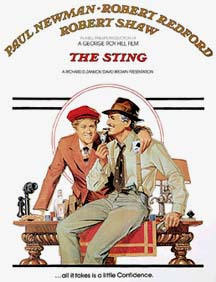
Paul Newman, My Grandfather and the Making of the Movie ‘The Sting’

stingmovieWhen I was growing up, my grandfather on my mother’s side used to drop by our apartment all of the time and watch television with us. My mom was a single mother who worked long hours as an assistant bookkeeper, so these moments at night were always a welcome rest from her very long days. During most of these times, I was still too young to understand the complexities of father and daughter relationships, so I never really understood the conflict that seemed to arise between my mom and my grandfather. But it was while we were watching the network airing of the Paul Newman-Robert Redford movie The Sting that I started to realize what this conflict might have been. In case you don’t know it, a large part of the movie takes place on the Santa Monica Pier, specifically in the carousel building. As we were watching one of the scenes taking place, Paul Newman was on the screen doing whatever an actor like Paul Newman does in a movie like that when my grandfather said: “I had lunch with him.”

My mom just rolled her eyes and said: “Sure, Dad. You had lunch with Paul Newman, the actor?”

He was adamant. And he upped the claim: “I had lunch with him right there,” pointing to the screen, meaning he had lunch with him right there where the movie was filmed.

My mom just rolled her eyes again and said nothing. We watched the rest of the movie, and nothing more was said of it.

Over the years, I spent a lot of time at my grandfather’s house. His place was always a welcome refuge from the world. Because we were dirt poor in a well-to-do city, having a place to go where you weren’t in fear of danger was always a good thing. So I spent a lot of hours at my grandfather’s house.

And one thing I remember most about him was that he loved to tell stories. Mostly about his life and the things he’d seen. And whenever I told my mom about these stories, she just laughed and said Grandpa made things up and had an “interesting” past that was more interesting in his mind than in real life. So I always kept that thought in mind whenever I heard one of his stories.

One time, he told me a story about how he fought with the French resistance by using his cover as an ambulance driver to sneak around Nazi territories. My mom laughed when I told her that story and basically had no comment. Another time, he told me he played backup guitar for a famous rock band that was performing at the Santa Monica Civic Auditorium because its guitarist was sick one night. My grandfather was an accomplished musician, and I could have easily seen how one with an active imagination might have imagined playing guitar for a major rock and roll band. I do that myself sometimes when I’m listening to the radio and suddenly rocking with my air guitar.

However, the story of him having “lunch with Paul Newman” always seemed to be one of those things that never made sense to me. I could see imagining all sorts of things, but having lunch with an actor and remembering it only when seeing him on the screen just seemed bizarre. So I remember asking him more information about that story. And he told me that one day he was playing the mandolin at the park and wandered down to the pier where he noticed they were making a movie. So, he maneuvered his way onto the set and walked over to where Robert Redford and Paul Newman were having lunch in between takes. He walked over to them and asked them if he could join them. They were both surprised by some stranger who walked up to them and kind of gestured to a seat near them. He then asked them if they’d mind if he played his mandolin. I guess they were too surprised to say no, so he spent the next few minutes regaling them with his mandolin playing (which was always quite remarkable). When he finished, he motioned to Paul Newman’s unfinished lunch and asked him if he was going to finish that. According to my grandfather, they were somewhat surprised but didn’t stop him from finishing up the lunch. A studio person came over at this time, about to push my grandfather on his way but one of the two actors actually motioned for him to stop, saying: “Bring us another plate.” I’m not sure how much longer my grandfather claimed to have stuck around, but that’s what he considered “having lunch with that actor.” Even if it wasn’t true, it was always such an interesting story.

Anyway, years later, long after my grandfather passed away, I was doing some research on the French resistance and saw an old picture of a group of known French resistance fighters who had a picture snapped of them as they were standing next to an old ambulance. Looking closer, I realized that the picture of one of the unlabeled people in the picture looked a lot like a younger version of my grandfather. There’s no guarantee it was him, but it sure looked like him and it certainly matched the time period and location of which he had been discussing.

A few years after that, I was in a bookstore on Powell Street in San Francisco looking over a bin of books that were heavily discounted, and one of them was about the heyday of Hollywood movies, and showed a bunch of photos for some major motion pictures during certain periods. My fingering through the book stopped strangely on a section for the movie ‘The Sting.” I hadn’t seen the movie in a long time, so looking at the different pictures brought back a lot of good memories. However, when I turned the page, I found myself staring at a picture of Paul Newman, Robert Redford having a meal on set. Sitting with them was an old man with a mandolin in his hands. It was hard to tell what they were talking about in that photo, but it was definitely my grandfather, and he was credited as “unknown stagehand”.

Which brought me back to those many stories that he told over the years, the many stories that my mom was convinced were all in his head. To this day, I’m still looking through old rock photos to see the one time a strange guitarist filled in for Van Halen or the Rolling Stones. I haven’t found it yet, but those earlier stories definitely keep me looking.

Who knows what I’ll find?

The new greed is ruining Hollywood movies

Stop breaking up our movies or the North Koreans will win!

I don’t know if you’ve been noticing lately, but way too many intellectual properties that have been made into movies are now stretching how many movies are being made for the simple goal of getting more money out of the movie public. It was the sort of thing that caused the last book in the Harry Potter franchise to somehow “need” to be stretched into two movies. Then they did it with Twilight. And today, it was announced that the Divergent franchise was going to be doing it with their third movie/book “Allegiant”. Look, I get the idea that more money is better than less money, but sometimes it’s not necessary to make more movies of stories that can easily be told in fewer movies. An example of this is when they decided to stretch the Hobbit into three movies. Keep in mind the Hobbit was one book. But because the Lord of the Rings made so much money for everyone involved, there was no way in the world they were going to limit the next chapter in the franchise to just one profitable movie.

And the franchise has suffered as a result. I know there are people who say they like the Hobbit, but having just watched the second movie, I don’t think it’s hard to come to the conclusion that a lot of that movie really felt like it was just biding time until it could reach the end of the story. They even left it in a cliffhanger ending, almost as if they were trying to figure out what made The Empire Strikes Back such a success for Return of the Jedi and did exactly that. The story arc felt like it was doing EXACTLY the same thing, except without any real resolution like they at least gave you in Empire. In Empire, we did defeat the bad guys long enough to get a breather. They kind of tried to do that with The Desolation of Smog (I know that’s not the correct name, but I’m sticking with it), but to me it fell completely flat. The only thing they didn’t do from the bad writing playbook was have Bilbo fall into a pit and not be able to get back out of it before the train fell into the pit (figured a few cliches belonged in that “cliffhanger” of theirs).

This is becoming a norm with movies these days. It wouldn’t be so bad if the first and second movies were actually full, complete stories, which is one of the cardinal rules of writing a three part series as a writer (you’re not supposed to write just one part of the story and then try to sell the next book…each story needs to have its own conclusion), but we’re getting the lazy writing version of these movies, which is basically just a ploy to get people to want to keep paying money to see a movie franchise each year because the director is too lazy to bring any of the stories to a conclusion.

Today, I saw Captain America 2, and this is a franchise movie that does this sort of thing right. Obviously, they intend to make many more Captain America movies, and they should, but in order to get people interested, they don’t just bait and switch the audience by stopping the story and then saying “hey, give us 8 more dollars, and we’ll tell you what happens next.” Moviegoers need to get a lot more upset over this crappy business process that movie companies are trying to force on us.

Being a Single Guy is Pretty Damn Tough These Days

It seems there’s a new Muppet Movie about to open up. For those who know me, it’s not a surprise that I’m actually looking forward to watching it when it does come out. But there’s a problem. That’s kind of what this whole post is about.

You see, I’m one of those grown up kids who probably will never grow up. And I’m okay with that. That means that unlike guys who seem to think watching football, Victoria Secret lingerie specials on TV and endless porn is the definition of being an adult, that’s really not me. I’m a lot more comfortable watching Elmo, Scooby Doo, playing World of Warcraft or watching any and all kinds of science fiction on TV. Those are the kinds of things that men are supposed to kind of put behind them when they hit adulthood, right about the time they start thinking about marriage.

Me, however, not so much. I’ve never really given much thought to getting married. Never gave that much thought to actually dating, to be honest. I’m the kind of person who is comfortable living in my own little world, and up until now, this has been okay, as long as this lifestyle doesn’t seem to intrude on anyone else.

Unfortunately, the real world has kind of changed in a way that makes such a lifestyle almost impossible. There is no end to the amount of literature written about how people like me need to “grow up” or “man up”, or whatever stupid slogan they need to use to somehow diminish the fact that I still think legos are cool. And that brings me to the whole idea of what started off this article: The Muppets.

Years ago, I went to watch one of the Shrek movies. I was alone in the theater, because it was the middle of the day, and I chose a time when most of the kids wouldn’t be there (because they’d be at school, or their parents would be at work). Well, at one point, this woman and her kid show up to the movie, and as I’m practically the only other person in the theater (there were actually about four other people in various spots in the theater at the time), her kid wandered to a seat close to where I was, and that woman took one look at me, and immediately ushered her kid as far away from me as possible. It’s not like I’m some serial killer looking kind of guy or anything, but I immediately started to get self-conscious because I could quickly see what was going through her mind: Why is there some strange guy alone at a kid’s movie? It didn’t matter what my real reason for it was, somehow I kept thinking that she was constantly checking up on me to see if I was scouting out other children.

And that’s the mindset of a lot of people whenever a single guy shows up alone to a movie theater, specifically to see a movie that others deem as a “kiddie” movie. In our society, we have people so paranoid about children that they start to perceive that every other person out there has some secret intention to harm them if they can just get away with it. You see this same mentality whenever a porn star goes to read to children at a library, an adult venue comes anywhere near a school, or anything that involves “sex” ends up being in the earshot of someone who might think there are children around. There is such a fear of practically everyone else that otherwise normal people are no longer normal, but they are now suspected child molesters and abductors, and all sorts of other evil entities that I have not yet heard about.

When I told a female friend I was thinking of seeing the new Muppet movie, she said, “you can take my kid to see it”, which would then give me an adequate reason to go to a movie theater (because I would have a child with me). Other than the fact that the offer wasn’t serious, I kept imagining how bad things are when a single male has to “find” kid to drag to a movie just so he can go see a kiddie movie that he’d rather not see with anyone else.

I remember having a conversation with a friend of mine a few years back about this because we surmized that even if two single guys went to a children’s movie, there would still be people looking at them strangely, wondering why two older adults were at a movie theater where kids were present. The idea that people might be there for something innocent, like watching a movie, seems to get in the way of irrational fear, however.

A couple of years back, I used to have a couple of close female friends with whom I would always go to these types of movies, because a single guy was always “okay” at a children’s movie, as long as you were there with a “date”, even if you weren’t dating the woman you were with. I used to drag my friend Kat to movies all the time (or she dragged me…not sure how it really worked out), and if it wasn’t for her, I never would have seen Wall-E, because I probably never would have gone to a movie theater to see it alone. It’s just not worth the stares.

But today, I don’t have a female friend I hang out with like I used to. Back then, while I was doing grad school, it was a lot easier finding a female friend who liked to hang out, who didn’t think you were trying to date her. Nowadays, in the real world, that just hasn’t happened for me. The last woman I asked to a movie wanted dinner to go along with that movie, meaning she expected it to be a “date”, not just two friends hanging out at a movie. And that’s okay, but that’s not the kind of person I want to see the Muppets with.

So, I’ll probably have to wait until it comes to dvd, which usually diminishes the experience of seeing a movie like that in an audience of people who are laughing as Kermit and gang do the kinds of things that only Kermit and the gang would ever do.

Now that Spock (Zachary Quinto) has come out of the closet, will it affect his Star Trek career?

First off, I have to say “hats off” to Zachary Quinto for coming out of the closet as a response to a bullying incident that he felt warranted his revelation of his gay lifestyle. Quinto, who is best known for playing Spock in the Star Trek reboot and the sinister Sylar on the television series Heroes, probably could have remained incognito about his sexual lifestyle and no one would have really suspected (or even cared), but now that he has revealed his personal background it should be interesting to see where things go from here.

The reason I mention this is because of a distinct hypocritical situation that is probably going to play itself out over the next few years. You see, Star Trek has always been one of those shows that likes to think of itself as forward thinking and taboo breaking. It was known for the first interracial kiss that occurred between Captain Kirk and Lieutenant Uhura. When Nichelle Nichols, who played Lieutenant Uhura, was thinking of quitting Star Trek, Star Trek lore reminds us that Martin Luther King, Jr. told her she couldn’t quit, that she was making strides for the Civil Rights Movement that were happening in front of the audience in ways that no one else could do at the time. Whereas she thought she was playing a simple part, and not receiving the recognition deserved, others saw her as the ground-breaking maverick who would forever be remembered for her accomplishments.

It seems somewhat ironic, or surprisingly symbolic, that Lieutenant Uhura is again involved in another stride forward from Star Trek, as it is her reboot relationship with Commander Spock that breaks the traditional lore, showing her involved in a relationship with the Vulcan, whereas none was suggested before during the Leonard Nimoy era of Spock. Now, this Spock is going to be seen in a completely different light, because now everyone going to see the new episodes of the reboot will forever know that the new Spock is being played by a gay man. If seen from the eyes of the Star Trek universe, this should be seen as nothing but a step forward, as some of the newer episodes of the later series, like the Next Generation and Deep Space Nine were not afraid to explore very controversial and ground-breaking ground in this area, including an episode where the Enterprise’s doctor, a woman, rekindled a romance with a species hopping former lover who was now in the body of a woman, causing one of the more awkward love-scenes between two women in a way that was quite brilliant in that it was not exploited, comfortable or in any way frightened of what it was attempting to portray.

However, even though the show might be ground-breaking and willing to explore new ground, I wonder if the fan base feels the same way. While I have zero problem with an outed gay man playing the iconic Commander Spock in the new reboot, one has to wonder how the loyal fans will handle the same kind of scenes where Kirk and Spock were conquering the galaxy together. Even during the straight days of the two iconic galactic heroes, there was a spread of fandom fiction that postulated the possibilities of Kirk and Spock being gay lovers, and quite often such portrayals were seen with harsh indignation from other fans. The very idea that Kirk and Spock might have even been suspected of homosexuality filled pages and pages of fan blogs about the two characters, and quite often there was an immediate condemnation of the very nature of the idea.

So, how will fans handle this sort of a character going forward? Will they be able to separate the actor from the character, or will they feel an apprehension with Quinto as the iconic Spock? When they see Spock wooing Lieutenant Uhura, will there be a sense that something’s just not right, as it is very hard to see the character through the eyes of an actor who is perceived to be faking a romantic involvement (even though that’s what most actors are supposed to be doing anyway)? Much like the criticisms of Rock Hudson after it was discovered he died of AIDS and was secretly gay, are audiences capable of that suspension of disbelief, or will they spend their time over analyzing every scene, kind of like music critics over analyzed Melissa Etheridge’s lyrics after discovering she was a lesbian, believing that somehow that changed the very nature of any love ballad she may have composed?

Personally, I find Quinto to be a brilliant actor and look forward to the many roles he will continue to play, but at the same time I wonder how much criticism he will receive as the indominable Spock, now having to live up to the baggage that will now be added to the part.

Saving Private Netflix…and dealing with cheating whores

In the movie Saving Private Ryan, there’s a scene where Tom Hanks, playing the special ops captain who has just risked life and lost really good men, tells a young Private Ryan that he’d better do something great with his life, like invent a new brand of toothpaste or something, something to have made the sacrifices of his men worthwhile. And the young private, now grown up, asks his wife if she felt he contributed something important to the world, and she tells him he has. And all I was left thinking was, that captain played by Tom Hanks wanted something a bit more, not just that Private Ryan would make some family happy, and to be honest, I never really felt that Private Ryan lived up to the expectations that Tom Hanks’s dying character really demanded.

I’m kind of left with that same feeling when I received an email from Netflix yesterday informing me that it was going to be raising my rates 60 percent to give me exactly what I have always been receiving. In other words, rather than raise my rates AND give me a little more value, they’re giving me exactly what they always give me, and charging me more for it. Not very impressive.

And that action has caused all sorts of backlash from the community that makes up the customer base of Netflix. You see, they tried to do this a long time ago, and it failed miserably. Some years ago, they tried to raise rates BIG TIME, and most of their customers revolted. I did, too. Instead of quitting Netflix, I decided to switch from three DVDs at a time to 1 DVD at a time. The result was that I ended up paying less than what they were receiving from me before the change. A month or so later, Netflix completely reversed course, lowered their rates back to the original amount, and then people started to come back; I personally went back to my 3 DVDs a month.

Recently, they quietly raised prices on us. Not a huge amount, but enough to be noticeable. I thought about leaving but then just decided it wasn’t a big enough increase to cause me to leave. Kind of like the frog in a warm pot who doesn’t jump out even as the water slowly begins to boil. The slow burn and the slow increase of heat remains comfortable until you cook to death and die.

Well, this change is much different. They’ve decided that they want to be a mainly streaming company now, which is not what they were designed to be in the first place. There’s a whole lot of literature in Economics 101 about how a company shouldn’t change what it does best or to try to do more products than it is known for, but Netflix has always felt that it could buck the trend and win the brass ring no matter what it did. Rather than just increase rates, they’ve decided to charge people for both streaming AND DVDs, where they used to be lumped together in the past. I think they believe that people will respond by dropping one or the other, but I don’t think they realize the real implication, and that’s that they’re about to lose customers forever. I’m not talking about people getting pissed and changing their options until Netflix backs down. I mean people leaving in droves and being so pissed at Netflix that no turnaround will cause them to come back.

That’s where I am right now. I’m in the middle of watching Rescue Me through streaming, and when that show finishes its run (in other words, I get through the last season), I’m ending my Netflix subscription forever. I haven’t really watched any DVDs in a long time, having held onto the same ones for a long time, so that’s not a big deal. And I’ve never been all that much of a fan of their streaming service as most of the choices have been crap, and when I have watched something, half of the time the connection is not good enough to where I’m constantly watching a smooth experience. The continuous buffering thing gets old, and I won’t miss that.

What Netflix doesn’t seem to get is that they are not part of a necessity for most people. Television and movies is a luxury, and to be honest, I really won’t miss it all that much. Yeah, I could go find alternatives to seeing the same programming, but most of it has generally been crap. Every now and then a good show comes on that I’ll watch through its run, but quite often almost everything I watch has been a waste of time. Movies are almost always a waste of time because Hollywood has been making nothing but crap for years now, and for the five movies I’ve enjoyed, I’ve probably watched a hundred I didn’t. The odds just don’t make it worth it.

For the longest time, I’ve stayed with Netflix more out of nostalgia than anything else. It was convenient and comfortable. That’s it. It hasn’t been that useful. Years ago, when there were lots of things in my queue, it was wonderful. But years later, I’ve gone through my queue, and where I used to have blockbusters in it before, I have mostly second rate choices that were put in there and constantly pushed to the bottom of my queue so I could watch stuff that seemed more interesting. With that to look forward to, Netflix doesn’t offer a whole lot of wonderful things for the future.

So I’ll be dumping them like a girlfriend who has been cheating on me for years, and I’ve just been too busy at work to sit down and explain to her that we need to see other people. Well, the rhetorical job just told me to take my vacation, and I’m realizing I now have to spend a week with the cheating girlfriend, and the girl next door has been giving me the eye. Okay, it’s a bad analogy, and unfortunately all it does is remind me that I don’t actually have a girlfriend, and even worse, a social life. But at least I won’t have Netflix either. I’m dumping that cheating whore.

Recap of the News and a treatise on quantum mechanics in movies

It’s time for a little recap of the news, Duane style. There were just too many little things going on that I didn’t want to write a bunch of different posts rather than just do the whole thing at once.

1. Charlie Sheen. It seems his second performance (in Chicago) was a lot better than his first one in Detroit. Let’s see if he can manage to pull it off with a majority of his shows or if the one in Chicago was a fluke. What I have found fascinating about this whole story is how many people feel it necessary to comment about how stupid people are for wasting lots of money for a concert ticket to watch a “train wreck”. You know, as much as I agree with the sentiment, it’s their money, and if that’s what they want to do with it, who cares? It’s not like everyone else doesn’t waste money on stupid things as well. Some people pay outrageous amounts of money on porn, some on shoes, some on video games, others on Apple products. So let them. The only ones I found to be most relevant in their condemnations were the people who paid money to see him and were seriously disappointed. It should be interesting to see how this whole thing plays out over time.

2. Libya. Most people who know me also know I’m not a real fan of war. Since leaving government service, I’ve become more of a peaceful individual, and the idea of starting wars for any reason bothers me. Anyway, the situation in Libya is interesting in that it’s not just about war. It’s about choosing sides. For decades, we treated Gaddafi as the enemy, and then during the War on Terror, we started treating him as an ally. And the second that a revolution started in his country, we took sides against him. But at the same time, we also realized that we still want and need oil, plus the help of Libya against future terrorists is also a necessity, so if he isn’t removed from power, there’s going to be a very interesting dilemma our country has to face in the future. Do we go back to treating him friendly, or do we forever treat him as an enemy, knowing that he’ll probably start fostering terrorism used against us. Add to the fact that the rebels are now possibly targeting civilians in order to fight Gaddafi, and you have one of those situations the US is so good at getting itself into. We’re really good at doing the “right thing” but what we’re not really good at doing is knowing when to stop or even how, especially when the “right thing” is no longer the good thing. We stopped potential civilian casualties, and now we’re in the situation where we have to decide whether or not to back the rebels rather than just protect civilians. Like I said, we’re not historically very good at making choices like these.

3. Source Code. I saw this movie over the weekend, and I really enjoyed it. I’ve been hearing mixed reviews from others, however. Most of the established review sites have liked it, but the people who haven’t seen it seem to be interested in criticizing it, which is somewhat bizarre if you think about it. One of the biggest criticisms has also come from people who have seen it, and it (SPOILER ALERT…don’t read further if you’re interested in seeing this movie) has to do with the ending of the movie. And I’m finding that kind of funny because I think the criticism comes from people not realizing exactly what happened at the end. I keep hearing critics say, “the cheezy ending which didn’t make any logical sense” or how they believe that there was too much suspension of disbelief that was required to make that leap at the end. Well, what I want to add to this is that I think they didn’t understand what happened. It wasn’t a cheezy ending for the main character to make the choice he did. What really happened was he understood what was going on, but the scientist didn’t. The scientist thought he invented a process (the source code) to take someone through another individual’s mind and relive the last moments of his life. He argued the significant point that kind of gave away the ending, IF YOU KNEW ANYTHING ABOUT QUANTUM MECHANICS. The movie created a Shroedinger effect, in that what was really going on (and the main character realized it in his own uneducated way) was not a reliving of last moments of life, but a jump into another reality, kind of the “is the cat dead or alive” effect of Shroedinger. When he asked to save the people on the train and sent out an email message to the woman behind the camera, he realized that he was saving another reality, not his own. He understood that the people on the train were dead in his own reality, but he wanted to save another reality this time, and that’s the one he managed to continue living in. Yes, it’s highly complex, but if you followed the quantum mechanics, it actually made some sense. Anyway, spoiler done.

4. Obama announced his reelection. Really? That came out of nowhere.

5. The Budget and Shutting down of the government. Hope it doesn’t happen. But this is what happens when you give people too much power, too much responsibility and no ramifications if they don’t get the job done. To them, it’s all about winning this ideological battle and has nothing to do with actual service. All of them were elected to serve their country, but in reality they’re doing what they do best, serving themselves. The only people who will suffer will be “the people” as the politicians will all get paid regardless of what they do. Always remember that when they do what they do, or even more importantly, don’t do what they do.

6. Anti-teacher sentiment in America. I’ve really never seen it this bad. For ridiculous reasons, the right has decided that the way to clean up government is to go on the warpath against teachers, pretty much trying to use teachers as their scapegoat of everything that’s wrong in America. For years now, the problem has been education, but teachers aren’t the problem; they’ve been the ones trying to solve the problem. Unfortunately, no one seems to really be interested in dealing with the actual problems, like poverty, hunger, apathy and violence. Because governments have been spending money like it’s going out of style, somehow the teachers have been seen as the ones responsible, even though they don’t make those decisions but politicians do. So, of course, because politicians can’t blame themselves, they’re going after the people they can blame. Economically, the system cannot maintain itself as it has, but that’s not the fault of teachers; that’s the fault of the budget people who have been playing the “kick the can down the road” game for decades now. Well, we’re running out of road, so obviously now that it comes time to make tough decisions, we’re proving we elected people who have never made good decisions to begin with and expecting them to come up with proper solutions. How more broken can the system be than that?

7. The War on Drugs. I know it hasn’t been in the news lately, but actually it has. It’s in the news every day, even though we see it as other stories. We’ve been fighting this “war” for decades now, and we’re not winning. Instead, what we’ve done is create a criminal society where addicts are now perceived as criminals and added to our prison system population instead of treated. Then we ruin their lives, making it impossible for them to ever properly rejoin communities, thus falling back into irresponsible behavior. We have also created a criminal element of people who prey on other people. By allowing this behavior to continue, we have also pushed back race relations a hundred years, where we have one group of people attacking another group of people, where the only things that separate them are color of their skin, because other distinctive characterizations are more difficult to ascertain. In some cities, like Denver, we have race riots being fought, and they happen under the noses of the rest of the country, which prefers to be completely oblivious to this type of behavior, using pretense as a process of filter. Where we need leadership to fix this, we have people who gain political prominence and power by fueling this behavior, and we all lose. I’m just saying.

That’s all for today. Stay well, and don’t eat the yellow snow. It doesn’t taste like bananas.

Those Rare Movies Where Great Writing Appears Almost from Nowhere

I’ve been kind of consumed by something else lately. I’ve been trying to write Java programming for a personal project of mine. But usually when I get consumed by something like that, every now and then something else manages to hit me out of left field, and I’m left astonished because I never saw it coming. This time around it was a movie I watched on Blue Ray the other day, a movie called Sideways.

I heard the movie was pretty good, so I had bought it on Blue Ray back when Best Buy had it on sale. Of course, buying a movie and then finally seeing it are two different things as my time is usually very limited. But on the weekend, I decided to take a few hours and actually watch the movie I had bought weeks ago.

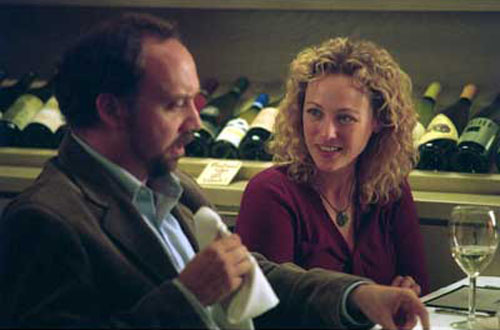
I’m usually not that taken in by movies, as I’ve become a very cynical critic of most movies I see these days. Don’t get me started on the whole remake phenomena that seems to be going on these days. But as I watched Sideways, I realized I was seeing something that was rare. It was not only a very good movie with excellent acting from everyone in it, but the writing was superb. From a writing standpoint, there’s a moment when you’re watching superb writing that you start to realize it, and for me it was pretty deep into the movie because I hadn’t even realized it was affecting me so. But at one point, I even felt the scene hitting me because the writing was so perfect and delivered so well by Paul Giamatti that I was floored by what I was seeing.

The scene was simple, between Giamatti and Virginia Madsen, who were having an intimate conversation about wine. At one point, she asks him why he loves Pinot, and it starts off as such a simple response before it turns into a metaphor for the character Miles, who Giamatti plays. He talks about how the Pinot is a red wine grape that struggles for survival, and unlike the Merlot, he appreciates everything that grape goes through as it can only survive in specific climates and areas but manages to succeed and produce a wonderful tasting wine as a result of its survival. The lines that Giamatti delivers in this scene were so powerful and so poignant that I found myself amazed that this practically appeared from nowhere yet seemed so perfect for the moment that served as its introduction.

When the movie was finished, it made me wish that so many other movies would even attempt a smidgen of the brilliance that existed within this script, but then I realized that so many other movies would shove themselves out of Hollywood’s doors and we’d have to wait for something as wonderful as the writing of that movie again.