Monthly Archives: April 2026

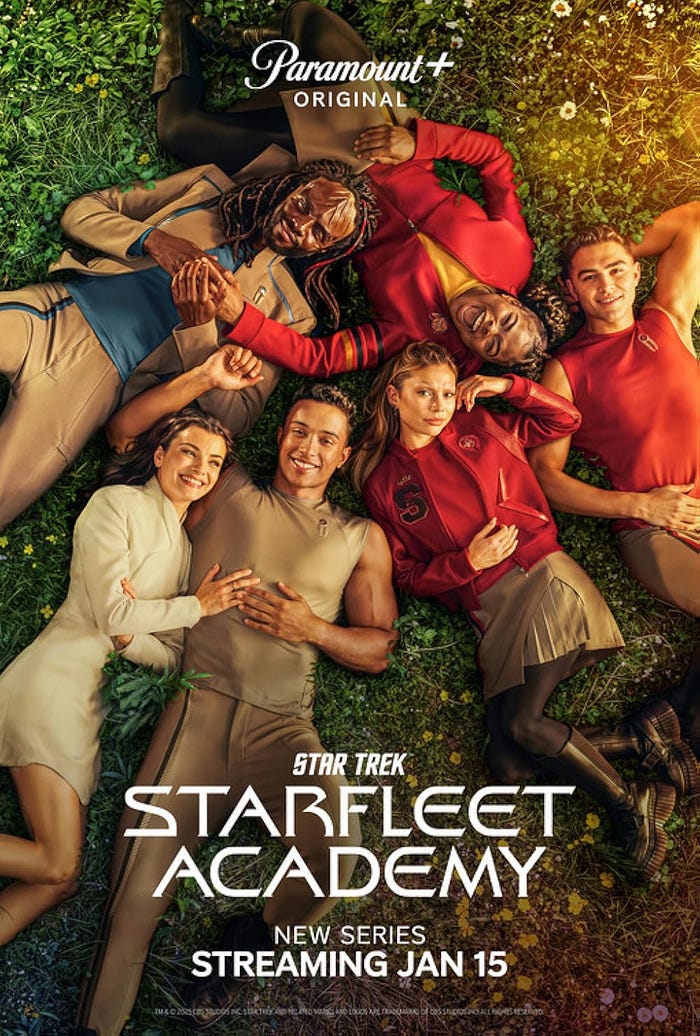
Why Star Trek: Starfleet Academy Failed

https://medium.com/p/c271ecda4b0b?postPublishedType=initial

Sometimes, Star Trek can be hit or miss with the programming it presents. Since September of 1966, when the first series was presented, Star Trek has gone through iterations of being popular with the fans but not so popular with the networks that aired it. The very first series was first canceled by its network because at that time, networks had no idea what a gold mine they had with their programming. After it was canceled, it took Lucille Ball, one of the solid voices at Desilu Productions to convince her own people that the show needed to continue (getting it another season after being canceled).

Since then, Star Trek has aired numerous shows in its name, including an animation of the original actors, Star Trek: The Next Generation, Star Trek: Deep Space Nine, Star Trek: Enterprise, Star Trek: Discovery, Star Trek: Strange New Worlds, and, of course, Star Trek: Starfleet Academy. Plus, there were a number of films based off of the original series and Star Trek: The Next Generation. Oh, and don’t let me forget that there was a three movie reboot of the original series with excellent actors who reprised the roles made famous by the original crew. There was also a movie based on Section 31 (an evil organization that exists within Starfleet that was originally introduced in the series Deep Space Nine).

If this information is starting to confuse you, and you’re not a diehard Star Trek fan, then perhaps you might start to understand a huge part of the problem that Paramount has encountered and never took time to actually solve.

So, let’s analyze my reasons for why I think Star Trek: Starfleet Academy failed.

Star Trek is a niche product of science fiction fandom.

When Star Trek first aired in the 1960s, it was unknown because it was brand new. However, in a few years, suddenly every young person (and some older) became fans. There was nothing like it on air at the time. Star Wars was still about a decade away, so if you were a young person into science fiction, this was your domain.

I was 2 years old when Star Trek first came out. It wasn’t until years later that I came across the series in reruns. I wasn’t lucky enough to catch it when it first aired, although I wish I had, but that would make me in my 70s or 80s, and I’m just not yet ready for that. But what I do remember was rushing home after school and turning on the TV, hoping Star Trek was going to be on the screen. We didn’t have scheduled programming in those days, so you just had to be lucky to catch your show when it aired. However, during this period we had stuff like The Twilight Zone and a few other science fiction greats, but Star Trek was always the one we were looking forward to.

My show ended up being Star Trek: The Next Generation, which had a rocky start but by the second season ended up being some of the best science fiction programming. It was mostly during this period that the “Kirk vs. Picard” or “Star Trek vs. Star Wars” arguments started, and even though it sounds like those were heated arguments, they were mostly preference battles that were often recognition that we were science fiction fans rather than angry retorts over which fandom we were a part.

Over the years, as more and more Star Trek series emerged, a familar fanbase emerged, and while some might like one show over the other, the understanding was that we were all Star Trek fans, and that’s what united us together.

During this period, whenever one show ended, and there was nothing left of the Star Trek universe being created, the anticipation was always in wait of the next one that might be coming down the line. But as more and more of us became older, we started to notice that preferences and nostalgia made it difficult to ascertain what the consensus was on Star Trek programming at any time.

This emerged an interesting aspect of the Internet: Haters and trolls. Over the years, kind of emerging with the advent of the show Star Trek: Enterprise and then carrying over into Star Trek: Discovery, fans of Star Trek became very vehement in their expectations for the franchise. If they didn’t get the same feelings for a series as they did in a very specific series they enjoyed, they started to criticize any new direction in Star Trek. In Enterprise, they hated how the series wasn’t moving forward but was just harping over old things and milking the franchise.

And then Star Trek: Discovery came out, and suddenly everything about Star Trek was bad. According to them. For me, in general, I watched Discovery mostly because it was the only new Star Trek available, and sometimes it did something that I enjoyed. But mostly, it wasn’t my Trek, nor was it the Trek that most others were used to.

During this time, another phenomenon emerged: The Youtube Celebrity. On Youtube, a number of reviewers of science fiction started to make names for themselves. Before, when fans were mostly individuals and had no people to whom they were speaking, other than a couple of friends, the networks paid little heed to this fan base. They put out their programming and hoped that it would stick.

Now, networks were witnessing fan bases that followed Youtube creators, and those fan bases grew into tens of thousands of followers. Sometimes, hundreds of thousands.

And many of them were very negative critics of anything that Star Trek created. I believe that this is where the term “Kutzman Trek” emerged, which was basically the Star Trek direction taken by filmmaker Alex Kurtzman. This is currently the direction Star Trek is in, following Discovery, Strange New Worlds, Section 31, and of course, Starfleet Academy.

The amount of hatred towards Star Trek’s direction has been no end of hostility from this segment of the Youtube creators. After Starfleet Academy aired, this group went nuts and declared pretty much everything Star Trek to be close to being in league with Lucifer. It’s most definitely a huge part of the backlash against current Star Trek because they are quite vocal, and when no one else is talking, all you can listen to is those yelling the loudest.

What this has done is alienate those of us who enjoy all things Star Trek. Granted, I wasn’t a huge fan of Discovery, but I watched it because it was all I had. I wasn’t the biggest fan of Starfleet Academy, but again, it was all that I had.

I’ll let you in on a little secret I’ve discovered: Starfleet Academy was targeted at a different community than most Star Trek has tried in the past. I was nonplussed at this show, but one evening my best friend came over to my house to watch some evening television entertainment, and I introduced her to Starfleet Academy, just to get her opinion. She loved it, which immediately made me realize that the direction that show took was targeted at a demographic of which I am not a part. So, I suspect that a lot of people around the country (and the world) might have tuned in and liked what they saw.

The problem with that is not always is that demographic going to have someone like me who is going to introduce them to a product that most guys might not actually like. Which means the main audience is the people who were never going to like the show in the first place. If Paramount can’t target the audience it wants, or at least advertise to them in media that serves that purpose, the show was never going to take off the way they wanted.

Instead, they targeted the same audience as always with a limited campaign that never had a chance. Part of me thinks that if they targeted fashion magazines and all sorts of other places that people like me generally don’t know much about, they might have found their audience. But they didn’t. So the show failed. Big surprise.

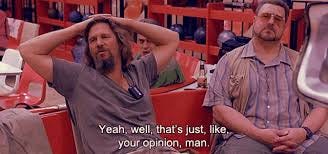
But that’s my opinion of why I think it failed.

Attributed to Tenor

Playing video games does not make me a child

https://medium.com/@duanegundrum/playing-video-games-does-not-make-me-a-child-a63ff7d5c707

I’ll let you in on a secret that’s not so much of a secret: I play video games. And I’ve always played video games. And thus, I’m probably always going to play video games.

I started playing video games when video games first became a thing. In my last years of high school, the personal computer came out and I immediately started playing video games. Back then, they were usually sold in plastic baggies, kind of like crack and heroin. The result was the same: We all got addicted and wanted more.

And that was a problem because at that time there weren’t any more. There was maybe one or two new video games a month. I went to the local video game store in the San Bruno mall and looked over the selection of new games that were contained in nice, cardboard boxes with really impressive, colored drawings which helped me decide what new game I would buy. And almost always, I would buy the new box of that game and take it home, ready to open it and slip that 5 and a half disk into my disk drive to load up and hope that it played. And then I would have my fix for the month, playing it until a new game came along.

But in the beginning, there was no store in San Bruno Mall (I think it had been a store that sold vacuums). Instead, computer magazines would publish full basic programming codes that we would have to type in oursevles into our computers and hope that the gods and goddesses were kind to us that time so that the program would actually work. And they never did. If you knew BASIC coding yourself, you might be able to figure out what was wrong and fix it yourself. Or you gave up after trying some fixing and then went on to another set of coding in the magazine that you hoped might work instead. That was gaming back in the day.

So yeah, once we got past that era of computer gaming, we got the nice cardboard boxes, which are still awesome today. I remember playing Richard Garriott’s first approaches to gaming back in the day (Ultima I and II). Then he started creating in an environment where the cardboard boxes were a new part of the industry (Ultima III and everyone that followed). I remember buying his games in plastic baggies and then in professional boxes after that. My, how that industry changed over just a couple of years.

But today, I still play computer games. Because I love them.

Nowadays, we buy our games online, and sometimes even play them online.

I play a couple of online games that I’ve played for over a decade. I made friends in those games, and some have stuck around while others have moved onto other games, or even in activities that have nothing to do with games. I remember a friend I made in Ultima Online who moved on to something else and then ran into him while playing Everquest (using the same name he used in Ultima Online). Meeting a friend again in a subsequent game is always a great feeling, and it’s happened several times.

In some online games, we have a discord server for our guild, and then that guild covers several different games, so you might just carry over that friendship into that other game, already knowing that person before you ever subscribed to that new game.

But the one thing I wanted to talk about his how people who don’t play games often make snide comments about childishness just because I happen to play video games. They talk about how I’m wasting a good deal of my time playing those games, while they don’t seem to have a problem that they spend more of their time watching sports on television.

At what point did watching a sports competition for practically every game during a season seem more adult than playing a video game?

One thing that never gets mentioned is that watching a sports game involves nothing more than just viewing. Not once do you get to pick up the baseball or football. Not once do you decide any play that is going to happen on the field. Nor does any thought of the game have any more impact than cheering for the team you like better. And sometimes it’s in front of a TV screen, so the players quite often don’t ever hear your input in any way, shape or form.

Computer gaming, on the other hand, requires your input in order to make the action move forward. If you play computer sports, you are controlling a large part of the game. Your inputs matter; otherwise, they don’t happen.

If you play a more action-oriented game, you are the center of the action, and whatever you do is a part of the narrative itself. Sure, someone programmed a great deal of the story, but that story doesn’t happen if you don’t actually make a choice of which way to lead that story. Most games today are beyond just observation with the story. Games require you to choose your own adventure in that what was programmed was your choice to drive the narrative forward.

A lot of the games are adult-driven stories. I don’t mean prurient in nature, but adult themes that probably aren’t appropriate for youngsters that haven’t developed the capacities to handle such stories. Recently, I’ve come across a couple of games that while playing them have made me decide what is the proper course forward when my choices are to let a civilization die or to sacrifice parts of my own breathren to avoid having to make such horrible decisions. No, not something young people should have to deal with, and even me, with years of experience and dealing with many bad situations, I really didn’t feel that even I was ready to make such decisions.

You don’t get those kinds of choices when watching a football game on television.

So, the point is: These aren’t the games we played when computer games were in their youthful period. I don’t remember thinking to myself that destroying individual asteroids with a ship that was only capable of turning and firing at rocks was somehow deciding the fate of anything other than should I make these big asteroids into smaller asteroids or just not do it. No, games have changed tremendously over the years, and I honestly think that people who don’t play them honestly think that they’re of the same nature today.

They aren’t.

So, when someone starts to think that my desire to play computer games somehow makes me more of a child than a man, I quickly tune them out. After all, I’m deciding whether or not I must wipe out a civilization in lieu of saving my brother.

Man, the decisions we have to make in My Little Pony are really complicated these days.

When you start to realize you’re never going to change the world

I was one of those little precocious kids who grew up, convinced that he was one day going to change the world. At first, it was going to be through science, as I studied physics, sure that I was able to see the world in ways that no one else possibly could. I had my ground-breaking theory that re-explained the universe’s creation through a process called neutra-matter (my own invention) that was the embodiment of light, and thus, the separation particle that kept the barrier between matter and anti-matter. It all made sense to me, and actually still does. I worked through college to become a physicist, and throughout my education, I devoted a great deal of time just trying to disprove the theory so I could move onto something better. And I never did. So it might be true. Or not. We’ll never know because I didn’t remain in physics, and even if I did, I hit a point where I started to realize that no one really cared.

Yeah, that was true. No one cared. I had this great idea, and I was convinced it could change science. But again, no one cared. So I moved onto a different field. Genetics.

In genetics, I was quickly invigorated with a new idea that consumed my every scientific thought. I now had a convincing argument as to how the AIDS/HIV strain first emerged, and coordinating this theory with the concepts of archaeology (which I was also studying at the time), I realized that there was a way to use my theory to trace down Patient Zero, and possibly erect a cure for AIDS by creating a genetic suppressor from the origin rather than from the current variation of the virus. And it made a lot of sense to me.

So, as this was during the dawn of the AIDS era, I managed to convince a coordinator of the first AIDS conference to listen to my theory, and she was so intrigued by it that she arranged a meeting with me and a group of scientists who were all part of the first conference. They read my report, called me in and then in a round table discussion, asked me all sorts of questions about my theory. And they were intrigued. And then one of them asked me where I got my medical degree, and I revealed that my education was in physics, and that I did not have a medical degree. Essentially, the discussion was over, and no one was really interested in hearing anything else I had to say. In the end, my theory was shelved, and I went on with my life. Decades later, AIDS is still out there, and millions of people died, and unfortunately, I don’t think it’s going to be cured any time soon. Of course, I can’t say my theory would have done it, but it bothers me that it was never considered.

Many years later, I was in graduate school after doing the whole Ph.d thing in political science. This time, however, I was pursuing communication. And suddenly it dawned on me that our usual process for conducting diplomacy was wrong. In the middle of the night, I woke up with an additive theory, utilizing political science international theory, interpersonal

communication theories, a communication rhetoric theory and a mathematical model I designed in my head that would eventually be completed through computer modeling. This new theory, I predicted, would lead to a brand new way of conducting negotiations and diplomacy. Latching onto one of my fellow grad students with a background in history, we wrote up a theoretical paper on this and then presented it at communication conference. After that, a few people from different organizations contacted me by email asking me more questions, but over time, I starrted to realize that it also required people to really think differently than what they were used to. When I tried to present it to the Obama Administration, I realized no one was really interested in learning. People were pretty satisfied with doing things the way they had been doing them since the days of Caesar, so very quickly I got the impression that I was barking up trees that no one wanted me barking near. So I gave up on that as well.

The point is: At some point, you start to realize that no matter how many great ideas you have, eventually you’re probably going to hit the point where you realize that most people generally don’t care. The status quo is so much easier to stick with, so the amount of work involved in getting anyone interested in change is practically at a ridiculous premium. It’s a lot like the Occupy Wall Street movement that’s happened some years ago. I mean, they have great ideas and the best intentions at heart. But the reality is that no one is going to listen to them, and mostly what they will receive for their efforts is ridicule and pepper spray. You can’t convince people to change their ways, even if the change is in their own best interests.

So, at some point, you have to realize that as much as you like, you can have all of the greatest intentions in the world, but at some point you need to do the proverbial growing up of reality and settle for mediocrity and, if lucky, a small step after a period of anarchical punctuated equilibrium.

That’s where I am now. There are so many things I wanted to do with my life, so many things I thought I would do with my life, but in the end, I realize that it really didn’t amount to much. No fame. No fortune. No changing of the minds of the masses or even a few leaders. Not even a really cool career or a stable girlfriend (or an unstable one for that matter). At some point, you begin to realize that all you really have is an apartment full of friendly stuffed animals, a shelf of unpublished, or crappily published, novels, reruns of Star Trek and a delinquent World of Warcraft account.

Had I known that a long time ago, I probably would have chosen a much easier route to get here.