Tag Archives: Science Fiction

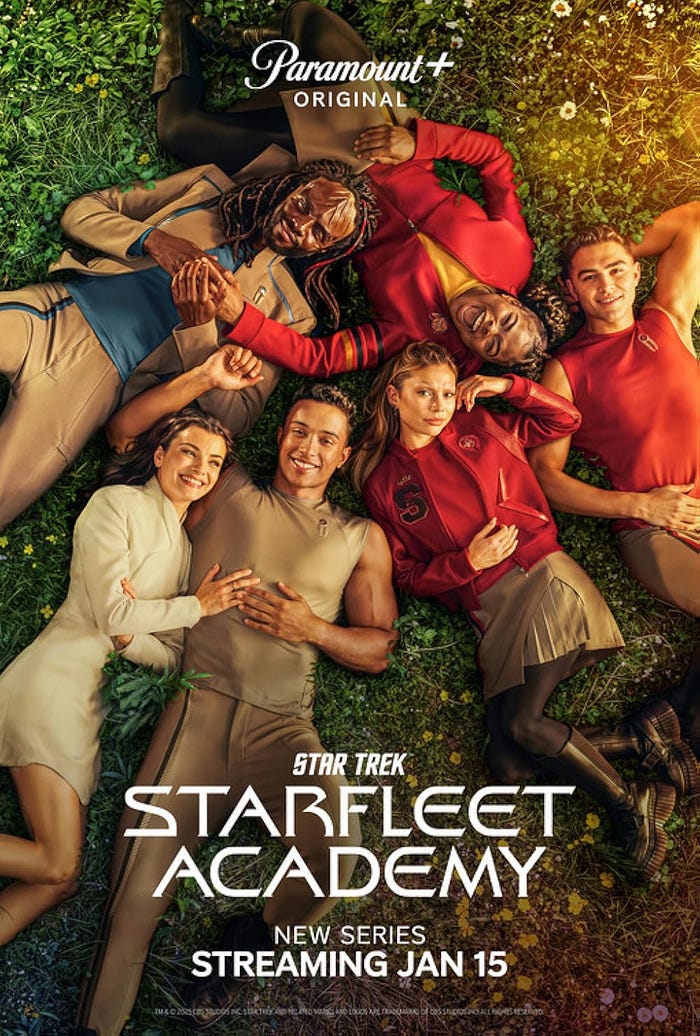
The State of USS Discovery after the 2nd Episode of Season 3

To be honest, USS Discovery has always been one of those shows that I have a love and hate relationship with, mostly because the writing has often been really bad. The acting is stellar, and the casting is great, but sometimes the writing takes the inevitable “we don’t really have a solution for this, so we’re going to just fill it with psychobabble so we can get to the whiz bang stuff”. Or, “we’ll try to pull on heart strings by showcasing the one character who has nothing else to do but pull on our heart strings.”

Season Two kind of went a different direction because of the stellar casting of Anson Mount as Christopher Pike. And strangely enough, the writing wasn’t that bad either. Sure, there were moments of the same problems as before (“we don’t really have anywhere to go with this so we’re going to just avoid sharing actual information that normal people would ask so we can keep the audience in a state of confusion going forward” but aside from those moments, like the whole “strange stars in space” phenomenon, which was basically the premise of the whole second season, it was still pretty good.

To be honest, after the mid-point of Season One, the show became watchable again, regardless of its avoidable moments.

(spoilers ahead)

And then Season 3 came along. Season 2 left us with Discovery being thrown 1000 years into the future (a future that has only really been touched on narratively once through a Star Trek short called “Calypso” and a bit through some of the temporal war background of Star Trek: Enterprise when “Crewman” Daniels brought Archer to the 30th or so century.

Now, we were in completely uncharted territory. The closest to this we really got, aside from a few one-off moments throughout the rest of the franchise, like Star Trek: Picard or some of the “it could have happened” episodes of Star Trek: The Next Generation, we’ve not seen much of the future of Star Trek’s future. Now, we were finally here (or there).

The first episode focused specifically on Commander Michael Burnham arriving in the 30th or so century and completely lost, spending the majority of her time teetering on whether or not she was gong to survive and whether or not she was going to figure out exactly when she arrived. We meet Book, a new recurring character and Sahid (I think was his name), an ambassador for a Federation that appears to have been more memory than prominent. Both of these new characters really do a great job of setting a scene for a dystopian future of the the far-off future, but still gives us a sense that there’s something still happening.

My only complaint on the first episode was more a feeling than an actual criticism, and that was that the premise for this future felt a lot like Gene Roddenberry’s Andromeda where Dylan Hunt (the name that Roddenberry was originally planning for Captain Kirk’s character) wakes up from a wormhole accident and the Commonwealth (i.e., the Federation) has been wiped out, leaving him to have to rebuild it from scratch with the last starship (Andromeda). We kind of have the same scenario happening with Discovery, even though in the first episode, the Discovery has not made it to the 30th century yet, but because it’s the name of the show, we know it’s going to regardless. Even Book felt like Tier (not sure I have the spelling of his name correctly, but he was the Nietzschean outsider of that time who hooks up with Dylan Hunt, much like Book is now doing with Michael. And of course, Sahid represents the Federation, which is obviously what the cast is going to go about rebuilding to its former greatness.

Now, that criticism aside, the first episode was actually pretty good and strangely enough it had no members of the USS Discovery other than the commander herself, so it ended up being a fish out of water episode that tested how well the actress is able to show her acting chops. Further spoiler alert: She has them when the script doesn’t call for her to overact the scene.

But the one thing missing from the episode of Star Trek Discovery was, well, the USS Discovery.

The second episode is basically the response to that. And one of the more refreshing things they did with this episode was not focus 100 percent on Commander Burnham (Michael). And it made me realize how much of this series is based around this one woman saving the day, each and every episode so that every other character is basically Abbott to her Costello.

In Episode 2, the USS Discovery comes crashing out of the wormhole and literally crash lands in an ice landing that would make Deanna Troi seriously proud. And rather than, okay, we crash landed, so let’s all move on with the episode, they actually focused on the ramification of how impactful such a crash landing just might be.

This episode gave the secondary cast a chance to finally shine, so they weren’t just shadows of the main character’s actions. Saru, the former first officer made captain, BECOMES a captain here, showing that he’s not just a character filling a spot, but a person who has spent his career learning the things an officer learns that eventually leads him to have to lead when the time finally comes. There’s a brilliant moment where he and Ensign Tilly (a character that sometimes grates on my nerves as a sort of Wesley Crusher kid genius response to every dilemma) are on an away mission together. Saru chooses Tilly for numerous reasons, all of which make completely sense and really show actual thought behind the writers of this episode.

She’s scared, and he knows that, but in his strange paranoid all the time way, he shows how her fear actually comforts his own fear so that both of them benefit from being together. It’s a really touching scene.

The scene then moves to a futuristic western bar that we’ve seen hundreds of times in so many other stories, and of course, the martial arts fight whatever comes before her Georgiou shows up, meaning we’re going to have a “beat up bad guys” scene, so that happens as expected, but it leads to a brilliant display of Saru showing that they’re Starfleet, not a bunch of wandering thugs, and it becomes one of those few missing moments that Discovery is sometimes lacking at times.

Meanwhile, the crew is still on the USS Discovery trying to at least get the ship back up and running, and this is where we see some of the character development that the first two seasons was seriously lacking. And that was such a refreshing segment to experience.

And then there’s a huge attempt to get USS Discovery back up into the air again, and that’s when they are picked up by a tractor beam out of nowhere, and it’s one of those moments of “should be shoot while we have the drop on them, or should we answer their hail?” And Saru chooses the Starfleet way, leading them to finally come back into contact with Commander Burnham again.

It’s an episode well worth watching. So far, the third season is firing on all cylinders, and I hope it can continue doing so.

Season 2, Episode 1 of Star Trek Discovery: My review

So, Discovery has come out with its second season, and it definitely appears to be coming in swinging. But before I start talking about Season 2’s first episode, it’s probably important to talk a bit about season one.

Season one was controversial, to say the least. Here are a couple of issues that fans have brought up.

  1. The Klingons don’t look like Klingons. This is what happens when you hire makeup artists who watch episodes of Survivor instead of shell out the money for Netflix account where they could have watched episodes of the previous iterations of Star Trek.
  2. The star isn’t the captain. That’s just kind of blasphemy, the sort of obnoxious oversight that would cause Kirk to leap at an enemy with both feet and then fall down on his behind, commonly referred to as the Kirk Maneuver, or Kirk Fu.
  3. Technology that surpasses all previous LATER IN THE TIMELINE Treks. Spore drive? The ships? Actor’s wigs that actually look like their own hair?
  4. Did I mention Klingons?
  5. A misleading plot that was going somewhere but took time to get there. I’ll talk about that later.
  6. (spoiler, so don’t read this part if you haven’t seen the show) Michelle Yeoh dies almost as soon as the show starts. Michelle Yeoh. The best actor and most enjoyable character dies almost as soon as the show starts. And then we get her again, which is great, but this wasn’t until long after the parametics revived me and helped me back to my remote.
  7. (spoiler, so don’t read this part either) The Mirror Universe showing up almost as “hey, oh yeah, we’re doing this now, and we’re going to be doing this for the rest of the season”).
  8. The main character (and possibly its the actress herself) is not very engaging. Just there. And she’s the sister of Spock. Okay, we need another number.
  9. Sister of Spock? Really? This is the one they mention in Episode 14, right? Oh wait, they never mentioned her. She’s kind of unknown to everyone. And she’s a human. Not a Vulcan. Um, okay. I guess we’ll have to wait for Season Two to figure out her deal with Spock. I just hope we don’t focus the entire season trying to figure out her deal with Spock. Oops, spoke too soon.

That being said, the first season was actually pretty good. Most people who hated Star Trek Discovery didn’t give it more than the first three episodes, which dragged on so badly. Once the season picked up, it never let go, and that’s what made it completely worth it. But you had to actually buy into that and stick it out. Fortunately, I was still being revived by the paramedics at that time, so I was stuck in front of the TV. (Aside, I am only joking. No need to send condolences, unless it’s in the form of money, then I’m feeling better and could end up keeling over any day now, so send LOTS of money).

Which brings me into Episode 1 of the new season. It’s filled with a lot of wow factors in this episode, so much that I ended up watching it a second time.

And that’s when I started to see the problems. Let me mention a few:

  1. Is this season really The Search For Spock? I kind of remember another movie with that title before.
  2. We waited until the second season to start fleshing out the main character. This isn’t a slice of an onion being presented. This is backstory that should have been in the first two episodes.
  3. Spock as a mean-spirited, anti-sister brother right off the bat just seems odd. Sure, Spock might have grown since then, but not sure I like this version of Spock’s child.
  4. Captain Christopher Pike. It really feels like they just read a lexicon of Star Trek characters and then add one of them to the mix. But it makes no sense. Think about it. He’s the captain of the U.S.S. Starship Enterprise, which is broken, so he’s going to go galavanting on Discovery for a season (or however many episodes he’s cast) before going back to his own ship. Navies don’t generally do that. I assume Starfleet doesn’t either, as everything else seems to show the future navy as very much like the present navies. He’s going to stay with his ship as it’s being repaired. I always hate the badly written plot device of trying to figure a way of squeezing someone into a story where they surely just don’t belong. Pike has his own adventures. If you want to see them, make a show called Star Trek: Enterprise: The Pike Adventures.
  5. Ensign Silly. Tilly? The running gag on Discovery. Her naivete is cute at times, but they’re trying way too hard to oversell a very minor character. She’s starting to become Wesley Crusher, and that’s when people are going to start throwing things at her. Or at least hope the strange aliens who call themselves Klingon might throw something at her, like a batliff.
  6. Section 31. Seems that Michelle Yeoh’s doppler double from the mirror universe is going to involved somehow. I could imagine her starting it, or at least being quite instrumental in getting it going. My one complaint is that we’re already hearing “Section 31” in the trailer for the second episode. The agency is supposed to be extremely secret, almost so secret that the agents themselves wouldn’t often talk about it to others, and even to themselves. A good series of writers would have developed her character within a shadowy organization and not even mention who they were. EVERY Star Trek fan would know who they were, and that would have been good enough. Never revealing it would have brought that cloud of their mystery into the mix and would have made it awesome. If they really wanted to reveal it, it should have been a final moment revelation AT THE END OF THE SEASON.

Not a whole bunch, but a few that could easily bog down the rest of the season. I hope they figure out how to get around those.

What they are doing is setting up a nice mystery that I hope they do something stellar with. Stellar. See what I did there? Stellar? Like stars as in Star Trek. Oh, I’m so funny.

But yeah, they could so something amazing with this and as they proved in season one, they do have awesome writers that once they’re given some space really know how to do something with it.

I’m on the fence with the whole Section 31 thing. One thing I thought would make it awesome (even with their revelation already) is for the whole series to be leading to reveal that Discovery is the instrument that causes Section 31 to come to life because everything about Discovery so far has been “it’s a secret ship that even Starfleet knows little about”. They kind of set that tone right from the very first episode when the main character is recruited into their ranks from her prison cell. Part of the problem with the first season (and even in a few moments of the first episode of the second season) is that they kind of forget about that. The writers treat Discovery as just another ship when before it was pretty secretive in what it was doing and even how it was built. It’s sad if they just ignore that and try to make it a happy, Starfleet vessel.

So far, I’m interested in continuing. Not a fan of CBS All Access crap. I’ll be honest. I don’t watch a single show OTHER than Discovery on there. I don’t really like ANY of CBS’s shows that I’ve seen. If they’d put more intriguing science fiction on there, I would, but even their few selections they do have are either badly written or designed by people who think we want shoot em ups in future settings. But what do I know? Maybe that IS what people wants these days. Look at some of our leaders we choose. But that’s another story.

So, after Spock went back in time, is the Next Generation time line gone?

This has been bothering me for some time now. Yes, I understand that the United States is going through a horrible time with a game show host as president, Russian election-hacking and the dilemma of which side to choose in the upcoming war between Taylor Swift and Katy Perry. But this has actually been taking a bit more of my attention than those other inconsequential dilemmas.

Here’s the scenario that sets up the problem. Ambassador Spock in the reboot of Star Trek went back in time to chase a Reman mining vessel that was planning to kill Kirk and mess up the time line. The bad guy managed to kill Kirk’s dad, threw the whole universe into a spin time-wise, and now we have a new set of adventures for the Kirk crew, and the future as we know it may not actually happen as intended. Which produces the question: Is all of the history that came after the original Star Trek now gone? Or is it not gone but the stories are quite possibly going to be told a different way?

If so, that means that the future iterations of the Enterprise might change. Khitomer might not have happened as it was supposed to. Kirk might not have died on a planet fighting alongside Picard, even though he was supposed to be already dead and now living in a time ribbon (as if that makes any sense). Is Picard now flying a cargo ship across the galaxy with his crew of Firefly rejects? I mean, I guess anything can happen.

But I’m torn. All of those adventures that come from TNG and Deep Space 9 might no longer be canon. All those adventures might be gone.

And what about when they decided to do a later series of Star Trek? Will it be post-Picard, or will that universe change completely? And even more important: Does the old universe of the future still exist? Or is Data gone to be replaced by Data 2.0? Inquiring minds gotta know.

The Problem of Genre

One of my biggest problems as a writer is that quite often it is very difficult to nail down the genres in which I write. It was easy in the beginning of my career when I wrote Innocent Until Proven Guilty, which was mystery/suspense. But then I started branching out on other types of books and things got, well, kind of confusing. Let me give you a bit of a run-down, and you’ll see what I mean:

Innocent Until Proven Guilty: A murder takes place in corporate America and then an executive frames another for the murder. Works well as mystery/suspense.

Leader of the Losers: A dystopian future where poverty and class distinction has been solved by eliminating the “losers”. Definitely science fiction.

72 Hours in August: During the 1991 August Coup in the Soviet Union, a plan is hatched to start a nuclear war before the coup is over. Suspense, but also historical, and kind of a mystery as well.

Destiny: The Tales of Reagul story that starts the whole series, except it takes place 3000 years after the beginning of the epic. Story begins with a space battle, turns into a fantasy trek across a mysterious land and then ends with another large space battle. Science fiction? Fantasy? Both?

Deadly Deceptions: In South Korea, a counterintelligence agent uncovers a blackmarketing operation that might actually be masking a major espionage cover-up. Guess that’s a suspense novel, or a thriller, or also a mystery.

The Ameriad: A humorous Greek epic that spoofs the Iliad and the Odyssey by turning the icons of American society into the “new” gods. No idea where this one belongs.

Absent Without Leave: A military criminal investigator uncovers a 20 year old crime that started with the framing of his father and leads to the political future of Texas politics. Mystery, maybe? Thriller? Suspense?

The Teddy Bear Conspiracy: A CIA agent, running an operation to defeat the Colombian drug lords, finds himself targeted by his own people, forcing him to finish the mission alone while someone within his organization is trying to kill him and take over the project. Suspense?

Thompson’s Bounty: A time-traveling Coast Guard cutter encounters 16th century pirates and is sucked into a battle between two naval commanders. Science fiction? Naval warfare?

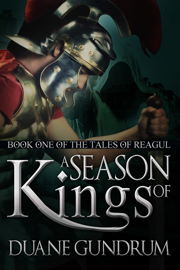
A Season of Kings (my next novel): The first official book of the Tales of Reagul, which tells the story of a planet where science and magic are intertwined. Most of the story is fantasy, but the whole premise comes from an alien experiment, which basically makes it science fiction.

Those are just the tip of the iceberg, and I’m finding it really hard to market my books because none of them really fit into any solid genre. Or few of them do. I won’t even try to figure out where Plato’s Perspective fits in, as it’s a novel with the protagonist named Plato who may or may not be the actual Plato, and the novel’s point in time may be a bit confusing as well. It could end up being philosophy, science fiction, fantasy, mainstream, history, etc. I’m sure you get the idea.

The Realm of Reagul

Reagul2
The original concept map for Reagul

The Realm of Reagul

 One of the longest projects I’ve ever worked on has been a world-building one called Reagul. I originally conceived of the land of Reagul in a computer game I designed back in the early days of computer games. It was called Prisoner of Z’anth, which involved an American soldier during the Vietnam War who comes across a mysterious artifact in the jungle that points to a sinister organization working behind the scenes of the war. As he battles his way through enemies, he comes to a portal they are protecting that takes him to the land of Z’anth, a realm completely in Earth’s middle ages but filled with dragons and strange creatures, as well as humans who know nothing of Earth. The story in Z’anth opens up to a revelation that this land was once linked with Earth many years ago, and that an alien race may have been responsible for why all of these people are on this planet. The game itself concludes with a final battle against an evil sorcerer who wishes to control everything around him and is now intrigued to discover there’s a world (Earth) he has yet to conquer.

 A few years later, I created another game called Lessons in Death, which took place in the year 3000, when Earth has been taken over by an emperor who seeks to subjugate the known universe. The peace-loving Eden System comes under attack, and a young female ensign from Eden named Laura begins a quest to destroy the emperor and the empire. It starts out as a space battle and then becomes a medieval sword and sorcery tale on a planet that comes to be known as Reagul. As you might suspect, Reagul is none other than the original Z’anth.

 This game eventually became my novel Destiny, which is basically the introduction to the Tales of Reagul, whish strangely begins 3000 years after the saga actually begins in the first series of the Tales of Reagul. Let me explain.

 During the early days of the Roman Empire, an alien race of beings called the Minions takes a large group of Roman citizens from different locations across the empire and moves them to the planet Reagul. As you start to discover, this is not the first time they have done this to human civilizations, having done this with the Egyptians before and the Greeks soon after. They have also transplanted creatures from other planets, running experiments to see how different species interact with each other.

 At some point, the Minions are called home to fight a war that has been taking place in their home solar system. Realizing they must leave soon, they train a young man in their ways, basically giving him the knowledge of a civilization that is thousands of years ahead of anything ever seen before. His new knowledge makes him so powerful, he becomes the first wizard/sorcerer of Reagul, and his name is Sarbonn.  After the Minions leave, Sarbonn attempts to continue their work of protecting the planet, but he also starts to discover that he’s not the first one they’ve trained, as he begins to discover hints of something referred to as the Dark One, a former trainee who has become so powerful that he has gone insane and seeks to destroy all life through a process of chaos and destruction.

 But Sarbonn, oblivious to this future danger, trains two young sorcerers who become his “children”. Over the years, all is fine, and the kingdoms of Reagul begin to grow with the usual sorts of skirmishes that happen when humans try to create civilizations in different places but are close enough to influence one another. Then the process begins to fall apart.

 One of Sarbonn’s “children” decides that because he is so powerful he should be ruling mankind instead of serving it, so he begins a war of aggression that eventually leads to him becoming the emperor of Reagul. Finally, Sarbonn and his other son must confront this upstart, which leads to a cataclysm like none ever seen before.

 Meanwhile, the shadow of the Dark One continues to spread its tentacles, planning and waiting for the right moment to strike.

1 small

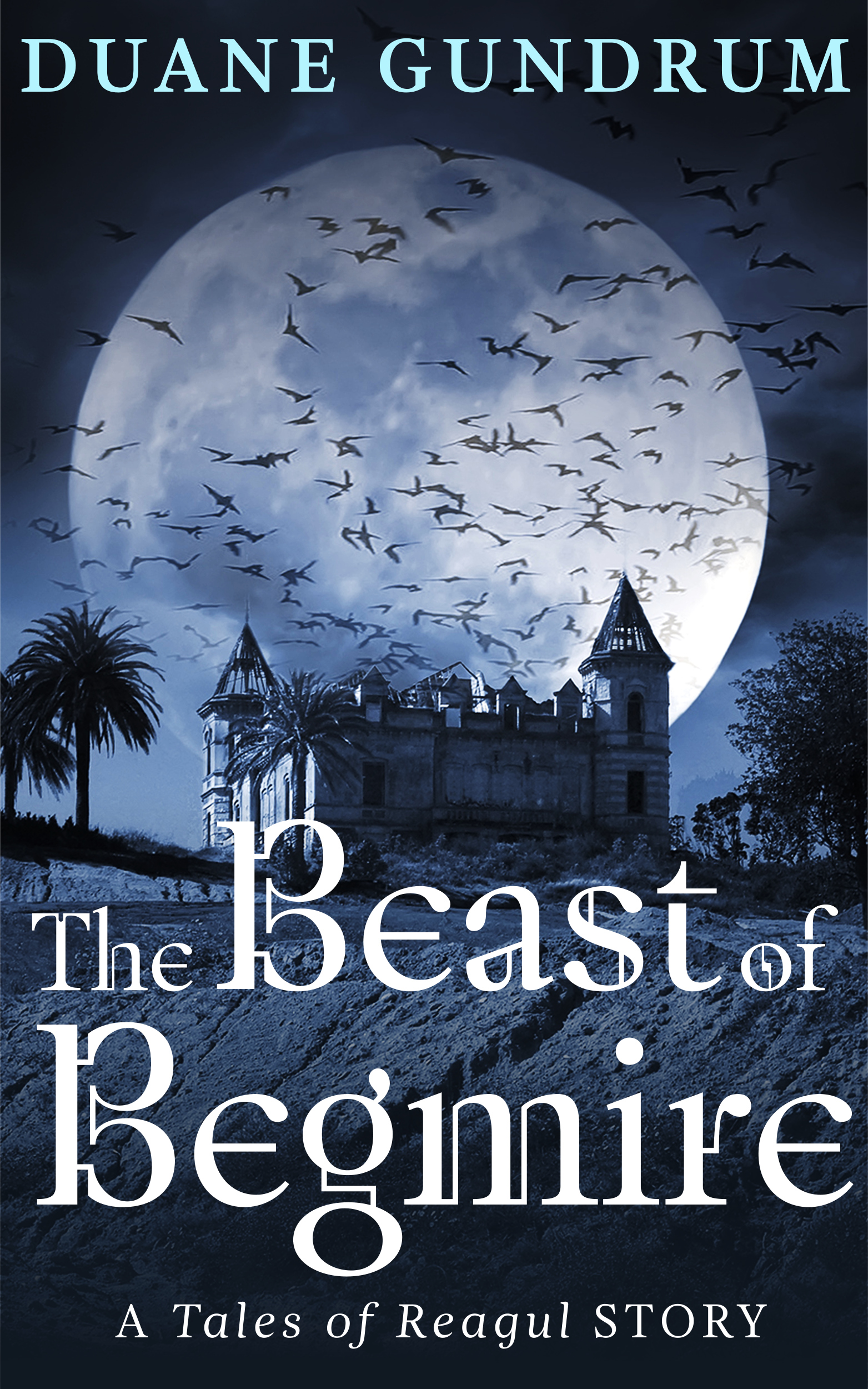
The first novel will be released later next month, and it’s called A Season of Kings. Later this month, the first teaser will be published, which is called The Beast of Begmire, which tells the story of a mysterious sorceress who comes in battle with the Dark One some time after the events of the first three books.


Beast of Begmire - High Resolution

The Second Season of V Disproves My Theory That V Couldn’t Get Any Worse

I discovered the other day that the television show V actually came out with a second season. Somehow, I missed it when it aired, but as I had seen the first season and was really interested in seeing how it played out in the second season, I went out and bought the season of DVDs. You see, I should probably explain that my fascination with V is not because I think it’s a great show, but because I watched the first season and kept saying to myself: “How can a show have such great acting talent, an obviously decent budget and still manage to suck so badly?” I mean, the star of the show is one of the main characters from the GREAT television series LOST. And then there are people in the show that come from some of the greatest that science fiction has ever offered. There was a guy from Firefly (the pilot on the show), the star of Earth: Final Conflict (a strange show that is oddly A LOT like V’s premise of an alien race showing up, promising great things but having a hidden agenda), an actress who was one of the recurring characters on The Office, the secondary female star being also from Firefly and Stargate SG1 (she played the prostitute on Firefly and the Ori human leader in Stargate SG1), the hot girl who played Supergirl on Smallville, and so many other actors that I was constantly saying, “hey, I recognize that guy/woman!” Yet, with all of that talent, they still managed to produce one of the most ho hum shows I’d ever seen.

So, I thought that the second season really couldn’t get much worse. Well, I was wrong. What started out as a “oh no, the aliens are really evil but only one FBI agent knows about it” has now turned into a show where I find myself going, “who cares?” almost every time a big event occurs in an episode. The aliens are diabolical, yet the rag tag team of rebels is at some times brilliant (beyond belief), the greatest Spetznaz operatives the world has ever known, completely stupid and clueless, overly obvious to the point of where I keep thinking, Okay, we have the stupidest aliens in history because they can’t figure out that the guys working against them are always present whenever things go bad, and filled with so many dorky coincidences that I’m sometimes embarrassed to be watching.

Spoiler alert: The end of this season got even worse than I ever imagined it would be. The aliens became so powerful, and so evil that it actually hit a point where I thought, wow, there’s no way the humans are going to win this one. Everyone is paranoid, and the good guys are losing their way and their battles, and I thought, okay, wow, this is going to finally start getting really good to where the main characters are really going to have to doing some serious crap to win this battle. And THEN: a secret organization of military organizations made up of every nation in the world comes to the rescue of the main hero, telling her that she’s no longer alone in her battle, that this organization of super army has been tracking the evil aliens, JUST IN CASE they might be evil, and now they’re ready to work with her, because they now realize she’s actually on their side.

Really? That’s the October surprise you have for your viewers? When things get really bad, SHIELD is going to appear out of nowhere and help the Avengers now that they’ve lost all of their powers, even though we never hinted SHIELD existed in the first place? How about a superduper weapon that they’ve been building in the Antarctic wastes, just in case something like this should ever happen? Or perhaps a Death Star? Or should we just find a hot shot pilot who has never flown a battle before to fly a sortie against the alien horde and shoot his blaster at a two meter hole that will somehow blow up all of the alien ships together? I mean, we’re doing stupid crap. Why not?

Anyway, I’m looking forward to Season 3, so we can see what “great” entertainment they have to offer next time around. I’m hoping the hero finds an alien motorcycle and jumps over the alien space shark that is threatening humanity.

The Struggles of Science Fiction on Modern Day Television

I was watching another one of those obscure BBC television shows this last weekend called Outcasts. It’s a science fiction 8 part series that takes place in the future when a series of catastrophic events force colonists from Earth to take up residence on some far-away planet. Immediately, they run into political problems amongst the survivors, and then they start to discover really odd things, like the possibility that humans may have colonized this planet a long time ago (which makes absolutely no sense to anyone). It’s an interesting story arc, and as I was watching it, I immediately started thinking, “I’ll bet they didn’t renew this show, which means I’m probably watching the first season of yet another science fiction television show that didn’t make it past its freshman year.” And it turns out, I was right. The first season ends on a cliffhanger, and the viewers are left hanging yet again.

Maybe it’s me, but why don’t television networks understand that science fiction takes time to grab ahold of its audience? I don’t think there’s a science fiction show out there that didn’t take a number of seasons of trodding through really difficult character building before it finally got the to meat of its show. Look at the recent success of Battlestar Galactica. It started off a bit stale, and then it built into a brilliant final couple of seasons. Look at practically every Star Trek that came out after the original series. The Next Generation took a few seasons to catch on, people constantly comparing Picard to Kirk before realizing they weren’t the same person, but different, and that wasn’t so bad a thing. Deep Space Nine took about three or four seasons to kick off before it became possibly the most beloved of all of the Star Trek universe offerings. Voyager, well, I argue it was a lot better four seasons in and to the end, although there are some who can’t stand it at all, but it still made that same arc I’m talking about. And Enterprise was a pretty decent last season show that took a lot of “hey, we’re exploring space for the first time” episodes to get to its point.

I look at some of the greatest science fiction around, and it took a long time to get around to being great. The 4400 was a great show once you finally got beyond the beginning parts of what it was trying to do. The X-Files took some time to find its footing, as well as Fringe took about two seasons to finally reveal that it wasn’t a rip-off of the X-Files, but great science fiction all on its own. It’s still going strong.

The thing is: Science fiction takes time to tell its story. It’s not like a cop show where you throw a bunch of people into a scene after a murder, have the star do his quirky mannerisms and then jump to a chase scene/shoot out, and then cue the last insider joke before going to commercial. Some of these shows are dealing with some pretty heavy subjects, and it takes time to get an audience to buy into the characters, and sometimes even the universe we’re talking about. Stargate was an interesting piece of science fiction in that it started off strong, and then became even stronger once it played out its initial arc and had to reinvent exactly what it was doing to come to a whole new kind of show. Stargate Atlantis did practically the same thing, once its writers realized they weren’t just recreating Stargate SG1, but had a brand new animal on their hands. Stargate Universe could have evolved into something great as it was starting to get better in the second season, but like most executive decisions it never had enough time to build its audience and appeal to do what it needed to do. It was cut off way too early to finish its growth.

Outcasts is an interesting example for me because I’ve been reading the message boards concerning this show since it was shut down after its first season. People are really upset because a show they really started to get into was cut off way too early to allow itself a chance to breathe. And I don’t blame them. For all of the crappy shows that are out there, it is rare to find a show that really tries to take chances and pushes itself as it does it. It was fascinating that they were doing what they were doing with the cast they had, considering I don’t think I’ve ever really seen any of the actors before, aside from a cameo in the very first episode by Jamie Bamber, better known for playing Captain Apollo on the remake of Battlestar Galactica (I kept looking at him, thinking, “is that who I think it is?”).

Sadly, one of the few places where science fiction is welcome doesn’t seem to have a lot of science fiction anymore. I’m talking about the SyFy Channel, which used to be the SciFi Channel. Nowadays, the channel is known more for WWF wresting and ridiculous movies of the week about killer land sharks and other nutso ideas. They have a bad habit of killing any strong science fiction shows, including the cancellation of Caprica, Stargate Universe and the recent announcement of the discontinuation of Eureka. Checking through the TV Guide, I don’t find too many original programs showing up on the SyFy Channel any longer, which means my original necessity of always making sure my cable company had that channel is no longer a given.

Part of the problem of this dilemma is probably necessary to address as well, and that’s the fact that because science fiction involves special effects and unique, alien environments, the budgets for these shows can sometimes be astronomical. During the Star Trek run on UPN, there was some serious money being invested per episode to keep the quality up on that show, and every other show was trying to do the same sort of thing. Nowadays, a network isn’t really all that interested in paying that kind of money for entertainment, especially when they can get even higher ratings from crappy reality tv programming that costs a fraction of money to produce.

The other part of the problem is the perception people have for science fiction as well. For some reason, science fiction is seen as “geek” culture, which can often lead to a group of adults shunning someone who watches science fiction, while they may be gluttons of reality television and Gossip Girl-like programming instead, somehow seeing these alternatives as more “acceptable”. Science fiction gets equated with the kind of entertainment that should be enjoyed by little boys and men who never grew up.

But quite often, science fiction practically masters the concepts of the human condition by forcing us to look at social and societal issues that cannot be explored within the confines of our normal, everyday lives. Science fiction can put someone back into the shoes of someone who had to make decisions during the Trials of Nuremburg, or force a discussion on the ramifications of the ethics of genocide that are not just theories but might be happening at a particular time and place. It can allow questions of the nuances of same sex relationships by changing the species as the focus, yet still unravel a group of people on the cusp of making a life-changing decision. While it’s not impossible to do that in other genres, rarely is it done there, which leaves science fiction one of the few places where such ideas and thinkers can completely be at ease with each other.

Unfortunately, I just finished watching a great show that will never see another episode or any of its brilliant ideas examined further by the writers who presented the dilemmas in the first place. Until then, we have to search for another venue, and hopes that someone else manages to fill the void that doesn’t often get filled by those with the vision to ignite the ideas in the mind’s canvas of possibilities.

Explaining the Libyan Conflict to College Students Who Don’t Care

I’m a college professor who teaches political science to students who generally aren’t interested in the information. It’s a required course, which means you end up with a lot of students who are in the class mainly to fulfill a requirement and then get out. The information is irrelevant to them. It’s not important. It’s information best left to people who deal with that sort of information. Which kind of brings me to an aside. Years ago, I was a counterintelligence agent working in a foreign nation. I was working with some very dedicated people. I had an assistant who was sponging off me, trying to learn everything he could so that one day he could be an agent himself. I remember him asking me one day when we were involved in something that would take a novel to explain (and could have very well qualified for science fiction status) when my assistant turned to me and said: “Aren’t there people in our government who handle these sorts of things?” And my response was, which I’ve never forgotten: “We are those people.” His response was classic: “You really should be getting paid a lot more than you are.”

Which brings me back to teaching college. I was discussing current events of the day, and a student mentioned that we were now attacking Libya and then asked: “I don’t understand why we’re doing it? Why are we attacking?”

This was one of those questions that most people don’t have to deal with because either they’re hip on what’s going on in the world and are more a part of the argument than the reasoning, or they’re part of that group of people who are oblivious to what’s going on in the nation and the world around them, kind of like most college students tend to be. We like to think that college students are the smarter of the young people out there, but quite often they’re clueless, mainly because their interests are still high school interests that have yet to evolve into something more worldly.

So I stood in front of class and tried to bring it back home. We had been talking about the War Powers Act of 1973, that details when a president can and cannot commit troops to war, and as much as I tried to explain it, the questions kept coming up with how a war can actually take place when the resolution basically says that it really shouldn’t. I tried to explain that the War Powers Act was a response to the Vietnam War, where Congress no longer wanted a president to be able to commit the country to war without a resolution of war first, but then also explained that real events in real time were always a test of boundaries, and right now we were going through yet another test of the boundaries set forth by the Act itself. I went through and explained the ramifications of Bush II’s escalation of war from an angered country after 911, and how it had everything to do with the state of the Act today. Little by little, I was able to explain what was going on, but each time I peeled another layer of the political onion, I found yet another raw debate waiting to emerge.

In the end, I was left explaining that events are happening right now in which the future has everything to do with how things play out on a day to day basis, that quite often you couldn’t rely on a textbook or legal definition to reveal what was right and what was wrong. Often, more than sometimes, the events of tomorrow have no predictability because people today are rarely rational, even though political scientists tend to veer towards the rational actor theory (people do what is most natural and, for lack of better word, rational).

It was one student, sitting in the back of the room, texting her friends during the lecture, who offered probably the most poignant question of all. “What will this mean for us in the future?”

And she meant for young people like her, those going through college and trying to create a life for themselves. Realizing the nation was already at war in two other places, the revelation that we might be at war in a third caused a texting student to stop texting long enough to ask what this might mean for her future.

And I had to tell her that I didn’t know. Politics is all about how rational actors respond irrationally to events that often make little sense in a solitary context. It’s why political scientists should never predict, even though they keep trying to do so. All I could respond with was confusion and knowledge of the past, because I realize that nothing in our future is truly new, as we often fulfill the axiom of history repeating itself. What that axiom never points out is that most people don’t have a solid foundation of history to recognize it when it does. You see, most people are like my students in that class, oblivious to the world around them, and equally clueless to the past because they didn’t think it was important enough to study at the time.

Memoir Books Are Being Slowly Replaced by Lazy Writers


I was in the bookstore the other day looking over the selections of books when I came across a really interesting book of which I had heard nothing so far. But it looked intriguing. It was called Moby-Duck, and as you can see from the picture with this article, it is about a man who goes on a quest to discover what happened to 28,800 bath toys that were lost at sea.

So, why am I talking about this book? Well, think about the story involved in this book. The author, Donovan Hohn, actually put forth a lot of work to find out what happened to these rubber duckies and bath toys after the disappeared. In essence, he went on an epic quest, like the infamous Moby Dick to find what happened to these items. In other words, he went through a hell of a lot of work to get the story that he later transposed to paper so that the rest of us could experience his adventure.

My point is that so few people who write memoirs these days actually go through this amount of work in their adventures before sitting down and writing their “memoirs”. Instead, they suffer one bad relationship, have a bad drinking problem, or do something singularly simple and then try to convince the rest of us that it was actually an epic journey to get from one place to the other. I guess you could say I’m getting a little sick of these kinds of stories that really have no great master journey to them, no odyssey, yet are treated as if they are the epic adventures of a lifetime.

We need more writers out there who are willing to go through a little bit of work to actually come back with the story they need to tell. Instead, we get lazy writers that try to profit off of their innane adventures. And we keep buying this crap because none of us are willing to demand more from the writings that we read.

I felt this way some time ago when I was writing one of my earlier science fiction novels, Thompson’s Bounty, which was about a Coast Guard cutter that gets sent back into the 17th century. When I first started writing the novel, I actually tried to just crank it out without really knowing much about my subject, other than having watched a few old movies about pirates. Then it dawned on me that I wasn’t ready to write the novel. So I contacted the Coast Guard and requested some in person information, which led to going out with a cutter crew for several days over several weekends. It also led to a bunch of long conversations and tours on a Coast Guard base where very knowledgeable people gave me first hand information about the subject I was writing. In the end, I wound up with a book that told the story I wanted to tell instead of one that was peripheral and out of context.

Recently, I’ve been working on a novel that I originally wrote decades ago that takes place in Eastern Europe during the Cold War. Originally, I kind of winged it through the story, but after doing my thesis work on the August Coup in the Soviet Union, I finally had the premise, place and event that really made up the background of the novel I wrote years before. So, I’ve been sitting down and tackling that book from the start, realizing that I now know a lot more information than I first did when I wrote that book back then.

That’s sort of the thing I’m talking about with the kind of reading I’m coming across these days. So much of it can be so much better than it is if authors would take the time to actually do the research that would make their books that much better. I remember a great scene from Billy Crystal’s Throw Mama From the Train when a woman in his creative writing class is describing a submarine story she wrote, and he comments that maybe she should actually know the name of the device she’s describing if she wants to be taken seriously in a story that involves submarines. I take his advice a bit further and say that maybe some time should be given to exploring the lifestyles and events that lead people to the moments that occur in novels so that the reader believes the author is the right person to be writing the story.

We seem to have a lot lazier writers these days with a lot of the stories and memoirs I read, but that doesn’t mean we have to settle for that. We can demand more substance, research and work. We just generally don’t. And we’re the ones who suffer as a result.