Tag Archives: Star Trek

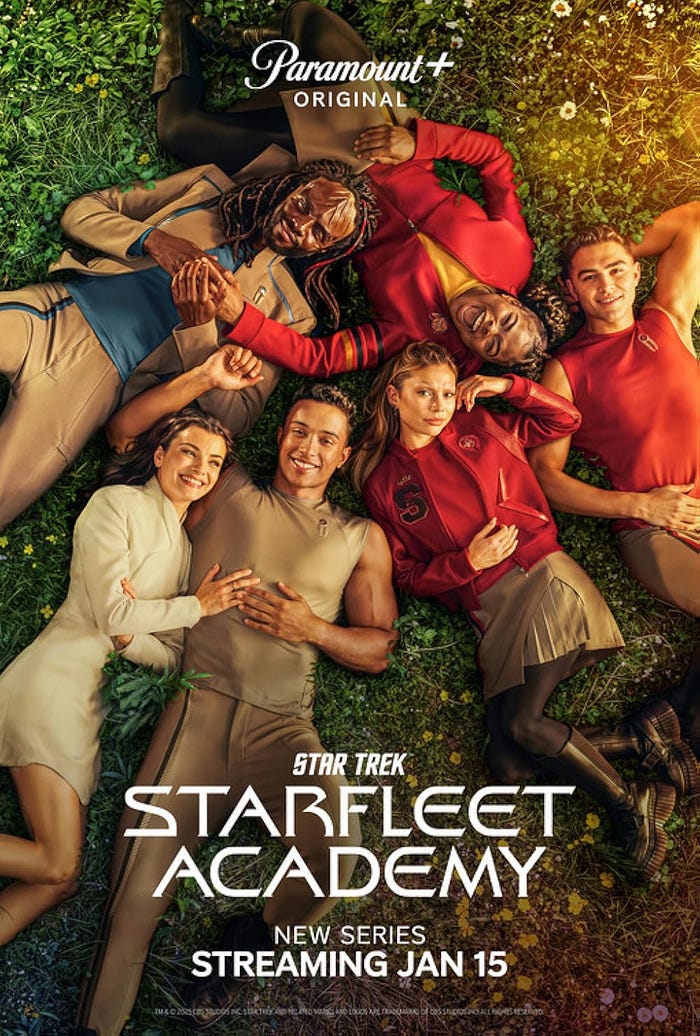
Why Star Trek: Starfleet Academy Failed

https://medium.com/p/c271ecda4b0b?postPublishedType=initial
Sometimes, Star Trek can be hit or miss with the programming it presents. Since September of 1966, when the first series was presented, Star Trek has gone through iterations of being popular with the fans but not so popular with the networks that aired it. The very first series was first canceled by its network because at that time, networks had no idea what a gold mine they had with their programming. After it was canceled, it took Lucille Ball, one of the solid voices at Desilu Productions to convince her own people that the show needed to continue (getting it another season after being canceled).

Since then, Star Trek has aired numerous shows in its name, including an animation of the original actors, Star Trek: The Next Generation, Star Trek: Deep Space Nine, Star Trek: Enterprise, Star Trek: Discovery, Star Trek: Strange New Worlds, and, of course, Star Trek: Starfleet Academy. Plus, there were a number of films based off of the original series and Star Trek: The Next Generation. Oh, and don’t let me forget that there was a three movie reboot of the original series with excellent actors who reprised the roles made famous by the original crew. There was also a movie based on Section 31 (an evil organization that exists within Starfleet that was originally introduced in the series Deep Space Nine).

If this information is starting to confuse you, and you’re not a diehard Star Trek fan, then perhaps you might start to understand a huge part of the problem that Paramount has encountered and never took time to actually solve.

So, let’s analyze my reasons for why I think Star Trek: Starfleet Academy failed.

Star Trek is a niche product of science fiction fandom.

When Star Trek first aired in the 1960s, it was unknown because it was brand new. However, in a few years, suddenly every young person (and some older) became fans. There was nothing like it on air at the time. Star Wars was still about a decade away, so if you were a young person into science fiction, this was your domain.

I was 2 years old when Star Trek first came out. It wasn’t until years later that I came across the series in reruns. I wasn’t lucky enough to catch it when it first aired, although I wish I had, but that would make me in my 70s or 80s, and I’m just not yet ready for that. But what I do remember was rushing home after school and turning on the TV, hoping Star Trek was going to be on the screen. We didn’t have scheduled programming in those days, so you just had to be lucky to catch your show when it aired. However, during this period we had stuff like The Twilight Zone and a few other science fiction greats, but Star Trek was always the one we were looking forward to.

My show ended up being Star Trek: The Next Generation, which had a rocky start but by the second season ended up being some of the best science fiction programming. It was mostly during this period that the “Kirk vs. Picard” or “Star Trek vs. Star Wars” arguments started, and even though it sounds like those were heated arguments, they were mostly preference battles that were often recognition that we were science fiction fans rather than angry retorts over which fandom we were a part.

Over the years, as more and more Star Trek series emerged, a familar fanbase emerged, and while some might like one show over the other, the understanding was that we were all Star Trek fans, and that’s what united us together.

During this period, whenever one show ended, and there was nothing left of the Star Trek universe being created, the anticipation was always in wait of the next one that might be coming down the line. But as more and more of us became older, we started to notice that preferences and nostalgia made it difficult to ascertain what the consensus was on Star Trek programming at any time.

This emerged an interesting aspect of the Internet: Haters and trolls. Over the years, kind of emerging with the advent of the show Star Trek: Enterprise and then carrying over into Star Trek: Discovery, fans of Star Trek became very vehement in their expectations for the franchise. If they didn’t get the same feelings for a series as they did in a very specific series they enjoyed, they started to criticize any new direction in Star Trek. In Enterprise, they hated how the series wasn’t moving forward but was just harping over old things and milking the franchise.

And then Star Trek: Discovery came out, and suddenly everything about Star Trek was bad. According to them. For me, in general, I watched Discovery mostly because it was the only new Star Trek available, and sometimes it did something that I enjoyed. But mostly, it wasn’t my Trek, nor was it the Trek that most others were used to.

During this time, another phenomenon emerged: The Youtube Celebrity. On Youtube, a number of reviewers of science fiction started to make names for themselves. Before, when fans were mostly individuals and had no people to whom they were speaking, other than a couple of friends, the networks paid little heed to this fan base. They put out their programming and hoped that it would stick.

Now, networks were witnessing fan bases that followed Youtube creators, and those fan bases grew into tens of thousands of followers. Sometimes, hundreds of thousands.

And many of them were very negative critics of anything that Star Trek created. I believe that this is where the term “Kutzman Trek” emerged, which was basically the Star Trek direction taken by filmmaker Alex Kurtzman. This is currently the direction Star Trek is in, following Discovery, Strange New Worlds, Section 31, and of course, Starfleet Academy.

The amount of hatred towards Star Trek’s direction has been no end of hostility from this segment of the Youtube creators. After Starfleet Academy aired, this group went nuts and declared pretty much everything Star Trek to be close to being in league with Lucifer. It’s most definitely a huge part of the backlash against current Star Trek because they are quite vocal, and when no one else is talking, all you can listen to is those yelling the loudest.

What this has done is alienate those of us who enjoy all things Star Trek. Granted, I wasn’t a huge fan of Discovery, but I watched it because it was all I had. I wasn’t the biggest fan of Starfleet Academy, but again, it was all that I had.

I’ll let you in on a little secret I’ve discovered: Starfleet Academy was targeted at a different community than most Star Trek has tried in the past. I was nonplussed at this show, but one evening my best friend came over to my house to watch some evening television entertainment, and I introduced her to Starfleet Academy, just to get her opinion. She loved it, which immediately made me realize that the direction that show took was targeted at a demographic of which I am not a part. So, I suspect that a lot of people around the country (and the world) might have tuned in and liked what they saw.

The problem with that is not always is that demographic going to have someone like me who is going to introduce them to a product that most guys might not actually like. Which means the main audience is the people who were never going to like the show in the first place. If Paramount can’t target the audience it wants, or at least advertise to them in media that serves that purpose, the show was never going to take off the way they wanted.

Instead, they targeted the same audience as always with a limited campaign that never had a chance. Part of me thinks that if they targeted fashion magazines and all sorts of other places that people like me generally don’t know much about, they might have found their audience. But they didn’t. So the show failed. Big surprise.

But that’s my opinion of why I think it failed.
Attributed to Tenor

The State of USS Discovery after the 2nd Episode of Season 3

To be honest, USS Discovery has always been one of those shows that I have a love and hate relationship with, mostly because the writing has often been really bad. The acting is stellar, and the casting is great, but sometimes the writing takes the inevitable “we don’t really have a solution for this, so we’re going to just fill it with psychobabble so we can get to the whiz bang stuff”. Or, “we’ll try to pull on heart strings by showcasing the one character who has nothing else to do but pull on our heart strings.”

Season Two kind of went a different direction because of the stellar casting of Anson Mount as Christopher Pike. And strangely enough, the writing wasn’t that bad either. Sure, there were moments of the same problems as before (“we don’t really have anywhere to go with this so we’re going to just avoid sharing actual information that normal people would ask so we can keep the audience in a state of confusion going forward” but aside from those moments, like the whole “strange stars in space” phenomenon, which was basically the premise of the whole second season, it was still pretty good.

To be honest, after the mid-point of Season One, the show became watchable again, regardless of its avoidable moments.

(spoilers ahead)

And then Season 3 came along. Season 2 left us with Discovery being thrown 1000 years into the future (a future that has only really been touched on narratively once through a Star Trek short called “Calypso” and a bit through some of the temporal war background of Star Trek: Enterprise when “Crewman” Daniels brought Archer to the 30th or so century.

Now, we were in completely uncharted territory. The closest to this we really got, aside from a few one-off moments throughout the rest of the franchise, like Star Trek: Picard or some of the “it could have happened” episodes of Star Trek: The Next Generation, we’ve not seen much of the future of Star Trek’s future. Now, we were finally here (or there).

The first episode focused specifically on Commander Michael Burnham arriving in the 30th or so century and completely lost, spending the majority of her time teetering on whether or not she was gong to survive and whether or not she was going to figure out exactly when she arrived. We meet Book, a new recurring character and Sahid (I think was his name), an ambassador for a Federation that appears to have been more memory than prominent. Both of these new characters really do a great job of setting a scene for a dystopian future of the the far-off future, but still gives us a sense that there’s something still happening.

My only complaint on the first episode was more a feeling than an actual criticism, and that was that the premise for this future felt a lot like Gene Roddenberry’s Andromeda where Dylan Hunt (the name that Roddenberry was originally planning for Captain Kirk’s character) wakes up from a wormhole accident and the Commonwealth (i.e., the Federation) has been wiped out, leaving him to have to rebuild it from scratch with the last starship (Andromeda). We kind of have the same scenario happening with Discovery, even though in the first episode, the Discovery has not made it to the 30th century yet, but because it’s the name of the show, we know it’s going to regardless. Even Book felt like Tier (not sure I have the spelling of his name correctly, but he was the Nietzschean outsider of that time who hooks up with Dylan Hunt, much like Book is now doing with Michael. And of course, Sahid represents the Federation, which is obviously what the cast is going to go about rebuilding to its former greatness.

Now, that criticism aside, the first episode was actually pretty good and strangely enough it had no members of the USS Discovery other than the commander herself, so it ended up being a fish out of water episode that tested how well the actress is able to show her acting chops. Further spoiler alert: She has them when the script doesn’t call for her to overact the scene.

But the one thing missing from the episode of Star Trek Discovery was, well, the USS Discovery.

The second episode is basically the response to that. And one of the more refreshing things they did with this episode was not focus 100 percent on Commander Burnham (Michael). And it made me realize how much of this series is based around this one woman saving the day, each and every episode so that every other character is basically Abbott to her Costello.

In Episode 2, the USS Discovery comes crashing out of the wormhole and literally crash lands in an ice landing that would make Deanna Troi seriously proud. And rather than, okay, we crash landed, so let’s all move on with the episode, they actually focused on the ramification of how impactful such a crash landing just might be.

This episode gave the secondary cast a chance to finally shine, so they weren’t just shadows of the main character’s actions. Saru, the former first officer made captain, BECOMES a captain here, showing that he’s not just a character filling a spot, but a person who has spent his career learning the things an officer learns that eventually leads him to have to lead when the time finally comes. There’s a brilliant moment where he and Ensign Tilly (a character that sometimes grates on my nerves as a sort of Wesley Crusher kid genius response to every dilemma) are on an away mission together. Saru chooses Tilly for numerous reasons, all of which make completely sense and really show actual thought behind the writers of this episode.

She’s scared, and he knows that, but in his strange paranoid all the time way, he shows how her fear actually comforts his own fear so that both of them benefit from being together. It’s a really touching scene.

The scene then moves to a futuristic western bar that we’ve seen hundreds of times in so many other stories, and of course, the martial arts fight whatever comes before her Georgiou shows up, meaning we’re going to have a “beat up bad guys” scene, so that happens as expected, but it leads to a brilliant display of Saru showing that they’re Starfleet, not a bunch of wandering thugs, and it becomes one of those few missing moments that Discovery is sometimes lacking at times.

Meanwhile, the crew is still on the USS Discovery trying to at least get the ship back up and running, and this is where we see some of the character development that the first two seasons was seriously lacking. And that was such a refreshing segment to experience.

And then there’s a huge attempt to get USS Discovery back up into the air again, and that’s when they are picked up by a tractor beam out of nowhere, and it’s one of those moments of “should be shoot while we have the drop on them, or should we answer their hail?” And Saru chooses the Starfleet way, leading them to finally come back into contact with Commander Burnham again.

It’s an episode well worth watching. So far, the third season is firing on all cylinders, and I hope it can continue doing so.

That tendency to return to a beloved game

So, up until recently, I was heavily involved in playing Shroud of the Avatar. It’s an okay rpg-like game, but there was a substantial learning curve involved and a heavy financial burden that was necessary in order to even become a somewhat productive member of its society. Sure, you could play for cheap, but like most things, cheap meant living cheap, and it was never really that much fun. But right before it was released, I invested heavily in the game, paying an absurd amount of money for a house and stuff (mainly a tiered system for joining), and even after that, I never really felt like I was going to become one of the better classed citizens around town.

You see, a lot of that was because in order to be one of those better-off citizens, you pretty much had to invest in the game back when it was in its kickstarter faze of existence. But I didn’t know about it until much later, so my chances of ever investing heavily in the game (and getting something out of it) never could happen. It’s like investing in Facebook AFTER its IPO. Sure, you might make a few dollars, but you were never going to make the CEO-like profits that you would have gotten by investing before the IPO. You were always going to be a second-class citizen.

So, while I haven’t completely left that game, I realize there’s not a lot for me there, so I’ve invested in going back to a previous game, one that I invested in since the beginning: Star Trek Online.

Now, Star Trek Online is one of those weird entities out in the MMO world, mainly because it probably should have gone out of business a long time ago, but lived long enough to be able to sustain itself and then reinvent itself as new Star Trek entities came on the scene to make it viable again.

And eight or so years ago, I paid about $300 for a lifetime membership, which means that I’m still racking up free money and benefits from the game that have made that initial investment completely worth it. But that’s not to say that I haven’t made it worth STO’s time either. I’ve put a lot of money back into that game, buying ships, in game zen currency (to buy other stuff) and even entire expansion sets when they were appropriate. It’s one of those games I’ve always felt was worth the price, even though I might have kicked myself almost every time I shelled out another hundred or so dollars.

But if you love Star Trek, and oh yes I do, then it’s really the perfect game for you. A lot of the game is grind, where you’re doing things that are just completely time consuming, like training skills so that you might one day actually use them, or fighting bad guys on some washed out planet so that you can build up enough of that faction’s marks so that you might one day be able to buy some ship engine you’ve always wanted that can only be bought by that faction’s store. Stuff like that.

But it’s got all of the pew pew you could ever ask for. And I figure that for the next three or four months (or until the next WOW comes along), I’ll be playing it on an almost daily basis.

And shelling out stupid money from time to time.

Cause that’s what they do best. Take your money.

And that’s what I do best. Give away my money. Not sure I’m all that satisfied with that realization. But I’ll be fighting some Romulans, so I’ll have to think about that later.

Season 2, Episode 1 of Star Trek Discovery: My review

So, Discovery has come out with its second season, and it definitely appears to be coming in swinging. But before I start talking about Season 2’s first episode, it’s probably important to talk a bit about season one.

Season one was controversial, to say the least. Here are a couple of issues that fans have brought up.

  1. The Klingons don’t look like Klingons. This is what happens when you hire makeup artists who watch episodes of Survivor instead of shell out the money for Netflix account where they could have watched episodes of the previous iterations of Star Trek.
  2. The star isn’t the captain. That’s just kind of blasphemy, the sort of obnoxious oversight that would cause Kirk to leap at an enemy with both feet and then fall down on his behind, commonly referred to as the Kirk Maneuver, or Kirk Fu.
  3. Technology that surpasses all previous LATER IN THE TIMELINE Treks. Spore drive? The ships? Actor’s wigs that actually look like their own hair?
  4. Did I mention Klingons?
  5. A misleading plot that was going somewhere but took time to get there. I’ll talk about that later.
  6. (spoiler, so don’t read this part if you haven’t seen the show) Michelle Yeoh dies almost as soon as the show starts. Michelle Yeoh. The best actor and most enjoyable character dies almost as soon as the show starts. And then we get her again, which is great, but this wasn’t until long after the parametics revived me and helped me back to my remote.
  7. (spoiler, so don’t read this part either) The Mirror Universe showing up almost as “hey, oh yeah, we’re doing this now, and we’re going to be doing this for the rest of the season”).
  8. The main character (and possibly its the actress herself) is not very engaging. Just there. And she’s the sister of Spock. Okay, we need another number.
  9. Sister of Spock? Really? This is the one they mention in Episode 14, right? Oh wait, they never mentioned her. She’s kind of unknown to everyone. And she’s a human. Not a Vulcan. Um, okay. I guess we’ll have to wait for Season Two to figure out her deal with Spock. I just hope we don’t focus the entire season trying to figure out her deal with Spock. Oops, spoke too soon.

That being said, the first season was actually pretty good. Most people who hated Star Trek Discovery didn’t give it more than the first three episodes, which dragged on so badly. Once the season picked up, it never let go, and that’s what made it completely worth it. But you had to actually buy into that and stick it out. Fortunately, I was still being revived by the paramedics at that time, so I was stuck in front of the TV. (Aside, I am only joking. No need to send condolences, unless it’s in the form of money, then I’m feeling better and could end up keeling over any day now, so send LOTS of money).

Which brings me into Episode 1 of the new season. It’s filled with a lot of wow factors in this episode, so much that I ended up watching it a second time.

And that’s when I started to see the problems. Let me mention a few:

  1. Is this season really The Search For Spock? I kind of remember another movie with that title before.
  2. We waited until the second season to start fleshing out the main character. This isn’t a slice of an onion being presented. This is backstory that should have been in the first two episodes.
  3. Spock as a mean-spirited, anti-sister brother right off the bat just seems odd. Sure, Spock might have grown since then, but not sure I like this version of Spock’s child.
  4. Captain Christopher Pike. It really feels like they just read a lexicon of Star Trek characters and then add one of them to the mix. But it makes no sense. Think about it. He’s the captain of the U.S.S. Starship Enterprise, which is broken, so he’s going to go galavanting on Discovery for a season (or however many episodes he’s cast) before going back to his own ship. Navies don’t generally do that. I assume Starfleet doesn’t either, as everything else seems to show the future navy as very much like the present navies. He’s going to stay with his ship as it’s being repaired. I always hate the badly written plot device of trying to figure a way of squeezing someone into a story where they surely just don’t belong. Pike has his own adventures. If you want to see them, make a show called Star Trek: Enterprise: The Pike Adventures.
  5. Ensign Silly. Tilly? The running gag on Discovery. Her naivete is cute at times, but they’re trying way too hard to oversell a very minor character. She’s starting to become Wesley Crusher, and that’s when people are going to start throwing things at her. Or at least hope the strange aliens who call themselves Klingon might throw something at her, like a batliff.
  6. Section 31. Seems that Michelle Yeoh’s doppler double from the mirror universe is going to involved somehow. I could imagine her starting it, or at least being quite instrumental in getting it going. My one complaint is that we’re already hearing “Section 31” in the trailer for the second episode. The agency is supposed to be extremely secret, almost so secret that the agents themselves wouldn’t often talk about it to others, and even to themselves. A good series of writers would have developed her character within a shadowy organization and not even mention who they were. EVERY Star Trek fan would know who they were, and that would have been good enough. Never revealing it would have brought that cloud of their mystery into the mix and would have made it awesome. If they really wanted to reveal it, it should have been a final moment revelation AT THE END OF THE SEASON.

Not a whole bunch, but a few that could easily bog down the rest of the season. I hope they figure out how to get around those.

What they are doing is setting up a nice mystery that I hope they do something stellar with. Stellar. See what I did there? Stellar? Like stars as in Star Trek. Oh, I’m so funny.

But yeah, they could so something amazing with this and as they proved in season one, they do have awesome writers that once they’re given some space really know how to do something with it.

I’m on the fence with the whole Section 31 thing. One thing I thought would make it awesome (even with their revelation already) is for the whole series to be leading to reveal that Discovery is the instrument that causes Section 31 to come to life because everything about Discovery so far has been “it’s a secret ship that even Starfleet knows little about”. They kind of set that tone right from the very first episode when the main character is recruited into their ranks from her prison cell. Part of the problem with the first season (and even in a few moments of the first episode of the second season) is that they kind of forget about that. The writers treat Discovery as just another ship when before it was pretty secretive in what it was doing and even how it was built. It’s sad if they just ignore that and try to make it a happy, Starfleet vessel.

So far, I’m interested in continuing. Not a fan of CBS All Access crap. I’ll be honest. I don’t watch a single show OTHER than Discovery on there. I don’t really like ANY of CBS’s shows that I’ve seen. If they’d put more intriguing science fiction on there, I would, but even their few selections they do have are either badly written or designed by people who think we want shoot em ups in future settings. But what do I know? Maybe that IS what people wants these days. Look at some of our leaders we choose. But that’s another story.

Star Trek Online: Quark’s Lucky Seven

Some of you may find this relevant, and most of you probably won’t. It involves computer games, and more to the point, an MMO.
 
Recently, I’ve been playing Star Trek Online, which I’ve been playing off and on ever since it was first released back in 2010. Sometimes, it can drag on; other times, it can be just like being a part of the show itself.
 
So, a new update has occurred called Victory Is Life, which basically introduces the Jem’Hadar as a new character race (they were the bad guys of the Dominion from Deep Space 9). This new update is everything DS9, and a lot of the actors from DS9 are part of this update as well, providing their voices to their characters again.
 
Well, last night, I was playing through the new Jem”Hadar missions when I came across a mission called Quark’s Lucky Seven, which essentially is a Ferengi bank robbery type of story where you end up experiencing the story as the numerous Ferengi characters in the adventure.
 
At first, I thought this was going to be contrived and not worth it, but shortly into the story I realized that they had seriously upped the writing during this adventure. It was probably one of the best episodes the game has produced, and I would have to say one of the few stories I’ve played in this game that completely rivaled the best episodes of the show itself. There were twists and turns, surprises and just damn good writing and acting.
 
If they wrote episodes on this level throughout STO, it would probably be the most played game on the planet.

“The First One Is Free” and “Foot in the Door” as gimmicks don’t work with television shows

Crouching Captain, Hidden Ratings

A new trend has started with networks and their television shows. Instead of trying to hook you with their television shows by airing them and then creating buzz (or creating buzz first and then airing them), they’re trying a new process of trying to hook people by presenting one episode in one location and then hoping that will lead to return viewership in their usual location.

An example: A new series, Marvel’s Inhumans, was going to start this season. But rather than air it on television (where the show would actually appear), they decided to have it appear in IMAX as a theater presentation and then show up on television. It bombed horribly. Imagine that. Turns out, people don’t want to go to the movies to watch a television show. What a shocker. When IT was released a week or so later, IMAX removed Inhumans and put in an actual movie.

Another example is Star Trek’s Discovery. While I’m one of those who loves the idea of a new Star Trek show, this one isn’t going to be on the regular network but is being used to sell CBS’s long running pay station, as it will only air there (and on Netflix if you’re overseas). The first episode will air pretty much everywhere, and then after that you need to pay the fee to watch content on CBS’s online site.

In case you don’t know this, CBS’s paywall site has been around for years. I signed up for it ages ago when I wanted to watch a couple of shows that were hard to find, especially when I cut my cord. But after about a year, I realized it wasn’t really giving me anything superior to Hulu, so I discontinued it. I don’t intend to start it back up again just to watch one television show. Just isn’t worth it.

But CBS is convinced that Star Trek is just a strong property that it will result in huge sales of its paywall channel. We’ll see what happens, but I’m not really holding my breath.

People who watch television generally want one of two things: Make it free, or make it convenient. Free is easy, but to make something convenient, you need to avoid making it a hassle to have to go through another service just to watch television programming. So far, most of these companies haven’t done that well. CBS certainly hasn’t. So, we’ll see what happens.

So, after Spock went back in time, is the Next Generation time line gone?

This has been bothering me for some time now. Yes, I understand that the United States is going through a horrible time with a game show host as president, Russian election-hacking and the dilemma of which side to choose in the upcoming war between Taylor Swift and Katy Perry. But this has actually been taking a bit more of my attention than those other inconsequential dilemmas.

Here’s the scenario that sets up the problem. Ambassador Spock in the reboot of Star Trek went back in time to chase a Reman mining vessel that was planning to kill Kirk and mess up the time line. The bad guy managed to kill Kirk’s dad, threw the whole universe into a spin time-wise, and now we have a new set of adventures for the Kirk crew, and the future as we know it may not actually happen as intended. Which produces the question: Is all of the history that came after the original Star Trek now gone? Or is it not gone but the stories are quite possibly going to be told a different way?

If so, that means that the future iterations of the Enterprise might change. Khitomer might not have happened as it was supposed to. Kirk might not have died on a planet fighting alongside Picard, even though he was supposed to be already dead and now living in a time ribbon (as if that makes any sense). Is Picard now flying a cargo ship across the galaxy with his crew of Firefly rejects? I mean, I guess anything can happen.

But I’m torn. All of those adventures that come from TNG and Deep Space 9 might no longer be canon. All those adventures might be gone.

And what about when they decided to do a later series of Star Trek? Will it be post-Picard, or will that universe change completely? And even more important: Does the old universe of the future still exist? Or is Data gone to be replaced by Data 2.0? Inquiring minds gotta know.

Dealing with multiple languages in fiction

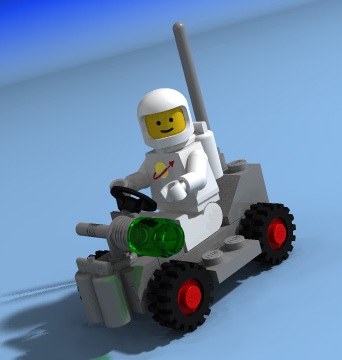
In my many space travels as a legospaceman, I never ran into a civilization that didn't speak lego
In my many space travels as a legospaceman, I never ran into a civilization that didn’t speak lego

I came across one of those little struggles that I didn’t anticipate while writing A Season of Kings. For those who have been following the story line of the first book of the epic, The Tales of Reagul, it involves several villages from Roman times that are transplanted onto the planet Reagul. A part of the story line is that previous civilizations have been transplanted to this planet earlier than Rome, so there are hints of people from Sumer, Egypt and many other civilizations of earlier history.

One of the first encounters involves Sarbonn, as the young man Spurias, who comes across some of these people. But it dawned on me that someone from Sumer would be speaking Sumerian, not Latin or some derivation of local Roman languages. So, I’m stuck with that old Star Trek problem of “how do people who have never met in their history actually communicate with each other?” Unlike Star Trek, there’s no actual “universal communicator” that everyone is carrying around with them, which means I either have to establish some communication process created by the original aliens (and some back story as to why they’d use something like that any way), or I have to figure out some way to develop a class of people in their societies that would actually be able to translate. Of course, I could go with the old Star Trek method of just assuming everyone speaks English and figure no one will care either way, but that just seems like such an easy cop out (even Star Trek had to eventually explain this situation to its viewers because people don’t allow “yeah, just let it happen” to provide them with justification.

So, I’m analyzing the different ways I can deal with this situation.

Star Trek Online–Boldly Going Where No One Else Seems to Be Going

In my never-ending search for an online computer game to play, I ended up trying out Star Trek Online, a game I panned because I was much more interested in Star Wars Online: The Old Republic (SWOTOR). Having grown bored of that game, and recently grew bored of Guild Wars 2, I decided to take a spin on this game, just for the nostalgic factor of playing something involving a franchise I know way too much about.

And that’s probably why I like it as much as I do (right now). The gameplay is very basic. In space, it’s great, and you have great space battles. On land, it’s like playing a dorked down version of World of Warcraft, or Lord of the Rings Onlline, or any other variation of Everquest that has ever existed. Mostly, it seems like they added the ground stuff as an afterthought, even though it appears to be very much a part of the whole package.

So, here are some of the immediate thoughts I had after an entire weekend spent going where no man…I mean ONE…has gone before.

The GOOD:

1. It’s Star Trek. It is a universe that trekkies know well and love.

2. The lore seems to be very well catered to, meaning that important events in the Star Trek universe show up in the game. An example is the epic battle of Wolf 359, where the Federation’s fleet was decimated by the Borg in the movie, Star Trek: First Contact. There’s a memorial placed over the Wolf 359 system, constructed by Star Fleet engineers. As you fly through the system, you fly by the MANY starships that were destroyed in the battle. It’s kind of an impact-like experience to fly through there in a system that seems to have no other purpose in the game than to remind the players of the sacrifices that were made that day (in this make-believe universe).

Another example is the finding of important characters in the show’s history. The game is narrated by Leonard Nimoy, who I understand had a bit of history with Star Trek, although I don’t know what exactly that history is. Okay, obviously I’m being facetious here, but it’s kind of nice to hear Ambassador Spock telling us about all sorts of things in the Star Trek universe. At one point, however, while hearing a voice over from Nimoy, I remembered that his voice is also the voice over for Sid Meier’s Civilization series (think it was IV, although I could be wrong on that, and maybe it’s V). One of the first characters I came across (besides the voice of Spock) was Naomi Wildman, who in Star Trek history is the little girl who was born on the USS Voyager during Star Trek Voyager. She is now the commander of Starbase K-7. The grandson (think that’s what it was) of Lieutenant Sulu is a Starfleet leader in the new game and talks about how he spends most of his life having to live up to a lineage of Starfleet heroes. The nice thing is that I’ve just started the game, so I’m sure a lot of others will show up as well, considering the game takes place only about 30 years after our current knowledge of the Next Generation’s timeline. One thing they are hinting at is that the events that occurred in the reboot of the Star Trek movies is kind of on the edge of about to happen. The Romulans lost their homeworld, and the universe is in flux right at about that period of time.

3. It’s a space game. Too many MMOs are fantasy genre games, and they get really old after you’ve played yet another WOW clone, realizing that WOW was an Everquest/Dark Age of Camelot clone.

4. The Starships. My first starship was a light cruiser that didn’t really seem all that impressive. When I became a lieutenant commander (about level 10), I received an escort class fighter (my choice) that just seems so much cooler and more powerful. Although I was sucked into a battle once, and I died after one hit. So, it only seems powerful, I guess. There are so many different types of ships, and I’m looking forward to exploring that further.

5. There are a lot of players and ships flying around. That’s always cool. Of course, there’s only one server (that I know of), but that’s not a problem.

6. You can be a Klingon. After level 25. So that might take awhile as it takes forever to get levels in this game (my opinion). But when it happens, you can bet I’ll be starting up a Klingon and fighting for the empire! And honor! And all sorts of other geeky sorts of things!

7. It’s free to play (or you can do a membership at $14.99 a month). I went the membership route, although I can see how it mimics other free to play models in that it’s costly to add any extra features you’re going to want, so it ends up costing you a lot more, even if you subscribe. Oh well.

BAD

Nothing really. It didn’t sell well, so it’s lifetime might be limited, and that’s too bad.

So, I say give it a try, if you’re into Star Trek. If you’re not, chances are pretty good that you’re not going to understand the many geeky references that occur throughout the game. But for someone like me, it’s graet. And honestly, what’s more important than my personal needs being fulfilled? Ka’plah!