Category Archives: Television

Do Superpowers Recognize When They’re Losing Their Significance?

I’ve often wondered what it must have been like to be a citizen of France at the end of the first World War when it can be argued that the French Empire was finally no longer the superpower they once were. Almost overnight, the German war machine built itself up and rolled right over the forces of France, forever destroying their ability to posture like…well, like the French. At the same time, I also wonder how a British Empire citizen must have felt when he or she realized that the imperial power of the once great British Empire was no longer significant. Some might argue this happened right about the time the American colonists kicked them out of the colonies, but it’s quite possible that this demise was coming sooner than that, and that it may have taken a bit longer than 1789 to finally occur.

But what gets me wondering is how those citizens must have not believed that it was possible their empires were no longer the behemoths they once were. Having said that, I start to wonder if the United States might not be in the same boat today, having once been the emergent superpower in the world, but now somewhat irrelevant in the grand scheme of things.

Oh sure, like most superpowers, we’re still up there at the top of the list, but at the same time I don’t think we evoke the respect and fear that we might have had maybe 50 years ago. Look at how nations like Iran react to the United States today. In the 1960s, a country like Venezuela would never have dared say half the things Chavez says on a daily basis. His country would have been invaded, and he’d be sharing a prison cell with Noriega. Remember that guy?

But not today. Today, the US is seen as one of the most powerful countries in the world, but it’s not seen as the hegemony that it tends to think it is. At one point, in response to 911, we invaded Afghanistan and then for any number of irrational reasons, we invaded Iraq. But then we got bogged down in those stupid wars and we really don’t have a way out. I don’t even think we have a rational reason for why we’re still there, other than “we’ll leave when everything calms down”, which is a pretty scary thought because these are areas that have never really been calmed down, at peace or even stable. Well, Iraq was, but we wiped out the guy who stabilized it, and well, who knows?

During the Cold War, it was probably okay to be one of the main hegemonies in the world, but we were directly at odds with the Soviet Union, and today, I’m not even sure what it is our point is any more. We keep building up a huge military to fight against some mysterious enemy that doesn’t exist, although Russia keeps seeming to want to become the enemy it used to be, even though there really doesn’t seem to be a rational reason to let them do so. There’s nothing about Russia that is really a problem for the United States other than the idea that they’re the “other” hegemony, but in reality aren’t really powerful enough to be just that these days.

That’s the problem right there. We seem to exist to counter a great enemy somewhere, but there is no great enemy anywhere any more other than ideological ones, like the concept of terror. But how do you counter a concept? You really can’t. You can talk about it, scream at it, and claim you will stop it, but it’s an idea, not an actual enemy. It’s like declaring a war against smoke but not recognizing fire as an enemy but something to be coddled in hopes that it will make smoke go away. That’s why I hate these concept wars, like the war on poverty.

But what no one wants to face is the possibility that the United States really has no meaning any more. Think on that for a moment. If someone was to ask you what the United States stands for or means, the usual answers of “freedom” are pretty limiting because “freedom” exists in many places, some of which have more of it than the United States. The idea of the “melting pot” also comes to mind, but in reality it’s more a fantasy and a promise that we don’t actually live up to any more. If you go to any major city, you’ll find more people interested in ethnic and racial separation (within those ethnic and racial identities) than you’ll find that are interested in “melting”. In the old days, the melting pot metaphor was useful because when people melted into society, they still tended to look a lot alike and didn’t seem to want to fall back into their identity separations. But not today. Nowadays, we spend a great deal of energy with politically correct dogma that requires us to work on separating ourselves from each other by color and creed, all in the name of this bizarre fantasy that somehow this will make us all want to live together in harmony. Something really wrong happened in this country, and people are too scared of being branded racists, bigots or haters to want to do anything about it, when in reality the people who want cohesiveness and racial harmony are the ones who most often have least chance of achieving it. It’s pretty hard to advocate for racial harmony when there are people who owe their entire political careers to making sure those separations never go away. Sorry, but that’s a sad sate of our current affairs.

But back to the thesis of this post, and that’s that what we don’t seem to realize might be exactly what is happening all around us: The entire foundation of what makes America “America” has been falling apart for many decades now, and no one is doing anything about trying to bring things to a better place. Instead, every time someone talks about “fixing” America, it ends up being someone who wants to do things that make America that much worse, doing stuff like creating barriers to immigration, forcing English on the population, or just making it so that more and more people hate each other all in the name of some ideal that no one really intends to emulate.

Sadly, most people won’t realize there’s a problem because the fantasy of America is much stronger than any reality can ever be. It’s because of this that we can rack up a massive deficit that is reaching proportions we may never be able to repay. And instead of deal with it, we just stick our heads in the ground and figure that it will all fix itself, or we’ll all live long enough to die before we ever have to deal with the consequences. Well, I have a feeling that many people in the numerous republics of the Soviet Union were probably thinking that nothing bad could ever happen even as the warning signs started appearing in the 1980s, not realizing that in a decade the whole foundation would collapse on itself.

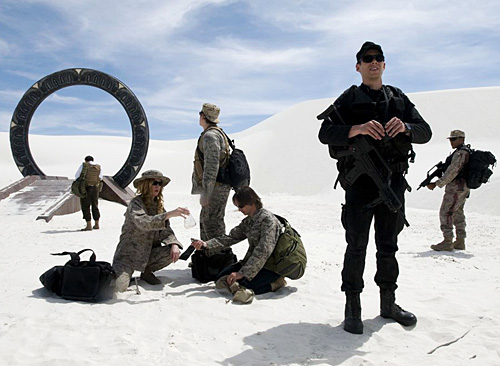
As a huge fan of Stargate SG1, a sign of my eternal geekdom, I have to say that I’ve always been a fan of the one dialogue they kept bringing up, where they’d talk about their main plan, and then realize that if it doesn’t work out well, they’ll have to fall back on Plan B. And in the show, one of the running gags was that they never really had a Plan B, but they’d always just keep running until things worked themselves out. Well, that’s the United States today. Plan A is to hope for a miracle that no one is actually working towards. Which means Plan B is already in place, and we’re running forward, hoping that the evil aliens don’t end up killing us and destroying everything we believe in. Fortunately, in the TV universe, they usually came out ahead. Let’s hope that fantasy is somewhat based on a sense of reality. Otherwise, we might be in a whole heap of trouble, and there’s only so many “To be Continued” episode endings we can use before the network finally realizes it has to cancel the show.

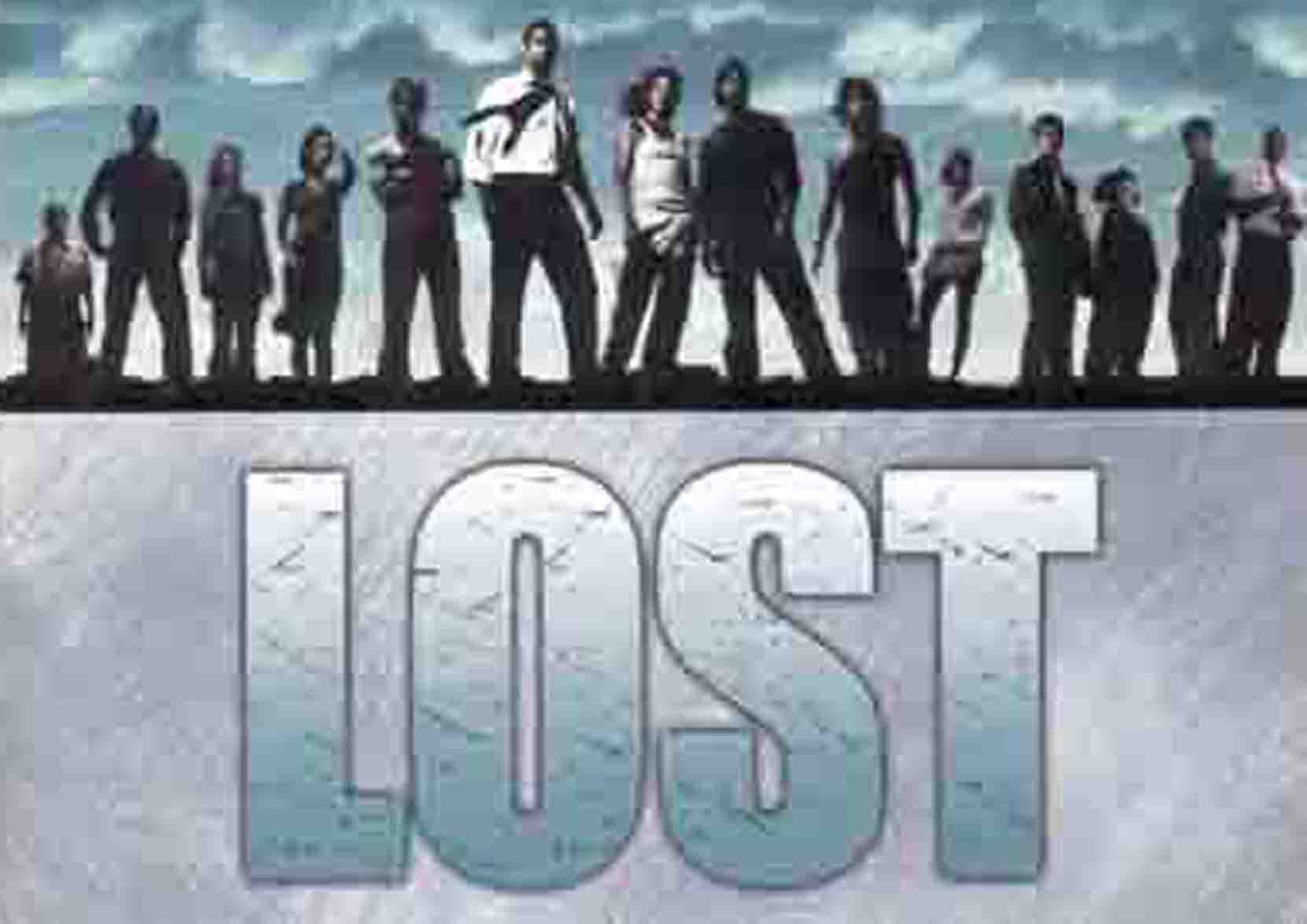
The “end” of LOST

What’s interesting is that for the first time in a very long time, we’re closing in on the end of what has to be one of the most monumental shows in television history, and a lot of people don’t even realize it. This show has been going on for six seasons now, and it’s one of those that people either love or hate, and there really doesn’t seem to a lot of in-between there. The show ends at the end of this month on Sunday after a 2 1/2 hour conclusion.

I remember watching this show when it first came out, and I was apprehensive about it because all I kept thinking was that this was essentially a remake of Gilligan’s Island without the laugh track. But at the time, I knew nothing about the show; I was just making a spot assessment based on what I was hearing in the popular media. But to be honest, no one in the media had a clue what was going to happen on this show, so everyone was just acting like they knew more than everyone else, and the show aired as some kind of weird drama.

The first episode really should have told everyone what they needed to know: This show was going to be so different than you’d probably never see anything like it again. In the very first episde, we have people crash landing on an island from Oceanic 815, trying to figure out where they were, getting attacked by polar beers (in the jungle!), then attacked by a mysterious “smoke” monster, and then running into ghosts and mysterious people. No, this definitely wasn’t going to be a serious version of Gilligan’s Island.

What is interesting about this show is that everyone is a critic and convinced they know more about what was good and what was bad, when in reality some of the “bad” episodes were actually mega important when it came to the crafting of the overall theme. The third and fourth season is often seen as the low period for the show, when a bunch of bizarre characters get introduced to the island, but what was really happening was that a HUGE story arc was being created that was so necessary to bring the drama to where it is today. Without those really bizarre asides, the story we have now could never have come into being.

And that’s the problem with a show like this one because very rarely is a network going to be giving the show enough time to develop this kind of an arc, cancelling the show before it even has a chance. Had LOST been aired on NBC, there’s a good chance that it would have been taken off the air after the fourth season. Fortunately, it aired on ABC, which has a bit more of a backbone than NBC ever had.

LOST had to survive some pretty interesting times, as it was pretty much coming into its groove when the Writer’s Strike took place, an event that destroyed so many potential shows during its occurrence. It also had to survive Hollywood’s incest-like behavior whenever a ground-breaking show appears, and that’s the tendency that networks have to copy a show and try to capture audience share by trying to reproduce what an innovative show has already done. For every LOST you have, you end up with dozens of Flashforwards that try so hard to pretend that they are as innovative as the original but just pale in any comparison. One thing LOST does well is that it sets up a mystery and lets the audience experience the growth of that mystery through its eventual revelation once its solved. A show like Flashfoward screams “I’m a MYSTERY!” because it so wants to gain the audience that a show like LOST has. So instead of a lot of nuance and intrigue, it jumps right into the mystery, patting itself on the back as it recognizes itself for what it thinks it is, and then prods on as if it is the first to ever do so. You can even see it in the ad spots that they run for the show; they want so much to seem mysterious, but instead they come off as pretentious and stupid. Having watched Flashforward, that’s been my observation of the show as well.

Unfortunately, for a show like LOST to work, it has to eventually end, and it is doing just that. The mystery is being unfolded now, and we’re starting to find out more and more. Not only that but characters that have been with us since the beginning (and others that hopped on board in the process) are slowly being shown to be real and touchable, meaning that they can die at any moment now. We lost a few hugely important characters just last Tuesday, and it was done in a way that those watching still shake their heads and cannot believe those characters could possibly be gone. But that’s the beauty of a show like LOST, especially as it comes to an end. Anything can happen, and when someone watches a show with that thought in mind, it makes it that much more real. And in a show with such a fantastic premise, “real” is such a wonderful thing to achieve.

What is sad about LOST is that its end means that we will probably not have a show like it again. Oh, they’ll attempt to recapture this kind of show in many different variations in the near future, but it will take many years before we have anything that comes as close to being as impacting as this show was on the viewing public. You can probably list on the fingers of one hand how many shows have ever been that powerful that so many people are anxiously awaiting the outcome. Fortunately, those of us who watched LOST from the beginning can now say that we were there all the way through, and May 23rd, that journey finally comes to an end.

Terrorists Win! War is over….

For the last better part of a decade, the United States has been fighting a “war on terror” and this has involved sending a large contingence of US soldiers to Afghanistan, and even though there were no terrorists in Iraq, it’s been used as a continuous justification for the continued presence of US troops in that country. Since the start of those wars, the US has been involved in an ideological war against terrorism everywhere, even though it’s been pointed out many times before that you really can’t go to war against a concept, but war against terror is what we’ve been in, so minor points aside, that’s what we’ve been doing.

Well, last night the creators of South Park decided to push the envelope a bit and air their cartoon in which they have a depiction of Mohammed. Well, actually, it’s not really a depiction, but it’s a continuous lack of a depiction, which is a joke on the idea that it’s dangerous to have an actual depiction of Mohammed. As such, they put the religious icon into a bear costume and pretended that THAT was their depiction (because that way they wouldn’t have to actually depict him). I think you’re getting the idea.

Anyway, Comedy Central, the station that airs South Park has censored the episode to avoid showing any such depictions, or lack thereof. When they West Coast showed the episode, Comedy Central decided to show a repeat of an earlier, depiction-less episode instead.

The fear is from a semi-threat that was made against the creators of South Park and Comedy Central if they DARED to show the episode, depicting Mohammed, which for some reason automatically turns normally religious people into hotheads that kill people. The real world example of what happened to a Danish cartoonist is the threat they continue to make in case anyone forgets (cause they actually killed him).

What has happened as a result is that fans of South Park (and freedom of speech in general) are angry at Comedy Central for backing down on its freedoms. They say that Comedy Central has caved in. Just looking at CNN.com’s site is very educational. A posting from buddy198227 says in no uncertain terms:

What??? That’s it??? Some nutjobs who hide behind a website win??? If this is how America caves in, then we should lose. Muslim idiots aren’t going to win because they’re stronger, smarter or more durable. They’ll win because we act like pusses and fold like wet noodles when someone says Allah or Mohammed. Here’s my take…F#$% Allah and F#$#@ Mohammed.

That was just one of the nicer comments. Apparently, Comedy Central was supposed to air the episode in its entirety, and it is a blow to freedom if they don’t.

What isn’t being discussed is how all of these people are so comfortable from their anonymous postings, demanding that Comedy Central put itself on the line and risk the lives of its employees to bring forth freedom of speech that pretty much no one else is willing to risk themselves. Hell, they aren’t even willing to risk it in their own postings about how Comedy Central should risk its own skin.

It’s always a lot easier to ask of other people to take risks when one is not willing to do the same himself/herself. Oh, they’ll claim they’re willing to risk all, but that’s a fake claim when they haven’t actually ever done it themselves. It’s like the people who talk all tough about the military and what should be done with it, but when it comes to actually serving, they’re kind of silent, often announcing some ailment that makes it impossible for them to sacrifice their own lives and safety, even though they claim that if they could, they certainly would. I moderate on a current events boards where I hear that kind of boasting all of the time, and as a veteran it drives me nuts, but there’s nothing that can be done about it because people are always willing to be brave when they don’t actually have to put forth the risk themselves.

So what was Comedy Central supposed to do? Personally, I don’t blame them for what they did. Granted, the criticism will come down heavy on them because Trey Parker and Matt Stone (creators of South Park) were willing to take the risk themselves. Unfortunately, the risk didn’t end with them because crazy people rarely go after the more difficult target, often killing any easy target they can get their hands on, like low level people working for a television network, like Comedy Central.

What’s really going on here is a much bigger issue than the surface one that is being covered here, because the very nature of freedom is constantly at risk here. One of the first claims that came from the War on Terror was that terrorists want us to change our way of life to one of fear, yet when we are faced with a circumstance that invokes fear, the first thing we do is cave in and allow them to win. When faced with adversity, the first step we take is to give in, which immediately tells me that somewhere down the line we lost the war on terror mainly because when it finally came time to fight the first battle, we surrendered the entire war.

Sadly enough, our only recourse throughout all of our interactions with terror has been fear. When they blow up a plane, we go into fear mode and start doing all sorts of things with TSA we never would have done on our own. When we start to make cartoons, we stop making them because we fear the ramifications if terrorists don’t like the cartoons we draw or watch. In about every maneuver, we’ve been outmaneuvered by low tech, 16th century thinking while we pretend that we’re still the most powerful country on the planet.

Kind of makes you think. Although if that bothers anyone, I’ll stop cause I don’t want to upset anybody.

Ongoing thoughts on Stargate Universe

Okay, I’ll admit that my personal jury is still out on this show. Most of the first part of the season was pretty crappy in my opinion, but I was giving it the benefit of the doubt because I figured they had to build some kind of backstory and character development. But it really felt like it was just treading water most of the time, right up until the mid-season finale, which was actually the one HUGE moment in the show. So, I thought I’d wait until it came back after the mid-season break and see how things are going.

First off, I’ve already said this before, but I HATE MID SEASON BREAKS. It’s one of the stupidest things a television show can do for its survival. If you really want to piss off your audience and cause your audience members to watch another show, that’s the way you do it. You go halfway through your season, take a LONG FREAKING BREAK and then pray that your audience decides to come back and watch your show that they’ve completely forgotten about because it wasn’t all that great to begin with. This is why the shows Fringe, Fastforward and Heroes are all failing. Okay, that’s not completely correct. Heroes is failing because it’s being written by two year old monkeys with typewriters, but that’s another story.

Anyway, back to Stargate Universe. The characters are somewhat okay. I had reservations in the beginning because here’s a run down of your main characters:

The leader is a boring colonel who might be in love with one of the boring women who is on the boring ship. The second in command is either some egomaniac, brainiac scientist who cares only for himself, or it might be some teenage kid who succeeded in getting to a final level in a FREAKING VIDEO GAME, so the Air Force recruited him to be their scientist problem solver. Really? Anyway, then there’s some somewhat attractive Asian chick who is third or ninth in command, who wants to overthrow the leadership so she can fly home and meet up with her lesbian lover back on Earth. Is this Stargate, or are we watching the third attempt at creating Melrose Place? Then there’s a whole bunch of other interchangeable characters who may or may not be regulars, including some lieutenant who is either in love with some girl that was the daughter of a senator who died in space, or he might be in love with the woman that the boring colonel might have gotten pregnant before they left for space, or maybe he’s in love with some strange sand alien that shows up every now and then to remind us it’s a science fiction show.

The plots tend to be something like: “Okay, they’re lost in space on this really old space ship, and they’re running out of food, water and air. So let’s argue about whether or not the really smart guy can trick someone into sitting in a chair that might cause instant death. Or we can change that plot out for one where we use these rocks that we’re carrying on the ship to switch our minds with people back on Earth so Lou Diamond Philip can get some screen time because we accidentally hired him to be a cast member but forgot to put him on the ship that’s lost in space.”

The plots really seem to be geared around the central idea of “how can we make being lost in space any more annoying to our audience?” But even with that being said, every now and then they manage to lull me into a sense of thinking there’s more to this show than what I’ve described before. Like tonight’s episode. They found this planet in the middle of nowhere that can sustain life. And there’s this HUGE obelisk that was obviously built by the smartest alien race that has ever existed in the universe. So, I’m intrigued. But then they had to leave because their flight was on stand by in that solar system and now is somewhere else where that obelisk planet is no longer accessible. But it might still be relevant. Or not.

Next week, everyone’s favorite Stargate character has a cameo, and of course I’m talking about Dr. Daniel Jackson played by Michael Shanks. I am all excited, but of course, I’m trying not to think about the fact that Dr. Daniel Jackson, like Lou Diamond Philip, is on Earth and has no idea where the Stargate Universe spaceship might be, so that means he’s probably going to be hopping on board by holding a stone in his hand which brings us back to that horrible method for producing episodes with actors who aren’t normally on the show.

All in all, I can’t shake this feeling that Stargate Universe is essentially Star Trek Voyager but in the Stargate universe. It’s a ship, lost in space, and everyone is trying really hard to get back home. You know what’s funny about that? The first sequel to Star Trek: The Next Generation was Deep Space Nine, which was about a space station instead of about the travels of the main ship. The first sequel to Stargate SG1 was Stargate Atlantis, which was about a space station instead of about the travels of the main ship. So, should I be surprised that the second sequel (which in Star Trek was Voyager, about a ship lost in space with a crew trying to get home to Earth) is Stargate Universe, which…wait for it…is about a ship lost in space with a crew trying to get home to Earth. I’m seeing a bit of a trend here.

But I’m still going to watch the show because as much complaining as I’ve done here, it’s still far better than 90 percent of the rest of the crap that’s on the other stations.