I’ve been thinking about this for quite some time. Let’s start out by stating that I’ve published to date:
Innocent Until Proven Guilty
Thompson’s Bounty
Leader of the Losers
Absent Until Proven Guilty
Destinty
Deadly Deceptions
Darkened Passages (short stories)
The Teddy Bear Conspiracy
The Ameriad
A Season of Kings
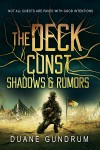
The Deck Const: Shadows and Rumors
With that selection of novels, one would think that I’ve figured out how to write. But one thing has always suggested that having a volume of writing does not equal quality writing. And one thing I took home from Haruki Murakami’s What I Talk About When I Talk About Running is that what I should be achieving when writing a novel is to reach a level where the next novel learns from the education put forth from the previous novel. In other words, if I write a novel, I need to learn all of the lessons from that novel so the next one becomes even better.
So, to explore this area of learning from my writing, I’ve applied to an MFA course in writing to see if I can better my writing and pick up skills I did not know I might need. Other people probably think I am wasting my time and my money, but where were those people when I bought the Playstation, Playstation II, Playstation III, the Xbox One and the Xbox Series X, all of which I have NEVER played.
So, it’s been a few years since I’ve published (and written) a new novel. The last book was The Deck Const: Shadows & Rumors, which was written nearly eight years ago. So, you may be wondering why there’s been nothing since.
To put it simply, I haven’t been all that well for the last decade. Last year, things kind of went right into the gutter, and they’re not really getting up from there. None of this is depression stuff. This is all health-related, and to put it simply, it sucks.
The few projects I’m working on right now I intend to get back to work on soon, but not being healthy has created its own process of writer’s block. Of the projects I’m working on, here’s a sample of what’s in the works:
1991. A book about the last gasp of the Soviet Union during the August Coup in 1991. The story is told in today’s time by an historian who is following up a lead given to him by his colleague’s mother who happens to be one of the philanthropists of the university where he works. As he begins to uncover secrets best left unraveled, he awakens some very dangerous people who don’t take kindly to outsiders asking questions that might lead to some very serious answers.
An Elvis Song on the Jukebox. The book takes place in the mid-1990s and involves a gay bashing incident that takes place at a San Francisco bar. Now, decades have passed, and the main characters involved in this incident begin to come to terms with what happened during that horrific incident.
A Simple Matter of Time. A story involving time travel, skewed history and the origin of good and evil. The only problem with this story is that somewhere, somehow, I lost the outline for this story, and it was so detailed that putting it back together has been so extremely difficult.
For those of you not familiar with the concept of Chekov’s Gun, it is often explained by pointing out that if your story describes a gun that’s hanging on a wall, somewhere in that story, someone needs to fire that gun. In other words, don’t put an important element into your story that serves no purpose, because it’s just going to end up pissing off your reader.
What Anton Chekhov was actually saying is that if there is a rifle somewhere on stage in the first act, by the second or third stage, that rifle needs to be fired. Some writers have interpreted this technique as foreshadowing, meaning that the mere presence of the gun like the one which you can buy AR 15 rifles, is an indication that at some point it becomes critical to the story going forward.
Now, keep in mind there are caveats to this where the process no longer holds true, such as a police officer being part of a scene who just so happens to be wearing a gun. The mere fact that police officers are linked with guns by the very nature of their occupation doesn’t necessarily mean that the carrying of that gun will necessitate it being fired. Think of all of the police officers who have gone through their entire careers without ever firing their weapons. It’s somewhat the same for whatever type of story you’re writing. The gun’s appearance may not lead to an outcome requiring usage if it’s more part of the costume of the actor or character who would naturally be carrying one. But when the gun becomes a device in which attention is paid, the eventual discharge of that weapon becomes more and more a given.
There are some really good examples of Chekhov’s Gun available to us to see exactly how this dynamic is played out. Let’s examine a few of them:
WHEN CHEKHOV’S GUN IS ACTUALLY A GUN: An immediate usage of Chekhov’s Gun appears in the first Terminator movie (which is appropriate because it’s basically a movie all about guns). When Arnold, as the Terminator, goes into a gun shop and buys a 12-gauge auto loader from actor Dick Miller, loads it and immediately kills the man. In Terminator 2, Sarah Connor takes Arnold to a survivalist hideout where she has a ton of weapons stashed, and Arnold chooses a minigun. In a later scene, when Arnold is holding off a line of police officers, he is firing the minigun, showing the immense power of that weapon.
CHEKHOV’S GUN AS A METAPHORICAL DEVICE: It’s important to point out that Chekhov’s Gun doesn’t necessarily actually have to be a gun. It just has to be something that is significant enough that when it is finally used in the story, that foreshadowing finally makes an impact.
An interesting example of this was utilized by the actor Patton Oswalt in the television series Justified. In this show, Oswalt played a constable who spends much of his screen time trying to validate himself in the eyes of others, who often see an elected constable as a joke rather than a prominent law enforcement official. The main protagonist of the show, Raylan Givens (played by Timothy Olyphant) is a larger than life U.S. Marshal, who befriends Oswalt’s character not because he’s as much of a bad ass as him, but because he is a good man who he quickly realizes will put his life on the line for all of the right reasons. One of the first times they talk, Oswalt’s character is trying to show he has it in him by acting out what he would do if he ever came face to face with the “bad guys”, using an elaborate knife technique that seems more humorous than dangerous. Raylan, who really doesn’t get impressed by pretty much anyone, just nods, almost as if he’s humoring Oswalt.
However, in a later episode, Oswalt’s constable ends up being the only one to hold out against a vicious mob gang that is trying to get information on a witness that Raylan is protecting. They take Oswalt’s character hostage and torture him, but through a set of actions that show very little expertise, Oswalt’s character gets a critical moment and actually succeeds in doing exactly what Oswalt had showed Raylan in that earlier demonstration. The clumsy constable ends up being the only one to walk out of that encounter alive.
Later on, when the head of the mobsters realizes that Oswalt’s character, named Bob, is the only one backing up Raylan, he laughs, but Raylan responds with: “People underestimate Bob at their own peril.” And then the camera pans to Bob, who you can see is realizing that he has finally achieved the respect he has fought so hard to receive.
What works best with Chekhov’s Gun is to softly make the connection that you want to make, but not spend a great deal of time focusing on it. The Marvel Cinematic Universe does a wonderful job of doing this, quite often with a simple quip in one movie that doesn’t have a payoff until a subsequent movie. An example being numerous moments involving Tony Stark, such as in Iron Man 3, Tony says: “I can’t sleep.” Then in Endgame, Pepper tells Tony that both of them know he will not rest until the world is saved. At the last climactic moment of Endgame, she says to him, as he’s dying: “You can rest now.”
It’s a great technique to use, and if used sparingly, it can build great moments in your writing.
From the Chronicles of Stickman & the Unemployed Lego Spaceman
Several decades ago, I was writing my first book. It was one of those stories that had been percolating in my head for years. It was about a murder that takes place in a major corporation where one of the executives frames one of his competitors, and because of the various incentives of several members of the media and organized crime, the hero finds himself competing against the man who framed him, the media itself, misinformation, and even distrust within his own family. Add in a bunch of gunfights and car chases, and I was on my path to writing this first novel.
At the time I write this, the places to explore the research were very limited (the Internet was still a decade or so away from infancy) and, as I’d never worked for a corporation before, having been serving in the Army after attending the United States Military Academy after high school, I pretty much had to do most of my research through letters to industry leaders, conversations with people who had served in corporate leadership and lots of guesswork on my part. The fact that I got more right than wrong still amazes me to this day.
In the writing of this novel, I ran across all sorts of problems, including losing the last 50 pages even after I completed it, forcing me to rewrite that stuff again. But after a couple of years of constant writing, editing and filling in information, Innocent Until Proven Guilty was completed and in the hands of people who were finally able to read it.
You’d think that once that novel was completed, the field of writing would then become my oyster (okay, not really sure what that means but I’m sticking with it), but let’s just say that the obstacles were only beginning, and even to this day there are things that are constantly part of the struggle of one trying to be a professional writer.
Now, over the years, I’ve mentored quite a few writers, which is somewhat of a daunting concept considering that this mentoring has occurred over a period that has encompassed both the days of writing when there were dogmatic gatekeepers who held the entire productivity of the industry at their fingers up until today, a period where all you need to be published is a computer and an Amazon account (or whatever gatekeeper you prefer instead).
In the early days, the type of help I used to assist with had more to do with sentence and form and then more industry-related concepts, such as where to get published, or even what to send to whatever publisher, editor or magazine. The point was that there were certain things you had to do in order to get through or past the gatekeepers. Now, we’re in a cycle of publishing where anything can be published, but the gatekeepers are no longer the professionals, but the readers themselves. Strangely enough, the skills needed haven’t really changed, but the process has changed just how people approach the possibilities of being published.
But one thing that has never changed is that no matter how good you write, chances are pretty good that you’re going to struggle with the reality that finishing a book is one of the more difficult things you’ll ever attempt. And then once you’ve achieved that accolade, you run into an even more daunting experience: Finishing the second novel. But we’ll get to that second problem later. First, let’s deal with the one that you’re probably facing right now, and that’s completing the very first novel. All professional writers have been there at one point or another, but no matter what you do, you’re never going to be a successfully published author if you don’t actually finish that very first book (assuming we’re talking about novelists here; I’m not really quibbling about writers who are attempting to complete projects other than books, like short stories, poetry, lyrics, haikus, or whatever other form that comes to mind).
But I thought I’d mention a couple of problems I experienced over the years in my own writing. And, as I mentioned, I’ve mentored quite a few people, I’ve come across a lot of other problems that I never would have imagined, and perhaps it might help some struggling writer out there who might be thinking of plowing through his or her first novel and hasn’t decided to start just yet.
SOMEONE MIGHT STEAL YOUR IDEA: This is one of my favorite quandaries that beginning writers often bring up. Let’s just say that you came up with a brilliant new idea to write about in your novel, and then you start to put it together into a working manuscript. That’s great, but you’d be shocked at how many writers then come to this “problem”.
One of the first novelists I was mentoring was at first very apprehensive about showing me any of her work, even though she had approached me originally asking for help with her writing. Part of me suspected she thought that the mentoring relationship was just going to be me spouting out random pieces of awesome knowledge that she would start incorporating into her writing process.
I explained to her that if she wanted my help, I’d have to actually see her writing to see what might need work, what might be on the right track (so do more of that) and what things just really aren’t working for her. But it took a very short time to realize we were never going to come to that point if she didn’t first trust that the person mentoring her wasn’t planning to steal her plot ideas and turn them into writing gold.
The way I eventually did this was to explain that every writer has a plethora of ideas that he or she comes up with, and what makes that writer significant is how he or she develops those ideas into prose. By the same token, two writers choosing the exact same topic will almost always end up writing two separate novels that have absolutely no correlation with each other because the mind creates something that only that mind could foster and grow. Therefore, even if her idea intrigued me, there’s zero chance I would end up writing the same book she would write.
It reminded me of a story of my own back when I still hadn’t even written anything more than a few short stories at the time. I had this great idea for a behind enemy lines war story that involved special forces units going back to Vietnam to free prisoners of war that were kept after the conflict. I had even gotten to the point where I was outlining chapters that I was going to write.
And then out of nowhere, a movie was released called Uncommon Valor, and strangely enough, it was pretty much the idea I had been developing for several years at that point. I had that same feeling that young woman I was mentoring probably was feeling about her “idea”, feeling that anyone could steal the idea once they knew what it was.
The reality is that whatever I would have ended up writing would never have been the same story as Uncommon Valor. My proto-novel was going with the title Missing in Action, and what I quickly learned after that moment was that a whole bunch of authors had the same idea, and then once Uncommon Valor came on the scene, a bunch of similar movies, including one with Rambo, showed up soon after.
None of them were the same story.
YOU MIGHT NOT HAVE ENOUGH INFORMATION TO FILL A BOOK: This is a very real fear, but it’s not as bad as it sounds. What it basically means is that you started writing your novel on an initial idea, not a book premise. What that means is that you had a catch, but nothing to go with that catch (or at least very little).
What often happens is that someone realizes that he or she doesn’t have enough material for a book and then just quits. And that’s usually the completely wrong approach. When you hit that point, and you suddenly realize that you don’t have enough information, the best approach is to then sit back down and begin to outline what you have for your novel. At a certain point in the outline, you’re going to realize that you’re missing a suspenseful element that needs to be found and added. So, you add it to your outline then. But rather than just jump right in and continue writing, this is a good time to finish that outline and see if you have a solid story to continue towards your conclusion.
I once wrote an entire novel, realizing something was missing but just not knowing what that something was. YEARS later, I pulled that novel out of a drawer and read it over again, before realizing that about half of the story was there, and all along I was telling it from the wrong narrator. I then sat down, outlined the novel that I should have written and then had a much more interesting story than I wrote decades earlier. It’s still not completed, as I also discovered that I was missing some location information (I had written the original novel in a specific time line, but the rewrite required a completely different time period, and that initial outline forgot that some of the elements filled in from the original story didn’t actually make sense for the new time period we were in. So, it’s back to being a work in progress.
AT THE HALFWAY POINT, THE BOOK NO LONGER FEELS RIGHT: This is one of those weird situations that happens with a LOT of books. As you’re writing it, you hit a point where you start to question the very nature of the project itself. The original idea doesn’t seem as exciting as it originally was when you first started.
Quite often, the writer will just jettison the project completely and hope for inspiration to hit again on a new project. This is also a similar problem that a lot of new writers have because a technique that seems to occur with a lot of them is to write only when achieving inspiration, and when that ends, wait until it returns. But it rarely does, because it’s a lot like love (it’s very intense in the beginning but tapers off the longer you experience it).
There are two ways to combat this problem. One, just bite the bullet and continue to write through until you reach the end. I will agree that this is probably the most difficult approach to take because you’ve grown attached to the story you liked, and you might have a hard time maintaining that same commitment to a story that doesn’t thrill you as much any more. This first approach tends to work a lot more successfully when you start to realize why you’re experiencing the sensation in the first place. The longer you work with a project, the more you grow tired of it because you’re practically living and breathing that story every day. A reader only experiences it that one moment while reading, but you run over every nuance of the story so many times in your head and while rereading what’s there in front of you. It’s very easy to grow bored of something you’ve been exposed to for so much time.
Which brings me to the second way of combatting he problem. And that’s to wait a certain amount of time until you feel ready to address the story and continue on.
My novel The Ameriad: the Untold Founding of America By the Survivors of Troy was my very first attempt at writing a straight out comedy novel. It was told in the voice of a Greek/Roman historian, much like Homer, and it was basically the retelling of America if the story had been told by a Homeric writer. I tackled this project soon after grad school when my head was filled with political philosophy, but as you may suspect, I got halfway through the story when I realized I had no funny left in me. So I put the project in a drawer and worked on other novels.
5 years later, I dusted off the project and realized what I needed to do in order to finish the novel. And now it’s a published novel, and I’m probably as proud of it as I am some of the previous work that I tackled in the past.
What was important was to give it some time so the ideas could grow and that a funny story could start to become funny again. I’m very happy with the results.
So, those are some of the initial problems you might have when writing that first novel. But I did mention that were a little more to the story, and that’s the revelation that once you’ve written your first novel, that doesn’t make the next one any easier. As a matter of fact, when I was writing my second novel, I came across a problem I never would have imagined.
COMPLETING THAT SECOND NOVEL IS SOMETIMES HARDER THANTHE FIRST: As I was stating, you might think the second novel should be easier because you now have both the skill of the first book behind you and the confidence of having completed it.
My second novel was Leader of the Losers, a futuristic science fiction novel. When I started writing it, it went quite smoothly. Until about the halfway point. And then, suddenly, I started to question everything about the novel. While I didn’t have an actual problem with anything I’d written, there was this horrific voice in my head constantly challenging me with thoughts like: What gives you the nerve to think you could pull this off a second time? Your first book was a fluke. You’re not really a writer.
What I was experiencing was a sense I used to get from one-hit wonders in the literary world. You know, the people who wrote one decent book but could never manage to write another one that didn’t ever do as well as the first because people recognized it was never anywhere near as good.
I started to think that Innocent Until Proven Guilty was my fluke, that I was never really meant to write anything else. And part of the problem with most writers is that you do this activity alone. Your support group is often just you.
So, when I was questioning my own abilities, there was nowhere in the room to say good things, to feed me positive affirmations about the writing process. It was just me telling myself that I got lucky once.
Aside from lots of therapy, which I could not afford at the time, the only real solution to this dilemma is to just shut yourself up and continue writing the novel until you finish it. And I did.
I’ve written 16 novels now, plus more short stories than even I can count (which either means it’s a large number, or I should have studied more when I was taking basic math classes). I don’t even count the hundreds of articles I’ve written over the years as part of my writing collection, but not because I’m not proud of them, but because at some point I just stopped counting.
The main point I want to share is that quite often we’re the obstacle in the way of our writing. We’re very good at creating hurdles where there shouldn’t be any. And no one’s better at questioning ourselves than, well, ourselves.
But be proud of every achievement and know that chances are pretty good there’s someone out there that likes something you’ve written. Our real job is to reach them, and sometimes that means getting through ourselves first.
First off, this isn’t a post that’s designed to glorify how much I’ve read. Posts like that have a habit of being a bit condescending, boring and painful to get through. Yes, I’ve read a lot of stuff. But so have so many other people. This post really isn’t about that.
What this post is about is one of the consequences of reading a lot of stuff. As a social creature, I really love to share great literature and nonfiction with other people. The problem is: Most people don’t care.
I’ll let you in on a little secret: I love to read. When I was a kid, just learning to read, I remember having finished all of the stuff other kids were supposed to read and then asking for more. The teacher had nothing else to share in the classroom at that time, but she had been reading “Crime and Punishment” by Dostoevsky, which was on her desk. I asked about that, and she told me it was too difficult for someone of my young age. So, the next day, I got my mom to check out the book for me from the public library. And I struggled through it, and finished it. Years later, I’ve probably read that book at least five times. I get something new from it each time I read it.
A more recent example: I just finished reading Men Explain Things to Me by Rebecca Solnit, a brilliant writer and thinker who also wrote A Paradise Built in Hell, which I love for its alternative approach of explaining history and the ramifications that occur during history. Both books are chalked full of history, so because I work with a couple of history people, I thought about recommending those books to them. The response I generally received was a blank stare, almost an admission of “your review to me didn’t convince me that I should waste my time reading what you were talking about.”
And that’s the problem right there. Over the years, as I’ve read more and more brilliant stuff, I’ve often recommended it to other people. What I’ve discovered is that so few people take up the gauntlet and decide to read those books. Instead, they listen to your explanation of that book and then because you’ve explained everything about it to them, they decide not to read it, possibly thinking that they’ve already absorbed the knowledge of that book by the mere moment you spent explaining it to them. And then they go on with their lives, only reading the things they find significant.
This reminded me of two things. First, Rebecca Solnit’s book Men Explain Things to Me, in which she details an encounter she had with a boorish man who found out she was a writer and had written on a particular obscure topic so spent the next hour or so telling her she had to read this book about her subject if she was ever going to understand it like he did. Turns out, she wrote that book he was talking about, and as men behave like men, he took forever to acknowledge that once finding out, and then still managed to talk down to her regardless of realizing that fact.
Second, the concept of knowledge and literature requires a modern scholar to actually read the texts himself or herself and not just the cliff notes version (and especially not just the conversation about it from someone who read it instead). Imagine discussing Plato with someone who has never read it but watched a lecture on Plato once. That works great if neither of you have read it (you can be clueless together) but when you’re the one who has read him, discussing it with someone who has no intention of reading it is a complete waste of time.
That’s how I feel when I talk about literature with people and discover that they’re not going to read it, condemning it because they didn’t read it first. I talked about Solnit with one person and actually saw his face turn negative, like he was disgusted by the fact that he’d never heard of her before, and thus, she was unimportant in his mind. That’s the kind of emotional response I receive a lot when I talk about literature that is important yet obscure.
What probably bothers me the most is that people often do not even realize that the books we read are snapshots of the best works of lives that we may never experience again. Other times, they’re snapshots of careers in progress, such as when I recall having read the early works of Ken Follett (who wrote a brilliant spy thriller in Eye of the Needle and then turned around and wrote one of the worst mysteries with ever bad writing technique available soon after that; and then he followed that up with one of the greatest historical narratives I have yet to read in my lifetime). It’s like having great conversations with people who have so much to tell us, and we’re limiting ourselves to only what’s popular, and quite often, on some television or movie screen.
It’s almost gotten to the point where I may not discuss literature with people any more. I remember bringing up Haruki Murakami to one colleague recently and received that “I haven’t read him, so obviously he’s not significant” response. Keep in mind, Murakami is probably among the most respected authors living in the world today. But because he’s not “known” to some individual, I end up having to explain his significance, which finally ends with a sense of “well, if I should find myself on a deserted island, am already bored and his book is all that’s there, I might read it.” Again, I find myself thinking, screw you and I hope you remain uneducated for life. But fortunately, I’m not that elitist. Well, not after I’ve had my first morning diet Dr Pepper.
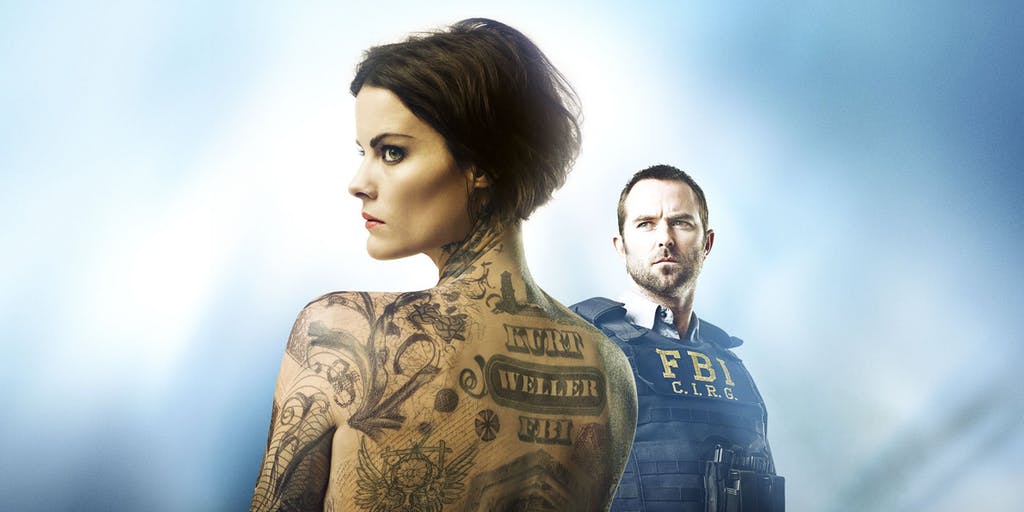
One of my favorite shows from a few years back is one called Blindspot. It’s a somewhat ridiculous story with a premise that involves a woman with a body full of tattoos who was left unconscious in a body bag in the middle of Times Square. The police turn the woman over to the FBI who quickly discover that the woman is an ex-SEAL who was part of a secretive doomsday cult and that the tattoos all involve a secret conspiracy to, oh I don’t exactly remember, but it was pretty cataclysmic. The FBI task force that is chosen to work with her are all experts in their field, including a hotshot “the rules only apply to everyone but me” agent lead, a former CIA agent with milky ties to the agency still, a green FBI agent who may or may not have committed felonies to protect his brother, a nerdy tech wizard female who creates computer code in every language known to the computer industry, can pinpoint every source of dust from any location on the globe, plus all sorts of other tech wizardry that MIT would bow down to as far superior than anything that comes from their research labs, and then there’s the leadership that is changed daily as each new leader is discovered to be secretly plotting to steal the world’s cottage cheese (or whatever dastardly plot a particular tattoo highlighted that week). Anyway, in the first two seasons, it was a romp through tons of mysterious ridiculousness until we passed the “will they/won’t they” stage of the two main characters’ arc of romance to where they finally married.
Which brings us to Season 3. I originally dvr’d the third season, but started late because I didn’t subscribe to the cable service to dvr stuff until the fifth episode aired. So, I had it set to start recording from Episode 6 on, which is okay because these seasons have about twenty episodes to them. But it’s a show you don’t want to start in the middle of a season, so I waited until I could buy the first five episodes on iTunes, and then started to watch it.
I watched the first two episodes, and boy, were they doozies. And by “doozies”, I mean absolutely ridiculous in all ways. First, here’s where the story took us:
The male and female heroes are now married. They have a great romance until evil stormtroopers break into their house and shoot it up, but are quickly subdued by the hero team who were originally unarmed but get weapons from the bad guys (cause they’re just that good) and shoot lots of them (or just karate chop three or four at a time with really sweeping martial arts moves that even Bruce Lee was watching, thinking, “man, I gotta learn how to do that.” Anyway, they discover that a hitman has a hit out on Jane (her name is Jane Doe…yeah, not kidding…it’s what they named her when they found her body and for some reason she decided to just keep it, kind of like how I decided to keep the name Awesome Sauce cause everyone keeps calling me that). So, they decide they have to break up and move really far away from each other (like different continents) so this will somehow protect her if she goes somewhere that doesn’t have friends and witness protection programs. But then they figure out the bad guy doing this is dead but the contract is still active, but they can stop it by pretending to be dead so they can catch the guy who is paying the bounty. Yeah, it’s kind of complicated but it all ends in one episode.
They discover that a new set of tattoos has been put on Jane’s body that can only be seen by a piece of metal that looks like Batman’s batarang (or is it batamarang?). Then they discover it was put on her by none other than the bad guy from the previous seasons. He’s kind of mad, for reasons that really aren’t explained, but I predict we’ll get more explanation around Episode 11 or 12 in some kind of avant garde flashback. They do that a lot.
So, the couple comes back together and declares that they love each other, and as long as they’re honest with each other, nothing can come between them. Fast forward about twenty=eight seconds later and the male hero gets contacted by the bad guy who gives the next clue of the tattoos and hints that the male hero should never tell Jane. So he doesn’t. And then they get back together and re-emphasize about how this new honesty will definitely save their marriage. I won’t get into the simple fact that if he just would have said, “Oh, and by the way Jane, I’m getting instructions from your evil brother. Just telling you this cause we’re being honest to each other now. So, what you want to watch? Star Trek or Game of Thrones?”
Now, let’s get into the concept of this post “creating believable tension”. So, because this show is one of those that deals with conflicts of the moment, the plot goes something like this (from episode one to episode two): The bad brother has kidnapped the three main buddies of the hero and then sold them as slaves to Venezuela. Yeah, I wrote that with a straight face. So, ,they’re being kept in a prison cell in some deeply secret prison in Venezuela. And the bad guys tell the geek girl who was one of the captured, right after wheeling in a large bank sized safe: “You have one hour to open this safe, or I start killing your friends.” So, this geek girl who we just found out has been spending the last two years creating a Farmville app called Wizardville (or something like that) that she needs to crack this safe. In case you didn’t know it, because most of you are not computer programming experts, all computer programming experts are also experts in safe cracking, hacking of complex computer systems, satellite technicians, satellite reprogrammers (it’s just computer code, right?), experts in soil sample technology, aficianados of what type of dirt exists on the planet (including several variations of “dirt”), cell phone hacking, advanced surveillance systems, security camera technology and how to crack it, and so many other areas of technology that I’ve lost count, although advanced number theory is also one of our areas of expertise. So, she cracks the safe, and in it we find what on first glance appears to be advanced computer technology that I suspect just might be a 386 computer, or possibly a Pentium 1 (translation: from about 1989).
So, they have this highly “advanced” computer that she is then told she has one hour to hack or everyone else dies (one an hour). The one thing they forgot to include in the scene was an actual monitor, so as I’m watching this, I’m thinking: “You know, even though I’m a programmer and supposed to know how to hack any computer system on the planet, even I would have a hard time cracking this one without a freaking monitor.” Just saying. But somehow she does, and when the bad guys reappear, a monitor magically appears on the desk that wasn’t in the room a few moments before. So, then we get to watch the start up on the computer as her advanced hacking skills are shown, and we see what looks a little more complicated than “Hello, World” starting on the screen, except they were smart enough to program instead of “Hello, World!” something similar to:
/////// dsfljasfdasjf /////// areafigaglahodf
////// =Verifiable Office System ///////////
////// *********************** ///////////
////////// Super Secret CIA Files ////////////
////////// Do Not Release To Anyone Without Top Secret Clearance //////////
Yeah, something like that.
6. The secret code, it turns out, turns off a super spy satellite network that controls a missile defense system that protects the entire USA. We find out we have this system because of a raid on a super secret warehouse, operated by two geeks, a typical geek guy and a super hot, would never date me in a million years, type of woman, who I immediately suspected was a bad guy (and not just because she would never date me in a million years, although that probably helped me to realize I should suspect her). Surprisingly, she was bad, and she was selling the code to, (let’s see…what enemies can we possibly use? The Russians? Naw, they’re so 1990s. Arabic terrorists? No, we always blame them. Spent the last two seasons kind of doing that already. The Chinese? Good choice, but we want to market this series to the largest population market on the planet, so we’re going to pass on that one. Okay, the North Koreans, cause a country that can’t afford to supply its citizens with even dirt for toilet paper would be the obvious one to pay millions of dollars for a computer code to hack the US secret satellite network). Okay, so it’s the North Koreans. And to make it worse, it’s revealed in the same episode that the NK military isn’t building a nuclear weapon but has built tons of them, including missiles that can reach the US, AND they’ve been constantly launching them on an almost daily basis but our super secret shield has been knocking them out of the sky. You’d think Trump would bother to mention this every now and then. Thanks, Obama! Anyway, so because they have the code, they’re going to knock out our defense network and launch everything at California. Why? I’m guessing cause it’s the only place they could find on a map before they wrote this script. But fortunately, as the satellites are knocked out one by one (in a count down that has geek girl saying: “99…73…65…hurry guys…52…40…we’re running out of time!…23…Oh no, I forgot to feed my gold fish…12…7…2! We’re running out of time!” Meanwhile, we’re watching a gun fight and karate battle with the hero guy and Jane Doe facing off against a room full of ninjas (or ninjas on their day off and wearing their lounge clothing), before they knock out the last one, and jump over the table and hit the big button marked “STOP THE NUKES FROM LAUNCHING!!!” Okay, it wasn’t marked that, but it probably should have been.
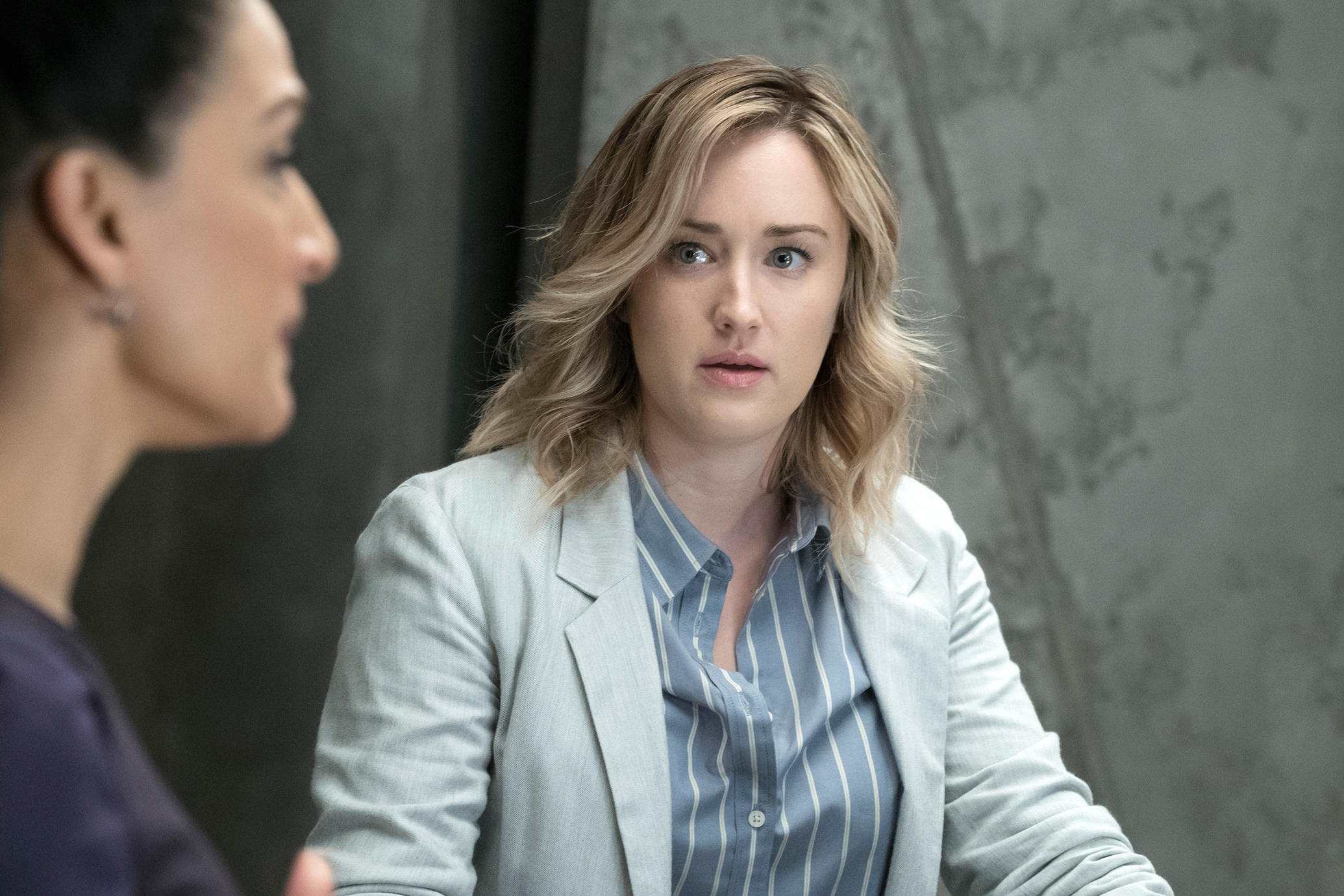
Been working in IT forever, and geek girls don’t generally look like this
Those are mainly my biggest gripes with the episode, although I do have to point out one inconsistency because it just drove me nuts when it happened. The two heroes find the secret base in Venezuela (no, I don’t know how, unless there’s only one in Venezuela, or they did some kind of “we traced the signal of their Blipomatosphere and it was right at this location” that I just didn’t catch, but I’m not even worried about that. What did bother me is that they stole an enemy tank, drove it to the battle and saved the day. Even that wasn’t a problem for me, as problematic as that actually is. It’s when the hero said: “We won’t be able to go fast. Tanks don’t move fast.” And I realized right then and there not a single writer on their staff has ever been in , been near, been around, or watched a tank on television. Tanks aren’t slow. The reason people think tanks are slow is because in old movies where they saw them most often, the drivers went slow because it was filmed that way for dramatic effect. A tank is a super fast vehicle on the battle field, and I can tell you that infantry were quite often more scared of being run over at high speeds than they were from any guns from the tanks themselves. Hell, I can tell you a bunch of times where I almost got run over by tanks on my own side because they go so fast that you often don’t see them until they’re practically on top of you.
So, getting back to my point of this post. A huge problem of tension in fiction is making it believable. But at the same time, you have to make the scene strong enough that someone is going to want to keep reading.
I’m reminded of one of the stories often shared when someone starts out writing. In the early days of pulp fiction (not the movie, but the concept it’s based on), there was a period of serial fiction where a writer would produce a long story over a number of different issues of a magazine. To do this, he or she would create a cliffhanger. Those cliffhangers were designed to make you want to buy the next issue of the magazine and find out what happened as a result of the corner the author created. As a result, those cliffhangers would get more and more complicated (kind of like the detective fiction where the concept of the locked room came about…”how did the killer do it when the room was locked from the inside?”…similar concept. Any way, in order to keep selling these magazines, the audiences became more and more acclimated with the technique and demanded stronger and stronger cliffhangers. Which brings us to the story often told:
A writer created a cliffhanger where the protagonist was undergoing one hazard after another and then finally fell into a deadly pit that was more than 20 feet deep. The issue ended with “To be continue….” And people awaited the conclusion, wondering what great writing technique was going to be used to save this hero.
The next issue appeared. The author wrote something to the effect of: “Stuck in the pit, Dave (our hero) leaped out of it to safety. He then….”
As you might guess, readers were pretty pissed at the author for taking such a stupid short cut. Ever since then, it’s been referred to by a lot of names, but more often “The Writer’s Pit”, although I remember hearing it once recently and not a single person in the room had an idea what that name referred to. References tend to diminish in notoriety over time.
So, if you’re trying to build tension, it requires investing some time. The characters first off have to be believable. The days of superhero protagonists are not acceptable these days. Developing your character as a stereotype trope of Arnold Schwarzeneger might seem like a fun exercise, but people generally aren’t going to buy some of the very recent attempts at re-creating James Bond and giving him a different name, yet keep unbelievable attributes that people just don’t imagine one person being able to inhabit.
So, let’s look at a series like Blindspot. How would I have made it more believable?
The hero needs to be grounded in reality. He could be a great FBI agent, but he’s not some special forces/intelligence agent/brilliant tactician/martial arts dabbling/no faults whatsoever. One or a few of those qualities, and it’s more believable.
Eliminate all of the CIA agents on the team. It makes absolutely no sense.
Put about ten scientific experts on the team. One person can’t possibly know as much information as geek girl seems to know and be incredibly hot at the same time. Not saying hot women can’t be geek girls, but no one is as smart as this woman is made out to be.
Get actual computer experts to deal with some of the tech. Person of Interest and Mr. Robot do that really well. Emulate that example.
Understand international politics and international politics a lot better, or at least stop trying to fool your audience and believing your audience is composed of complete idiots. If that’s the case, I’ve been watching the wrong show for the last three years.
Stop with the characters lying to each other just to create drama. It serves no purpose. Right now (in episode 2) the male hero is lying to Jane Doe for absolutely no reason, and she just told him “Our relationship will last forever as long as we’re honest to each other”. His reply SHOULD HAVE been: “Wow, you’re right. By the way, your brother is starting to send me messages about your tattoos. I meant to tell you but we were so caught up in watching Game of Thrones that it totally threw my mind.”
Anyway, just my thoughts on how writing fiction can benefit from watching really bad fiction in what could otherwise be really awesome television.
There are a lot of writers out there who haven’t been that successful. Yet, they keep on plugging away, convinced that one day it’s all going to work out for them. I’m kind of in that same boat, but unlike the others who never had their chance, my chance came several times…and sort of fizzled away. Let me explain:
Years back, I was shopping my first book. I was in my early twenties, and I had written it while in the Army. It was a really good book called INNOCENT UNTIL PROVEN GUILTY. And it was published. Not to great fanfare, but it was published.
So, I started shopping my second novel, LOSER (which would eventually become LEADER OF THE LOSERS). Nothing. Not even a whimper from anyone wanting to sell it. One editor pointed out that perhaps it was the depressing title. Publishers didn’t want to publish books with such a negative title. So, it sat there, forever.
Then I wrote my next novel, the infamous The Armageddon Project, which was a story that took place during the Cold War. Keep in mind, it was written during the Cold War. But at the time, the Cold War was ending, so I quickly rewrote it to match the new events taking place in the world (much of the action takes place in East Germany and Western Russia). And then those regions kept changing, so I kept rewriting it. At some point, the title changed to match the main character (known as “the Unicorn”), so the title became TO TOUCH THE UNICORN. And then a publisher told me that the title was too much like a fantasy novel, but the novel was corporate/government espionage. He also said that it was hard to figure out what exactly the main character’s job was. At the time, I had created the concept of an economic hit man, but the concept was completely unknown in the 1990s, so it just couldn’t catch on. Years later, after Germany and Russia have settled into the republics they are, the story changed massively and is now being rewritten for about the 90th time, and it now takes place in 1991 during the August coup in the former Soviet Union. It’s now called 72 HOURS IN AUGUST, but it’s on the back burner for a rewrite.
Anyway, somewhere around this time, I was starting to make a name for myself as a writer. I had been writing tons of short stories and they were published in a bunch of different magazines. At first, they were published in mostly literary magazines, but then the larger presses started picking them up, and several prominent magazine editors started recognizing my name from previous things I had written. Things were kind of going pretty nice for me back then.
And then one of my novels was bought for publishing by a prestigious book publisher. And then I got an agent who once represented one of the greatest science fiction writers in modern times before he passed away. All was looking great.
And then the publishing company folded. Overnight. Without a single warning.
My agent got into an accident and severely injured her head. She dropped out of the business for a while to recover, and when she did, she seriously didn’t even remember who I was. I gave up trying to re-establish our working relationship.
And then the Internet exploded. Amazon became the biggest thing in independent writing, and the industry changed overnight. If you weren’t already established, you were basically an unknown, and if you were an unknown, you had to now start building a social following in order to even sell a single book. Not being really good at social networking (just has never been my thing), my career kind of just fizzled and died. Sure, I sell a few books here and there, but I might sell more just standing on the corner and asking people to give me a buck for a hand written copy.
Fast-forward to today, and I’m the middle of writing an epic novel series that I suspect might not be read by more people than this blog post. I say this with trepidation because of the amount of time invested in this project. I’ve already spent seven years researching this thing, and I’m about to start putting actual physical work into writing it. Keep in mind that my last two projects took me each half a decade to produce, and my stuffed animals get more attention when they’re pulled over for drunk driving. My previous project took me six years to complete the first book (of a three book project). The research involved was extensive. It was called The Deck Const. Doesn’t matter what it was about because no one’s going to read it any way.
The project before that is probably the one piece of work of which I am most proud. When people talk about a crown achievement in one’s life, that book would probably be mine. It is a humorous novel that tells the story of the last hero of Troy who comes home to found a little civilization called America. It’s called THE AMERIAD, and it was so much work, and it involved so much research. But to someone reading it, one gets the sense that it’s a simple, fun story that seems very familiar. It’s told in Iliad/Odyssey format, and the main character is actually the translator who has interpreted this found epic in the only way the worst translator could possibly ever do. The book was so hard to write, especially in a way that made it feels so natural.
That’s the dilemma I find myself in as I finish up the last stages of research to begin constructing my Arthurian epic. And part of me wonders if my time might better be spent playing a video game instead.
One of the common refrains heard from people who skirt the field of writing is that of someone who suspects that if he or she writes a book and no one reads it, is that person actually a writer. And there are numerous schools that try to answer this, much like a zen master talking about whether trees falling in the forest actually happen if no one hears them.
Lawyer and writer, Susan Wolfe, writing for Writer Unboxed, asks that same question and comes up with the inevitable answer of yes, you are a writer, which isn’t really that much of a surprise. But what does comes as a surprise to me is that her article goes on about how whether or not her second book sold was enough of a hit to allow her to want to write her third. That hit me kind of hard because it’s been a very long time since I wrote my third book, so it’s almost like I don’t ever remember having that conversation with myself.
You see, my biggest problem back in the day was whether or not to write my second novel. I had finished Innocent Until Proven Guilty early in my military career. And it was such a lot of fun to write. Then, I started imagining my second novel and decided to go with science fiction instead of mystery/suspense. And that got me to start wondering: Was the first time a fluke? Am I really a writer? Who am I trying to fool?
So, I sat down and started to write the second novel. And let me tell you: It was freaking hard. I kept second guessing myself, convinced that the first time was that one book everyone has inside of him (or her), and a second one meant you were really trying to be a writer. And about halfway through that novel, I can’t even begin to tell you how many self-doubts started flying around me. Yet, like all stories, this one had an ending, and I managed to muddle through it. That book became Leader of the Losers. Without a doubt, that was the hardest book I ever wrote. My third one, and those after, were never as hard as that second book. I’ve written 14 of them now. I’m writing my 15th.
But getting back to the original question of whether or not someone considers himself/herself a writer based on a particular book’s success seems almost irrelevant to me. I’m a writer because I love to write. I was writing stories for several decades before I wrote my first novel for actual publication. I had written hundreds of short stories that had been published during that time as well, which I suspect is a bit of a problem these days as not a lot of writers get their start that way any more. Instead, they’re expected to write their great opus out the gate, which is why so many self-published books read like someone’s very first thing they’ve ever written. Because it is.
To Susan Wolfe, I would say relish the act of writing more than the business of writing. If you’re doing this to “sell books” rather than to tell stories, I suspect you’re probably never going to find true happiness. You might find financial success, but that’s such a sad way to find one’s place in art. I’ve had moments where a turn of a phrase I came up with has lightened my entire day. I’ve had others where I’ve been seriously pissed off at a character of mine for doing something that I hadn’t expected. Writing finds those paths that logic can’t travel because each sentence is part of a journey, and a writer should constantly be trying to find new roads.
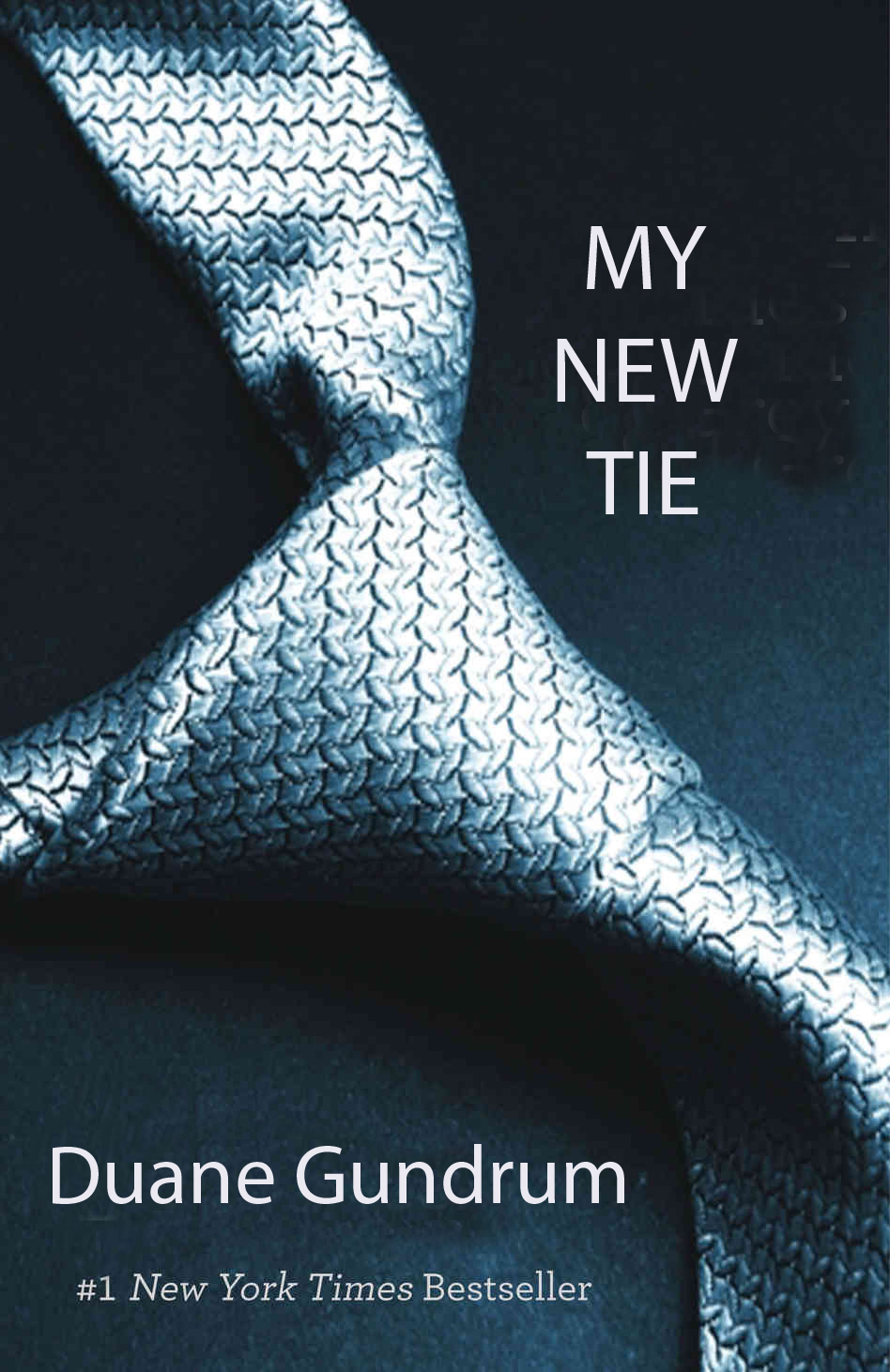
The cover of my new book. Someone told me it looks like something they may have read, but I’m not seeing it.
One of the problems of being political or taking a political stance is that chances are pretty good that you’re going to end up pissing off someone when you didn’t intend to do just that. As a writer, my goal is always to entertain as many people as possible, so whenever I deal with political issues, I get scared that whatever I’m going to say is bound to cause an audience member to dislike me. And these days, when someone dislikes you, that person tends to stop following and you never hear from that person again.
Therefore, it becomes a dilemma.
Because if one focuses on this type of fear then a writer is bound to water down whatever he or she has to say and only say the things that he or she hopes the audience is interested in hearing. And I can only imagine how bland and boring that might turn out to be.
The other day, I posted a tongue in cheek comment about something, and one of my politically correct “friends” corrected me and told me that I had to be careful, because saying such things can be construed to be wrong. I didn’t respond, but part of me was thinking: “Hey, I said what I said because it was something I wanted to say. If it bothers you, just ignore it or go frack yourself.” I didn’t say that because I’m a complete coward, but it did cause me to think.
And then the next week, that same person posted something that was completely one-sided, told in a tone that she knew best and anyone else who disagreed was obviously stupid. Basically, she did exactly what she told me not to do and then didn’t think anything of it. I then started to notice she does that all of the time.
Some people are like that. They are good at criticizing, but not so good at avoiding the behavior they criticize in the first place.
But then, she’s not a writer worried about people not continuing to read what she writes, and I am. So, there’s the dilemma.
Which kind of brings me to wondering how it is possible for polemic people to write the types of articles they do, knowing that people are going to be annoyed at what they write. I’m thinking about people like Ann Coulter, Michael Moore, and Tomi Lahren. The first two have completely established audiences that they’re probably never going to lose, but like the latter one, it leaves me wondering what kinds of risks is someone like Lahren willing to make in order to remain somewhat relevant in a very hostile media atmosphere. And part of me is also constantly wondering if part of the appeal is physical attractiveness as well, because if there wasn’t that, I kind of wonder at how many followers someone like her would have if the audience isn’t already cemented.
Social media seems to be one of those weird animals in that some people just come to it naturally and do really well right out the gate, whereas others, like me, take to it slowly and never really seem to reach the audiences they dream of achieving. It’s like the market for writing novel e-books. I’ve been writing for decades, and the readers I have tend to be the same readers who found me some years back. Others, I’ve seen them publish their first book and suddenly they’re selling them faster than Amazon can print them. Okay, Amazon doesn’t exactly print them, but you get the idea. I hope.
Some people just do really well with little effort while others succeed without trying. I’m starting to believe that that is how social media works for some people as well. While some people have the added benefit of being attractive to, well, attract others, those of us like me, toad-like in appearance, pretty much have to fight for each stride of existence. Okay, not toad-like, but I will admit that when my picture is put next to Brad Pitt’s, people tend not to stop and think: “Wow, I can’t tell them apart.” Definitely not. Brad’s got nothing on me!
Anyway, so the point is that getting an audience can be pretty tough and then once you do, it’s like walking on egg shells to make sure that you don’t lose any of your listeners. People can be pretty fickle about such things, and once you’ve lost a member of your audience, you tend to never get that person back.
So, if this bothers anyone who happens to be reading this, understand that it was someone else who said it, not me. I would never say anything to piss you off. Really. I’m just that kind of guy.