Monthly Archives: November 2013

The problem of being asked questions that no one wants an answer to

Last week, I received an email from two separate sources at the school where I teach. The first one was informing me that I would be charged for parking, and it would be coming out of my bi-weekly pay. It also stated to inform them if I was no longer working on campus, as that didn’t require a charge for parking. The same day, I received an email from another entity asking me pretty much the same thing.

So, I responded to both of them at separate times, indicating that I was teaching ON campus, BUT I didn’t utilize their parking because I worked down the street from school, which meant that I was walking there every day and haven’t used parking since I started working there years ago. In other words, each year they’ve been charging me for parking that I don’t actually use. And never will.

Their response: None. Last week, I was charged for parking.

Does anyone else find this a little annoying?

This falls into what I like to call false communication, meaning that someone addresses you with a conversation but isn’t really interested in the response. What was really going on here was that the administrators of my school were informing me that they were going to be charging me for parking, and it was pretty much a foregone conclusion that they were going to do it regardless of what I said or did.

This is one of the problems a lot of businesses have. A great example of this was the debacle that Netflix went through a few years ago when they tried to raise their prices but did it as if they were offering a “service”. The service they were offering was one that no one wanted, so when people responded that this was a bad idea, they went ahead and did it any way. So, the result was that a lot of people left Netflix and never came back. No amount of cajoling or explaining “this is what we meant to say or do” made a difference. Because they lost their customers by basically telling them one thing, being adamant about it, and then going ahead and doing regardless of the feedback from customers.

And that’s the problem right there. When you ask for feedback from customers, you acctually need to do something about responding to it. If you say, I want to hear from people about our services, don’t be surprised when they respond with negative information. If your goal is to get only good responses, you’re basically wasting the opportunity of asking for information in the first place.

I’ve worked at a few places that have this faulty philosophy where they basically only want to put forth a positive image, so they suppress anything that sounds negative. An example is a human resources department I worked for that used to constantly say “Our company is the number one company in our area and people want to work here.” They say this even though their turn-over is massive, and they basically can’t hire people to remain even in the industry in which they are a pominent player. What has happened is that they kept telling this lie to themselves to the point of where actual employees used to joke with each other by insulting the company and stating “Yeah, this is the place where employees really want to work.” When your boast becomes a sarcastic retort, you’re obviously doing something wrong.

I once worked for a company that kept being hit by national scores on bad customer service. Therefore, management decided that it would educate staff on customer service so they could raise these scores. As I listened to executives explain how they would begin training the staff in customer service, the one thought going through my mind was “you know, if the customer service of the staff teaching customer service is atrocious, how do you expect to raise those scores?” And that was a huge concern. I’d listen to one supervisor talk about how staff was going to work hard to increase those customer service scores, and I’d look around the room at people who weren’t happy to be there in the meeting in the first place. And you’d wonder, do they even realize there’s a problem much bigger than customer service ratings on forms from people outside the organization?

And that’s the other problem. As long as people are short sighted enough to not realize the problems are inherent within the system itself, they’re never going to solve the problem.

I go back to my school and think, if they only knew that their lack of communication is hurting them, they might actually do something about improving it. But even if I said something, they’d most likely see me as an outlier and continue doing what they do, because up until now, nothing has caused them to think they’re doing anything wrong. Until people are affected and their illusions of security are threatened, they have no reason to make changes.

And thus, we get charged for parking even when we don’t need…or want…it.

Becoming a full time writer

Honestly, I never thought the day would come, and to be even more honest, it’s probably not the right time either. But my job hit a point where I realized I couldn’t keep working it any longer. So, on December 24th, the day before Christmas, I will be unemployed.

The job market is horrid these days, which means I don’t suspect I’m going to be finding anything else soon. I’ve got a few irons in the fire I’ve been trying to grab, but my belief is that they’re not going to work out, so I’m pretty sure that in a month from now, I’m going to be facing a new day without any means of survival behind me.

So, I’ve started thinking that perhaps this is the time to finally make a go at being a writer. I’ve been struggling at it for several decades now, and I know enough about the craft to know that my stuff is good. I just now need to figure out how to get readers to actually want to read what I have to write. Part of me has felt my whole life is a Van Gogh perspective, in that I really feel that I have monumental works, yet suspect that no one will ever discover me until long after I have left the planet.

My latest project is The Teddy Bear Conspiracy, which I’m finishing up for an early December release. Then I work on my triple play saga, The Tales of Reagul, a fantasy/science fiction epic based on the world of my book Destiny. I’m hoping to have the first of the series, A Season of Kings, out in early January and then follow up with the other two immediately after. I’ve never done a series before, so that should be interesting.

The next project I’m working on is a follow up to Thompson’s Bounty: A Ship Out of Time, which is a return to the time travel epic for the Coast Guard crew, except this time they’ll be traveling back to Roman times. The title is still kind of up in the air, although I’ll probably go with another “Thompson’s (something)”. I’ve had a lot of people asking for further adventures in this universe, so I decided after some years that perhaps there’s a lot of fun to be had there yet.

Two other projects are on the horizon as well. The first is a rewrite of a novel I wrote some years ago, called 72 Hours in August, which is an espionage, action thriller involving an Armageddon project that emerges during the 1991 August Coup in the Soviet Union, and it introduces my new character who goes by the code name of the Unicorn, because everyone who sees him is rarely believed. He was an idea of mine decades ago when I was working as a counterintelligence agent. He’s what I refer to as an economic hit man, a man who goes into countries and disrupts their economies on the orders of an illusive corporation that benefits.

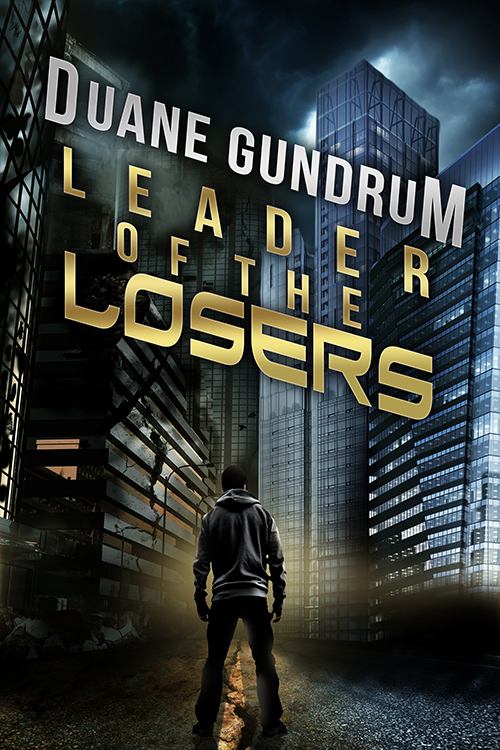
The other project I’ll be completing is the first set of books in my Deck Const series. The Deck Const is a dystopian science fiction novel where a surviving soldier emerges from one of the last wars on a quest to find a rumored object, the Deck Const, which has been spoken of only in whispers, but may hold the key to rebuilding a very fractured world. The first set of novels takes place in California (from San Francisco to Los Angeles and then to Las Vegas) where communities have become fun house versions of their former selves as the soldier starts to build his army which will one day have to confront the dark one (the other person seeking the Deck Const). Anyway, it’s a huge epic that I’ve planned out, and I’m finishing off the first three novels, of which the series will be continuous sets of three books.

Either way, wish me luck, or wave to me as I pass you on the street with my shopping cart.

Addicted to my computer

Over the weekend, I had a bit of a problem. My hard drive failed. But if you would have interacted with me, you probably would have thought my own heart had stopped instead. I was basically devasted and not sure what to do. This is coming from a former computer technician who has probably fixed and replaced more hard drives than a Geek Squad trauma team. Yet, I was kind of put into a position where I couldn’t do anything about it.

First off, I have a computer that has two hard drives. One of them is only used for starting up the computer, and the other one is my high-capacity storage one. Well, the one that starts up the computer is the one that appears to be failing. So, instead of discovering my hard drive was failing, I was just basically told that the computer couldn’t read my drive, which is short speak for “Sorry, Duane, but I honestly don’t know what’s wrong with your computer but it could be your hard drive, your RAM, or possibly payback for a bad relationship you were once in.” Then I discovered that I had no idea where my recovery or Windows 7 disks were. I tore apart my office looking for them, finding numerous copies of disks that haven’t been useful in decades, and rummaging through pretty much everything I had before discovering that the disk that worked with my computer was labeled a lot like a videocard CD they sent in the boxes, which is why I kept tossing it aside as I was looking for the “real” disk. That wasted Saturday. On Sunday, I found it, and got my computer back up and running. Since then, I’ve been scared of even shutting it down.

Last night, I got a warning from my computer basically stating: “Your hard drive is probably going to fail soon, and I also believe you’re out of Oreos.” While I was overjoyed at the complexity of my computer’s warning system, I wasn’t all that happy about the fact that my computer is about to fail. Or maybe it already did. I shut it down, and I won’t know what happened to it until I get home. If I have to buy a new hard drive, I can’t afford one until next week, and that also means I’ll probably end up with lots of stressful anxiety during that period as well. Oh joy.

But what I’ve discovered is how much I rely on this computer. When it went down, I looked around my house and discovered I have four other computers in the place. So, I could fire up one of the older ones, or my laptop, or my Macbook Pro, or my Ipad, or my Ipad 2, or my Kindle, or the computers my stuffed animals seem to have lying around the house. The point is: I’m not lacking for any computers right now.

But my MAIN computer went down, and that’s what bothers me. I do everything on this computer. And I mean everything. When I get home at night, it’s the first thing I turn on. When I need to check something, I do it on that computer. When I watch TV, quite often I watch it on THAT computer. Losing THAT computer really bothers me because I’m not sure I can handle going back to something that’s not 22nd technology (all the others were made at least a year ago).

So, tonight, I have to face the fact that I might have to do some serious work on getting my computer up and running. But it’s like I’m losing my best friend, which isn’t all that surprsing, considering I don’t really have any close friends aside from that computer and my stuffed animals.

But it usually takes an incident like that for you to realize how significant something might actually be. I do know that I can’t play Star Wars The Old Republic until my computer comes back up to speed, and that alone is devastating. Yes, as a colleague pointed out today, “real problems in a first world environment.” But that doesn’t take away the fact that I’m bothered by the whole situation. It just leaves it less relevant when put into larger perspective.