 So, a couple of months ago, I was having trouble falling asleep at night, so after a bunch of frustrated attempts to sleep, I did what any 21st century geek would do: I turned on my computer and Googled something that had to do with sleep. And that was how I came across a video of a woman on Youtube who whispered and made unique sounds while trying to help the viewer fall to sleep. That was also the first time I had heard the term “ASMR”.
ASMR, or lesser known as “autonomous sensory meridian response” is a really niche segment of the Youtube population that caters specifically to people filming videos of themselves talking to the camera while making various sounds that are supposed to activate “tingles” in audience members. So, this could be anything from scratching a piece of paper to extremely elaborate presentations of mixing jugs of water back and forth. Sometimes, the purpose is to help someone sleep or relax, and other times it’s just to evoke some kind of response from the person watching the video. And those responses can be all sorts of different types.
After a bit of time of crawling down this rabbit hole of ASMR, a couple of things start to become apparent.
- The people involved in this phenomenon are like most Youtube channel owners. They want subscribers, which causes them to have to do more and more things that differentiate them from other people doing the same sorts of things. In the beginning, I was following a couple of the artists who were doing very generic, sleep type of videos, but then I started to notice as their time line stretched into the present, they were doing more and more elaborate types of presentations. Rather than just speak to the audience, I started to see role play presentations where the artist would pretend to be a doctor, a nurse, a police woman, a vampire, or pretty much anything else you might imagine. The ASMR activity would remain similar, but the antics would become much more involved in the script than the results the artist was originally trying to achieve.
- The subscriber aspect of the system favors women more than men demonstrably. While I did observe a few men who were doing regular ASMR videos, the majority of the material coming out on Youtube was strictly women. Young women. And very attractive women. Which then led me to start to observe that more and more of the highly successful ASMR artists tended to have a very interesting history, where their videos began as generic, fun videos and then slowly became much more sexualized, somewhat PG-rated. It practically opened up a separate category of ASMR, which I began to call “Kidnap ASMR” where a woman would roleplay that she has “captured” the viewer and was now doing ASMR stuff to him/her. This type of thing ranged from crazy girlfriends kidnapping someone she was in love with to female police officers “arresting” someone and interrogating the person for “ASMR activity.” Some became quite innovative, like artist “Innocent Whispers” who orchestrated a series of videos where she pretended to be an officer of the FBI, “Federal Bureau of the Internet” and she was investigating individuals who were brought to her so that she can ascertain their level of ASMR response. To this day, I’m still trying to figure out if her purpose in the roleplay was to “catch” people for their ASMR interests or to do research for her somewhat weird federal agency.
- There seems to be no end to the types of sensory responses that ASMR artists are capable of exploring. When I first started watching these videos, the type of “noise” the artists would focus on was usually some type of tapping (fingers on surfaces, devices on other devices and on the microphones themselves), and then as those videos became somewhat generic all sorts of alternative sound-generating possibilities were explored. One recent video focused on fire, as one woman continued lighting matches over and over again so that the listener/viewer experienced both the visual aspect of the fire and with an extremely expensive microphone also experienced the auditory sound of the fire erupting each and every time the match was struck.
- Whispering is a huge segment of this activity as well. Very rarely does the artist raise her voice above light speaking. Most of the time, whispering is how the artist communicates with the listener. My experience so far has caused me to believe that the whispering creates a much more personal experience between the speaker and the listener.
- Most often, the atmosphere is one of positive energy. Quite a few ASMR artists tend to focus on trying to make the listener feel better in some way, whether the reaction be a state of hypnosis, better ability to sleep, feeling good through positive affirmations or any other positive type reaction. I’ve seen a few specific ASMR videos that are designed to be the complete opposite (such as “negative affirmations” where a woman basically insulted the listener nonstop) but those are rarities and seem to be more fetish-based than a part of the overall scheme that ASMR tends to represent. Quite a few ASMR videos are designed around the concept of making the listener feel better.
- There can often be a lot of humor incorporated into ASMR. What probably leads to a lot of the hits that ASMR artists receive (and the large numbers of followers/subscribers) has to do with the personality of the artists themselves. Humor is often one of the strongest points of the better known ASMR artists. Humor becomes a huge part of the bantering of the artist as she communicates with her following. However, I have noticed that when humor is the intent of the actual video, it tends to not do as well, which suggests that incorporating humor is good, but focusing on it doesn’t yield the same positive results.
- ASMR is not limited to Americans, or even English speakers. One phenomenon I’ve noticed is that quite a few artists are from variously diverse places across the planet. Some of the better known ones are Eastern European, Korean and Japanese. However, quite a few of the ASMR videos tend to be in the English language, and if an artist does not strictly do English language videos, there will be a few here and there as the artist starts to become better known. However, as a lot of ASMR can be conducted without any words whatsoever (tapping, inaudible whispering, etc.), a number of non-English speaking ASMR artists can strive and do well with non-specific language videos.
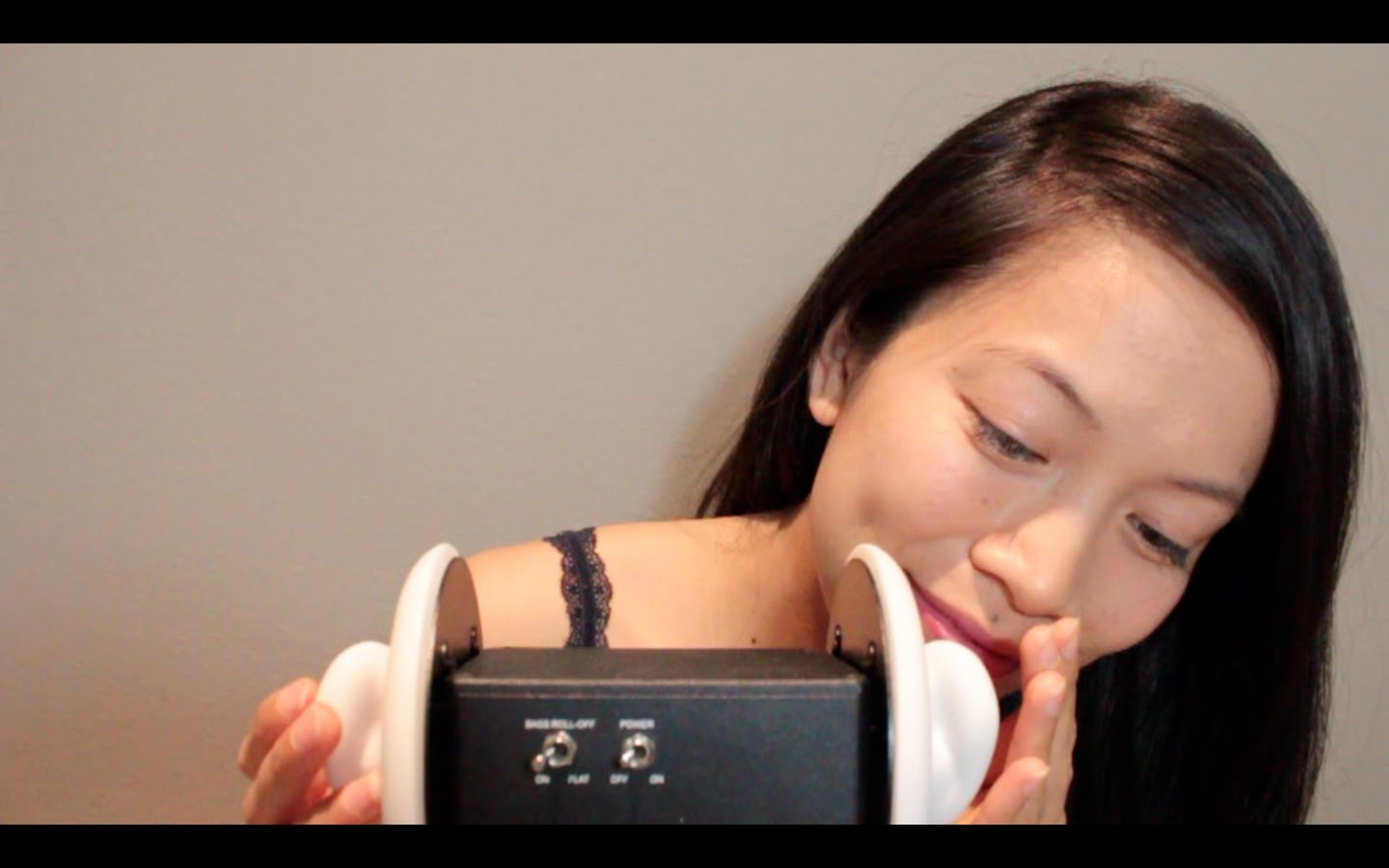
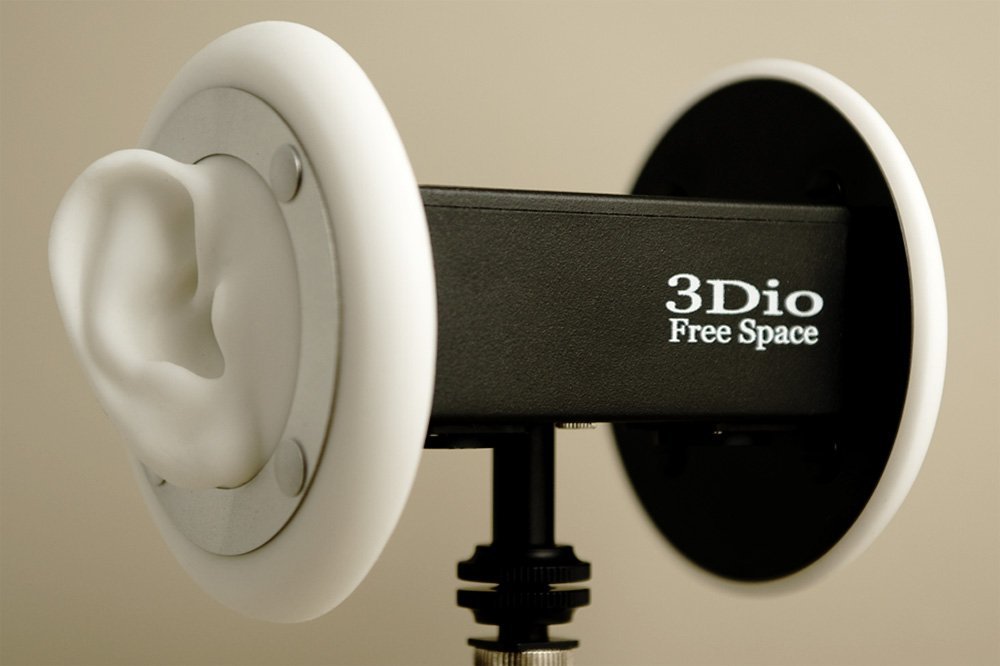 The microphones themselves are quite unique. Before studying this are of Youtube, I thought I knew something about microphones. But I was wrong. I knew nothing, Jon Snow. What they use in a lot of ASMR videos is this type of microphone I have here as a picture. It is almost like a person that the artist is speaking to (including ears). Quite a few artists play with the “ears” and it can sometimes be a bit weird (well, to me). However, the microphones are extremely expensive and are set up to handle stereo recordings, which means that when the artist moves to the left side of the screen, if you’re listening with headphones, you are going to hear her voice come out of the left speaker, so that it can actually feel like the person is walking around you as she is two dimensional on the screen. This microphone in the picture is about $600. I’ve seen some of the microphones (including one that’s a representation of a person’s head) run for close to ten thousand dollars. Obviously, some of these artists are extremely invested in this activity.
So, this has been my adventure so far in studying ASMR. I got into it once because I was having trouble sleeping, and then the communication scholar in me started to see this as an untapped area of exploration that I believe more people should be aware is happening around them. The phenomenon is relativity new (still pretty much in its infancy in comparison to other phenomena), but I suspect its continued evolution might lead to all sorts of interesting perspectives and insights.