Tag Archives: Politics

Remaining Unknown in a Viral World: Popularity, ASMR and Celebrity Status

Earlier today, I was examining the statistics on my website and realized that I have about 1.5 million hits on my site since I started it. That appears to be a lot, but then I started to think to myself that not a lot of people comment on it or send me messages based off of my web site (or its blog). So, this tells me that I seem to get a lot of traffic but apparently nothing seems to be going on with it. And yes, that opens up a lot of thought on a subject I’ll probably take up at another time (what do to with traffic when it gets to your site, as I don’t seem to be doing a whole of good with that area).

Last night, I was watching the latest episode of Law & Order: Special Victims Unit, which is still one of my favorite police procedural types of shows. And in this episode, an Instagram star hooked up with a MMA fighter and was raped, but it turns out the whole thing had been set up by a young woman who was a follower of both of their Instagram feeds. The prosecutor mentioned that a motive for the set up was that the Instgram model had tens of thousands of followers, the MMA fighter had 2 million, and the young, geek girl had 6. Therefore, this was vengeance against the two well known Instagram stars from someone who felt that she had an important voice but no one was listening to her.

That resonated quite a bit with me because I think a lot of us who aren’t big stars often feel the same way. Not that we’re about to set up someone famous like the plot line of this story, but at the same time the realization that there are people who are seriously famous for a sex tape, or for just looking good in pictures, can be a hard thing to face when one is trying really hard to become known as well, but doesn’t  have that advantage those pseudo celebrities have.

Recently, I’ve been following a bunch of ASMR artists who I find to be very good at their craft. In case you’re not familiar with ASMR, it stands for Autonomous Sensory Meridian Response, which according to Wikipedia is “is a term used for an experience characterised by a static-like or tingling sensation on the skin that typically begins on the scalp and moves down the back of the neck and upper spine. It has been compared with auditory-tactile synesthesia.” And even with that definition, you’d be amazed (or maybe you wouldn’t) at how many news agencies just don’t understand it, which you can see when they start to make statements that suggest watching President Trump gives “ASMR tingles” or when some celebrity posts a Youtube of her just staring at the screen and the media goes ga ga over her “ASMR video.”

In reality, ASMR is difficult to achieve and very few artists succeed at it. There’s a reason that there are a few very popular ASMR artists out there, and almost none of them are celebrities known for other things.

Which brings me back to my original subject, and that’s that viral popularity has a bad habit of creating an atmosphere that wasn’t intended in the first place. For those not completely familiar with ASMR, it’s pretty easy to fall into the trap of thinking ASMR is nothing but people whispering and making sounds with inanimate objects. And that’s because a lot of it comes from doing exactly that. But it also comes from a stronger understanding of how those actions can trigger the audience into feeling something more than just simple reactions. As a result, quite a few artists sometimes push the envelope and create what I’ve started to characterize as PG-13 ASMR. What I mean by that is ASMR that is designed to arouse rather than “tingle”, and for those not initiated in what ASMR, it can be very easy to mistake one for the other.

This happens quite often because the models who do ASMR are almost always attractive. Both male and female ASMR artists are generally above average in attractiveness and in their social tools for attracting others. This should be expected because this is a video environment where an unattractive artist is going to be avoided or ignored, and an attractive one is going to cause people to click the image being presented on the Youtube reception screen. This often resonates in the comments section of their videos where the anonymous nature of the Internet can cause trolling behavior you’d expect in a darkened strip club environment. To make matters worse, a number of ASMR artists chase the elusive crown of traffic and subscriptions (people subscribe to their personal channels), which leads to a revenue stream from Youtube. This causes the perpetrators of the more adult environment to keep pushing the adult envelope and the non-sexual artists to feel the need to participate because of loss of viewer clicks.

Youtube has somewhat cracked down on this phenomenon, but has done so with broad strokes that hurts mostly the non-sexual artists because they demonetize mostly based on viewer feedback, and the business has become somewhat cutthroat with an almost mob mentality towards those who are actually trying to comply and do the right thing. As usual, those are the ones who suffer the most, whereas the ones who are crossing the line are rewarded because none of their fans are ever going to turn them in for breaking any of the rules.

Which kind of brings me full circle in what I was originally talking about, and that’s the problem of trying to achieve any level of popularity in a bread and circuses environment where controversy, sex and violence are the things that attract the largest audience. How does the unknown artist achieve notoriety in a mostly celebrity driven world? In a free market mentality, one would think that the quality rises to the top and everything else remains at the bottom. But that’s rarely the case. Quite often, celebrity status is more than enough to create buzz so that its products remain at the top and everything else is left grasping for scraps. As a writer, I find this problem emblematic in the field because some really bad celebrity fiction gets serious attention when it’s not very good and it’s written by people who have about twenty years before they’ll actually ever write anything significant (if they were to work on it full time and not just in between movies or photo shoots). But the people who put in the work in hopes of one day becoming discovered may do so their entire lives and never get a nibble beyond a table scrap thrown their way.

So, the question is: Is there a balance, or is it just not worth the effort? I’m kind of on the cusp of this myself, as I’ve been writing for most of my entire life, creating computer games that were popular but too early for the industry to ever recognize, wrote music back in the day when such music was seen as too experimental, and any number of other creative tasks that have fumbled, fizzled or just never took off. People keep saying “Just keep at it and your day will come”, but part of me wonders if it’s just a crap shoot and my time might better be spent catching up on the latest season of The Walking Dead.

The Gender Problem: Being a Beta Male Has Always Been Seen As Bad

My ivory tower where the world actually makes sense to me

There’s a current dilemma going on right now that seems to have origins dating way back in time, but for bizarre reasons, people are convinced the problem has only recently emerged. The problem stems from revelations that Harvey Weinstein ruled his Hollywood perch by forcing women into sexual relations with him without women’s consent. It comes from our current president bragging about grabbing women in sensitive off-limits areas and referring to it as “locker room talk”. It comes from politicians running for office, oblivious to the fact that dating 14 year old girls and then demanding those girls be tried for the crime of not reporting this crime until years later is not all that cool. Anyway, the dilemma is caused from men being called out for these types of things, including catcalling, sexual discrimination, hostile work environments and no end of other horrible circumstances. But what it really stems from is a sense of cognitive dissonance (ignoring) these things for so many years and then just casting such things off as “oh well, boys will be boys.”

But there’s no lack of conversation of this dilemma going on right now. Everyone is talking about it. But what’s lacking is a discussion about why this behavior is so prevalent, and, even more important, why it’s probably never going away.

You see, our society has done a miraculous job at making sure that guys who don’t participate in the one-sided sexual politics against women have been basically neutered or removed from the equation in any way whatsoever. We even have terms for guys who aren’t participating in this behavior. Guys call them “emasculated” or “pussy-whipped”. Women don’t call them at all; they’re basically invisible to the female half of the species.

Historically, we have called them “beta” males, and with that designation comes all sorts of negative connotations. Every dating site appeals specifically to the “alpha” male, specifically a guy who is aggressive, take charge and one who leads the pack (whatever that means). The “beta” male is seen as the follower, the one who makes room for the aggressive male and most often is seen as the “friend” to a woman rather than the potential mate. Having said that, there are those who argue that this isn’t the fate of a “beta” male, but way too often it becomes exactly that. And that’s mainly because of societal expectations and norms.

Think about it. You don’t see self-help books for guys that help them to embrace their “beta” side. Instead, what you see are all sorts of crap about how to best be an “alpha” male, the guy who gets the girl, the guy who gets the job, the guy who gets, well, pretty much everything that the “beta” male guy will never get. Instead, we get dating books with advice from guys who argue that it’s better to make your move and apologize after than to do nothing and never get the opportunity in the first place.

And that’s where we are right now. “Alpha” males have gotten themselves into serious trouble with society because they felt it was acceptable to do all sorts of sexual behavior that favors dominance and control from the male perspective. Women have been seen as something to be conquered, and thus, the ramifications have always been a) conquer and win, or b) fail to conquer and lose. We have so incorporated this behavior into our societal norms that when we challenge those behaviors we’re seen as sending misleading signals, and thus, doing the wrong thing by questioning such actions in the first place.

We’ve been doing it so long now that we have started to make arguments that it’s basically in our nature, that what is happening is because of anthropology, not psychology. If women don’t like it, then the argument is that they shouldn’t have rewarded it in the first place.

But we never gave any other option a chance. Equality has never been a part of our social fabric. Ever. When women were given the right to vote, we argued for it because it would allow them to address fundamentally female issues, like health care and children. Hell, in some cases we even argued that “feelings” come from the female side of the audience, like every man is some kind of binary computer algorithm.

But think about that last paragraph for a second. How many people even questioned the terminology of “women were given the right to vote”? Why should that have EVER been a choice given to men as to whether or not women were authorized to make democratic decisions for themselves? Yet, that’s a decision we only made about a hundred years ago. It’s not like we’ve had centuries since then to see how much more we might have evolved. On the grand scale of time, we made that decision ten minutes ago. We’ve been thinking that way for about as long as we’ve been able to think. Even now we’re still nowhere near where we should have been in the beginning. And we justify not making any further strides for all sorts of reasons, including history, tradition, science, religion, hatred and racism.

Which brings me to the original point I was trying to make because yes, I will admit it. I’m a beta male, and I’ve always been one. Over the years I’ve been humiliated, talked down to, laughed at, dismissed, looked past, friend-zoned, threatened and ignored. What’s interesting about this dilemma is that this attitude is one that a future male species appears to be heading towards if we’re ever going to see gender equality, but I suspect that we’re so very far away from achieving this that comfortable acceptance of this status is not going to be in our lifetimes.

So, expect this conversation to continue as it has for many years to come. Hollywood won’t be cleaned up with the alienation of a few producers and actors. Politicians won’t clean up their ways with a few of their numbers being sidelined. Expect to see these same people re-emerge as comeback stories and overcoming past indiscretions (but changing nothing but the optics); we’re really, really good at wanting to forgive people who used to be in our corner, even if they’ve done nothing to deserve such forgiveness. And if you’re ever looking for a reason why none of this will ever change, THAT alone is the reason. As long as there are Weiners, Bill Clintons, Roy Moores, Jerry Falwells, Mel Gibsons, Woody Allens, Kevin Spaceys, Ubers, Trumps, Thomas’s, etc., we’re never changing our ways.

And if you looked at ANY of those names and thought “I agree with one of those but not one of the others,” then you’re the reason why.

The Fear of Pissing Off Your Audience While Trying to Get One in the First Place

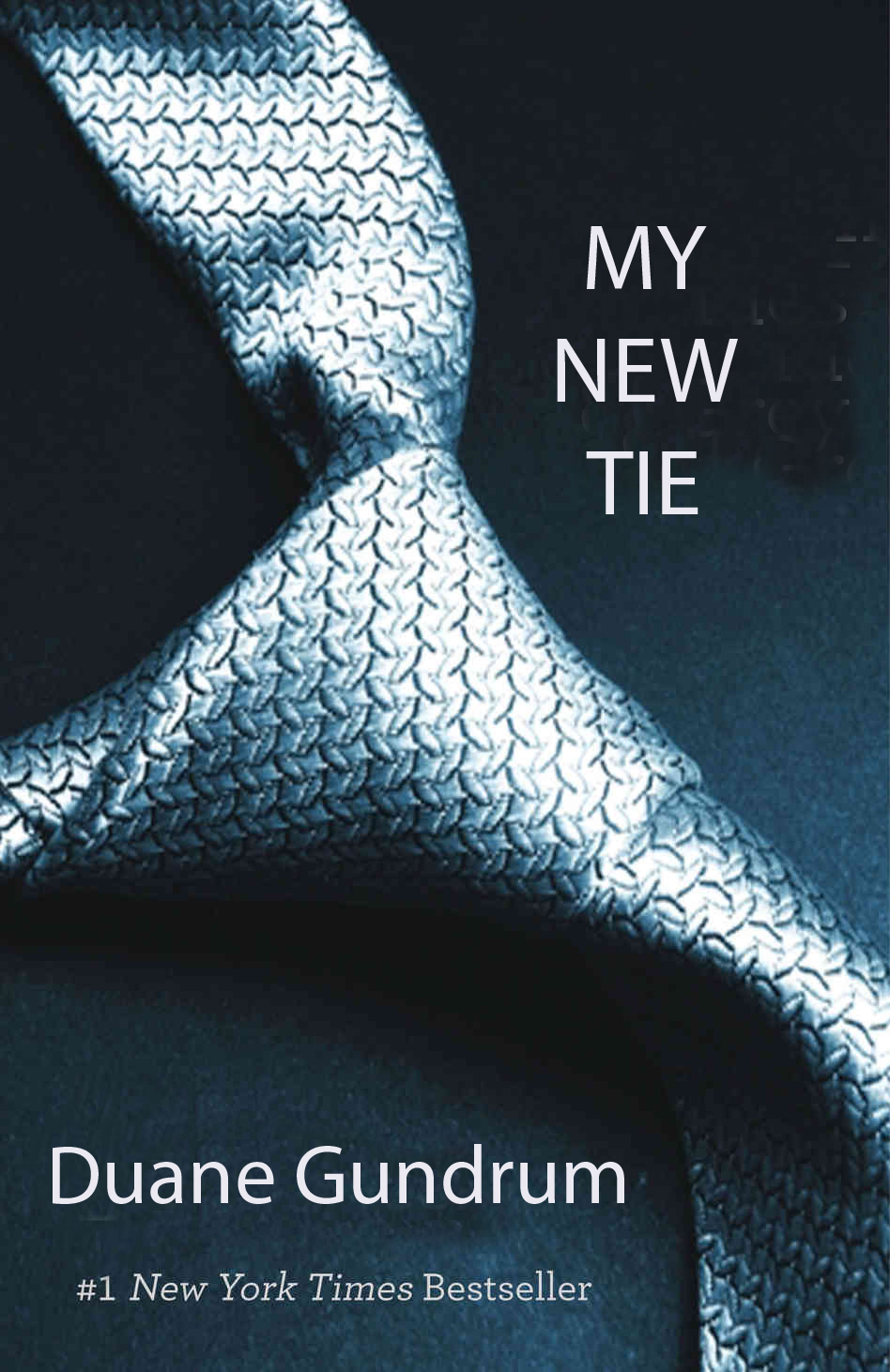
The cover of my new book. Someone told me it looks like something they may have read, but I’m not seeing it.

One of the problems of being political or taking a political stance is that chances are pretty good that you’re going to end up pissing off someone when you didn’t intend to do just that. As a writer, my goal is always to entertain as many people as possible, so whenever I deal with political issues, I get scared that whatever I’m going to say is bound to cause an audience member to dislike me. And these days, when someone dislikes you, that person tends to stop following and you never hear from that person again.

Therefore, it becomes a dilemma.

Because if one focuses on this type of fear then a writer is bound to water down whatever he or she has to say and only say the things that he or she hopes the audience is interested in hearing. And I can only imagine how bland and boring that might turn out to be.

The other day, I posted a tongue in cheek comment about something, and one of my politically correct “friends” corrected me and told me that I had to be careful, because saying such things can be construed to be wrong. I didn’t respond, but part of me was thinking: “Hey, I said what I said because it was something I wanted to say. If it bothers you, just ignore it or go frack yourself.” I didn’t say that because I’m a complete coward, but it did cause me to think.

And then the next week, that same person posted something that was completely one-sided, told in a tone that she knew best and anyone else who disagreed was obviously stupid. Basically, she did exactly what she told me not to do and then didn’t think anything of it. I then started to notice she does that all of the time.

Some people are like that. They are good at criticizing, but not so good at avoiding the behavior they criticize in the first place.

But then, she’s not a writer worried about people not continuing to read what she writes, and I am. So, there’s the dilemma.

Which kind of brings me to wondering how it is possible for polemic people to write the types of articles they do, knowing that people are going to be annoyed at what they write. I’m thinking about people like Ann Coulter, Michael Moore, and Tomi Lahren. The first two have completely established audiences that they’re probably never going to lose, but like the latter one, it leaves me wondering what kinds of risks is someone like Lahren willing to make in order to remain somewhat relevant in a very hostile media atmosphere. And part of me is also constantly wondering if part of the appeal is physical attractiveness as well, because if there wasn’t that, I kind of wonder at how many followers someone like her would have if the audience isn’t already cemented.

Social media seems to be one of those weird animals in that some people just come to it naturally and do really well right out the gate, whereas others, like me, take to it slowly and never really seem to reach the audiences they dream of achieving. It’s like the market for writing novel e-books. I’ve been writing for decades, and the readers I have tend to be the same readers who found me some years back. Others, I’ve seen them publish their first book and suddenly they’re selling them faster than Amazon can print them. Okay, Amazon doesn’t exactly print them, but you get the idea. I hope.

Some people just do really well with little effort while others succeed without trying. I’m starting to believe that that is how social media works for some people as well. While some people have the added benefit of being attractive to, well, attract others, those of us like me, toad-like in appearance, pretty much have to fight for each stride of existence. Okay, not toad-like, but I will admit that when my picture is put next to Brad Pitt’s, people tend not to stop and think: “Wow, I can’t tell them apart.” Definitely not. Brad’s got nothing on me!

Anyway, so the point is that getting an audience can be pretty tough and then once you do, it’s like walking on egg shells to make sure that you don’t lose any of your listeners. People can be pretty fickle about such things, and once you’ve lost a member of your audience, you tend to never get that person back.

So, if this bothers anyone who happens to be reading this, understand that it was someone else who said it, not me. I would never say anything to piss you off. Really. I’m just that kind of guy.

Please don’t go!

The Problem With National Intelligence and Classified Information

One of my pet peeves has been the concept of classified information. It’s commonly used as a gatekeeper to give some people access to information and keep others away from it. When people talk about it and think about it, it’s often considered of significant importance that this information is kept classified and away from other people who don’t have access. Strangely enough, no one really seems to think about it from the perspective of wondering why we keep all of this information classified in the first place.

In the old days, and I mean like the 1940s, classified information was important because it meant keeping it away from the Axis powers who meant to do us harm. During the Cold War, it was to keep the information away from the evil KGB and their cronies who were out to do all sorts of harm to the US people. I guess now it’s being kept from terrorists who, of course, mean to do us harm.

What I find myself asking more and more these days is why is the stuff we keep classified actually being kept classified. And almost always, the reasoning seems to fall short of any test of logic.

I was looking at the requirements for working for the State Department the other day and noticed that to be in practically any position, including a mechanic, you need at least a Secret clearance level. And this immediately started putting my thinking process through the obvious channels of one thing leads to another. I thought, why does a mechanic need a Secret clearance? And then you go through the usual Kevin Bacon approaches to connecting dots and start thinking “well, he might be working in the motorpool one day when some guy with Secret information might be talking about secret things.” And then you realize how absurd that is because the guy with Secret information shouldn’t be talking around people who don’t have clearances in the first place. And that got me thinking, what exactly would someone in the State Department be talking about that should be classified? And basically, it kept coming back to even more questions that bothered me because in each case, the “Secret” information appeared to me to be information that might be embarrassing if it got out but generally not something detrimental to the country itself.

And that’s what I’m starting to realize is the reason for most of our classifications today. We make things Confidential or Secret because we really don’t want anyone else to know what it is we’re tracking or talking about. Yet, the information we’re talking about probably shouldn’t be classified in the first place.

We live in a country that values its freedoms. But in order to truly value those freedoms, the people of that country need to know what their leaders are actually doing. But we don’t. Because they classify everything to make sure that we don’t know what they’re doing.

Does this protect our country? Not in the slight. As a matter of fact, it makes our country even more vulnerable because its people are putting others into power based on limited knowledge of what might really be going on. And we’re told that it’s better this way because what’s really doing on is too important for everyone to know what’s going on. It’s kind of one of those vicious cycles that doesn’t ever get any better.

So, who are we supposed to be protecting this information from? The Russians? The Chinese? The North Koreans? It all sounds good in theory, but in reality, so little of that information that is classified these days would make a difference if any of those entities actually knew what was going on. Well, maybe the schematics of how to build a nuclear device, or something like that, but that’s not really what we’re classifying. We’re classifying conversations between people who couldn’t build a nuclear device if their lives depended on it. They’re bureaucrats who really don’t have a lot of intricate knowledge about anything.

I sometimes think the majority of the stuff they classify is just to appear more important than they really are. And this mentality feeds upon itself and often makes things even worse.

Back when I was in the service and working in that field, I used to see things become classified that had just been printed in the New York Times. But because some bureaucrat read it, he would then type up the same article and then declare “SECRET” or even “TOP SECRET” and make sure only those with high clearances were able to read it. But the newspaper article would still be out there, being read by anyone who bought it, including parakeets who had it lined on the bottom of their cages. And as sad as this seems to admit, people were threatened with being brought up on charges because of disclosing something that they might have actually read in the newspaper but some other bureaucrat only read it in a security briefing (because of that doofus who classified it in the first place).

I’ll come out and just say what I believe here, but I think way too much information is deemed classified in a society that should be a lot more open with its information. We classify farm reports, trade manuals, articles from newspapers (as previously mentioned), financial forecasts, political meetings, patents, treatments for diseases and illnesses, phone call records, as well as so much more information all in the guise of protecting “national security.” And honestly, what’s the benefit?

To be honest, I don’t perceive this changing any time soon because bureaucrats love to think of themselves as more important than they really are. That’s never been different in our civilization. The greatest impediment to evolving knowledge is when we hoard knowledge and evidence, yet we seem to do that more and more these days.

My Thoughts on the Infamous Election

governmentSo, I hear there was some kind of election that took place a week or so ago, and for some reason everyone seems to be a bit stressed about the results. Knowing how much my fan base cares so much about how I think about things, I thought I would just make a couple of comments about the whole thing. (Disclaimer: No one cares one iota about what I think, so I’m just feeding my ego by pretending that people actually do)

  1. The result. During the primary, I remember stating numerous times that Trump really shouldn’t be discounted. I even described the whole situation as a potential “mule” effect, meaning that it may be one of those situations that defies predictive algorithms and statistical approaches. People said I was stupid and ignored me. They pointed to people like Nate Silver and said that was why I was wrong. Turns out, Nate Silver was extremely wrong (and still going on talk shows pretending that somehow he really wasn’t, even though he most certainly was). People are now starting to come out of the woodwork claiming that they knew this was going to happen all along. They didn’t. They were so completely wrong and just don’t want to admit it to themselves.
  2. Hillary was the worst candidate the Democrats could have ever run for president. I kept saying this to people. It wasn’t because I liked Bernie. It was because I really didn’t like Hillary. And I suspected that a great deal of people in the country didn’t either. Enough to mean the Electoral College might seriously disappoint her. The responses I got from people were quite hostile, so I stopped talking about it. And then people I really respected started revealing they “were with her” and I felt bad talking in negative terms to those people who I didn’t want to get into social biffs with. Well, she lost. And that’s just one of those things. First off, she was never all that popular with America in the first place. She was beaten horribly by Obama eight years before because people wanted pretty much anyone but her. This time around, the Democratic Party basically railroaded America into having no choice but her, so everyone had to sign onto her name as “with her”, and when the numbers were finally counted, people weren’t really with her. Oh, sure, she won the popular vote, but let’s put this into some perspective. She was running against what should have been a sure thing: A candidate who alienated practically every demographic, spoke out loud with his inner voice, and didn’t give a flying crap what anyone thought about him. And he still managed to beat her on the state by state basis so that the Electoral College is now his. She lost. He won. Except people don’t want to accept that and will continue complaining about it for the next couple of years as she’s unemployed and he’s the President of the United States.
  3. This should be the end of the Clinton Dynasty. Bill was great. No one wanted Hillary. Which means this should be the last we hear from them. Except that’s not going to be the case. In a few years from now, we’re going to start hearing about the GREAT CHELSEA CLINTON, who has actually done absolutely nothing in her life other than be the daughter of a president and a loser for president. Yet, she’ll eventually emerge as “OUR ONLY CHOICE” some day in the near future. Mark my words. The girl who has done nothing but receive a special network job ONLY because she’s someone daughter will one day be a shoo-in for political office. And we’ll have to endure more years of a dynasty that really should have been contained with one excellent president.
  4. Protests. Yes, I understand people are upset that Trump won when they didn’t want him. But rational choice statistics causes me to think: “Why protest if NOTHING can possibly change?” Protesting Trump isn’t going to lead to a recount and a sudden declaration that we were wrong, that Clinton should now be president. Protesting isn’t going to change the minds of the people who backed Trump (or any Republican) especially in an election that was much more about not wanting one candidate as much as another. Boycott businesses? Sure, but what purpose does that serve? Before and during the election, we heard all sorts of horrific comments from CEOs of Papa Johns, Hobby Lobby, Chick Fil A and a bunch of others, but people are still shopping at those places and not changing their ways. Boycotts don’t work when you weren’t originally a daily shopper at the place you’ve decided never to shop at in the future. So, about the only purpose protesting is doing right now is to serve one’s own personal desire to be upset, kind of like when little kids scream until someone acknowledges them. And like those kids, when no one acknowledges them, nothing really changes. And if the only acknowledgement you get is to be arrested (and have no support from the community around you as a result), then all you managed to do was start up your criminal record which will probably make it more difficult to get work in the future. Part of what made dumping tea into Boston Harbor in the 18th century turn out to be a good idea was that the community recognized this as a positive thing and supported future protests. None of the protests I’ve seen seem capable of doing that because for the most part, no one even knows the protests are even happening, other than to be inconvenienced for a few moments (like when an actor gets arrested for climbing up the side of the Bay Bridge and stopping traffic; most people are generally just pissed at the actor for making their commutes a bit longer).
  5. Going Forward. This is a more difficult one to discuss because our country seems to be in a bit of a pickle because few people want to move forward after the election, yet the reality is that eventually exactly that is going to have to happen. Trump is going to be president. That doesn’t get postponed or changed just because half of half of the country voted for the other candidate (the other half of the country didn’t care enough to even show up to vote). So, come January, things either move forward or we end up in total anarchy. Historically, and statistically, I don’t see the latter case happening, meaning that business will be as normal, even if a bunch of people walk around all pissed about it.
  6. Movements. The biggest casualty of this election, in my opinion, is the population of people who have gained great ground over the years that are completely frozen in time right now because alternative political forces routed them and beat them in the field of battle itself. This means a lot of people who were walking around with chips on their shoulders, convinced they were not only power centers but the power brokers themselves, are kind of on the outskirts of power, realizing that all of America didn’t respond to their proclamations as they were expecting. A lot of liberal power centers were seriously humiliated on that day, including boisterous celebrities, the Daily Show (and numerous other talk show personalities as well), and entire news media outlets. A sea change really should take place here, but won’t because the personalities involved will make the wrong assessments and continue to do the same things they did before, except now they’ll try to shame the conservatives who liberals have never learned generally don’t take that sort of bait (something they should have learned during the George W Administration). An example of what I’m talking about: I watched for about two weeks before the election of how many times The Daily Show went from being a satirical news site to being a cynical news site to straight out becoming an advocate for the Hillary campaign. I used to defend The Daily Show from conservative attacks, but wow, they were so over the top with one-sided commentary (not even humor) that I began to equate Trevor Noah with a Hillary talking bot. If that sort of thing continues, as I suspect it will, then we’re in for a very interesting four or eight years of negativity and shame approaches to reporting the news.
  7. Moving to Canada? This “threat” needs to just be removed from the English grammar process. We don’t live in a world where you can easily just move to another country any longer. Unless you’re already a citizen of Canada, your chances of being able to move to Canada are pretty close to nil. First, you have to have the economics to allow yourself to make such a move, apply to that country itself (which has quotas and immigration much like the US does), and you have to have some kind of job lined up for when you get there. If you don’t, your chances of being accepted aren’t really there. So the two prongs of this “threat” need to disappear. First, the threat is baseless and rarely ever going to be carried out. Second, trying to hold someone to it because that person made the threat needs to also understand those practical implications. A person threatening to move to Canada and someone actually being able to do it are quite disconnected. Now, a number of celebrities have made that threat, but if someone is a celebrity and that fame requires working in a country that isn’t Canada, again, its a baseless threat and should be laughed at and never taken seriously. I imagine we’re going to hear a bunch of conservatives shaming liberals these days about their threats to leave to Canada and that they never did. Just stop it already. Both of you.
  8. Future legalities. This is the one thing I find interesting because this election exposed both Clinton and Trump to all sorts of potentially illegal activity that should be addressed. From foundations that promised money to Haiti and never delivered to universities that might have cheated people out of lots of money, including federal funding, there is a lot that needs to be accounted for. I suspect NONE of it to be addressed over the next few years. And that’s really all I’m going to say about that.
  9. So, we had our election and now we’re back to the wait for our next election. Remember Rousseau’s claim (reworded for clarity): We’re only a democracy when we vote; at all other times, we’re under the control of the people who run our authoritarian government. Remember that as you pay your mandatory taxes and register your cars for the permission to drive on your country’s roads at a speed mandated by government representatives and enforced by uniformed men and women who carry guns. It’s our democracy.

A political media trend I wish would end yesterday

donald-trump-hillary-clinton

I don’t know if anyone else has noticed this, but I’m getting really sick and tired of media portrayals of political people that include unflattering pictures of the politician, mainly because the publication responsible for the article doesn’t like the politician. I don’t mean a one-off picture here and there, but I mean EVERY media outlet using the same image over and over again because it’s the worst picture of the politician they can find. Like the one I’ve included with this post. I hate this picture. I’m sure Donald Trump hates this picture. Yet, media outlets that hate Donald Trump continue to use it nonstop. I imagine we’re going to see several thousand uses of it during this upcoming election.

There are a couple they’ve been using of Hillary as well. Mostly they are the ones that show her laughing as she’s pointing at something. She needs to stop doing that because I have yet to see a flattering picture of her doing that. Ever. But at the same time, media outlets need to STOP USING THOSE PICTURES. I could understand if the article is about the picture, but they never are. It’s usually an irrelevant connection (meaning, no connection) but they use it because it makes the politician look stupid.

hillary-clinton-unflattering-photo-cheering

Please stop doing it. NOW!

The Problem With Our Government and Classified Information

For those of you who already know me or about me, you know I used to be a counterintelligence agent. I worked with and about classified information. It was basically my job. What I’m about to say now is probably going to be taken as a bit of hypocrisy or at least with a sense of strangeness. You see, I don’t think most of what is classified these days really should be classified at all. I’m being nice by saying “most”, but in actuality, I mean none of it.

The first part of the problem is that we classify way too much. If some decision-maker thinks there’s a fear of our “enemies” finding out something about what we’re doing, he or she immediately feels that information needs to be classified. In my time, I’ve seen people feel the need to classify newspaper articles. Yeah, I’m serious. Mass-printed and mass-distributed newspaper articles. Someone in our government (and by someone, I mean a LOT of people) reads an article in a newspaper and then decides that information needs to be classified, so it gets made “Confidential”. Then someone up that chain reads the release, feels it’s even more dangerous if our enemies find ou about it and upgrades it to “Secret” or even “Top Secret.” Meanwhile, some farmer in Utah is reading that exact document with his morning coffee because it came from a newspaper, not from the CIA. Yeah, that happens a lot.

Which brings me to the philosophical part of the argument. If we were an autocratic government, or a dictatorship, or some country that basically lives its existence by doing evil deeds in the shadows, well, then, I would think we need to classify a lot of things. But that’s not supposed to be our government. We’re supposed to be a nation that exists as one where the people make the decisions. The people decide who goes into office. The people decide who creates new laws. And at a lot of times, we vote for a lot of the laws that run our very lives. At no time did we elect a dictator-in-chief, nor did we ever sign up for a Master-of-Secrets. We have a free press because our news people are supposed to be able to tell us what’s really going on so we can properly decide on the right people to keep representing us for the laws we would like to see enacted.

A perfect society should have no secrets. At all.

I know the immediate response to this is “but what about our enemies???” The thought is that we need to keep certain information from our enemies to make sure they don’t know what actions we are taking against them.

Okay, why are we taking actions against anyone to begin with? Cause they don’t like us? Cause they hate us? Cause they do dastardly things targeted at us?

What would change if we were more upfront about the information we collect? We have entire police agencies that operate mostly in the sunlight, yet they are still quite capable of stopping a lot of really bad people. Sometimes, they don’t tell the whole story of what they’re doing, and most of the time when that information has been revealed, it turns into a bit of a scandal, and the Monday Morning Quarterbacks indicate that they probably should have been a lot more honest about what they were doing. And even if that wasn’t the case, our police agencies collect information until they make the arrest. And then the courts are privy to the information. We generally don’t try people with “secret” information. The few times we have tried to do that, it has backfired horribly. And yeah, I know there are a couple of instances going on where we’re doing exactly that. Mark my words: Those will backfire horribly, too.

An important question to ask is why do we have enemies in the first place that we have to keep information from? I think if we dug deep enough, we could probably find some circumstances we did in the past that made things as they are. Some, maybe not. But that still doesn’t indicate a reason for having to keep information confidential from people we generally don’t trust. If the Iranians know that we have lots of cruise missiles on ships parked off their coast, knowing about it is probably not going to do them a whole lot of good. But even so, I’m not advocating telling our “enemies” about our troop movements, but about changing our mindset from one of secrecy to one of sunshine diplomacy. We are a very powerful country. If a potential enemy sees us on their doorstep, classifying stupid memos doesn’t change the fact that they’re going to realize that they’re being watched, and they’re being watched by a pretty powerful potential foe.

You see, the problem I perceive is that our secrecy is being used as a type of cloaked power that it was never designed to be. The press, our check on government, is told that it can’t find certain things out because of “national security” when most people know there’s absolutely no national security at stake in most cases that phrase is used. What’s generally at stake is embarrassing information that certain actors don’t want to reveal to the press because it might cause them to lose their leverage in the cloaked power of secrecy they currently maintain. A fresh slate means that people can make honest decisions based on honest observations. Way too often in the past, someone in power has stated that something cannot be revealed because “government knows better”, which is slang for “some moron in government thinks he knows better than you do.” Sorry, but I call them as I see them.

The biggest problem I perceive in my suggestion is that people will constantly cling to the old adages of Cold War philosophy, thinking that diplomacy is a weapon rather than a tool. We still think in terms of how another country can benefit us rather than how we can use this mega machine of democracy to develop more democracies and, in turn, fix our own. Because in case you don’t realize it, since 911, we’ve moved further away from democracy than we have in decades, and we’re still cascading down that path towards oppression. And most of us don’t even see it because we’ve been blinded by nearly a century of having gone the other way.

Government should never be used as a vehicle to drive over its citizens, but as an implement to take those citizens to somewhere better. Right now, we’re going through a pre-election period where absolutely NONE of the candidates are talking about that better road. Well, one of them maybe, but he’s being cast aside as inconvenient rather than as an actual player. Which means we’re going to have nearly an entire decade of continuing to travel down the wrong path without ever realizing we’re not even traveling to the place we set out to go when we first started.

The Problem with Bernie Sanders Isn’t Exactly Bernie Sanders

There’s been a lot of talk recently about Bernie Sanders as an alternative to Hillary Clinton for those who really don’t like Hillary Clinton as a candidate. Sanders has done a great job of showing that he’s an “outside” candidate that doesn’t go along with corporate greed and all of that. As someone who basically isn’t all that fond of Hillary Clinton, I was seriously looking at Sanders as an alternative, but then I started thinking. What makes anyone think that Bernie Sanders is going to be that much better of an alternative to Hillary Clinton in 2016 than Barack Obama was a better alternative to Hillary Clinton in 2008?

Think about it. Part of the reason why so many people like me don’t like Hillary Clinton is because she’s as close to a corporate follower as you can get (aside from being a current Republican). When she takes office, she’s going to give Wall Street exactly what Wall Street wants because she needed Wall Street to get elected, and let’s face it: She’s a freaking elite who is going to do for the elites what elites generally do for elites. She’s not one of us. Hell, even Bernie isn’t one of us. We don’t have one of us running for office, and when one does, he or she is so far marginalized that we never hear from that person again.

Obama was going to be the outsider response to Hillary Clinton in 2008. Unfortunately, what happened once he took office was he discovered that Washington doesn’t do anything different than the way Washington likes to do things. Wall Street doesn’t comply. Politicians don’t change their ways. And the rich don’t stop doing what they do in order to embrace new ideas. No, things stayed pretty much the way they have always stayed.

Some things got better. But marginally. Not so that students mired in student loan debt were relieved. Students loans were addressed, mainly to spread more margarine on the butter so that things didn’t really change, but people got to say “hey, look, change!”

That’s what’s going to happen with Bernie Sanders. He’ll get to the White House (if he wins) and see that the Republicans aren’t going to allow any changes. Hell, the Democrats in office aren’t going to allow any changes because they’re filthy rich millionaires that don’t want to rock that apple cart any more than they have to. Wall Street will continue to rape the American people, and politicians will take their payments while pretending to care about doing something about corporate greed.

Change isn’t going to happen until government holds corporate greed hostage, and that’s never going to happen in our system. We live in a capitalist system that rewards greed. How do you change the system from within if everyone who makes change is receiving kickbacks from the system in the first place?

So, we can all vote for an outsider, but he’s either going to become an insider, like Obama did, or he’s going to remain an outsider (more like a Carter) who can get absolutely nothing done. That’s kind of the problem.

Solving the School “Costs” Problem

star-wars-darth-vader-senseRecently, President Obama push forward the idea of making community colleges “free” to students. This, supposedly, will give downtrodden students an opportunity to get an education and improve their lot in life.

A nice thought. A nice idea. But again, it does too little and in the wrong place.

First off, I think it’s great that our president is talking about cutting the costs of education and in a roundabout way, talking about cutting down on student loans. But this is another one of those attempts to create savings in an area that is actually not the problem. Community colleges are generally pretty cheap, and if you’re living a normal life, there’s no way that you really can’t pay your way through a community college program. Where the real problem exists is in higher level institutions and in the student loan fiasco that exists in that realm. But as I’m sure you realize, no one is doing anything about the fact that so many people who have student loans are basically screwed for the rest of their lives.

And that’s really the problem they need to address and never will. Instead, what seems to happen is you mention the student debt problems, and you get a sort of Mitt Romney response of “you shouldn’t have taken out the debt if you weren’t planning to pay it back.” Yeah, that’s true, but people took out so much debt to pay for college based on this fantasy that jobs would be prevalent after graduation. And that hasn’t been the case.

So, what should government do?

Well, for one, forgive student loan debt AND then work on making colleges affordable so that people don’t need to take out so much debt. But we’re not doing either one of these. Focusing on community colleges for savings in tuition is like going to a random soda machine and making everything half priced in one place at one time where few people are going to even know it’s happening. If you wanted to make a difference, you go to the original distributor, put all the sodas on an inexpensive rate and then notice as everyone pays less money for soda. Discounting a discounted tuition (which is what community colleges basically are) doesn’t solve anything as no new people are going to be able to pursue education because they’ve already scraped the bottom of the barrel by making those school affordable to anyone who actually has time. If someone can’t afford a community college now, their problems are probably much worse off, meaning they’re focusing on whether or not they should pay the heat bill or the electricity rather than whether or not college is affordable.

What caused the problems of today was that bankers decided that college debt should not be forgiveable, and they made Congress back that up with law. Meanwhile, they allowed themselves to declare bankruptcy if they make stupid financial decisions and had Congress back that up as well. In other words, if you make a stupid mistake like try to get an education, you will never be forgiven for that mistake. If you take billions of dollars of money that you don’t actually own and invest it in blow and hookers, you can declare bankruptcy and five years later you can do it all again. As long as that mindset is part of our dynamic, we’re NEVER going to solve the problems inherent in our system. Mainly because the people who can solve it are benefiting from the problem in the first place. In the end, it all gets paid for by the people who can’t afford to get a good job because their educational goals have stifled any future economic advancement.

So, when I hear a president say he’s REALLY going to solve the student college problem, I need to hear a lot more than “we’re going to trim a few leaves off a tree in hopes of growing a forest.”

And this is coming from someone who actually likes our president. That doesn’t mean he gets a free pass every time he does something like this.

If you have no voice, does democracy really matter?

One of the paradigms of democracy is the idealism that goes along with that institution, specifically that when everyone has the opportunity to vote it somehow translates to a freer society. We know this isn’t really the truth, which can be provided with evidence from Ukraine, Iraq under Saddam Hussein, and practically every other dictatorship that requires mandatory voting in which the choices are limited to either the dictator or specific party choices. Whenever we talk about those kinds of nations, we laugh at them and raise our hands in solidarity, voicing our opinion about how great our democracy is.

But is it?

I started thinking about this question the other day when one of the national politicos started talking about the inevitability of Hillary Clinton running for president. And I started thinking, why is it inevitable? And more importantly, why her? Why not the guy who lives down the street from me who waves to me every time I walk by, even though I think he’s kind of nuts? How about the cute girl that works at Starbucks? I’d vote for her. She really couldn’t do a worse job than anyone currently in government. And at least she gets most of the drink orders correct. That means she can take instructions from the guy standing at the register, create the correct drink and bring it to him without totally screwing it up. Most politicians fail at taking the order, and from there you go from ordering a carmel espresso and end up getting an F-35 that crashes because it goes so fast that its pilots pass out when flying the thing.

But back to democracy. Who decides what people are on the ballots? If you read the propaganda that gets put out, we do. But who are we? Most people don’t think about that, yet they will go and vote for one of the names of people they don’t really want. Very few, and I mean VERY few, choose someone that is not from one of the two main parties, even if they don’t who any of the people are from either one of those parties. Basically, most of our elections are decided by attack ads that cause cognitive dissonance about one candidate, or you might vote for someone because you saw more yard signs with that person’s name on it. Or you might recognize the name because the person has served in Congress for so many years that it’s impossible not to mention the name, even though you haven’t heard a single thing about what that person has ever done in the 40 years he or she has been in office. Yet, you’ll vote for him or her because, well, they’re on our team, or some bizarre reason makes you think that somehow this person who has always had the job will somehow change things for the better, even though he or she has never tried doing that in the past.

It’s enough to drive one batty.

The problem with elections is that they serve people who have strong name recognition, which in most cases means someone who already has political clout or a lot of money and economic connections. That means that most of us are unimportant and insignificant. Seriously, we’re insignificant and basically unwanted by those who are in power because talking to us is a waste of time when there are so many important people with power and money they could be talking to.

Part of the problem is that our country is so big that in order to have any influence, you already have to be part of the power structure to even be heard by anyone who might make a difference. Yet, we’re also in a country where more and more people are graduating from college and universities, which means there are more and more people who have the brains and intelligence to possibly change the world for the better but are compartmentalized by those in power instead. So, the only places they have to make a name for themselves are in business or the arts, which for the most part means an alternative route to a place that politicians ignore or condemn as unimportant again.

The real problem isn’t just that so many people have so little voice in government. Well, actually that is the problem, and as in most iterative scenarios, if you crunch those numbers, you end up with a lot of people growing more and more dissatisfied with government, which means people start protesting, and when those protesters are marginalized, like the Occupy Wall Street protests were, people start to look for other avenues to participate in political empowerment, which if you follow the logic, means that it may lead to very dangerous outcomes, because once people give up on the given institutions and look for their own places to have their voices heard, pretty much anything can happen. That’s basically the menu that led to the French Revolution and practically every other overthrow of a social institution in the 20th century. With this much anger festering, I can imagine that when things do happen, those with money and power aren’t going to be the royals trying to find a new position in the new paradigm, but possibly the victims of such anger.

We’re already starting to see this sort of thing in race relations. Sure, we like to pretend that those are just circumstances that got out of control, that everything is really fine, but in reality when you have powder kegs all across the country, and world, ready to explode at the first ignition of trouble, it shouldn’t be all that surprising when you see that sort of thing happening on a regular basis. Which then leads to people in larger cities feeling completely unsafe in their cities because whenever these things happen, the police are completely taken by surprise and overwhelmed. People power has a tendency to do that. But when people no longer trust their government to be the instrument that keeps things safe, they start looking to protect themselves, which makes the next powder keg that much more of a demonstrative explosion.

The real problem (think I’ve said that a few times now) is that people keep thinking that “it can’t happen here” which is usually the last cry you hear before something happens and then you hear “I never thought that could happen here”. Our institutions are being stretched to the limit, and while the solution would have been to stop educating people so they wouldn’t realize they were being marginalized and disenfranchised (and believe it or not, you can vote and still be disenfranchised), but we’re way beyond that, and no one these days could ever justify the idea of saving the state by not educating people, unless you’re Stalin, or a politician in Iran.

But then, no one really cares. There are too many interesting things on television to pay attention to this sort of thing.