Tag Archives: science

Hollywood’s History of Explaining Advanced Technology

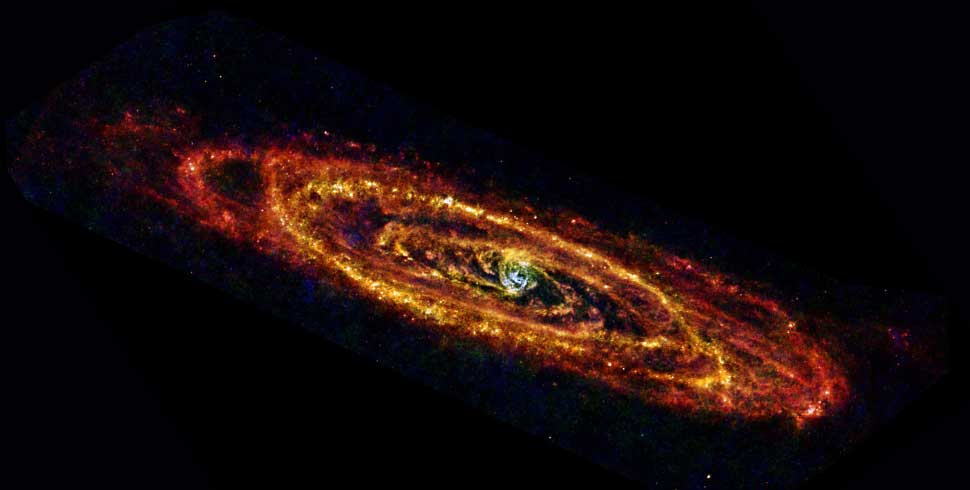
Courtesy NASA/JPL-Caltech

The other day I was watching Apple TV’s telling of the story of Isaac Asimov’s Foundation series. For the record, at least up until the fourth episode, they’ve been doing a great job (they’ve only released four episodes as of the writing of this article). But one of the things that started bothering me was the way they handle advanced mathematics.

You see, if you haven’t watched the show (or read the books), the premise is basically about a mathematician who has blended math with psychology and history to create psychohistory, which is essentially a predictive mathematics. It’s a great concept, and someday, I’m sure that’s where our math will take us.

What I haven’t liked about the show is how it tries to show one of the main characters (an assistant to the mathematician) practically thinks in math so that she’s always thinking about prime numbers (a number greater than 1 that’s not the product of two smaller numbers). She keeps repeating large prime numbers as she’s doing other things, which is to give the viewer the impression that she’s so advanced in mathematics that she must keep focusing on prime numbers.

Well, to a person who understands prime numbers, it’s not that impressive. It’s actually reductive. To someone who doesn’t follow math, it’s going to serve its purpose: Making one think that she’s so brilliant that she thinks in primes. But to someone who knows basic mathematics (to the level of primes), it’s like pointing out a very smart person who is somewhat stricken by a compulsive disorder because, to be honest, spouting off prime numbers isn’t really complicated; it’s just repetitive and a somewhat endless process.

Which got me thinking about the many times that Hollywood has tried to represent intelligence to an audience of people who generally aren’t very intelligent. I mean, let’s face it. As much as we’d like to think otherwise, the average television or movie viewer isn’t exactly approaching the higher levels of Mensa. Sure, they might be represented in that demographic, but most media broadcasts are designed to appeal to someone with anywhere from a sixth grade to high school level of intellect. It’s not an insult to viewers, but just a common acceptance of the type of media to which most of us are exposed.

I remember years back when I was reading a book by Robert Heinlein, specifically Number of the Beast, a science fiction novel that uses mathematics to explain the nature of God and spirituality. At the time I read it, I remember thinking to myself that this went way over my head, and there were times where I found myself swimming in numbers that Heinlein was presenting, only half understanding the majority of what I was reading. That book alone represented to me the realization that there are some people who are way smarter than the average person, and quite often those people can find themselves incapable of even communicating a message to those they to whom they wish to connect. Which is kind of funny because most of the rest of Heinlein’s books are accessible and totally understandable. It just happened to be that specific novel that threw me off so much.

Of course I was young back then, but I never did reread it, even after gaining several advanced degrees. Why? You might ask. Well, cause secretly I’ve always suspected that I’d probably still find it difficult to read through that book again.

What this generally told me is that there is a certain talent to sharing information with other people. In communication, we call it accessing, which explains the procedure a doctor must go through when explaining complex procedures to a lay person who is being diagnosed. Delivering such information in complex jargon is never going to help to relay information so that the patient can take the necessary steps to deal with whatever might ail him or her. The doctor generally has to dumb down the language so that everyone is speaking in a language that everyone can easily understand.

So I started to think about other media that has attempted to do this in the past, where they have tried to represent some higher intelligence in a way that the rest of us might understand. And a couple of times they got it very right. And here are a couple of examples.

Close Encounters of the Third Kind: Steven Spielberg’s ground-breaking film was brilliant in how it did this. One of the questions I always seemed to have whenever it came to films about alien civilizations was how would they actually communicate with us. This movie handles this really well by showing that communication would happen through music, which would be a verbal representation of mathematics. By tying the algorithm through computer AI learning the other language, it made for a process that was easy to understand without having to actually learn a language in order to foster further communication to the audience.

Historically, movies and television have taken short-cuts through this process by just having alien races speak the same language as we do, which has never really made much sense. Star Trek attempted to cross this territory by creating a never-seen technology called a Universal Translator that basically gets implanted into your ear and then translates all languages so that you’re always able to communicate with others. A few times they mess this up by having characters actually speak a foreign phrase or two, but for some bizarre reason those phrases don’t end up being translated as well. I never really did understand how that worked (or didn’t).

One of the problems shows and movies have always had is determining how much dumbing down of technology they would do in order to help an audience understand. Star Trek was also famous for creating babble-speak that sounds techno, but doesn’t actually mean anything. It was a process always used to sound technological to a crowd of people who would have no idea what such vocabulary actually meant (usually because it didn’t actually have any translation).

The important question we’re left with is: How complex can you make the technology without losing your audience? Every time I watch a new show, I often wonder how they will handle that question, and often, when the writers have failed miserably, I find myself staring blankly at the screen because I have no idea what’s going on, which makes me question if the fault was mine (lack of knowledge) or theirs (lack of explanation). And sometimes, the answer to that question determines whether or not I will continue watching the show (or movie) further.


The Problem With National Intelligence and Classified Information

One of my pet peeves has been the concept of classified information. It’s commonly used as a gatekeeper to give some people access to information and keep others away from it. When people talk about it and think about it, it’s often considered of significant importance that this information is kept classified and away from other people who don’t have access. Strangely enough, no one really seems to think about it from the perspective of wondering why we keep all of this information classified in the first place.

In the old days, and I mean like the 1940s, classified information was important because it meant keeping it away from the Axis powers who meant to do us harm. During the Cold War, it was to keep the information away from the evil KGB and their cronies who were out to do all sorts of harm to the US people. I guess now it’s being kept from terrorists who, of course, mean to do us harm.

What I find myself asking more and more these days is why is the stuff we keep classified actually being kept classified. And almost always, the reasoning seems to fall short of any test of logic.

I was looking at the requirements for working for the State Department the other day and noticed that to be in practically any position, including a mechanic, you need at least a Secret clearance level. And this immediately started putting my thinking process through the obvious channels of one thing leads to another. I thought, why does a mechanic need a Secret clearance? And then you go through the usual Kevin Bacon approaches to connecting dots and start thinking “well, he might be working in the motorpool one day when some guy with Secret information might be talking about secret things.” And then you realize how absurd that is because the guy with Secret information shouldn’t be talking around people who don’t have clearances in the first place. And that got me thinking, what exactly would someone in the State Department be talking about that should be classified? And basically, it kept coming back to even more questions that bothered me because in each case, the “Secret” information appeared to me to be information that might be embarrassing if it got out but generally not something detrimental to the country itself.

And that’s what I’m starting to realize is the reason for most of our classifications today. We make things Confidential or Secret because we really don’t want anyone else to know what it is we’re tracking or talking about. Yet, the information we’re talking about probably shouldn’t be classified in the first place.

We live in a country that values its freedoms. But in order to truly value those freedoms, the people of that country need to know what their leaders are actually doing. But we don’t. Because they classify everything to make sure that we don’t know what they’re doing.

Does this protect our country? Not in the slight. As a matter of fact, it makes our country even more vulnerable because its people are putting others into power based on limited knowledge of what might really be going on. And we’re told that it’s better this way because what’s really doing on is too important for everyone to know what’s going on. It’s kind of one of those vicious cycles that doesn’t ever get any better.

So, who are we supposed to be protecting this information from? The Russians? The Chinese? The North Koreans? It all sounds good in theory, but in reality, so little of that information that is classified these days would make a difference if any of those entities actually knew what was going on. Well, maybe the schematics of how to build a nuclear device, or something like that, but that’s not really what we’re classifying. We’re classifying conversations between people who couldn’t build a nuclear device if their lives depended on it. They’re bureaucrats who really don’t have a lot of intricate knowledge about anything.

I sometimes think the majority of the stuff they classify is just to appear more important than they really are. And this mentality feeds upon itself and often makes things even worse.

Back when I was in the service and working in that field, I used to see things become classified that had just been printed in the New York Times. But because some bureaucrat read it, he would then type up the same article and then declare “SECRET” or even “TOP SECRET” and make sure only those with high clearances were able to read it. But the newspaper article would still be out there, being read by anyone who bought it, including parakeets who had it lined on the bottom of their cages. And as sad as this seems to admit, people were threatened with being brought up on charges because of disclosing something that they might have actually read in the newspaper but some other bureaucrat only read it in a security briefing (because of that doofus who classified it in the first place).

I’ll come out and just say what I believe here, but I think way too much information is deemed classified in a society that should be a lot more open with its information. We classify farm reports, trade manuals, articles from newspapers (as previously mentioned), financial forecasts, political meetings, patents, treatments for diseases and illnesses, phone call records, as well as so much more information all in the guise of protecting “national security.” And honestly, what’s the benefit?

To be honest, I don’t perceive this changing any time soon because bureaucrats love to think of themselves as more important than they really are. That’s never been different in our civilization. The greatest impediment to evolving knowledge is when we hoard knowledge and evidence, yet we seem to do that more and more these days.

The Ignorance of the American Public in an Age Where People Think an Opinion is Knowledge

We're #1! Yep, we're proving ourselves stupid again.
We’re #1! Yep, we’re proving ourselves stupid again.

There’s an interesting article that’s making the news today from Gfk Public Affairs & Corporate Communications that states that 51 percent of Americans question the Big Bang Theory. Teaching political science at a community college, I have no problem adding that if you asked those same people surveyed if they even knew how to explain the Big Bang Theory, chances are pretty good that you’d get a bunch of clueless responses. You see, I think something much worse is happening than people are squeamish on current accepted scientific knowledge; I think the real problem is that not only do people not know what’s current in scientific knowledge, but they believe that because they have an opinion, that somehow that’s some kind of knowledge, too.

Let me explain. Some years ago, I was working for a hotel back when I got out of the service. A young woman who worked in human resources was engaging me in a conversation one day in the employee cafeteria, where she was explaining to me why she thought that I was incorrect for indicating that the time line was not 2000 years old until December 31, 2000, rather than on the day the world counted as January 1, 2000. In other words, my argument was that for a full 2000 years to pass, you have to actually finish the 2000th year. Anyway, regardless of who was right or wrong, she explained that I couldn’t be correct because “the majority of people think the way she thinks” as opposed to the “bizarre” interpretation that I was giving. I then explained that scientific knowledge is not survey based, and she made some really strange response of how most people wouldn’t think that (the irony of that response didn’t escape me then either).

This is how I see the current state of knowledge in the United States today. People no longer rely on evidence or even on scientific theory but think that if they can argue some kind of rudimentary logic, then it must be as good an explanation than if you were to offer formal proofs. I believe part of the problem stems from science’s mistaken usage of the word “theory”, which causes so many people to think that the “theory of evolution” is just a theory, which to them means it has as much ground as the “theory of imaginative fiction” because the word “theory” is involved.

I was watching this week’s COSMOS, and I would like to say that it brought up something brilliant that so few people will latch onto. And that was the struggle that geochemist Clair Patterson underwent when he was trying to prove lead poisoning was killing people in the 20th century. What the episode did a great job of exposing was how easy it was for one doctor, on the payroll of the lead industry, was able to convince so many people that lead wasn’t a problem, when today there’s not a scientist alive who wouldn’t claim it was killing people in the way it was being used in industry. If that episode did anything for the future, I hope that it got people to pay closer attention to what big business tries to “sell” as “safe” whenever there’s something that should be scrutinized a lot more before being made mainstream. But we’re stupid people, which means we’ll take “experts” at their word, conduct surveys of the rest of us who don’t know better, and continue to enrich people who don’t care if they kill us while they profit off our dead bodies.

On the periphery of participating in the scientific revolution

Courtesy NASA/JPL-Caltech

There’s an age-old story about Albert Einstein that discusses his experience when he was young and in school and asked a teacher about how light could be viewed as both a particle and as a wave. The teacher remarked that obviously he had much more to learn as light was ONLY a wave, and once he learned that he would be able to understand the nature of that particular issue in science. Einstein spent his early adult years proving the teacher wrong and that light could be both a particle and a wave. It kind of changed science forever. Kind of cool.

When I was in grade school, I remember a similar kind of situation when I was first taking physics. And strangely enough, it involved the nature of light. The topic was about the scientific speed limit (the speed of light) and how nothing could go the speed of light, and that all attempts to achieve the speed of light would forever fail. I asked about light itself, indicating that obviously IT could go the speed of light because it was, in fact, light. Therefore, as it was a substance (specifically a particle, according to Einstein nearly eighty years before), then that meant a substance could achieve the speed of light. As scientists would eventually start to realize, light doesn’t approach the speed of light. It IS light and thus, always travels at the speed of light.

And then in the 1970s, there was a huge breakthrough in the concept of antimatter and tachyon particles. Antimatter, for clarification, is anything that is the opposite state of matter, meaning it has the same mass as matter but is in an opposite charge to that of matter. Antimatter particles (referred to as antiparticles) combine to create antimatter just as Matter particles combine to create particles. Tachyons, for those not familiar, are particles that move at speeds above the speed of light, which according to some mathematics I was playing around with at the time, I determined could not reach the speed of light from the opposite direction (the negatives proving to be the same opposite problem from the opposite side).

During this questioning period I was undergoing, I started to believe that I understood what tachyons really were and conjectured that what we know in our universe consists of matter that is incapable of achieving the speed of light. Therefore, in an antimatter universe, the antiparticles would consist of tachyons that would travel above the speed of light, but never be able to reach the speed of light from the other direction. It seemed pretty simple to me. The only thing missing was the simplicity of “where is it then?” We know where matter is because we see it, but we don’t know where antimatter is because we don’t see it long enough to determine that it’s really there (or are capable of stabilizing it before it dissipates in our own universe). This led me to believe that perhaps there’s a buffer substance between the two types of matter (positive and negative). And a simple matter of deduction gave me the theory that, unfortunately, I’ve never been able to completely disprove.

And that’s the Theory of Neutramatter. Neutramatter is a buffer substance that you would need to separate both matter and antimatter, which by simple definition would have to separate particles going below and above the speed of light. It almost seemed too simple because the substance that would need to separate the two universes is the most obvious substance known to man, and that’s light. As we know, light travels at the speed of light (which is kind of duh realization), which then indicates that as it is the buffer substance, the one thing that separates the two universes is the presence of light.

And as we know that light consists of more than just the visible spectrum, there are all sorts of properties that make up the wavelength frequencies that would separate this light across its spectrum, and thus, keep both matter and antimatter from ever crossing into each other’s specific realms.

The strange thing is: I was watching the latest episode of Cosmos with Neil Degrasse Tyson last night (taped from the night before that), and the focus was on the properties of light. It reminded me completely of this theory I had so long ago, and it almost seemed like the science of that show was about to make the, well, quantum leap to the theory itself, as it still seems to fill in the gaps that we still have. A couple of the questions that Tyson brought up (that mankind still has) fit directly into that theory.

It kind of makes me wish I would stuck it out with physics and continued on that path. I still believe there’s something to it, but when I was proposing it back then, string theory was the new kid on the block, and no one really cared about light at the time. I still think there’s something there, but today I’m a novelist who does nothing in science (aside from science fiction). And I wonder if I completely missed my calling.

The World Until Yesterday by Jared Diamond; a book no MA grad student could have gotten by a thesis committee

The World Until Yesterday: What Can We Learn from Traditional Societies?The World Until Yesterday: What Can We Learn from Traditional Societies? by Jared Diamond

My rating: 3 of 5 stars

Diamond does a great job analyzing primitive societies from the perspective of an up-close observer, but one of the problems he suffers from is a massive case of anecdotal evidence that may or may not apply to larger populations. His examples are great, and some of his conclusions are interesting, but he has a really bad problem of writing as if he’s the expert on all things because of his experience with limited populations.

Where I saw this mostly lacking was whenever he was discussing an issue and then drawing a conclusion. The academic in me kept saying to myself while reading: “And your source for this conclusion?” But there was rarely sources brought up as any type of back-up to the arguments he was making. It made me suspect that he’s become so famous for his earlier work that I started to think he felt he didn’t have to back up his evidence with…well, evidence, because it wasn’t evidence; it was mainly a guess based on his years of experience out in the field.

The problem with this kind of conclusion he kept offering is that he’s relying on his own knowledge and guesses and then figures that it should be good enough because of his massive volume of work that preceeded him. Unfortunately, that’s not how science works, and he should know that as he is one of the people who has been in the trenches when this type of requirement was founded.

The problem with all of this is that he does have a lot of very interesting information, and when your information gathering process is criticized by others (and believe me, I’m not going to be the first or last one to make this criticism), it has a tendency to negate ALL of your evidence, which is probably the one tragedy in his shoddy attempt to provide good information.

View all my reviews

I think I’m going back to school

Well, I’ve been mulling this decision over for some time now, and I’ve finally come to a conclusion: I’m going to go back to school. Even though I have enough degrees as it is, this isn’t about getting a new degree, but it’s much more about trying to find a purpose in life. Unfortunately, my current trajectory is taking me in directions that are suck in mud, and it’s been driving me nuts lately.

Unfortunately, all of my graduate degrees in social science have led me to absolutely nothing. I can’t get a job. At all. I’m qualified to teach political science and communication, and no one hires. I mean, NO ONE HIRES. Currently, I”m working as an adjunct, and I’ve been offered other “adjunct” positions in both fields, but finding a full time teaching job is not even possible. Most of the time, I’m lucky to get a form letter rejection thanking me and informing me they’ll keep my application on file. This has convinced me that the only way to actually get a college teaching job is to know someone in the school already, and unfortunately, I don’t know anyone in the school already. This means, I’m doomed to a lifestyle of submitting applications that will be circular filed and nothing else.

So, I started spending some time analyzing what it is I actually want to do. My forte is mathematics and hard-based science. It’s something I actually enjoy. It causes me to think. Right now, I hardly think at all. There’s no need for it. Political science requires no thinking. You either know it, or you don’t. Communication doesn’t involve that much more, other than a need to read more material. But in the end, the same ideas that were espoused in the 1950s, are the ideas that are ground-breaking today. Daniel Goldman just reiterated Sarni’s work, while practically every identity scholar reinvents Black. I tried to develop something completely new, designing an additive theory linking both political science and communication to produce a brand new strategy of international negotations. Was I successful? I think so. The result: No one cares. Diplomats are only interested in doing what they’ve been doing since Napoleon discovered he had a short person complex. Social science is a path to obscurity and reinvention (with a new paint finish!).

So, I’ve decided to pursue the biological sciences. My immediate goal right now is something involving forensic science, possibly leading to medical school (but not being a practicing doctor but more of a research-type professional). It was a direction I was going before, so at least now I’ll try taking it seriously.

What I have discovered is that I’m doing absolutely nothing with my life. I have a job where I do not feel respected as a professional in any way whatsoever. I’m literally a glorified editor (without the glory). During the year, I’m told I’m doing an “adequate” job, but whenever it comes time for the yearly performance review, I’m “just not doing enough”. But the job isn’t designed to give the opportunity to do anything, which precludes the possibility of “enough” in all cases. I don’t think I’ve really stretched my brain more than two times that I’ve been here. There will never be opportunities for advancement, as I’m not a medical professional, so I’m going to be stuck in the same job, same pay grade just shy of achieving the yearly cost of living percentage increase.

Therefore, I have to create my own opportunities, and that’s what I’m going to be doing.

So my quandary, or struggle, right now is trying to figure out exactly how to do it. I really don’t want to spend years and years starting over with school when I’m sure I shouldn’t have to. I tried contacting Western Michigan University (as their close to local) to inquire about their biology program, and basically the “counselor” responded by throwing the ball back in my court, as administrative types tend to do a lot. I asked specific questions, and not a single one of them was actually answered. I got a “send us all of your transcripts and we’ll see where you stand” response. My question was: “Does the local campus for WMU actually offer biology courses?” Anway, you’d think by now I’d be used to these types of responses from people.

So, that’s where I am right now. My life isn’t working as planned, mainly because I haven’t realy planned it out that well. So I have to find something else.

When You First Begin to Realize You’re Never Going to Change the World

I was one of those little precocious kids who grew up, convinced that he was one day going to change the world. At first, it was going to be through science, as I studied physics, sure that I was able to see the world in ways that no one else possibly could. I had my ground-breaking theory that re-explained the universe’s creation through a process called neutra-matter (my own invention) that was the embodiment of light, and thus, the separation particle that kept the barrier between matter and anti-matter. It all made sense to me, and actually still does. I worked through college to become a physicist, and throughout my education, I devoted a great deal of time just trying to disprove the theory so I could move onto something better. And I never did. So it might be true. Or not. We’ll never know because I didn’t remain in physics, and even if I did, I hit a point where I started to realize that no one really cared.

Yeah, that was true. No one cared. I had this great idea, and I was convinced it could change science. But again, no one cared. So I moved onto a different field. Genetics.

In genetics, I was quickly invigorated with a new idea that consumed my every scientific thought. I now had a convincing argument as to how the AIDS/HIV strain first emerged, and coordinating this theory with the concepts of archaeology (which I was also studying at the time), I realized that there was a way to use my theory to trace down Patient Zero, and possibly erect a cure for AIDS by creating a genetic suppressor from the origin rather than from the current variation of the virus. And it made a lot of sense to me.

So, as this was during the dawn of the AIDS era, I managed to convince a coordinator of the first AIDS conference to listen to my theory, and she was so intrigued by it that she arranged a meeting with me and a group of scientists who were all part of the first conference. They read my report, called me in and then in a round table discussion, asked me all sorts of questions about my theory. And they were intrigued. And then one of them asked me where I got my medical degree, and I revealed that my education was in physics, and that I did not have a medical degree. Essentially, the discussion was over, and no one was really interested in hearing anything else I had to say. In the end, my theory was shelved, and I went on with my life. Decades later, AIDS is still out there, and unfortunately, I don’t think it’s going to be cured any time soon. Of course, I can’t say my theory would have done it, but it bothers me that it was never followed up.

Many years later, I was in graduate school after doing the whole Ph.d thing in political science. This time, however, I was pursuing communication. And suddenly it dawned on me that our usual process for conducting diplomacy was wrong. In the middle of the night, I woke up with an additive theory, utilizing political science international theory, interpersonal communication theories, a communication rhetoric theory and a mathematical model I designed in my head that would eventually be completed through computer modeling. This new theory, I predicted, would lead to a brand new way of conducting negotiations and diplomacy. Latching onto one of my fellow grad students with a background in history, we wrote up a theoretical paper on this and then presented it at communication conference. After that, a few people from different organizations contacted me by email asking me more questions, but over time, I starrted to realize that it also required people to really think differently than what they were used to. When I tried to present it to the Obama Administration, I realized no one was really interested in learning. People were pretty satisfied with doing things the way they had been doing them since the days of Caesar, so very quickly I got the impression that I was barking up trees that no one wanted me barking near. So I gave up on that as well.

The point is: At some point, you start to realize that no matter how many great ideas you have, eventually you’re probably going to hit the point where you realize that most people generally don’t care. The status quo is so much easier to stick with, so the amount of work involved in getting anyone interested in change is practically at a ridiculous premium. It’s a lot like the Occupy Wall Street movement that’s going on right now. I mean, they have great ideas and the best intentions at heart. But the reality is that no one is going to listen to them, and mostly what they will receive for their efforts is ridicule and pepper spray. You can’t convince people to change their ways, even if the change is in their own best interests.

So, at some point, you have to realize that as much as you like, you can have all of the greatest intentions in the world, but at some point you need to do the proverbial growing up of reality and settle for mediocrity and, if lucky, a small step after a period of anarchical punctuated equilibrium.

That’s where I am now. There are so many things I wanted to do with my life, so many things I thought I would do with my life, but in the end, I realize that it really didn’t amount to much. No fame. No fortune. No changing of the minds of the masses or even a few leaders. Not even a really cool career or a stable girlfriend (or an unstable one for that matter). At some point, you begin to realize that all you really have is an apartment full of friendly stuffed animals, a shelf of unpublished, or crappily published, novels, reruns of Star Trek and a World of Warcraft account. Had I known that a long time ago, I probably would have chosen a much easier route to get here.

The Ramifications of a Scientific Study That Purports That High IQ is Linked to Drug Use

There was an article reported today on CNN’s site, discussing a recent scientific study in which high levels of IQ are linked to the propensity to use drugs. Immediately, the people who have responded have started making the usual faulty scientific connections, such as “that proves it! Using drugs leads to a higher IQ!” One responder, named JeffinIL, states specifically, “I never realized I went to high school with so many geniuses.” As usual, someone took the conclusions and then tried to return the conclusions to the hypothesis, essentially trying to create the cause from effect, rather than what the study itself said, that cause led to effect.

Okay, right off the start, I have to make a few comments on faulty reporting, which is leading (and will lead) to bad conclusions.

1. The data was collected in 1970 and just recently analyzed. This is not a RECENT study by any stretch of the imagination, even though the article attempts to make exactly that claim in the second paragraph: “A new British study finds….” 1970 was over 40 years ago. The people studied back then are now reaching latter stages of adulthood, which means that their “habits” and the findings are relevant to a group of people who are now in their 50s and 60s, not children as the study claims to connect.

2. The “high” score for IQ was registered as between 107 and 158. Not really that high when it comes to what people refer to as “high” IQ scores.

3. IQ has never been an acceptable gauge of someone’s actual intelligence. There’s a reason that IQ scores are rarely used anywhere other than in comparison studies in which people try to use them to inflate their attributes. People generally don’t take IQ scores to begin with, and those who do often take them numerous times to try to “game” the system. Other people learn logic skills that help them “beat” the IQ test, and mostly, the scores are considered fringe on the levels of acceptable science.

4. The study makes inferences that may or may not be contributing factors. While the only claim the study makes is that people with higher IQs report higher levels of using drugs in later years, there is no actual connection to drug use AT THE TIME of the IQ test, so there’s no way to know how much more education a person may or may not have had since having an IQ test. Socioeconomic factors were mentioned, but weren’t really discussed at length.

5. The study (and the author of the article) make a lot of guesses as part of the study, indicating that maybe people were “bored”, and thus turned to drugs because their higher IQ put them in a bored state of mind in comparison to other people with lower IQs who might not be as bored because, I guess, they don’t have as much to think about with their lower IQs. I mean, that’s the inference of that statement, but I’m just guessing based on the lack of information contained in the article itself. Seriously, anyone can do that kind of logical exercise, even people with low IQs like me.

The worst part of this study is that the way it is reported means a whole bunch of people are now going to be “armed” with faulty logic as trivial information they store away. When someone is at a party and someone offers him or her cocaine, rather than think, “no, that stuff might be dangerous”, in the back of someone’s mind is going to be the thought, “well, I did read this one study once that told me that people who take drugs are more likely to have higher IQs, so it might actually be to my benefit.”

It doesn’t take a genius to see that one coming.

America Needs a Social Messiah

Most people feel it but don’t really know how to put it into words. Something’s wrong with our country, everyone seems to know it, but no one really knows what to do about it. Our politicians keep claiming they have it all figured out, but they’re floundering, unsure of what to do and constantly going back on everything they say because they’re as confused as the masses. Something’s wrong, and we’re at a stage where something needs to happen to fix what’s wrong.

Having said that, I have to point out that one of two things is going to happen (aside from nothing happening and this state of morass continuing for more years before a solution finally occurs). Either someone is going to come along and rally everyone together to lead them off the end of a cliff, or someone, or some thing, is going to arrive and lead us to a better place. We’re at that stage where we need something, and unfortunately everything already in place is totally incapable of doing the trick.

This is part of why Obama became president. He came after a crappy period in US history, when we had a president and and administration that led the country down a road into near despair and depravity. He came along and promised a new sense of America that would put the country back on track, kind of like a political messiah who would lead us to the proverbial promised land. Instead, he gave us a lot of what we already had, and basically became Bush Light, leaving us in a state where we’re still waiting for someone to come along and pick up the slack he was supposed to actually use to make things better.

It’s not just a bad economy that’s causing the frustration. It’s a sense that no one knows what to do with the most powerful country on the planet. We have no rudder, steering us to some place better because we honestly don’t know where a better place might exist. Technologically, we’ve created the computer and hand held devices that make life simpler, although they tend to make things even more complicated (adding to our work day instead of cutting it down). Intellectually, we kind of have a lot of science and medicine already figured out, although we still can’t provide health care for everyone, our medicine is created by companies that make only the drugs that are profitable and lobby to make sure things don’t get better for the masses, and we pay our businessmen far more than our engineers and scientists, which means we’ll always have more people making money than making better products. Our political landscape hasn’t changed since the 1800s, as we still rely on diplomacy that requires tit for tat game theoretical models which reward last year’s actions and beg next year’s compliance (even the Roman Empire planned five years ahead, rather than this “what have you done for me lately” policy we seem to have fallen into).

In other words, we don’t seem to have a direction, or even a clue as to how to get ourselves pointed in any direction. People are so focused on the now that they could care less about the future, and anyone who things progressively is seen as foolish and foolhardy, which means we are like ten year olds planning for lifetimes of mediocrity.

This is the time when someone can come along and change things. This could be a great thing, especially if we find an enlightened thinker, but unfortunately we’re so 18th century in our thinking that we all seem to believe we need an enlightened “leader” rather than an enlightened “thinker.” Think about that for a moment. When it comes down to it, we’re going to end up going to the polls, or erecting an homage to a power base, rather than follow the enlightened ideas of someone who has the right ideas. We’re so Hobbesian in our ideals (needing a leader to lead us) that we have forgotten that the US was created in Lockeian ideals (where we control the leader), and really should have been leading to Rousseauian ideals (where the group identity has more power than the individualistic desires that we have today…where some corporate entity can dominate the masses because it has economic power that speaks louder than ideas and voices).

Part of my fear is that most of the west is filled with people who are only capable of the lowest levels of Maslowian achievements (basic needs) rather than higher level analysis (using logic to figure out ways to fulfill needs rather than immediate gratification). This means that when someone comes along and tells us what we want to hear, we’ll comply and expect great results, and when that person proves to be no better than your average Detroit politician (i.e., corrupt), we’ll back that person even when things turn into Ponzi schemes and false hopes and promises. When people are incapable of thinking logically through higher level concepts, they’re constantly doomed to being cheated and exploited by their leaders (kind of where we are today).

The ideas of Rousseau are probably interesting to point out here because the ideas he espoused were those of an enlightened society that realizes its needs are met through its communicative knowledge, but as long as we want things fulfilled within easily constructed plans, we’re always going to be doomed to Hobbesian outcomes (the leader telling us to do what to do so he can get the payoff instead of us). The solution, unfortunately, involves more and more people talking to each other about how to make things better, but as long as media is one-way communication (them to us), we’re never going to get there. Social networking is designed to be two-way, but as I look at the recent approaches of Facebook and Google+, all I see are attempts to create celebrities with bullhorns, rather than a process to open communication between both sides. Which means we’re moving further and further away from where we need to be.

At the end of a diatribe like this, I’m sure the logical question will come: “Do we need to know this for the test?” And when I say no, thinking stops and texting starts.

So I give up again.

How Math Saved the World…at least during World War II

People who know me know that I am a huge fan of mathematics. My last academic paper for communication was a theoretical paper using a mathematical iterative model to develop international compliance and friendship between nations that have adversarial relationships. I developed this because I was sick and tired of the 18th century negotiations model we’ve been using nonstop even to this day, something I critique quite often whenever we get to having to deal with yet another adventure in acquiring peace in the Middle East.

But recently, according to Wired, it seems that mathematics has more of an interesting history than we may have been told. During the Second World War, it appears that our intelligence used the kind of thinking I really like. Instead of just relying on spot reports and covert agents, they used innovative thinking. When soldiers captured enemy tanks, rather than just strip them apart for intelligence involving their capabilities, they also recorded the serial number for the tank itself. Some intrepid mathematician for the government realized that if you used those numbers, you not only could catalogue a specific tank, but you could use the categorization scheme to figure out exactly how many tanks the Germans had. And once you knew that, you knew exactly how many you needed to make to overwhelm your enemy. Unlike the past where nations would just create weapons until they ran out of money, or guestimated they were making enough, this told you exactly how much you needed to beat your opponent in the field. When you needed a 2 to 1 advantage, at least according to the old numbers involving calvary and tank warefare, it was important to only field as much as you needed.

Well, the equation they came up with was:

, where k=the number of tanks observed, m=the largest serial number observed. The -1 is the simple factor that for every tank you take out of usage (meaning you were looking at the serial number of a tank that was removed from battle), you would not run into that same serial number again. Then you use this number to calculate the variance (N) and you now know how many tanks the enemy was fielding.

This formula was so accurate that we predicted the German were building 255 tanks a month, and after the war we discovered we were off by one tank (they were building 256 tanks a month). Not bad, eh?

People constantly disparage the importance of mathematics, but it can be used for so many different applications that people don’t even think about. With iterative calculations, you can estimate instances of occurrences, something I’ve recently found to be very interesting in figuring out long-term, generational effects. For too long, we’ve focused on calculus, which is quite useful for area-filling calculations, but this has pushed us into a one-use kind of mathematics that has limited its application. Statistics are great for certain things, but some questions involve the application of time and the degeneration of numbers. Fortunately, our ability to use the math at our disposal makes us capable of answering a lot of questions we were only imagining only a few decades before.