Tag Archives: Apple

My Take on the Really Important News Stories Currently Happening

The post isn't about the movie, but the picture definitely works

As I know I’m the one everyone turns to for on topic news reporting, I thought I’d give some opinions on what’s currently happening. Okay, no one reads me, so I’m ranting to the wind, but it’s my blog, so I’m going to do it anyway.

1. Obama Takes Credit for Lame Duck Victories. Um, okay. It seems that our current president seems to think that he has done great things by using the lame duck Congress to get a lot of legislation pushed forward before the end of the year. A couple of thoughts: First, Obama didn’t really do anything. The lame duck members of Congress did. So it was really them that succeeded in doing what they did. Second, while it’s wonderful that a lot of gridlocked legislation got pushed through (DADT, Bush Tax Cuts, START treaty, Adoption of Stickman as Ambassador to Iceland [okay, the last one didn’t happen, but it really should have]), when the new year starts up, we’re back to where we were before, except now we’re going to have a lot of pissed off Republicans who still think they have some kind of mandate to provide gridlock to the presidential agenda. Basically, the Democrats rammed through a whole bunch of legislation that required them to use their majority that is going to disappear at the start of the new year. That can’t lead to positive relations in Congress for the next year. Expect a lot of political partisanship to get much worse in the very near future, all of it blamed on the lame duck stuff. Lesson: You really don’t get a free ride when the odds are stacked against you for the future. Even the Bush Tax Cuts, which the Republicans are all happy about being passed, are going to be seen as Obama’s lame duck stuff that will cause immediately cause Republicans to blame Obama and the Democrats for anything that comes out negative, even as Republicans use the money to fuel their own desires.

2. Rahm Emanuel is Cleared to Run for Emperor of Chicago. Or Mayor, or whatever it is he’s running for. Basically, an Obama Administration guy is running on that name connection alone, even though everyone who had anything to do with Obama was thrown out of office during the last election. Supposedly, this might work in Chicago, which is Obama’s former backyard. But how does this affect the rest of us? It doesn’t. It means absolutely nothing to us. For all I know, he’s probably going to lose because he’s not actually Obama. The people of Chicago aren’t voting for Obama; they’re voting for some guy who once worked for Obama. He has to run on that. No one outside of people who might gain from any connections to this guy really cares in any way, shape or form. So, everytime I see an article about this, which is practically every day even though I don’t subscribe to any papers that have anything to do with Chicago, I want to claw out my eyes with a rusty spork. Please make him and his personal desire to be god of Chicago go away. Please, even if it’s just for the children.

3. Steven Spielberg is not going to advise Democrats on how to win over the voters. Thank God. It’s not that I don’t like Steven Spieldberg. His movies are great. But they’re movies. And as we learned from World War II, when a movie director like Kapra is making movies for the country, they’re not movies; they’re propaganda. Having a famous filmmaker try to change the perception of Americans about the Democrat Party is a disaster just waiting to happen. What’s wrong with the Democrats right now is that they’re constantly running on a platform of being for the people when they’ve been so out of touch of what the people want and need that they need education, not propaganda. But they’re not going to get that education because they don’t seem to realize what’s wrong. People are pissed at the Democrats right now because they came in with a plan to give the people what they wanted and then and went and did things that politicians have been doing for decades (filling their own pockets). We saw Rangel and Conyers and all sorts of shenanigans that benefited none of the people, but only the people in power. THAT is what they need to fix, and trying to get a famous movie director to advise them to change their public image is never going to work because it’s not their public image that needs fixing. It’s their actions they conduct in the name of the public interest. But I doubt they’re going to figure that out because the people who advise them are the same people who have been advising them while they were holding $1000 a plate fund-raisers to get elected.

4. Facebook is a networking program, not a lifestyle. Recently, Mark Zuckerberg was voted as Time’s person of the year. I really don’t care. He’s a rich, elitist, misogynist who happened to be at the right place at the right time to steal the right idea at the right time. Ever since then, he’s been trying to become important, but he heralded the creation of a platform for people to find their old friends and keep touch with their current friends in ways bordering on stalking, but only if the victim was sending texts to her stalker to announce where she’d be going next. Yes, I have a Facebook account. But it’s not my only means of oxygen or survival. It’s an interesting tool. And that’s it. For me, the person of the year would have been Julian whatever his name is who was running Wikileaks. That person really made an impact last year. Facebook didn’t. Neither did that rich billionaire, irrelevant sack of shit owner of Facebook either. It’s almost as if Time went out of their way to create the easiest winner of the award, realizing that if they chose the guy who should have got it, the government would have actually shut down Time Magazine as a threat to the country. I honestly don’t think it’s that much of a stretch to realize that this had to have been part of their discussion the night before they made their decision.

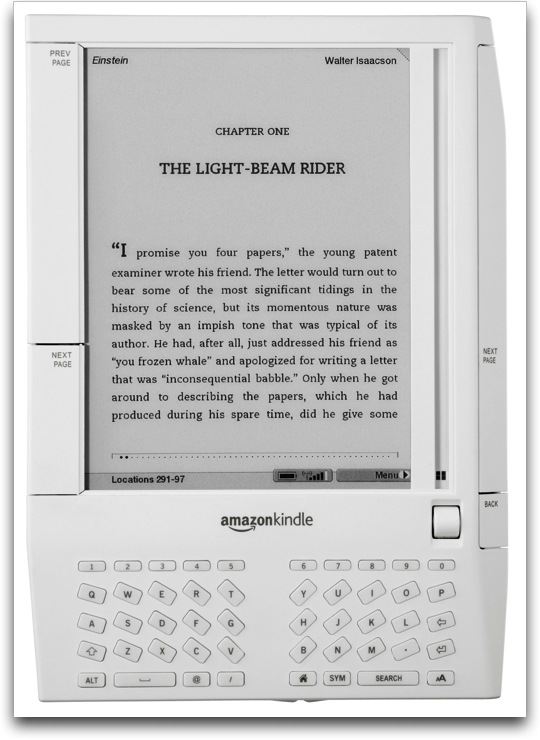
5. 2010 Kindle Sales will reach 8 billion. So what? Oh wait, I mean 8 million. Whatever. I mean, it’s kind of cool that Kindle will sell that many, but as expected, this kind of announcement fails to mention what’s really important: How many books are being sold, and how many are available? You see, it’s one thing to sell a bunch of devices, like Barnes & Noble is doing with the Nook Color, but when they don’t tell you how much information is available for the device, it’s really doing a disservice to the buying public. An example: I bought a Color Nook from B&N, and I’ve been nothing but pissed about my purchase ever since. I bought it, expecting the market to be represented in books, magazines and newspapers, but so far the selection has been abysmal at best. I have yet to see a justification for the color device because the magazine selection for the device is horrid. I have yet to see any new magazines sign up, other than really crappy ones that I would never flip through at the bookstore for free. When they start getting the marketplace to respond to their product, I’ll be happy. And don’t get me started on prices. The price for practically every book I’ve seen with the Nook has been either exactly the same price as the Kindle or much higher. Computer books are ridiculous in that they’re sometimes more expensive for the Nook version than they would be if I bought it in a physical copy. Not a good sign if they’re trying to capture a market. Or even tap into one.

This is the same problem, I have with the Kindle. The prices for books just don’t seem to justify the device itself. When books are $9.99, it might be worth it, but there’s a mindgame being played here that they don’t want to own up to. A lot of these books are now out in paperback and available from some retailers for much cheaper than $9.99. Yet, the price for these books doesn’t go down. They remain at $9.99 or recently, $12.99, which seems to be some bizarre sweet spot the book companies think they can get. In other words, they’re making the market reliant on the hardbook, brand new price model when most people haven’t even really been reliant on that model in the real bookstore of the past. I bought a few books that were “discounted” at the $7.00 range, and I realized while buying them that I could probably get these books for less than $5.00 because they’ve been out in paperback forever. Kindle is trying to take the Apple approach of “people are suckers who will pay anything for something digital, and if we capture that market, they’ll always pay us full price”. Kindle started out well with their price model, but then they caved in against the book publishers, and that bit of working together has managed to screw the average customer who is now faced with paying stupid prices or going back to the old model of waiting for physical books to go down in price. Without even trying, the e-reader market is doing a good job of killing its own future marketplace.

6. The iPad. The hype over this product has completely overwhelmed me. Not enough to buy one, but enough to cause me to wonder if people really are that daft. I mean, it’s not like the technology was really all that new. We’ve had tablets on the market for a few years now, but they never sold because people didn’t see a need for them. And then Steve Jobs announced the iPad during his yearly announcement meeting, and suddenly everyone had to have one. I’ve looked at it, and almost even bought one, because I’m a stupid Internet geek who buys stupid things like the Nook Color. But I waited a day and then realized I didn’t want OR NEED one. It didn’t do anything I couldn’t already do with devices I already had. I mean, it’s got a bookstore so I can read e-books. They’re more expensive than any other store, because it’s Apple, and I already have a Kindle and an Amazon Nook. Not worth it. It does some word processing. So does my laptop. Much better, too. It looks like a Star Trek datapad. That’s cool. But that’s about as useful as it gets. It doesn’t actually do anything my iPhone doesn’t do. It’s just that my iPhone is smaller.

7. Which brings me to my iPhone. I bought an iPhone when they were first released. And it rocked. Back then, I had a crappy cell phone that was not very smart, and the move to a phone that did everything was great. But it’s been some years since I first bought that phone, and the marketplace has finally caught up to it. You see, there are some things that the iPhone won’t do, mainly because of Apple and because of AT&T. I have been getting a lot of phone calls from telemarketers lately, including one that calls me every day. I can’t block their calls because AT&T won’t let me do it without paying for a special service that does just that. Apple won’t let me get an App to block calls because for some reason Apple just doesn’t seem to think that’s a good App. So I’m left having to be innovative and work around my phone in order to get my phone to do what I want it to do. So a few days ago, I bought an Android phone that lets me do all of the things an Apple phone won’t let me do. And I’ve been really happy with it since. I had to move to Sprint PCS instead, and well, it’s working out like a first date with a supermodel who only orders off the children’s menu to watch her weight. Apple managed to push itself out of my market when I used to say nothing but wonderful things about them and their phone.

8. The Spiderman Musical. Now, as much as I love a train wreck like everyone else, I’ve kind of hit my saturation point with this story. Okay, they tried to make a musical that was too innovative to actually be done successfully. Fix it or move on. It doesn’t really matter to me.

9. Sony launched a model to compete with iTunes. Yeah, good luck on that one. You’re a day too late with a model that’s not innovative. Sprechen Blockbuster versus Netflix?

10. South Korea is trying to rile up North Korea with live fire exercises. Um, poking a tiger is not always the best way to entertain the kids. But what do I know?

That’s all for now. Have fun and avoid eating the yellow snow. Just cause it looks like lemon flavoring doesn’t mean it’s going to work out that way.
iPhone 4…what the hype?

It seems that time of the year again when Apple has announced its new hyped products and updates. Well, this year it was all about the new iPhone, specifically iPhone 4. Well, as an iPhone owner, I would like to make a few comments on the announcement.

First, I have to say that the blunder during the announcement made it almost all worth it. Steve Jobs was going to compare the old iPhone’s web browsing capabilities against the new iPhone 4. Well, the old iPhone came up great, showing The New York Times’s site. The new iPhone 4? Well, not so good. Didn’t show anything at all. Jobs blamed it on the network, but honestly, the old iPhone worked on the same network at the EXACT SAME TIME, so obviously the new iPhone had to be the culprit. No amount of talking around it is really going to get you out of it when BOTH WERE ON THE SCREEN AT THE SAME TIME RIGHT NEXT TO EACH OTHER. Anyway, with that said, I’m sure they’ll fix it, and with that behind me, I still think it’s pretty cool.

The new iPhone has video HD capabilities for filming. Looks and sounds great. The demonstration during the presentation received a lot of oohs and ahs from the audience.

Now, here’s what is bugging me about the new phone.

1. Video conferencing only works between separate iPhones. Not a great thing.

2. Video conferencing only works over wifi. Not great when most people are making phone calls over the 3G/4G network.

3. Upgrading. Jobs announced that AT&T will let you upgrade (with a new two year contract) if your contract expires before December. So, does everyone else that owns an iPhone have to wait until forever until they can use the MUCH GREATER iPhone? There was no announcement of the base price, but they really should be thinking of their current subscriber base, not just a hope of future customers.

4. No announcement of a carrier other than AT&T. Okay, we’re really tired of AT&T. You’d think Apple would realize that by now. Even during the demonstration, one audience member yelled out a solution for the New York Times problem Jobs was having on stage: “Switch to Verizon!” or something similar to that.

Anyway, that’s about all I have to say. Interesting announcements, but after the hype, it was still mostly just hype. Not as wonderful as everyone is making it try to sound. I’m almost exhausted with CNN’s continuous coverage of any time someone from Apple sneezes. Enough with it already.

May Wrap-Up

Just thought I would take some time to do a little bit of a wrap-up of things going on, including the news.

1. My job. Well, I haven’t lost it yet, but it’s never really going well. I like the people I work with, and I tend to deliver whatever is desired from me, but it’s one of those jobs where you just get the feeling every day that it just isn’t working out, and no matter what you do, it probably never will. It’s unfortunate, but I really need to find something stable that doesn’t make me feel like it’s going to end tomorrow on a whim that I can do nothing to avoid.

2. My writing. Nothing seems to be happening. I send stuff out, and if I ever get a response, it’s a generic, no thanks. It’s really frustrating, and I really don’t know what to do about it. It’s like I’m forever on the outside looking in to a great place where everyone is writing lots of fun stuff. People who come out of the place engage me in conversation, but I’m never allowed inside, almost as if there’s a conspiracy to keep me outside but no one on the inside knows anything about it.

3. Stickman. I’d produce more of Stickman, but it’s really hard to try to bring humor to the rest of the world when you get the impression the rest of the world doesn’t care, doesn’t really want it, and you’re just wasting your time. Or at least it feels that way.

4. My life in general. It feels like I’m constantly in limbo land, and I can’t find a way out of it. I don’t feel I’m where I need to be, but I don’t know where I need to be either. There’s really no one significant in my life, so I don’t have that to look upon as a solution to anything, or even as a journey towards any place. If I had to use one word to describe the feeling, it’s “blah”. Really blah, if I needed two words.

General topics:

5. The Guild Season 3. If you have never seen this series, and you happen to be a computer gamer, especially one who plays MMOs, this series is for you. It’s put out by Felicia Day, and it’s manufactured by a bunch of Internet happy people (meaning, without a lot of commercial backing), and it’s funny. It misses every now and then, but it does deliver. I recommend it.

6. Survivors (the British import series). Another interesting show. I recommend it. It’s another one of those shows that doesn’t appear to have been backed by a very large commercial enterprise. Either that, or it was backed by a commercial enterprise that seriously sucks because its production values are very amateurish. But it’s quality of show is very high. The writing is good, the acting is surprisingly not bad, and the premise is quite original and fresh. It is also very daring in its material, which has shocked me a few times because it really feels like some show that had been made in the 1970s, but with a sense of 2010 in mind. As a matter of fact, I just checked, and it WAS produced in the 1970s, so that explains that. But another one I recommend.

7. Sandra Bullock and her husband. Every now and then something in the news causes me to want to make a comment. Well, recently, Jesse James went on Nightline and said that he cheated on Sandra Bullock because he was abused as a child. Today, the father announced that Jesse was lying, that he never abused him. Well, my thought on this, having no knowledge of said events, is that abusers rarely ever admit they abused anyone. And in many cases, the spouse will also claim there was no abuse because no one wants to believe that something happened under their noses. But having said that, it’s a stupid reason to use as an excuse as for why you cheated on your wife. Any excuse is a stupid excuse because cheating is just that…cheating. I’d never have gotten married to anyone if I ever imagined once that I would be cheating on my future wife. And once I was married, cheating is NEVER an option. Why so many people can feel that there is justification for whatever reason is beyond me. I even heard one person say his wife cheated on him so now he has a blank check to do the same. It just doesn’t make any sense to me. Maybe it’s why I’m rarely in a relationship. They never make a lot of sense to me.

8. LOST. It was great. Great ending. Great show.

9. The iPad. Um, is it a netbook? A laptop? An oversized iPod? I’m not sure. But it isn’t enough of a substantial product to get me to want to buy one yet. I need something like it that I can really use to write a novel on and feel comfortable with it. It’s almost there. Why wouldn’t I buy one? In order to use its 3G network, I have to pay AT&T more money. I already pay them to use it with my iPhone. If they can’t lump those two together, they’re ripping me off. Not buying it for that. I don’t hang out at wi fi spots enough to use it otherwise. No word processor that I could find on it when I was looking at it at the Apple Store. Or maybe there was one. I don’t know. The guy who worked there was so impressed with himself that he worked there that he spent the entire time trying to score with some hot chick that was looking at an iPhone that I couldn’t get anyone to help me except for the one guy who “thought” he might be able to guess. Not a hard sell for me.

10. BPs oil disaster. Clean it up. Well, cap it off and then clean it up. I don’t want to hear about how you’re thinking you can do it. Just do it. As for Obama’s involvement, I don’t care. Get BP to fix it or call in the Marines. Or Flipper. I don’t care. Fix it. Or get Red Adair to fix it.

11. North Korea. Not sure what to say there. Our foreign policy was written in shortly after the First World War. We haven’t changed it since. Not sure why we’re under the impression that things are going to get better if we keep doing the same things that haven’t worked before. Didn’t Einstein have something to say about that and insanity?

That’s all for now. Some days, it just doesn’t feel worth it to continue, but then I remember that there’s still another episode of LOST to air before doing something stupid. Oh wait, the show ended. The networks better come up with something soon, or I’m cashing my ticket out of here.

Apple and Adobe fighting is a lot like when Mommy and Daddy were fighting cause Daddy Slept with the Waitress and Lied about it after

Okay, maybe not the same. At least I don’t see Apple or Adobe having to sleep on the couch or sneak into your room to ask “Is Mommy Still Mad?”.

It’s been really bizarre lately to listen to the fight between Apple and Adobe about whether or not Flash has broken up the family. Mommy and Daddy, stop fighting, Flash will be good and stop getting into trouble at school if you just stop fighting!

Okay, again, that doesn’t seem to work, but let’s put some history into perspective here because both Apple and Adobe seem to have forgotten how the relationship used to work. You see, I used to work as a computer technician years ago for a university, and I remember when Adobe was the big boy in the computer software bin. Adobe Photoshop was the big kid on the block, and I distinctly remember an Adobe sales rep talking to us about Adobe when me, a PC technician, asked, “why are you still making software for Apple?” Back then, I really didn’t see a future for Apple, and honestly, neither did 99 percent of the rest of the planet. But the rep told me that Adobe continued to make its software for both platforms because Apple still did make good computers, and as long as they continued to make quality software for Apple, they were still going to be around to make those good computers. She told me that it was important for Adobe to continue to support both platforms because both platforms were important for different aspects of the creative community.

Flash-forward a decade, and I was shocked to hear Steve Jobs actually trash talking Adobe, which made me wonder if he even remembered how hard certain companies were working to keep Apple as a viable manufacturer of computer equipment. Back then, I don’t think Adobe would have suffered all that much if it dropped Apple as its main platform for its software, but they never did, and they continued to work with Apple to keep making software that helped Apple become the main type of machine for creating design applications. Somehow, something happened that has really put a real wedge into the middle of what used to be a really cohesive agreement.

All I can think is that Apple has completely forgotten how important Adobe is to its software line, especially with its personal computers. If they’re planning to focus on only iPads, iPods and iPhones, then it makes complete sense, but if they’re still planning to make quality computers, why are they doing everything possible to derail their own future? If other manufacturers of multi-platform software see Apple’s encounters with Adobe as a forerunner of their own future encounters with Apple and Macintosh, then Apple is doing everything possible to destroy its own future as a computer manufacturer.

Look, sometimes Mommy and Daddy get back together for the good of the kid, so perhaps Apple needs to start thinking ahead rather than picking fights with former partners. Of course, sometimes Mommy leaves Daddy so Daddy can hook up with Angelina Jolie after she breaks up with her crazy ex-husband, even though everyone said Daddy was nuts for dumping a hottie like Jennifer Aniston, so if that’s the case, we understand. But someone please think about the children….

The Problem for the Future Might Not Just Be the Government

As an advocate of free speech and very (extremely) limited government, I’m often talking about the problem of government control and its intrusive nature. For those like me, we’re often seeing the future as a variation of “1984” and fear the process of new-speak and Big Brother. But one thing that has emerged over the latter part of the 20th century and into the early part of the 21st century is the revelation that the problem may not be coming from big government, but from big business. This is somewhat ironic, or tragic, because most people who tend to advocate for less government are usually big fans of privatization and the freedom of business interests. But what has happened is that big business is slowly usurping big government as the entity we most need to fear.

Look at Microsoft, Google and Facebook for examples of what I’m talking about. Microsoft won the operating system wars by dogmatic policies and, as some lawsuits would have you believe, through some pretty crappy business practices involving monopolies and claims of stolen innovations. Whether or not there’s any truth in that latter claim, I don’t really care about, but what arguments can be made is that by having huge monopolies of this nature, we’ve really made it practically impossible to innovate in new directions because dogmatic companies just don’t let you do that.

But to make matters worse, these types of companies are now going out of their way to innovate their own successes on the backs of most of their customers. Facebook, lately, has shown itself to be a behemoth that no longer cares what people think as it buys and sells our own personal information, and it laughs at us if we think what they’re doing is wrong in any way. I love their procedure for dealing with you when you decide to quit them. Instead of actually allowing you to delete your account, they “allow” you to “deactivate” your account so that they can still use your information and treat you as one of their products rather than one of their customers. To ACTUALLY delete your account, you have to go through a four or five click process to finally reach a page that then informs you that it will take 2 weeks to delete your account, as if the owners of Facebook realize that you’re being rash and hotheaded, so they’ll give you some time to think about it before they’ll allow you to make the “mistake” of leaving. Even when you deactivate your account, they make you feel so guilty about it, reminding you that if you should dare to deactivate your account, you will no longer be able to communicate with your friends, your wife, your loved ones or your family EVER again.

The biggest problem with some of these companies is that they buy and trade our own private information as if it is their own. And read the legalese they make you click and agree to before you ever access their pages. THEY OWN YOU and your information, and you’re only living in THEIR worlds. That’s really how they feel about it.

Lately, there has been a new movement to pretty much dump Facebook because of their unilateral strategies in ownership of information. The backlash has been a claim of “if you don’t continue with Facebook, then you can never communicate with anyone ever again”. It’s straight out arrogance and stupidity, but people fall for it.

What we used to fear was government becoming too powerful, which is why we made rules of what government could and could not do. But private enterprises don’t have this same type of hold on it, unless you count the government itself. Right now, Congress is looking into a number of these different large companies to stop their approaches to ownership over data and information, but these companies are doing an amazing thing as a response: They’re appealing to citizens and acting as if government is using its power to stop them from donig what is their right to do, which essentially means they are upset that government is stopping them from doing to us exactly what we wanted to make sure government could never could do to us. The irony is that because they’re not government, they think it’s okay that they get to do things that we would never allow government to do.

As big businesses are becoming more aligned with the wants and needs of government, and often use government to back up their plans (police agencies have always responded to the needs of large businesses before they respond to the common folk), this collusion may one day reach a point where we are going to find ourselves being detained by government at the behest of these organizations. Recently, when Gizmondo printed a story about the new iPhone, the government raided their offices and took all of their computer equipment. No one knows who pulled the government’s strings on that as Apple claims it was the individual who lost the iPhone, while many others claim it had to have been Apple because the government agencies involved then went silent when questioned further.

It might not be something people realize is a problem just yet, but when it becomes a problem that everyone notices, it will then be too late. But when has that ever caused anyone to be proactive about one’s own rights and responsibilities?

Why the Kindle never took over the world

I was in Best Buy this evening, and I was looking an iPad. I wasn’t planning to buy one, but they had three models of it on display, so I decided to take a few minutes to see if it was really an impressive product. None of the main features of it caused me to be all that impressed. And then I started looking at the iBook reading section of it (they happened to have Stephen King’s Under the Dome installed on it, which is ironic because I was planning on buying that on an electronic reader the second I got one (as I really don’t like lugging that HUGE book around, even though I currently own it). Wasn’t all that impressed. I didn’t see anything about it that the Kindle didn’t already do.

Which got me thinking. I don’t own a Kindle right now, but I do have a Kindle reader app on my iPhone. So, I can actually read Kindle books on my iPhone.

Which then got me thinking even further. I started to wonder why Amazon’s Kindle hasn’t made the impact that it probably should.

Let me explain. The Kindle is an excellent device for what it does. From the reviews I’ve read about it (including the testimonies), it is a great reader. Unlike the iPad, it doesn’t suffer from the sun glare if you’re using it outside, and it’s very much like an actual book in that you can read it for hours and not get uncomfortable like you will if you’re reading a computer screen (something practically every other e-reader suffers from). With that in mind, you’d think that the Kindle would be selling like hot cakes. So, why isn’t it?

Well, the answer to that question is found in Amazon’s strategy itself. And it’s one of the most bizarre strategies I’ve ever seen for a company that is trying so hard to set the standard for e-readers.

You see, Amazon wants to corner the market on e-readers and e-books, much like Apple has tried to corner the market on music with its iTunes platform. And Apple would have succeeded if it had done it earlier, but Apple put out iTunes AFTER there was already an MP3 market for music established. People were already burning CDs to MP3s and putting that music on MP3 players. Apple came along and then tried to corner the market on something that was already out of control. And surprisingly, they actually got their foot in the door, but it’s a door that’s been wide open for a very long time.

But books are a different story. There has literally been no e-book market because each company that puts out a reader is a company that has no ability to corner the market because controlling the reader doesn’t also mean controlling the content. And that’s where they all fail. But Amazon had a chance to do it because it is probably the one company out there that has a huge market that serves the reading community. If they would have put out an e-reader and made it easily available, they could have owned the whole e-reader market. And they almost did when they released the Kindle, but they then did one of the stupidest things they could have ever done. They made it so you had to buy the Kindle directly from them on their site.

And that practically killed their chances for world domination. I think of myself as a good example to explain why this was such a failure. I buy books from Amazon all of the time, but I refuse to buy a Kindle, mainly because I’ve never seen one in person. I’ve never held one in my hands. In other words, Amazon wants me to buy their equipment unseen and untested, specifically on trust alone. And I don’t trust them because they want me to spend $259 or $450-something for an e-reader that I’ve never seen in person before. And they’re asking a lot of people to trust them and buy their product without ever having a chance to test it. Unfortunately, that’s a business plan doomed to failure. Sure, they’ll sell a few, but they’re not going to sell the number they need to in order to gain the market share they want and need.

So, Amazon is mainly going to have to focus on trying to get people to buy the books they sell online through their site as Kindle books, but they then made it possible for anyone to have their own Kindle-like product, so they made it even less possible that people are going to buy a physical copy of a Kindle. Which then means someone who has a Kindle reader, but not a Kindle, probably has a device that can then probably handle other programs (or apps) as well, which means any company that puts out a book in a cheap format can easily gain their business.

Apple has now jumped into this market and is trying to create its own iBookstore which it hopes to control like the iTunes marketplace. Not going to happen because there are already so many other more trusted places to get book content that Apple is never going to be the “go to” place for that. It’s just going to further saturate the market with more places to find e-reader books, and thus, it will make it that much harder for e-books to take off because there will not be any one format. People will become so frustrated with trying to tap into this market that they’ll just consider it one of those unrealized areas of content and continue to buy books in hard copy.

But Amazon could have won the war right from the start if they would have done one thing, and that’s license other companies to sell their Kindles. Imagine the business they would have gained if they would have had Best Buy selling Kindles. If they would have dropped the price to about $199 and then put them in every Best Buy, they would practically own the e-reader business across the country, and who knows….the world. But they didn’t do that. There were no apps being made for the Kindle, so the only way to read books on it would have been to buy them from Amazon. It was a win-win situation, but they didn’t think it all of the way through.

Instead, we have more and more readers coming out and no way to figure out how to get the books onto those readers, so those readers are going to fail overall, and manufacturers will figure that it was the customers not wanting to buy books for devices, when in fact it was a failure of the devices to capture an audience that was willing to then buy content.

That’s why the Kindle never took over the world, even though it probably could have.