Tag Archives: Best Buy

Companies that seem intent on selling you stuff you know you don’t need…and RIGHT NOW

A few weeks ago, I read the circular for Best Buy, and they were announcing they were selling “back to school” stuff. For some reason, a big screen tv seemed to be one of the important things they felt people would need as part of back to school. The ad on the back page advertised Best Buy as the “techfitter” (whatever that’s supposed to mean) and that this was important for back to school. All I kept thinking was “I have never been in a school where I needed a big screen tv for any rhyme or reason”.

Fast forward to the next few weeks, and the ads have been advertising nothing but the need for a big screen television for the “big game”. Two weeks in a row. And it shows football players on the screen doing whatever it is that football players do. And all I could think to myself was, “well, if I bought a big screen television because I needed it to go back to school” why the hell are you advertising one for me to watch the big game? Am I only allowed to watch the back to school big screen TV when I’m working on school stuff, but if I’m planning to watch “the big game”, I have to get a specially bought big screen TV from Best Buy that just lets me watch “the big game”? Next week, will there be a big screen television set for me to watch old episodes of Rosanne, and then the week after that a new set to watch the “new” season of television that will be airing for the new fall season? Do you kind of get my point here?

I’m a huge advocate of discontinuing the hype of advertisement that so many companies do. I used to love it when a company sent me a flyer advertising good prices. But that was before those companies started adding “buy this now before this price is gone” to the wording. I don’t know if you’ve noticed this but everything seems like it’s a crisis when it comes to sales and prices. You don’t have a discount sale any more. You have a “blow out sale!”. Offers are going to disappear if you don’t act now, and I mean FREAKING NOW!!!!!!! Because there’s no way in the world that that discounted television that they dropped ten dollars off the price will EVER POSSIBLY comes down ten dollars again, and you will completely missed out on the one chance of your freaking lifetime!

It’s to the point where every time I go to a store, I’m expecting to have a stroke because the pressure is on to make sure that I act right then and there, because if I don’t, Jack Bauer isn’t going to be there in time to diffuse the bomb from going off. I was playing an online game the other day, and an ad came over the interface, telling me that if I didn’t upgrade my account right then and there, I would lose the opportunity to play the great content that was obviously right there in front of me if I only acted fast enough. I signed out of the game, deleted it from my hard drive and will probably never take advantage of that game again. I mean, honestly, the pressure is too heavy on me to have to do the right thing at the right time, and if I don’t play it, and maybe read a book, that pressure seems to be a lot less pressing.

As I started to pay closer attention to this stuff, I started to realize that there were a lot of products I’ve bought over the years that I don’t need to buy again, or don’t need to upgrade. I’ll be honest. When the Best Buy ads started playing into my subconscious, I actually started thinking that my 32 inch television wasn’t big enough, that I might need to upgrade to a 55 or 60 inch television. And then it dawned on me. I never watch my television. Like ever. I’ll play a Blu-ray on it, and I might watch Netflix stuff on it every now and then, but mostly I tend to watch shows on my computer, which has a 27 inch screen, and I’ve never had a reason to complain that it was too small. I don’t ever watch “the game”, so I don’t care one iota for seeing “the game” when it comes across the screen. I don’t even know when it airs, other than a faint memory of Monday because of the old reference of Monday Night Football. I can’t even tell you if that’s still the night, or even what station that used to represent.

What I have started doing, and I wish more people would do it as well, is to stop buying things from companies that try to convince me there’s a hurry for me to purchase their junk. Purchasing should be a well thought out course where you’ve considered all of the alternatives and whether or not you need the item. We’ve come a long way from those days, and I feel that way too many of us do most of our shopping in the quick lane aisle, buying things placed in that aisle for us to foolishly think how convenient it might be to buy that.

 

Attention: Your Sales Event is ONLY Timely to You, Not Me

I received an email from Bed, Bath & Beyond this morning, announcing “Online Clearance: These deals won’t last forever.” Before that, I received one from Best Buy, indicating that I had only two days to come in and take advantage of their “special” sale on electronics. Newegg thinks that if I don’t respond by today that I’m going to miss out on great savings. Amazon sends me a message practically every day that tries to convince me, like Barnes & Noble does every other day, that I only have one day to take advantage of outrageous savings.

Look, I get it. You want to sell me shit. And you want me to buy it today, not tomorrow. But I’m going to let you in on a little secret here they probably didn’t teach you in your Overhyped Management 201 Class at Harvard: I don’t care. There is absolutely no priority for me to have to buy a Blu-Ray player by Thursday, or heaven forbid, I might miss out on unbelievable savings. I don’t really need a Blu-Ray player. I have one. And I bought it at a convenient time when I actually felt like I needed one. It happened to be on a day when I was in the mood to go to the store, look at the different choice, and then chose the one that fit me best. I didn’t buy it because some screaming sales pitch indicated that I was running out of time, like some episode of 24 where Jack Bauer has to torture his secretary for information about terrorist activities.

I understand the economy sucks, and you need to make money. But the more I keep being hit by hyped pitches to buy things, the less I want to buy. And no, I’m no fooled by the barrages of letters and emails that indicate that you are responding to my requests for information because I would remember if I was interested in buying a Kia car, which prompted you to send me an email as if you’re answering my inquiry instead of writing me out of the blue, hoping I might be stupid enough to think, “you know, I don’t remember ever thinking about buying a Kia vehicle, but if he says I stopped by and looked at one, it must be true.”

There’s a whole slough of literature written on the attempt to convince people to buy things they weren’t interested in to begin with. It’s the stuff often referred to as “foot in the door” techniques, and there’s an entire shunned practice that evolves from it called “bait and switch” where you advertise one thing and then try to sell us something we weren’t interested in. But this whole hurried approach to sales really needs to end because I’m getting really tired of opening mail and discovering I have twenty seconds to respond or the whole world will explode.

Part of the problem with a lot of marketing today is that there seems to be a lot less interest in matching people with the things they want to buy, rather than mass mailing everyone under the sun in hopes of finding someone who might want to buy something they weren’t interested in at all. But I’ll let you in on a bigger secret and that’s that if you’re really interested in selling to me, you’ll offer something really of good value at a good price and then convince me you’re the only one willing to do that. Don’t try to get me into your store in one day. Just convince me that your selection is better than your competition, and I’m probably going to make it to your business place. An example: I’m really interested in the new game Skyrim, made by Bethesda. But it’s overly expensive for a computer game. Offer it to me for a better price, and I’ll probably buy it. Offer it to me for the same price and add a lot of extra features to the sale, and I might still buy it. But sending me nonstop messages about how I need to buy it immediately or I will somehow miss out on the fun, and you’re not setting up a sale. At all. You see, I can wait you out. You, on the other hand, need the sale. It’s that simple. It is in YOUR best interest to get me to want to buy from you. Hype doesn’t do it. Expiration periods of pretend sales won’t do it. A good sale that seems pretty honest, well, that works wonders.

Businesses are constantly making the mistake of thinking most consumers are stupid, or easily fooled. We’re not. Some are, but they’re really a minority and not a sustainable business model. But smart consumers who will continue to buy your product if you offer value, service and consistency, well, those are the ones you should be going after. But your current model isn’t doing it.

So, take your time because I’m not going anywhere. You, a lot like Netflix that keeps trying to convince me I have a short time to “come back” to their “great deal”, might be. And it may not be where you want to end up.

I’m just saying.

Heating Up the Winter While Communicating With NORAD

The other day, I bought a programmable thermostat. You see, this is kind of big thing for me, because you don’t know the half of what I went through to actually get this thing and then to get it installed. A few weeks ago, I honestly didn’t know anything about them. Actually, I really didn’t know they existed.

I should point out that I’m somewhat of a dunce when it comes to heating. I’m from California, and I love hot weather. I’ve tended to live in a lot of very warm climate areas, like Arizona, the desert, the surface of Mars. Until recently. Now, I live in the opposite, a few miles south of the North Pole, in some place called Freezing City, Michigan. Okay, it’s not really Freezing City, but it’s located a few miles west of Freezing City. It’s Grand Rapids, and for someone from California, that means Freezing City or any variation thereof. I think I’m getting the point across. It is cold here sometimes. And I don’t like that.

Sure, it’s not Minnesota, or Canada, or the inside of someone’s walk-in freezer. But it can be cold. When I first moved here, people told me: “Me, you’re not going to believe how cold Michigan can be. You’re leaving warm California for very cold Michigan.” Okay, no one said that exactly, but they could have. However, a lot of people in Michigan when I first moved there said: “Me, do you realize you left a very warm place to come to a very cold place?” Those Michiganders, always filled with great moments of logic.

Anyway, my first Winter here wasn’t that bad. As a matter of fact, it was the mildest Winter Michigan had in decades. I thought immediately, wow, these Michigan people are wimps. This was nothing. I’ve had Winters in San Francisco that were colder than this. And then the next year was one of the worst Michigan had in decades. I immediately bit my words and never uttered such insults again.

Getting back to my subject, I was talking to a co-worker, and she mentioned that perhaps I should get a programmable thermostat after I told her my usual habit of trying to leave my heat on all day so my house was actually warm when I got home. She kind of thought I was wasting a lot of heat (and money) by doing this. When I discovered they made such an item, I immediately decided that I had to have one. So I went to Best Buy to look for one, and of course, they didn’t have any. They could order it and have it delivered to their store in a few days, but they didn’t have any in store. Realizing I can have it shipped to my own freaking house, and not to Best Buy’s store, I walked out of Best Buy pissed off at Best Buy like I usually do whenever I go there to get a specific item that I would figure a stupid brick and mortar store would actually have on its premises (NOT SO I HAVE TO ORDER IT ONLINE).

Then it started to dawn on me that even if I got one, was I going to be able to put it into my apartment? I live in one of those management complexes that does everything for you, except anything you might actually need done. So, I called them and asked them if I was allowed to have a programmable thermostat installed. The response was as follows:

Them: Um, let yeah that should be okay. Let me contact our maintenance guys so they can set up a time to install it.

Me: That would be great.

Them: You do realize that this would have to be after hours because we can’t be held liable for that sort of thing? And I’d have to contact them to see if they could do it.

Me: What exactly does that mean?

Them: He’s not answering the line, so let me investigate this and then get back to you. Can I call you right back?

Me: (realizing where this was going) Um, sure. I’ll await your call.

Then I hung up. That was two weeks ago. Still awaiting his return phone call.

So, I contacted a friend of mine who knew someone who could put one in. Then I decided to buy one so he’d have something he could install when he showed up. That was when I read a great article in the New York Times about a programmable thermostat that was becoming all the rage.

This one goes to 11

Now, supposedly this thermostat learns as you use it, so it would do all sorts of things that you tend to do and then learns from it. The only problem I saw with it was that it wasn’t all that interested in letting you program it, but it wanted to learn from what you did, which meant instead of setting it for turning off the heat at midnight, it would want me to get up in the middle of the night (at midnight) and turn off the heat and then it would learn from my actions. Not exactly the kind of education I want to teach a thermostat, but I’m sure it has features that work around that.

 
The biggest problem with this thermostat is that it is sold out for a year, so don’t expect to actually buy one, which for me is usually one of the worst selling points. I mean, I’m willing to buy something as long as someone is willing to sell it to me, but don’t tease me with a great product and then say, “oh by the way, you can’t have one because we weren’t smart enough to manufacture enough of them.” I almost didn’t buy an Ipad 2 because of that. I ended up buying a Motorola Xoom, and boy was that a stupid mistake. Companies need to compensate for buyers like me, who makes stupid decisions because you have a horrible manufacturing deficiency.
 
So, I went to Lowe’s, and I found another programmable thermostat. This one, however, was just as good (except it doesn’t learn anything other than what I put into it) but you know, I’m okay with that. Sometimes, I don’t really want my thermostat being smarter than I am.
 
So, I got this one:


This one actually works and exists in real life

So, I had the guy install this one, and now I’m working through its minor details, like enabling certain functions that I find to be important, like actual heat. The other day, I pressed buttons over and over, launching two space shuttles, picking up three shows on HBO, relaying something called a “go signal” to some strange group in Iraq called SEAL Team 5, and changing the date from BC to AD at least twice. But “heat” seemed somewhat elusive. So I went back to the manual, read it through twice, realizing that this was the original Rosetta Stone they used to translate English to Sumerian cuniform, and then managed to finally get the heater to start putting out air conditioning, and then finally HEAT.

 
So, now I think I have it working, as I managed to get the heat to run this morning, just in time for the program to effectively turn it off for the day. But fortunately, I have tonight to play with it again when I get home from work.
 
I’m hoping to use it to communicate with NORAD this evening.


The Demise and Failure of Sears Should Be Taught in Every Business Class in the Future

A couple of years ago, I was interested in buying a Lifecycle exercise machine, or at least something similar to it. As I was wont to do, I wandered into a Sears store and took a look around. The salesperson met me at the exercise equipment and shortly after I told him what I was seeking, he somehow talked me into a treadmill machine instead. I think the selling point was that they didn’t have to put the treadmill machine together, but the bicycle machine would have required me to assemble it. Moral of the story is that somewhere down the line I ended up with a treadmill machine that ended up becoming a piece of furniture to put stuff on as I never used it more than the one time after I bought it. I would have used a bicycle machine, but a treadmill was a useless investment for me.

But at the time, Sears actually did a pretty good job of delivering the machine to me, and the purchase wasn’t seen as a bad one by me at the time.

Fast-forward a few years, and Sears has become a shadow of its once great self. Years back, every holiday season was seen as special because it usually culminated with the arrival of the infamous Sears catalogue. This was a sought after book that practically everyone in a household wanted to flip through, even if to imagine all of the great things that were offered, even if, like me as a child, you knew you could never afford them. Some years ago, Sears stopped sending out the catalogue for free (and may not even send it out at all, for all I know), which probably should have been the first of many signs that Sears was turning into a company that was nothing like it used to be.

Today, even though a lot of Sears stores exist in most major malls, it ends up being that one big store that people recognize as being there but people generally pass around on their way to the better stores. At some point, Kmart bought Sears (or they bought Kmart, or whatever), but the quality of Sears has been going downhill ever since. In today’s business news, it was reported that Sears has changed its online policy of upselling its warranty service when not requested by customers. This comes from a company that made it a policy to tack on a warranty service to high ticket items bought on its web site, causing customers to buy something they generally never asked for. When a customer reported them to ConsumerWorld.org, their response was that few customers had complained in the past. However, due to the outrageously negative response they have received (the different message boards covering this case have been nothing but a nightmare for Sears and its non-existent customer service), the procedures have completely changed for the future.

This is not the way a company should be perceived when trying to make its way into the 21st century. The response from former customers (and I emphasize “former”) has been overwhelmingly hostile and negative. Reading the 296 comments on msnbc.com’s response to their article about this story shows a massive onslaught of negativity towards Sears for the way it has changed over the years from a company once touted as the nation’s retailer to one that people are embarrassed to mention in the same sentence as our nation.

What needs to be said is that if there’s another company out there that is attempting to see profit as numbers rather than customer service, their future is exactly what can be expected for a company that is more interested in padding CEO pockets than serving customers. I’m looking at you, Best Buy, which seems to be on the cusp of almost the same type of transformation as it becomes one of the only major electronics retailers left, yet treats customers like Mac users are treated by its genius bar (where Mac products tend to be user friendly until they actually have something go wrong, and not a single tech person at a Mac store has a clue what’s wrong with your computer or tech device because they’re not trained in technical stuff, just responding by scripted dictates). I went to the Geek Squad the other day to ask about having a programmable thermostat installed, and the “geek genius” (or whatever they call themselves) couldn’t figure out how to answer the question because it wasn’t something simple like “do I need virus protection for my computer?”.

Part of the problem of our future in technology is that more people major in business these days than they do in anything dealing with technology, which means that way too many people are interested in separating us from our money without actually being able to do anything to earn that money. Too often, the focus of companies these days is on how to maximize profits, often at the cost of doing business to get profits. Sears recently announced it is fixing its current money woes by shredding staff. Never a good sign. You’ll notice that the Post Office is doing the exact same thing. They’ve announced that they’re going to improve their bottom line by offering less service, slower service and possibly fewer days of being open. It’s almost like the one person they never hired (even though their problem has always been they hire too many people and keep incompetent ones) was someone who sat down and thought, “wait, is that really a way to build business?”

But who am I to say anything? I’m just a customer, and as I’ve already pointed out, companies don’t need me. They just need my money.

Best Buy Profit Down 16%; My Theory on Why

The Wall Street Journal reported today that Best Buy‘s net dropped 16% based on sales. I’d link to the story, but if you know anything about the Wall Street Journal, they let you read the first few lines and then want you to sign onto their site. So we’ll just take their word for it and go on from there.

The theory that people are throwing around is that Best Buy is losing market share to Wal Mart and online markets, which everyone knows really means Amazon for the most part. But I have another theory, based on my many years of actually shopping at Best Buy. Before I give my theory, I would like to just say that I have been a loyal shopper at Best Buy for about as many years as Best Buy has been around. I used to practically buy everything from that place. My reason was that it was always a good deal, and it was always good equipment and stuff. Well, something changed over the years. I still shop there, but just not as much, even though I’m a silver member of their rewards program because of the amount of money I spend there on a usual basis. However, while I still shop there, I rarely go there because it’s the best price. Nor do I go there because it has the best stuff. Generally, I go there because it’s the only kid on the block that actually has stuff I can go and put my fingers on before I buy it. That’s still kind of important to me.

What I did want to say is what’s wrong with Best Buy. First off, their prices are no longer the lowest you can find. Online is the best price you can get for most stuff. Wal Mart is not the answer, as it’s like going to Tijuana for Mexican food. Yeah, they have Mexican food there, but honestly, who wants to go to Tijuana when you don’t have to?

The prices at Best Buy have been creeping up a lot over the last few years. And don’t get me started on peripherals. If you need a USB cord, you are probably better off buying one directly from NASA as peripherals at Best Buy are ridiculously priced to compete with property prices  in Dubai. I often dread going to Best Buy to have to buy a component for a larger item, only because I know how expensive it is going to end up being. When the clerk asks me pleasantly, “did you find everything you were looking for?” when you’re paying $70 for a cord that should have cost about $12, you have to suppress an urge to throw the person through a wall. After all, it’s not their fault. They just work for the company that charged you an outrageous amount of money for something you should never have had to pay that much for. Hence, sometimes I get help from https://exprealty.com/us/va/augusta-county/houses/ and listen to what they have to say before buying a property.

The second reason is that the stuff you get is no longer the best stuff for the best price. Yeah, it can sometimes be cheaper than other places, but at some point Best Buy stopped being all about great prices and then became a good price PLUS an extended warranty for even more money. It used to be that when you bought something in the ole’ good ole’ US of A, you were guaranteed a product that lasted forever. Now, it’s guaranteed for a year, somewhat, and then you have to pay if you want it to last longer. The prices aren’t that much better since those days, and with inflation it’s even more expensive. But now you know that whatever you buy is guaranteed to fall apart, so the only thing you can do is expect to buy a replacement soon or to pay extra to have it “guaranteed”. No, the US is not the country of quality it used to be.

So, when we’re trying to figure out why profit is down 16%, perhaps the reason has more to do with the fact that you can get what you want online cheaper, and that what used to be the best buy isn’t really the better buy any longer.

I’m just saying….

We Seem to be Running Out of Good Television Shows

Recently, I was looking for a good television show to watch on dvd. That’s kind of how I roll these days, watching dvd television series rather than original programming when it actually airs. What I’ve discovered is that everytime I watch a series that’s currently on, they cancel it. It doesn’t matter what it is, or how good it is, it happens to me all of the time. I mean, everyone has their complaint about the demise of Firefly, which was a great show for its time, but every other show under the sun as well gets canceled by today’s television networks. I started watching Star Trek Enterprise. Canceled. Watched The Sarah Connor Chronicles. Canceled. Jericho. Gone. Jeremiah. Gone before I even knew it. It seems no matter what I watch, it gets canceled.

I guess I could watch stupid shows like Two and a Half Men, but as much as I enjoy poking out my eyes with a spork, I just can’t watch that kind of garbage. An example is the sister show of that garbage one I just mentioned, Big Bang Theory. I bought the first three seasons of it for a pretty good deal at Best Buy, mainly because colleagues at work kept telling how funny it was. I think I chuckled every four episodes, and I finished watching the third season last night. Was not very impressed. It was like someone heard that geeks were funny, didn’t know anything about geeks and then wrote an entire series around what he “thought” geeks might be like if they were actually funny. Throw in a bunch of comic book references and various Star Wars/Star Trek-isms, and that’s pretty much the show. Oh, of course, you have to throw in a few hot females to exacerbate the whole idea that “geeks can’t get hot women” and then we’ve pretty much finished the triad of doom. Like I said, it had its moments of interesting jokes, but overall I keep wondering what happened to that last few weeks of my life. If I went with the premise of the show, it wouldn’t make a difference because geeks don’t have any worthwhile lives anyway, but let’s just say I’m not buyiing their nulled hypothesis.

Which leaves me searching through the Netflix queue hoping to find something, ANYTHING, to watch. I was in Best Buy the other day (when I bought the dvds for Big Bang Theory), and I noticed that Felicia Day‘s 4th Season of The Guild was out on dvd. I kind of wish I would have bought it then, but it was only 82 minutes, and I had been planning to spend a lot more time with a show. Should have bought it then. In case you’re not aware, Day’s series is a brilliant commentary of how actually to do geek humor, as it really gets it right and tells it from the perspective of people who ARE the geeks, in this case a guild of online gamers who have no other lives but the game. It’s completely believable and funny. An interesting ironic point is that one of the recurring characters (who showed up in the third season) is Wil Wheaton, the man who played Wesley Crusher when he was growing into adulthood. What makes it ironic is that he’s also a recurring character in Big Bang Theory, and I’ll go out on a limb and say that the few times he was in the show (as Sheldon’s arch enemy because he once showed up the main star of the series for a comic book convention signing) were the few times where I actually found myself enjoyiing the show. In those occurrences, Wheaton played essentially himself as a crass asshole of a person who may or may not actually be a lot like the actor himself, which surprisingly is not offputting, even though you would think it would be.

Unfortunately, I find myself unable to really find any great shows on television anymore. I sat down and watched on Netflix streaming the three seasons of Kyle XY, which was so much like so many other shows it was attempting to steal ideas from, like Roswell, the X-Files and even Buffy. So, until I find something decent, I’m kind of stuck waiting for Smallville to run out its final season before I’m left with nothing but these four empty walls of nothiness where my stuffed animals and I will finally realize we have very little to say to each other and lots of times to say it.

Those Rare Movies Where Great Writing Appears Almost from Nowhere

I’ve been kind of consumed by something else lately. I’ve been trying to write Java programming for a personal project of mine. But usually when I get consumed by something like that, every now and then something else manages to hit me out of left field, and I’m left astonished because I never saw it coming. This time around it was a movie I watched on Blue Ray the other day, a movie called Sideways.

I heard the movie was pretty good, so I had bought it on Blue Ray back when Best Buy had it on sale. Of course, buying a movie and then finally seeing it are two different things as my time is usually very limited. But on the weekend, I decided to take a few hours and actually watch the movie I had bought weeks ago.

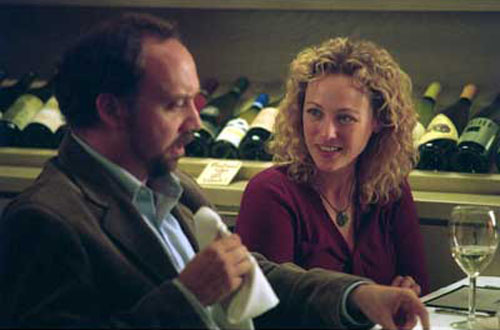
I’m usually not that taken in by movies, as I’ve become a very cynical critic of most movies I see these days. Don’t get me started on the whole remake phenomena that seems to be going on these days. But as I watched Sideways, I realized I was seeing something that was rare. It was not only a very good movie with excellent acting from everyone in it, but the writing was superb. From a writing standpoint, there’s a moment when you’re watching superb writing that you start to realize it, and for me it was pretty deep into the movie because I hadn’t even realized it was affecting me so. But at one point, I even felt the scene hitting me because the writing was so perfect and delivered so well by Paul Giamatti that I was floored by what I was seeing.

The scene was simple, between Giamatti and Virginia Madsen, who were having an intimate conversation about wine. At one point, she asks him why he loves Pinot, and it starts off as such a simple response before it turns into a metaphor for the character Miles, who Giamatti plays. He talks about how the Pinot is a red wine grape that struggles for survival, and unlike the Merlot, he appreciates everything that grape goes through as it can only survive in specific climates and areas but manages to succeed and produce a wonderful tasting wine as a result of its survival. The lines that Giamatti delivers in this scene were so powerful and so poignant that I found myself amazed that this practically appeared from nowhere yet seemed so perfect for the moment that served as its introduction.

When the movie was finished, it made me wish that so many other movies would even attempt a smidgen of the brilliance that existed within this script, but then I realized that so many other movies would shove themselves out of Hollywood’s doors and we’d have to wait for something as wonderful as the writing of that movie again.

The Illustrious iPad 2

Yesterday, Apple did its big announcement of the Ipad 2. Basically, after all is said and done, it’s the original iPad with a few extra bells and whistles. Or the same bells and whistles, but they made the bells chime longer and the whistles a little louder. What was probably more interesting was the fact that Apple is so paranoid about the people that will be replacing Steve Jobs when he retires/dies that they brought Jobs out of sick leave to make his usual announcement. This does not bode well for the future of Apple if they can’t even let the man rest long enough and let his successors actually try to succeed.

Having said all of that, I thought I would then address the Ipad 2 itself. Without getting into the details of the device, like it has the whole camera thing, supposedly a better screen (that might not be immediately available) and, well, nothing else that makes me want to go out and buy one. What is significant about the Ipad itself is that nothing announced so far has me anxious to want to go out and buy one. Yeah, I’ve been in Best Buy a few times where I’ve played with one to see how cool it is, but after I’m done playing with it, I realize that it doesn’t do anything that I don’t already have covered. And unlike my iPhone, it doesn’t combine enough OTHER things that I might want to add it to my toys to replace stuff that has become too encompassing.

And that is definitely the problem of the Ipad. There’s nothing about it that causes me to think it’s worth buying an actual tablet computer. And that’s the problem that Apple is facing in the long haul. Right now, it owns the tablet market, but it is still trying to build a “need” rather than a curiosity for that market. In olden days, when every house has an oven, there was this new device called the microwave oven. And it took a lot of convincing to “convince” housewives that they needed the gadget because an oven was capable of doing everything the new device could do. However, a media campaign that could have riveled the attack at D-Day managed to convince the average American that it was now a need, not a curiosity, or something for the rich only.

That is what the tablet still has to do, and it’s not succeeding. Sure, Apple is selling a lot, but Apple sells a lot of a lot of things that don’t become household givens. Until tablet companies do something that convinces the average person, like me, that we should want and need one of these gadgets, most of us are going to be sitting on the sidelines laughing at the people who bought one but still have no major need for one.

That is the press conference that Apple needs to succeed at. So far, they haven’t done it. As a matter of fact, Apple has recently done everything possible to destroy its own little niche market by trying to own that market completely through draconian rules and charges that benefit Apple only, cutting out other companies from investing in the Apple dynasty. As long as that keeps happening, you’re going to have a lot of people thinking, well maybe I don’t need the Apple one, so they’ll look at the other companies and then suddenly realize they don’t need a tablet at all. So far, the tablet hasn’t been the success that spin doctors really want you to think it is. The majority of Americans haven’t bought into it. A lot of people have, but a lot of people doesn’t translate to market saturation or even market itemization. It’s a gimmick right now, and as long as it remains in that category, it’s going to stay a gimmick.

Now, I know there are people reading this who are thinking, “hey, I bought one and I love it.” That’s fine, but you’re the outliers right now who Apple and tablet companies want to use to convince everyone else that their product is relevant. So, you need to start doing that and earning your pay you’re not receiving from a company that wants to get as much money out of you as possible by limiting your options in getting the best bang from your product. So do their dirty work for them. That’s kind of how the game works. For them. Be the tool they need you to be.

I’m Getting Really Tired of Salespeople Making Shit Up

I bought a Nook Color today from Barnes & Noble, in the store itself. It cost me $250, plus another $30 for a cover, but came to about $300 including the tax. It was somewhat of an impulse buy, although I have been thinking about it for a few days now. You see, I don’t really need one. Recently, I bought an Amazon Kindle, and I can use that to read most ebooks that I want to purchase. However, I thought it would be nice to buy a color ereader for when I wanted to read magazines or maybe an occasional graphic novel.

The big problem for me was that I don’t have wifi at home. I have it at work, but I want to be able to download books at home and read them there, not have to go downtown to download my books and then come back home. The sales dude at Barnes & Noble, when I asked him about this, said, “oh, it’s easy. All you have to do is just plug it into your computer and then move the book over to the reader.”

The reason why I bought the Kindle 3g version for $189 instead of the wifi version for $139 was because of that problem. And I’ve been happy with the Kindle since.

So, I get home, set up the Nook, and sure enough I can’t even register it because I don’t have wifi. When I finally read through the tech information on the Nook Color, turns out that unless you have wifi, you can’t download anything. At all. No 3g, no using it through your computer (as the guy specifically said it could), nor any way of using brainwaves to magically make the text appear on the Nook either.

So yet again a fucking salesperson for some company decided that because he didn’t know shit about the product he was trying to sell, couldn’t just come out and say, “You know, that’s a good question. I don’t have the answer t that.” Instead, he had to make shit up and have me walk out of the store with a purchase that doesn’t do what the stupid fucker said it could do.

This is a karmic payback. I know it is because earlier, I was in Best Buy with Jason, and a whole bunch of Best Buy blue shirts kept coming up to me and asking me if I needed help. I said no. But one really cute girl wearing the Best Buy blue shirt came up to me and asked me if I needed help while looking at a Canon camera. I let her go on and even give me misleading information because she was cute and I didn’t feel like sending her away. Therefore, the karma gods have responded to my letting that one person go without revealing her for what she really was, all because she was cute.

I shall not make this error again, oh great karma gods. No salesperson shall escape my wrath ever again, no matter how cute she is. Well, unless she smiles at me and…NO, I will not stray from the path again!!!

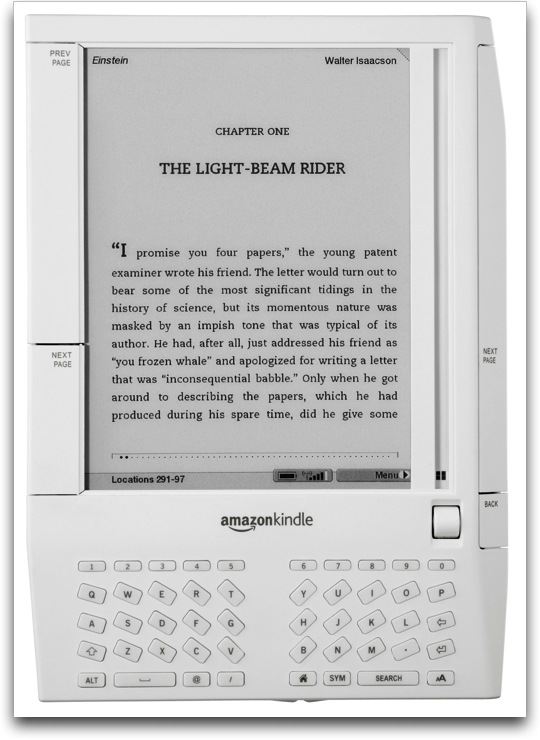
Why the Kindle never took over the world

I was in Best Buy this evening, and I was looking an iPad. I wasn’t planning to buy one, but they had three models of it on display, so I decided to take a few minutes to see if it was really an impressive product. None of the main features of it caused me to be all that impressed. And then I started looking at the iBook reading section of it (they happened to have Stephen King’s Under the Dome installed on it, which is ironic because I was planning on buying that on an electronic reader the second I got one (as I really don’t like lugging that HUGE book around, even though I currently own it). Wasn’t all that impressed. I didn’t see anything about it that the Kindle didn’t already do.

Which got me thinking. I don’t own a Kindle right now, but I do have a Kindle reader app on my iPhone. So, I can actually read Kindle books on my iPhone.

Which then got me thinking even further. I started to wonder why Amazon’s Kindle hasn’t made the impact that it probably should.

Let me explain. The Kindle is an excellent device for what it does. From the reviews I’ve read about it (including the testimonies), it is a great reader. Unlike the iPad, it doesn’t suffer from the sun glare if you’re using it outside, and it’s very much like an actual book in that you can read it for hours and not get uncomfortable like you will if you’re reading a computer screen (something practically every other e-reader suffers from). With that in mind, you’d think that the Kindle would be selling like hot cakes. So, why isn’t it?

Well, the answer to that question is found in Amazon’s strategy itself. And it’s one of the most bizarre strategies I’ve ever seen for a company that is trying so hard to set the standard for e-readers.

You see, Amazon wants to corner the market on e-readers and e-books, much like Apple has tried to corner the market on music with its iTunes platform. And Apple would have succeeded if it had done it earlier, but Apple put out iTunes AFTER there was already an MP3 market for music established. People were already burning CDs to MP3s and putting that music on MP3 players. Apple came along and then tried to corner the market on something that was already out of control. And surprisingly, they actually got their foot in the door, but it’s a door that’s been wide open for a very long time.

But books are a different story. There has literally been no e-book market because each company that puts out a reader is a company that has no ability to corner the market because controlling the reader doesn’t also mean controlling the content. And that’s where they all fail. But Amazon had a chance to do it because it is probably the one company out there that has a huge market that serves the reading community. If they would have put out an e-reader and made it easily available, they could have owned the whole e-reader market. And they almost did when they released the Kindle, but they then did one of the stupidest things they could have ever done. They made it so you had to buy the Kindle directly from them on their site.

And that practically killed their chances for world domination. I think of myself as a good example to explain why this was such a failure. I buy books from Amazon all of the time, but I refuse to buy a Kindle, mainly because I’ve never seen one in person. I’ve never held one in my hands. In other words, Amazon wants me to buy their equipment unseen and untested, specifically on trust alone. And I don’t trust them because they want me to spend $259 or $450-something for an e-reader that I’ve never seen in person before. And they’re asking a lot of people to trust them and buy their product without ever having a chance to test it. Unfortunately, that’s a business plan doomed to failure. Sure, they’ll sell a few, but they’re not going to sell the number they need to in order to gain the market share they want and need.

So, Amazon is mainly going to have to focus on trying to get people to buy the books they sell online through their site as Kindle books, but they then made it possible for anyone to have their own Kindle-like product, so they made it even less possible that people are going to buy a physical copy of a Kindle. Which then means someone who has a Kindle reader, but not a Kindle, probably has a device that can then probably handle other programs (or apps) as well, which means any company that puts out a book in a cheap format can easily gain their business.

Apple has now jumped into this market and is trying to create its own iBookstore which it hopes to control like the iTunes marketplace. Not going to happen because there are already so many other more trusted places to get book content that Apple is never going to be the “go to” place for that. It’s just going to further saturate the market with more places to find e-reader books, and thus, it will make it that much harder for e-books to take off because there will not be any one format. People will become so frustrated with trying to tap into this market that they’ll just consider it one of those unrealized areas of content and continue to buy books in hard copy.

But Amazon could have won the war right from the start if they would have done one thing, and that’s license other companies to sell their Kindles. Imagine the business they would have gained if they would have had Best Buy selling Kindles. If they would have dropped the price to about $199 and then put them in every Best Buy, they would practically own the e-reader business across the country, and who knows….the world. But they didn’t do that. There were no apps being made for the Kindle, so the only way to read books on it would have been to buy them from Amazon. It was a win-win situation, but they didn’t think it all of the way through.

Instead, we have more and more readers coming out and no way to figure out how to get the books onto those readers, so those readers are going to fail overall, and manufacturers will figure that it was the customers not wanting to buy books for devices, when in fact it was a failure of the devices to capture an audience that was willing to then buy content.

That’s why the Kindle never took over the world, even though it probably could have.