Tag Archives: civil war

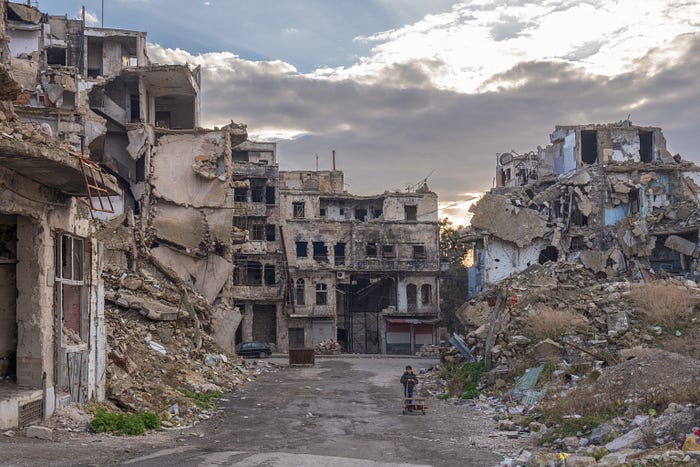
Is the United States Heading Towards a Civil War?

licensed from Adobe Stock

As someone who did his doctoral work in political science (and then subsequent graduate work in communication), let me tell you a secret that people almost always miss when it comes to the concept of civil war: No one EVER sees it coming. No one.

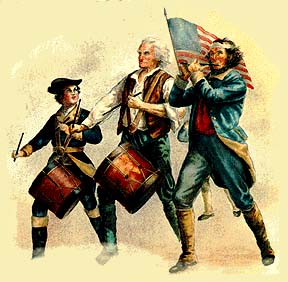
During the US Revolutionary War (which could be considered a Civil War as it involved fighting amongst Americans against Americans (as well as the outsiders who were theoretically in charge of the insiders at the time). For the sake of this essay, I’m referring to the people who fought against neighbors. And to make things even more complicated, most neighbors may not even known they were in the middle of a revolution until it was practically over. They were living their normal lives, farming or making products, and their only brush with the knowledge there was fighting might have been Revolutionary soldiers or British conscripts who crossed their lands at one time or other.

Forward just a few years after our conflict, and the French were in the middle of a civil war, often called another revolution. Some say it started because they had seen what had happened to the United States, but regardless, when it happened to the French, most were taken completely by surprise. Even the people who should have been knowledgeable. You know, the people who ended up getting their head chopped off for being in the parties of the people who lost. When Marie Antoinette said: “Let them eat cake,” she was not suggesting a desert choice for dinner. She was oblivious to the fact that things were going to come at her and come at her fast.

That’s kind of how I see things happening right now. The United States has had the luxury of nothing truly bad happening on its shores for over two hundred years. Sure, a bunch of religious fanatics, with connections to ideologies in foreign lands, flew a bunch of airlines into some or our largest buildings. But that’s not what I mean by bad happenings on our shores.

For over a hundred and fifty years, we’ve had nothing serious consume our homeland that threatened the very nature of what we stood for. Other than World War II, which was basically a challenge to Europe and the Pacific Rim, we’ve had it pretty lucky with most of our conflicts stemming from U.S. attempts at enforcing Marshall Plan-like proclamations. But those rarely threatened the daily lives of American citizens.

However, right now, we seem to be heading for conflicting territory in our future, the kind of mixed narrative where no one knows where it might end up, and any guess might just be more dangerous than saying nothing at all. In most civil wars, and I’m talking about a history of them from all corners of the globe, they happen for reasons you can never predict, and they explode in ways that no one can be sure they won’t end up under a guillotine or at the end of a firing range.

Civil Wars in Africa and East Asia have resulted in some of the worst atrocities imagined where common citizens were picked out of common groups and executed. Sometimes, people are killed for just looking one color or for having an occupation that someone believes to be a future threat.

But here’s the secret: The usual response is that “oh, that’s just in Africa and East Asia!” But here’s the thing: It’s not about where these things have happened; it’s about how they’ve gone from military targets to civilian targets. And what people don’t want to believe is that it’s not relegated to Africa and East Asia.

The United States’ citizenry has a unique history of murdering its own. In the United States, we have gangs that coordinate racial, ethnic, racist, religious and sometimes just local bullies. Historically, they have targeted less defended populations and harassed and/or killed them.

What is to stop anyone from thinking that these types of organizations, once there is rationale for the elements of civil war, won’t take it upon themselves to target those same demographics now that they have a justification for going after them? That’s pretty much how it’s always happened in the past. There are documented cases during a 19th century Civil War in France where shopkeepers used their ties to the leaders of a winning side (at least during two year periods of control) to target shopkeepers who were in competition with them, killing them so that they would no longer have to compete. That’s pretty much capitalism at its worse attribute.

Right now, the United States has split down the middle in a way not seen in the 1860s. Sadly, most people don’t realize that this isn’t new. The U.S. has always had this division. We just didn’t have the capability of recognizing it with some amount of immediacy. Up until now, we had mass communication, but that mode of speed was contained mostly by media and academics. Now, everyone, through social media, has instant communication. People who hate other people are now in contact with people who feel the same way, and they’ve become quite vocal.

For a few decades, we were generally okay because at least our politicians weren’t stupid enough to exploit this hatred Americans have towards other Americans. Now, that cat is out of the bag. And I don’t think anyone can figure out how to put the cat back into the bag, or even if America might bounce back to the way it was before the bag was opened.

We’re heading for a Civil Awakening, and whether that leads towards a Civil War is anyone’s guess, but from what I can see, NONE of the politicians trying to lead the country are capable of keeping it from happening. What we need right now is a completely different voice from what we’ve been hearing. We need someone who has a future vision of America where everyone benefits, not just one group of people rather than another group of people.

Our political parties are part of the problem. The Republicans represent a party that’s only desire is to benefit very rich citizens. Pretending to be for the people, specifically Rednecks that drive pick up trucks and wear baseball caps, has been dishonest for the last 60 years when they might have had an argument to make. Unfortunately, the Democrats have a similar problem. They advocate that they are for the lower classes, the middle class, and every disenfranchised demographic that is conceived by all sorts of parameters, but once elected to higher office, they immediately enact laws that protect specifically banks and very rich people. Meanwhile, a minority of their party still tries to advocate for the downtrodden, but not enough of them do in order to justify the appeal for 50 percent of the available votes.

The problem is that the people ONLY have a choice between these two parties. And this leaves a lot of people truly feeling disenfranchised when they become smart enough to realize what is really going on. Sure, they could vote for third parties, but in a two party system our country was built around, most of us are screwed.

And when people recognize they have no voice (and never will), the idea of revolution or civil war starts to sound appealing.

But like I said: If someone new with a completely different vision comes along, and at least one of the parties buys in, we might have a chance. Otherwise, we’ll exist on co-pilot until someone like the orange bufoon comes along with a more serious agenda that takes us right into the arms of an autocracy. And then it’s too late to care because those who do will end up being rounded up.

That’s how it usually happens. And you’ll never see it coming.
The Dilemma of Action or Non-Action in Libya

It probably doesn’t come as much of a surprise to anyone that we’re undergoing a fourth wave of democratiziation in the world right now, with the Middle East being the focus of the current spread. However, what’s not being made much of an issue is timing and how important it is to the success of this particular wave.

When Egypt went through the wave, it was already moved forward enough so that the results were conclusive before any real effort had to be applied. It may not have felt that way if you were living in Egypt, but when it comes to waves of analysis, it was a forward moving mechanism that never had much of a chance of a backlash. Some of the other areas of the Middle East have not been so lucky. Libya happens to be one of these more stubborn areas.

Right now, a skirmish is turning into a full blown civil war in Libya. But you wouldn’t know that if you were in any other place than Libya right now. Qaddafi is fighting for political and physical survival right now, and believe it or not, this is really his make or break time for his future as Libya’s leader.

Which brings me to the influence of outsiders, of which the United States is definitely in this category. Right now, Libya is fighting what could be the start of its civil war, but without assistance from outside, the rebel forces fighting right now might not last much longer. As with many independence movements in the past, western nations now have a chance to influence the future of a nation that is on its way to throwing off the chains of authoritarianism. The important question is: Should the west get involved at all?

Think about that question for a moment because the answer has a lot of huge implications that don’t often get brought up until it is too late. Right now, the United States, and other western governments, can probably make a significant difference by establishing a no-fly zone over Libya and then by escalating to providing assistance to rebel forces, either through supplies and/or through direct action.

But should we? If our sole purpose in life is to develop and establish democracy anywhere we can, then the answer would be pretty obvious. But is that our purpose? Or is our purpose to be completely self-serving, assisting only the interests that directly benefit our nation and its prosperity? Believe it or not, there are many arguments for both sides. In the end, whatever path we choose, it must benefit us in some way, or it’s not a logical path to choose in the first place.

There is a logical argument to not becoming involved at all, even if one is inclined to recognize potential benefits of democracies everywhere. And that’s the axiom that eventually all people are going to have to rise up themselves and throw off the chains of oppressors for themselves. It was the argument used against George W. Bush when he invaded Iraq, claiming a nation-changing strategy was in the best interests of the United States; his detractors claimed that if Iraqis really wanted freedom, it was something they were going to have to pursue themselves, not have handed to them on a silver platter.

The argument is simple. If a people are given a democracy and there is no historical framework for embracing democracy, chances are pretty good that in very little time they will throw it away in the name of security rather than freedom, kind of a reverse Benjamin Franklin-ish claim. However, if they are already embracing the foundations of what leads towards democracy, then the theory is that they don’t need us to push them in that direction because like entropy, they’re going to pursue it themselves as a natural process anyway. It just might take them a little longer than we would have wanted had we pursued the strategy ourselves.

So, using this theory, we would have to argue that the future for Libya could be democracy if its people are willing to make the sacrifices necessary to bring themselves to that situation. If Qaddafi succeeds in suppressing it, then they weren’t ready for it in the first place. But that doesn’t mean that they won’t eventually pursue and receive it. They just weren’t ready at this time.

That’s all fine and dandy if you’re talking theoretics and don’t feel people deserve freedom because not enough of them are capable of achieving it yet. If the opposite approach is valid, meaning that people deserve freedom regardless of the forced servitude status they are currently in, then all means necessary should be used to pursue that state of democracy. This secondary argument points out that slavery is not a positive circumstance for any people just because the dominators have more guns and means to keep their slaves in check. I don’t think anyone would argue that forced slavery is a “good” that any wise people should be living within, and that any means necessary should be enforced to make sure that no one is ever forced into circumstances like that, especially if there is a larger, democratic power out there willing to enforce the idea that freedom is a right for all.

So, the question really narrows down to where we stand on this particular issue. Are we at a point in our own growth that we recognize the inalienable right of all people to live in a society where they are free to choose, or are we still of an older mentality, where we support only what benefits us personally and pretty much cast everyone else out to the idea of every man for himself, until that person can achieve his own better means through personal sacrifice?

I don’t really have the answer to that, but I can point out one thing that is most significant and crucial to the conversation. If we’re going to do something, we need to do it now, because if we wait any longer, the window of freedom will close, and then it all falls back to being talking points and theory.

But what do I know? Really.

When the Revolution Comes Back Home


Revolutions can sometimes look like this

There’s been a lot of talk of revolution lately with the whole Egypt thing. I find it interesting that when we were talking about Yemen, my first thought was that Yemen would probaby be the tipping point for other revolutions because that’s usually what happens, and people didn’t seem to get what I was talking about. My point was that revolutions tend to spread revolutionary ideas to places where people aren’t expecting such ideas to take hold, and when it happens, it happens fast before anyone can see it coming, and usually faster than anyone can make it stop.

Mubarak realized that too late. He saw the waves of revolution coming at him, and instead of responding with an immediate jump into the current, he fought back against it, never seeing the wave as the tsunami that it was. And that’s what normally happens. When the US revolution happened, some French chick told a bunch of peasants to go eat cake. Next thing you knew, she was losing her head in a guillotine, and the monarchy of France was gone. Okay, for history’s sake, Marie Therese may have said the whole cake thing, and not Marie Antoinette, but most people don’t know that, and she still gets the credit for the sentiment, so I’m sticking with that. Rousseau was known for taking a bit of liberty with history, so we’ll just let it go there.

The point is: Mubarak never saw it coming and was so inebriated by his own power that he never saw the end coming. That’s generally how most revolutions play out, quite often with the masses rushing the bastille at the last minute and the monarch/dictator no longer able to hold session with the masses listening to every word, unless they are the “last” words before a beheading.

But this isn’t really a missive to communicate the aftermath of the revolution of Egypt. For all we know, there’s another that might have to take place once the army gets drunk with its new sense of power and ends up never giving it up. I can’t predict those events, so I won’t even try.

What is important is to focus on the wave itself, because revolutions don’t happen in a vacuum. They tend to overwhelm entire areas and spread one after another on the sentiments of rich, glorious freedom. Right now, Iran is shitting a brick because of the revolution that just took place in Egypt. The leaders there are condemning ANY attempt at celebrating or protesting in the name of Egypt or any other country because they’re scared to death with what might happen there. The public stance is that the revolution took place with the overthrow of the Shah in the 1970s. They don’t want to even think about the fact that there might be pissed off Iranians right now who are thinking about freedom. But if that happens, it will overwhelm them, and they’ll never see it coming.

Aren’t revolutions cool?

But what we should be focusing on is something NO ONE in the United States is paying attention to: The United States. We like to think that revolutions can’t happen here, but we’re exactly in the kind of atmosphere where one could spontaneously erupt, and no one will ever see it coming. Half of the country continues to use rhetoric indicating it hates the other half. It’s no longer gentlemen’s disagreements anymore. Half the country hates the other half. And the other half isn’t too fond of the first half. We’re either ripe for a revolution or a civil war. We’re just too sophisticated to believe that such a thing might ever happen here.

Well, I’ve got some bad news for you. More people in this country live in poverty than ever before. There is no direction out of it either. The country itself is heading towards bankruptcy and there’s no solution for that either. The rich and powerful own most of the production and money in this country. The majority of the country consists of people who have nothing and really have very little to lose. Right now, the only thing holding back an insurrection of horrible proportions is that the majority of the people who would participate are on invisible opium, a sense that there’s really nothing that can be done about anything. If these people start to tip in any one direction, you have all of the ingredients you need for an out of control movement that has the capability of becoming all sorts of things unimaginable.

The only thing separating us from that is this facade of “it can’t happen here” which is backed up by a fantasy called “the American Dream.” We’re basically surviving off of a fantasy that’s more believable in Santa Claus and slightly less believable in various variations of God. It really doesn’t take much to push us over to the other side, and all we have to rely on is, again, the idea that it can never happen here, backed up by the history of “it’s never happened here”. Well, at least not in the last hundred years, because it did happen here once. It doesn’t take much for these people to get riled up and start killing each other. For some, it’s a colored flag. For others, it’s an idea. For even more, it’s a realization that there’s nothing left to believe in.

That last one’s scariest of all because even after revolting, you generally don’t end up with a solution that satiates that one.

Either way, it’s been an interesting few weeks lately. Just remember that democratic movements come in waves, so always make sure you have a decent surfboard and lots of sunscreen. The sun can be a real bitch sometimes.