Tag Archives: egypt

21st Century Technology for a World Stuck in the Middle Ages

Sometimes when I read the news, I’m just too amazed to believe that what I’m reading isn’t in fact something from the Onion, rather than from the actual news. The other day, I caught the story where an Egyptian general, who is still a general today, indicated that female protesters who were arrested were administered virginity tests because, and this part still floors me, they wanted to make sure that when the women claimed they were raped, they could be proved liars because:

“We didn’t want them to say we had sexually assaulted or raped them, so we wanted to prove that they weren’t virgins in the first place,” he told the American network. “None of them were [virgins].”

What really gets me is the gall the guy had to actually make some kind of in your face comment that somehow any claims of rape would be false because they weren’t actually virgins, the translation meaning that in Egypt, a woman can’t be raped if she’s not actually a virgin. Think about that for a second. Now think about it for a minute. Did any more time somehow make that come off as making any more sense than the ridiculousness of when you first read it? I would hope not. Or you’re a part of the problem, and you really should be reading comic books instead of this blog. No, I take that back. Comic books shouldn’t get that kind of an insult.

Every day, I read more and more ridiculous stories like the one I just mentioned, and every day they just keep on coming. It’s like we don’t learn anything, and the stories just get worse. To add even more insult to this injury, I can’t even feel comforted by saying, well, that just happens in some obscure part of the world. Way too often the stories are coming right from the United States, where you read of some politician who makes some kind of statement that you feel even a general in Egypt wouldn’t be stupid enough to make. Like the subject of abortion. Recently, it’s been used as justification for all sorts of ridiculousness, so that whenever it’s brought up in subject, people throw all sorts of common sense out through the window. Male politicians in this country, who would never advocate that raping a woman is an okay thing, will then turn around and say, “well, it’s probably God’s way” if someone raped a woman and some anti-abortion person doesn’t want to use this to justify why she shouldn’t carry a baby to term, specifically one that came from someone who raped her. It’s like people have a tendency to turn off the “common sense” knob whenever we start talking about political issues.

But when it comes to relations between men and women, this country, this planet, is like some kind of purgatory for the Middle Ages because we’ve stopped learning anything and suddenly no longer think in common sense terms. I’m reminded of the Civil Rights movement, which most people who have some sense of common sense will argue on the right side, but when it comes to offering those same civil rights to gender, suddenly we’re back in Dred Scott days. So few people even realize that at one point, African-Americans were finally able to gain the right to vote, specifically through an alliance they made with women, who put off their own struggle for equality by dealing with the race issue first. But when it came to the Equal Rights Amendment, suddenly African-American men immediately remembered they were men first before being black men, and they turned completely against the same people who offered them assistance in their most needed hour. There’s something about gender that people just don’t seem to get.

In the 1970s, there was a huge battle in gender roles, mainly because men didn’t seem to see any actual issue when it came to rape. Believe it or not, in the 1970s, a woman had to prove that she wasn’t a slut before she was able to prove that someone may have taken liberties that he shouldn’t have taken. But you’d think that we’d gotten over that. Instead, every now and then, you’ll see some court case appear where some company is being sued by a group of women because it is STILL acting like its mentality is stuck in a loop in the 1970s, not the 21st century. And people will STILL side against women, as if the issue is brand new. And then you’ll get sniping from other guys who start to yell “reverse discrimination” and all sorts of other things, mainly because there’s still this belief that women need to be in the kitchen making dinner, or in the bedroom making babies. It’s amazing how quickly we fall into these roles yet again.

Anyway, I found myself reading the newspaper today again, and I began to wonder if I was stuck in a time loop again. But I guess I’m not. I have a feeling this is going to be the way things are for a very long time to come. So women, I guess you’re going to just have to learn to live with it, because apparently, I’m the only one who seems to care.

What is the Future of Government in a Twitter/Facebook World?

We keep hearing stories of how governments are being toppled by people armed with Twitter and Facebook accounts. While these accounts keep forgetting to point out that you need more than Twitter or Facebook to topple an oppressive government, what we should take from these examples (like Egypt, Tunisia, currently Libya and possibly a future Iran) is that revolutionary movements have been assisted by these social networking technologies. And that’s no small deal.

What doesn’t get addressed is something I find even scarier, but seems to be completely off the radar (or gps) of everyone involving this issue. What these technologies definitely do is provide immediate access to higher up entities than have ever been experienced before. What do I mean? In the olden days, a king communicated with his people by throwing up broadsheets that people would read by wandering out into the village square where they were posted. If they were lucky, a town crier would yell out the messages to people as well, which mainly assisted a population that was generally illiterate. As education has emerged and moved from the upper class to the middle class and now finally to all of the classes, people are capable of reading their own messages, so that town cryer is no longer necessary. And because technology has emerged alongside this development, people are now able to receive instanteous communication from higher-ups. This was the paradigm that brought us up and through the 19th and 20th centuries

But Facebook and Twitter also do something else that 19th and 20th century technology did not allow. Instead of just reading messages from leaders, we now have the innate ability to communicate BACK to our leaders. Add email to the mix, and our ability to actually speak to a previously untouchable leader has completely evolved into something kings and queens never imagined (and certainly never wanted). Today, we are moving from a receptive community to a community that is able to push rather than just receive.

What are the implications of this? Well, for one, it means that our need to rely on government is quickly diminishing. In the old days, we had government developed for us because basically we weren’t smart enough to maintain affairs on our own. That’s not the case today. In an enlightened society, or one that may soon be one, the need for government is minimized, which means that those people who have gained access to the halls of power are now seen as oppressive entities rather than those who serve the public good. Right now, we have a debate going on between Congress and the President of the United States as to whether or not government is even necessary (they’re thinking of shutting it down because they can’t pay their bills). What no one is addressing is the reason why this is happening. Those who advocate big government are pretty much behind the idea of needing government to take care of every need and desire, and I’d argue they’re not wrong in that a lot of people DO need government, but there is another segment of society that is slowly divorcing itself from the constraints of government, and unknown to a lot of average people, a whole bunch of them were actually elected to national office. We call them the “Tea Party”, and even though progressives use them as the butts of their jokes. a real movement is taking place right now in this country that should be seen as very dangerous to the natural order. If you want to understand why a lot of Republicans believe that government should be shut down, perhaps people should actually listen to the Tea Party instead of just making up jokes about them and figure no one takes them seriously.

Personally, I think the message that is being put out by the Tea Party is premature, in that I don’t believe the country has moved to that level of sophistication yet. Yes, believe it or not, I actually see their arguments as highly sophisticated; unfortunately, the ones receiving the majority of attention are the most unsophisticated ones imaginable, which is ironic just on that level alone. Only about 70 of them are in power right now, and that’s nowhere near enough of them to make the impact they want to make, so all they’re capable of doing right now is disrupting government, rather than shutting it down.

But what should be seen is the longer term implications from ideas that they do espouse. Our Twitter and Facebook technologies have actually developed movements that coincide with this attitude of the people believing themselves to be superior to government. Granted, another irony is present as well, as most of the Tea Party thinkers are usually way behind the learning curve when it comes to emerging technology, but that’s really for criticism and derision more than an argument. What we should be focused on is that that these types of movements (the usage of technology in its ability to supplant government rather than supplement it) tend to grow, not go away.

My more important question is the one that fronts this entire essay: What is the future of government in a Twitter/Facebook world? In other words, if we finally reach a point where people feel they are on the same level as government, rather than recipients of messages from government only, do we present a new paradigm for the future? Essentially, does this equal status present a situation where people can finally rise above government, believing themselves to be superior, and thus, believe government should be eliminated, or at least changed drastically to reflect the submission of government to the people, as was originally intended by the Founding Fathers? Or do we end up becoming the enemy of government, which will hold onto its last grip of power until finally removed by those who have deemed it no longer worthy?

Personally, I don’t think anyone is thinking this way yet. That’s okay. Rome wasn’t built in a day. Although it was destroyed in one.

Twitter: The Technology Everyone Uses Yet So Many People Hate

Recently, I’ve gotten into the whole Twitter thing. Before that, I was strictly a blog guy who swore he would never really get into Twitter. But a few years back, I opened up a Twitter account because I’ve always been one of those “well, everyone else is doing it, so I should, too” kind of guys. Like most people who join Twitter, I followed a few people, waited for the throngs to follow me, realized no one was going to follow me and then just stopped using it. I figured, like so many other people do, that it obviously doesn’t work because it wasn’t working for me.

Yet, since then, a few nations, including Egypt, collapsed because of the use of Twitter. No matter how I tried to ignore the story, it was HUGE, and the fact that this strange technology was used to bring down a powerful dictator really was hard to pretend it wasn’t this massively large elephant in the corner, practically taking up the whole room. So, recently, I decided I would go back into the technology to see if maybe I might have been missing something.

What I have discovered is that there’s a lot of very interesting information that gets shared on Twitter, but you have to be patient to realize it. If you go into the game with the thought that you’re going to get instant satisfaction or quick results, you don’t understand Twitter. And I didn’t understand it. Now that I’ve started to follow a bunch of people, I’m starting to realize that it’s a pretty interesting way to view the world. Therefore, I’ve decided to give some advice to those of you who may be thinking about getting into it yourself.

1. Follow people you are really interested in knowing more about. This is really important because one of the mistakes I was making was trying to “sell” me and then getting people to start following me. It rarely happens. It actually looks desperate, and who wants to follow someone who is the equivalent of the loser in a bar trying to pick up on anything that walks in? No one does. However, what I did start to discover is that because I’m a writer, and I’m interested in all things writing, I’m going to find a lot of interesting people to follow who actually might have useful information. You also quickly discover who is just there to use it as a marketing tool and who is there to use it as a communication vehicle. Some writing Twitterers I followed, like Publisher’s Weekly, have interesting information they share with their followers. Others, which I won’t name cause this isn’t really a “diss” kind of article, weren’t all that helpful and turned out to be really annoying more than anything else. The hardest thing I found myself having to do was unfollow someone, but sometimes, you need to just because the amount of spam that someone clutters up your channel with can be overwhelming, especially when it’s not helpful.

2. Some people are on Twitter because their egos need to be checked. A lot of celebrity Twitterers are like that, and it’s unfortunate. But it also tells you a little more about them and lets you realize that you’re probably better off avoiding them. One person I started following in the beginning was Felicia Day, who is the creator of the series The Guild. She doesn’t Twit that often, but when she does, it’s usually interesting and worth following. About half of what she has to say is interesting. Mindy Kaling, however, who is the girl who plays the Indian girl on The Office, I thought would be interesting and funny to follow. Personally, she’s not. I found her attempts at humor to be really attempts to try too hard to be cool, and pretty soon I’m probably going to unfollow her. An interesting celebrity I’ve been following has been Wil Wheaton, who is the man who played Wesley Crusher on Star Trek: The Next Generation. I haven’t come to a decision on him so far, as I’m suspecting he’s still looking for validation, as I noticed when some of the senior members of the Star Trek franchise were twittering and left him out, and he actually made a bit of an appeal last night, practically begging for attention. He’s an interesting case because he tends to float between a Felicia Day (interesting to follow) and Mindy Kaling (not worth the time). So the jury’s still out on him. However, it should be pointed out that if you’re hoping to be followed by a celebrity, or even have one actually pay attention to anything you write in response, it rarely happens. I used some of my best funny material in responses to Felicia Day, and I was pretty much ignored, which is probably no different than it would have been had I met her in public. Unfortunately, the lowly among us remain lowly.

3. If your goal is lots of marketing potential, then yes Twitter is a great tool to use, but you’re going to have to put in a lot of work and a lot of time before it ever pays off. If you spam your messages into the channel, people will dump you in a heartbeat, which means you have to use the technology to actually communicate. And like most avenues of communication, if you’re only projecting and not listening, people stop listening to you. Granted, the celebrities still get attention because they’re celebrities, but the average person, like me, is only really going to get attention as long as he has something interesting to say. So if you’re just there to build followers, you’re going to have a hard time unless you can provide something interesting to say. I started off with very few followers, and slowly, I’m building a bit of a following, but I’m not fooling myself into believing I’ve somehow tapped into the Duane-amaniacs. Therefore, I have to make sure that what I have to say is as interesting to me as it is to them, kind of like regular writing is. People avoid spam and really want something interesting to read. Otherwise, why follow you?

4. The social implications of Twitter are huge and have already proven themselves to be excellent. Like Egypt discovered, Twitter gives the average person a voice he or she might never have had before. When people were looking for information about Egypt and the revolution, well, that was an audience just waiting to hear what had to be said. Twitter was perfect for that. What happens to that Twitter audience now is probably even more interesting, but I doubt too many people will study that as researchers always look for that pivotal event, not the continued ramifications of a pivotal event that has run through its play in the media.

5. The complainers and the critics. There was an interesting article today on CNN’s site about the 5 ways Twitter changed how we communicate. What was even more interesting were the comments from the readers. Most of them were from what I like to call the old grandfather who lives in the house that no kid likes to go near, constantly yelling, “damn kids, get off my lawn!” Rather than read the article and be interested in the new technology, the haters showed up and posted responses like Shawn777: “Twitter? I don’t even use that crap” and Guest119 ‘s “200 years from now, provided humanity doesn’t blow itself up with nukes, Twitter will not even be a footnote in tech history.” My personal spin on this is that the majority of the complainers are people who tried it out on a weekend, didn’t get a million followers and then figured it was a dead technology.

6. What is the future of Twitter? Who knows? Certainly not me. I’m pretty late getting on the bandwagon as it is anyway. I do know that somewhere down the line another technology will replace it and be the next “in” thing. I’ll probably be late for that one, too. But right now, Twitter is serving as an interesting way to communicate, and as a writer and a communications professor, it’s hard for me to continue to ignore it.

For the record, if interested, follow me on twitter at DuaneGundrum.

The Dilemma of Action or Non-Action in Libya

It probably doesn’t come as much of a surprise to anyone that we’re undergoing a fourth wave of democratiziation in the world right now, with the Middle East being the focus of the current spread. However, what’s not being made much of an issue is timing and how important it is to the success of this particular wave.

When Egypt went through the wave, it was already moved forward enough so that the results were conclusive before any real effort had to be applied. It may not have felt that way if you were living in Egypt, but when it comes to waves of analysis, it was a forward moving mechanism that never had much of a chance of a backlash. Some of the other areas of the Middle East have not been so lucky. Libya happens to be one of these more stubborn areas.

Right now, a skirmish is turning into a full blown civil war in Libya. But you wouldn’t know that if you were in any other place than Libya right now. Qaddafi is fighting for political and physical survival right now, and believe it or not, this is really his make or break time for his future as Libya’s leader.

Which brings me to the influence of outsiders, of which the United States is definitely in this category. Right now, Libya is fighting what could be the start of its civil war, but without assistance from outside, the rebel forces fighting right now might not last much longer. As with many independence movements in the past, western nations now have a chance to influence the future of a nation that is on its way to throwing off the chains of authoritarianism. The important question is: Should the west get involved at all?

Think about that question for a moment because the answer has a lot of huge implications that don’t often get brought up until it is too late. Right now, the United States, and other western governments, can probably make a significant difference by establishing a no-fly zone over Libya and then by escalating to providing assistance to rebel forces, either through supplies and/or through direct action.

But should we? If our sole purpose in life is to develop and establish democracy anywhere we can, then the answer would be pretty obvious. But is that our purpose? Or is our purpose to be completely self-serving, assisting only the interests that directly benefit our nation and its prosperity? Believe it or not, there are many arguments for both sides. In the end, whatever path we choose, it must benefit us in some way, or it’s not a logical path to choose in the first place.

There is a logical argument to not becoming involved at all, even if one is inclined to recognize potential benefits of democracies everywhere. And that’s the axiom that eventually all people are going to have to rise up themselves and throw off the chains of oppressors for themselves. It was the argument used against George W. Bush when he invaded Iraq, claiming a nation-changing strategy was in the best interests of the United States; his detractors claimed that if Iraqis really wanted freedom, it was something they were going to have to pursue themselves, not have handed to them on a silver platter.

The argument is simple. If a people are given a democracy and there is no historical framework for embracing democracy, chances are pretty good that in very little time they will throw it away in the name of security rather than freedom, kind of a reverse Benjamin Franklin-ish claim. However, if they are already embracing the foundations of what leads towards democracy, then the theory is that they don’t need us to push them in that direction because like entropy, they’re going to pursue it themselves as a natural process anyway. It just might take them a little longer than we would have wanted had we pursued the strategy ourselves.

So, using this theory, we would have to argue that the future for Libya could be democracy if its people are willing to make the sacrifices necessary to bring themselves to that situation. If Qaddafi succeeds in suppressing it, then they weren’t ready for it in the first place. But that doesn’t mean that they won’t eventually pursue and receive it. They just weren’t ready at this time.

That’s all fine and dandy if you’re talking theoretics and don’t feel people deserve freedom because not enough of them are capable of achieving it yet. If the opposite approach is valid, meaning that people deserve freedom regardless of the forced servitude status they are currently in, then all means necessary should be used to pursue that state of democracy. This secondary argument points out that slavery is not a positive circumstance for any people just because the dominators have more guns and means to keep their slaves in check. I don’t think anyone would argue that forced slavery is a “good” that any wise people should be living within, and that any means necessary should be enforced to make sure that no one is ever forced into circumstances like that, especially if there is a larger, democratic power out there willing to enforce the idea that freedom is a right for all.

So, the question really narrows down to where we stand on this particular issue. Are we at a point in our own growth that we recognize the inalienable right of all people to live in a society where they are free to choose, or are we still of an older mentality, where we support only what benefits us personally and pretty much cast everyone else out to the idea of every man for himself, until that person can achieve his own better means through personal sacrifice?

I don’t really have the answer to that, but I can point out one thing that is most significant and crucial to the conversation. If we’re going to do something, we need to do it now, because if we wait any longer, the window of freedom will close, and then it all falls back to being talking points and theory.

But what do I know? Really.

When the Revolution Comes Back Home


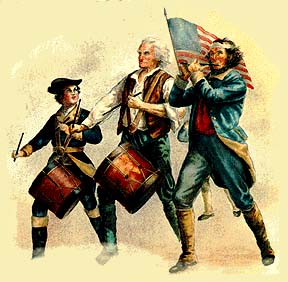
Revolutions can sometimes look like this

There’s been a lot of talk of revolution lately with the whole Egypt thing. I find it interesting that when we were talking about Yemen, my first thought was that Yemen would probaby be the tipping point for other revolutions because that’s usually what happens, and people didn’t seem to get what I was talking about. My point was that revolutions tend to spread revolutionary ideas to places where people aren’t expecting such ideas to take hold, and when it happens, it happens fast before anyone can see it coming, and usually faster than anyone can make it stop.

Mubarak realized that too late. He saw the waves of revolution coming at him, and instead of responding with an immediate jump into the current, he fought back against it, never seeing the wave as the tsunami that it was. And that’s what normally happens. When the US revolution happened, some French chick told a bunch of peasants to go eat cake. Next thing you knew, she was losing her head in a guillotine, and the monarchy of France was gone. Okay, for history’s sake, Marie Therese may have said the whole cake thing, and not Marie Antoinette, but most people don’t know that, and she still gets the credit for the sentiment, so I’m sticking with that. Rousseau was known for taking a bit of liberty with history, so we’ll just let it go there.

The point is: Mubarak never saw it coming and was so inebriated by his own power that he never saw the end coming. That’s generally how most revolutions play out, quite often with the masses rushing the bastille at the last minute and the monarch/dictator no longer able to hold session with the masses listening to every word, unless they are the “last” words before a beheading.

But this isn’t really a missive to communicate the aftermath of the revolution of Egypt. For all we know, there’s another that might have to take place once the army gets drunk with its new sense of power and ends up never giving it up. I can’t predict those events, so I won’t even try.

What is important is to focus on the wave itself, because revolutions don’t happen in a vacuum. They tend to overwhelm entire areas and spread one after another on the sentiments of rich, glorious freedom. Right now, Iran is shitting a brick because of the revolution that just took place in Egypt. The leaders there are condemning ANY attempt at celebrating or protesting in the name of Egypt or any other country because they’re scared to death with what might happen there. The public stance is that the revolution took place with the overthrow of the Shah in the 1970s. They don’t want to even think about the fact that there might be pissed off Iranians right now who are thinking about freedom. But if that happens, it will overwhelm them, and they’ll never see it coming.

Aren’t revolutions cool?

But what we should be focusing on is something NO ONE in the United States is paying attention to: The United States. We like to think that revolutions can’t happen here, but we’re exactly in the kind of atmosphere where one could spontaneously erupt, and no one will ever see it coming. Half of the country continues to use rhetoric indicating it hates the other half. It’s no longer gentlemen’s disagreements anymore. Half the country hates the other half. And the other half isn’t too fond of the first half. We’re either ripe for a revolution or a civil war. We’re just too sophisticated to believe that such a thing might ever happen here.

Well, I’ve got some bad news for you. More people in this country live in poverty than ever before. There is no direction out of it either. The country itself is heading towards bankruptcy and there’s no solution for that either. The rich and powerful own most of the production and money in this country. The majority of the country consists of people who have nothing and really have very little to lose. Right now, the only thing holding back an insurrection of horrible proportions is that the majority of the people who would participate are on invisible opium, a sense that there’s really nothing that can be done about anything. If these people start to tip in any one direction, you have all of the ingredients you need for an out of control movement that has the capability of becoming all sorts of things unimaginable.

The only thing separating us from that is this facade of “it can’t happen here” which is backed up by a fantasy called “the American Dream.” We’re basically surviving off of a fantasy that’s more believable in Santa Claus and slightly less believable in various variations of God. It really doesn’t take much to push us over to the other side, and all we have to rely on is, again, the idea that it can never happen here, backed up by the history of “it’s never happened here”. Well, at least not in the last hundred years, because it did happen here once. It doesn’t take much for these people to get riled up and start killing each other. For some, it’s a colored flag. For others, it’s an idea. For even more, it’s a realization that there’s nothing left to believe in.

That last one’s scariest of all because even after revolting, you generally don’t end up with a solution that satiates that one.

Either way, it’s been an interesting few weeks lately. Just remember that democratic movements come in waves, so always make sure you have a decent surfboard and lots of sunscreen. The sun can be a real bitch sometimes.

What it All Comes Down to

I guess it’s time for another update on what’s going on, what’s on my mind, and where I think things are going.

1. My Readership. I suspect I really don’t have anyone reading this blog (my main one). It gets printed also on Open Salon, which might grant me a few readers there, but even there it’s a crap shoot as to whether or not anyone actually reads (or cares about) anything I have to say. I also import my blogs to my Facebook profile, and even though I have a bunch of “friends” there, I suspect practically no one reads anything I have to say there either.

It’s a real problem for a writer who wants to be taken seriously when no one reads anything he has to say. It gets really frustrating. I mean, Snooki can write a book and it becomes a bestseller based on her outrageous behavior alone, but a consistent writer generally has to kill someone in order to get anyone to read his stuff. And they wonder why so many literary types kill themselves before they ever become famous, often discovered after they blew their brains out over the frustration of trying to actually make it as a writer or an artist.

This means when I post my blog, I get tons of traffic, but I suspect it’s a bunch of bots that are trying to get people to buy their shit rather than actual people reading my blog. My spam filter logs dozens of spam messages a day, which are all the type that say something like: “Read your posting, and I completely agree with you. You should try out this new version of sex medication which can be found at….” Yeah, it gets really annoying and frustrating.

But just because I suspect one of my stuffed animals might be reading this by tapping into my wifi at home, I’ll continue….

2. Snow. I really hate it. I do. I’m not from Michigan, even though I live here. I’m from California, and if I could afford to live there or could have ever found a job there, I would be there right now. I hate the snow. I hate the cold. I turned on my heater two nights ago for the first time (been using an electrical set of heaters all Winter long), and it was so much nicer than just being able to heat up one small room, and not very well either. Even though my electrical heater could get the room up to about 70 or so, it felt like it was 45. I’m now using my real heater, even though it’s expensive as hell. But I can’t take the cold any more. I really hate it here.

3. The Whole Nook vs. Kindle Debate. I’ve written a few articles on this because I bought both a Nook Color and the $189 Kindle 3G + Wifi. I’ve completely given up on the Nook. I had two subscriptions to magazines with the Nook Color (Consumer Reports and the New York Times Book Review). I gave up trying to get the Nook to download Consumer Reports. It would start to download and then just stop. I would check the wifi signal, and it would register as fine. After three days of trying to download a magazine I already paid for, I gave up, cancelled my subscriptions and I will never use the Nook again. Contest over. The Kindle wins. It might not look as nice, but at least I can actually get content onto it. The Nook Color is a piece of shit that should never have been sold to people. I will never recommend it to anyone ever again.

4. Egypt. Things are probably going to get really interesting now that Mubarak went on the air and basically told the protesters: “I hear you, but I just wanted to say go fuck yourselves. Have a nice day.” He’s decided that even though people are out in the streets risking their lives, he’s not leaving. The Army has now backed him, which means that one of two things are probably going to happen. They’ll crack down on the protesters, and this will be one of those sorry moments in human history that people try to forget when talking about how great a people we are, or the people are going to end up going the way of the French Revolution, overthrowing the government and killing Mubarak if he doesn’t escape out of the country first. If you’re a dictator, and you pretty much give the finger to your people when they demand you step down, you really don’t have a lot of options that can play out from that moment on. I mean, all sorts of things can happen, but right now, it’s going to be a slaughter of people unless a whole lot of people back down, and when people are backed into a corner, they usually strike back instead of back down. Unless they’re Americans. Then they either sue you or back down and say that they want to spend more time with their families.

5. Relationships. I don’t know anything about this subject. I’m not in one. I don’t recognize one when I am in one. I don’t even know what women are, although I see movies with them in it, so I do believe they might exist, although I can’t verify it in person.

6. Politics in the USA. We’re going to be heading towards another presidential election with no electable people in the Republican Party, a current president who has done nothing to be reelected, other than make arousing speeches that don’t translate to actual action, and a whole lot of self-important politicians who think they deserve to be the next leaders of the free (in theory, at least) world. Right now, the front runners for the Republican Party seem to be Sarah Palin (the joke that keeps giving), Newt Gingrich (a pompous airbag that comes installed as standard equipment), a just-announced “I’m seriously considering it” Donald Trump (another rich buffoon who thinks that being rich translates to leadership potential), and a bunch of other people no one knows, has ever heard of, or cares one iota about whatsoever. So, right now, I’m calling it a boring presidential election where we reelect Jimmy Carter, um, Obama.

7. The Academy Awards. A bunch of movies I didn’t see, don’t want to see, and don’t care about, are competing for the top honors this year. As you can guess, I’m holding my breath in anticipation.

8. SyFy Becomes Shark Attack Channel. I don’t know when this happened, but my favorite channel (I remember actually asking a television station provider if they carried the SyFy Channel and not caring about any others) went from being a station with original science fiction programming with shows like Stargate SG1. Atlantis, Warehouse 13, Eureka, Battlestar Galactica (then Caprica), some variation of Star Trek, and lots of that sort of stuff. Now, it’s Man-Killing Shark and really bizarre movie of the week crap that stars Erik Estrada as a small town sheriff who is fighting a shark that has grown feet and chases people on the beach, but Estrada, who plays Skip William, is afraid of sharks because a shark killed his family in a drive-by shooting in Compton. Okay, that’s not a real show, but it should be. Who stole my SyFy Channel?

9. The Federal Budget is Out of Control. Um, when has it ever not been? We’re approaching the debt ceiling in February, when they told us that if we didn’t do things right, we’d be hitting that debt ceiling by September. Um, it’s FEBRUARY and we’re already arguing for having to increase the limit. And this is the government that’s trying to FIX the economy? Really?

10. Facebook Went Public. I laughed my ass off when I heard it was going to happen. If ever there was a bubble corporation that has absolutely no value whatsoever being sold for so many billions, I couldn’t find one. At least GM makes cars. At least Microsoft puts out a browser or operating system every now and then. But what does Facebook actually produce? Your content. Your friends. Your information. In other words, not a damn thing. Yet, they’re bad boy of leadership is now a multi-billionaire, and they’ve been launched as a fake IPO (a real one wasn’t done because the SEC would have hit them with all sorts of legal injunctions, which should automatically tell everyone something’s not on the up and up, but even that doesn’t cause people to take notice). Yeah, I use Facebook, but it’s such a non-entity in the grand scheme of things and is really only as important as it is at any one moment, knowing that it can go the way of Myspace in a second. Or like AOL, which still tries to regain some importance. Or sadly, like Blockbuster, that sad commentary of a video rental store that hasn’t realized it was obsolete ten years ago.

11. Verizon’s iPhone. Finally. Not that I want an iPhone on Verizon, but now I don’t have to read 10,000 stories manufactured by CNN about how great it would be to have the iPhone on Verizon. It’s there now. Leave me alone and stop hyping the stupid thing on your news site. Nobody really cares, as we discovered when no one lined up at the early Verizon Store openings that day, letting the event come and go without much fanfare. Nobody really cared.

12. Groupon’s Super Bowl Ad. All of the people who are upset about this incident don’t want to even deal with the ramifications of what really happened. First off, they all got upset at the ad where Groupon poked fun at itself by using the controversy of China and Tibet as its canvas. Well, here’s what they’re not getting, won’t get, and especially won’t ever own up to. The humor went over their heads. Not that they didn’t get it. It went OVER their heads, meaning they had to be smart enough to realize what was going on. Consider the source. It came from the direction of Christopher Guest, who is well known for creating comedy that not everyone gets, mainly because it pokes fun at people who are on stage and represents entire groups of people who when they watch it don’t always realize they’re being seen as the morons they really are because they’re so locked into their own little worlds that they are incapable of realizing the rest of the world sees them as ridiculous. It was the exact same humor used with Groupon, and of course, the people watching it were not Christopher Guest fans. They were Super Bowl fans, which I’m going to go out on a limb here and say we’re talking about two completely different intellectual mindsets here. Fill in the blanks to figure out which one I’m probably insulting here. I don’t really care. I’m not selling ads. Those people just didn’t get it and went nuts against Groupon. Why am I not surprised? I’m also not surprised that no one else is either.

13. Lindsay Lohan’s Theft Charge. Okay, I’ll admit it. I enjoy reading about the many demises of Lindsay Lohan. I don’t know her, I’m not a fan, and I probably shouldn’t care. But it’s like watching a train wreck happen in front of me. I probably should call 911 for help, but I can’t stop watching. I don’t get the same trill out of Charlie Sheen. Nothing about him fascinates me, nor does his drama. Lohan’s, on the other hand, completely fascinates me because I keep thinking that ir probably won’t get any worse, and then it does. I don’t even think she stole the thing, but that’s not even what keeps me interested. What keeps me interested is how someone can take her fame and continue to destroy her career, her future and any support from the community that she might ever have. Just the other day, her legal team says that it’s not going to deal with the allegations in public; they’ll deal with it in court. Then the first day of the trial, Lohan tweets her whole ordeal to the public, trying it out in the public again, even though that’s exactly what they said they wouldn’t do.

I can’t stop watching.

14. Writing. I’m taking a break from my current novel and working on a screenplay. Then I’ll be working on a word text game app that I’m designing for the android platform. I realized recently that there aren’t a whole lot of word text games out there any more, and I think it would be fun to create a new one. I remember how fun they were to create back when we were first designing computer games for the early systems, before graphics took over the industry.

That’s really it for now. If you’re actually reading this, let me know. I’d really like to know that there are people actually reading the blog.
More Common Comments on the Day’s Events

Just thought I would mention that most of my new posts tend to go on Open Salon these days. If you’re following me, that’s probably the best place. Some of my more original stuff appears on my main blog site, and I apologize if some of that doesn’t make it over to Open Salon. I’m discriminatory on where some stuff goes and others does not. Anyhoo. On to the day’s comments….

1. Egypt. There’s really no way to avoid this story right now, nor should we, yet it’s amazing how many attempts are conducted to do just that. In case people don’t realize it, Egypt (or more likely Tunisia) has opened the door to a post-Huntington fourth wave of democratization in the world. For those wondering what I’m talking about, Samuel Huntington’s The Third Wave postulated that democratization occurred in three huge waves over history, starting with the US revolution being the first wave, the period after World War II being the second wave, and the eventual fall of communism (predicted in his book, even though we’re past that period of time now and he was right) was the third wave. I’m anticipating a fourth wave, which was touched off with the collapse of Tunisia, and now with Egypt, there’s every indication that it might create a wave of further democratization in the Middle East.

But there are some important points to consider. Just because an Islamic-based nation (or influenced nation) moves towards democratization does not mean it moves towards more positive relations with the United States. Unfortunately, we’ve been seriously influenced by a lot of statistical inferences over time, like the infamous duality of “no two nations in a democracy have ever gone to war” and “no two nations with a McDonalds have ever gone to war.” Political scientists and media hounds have been repeating those lines for decades, even though neither one of them is completely accurate. They just sound good and make people think that as long as other nations move towards democracy that everything is going to be all right.

Well, the simple fact of the matter is that the United States has a long history of backing some pretty evil people, and it’s in a lot of those places where this fourth wave of democratization is taking place. Just because two nations are democracies does not mean they will be friends. And another misstep of information: Being a democracy does not necessarily mean a system that exists under the economic policies of capitalism. Sure, they can go well together, but it doesn’t mean they have to. We’re just so used to it being that way because that’s what we grew up with. Athens wasn’t really a capitalistic society, and it had the first accepted democracy. So we need to be really careful when we throw around terms, because they bog us down with tiny details that tie our hands when we need to be very flexible.

For those who eschew democracy, or even anarchy, this is an interesting period of time, but we need to realize that just because a people demand democracy doesn’t mean they’re going to get it. The US revolution brought about our democratic republic. But the French Revolution, while it brought about a short period of democracy, also brought about Napoleon and years of dictatorship and warfare. We need to be really careful about these things.

But we should support democracy wherever it appears, even if it doesn’t benefit us personally. I doubt the democracy of Egypt is probably going to be the greatest thing for the United States in the beginning, because we stood by the evil dictators through thick and thin. But after years of supporting their freedom (in the future, not in our past), we might develop a friendship with an emerging democracy. And if we ever want to have good relations with Muslim and Islamic countries, this might be the way to start, because after time a democracy might build a friendship with another democracy once it is discovered that neither harbors any ill will towards the other. But right now, we’re so bogged down in our war on terror, that I don’t see that happening any time soon. There’s too much noise taking place for a truly beautiful song to be heard.

2. The Storm That’s About to Come. Supposedly, there’s a huge storm about to hit the area where I live. I’ve heard predictions of 18-20 inches of snow, winds that will increase the wind chill geometrically and all sorts of weather evil that precede total Armageddon, the Rapture and Elvis Sightings. Fortunately, every storm this season has completely missed us. I don’t know how, but we’ve been really lucky. But they say that by 6pm tonight, Zeus himself will be throwing lightning bolts at stuck cars on the side of the road and Loki will be out doing all sorts of mischief like he normally does in periods like this.

Okay, there’s going to be a bad storm. I’m not looking forward to it. But it’s Michigan. Sometimes, it gets bad. Hopefully, people will be safe and the government will perform as it is supposed to do, and in a few days we’ll all get back to normal again. Then we can all sacrifice a cock to Asclepius, or Xena, or whatever deity or hot chick is appropriate.

3. Charlie Sheen’s Melt Down. Um, supposedly Charlie Sheen went into some drug-induced moment where he asked some porn star actresses he was partying with to move in with him and babysit his kids. Why don’t I ever have weekends like this? I mean, last weekend I was at Costco trying to decide between Honey Nut Cheerio’s and Frosted Cheerio’s. That was the extent of my drama. Not once did “porn star moving in with me to babysit my kids that I don’t have” EVER appear in that dilemma. My life is so boring. This week, he’ll be in rehab with seriously overqualified therapists asking him if he made the right choice, and I have no one to help me figure out if choosing Honey Nut Cheerio’s was really the right choice I should have made. Not that an expensive rehab therapist would know better, but I can’t see the harm in asking a porn star actress for her opinion. I just don’t have any on speed dial like Charlie does.

4. Kim Kardashian is supposedly upset that she posed nude for a magazine. Um, I’m upset I bought Honey Nut Cheerio’s at Costco instead of Frosted Cheerio’s. Sadly, both were consequences of choices we made. I’m just not going to suffer as much due to the results of my decision. Although those frosted cheerio’s sure looked good on that box cover. But at least I didn’t pose nude for a magazine, which means so many more people won’t need therapy next week.

5. I forgot to make my speech about how I don’t care about my students’ grandmothers. What am I talking about? Well, every semester when I go over the syllabus, I usually make a spiel about how I don’t care one iota about the health of any of my students’ grandmothers, meaning that if your grandmother dies during the semester, tough luck. You’re not getting any extra breaks, like taking a week off from school because of poor old grandma’s ailing health. I know it sounds callous, but I don’t really care. My first semester of teaching, it was the number one excuse from students as to “why you need to let me take the exam late”. It then became a part of my syllabus reading where I indicated that if your grandmother was dying, ailing, dead, in jail for robbing a 7-11, accepting an Oscar/Nobel Prize/therapy…I didn’t care. Exams were on a certain date and you needed to show up on those dates or it was YOUR fault for not being there. I forgot to give that spiel this semester, and already I have one dying grandmother and a funeral for a great grandmother that has made it “why you need to let me take the exam late.” Students need to be more original with these things.

6. The Oscars/SAG Awards. I don’t care. Really. I saw one movie out of all of the movies that are up for awards. It was Inception. And I didn’t like it because the blue ray I watched it on was defective to the point of where I couldn’t hear what was going on with 30 percent of the dialogue. It could have been a good movie, but I’ll never know. Didn’t watch a single one of the other movies. Wasn’t interested. So I’m not on the edge of my seat waiting to see if Colin Frith (or whatever his name is) wins for a movie about some stuttering English guy’s speech he gave. Nor do I care if the Dude gets an award for a remake of a John Wayne movie. Or if the chick from the really bad Star Wars movies (the prequels) gets the award for some ballet movie she made. I’ve heard the movie was really good. Okay. Big deal.

And that’s my problem right there. The awards aren’t for us. It’s for them. It’s a big ceremony they put on where THEY dress up, THEY present a bunch of awards, and THEY receive a bunch of awards for things THEY did that helped THEM profit greatly. It would be like going to work tomorrow and receiving awards on television for correcting memos that I do each and every day. So a person made a movie and then got filthy rich off of it. I don’t care. Yet, they feel they need to flaunt it in front of the rest of us. They built a whole industry around a gimmick where a guy used a camera to show trains coming into train stations (where the whole thing started). Some of them are really good. Others, not so much. But with so many important REAL things going on, a yearly event honoring these things seems gratuitious at best. Perhaps they should change the Oscars to present awards ONLY when something so groundbreaking occurs that we all should take notice. Awarding them every year means we award a whole bunch of crappy things because it happened to be the one year when all the great visionaries decided to make a rom-com instead of the Godfather. I’m just saying.

7. Android vs. iPhone. They’re just cell phones. Not artificial hearts. I had an iPhone and now I have an Android phone from Samsung. My reason for switching was because of Apple’s walled garden. But personally I was happier with my iPhone and if they would have fixed it so I could have done something about spam phone calls, I would have remained with them. But in the end, both are just phones. That’s it. You can call them smartphones, but who cares? They’re just phones. People call me on them, sometimes. Other people I call. If they disappeared tomorrow, it wouldn’t be the worst thing ever. Stop acting like they’re curing cancer. They’re just freaking phones.

8. Eva Longoria and Tony Parker divorced. So what? Why do we even care what celebrities do with their personal lives? This reminds me of when Melissa Etheridge came out as a lesbian. One of my friends chided me because I was a fan of her at the time, saying: “Now what are you going to do now that she’s come out as a lesbian?” I stared at him as the moron he was because he somehow felt that information was relevant. It didn’t make her music any less enjoyable. I wasn’t ever expecting Melissa Etheridge to show up at my house and want to have sex with me in the past, so how exactly did this change anything? Now, Shania Twain getting remarried was different. I mean, she’s the foundation of my religion, even if she doesn’t know it, so that was much different.

9. Certain News Sites will ignore Sarah Palin for some announced length of time to prove how irrelevant she is. I’m sorry. Who is she?

10. Stephen King’s The Stand is to be made into a major motion picture. I’m interested, even though I was very pleased with the television miniseries they did of the book. The Stand is definitely one of my favorite books of all time. I liked both the old version and the newer one he released later (some people are very definitive in which one they prefer).

That’s all for now. Wish I had more to say, but my life is really boring.