Tag Archives: Revolution

Is Being Upset Enough to Sustain a National Movement?

The Occupy Wall Street movement is turning out to be a very interesting flashpoint in modern day history. If you follow the news, commentators are going out of their way trying to explain away something they can’t explain by using metaphors and comparisons to previous movements that are completely void of any dichotomous connections. What is simply happening is that something new has emerged, and the media has no way of explaining it.

So, let me explain what is really going on. What we have are a lot of people who are pissed off because the American Dream (or whatever international aspirations they might have if they’re not Americans) isn’t working out as originally sold by the marketers known as government and media. It used to be if you worked hard, put in your time, and did the right things, you would come out ahead, and that your children would end up doing better than you did before. This would continue on for generations until several generations later the new species wouldn’t even recognize the old species.

That works great in theory. However, the theory doesn’t account for the concept of greed. A capitalistic system works really well at bringing the society to a higher level of achievement, but what doesn’t get discussed is that not everyone rises up with the new tide of prosperity. In reality, a capitalistic system is designed to benefit those who are capable of taking advantage of the process, and in a zero sum economy, someone generally has to do horribly bad in order for someone to do horribly well. Socialism is the economic system where everyone comes out equally, although not always at the best they could be (as government isn’t known for raising tides of boats of economies all that well when there’s no incentive to provide for upward mobility). But capitalism is a different animal, and equality has never been a promise, a guarantee or even a necessity. Instead, capitalism promises prosperity for some, and desparity for most others. What we’ve only recently discovered is that 99% is desparity while 1% is prosperity in this zero sum game.

That is why people are pissed. You see, most people don’t want to be part of the losing side of economics. Yet, whenever this gets addressed, the 1% (and the clueless numbers in the 99% hoodwinked by the 1% to believe that they’ll one day have a shot at being one of the 1%) does everything possible to make the 99% sound clueless, making such commentary irrelevant, and even more important: Unheard.

But one thing happened that wasn’t a part of the capitalistic dilemma: Education. Many more people achieved education than a capitalistic system can actually maintain. Oh, this works out well if the education is vocational in nature, in that everyone exists for the purpose of feeding the greedy animal, but if the education is social in nature, and people become made aware, rather than compliant, then there would eventually be a reckoning. It’s somewhat inevitable, although I don’t even think Marx or Hegel predicted it would happen as quickly as it is beginning to occur; they suspected much more saturation would have been necessary first, but who knew?

That’s where we are today. The movement has no leadership because there is no one who can steer a crowd to inevitable collapse. There is no rallying cry that can push people in that direction. And there is really no rallying cry that can push a population back in the other direction once the masses have been unleashed.

So, the question is: Are we there yet? If we’re at the inevitable saturation point that leads to eventual destruction of the capitalistic system, then nothing exists that can push the movement backwards. If we’re not there yet, the people who hold onto the reins of power will continue to use their influence to push the masses back to compliance again. But one thing is certain: There will be no actual compromise because the holders of power cannot compromise without acknowledging that the system was flawed to begin with.

So we’re left with the question of whether or not there is enough anger, frustration and disgust amongst the population to fuel a movement further to a point where changes will actually take place. As collective action theory points out, people will gather together for a common purpose, but if they do not receive a payoff for their efforts, the movement dies until it raises steam again. If they do receive a payoff, they may settle down, thinking they achieved their goals but not really satisfied (meaning they will eventually have to rise again and start over from scratch), or they will be so insulted by the compromises asked of them that the movement will fuel itself and sustain itself further until it actually acquires the goals it sets for itself.

Either way, no one is going to sit down and write out a list of wants and needs to sustain the movement (something the media keeps asking for). It will either achieve what it needs to achieve (fulfilling a sense of punctuated equilibrium) and return rhetoric to a sense of order again, or it will overwhelm everything until it becomes the new world order itself.

Only the future can really tell.

Why the Wall Street Movement Needs Your Attention

There’s been a lot of conjecture from the mainstream media about how the Occupy Wall Street Movement is the liberal flip side to the Tea Party Movement. Unfortunately, they couldn’t be more wrong. It’s not like the mainstream media isn’t known for completely missing the boat even after it runs over them, but perhaps we need to explore what’s really going on to understand, perhaps, what’s really going on.

Let’s go back in time a bit with Duane’s special little time machine to, say, the middle of 2007. At this time, H. Clinton was the front runner for the Democratic Party, and Barack Obama was mainly known as a superstar senator from Chicago. A few people were talking about him as a possible political challenge to Clinton, but at the time there was little more going on with him other than the introduction of his book, The Audacity of Hope (released in 2006). During this time, I was focusing on Clinton, although not a real fan of her but figuring she had to be better than the crappy presidential administrations we were getting from the Republicans. I was probably wrong, but that’s another story.

Anyway, during this time, one of my fellow grad student colleagues started reading the book, and let’s just say he was overly enamored with Obama at this time, trying to get EVERYONE he knew to read the book because he had somehow found the new messiah. It was like you couldn’t hold a conversation with him without it turning to how great of a messiah Barack Obama was. And then, out of nowhere, it was like living in the world of the Invasion of the Body Snatchers, where rational people had been replaced by strange, pod people who didn’t become robotic but became Kool Aid drinkers of this new messiah of politics.

For months, it was nothing but a series of encounters with people that felt a lot like I experienced when I stopped drinking alcohol and started to notice that all of the drunks in bars were extremely stupid, but they couldn’t see it themselves because they were all drunk. That’s the kind of sensation I was getting on a daily basis as I dealt with people who I had normally discussed politics with. It was like all rationalization had been thrown out through the window.

What I started to suspect was something that took several years to occur, but I began to believe that we were being sold a messiah of politics, which meant one of two things was bound to happen: He was either going to fulfill that mission and everyone would feel wonderful (kind of as if we had a brand new John F. Kennedy or Ronald Reagan), or a lot of previously apathetic people who bought into the whole dream were going to emerge very, very pissed off at everything involving politics.

Well, the former didn’t happen. Sure, he got the Nobel Peace Prize for showing up for work on time and not actually doing anything that caused peace, but that’s about it. People had hopes and dreams with the guy, but the faith they had in him has diminished, and like waking up after a bender with a hangover, a lot of people have started to realize that four more years of the same would not really result in better circumstances, kind of like the Einsteinian definition of insanity (“continuing to do the same thing over and over and expecting different results”). So, we’re left with a lot of freshly enfranchised citizens who bought into the hope and change mantra hook and sinker, but didn’t get any positive results. So, where do we go from here?

If you listen to the mainstream media, they haven’t learned anything from what has happened, kind of expecting to go on autopilot like they have for the last four decades. Well, chances are pretty good that they are missing the boat yet again.

If you look at the Tea Party movement, you have a bunch of people who come from the right side of the fence, so it’s pretty obvious why they’d protest against a left sided president. Face it. No matter what he did, or does, they would never be satisfied. However, it’s pretty weak analysis if the belief is that the Occupy Wall Street movement is just the polar opposite of the Tea Party. If you think about it, you have a lot of people who didn’t care about politics before who are suddenly much more aware of current events and pissed that they didn’t get the messiah or religious experience they desired. So, of course, they’re going to be pissed.

But if the belief is that they’re pissed at Wall Street, one isn’t really paying attention to what’s going on. Wall Street serves as a great masthead for the corruption and problems going on, but if people are pissed off about the fact that “hope” didn’t result in positive “change”, the protests aren’t going to stop at Wall Street. Recently, President Obama has been trying to act like he “understands” the movement and “understands” the frustration. But if someone is part of the problem, then the chances are pretty slim that he actually understands enough to make a difference. It’s great if you’re trying to gain political capital, but if you’re trying to appease an angry population, that kind of patronizing is only going to piss them off more.

You see, the people are pissed at Wall Street, BOTH political parties, all politicians, corporations, lock-step police forces that defend everything they’re angry about (quite often with hostile approaches to everything without any desire to understand why the people around them are angry…police have never been very good at that sort of thing, and while it’s not exactly their fault, it’s not exactly their best attribute either), and a docile population that tends to side with the forces that are their own worst enemies. It was recently reported that the US has the worst CEO to worker pay disparity of any democracy (the numbers reported this year were 475 to 1, meaning for every $1 a worker makes, a CEO makes 475 dollars; that’s just absurd when you see countries like Great Britain at 35 to 1). But if no one seems to care, then obviously people are going to be pissed.

But what’s more important is where do we go from here? Do the protests start to turn to riots? Are leaders going to emerge that steer those riots/protests in any one direction? Or will they fizzle and people will go back to being sheep, like they’ve always been? One thing that probably won’t happen is that the people are never going to rally behind a passionate promise maker like Obama (or a group that makes promises in his name), which means that we’ll end up with even more apathy, which historically leads to either revolution or civil war. The only positive of those outcomes is that the population may become so apathetic that a revolution or civil war might occur and no one will show up.

That’s hope and change, I guess.

How Do You Steer a Rudderless Movement?

When the Tea Party first emerged, one of the notable features of the gatherings was the simple fact that there appeared to be no leadership whatsoever. However, as time passed, a few people became the spokespeople for the movement, and now whenever the “organization” is discussed, people can point at a few politicians and say “that’s their leader”. However, at one point, there were no leaders, and when the news media was trying to get comments from the protesters, it was very interesting to see how they tried to manage the fact that there was no one to actually interview.

Fast-forward to today, and we have yet another movement taking place that has virtually no leadership whatsoever. Unlike the Tea Party movement, this “organization” tends to hail from the liberal side of the political spectrum, but like the Tea Party, it shares the one attribute of having more in common with anarchy than actual political representation. The movement I’m talking about, of course, is the Take Back Wall Street movement that is currently occupying a lot of the current news.

It is yet another fascinating moment in people politics because it has absolutely no organization and has more in common with flash mobs than it does in any previous type of organizing behavior. Most events tend to be sporadic, immediate and out of nowhere, but unlike a flash mob, these movements tend to be stationary once they actually occur, meaning they don’t appear and then go away a few minutes, or hours, later.

But there are no leaders. And because of that, it is very difficult to determine exactly what they want, or what it would take to make them satisfied. The consensus, if there is one, is that people are outraged, upset and not going to take it any more, but when it comes to defining what they’re outraged about, why they’re upset, or what exactly they’re not going to take any more, that’s a little less apparent. Taking it one step further, what they actually want to fulfill their movement’s charter, if there was one, is even less tangible.

Analyzing it, they appear to be upset that Wall Street, or the people who work on Wall Street, have their own interests in mind at the expense of the rest of the country, or world. The claim is often made that the 1% (those who profit off of Wall Street antics) are profiting at the expense of the rest of the 99% of the country (and world). So, the desire is to somehow convince the 1% that the 99% are not going to take it any longer, and if things don’t change, that 99% is going to do something. What exactly, I’m not sure. No one else appears to know either. But they’re pissed, and they’re going to do “something” if “something” isn’t done to change things.

With a charter like that, it appears very difficult to figure out what they’re going to want or need to appease their members. Even worse, there’s no way to figure out who their members are, or even if they would be satisfied if “something” was done to appease them in the first place. I’m reminded of Mancur Olson’s The Logic of Collective Action, in which he pointed out that people have a tendency to free ride their way through collective action, expecting to achieve results but aren’t willing to do much to achieve those results. There appears to be a lot of free rider activity going on here, as was noticed during a recent Chicago flash mob of the Take Back Wall Street variation, reported by the Wall Street Journal, in which an independent trader named Roger Brownworth points out that he was disappointed at the turnout (he had seen only about 20 protesters), but at the same time didn’t seem all that interested in joining it himself.

But Olson isn’t the only source that should be of interest here. I’m also reminded of Poor People’s Movements by Frances Fox Piven and Richard Cloward (a great book, I HIGHLY recommend), who remind us that when people get together and form major movements to benefit their own interests, they’re often appeased by very minor reforms or benefits and then don’t show up for future gatherings, convinced that because there was such great outpouring the first time, they won’t be expected to show up for the next one, kind of backing up Olson’s projection. The Chicago gathering is a direct example of Piven and Cloward’s argument.

But that’s the movement itself, which in Piven and Cloward’s book usually points at an organization that has some type of leadership. With the Take Back Wall Street movement, we have no apparent leader where everything seems to be organized a lot like a flock of birds all turning together at the same time as a part of a social being rather than a collaboration of like-minded individuals. During the Gulf War protests during the Bush Administration, many gatherings of protesters were similar to this flash mob mentality, but quite often they were derailed by one or two individuals doing something uniquely ridiculous, like Woody Harrelson trying to climb up the gratings of the Bay Bridge during a San Francisco protest. Other major demonstrations were often turned by one or two individuals who acted as spontaneous agitators, yelling out something like “let’s take City Hall” which would cause throngs of people to start running off in one direction, causing a riot where a peaceful gathering was taking place only moments before.

That’s probably the biggest fear we have right now as when you have a mob (the obvious physical make-up of a flash “mob”), there’s a very real possibility that an agitator or two, either spontaneously or surreptitiously placed, may cause a group of people to react in a way that they were not intending to do when they first gathered to protest over concerns they may have had about injustices and unfairness. How many major sport events have turned violent because one or two individuals started doing or saying something stupid that somehow riled up a group of people who were already excited by the happenings of the particular event they were attending? Quite a few actually. Malcolm Gladwell points out in his book Blink that one of the biggest problems with excitable events, like a police car chase, is the excitement of the chase itself, which often can lead to adrenalin requiring some kind of release, which would explain why so many car chases end up with a physical altercation that might not have happened if people hadn’t been overly excited by the chase in the first place. The same thing occurs at these major social gatherings, like sports events, or for the sake of this essay, a flash mob. People are excited, they are yelling, and quite often it only takes a nudge in one direction for a group of people to start doing things they might not normally have done if they weren’t already overly excited.

Which means, there’s a good chance that one of these Take Back Wall Street events is going to turn violent if they continue to remain without leadership. However, if someone, or some people, arrives to take charge of this venue, there’s no promise that the presence of leadership is guaranteed to be in any way more positive. History is replete with examples of mob leaders who did some pretty horrific things once empowered with that ability to lead a group of people. And then there’s the equal fear that the emergence of leadership might doom the movement in the first place. Since the creation of “leaders” for the Tea Party movement, the spontaneous nature of that process has diminished greatly because a lot of the people who originally affiliated themselves with an unaffiliated organization never really fell in line with self-proclaimed wannabe leaders like Palin, Bachman, and the 70 or so Republican legislators who have claimed ties to the Tea Party foundations. Many of its members have actually gone underground, realizing that what they had to complain about was never solved by having people claim their throne in their name while never actually espousing their true beliefs.

The same problems may be seen for a Take Back Wall Street movement. The current crop of wannabe leaders already showing up are the likes of Michael Moore and other already entrenched in Washington political Democrats who see the movement as a way to shore up more support for their positions they already hold. There is also the tendency of the media to try to control the movement so it can be easier to report. CNN is already reporting How Occupy Wall Street Has Evolved, when CNN is still as clueless as the movement itself as to how it is changing, what it actually stands for, and what it actually intends to do.

What’s probably most significant is that a movement is underway, but no one knows where it is heading. It can become distruptive, like the Bolsheviks in Russia at the turn of the 20th century, it can be innovative like the Prague Spring in Czechoslovakia in 1968, it can transform like the recent Arab Spring, or it may write its own chapter of unforseen future circumstances. Either way, it probably shouldn’t be ignored.

What Causes the Media to Focus on a Particular Story?

ABC News International ran an interesting story the other day about Mikhail Gorbachev. It covered the last years of Gorbachev’s control of the Soviet Union right before it collapsed. Today, Reuter’s ran yet another interesting analysis of the August Coup that precipitated the collapse of the Soviet Union. Both stories came out of nowhere and pretty much had nothing to do with any particular story that was going on at the time. So, my question is: Why are mainstream news entities running these stories that seem to have no current relevance, yet both seem to be very intent on covering details that happened at around the same time, almost as if they’re complementing each other to tell us a much larger story of some kind of relevance.

Normally, I wouldn’t notice this, but I happened to have done a lot of research on the August Coup for my master’s thesis a few years ago, and it’s currently the setting of my most recent novel, 72 Hours in August. So when this sort of story drops, and it has a lot of relevance to what I’m writing, I find it very significant. However, before this, there was almost no information on the subject, which made for some very difficult research at the time. Now, it’s almost as if I could have just typed Google and would have everything I needed a few years ago. It sometimes doesn’t make any sense.

So I wonder at what agenda news medias have when they run these sorts of stories. Is there something going on with Gorbachev right now that causes senior members of the media establishment to want us to focus on the information? Is Russia about to become highly relevant again on the international stage in a way that it isn’t already? Does some analogy of coups have the possibility of transcending current events in a way that someone feels we need to have this seed planted before new events take place? In other words, is some huge coup coming around the corner, involving social media (in which Yeltsin’s response to the August Coup pretty much reinvented social media responses to huge events) so that we need to be reminded of how significant resistance is because we’re about to experience it again? Or is this such a slow news cycle that media personnel are resurrecting old stories for no reason, that have no connection to anything, just because there’s nothing else going on?

I tend to go with the conspiracy side of the house. I believe things are linked for reasons, even if it’s not that obvious why. I’m not saying there’s some diabolical mustache-twirler in a hidden office hidden underground who is manipulating things (although I’m not saying there’s not one either), but some things seem a little too random to be completely random, if that makes any sense.

Anyway, I’m wondering if we’ll start to see the third prong of the story framing, because one thing still seems to be missing, and I have a feeling it’s coming around the corner. Unfortunately, my guess as to what it will be is probably as good as yours. Or worse, considering I usually suspect Elmo is involved, but that’s a whole other issue….

What is the Future of Government in a Twitter/Facebook World?

We keep hearing stories of how governments are being toppled by people armed with Twitter and Facebook accounts. While these accounts keep forgetting to point out that you need more than Twitter or Facebook to topple an oppressive government, what we should take from these examples (like Egypt, Tunisia, currently Libya and possibly a future Iran) is that revolutionary movements have been assisted by these social networking technologies. And that’s no small deal.

What doesn’t get addressed is something I find even scarier, but seems to be completely off the radar (or gps) of everyone involving this issue. What these technologies definitely do is provide immediate access to higher up entities than have ever been experienced before. What do I mean? In the olden days, a king communicated with his people by throwing up broadsheets that people would read by wandering out into the village square where they were posted. If they were lucky, a town crier would yell out the messages to people as well, which mainly assisted a population that was generally illiterate. As education has emerged and moved from the upper class to the middle class and now finally to all of the classes, people are capable of reading their own messages, so that town cryer is no longer necessary. And because technology has emerged alongside this development, people are now able to receive instanteous communication from higher-ups. This was the paradigm that brought us up and through the 19th and 20th centuries

But Facebook and Twitter also do something else that 19th and 20th century technology did not allow. Instead of just reading messages from leaders, we now have the innate ability to communicate BACK to our leaders. Add email to the mix, and our ability to actually speak to a previously untouchable leader has completely evolved into something kings and queens never imagined (and certainly never wanted). Today, we are moving from a receptive community to a community that is able to push rather than just receive.

What are the implications of this? Well, for one, it means that our need to rely on government is quickly diminishing. In the old days, we had government developed for us because basically we weren’t smart enough to maintain affairs on our own. That’s not the case today. In an enlightened society, or one that may soon be one, the need for government is minimized, which means that those people who have gained access to the halls of power are now seen as oppressive entities rather than those who serve the public good. Right now, we have a debate going on between Congress and the President of the United States as to whether or not government is even necessary (they’re thinking of shutting it down because they can’t pay their bills). What no one is addressing is the reason why this is happening. Those who advocate big government are pretty much behind the idea of needing government to take care of every need and desire, and I’d argue they’re not wrong in that a lot of people DO need government, but there is another segment of society that is slowly divorcing itself from the constraints of government, and unknown to a lot of average people, a whole bunch of them were actually elected to national office. We call them the “Tea Party”, and even though progressives use them as the butts of their jokes. a real movement is taking place right now in this country that should be seen as very dangerous to the natural order. If you want to understand why a lot of Republicans believe that government should be shut down, perhaps people should actually listen to the Tea Party instead of just making up jokes about them and figure no one takes them seriously.

Personally, I think the message that is being put out by the Tea Party is premature, in that I don’t believe the country has moved to that level of sophistication yet. Yes, believe it or not, I actually see their arguments as highly sophisticated; unfortunately, the ones receiving the majority of attention are the most unsophisticated ones imaginable, which is ironic just on that level alone. Only about 70 of them are in power right now, and that’s nowhere near enough of them to make the impact they want to make, so all they’re capable of doing right now is disrupting government, rather than shutting it down.

But what should be seen is the longer term implications from ideas that they do espouse. Our Twitter and Facebook technologies have actually developed movements that coincide with this attitude of the people believing themselves to be superior to government. Granted, another irony is present as well, as most of the Tea Party thinkers are usually way behind the learning curve when it comes to emerging technology, but that’s really for criticism and derision more than an argument. What we should be focused on is that that these types of movements (the usage of technology in its ability to supplant government rather than supplement it) tend to grow, not go away.

My more important question is the one that fronts this entire essay: What is the future of government in a Twitter/Facebook world? In other words, if we finally reach a point where people feel they are on the same level as government, rather than recipients of messages from government only, do we present a new paradigm for the future? Essentially, does this equal status present a situation where people can finally rise above government, believing themselves to be superior, and thus, believe government should be eliminated, or at least changed drastically to reflect the submission of government to the people, as was originally intended by the Founding Fathers? Or do we end up becoming the enemy of government, which will hold onto its last grip of power until finally removed by those who have deemed it no longer worthy?

Personally, I don’t think anyone is thinking this way yet. That’s okay. Rome wasn’t built in a day. Although it was destroyed in one.

Twitter: The Technology Everyone Uses Yet So Many People Hate

Recently, I’ve gotten into the whole Twitter thing. Before that, I was strictly a blog guy who swore he would never really get into Twitter. But a few years back, I opened up a Twitter account because I’ve always been one of those “well, everyone else is doing it, so I should, too” kind of guys. Like most people who join Twitter, I followed a few people, waited for the throngs to follow me, realized no one was going to follow me and then just stopped using it. I figured, like so many other people do, that it obviously doesn’t work because it wasn’t working for me.

Yet, since then, a few nations, including Egypt, collapsed because of the use of Twitter. No matter how I tried to ignore the story, it was HUGE, and the fact that this strange technology was used to bring down a powerful dictator really was hard to pretend it wasn’t this massively large elephant in the corner, practically taking up the whole room. So, recently, I decided I would go back into the technology to see if maybe I might have been missing something.

What I have discovered is that there’s a lot of very interesting information that gets shared on Twitter, but you have to be patient to realize it. If you go into the game with the thought that you’re going to get instant satisfaction or quick results, you don’t understand Twitter. And I didn’t understand it. Now that I’ve started to follow a bunch of people, I’m starting to realize that it’s a pretty interesting way to view the world. Therefore, I’ve decided to give some advice to those of you who may be thinking about getting into it yourself.

1. Follow people you are really interested in knowing more about. This is really important because one of the mistakes I was making was trying to “sell” me and then getting people to start following me. It rarely happens. It actually looks desperate, and who wants to follow someone who is the equivalent of the loser in a bar trying to pick up on anything that walks in? No one does. However, what I did start to discover is that because I’m a writer, and I’m interested in all things writing, I’m going to find a lot of interesting people to follow who actually might have useful information. You also quickly discover who is just there to use it as a marketing tool and who is there to use it as a communication vehicle. Some writing Twitterers I followed, like Publisher’s Weekly, have interesting information they share with their followers. Others, which I won’t name cause this isn’t really a “diss” kind of article, weren’t all that helpful and turned out to be really annoying more than anything else. The hardest thing I found myself having to do was unfollow someone, but sometimes, you need to just because the amount of spam that someone clutters up your channel with can be overwhelming, especially when it’s not helpful.

2. Some people are on Twitter because their egos need to be checked. A lot of celebrity Twitterers are like that, and it’s unfortunate. But it also tells you a little more about them and lets you realize that you’re probably better off avoiding them. One person I started following in the beginning was Felicia Day, who is the creator of the series The Guild. She doesn’t Twit that often, but when she does, it’s usually interesting and worth following. About half of what she has to say is interesting. Mindy Kaling, however, who is the girl who plays the Indian girl on The Office, I thought would be interesting and funny to follow. Personally, she’s not. I found her attempts at humor to be really attempts to try too hard to be cool, and pretty soon I’m probably going to unfollow her. An interesting celebrity I’ve been following has been Wil Wheaton, who is the man who played Wesley Crusher on Star Trek: The Next Generation. I haven’t come to a decision on him so far, as I’m suspecting he’s still looking for validation, as I noticed when some of the senior members of the Star Trek franchise were twittering and left him out, and he actually made a bit of an appeal last night, practically begging for attention. He’s an interesting case because he tends to float between a Felicia Day (interesting to follow) and Mindy Kaling (not worth the time). So the jury’s still out on him. However, it should be pointed out that if you’re hoping to be followed by a celebrity, or even have one actually pay attention to anything you write in response, it rarely happens. I used some of my best funny material in responses to Felicia Day, and I was pretty much ignored, which is probably no different than it would have been had I met her in public. Unfortunately, the lowly among us remain lowly.

3. If your goal is lots of marketing potential, then yes Twitter is a great tool to use, but you’re going to have to put in a lot of work and a lot of time before it ever pays off. If you spam your messages into the channel, people will dump you in a heartbeat, which means you have to use the technology to actually communicate. And like most avenues of communication, if you’re only projecting and not listening, people stop listening to you. Granted, the celebrities still get attention because they’re celebrities, but the average person, like me, is only really going to get attention as long as he has something interesting to say. So if you’re just there to build followers, you’re going to have a hard time unless you can provide something interesting to say. I started off with very few followers, and slowly, I’m building a bit of a following, but I’m not fooling myself into believing I’ve somehow tapped into the Duane-amaniacs. Therefore, I have to make sure that what I have to say is as interesting to me as it is to them, kind of like regular writing is. People avoid spam and really want something interesting to read. Otherwise, why follow you?

4. The social implications of Twitter are huge and have already proven themselves to be excellent. Like Egypt discovered, Twitter gives the average person a voice he or she might never have had before. When people were looking for information about Egypt and the revolution, well, that was an audience just waiting to hear what had to be said. Twitter was perfect for that. What happens to that Twitter audience now is probably even more interesting, but I doubt too many people will study that as researchers always look for that pivotal event, not the continued ramifications of a pivotal event that has run through its play in the media.

5. The complainers and the critics. There was an interesting article today on CNN’s site about the 5 ways Twitter changed how we communicate. What was even more interesting were the comments from the readers. Most of them were from what I like to call the old grandfather who lives in the house that no kid likes to go near, constantly yelling, “damn kids, get off my lawn!” Rather than read the article and be interested in the new technology, the haters showed up and posted responses like Shawn777: “Twitter? I don’t even use that crap” and Guest119 ‘s “200 years from now, provided humanity doesn’t blow itself up with nukes, Twitter will not even be a footnote in tech history.” My personal spin on this is that the majority of the complainers are people who tried it out on a weekend, didn’t get a million followers and then figured it was a dead technology.

6. What is the future of Twitter? Who knows? Certainly not me. I’m pretty late getting on the bandwagon as it is anyway. I do know that somewhere down the line another technology will replace it and be the next “in” thing. I’ll probably be late for that one, too. But right now, Twitter is serving as an interesting way to communicate, and as a writer and a communications professor, it’s hard for me to continue to ignore it.

For the record, if interested, follow me on twitter at DuaneGundrum.

When the Revolution Comes Back Home


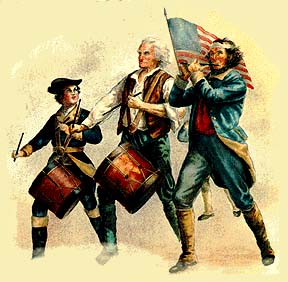
Revolutions can sometimes look like this

There’s been a lot of talk of revolution lately with the whole Egypt thing. I find it interesting that when we were talking about Yemen, my first thought was that Yemen would probaby be the tipping point for other revolutions because that’s usually what happens, and people didn’t seem to get what I was talking about. My point was that revolutions tend to spread revolutionary ideas to places where people aren’t expecting such ideas to take hold, and when it happens, it happens fast before anyone can see it coming, and usually faster than anyone can make it stop.

Mubarak realized that too late. He saw the waves of revolution coming at him, and instead of responding with an immediate jump into the current, he fought back against it, never seeing the wave as the tsunami that it was. And that’s what normally happens. When the US revolution happened, some French chick told a bunch of peasants to go eat cake. Next thing you knew, she was losing her head in a guillotine, and the monarchy of France was gone. Okay, for history’s sake, Marie Therese may have said the whole cake thing, and not Marie Antoinette, but most people don’t know that, and she still gets the credit for the sentiment, so I’m sticking with that. Rousseau was known for taking a bit of liberty with history, so we’ll just let it go there.

The point is: Mubarak never saw it coming and was so inebriated by his own power that he never saw the end coming. That’s generally how most revolutions play out, quite often with the masses rushing the bastille at the last minute and the monarch/dictator no longer able to hold session with the masses listening to every word, unless they are the “last” words before a beheading.

But this isn’t really a missive to communicate the aftermath of the revolution of Egypt. For all we know, there’s another that might have to take place once the army gets drunk with its new sense of power and ends up never giving it up. I can’t predict those events, so I won’t even try.

What is important is to focus on the wave itself, because revolutions don’t happen in a vacuum. They tend to overwhelm entire areas and spread one after another on the sentiments of rich, glorious freedom. Right now, Iran is shitting a brick because of the revolution that just took place in Egypt. The leaders there are condemning ANY attempt at celebrating or protesting in the name of Egypt or any other country because they’re scared to death with what might happen there. The public stance is that the revolution took place with the overthrow of the Shah in the 1970s. They don’t want to even think about the fact that there might be pissed off Iranians right now who are thinking about freedom. But if that happens, it will overwhelm them, and they’ll never see it coming.

Aren’t revolutions cool?

But what we should be focusing on is something NO ONE in the United States is paying attention to: The United States. We like to think that revolutions can’t happen here, but we’re exactly in the kind of atmosphere where one could spontaneously erupt, and no one will ever see it coming. Half of the country continues to use rhetoric indicating it hates the other half. It’s no longer gentlemen’s disagreements anymore. Half the country hates the other half. And the other half isn’t too fond of the first half. We’re either ripe for a revolution or a civil war. We’re just too sophisticated to believe that such a thing might ever happen here.

Well, I’ve got some bad news for you. More people in this country live in poverty than ever before. There is no direction out of it either. The country itself is heading towards bankruptcy and there’s no solution for that either. The rich and powerful own most of the production and money in this country. The majority of the country consists of people who have nothing and really have very little to lose. Right now, the only thing holding back an insurrection of horrible proportions is that the majority of the people who would participate are on invisible opium, a sense that there’s really nothing that can be done about anything. If these people start to tip in any one direction, you have all of the ingredients you need for an out of control movement that has the capability of becoming all sorts of things unimaginable.

The only thing separating us from that is this facade of “it can’t happen here” which is backed up by a fantasy called “the American Dream.” We’re basically surviving off of a fantasy that’s more believable in Santa Claus and slightly less believable in various variations of God. It really doesn’t take much to push us over to the other side, and all we have to rely on is, again, the idea that it can never happen here, backed up by the history of “it’s never happened here”. Well, at least not in the last hundred years, because it did happen here once. It doesn’t take much for these people to get riled up and start killing each other. For some, it’s a colored flag. For others, it’s an idea. For even more, it’s a realization that there’s nothing left to believe in.

That last one’s scariest of all because even after revolting, you generally don’t end up with a solution that satiates that one.

Either way, it’s been an interesting few weeks lately. Just remember that democratic movements come in waves, so always make sure you have a decent surfboard and lots of sunscreen. The sun can be a real bitch sometimes.

Burdened by the Status of No Power, No Voice and No Audience

I’ve been watching the struggles taking place in South and North Korea lately, and I find myself becoming very frustrated by the whole thing. But I’m not frustrated because they’re moving towards potential war (which happens ever decade or so), but because I often feel like I have potential answers to the problems that plague these people, and I also realize that there’s no chance whatsoever I’d ever get anyone to listen to me even if I had the definitive answers they needed.

What concerns me is not just that I find myself frustrated in life because I always seem to have a different perspective on things, a nuance that I often think might actually break through some of the problems that occur, but that I also realize that there are so many others out there who have to be just as frustrated as I am. This might be different if we lived in the 1600s where people generally were limited to their own surroundings, but today, we have the ability to travel pretty much anywhere, and we also have so much more liberal education than we’ve ever had before. It’s like we’ve been given the tools to do so much more with our lives, but we’re still limited to chiseling marketing messages on stone tablets to sell to our neighbors.

As someone who actually teaches college students in both communication and political science, I’m even more burdened by this because I often feel that I’m selling a box of false goods that empower people to do absolutely nothing because they’re never going to have the ability to influence anything beyond local issues. Yet, so many of them are probably growing up to do so many unique things that will never be given ground, so they will end up just as frustrated as the rest of us.

Yet, we keep seeing this group of people who do have access to the higher echelons of power, and they’re completely fucking everything up because their only claim to their station is that they knew someone, scratched the right back or were lucky enough to be born rich and/or entered into the right school.

The sad thing is, I’m sure this complaint is made on a daily basis by so many other people as well. Yet, I keep wondering what sort of compensation is being paid intellectually to keep so many people happy with their limited access to the pedastals of power. Sadly, I don’t think anyone who is in power really cares, other than making sure that those who are registered to vote continue to come out and continue voting them into power longer so they can continue to do mediocre services while enriching themselves, their stations and their offspring to continue the nepotistic process.

What worries me even further is my belief that an enlightened society cannot survive with more and more enlightened societal members realizing that the whole thing is somewhat of a joke where so few benefit at the expense of so many. There’s only so much one can believe in a system of “anyone can be one of the elite if one works hard enough” before realizing that it’s really a crock of shit. When that brass ring consists of 99 percent luck and 1 percent skill, that doesn’t leave a lot of very skilled people very happy with their lot in life. In the 1900s, you could laugh it off by believing that there weren’t enough people to cause problems, but nowadays, I’m not so sure.

Anyway, not much more to say. Must go back to the trenches and continue pounding on my tablet with my chisel as I make other people wealthier. Well, I work for a nonprofit, so I’m not sure how that fits into the picture, but I’m sure you get the picture. I guess we all pound on our tablets with chisels and then no one gets any wealthier. Hmm, might have to look for a better metaphor/allusion than that one.

Perfect Storm versus Continuous Apathy

There was an article today in the Salt Lake Tribune that points to its poll that indicates 1 in 5 people in the US right now trust the US government. This is at a major low in this country, but what should really be concerning people is the apathy that exists from several perspectives.

First, there’s apathy in government towards the mindset of the people. Even though 4 of 5 people distrust the government, the people in charge of government don’t seem to care. Oh, sure they’ll use it to their advantage to get votes, but overall they’re apathetic towards the way people feel about them. And the reason for this is because they realize that no one can do anything about it. People are stuck with the representatives they have, and those representatives know that. There is never going to be an election to just “kick the bums out” because every election in this country is designed to put new “bums” in even if we get rid of the old ones. The people we keep trying to elect to change things, to shake things up, don’t ever do it and end up becoming part of the system and then corrupted by the very nature of the system itself.

However, the real apathetic factor that needs to be paid attention to is that of the people themselves. There’s a reason why things don’t change in this country, and that’s because the majority of the American people are generally too lazy, or just don’t care enough, to do anything to make a difference. Americans, for the most part, are apathetic souls when it comes to politics. And that’s been a benefit to the power brokers who keep going to work every day living off the trough they continue to award themselves as a part of their power base.

But the 2008 election should have woken up the politicians to the realization that something has changed. Up until this election, politicans were the power, and they pretty much set the stage for exactly what they wanted, when they wanted. In 2008, the normal power brokers were unable to push forth their usual candidates for president, which is a major reason why Obama was elected in the first place. A lot of grass roots organizations made themselves seen, and they got this somewhat unknown politican elected over the “accepted” candidate Hillary Clinton who years before was all but guaranteed the presidency at the end of President Bush’s 8 year debacle. It didn’t matter whether or not the politician being elected was the “right” politician; he was different, and that’s what they wanted.

Well, it turns out he wasn’t different enough. Once in office, he became exactly what every other politician tends to be, and his public opinion polls are diving into an abyss of never-ending freefall. He might pull things around, much like a Clinton-like turn around, but for the most part, he has destroyed the fiber of what it was believed he was: An outsider who was going to change the status quo.

So what does any of this mean? Well, it means that something happened in 2008 that may end up becoming very important over the next decade or so. People woke up and started paying attention. Now, a professor of government might think this is a great thing (they’re always wishing more students would pay attention to politics) but to a person who desires stable government, this might be a horrific time to be around because waking up this apathetic public might be the worst thing that could have happened for the current paradigm. Because nothing changed, and people wanted change. If people realize that they can do nothing to change the political system, one of two things is going to happen:

1. People become apathetic again and give up on changing their environment.

2. People become angry and look for alternative ways to get what they wanted in the first place.

The first alternative is what we expect. The second one is dangerous, the kind that leads to revolutionary thought. Now, not all revolutions are 1776 kinds of revolutions; sometimes they’re as revolutionary as the iPod in a sea of MP3 players. But there’s no predictability when it comes to an impassioned public. In 1787, the public sent representatives to a Constitutional Congress to fix the government and ended up with a brand new government instead. I seriously doubt that the people back home were actually expecting that to happen at the time.

But with a public that is rearing for change and no change actually taking place, the future might be a very dangerous one because revolutionary thought is never really a polite process. I was watching the miniseries John Adams over the weekend, and one thing I kept coming away with from the series was that the average American in the 1770s was a hot head, just looking to burn something down. Even the big names that we attribute to some of the greatest moments in US history were essentially just angry men and women who carried clubs with the intention to bash in someone’s skull if they didn’t get their way. And that’s just the enlightened ones. Underneath every revolutionary movement is a huge segment of the undesirables of society who use that time to do some of the most despicable actions imaginable, and they do it believing they are justified because everyone else is pissed and doing revolutionary things.

Unfortunately, the current civilized man and woman has no idea of what his or her neighbor is capable. But as people become less and less apathetic, some attention might be paid to those around you, because once a movement begins, there’s usually not a lot that can be done to contain it until it succeeds in running its course.