Tag Archives: power

People of Detroit are Learning How Much Government Doesn’t Care About People

faucet

It was reported today that a government official in Detroit, U.S. bankruptcy judge Steven Rhodes, has decided that water isn’t a right, and that if people can’t pay for it, the government is obligated to shut them off. Basically, the argument is that government has been keeping the water on too long, and if you can’t pay, you don’t get to drink, or bathe, or do anything else that involves the most abundance substance on the planet.

What people should get from this story is not that water is not a right, but that when it comes down to basic survival, your government doesn’t give a rat’s ass about you, even though they will say the opposite in hopes of getting your cooperation, or votes.

I learned this myself this month when I moved to Texas. I moved into an apartment that was kind of nice, but over this first month, let’s just say that I’ve had EVERY utility that is owned by government somehow blow up in my face, and then some uncaring civil servant has sat across from me (or sat on the phone with me) and basically said: “It’s not my problem, so why are you bothering me?” Well, they didn’t say exactly that, but they could have and it wouldn’t have changed the outcome whatsoever.

As we’re talking about water, let’s talk about water. I was fine when I moved to my new apartment, but the person who lived in my apartment before me decided to cut off ALL utilities when she moved. And the way the government did it was quite unique. It didn’t matter that I was now the person on record as paying the bills, EVERY utility treated that original cut off notice as more important than the person who was now living in the building and actually paying for the service. So, for one week, I lost electricity. The next week, I lost gas (which meant hot water). After those were re-established (keeping in mind that NONE of these companies will do this at night or on a weekend, and almost always they shut me off at five o’clock on Friday (yep, each of them did it one weekend after another), meaning I went without electricity first, then without hot water (or the ability to cook)…well, that was followed up last week with several days of absolutely no water whatsoever. The people at the water company were “wow, that sucks, but sorry, we can’t have someone out there to turn it back on, even though he’s probably a few yards from where you’re at now because he just freaking turned the water off, so you’ll have to wait a day or two until we can pencil you in for our next turning on the water guy to show up.”

So, the other day, I got to take a shower with bottles of water from Wal Mart because I had no water in the apartment. And of course, it was cold water, because I couldn’t exactly heat up a plastic bottle of water for a shower (it just wasn’t really an easy proposition).

So, when I see people protesting out in Detroit over the government being a meanie, well, that’s just what government is. They don’t care about the common person because they’re not a common person, nor do they know any. They see someone who doesn’t pay as a delinquent, and if you happen to be one of them, expect them to respond with extra fees to turn back on your water because you’re inconveniencing them for their trouble.

For those in Detroit, keep in mind that when they turned off someone’s water, getting it back on isn’t just a matter of calling up and saying, yeah, I’ll pay the next bill. Instead, they’ll charge “administration” fees to turn it back on, which quite often are more than the water ever would have cost in the first place. And more importantly, they don’t care.

That’s life in the big world. And quite often, it sucks.

What a No-Fly Zone Really Means

I really shouldn’t have to write this post, but it bothers me that so many people don’t understand what it really means when they advocated for a no-fly zone over Libya. It’s like we’re playing some kind of video game where America (or the west) is so powerful that we have all of the cheat codes enacted, and there’s no way anything bad can happen. Well, we just declared war without actually declaring war again, so in case anyone thinks this is something less than that, you’re wrong. We’re now at war with Libya for as long as it takes to scare a dictator into surrendering, backing down or something equally improbable. In reality, we’re demanding he step down, which then means he either escape to another country that might take him, hope his own people won’t kill him or put him on trial, or that some other equally undesirable event doesn’t befall him. In other words, we’re asking someone to take a path of worse consequences than the one he’s actually in right now. We did the same thing to Saddam Hussein, who held out until we had to put troops on the ground, decimate his country, kill LOTS of his own people, and then finally capture him hiding out in a cellar somewhere, hoping he might not be caught.

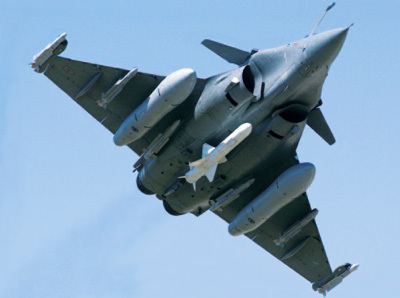
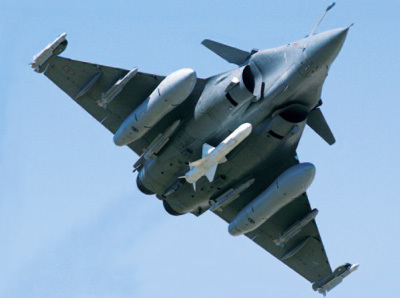
Right now, the French have attacked with aircraft. It’s possible one plane has already been shot down. Details are hard to come by this early in the war. But they have engaged the Libyans on the ground.

Which means people are already starting to die. So, no amount of posturing, pretending or ignorance gets us away from the fact that our entrance into this war means people will now die. Yes, people were dying before, but we’re going to be killing people ourselves now. We don’t get to paint over that with new paint and then put up a new car fragrance ornament to hide the smell. We’re killing people now. And we may lose some of our own. This is war.

I’m not against a war. I just want people to know and understand that they’re in one now. Sure, we’ll all go back to the mall on the weekend and buy videogames, dresses and other crap, but it doesn’t disguise the fact that we have aircraft in the air right now bombing people we don’t know anything about, and probably never will, especially since they will be dead soon. Hopefully, it won’t be as bad as some previous wars, and hopefully the survivors won’t grow up to hate anyone from the west, planning our deaths decades from now while we’re celebrating  a holiday or just going about our usual business.

This is war. It sucks. Don’t let anyone try to pretend it’s anything more pleasant.

But they will. Because that’s what spin doctors do with these sorts of subjects. Just hope that we don’t end up having to send soldiers over there to “finish what we started”  because someone in power who will never see combat can’t see any other way around the “dilemma”. War sucks, and it rarely turns out the way you plan, intended, or desired.

Now, back to American Idol and whatever we were doing before I so rudely interrupted with reality.

I’m Curious…Is America Over?

us flag  

Towards the end of the Roman Empire, after centuries of power, prestige and prosperity, the great nation crumbled inwards as its inability to acclimate to new events and changes finally led to an eventual collapse. Historians often point at the Visigoths and other non-melting immigrants to the empire that finally brought about Rome’s demise, but it may be possible that the sacking of Rome was more a symptom than a cause of it undoing, as it had probably seen its end on the horizon for at least a century before it realized things were as dire as they became.

Which leaves one to wonder if there had been a number of people who saw it coming but just kept hoping that things would last long enough for their own retirements, the ends of their own mortality and beliefs that it would last just long enough for their children to escape the eventual destruction that was sure to come. Somewhere, at some point, there had to be a number of people watching the horizon, realizing that the end was near, suspecting that it was closer than they were seeing through their focus on the distance.

Which then brings me to today, to looking at our own civilization, our own society and the wonderment at whether or not the Visigoths are already within our borders.

For years now, we have been struggling with cyclical recessions that seem worse some decades than others, yet we continue to tell ourselves that things are still great, that we are still the great empire that we once were. We are Americans, and we see ourselves as the successors of Washington, Jefferson and Lincoln, having lived through the various vicissitudes of struggles, always emerging with the belief that we are better for the efforts of our past, kind of like a version of the “if it doesn’t kill you, it only makes you stronger”.

Yet, I’m left wondering if we are still the same country that stood up to the British monarchy in the 18th century and then again at the dawn of the 19th century. Are we still the people who rushed to defend Europe during the first and second world wars, emerging as the victors, producing what we believed to be a shining beacon of freedom to the rest of the world to always aspire to. Or did something happen that changed us so that the next generations were no longer the same people who could pat themselves on the back as the nation of people who believed they were most definitely a part of an exceptionalism that we believed no other nation could achieve, yet every nation under the sun might one day aspire?

After the Vietnam War, the United States changed, or at least it may have metamorphasized into something different than what we believed it to be. Instead of that nation that others aspired to be, I start to wonder if we began to live on laurels of people who lived before us, convinced that the rest of the world would always see us as the exceptional Americans we believed ourselves to be, even though journeys to other nations would allow to us to see how little other people actually respected us and believed us to be that shining beacon we still kept adding to our resumes.

Over the years, we have supported vicious dictators who killed their own people, all in the name of feigning friendship to us. When a cold-blooded killer emerged to power in some far-off land, we turned our eye and accepted him because he offered us future economic incentives that we used to enrich already very wealthy people in our lands, even though the majority of the people in our country did not benefit as well. And then we sent soldiers to other lands to defend evil people whose only connection to us was they weren’t the “other guys” who we didn’t like a little more than the ones we were supporting. And now, a lot of those choices our forefathers, or our actual fathers and grandfathers, made have come back to haunt us over the years. Where we sided with bad people because they had fossil fuels we could use to propel ourselves to the local Wal Mart, the children of those who suffered no longer see us as the friends we used to believe we would be seen as because of our past dealings.

Which brings me to today. A lot of very wealthy people in this country seem to control the majority of the government, the economic power and even every decision we might make as a nation. The common person has little input, power or even a voice in this current era of government, which leaves me to wonder if all of our efforts led us to create a dynasty of misplaced power that is only now starting to become cognizant of the dangers that lie in the path before us.

Essentially, we have a nation where those who hold the strings of power have little to no connection to the majority of the people who have to live in that paradigm of a society. The last election should have actually been a wake-up call to those holding the reigns of power, but instead voices of complaint have managed to yield no response from those who are now being tasked to make some kind of comment. We have a nation of leaders who claim to represent large segments of people with whom they have never communicated, and yet believe themselves to be worthy of such power.

As was pointed out previously, there had to be Romans at one point who realized there was something on the horizon yet coming closer to the protection of the front gates. Is that repeating itself today, but we’re reacting the same, partying in the chambers of the Roman Senate until the Visigoths finally overthrow us, slaughtering us in our sleep because we never even realized there was a problem in our midst?

All I can hope is that I retire or reach the end of my coil of mortality before it happens. Some may not be so lucky.

The Future of America is in its Past

In case you haven’t noticed it lately, America has stagnated and isn’t really moving forward anymore. I know most people don’t want to face that possibility, and most people reading this (which means anyone aside from my stuffed animals and imaginary friends) will probably just ignore it and hope for the best. Unfortunately, we’re a bit beyond that option, and even though most people will attempt to embrace that plan, we’re kind of screwed if we do.

You see, according to Tyler Cowen’s thesis, The Great Stagnation: How America Ate All the Low-Hanging Fruit of Modern History, Got Sick, and Will (Eventually) Feel Better, we’ve pretty much exhausted all of our free ranges for expansion and exploration, leaving us with pretty much nothing but what we already have. And America was never designed around resting on its laurels; it was designed to expand and develop out, something it can’t do if there’s nowhere else left to go. Now that we’ve entered this inevitable recession, we’re hitting a point where we start to realize that there’s nowhere else for us to go, and that all of those jobs that we expect to come back might just not, and thus, we’re going to have to figure out how to make lemonaide out of already eaten apples. Yeah, I’ve run out of metaphors, similes and allusions. I’m a lot like my country.

Americans live in a system that promises that anyone can do wonders with little as long as that someone is willing to put forth a bit of elbow grease. Unfortunately, that’s kind of a lie, something we’ve been telling each other for generations, even though the lie relied on a lot of extra room to grow that we figured would always be there for expansion. Once that land started running out and the resources as well, we felt we could keep telling the stories long enough to pull a bait and switch, figuring no one would live long enough to really ask any important questions, at least not before we retired and/or died first. Well, we’ve reached the saturation point of that possibility, so now we’re kind of stuck in a future that relies on the lies of the past never being called, like markers in a poker game where we’ve been holding two aces, hoping its the best hand in the game, even though someone else may have had three twos showing all along. Yeah, more bad analogies, metaphors and similies. I’m just full of it today. Or them. Whatever.

Which leaves me with an observation that is probably important because we’re now hitting a point where we’ve already been called on our bluff. Everyone wants to see the hands of the cards we played, and all of the money is already on the table. Man, I’m just going to push this bad analogy all the way to the bank.

So what do we do? We’re in the middle of the unending recession, and we’ve been pushing forward with the belief that it had to end eventually because that’s what recessions tend to do. But if our economy doesn’t really have the power to pull us out of the doldrums, then where do we go from there? What if the recession we’re in happens to be the harbinger of doom that we should have been expecting from the beginning? What if all we have left is that Pandoran conclusion and hope just isn’t enough? Where does a rapidly expanding nation go if there’s no more room within which it can expand?

Part of the solution was the possibility of an untapped area of manifest destiny that offered a never-ending canvas for exploration. By that, I mean the Internet and the ever-expanding territory of a cyber universe. Unfortunately, even that has its limits, as we’ve realized that eventually everything explored in that world has to have some ties to the old world as well. While it might be fascinating to think one could live within a cyberworld, in reality, one still has to maintain a certain existence within normal society, even if to fulfill certain Maslowian needs. Forever expansion means little if someone still has to eat, drink and sleep in normal civilization. The days of Matrix-like exixtence are not yet achievable, so we’re still stuck with having to full basic, simple needs.

Which leaves us with having to find ourselves new frontiers in a walled garden of our own civilizations. The United States could offer endless expansion in the days of praries that went on forever, but once we hit the Pacific Ocean, we started to limit our ability to travel further. Now, everything has been spoken for, so any further expansion comes at a step backwards, a sort of inward despansion, for lack of better word. Much as cell growth is halted and the cells begin to collapse within themselves, feeding off one cell to sustain another, our future is now a tendency to cave in on our progress and trade resources amongst our already established infrastructure as we consolidate and seek to find new frontiers within those already explored. Our future expansion then becomes within, rather than out, mainly because we are without.

If we’re going to survive this change in perspective, we need to realize that we can no longer cannibalize upon outside resources to which we no longer have access. For territory, we must look at that which we already control. For fuel, we can no longer just take from nations that have weak military forces as the world is becoming savvy to that approach and compensating to it as well. We are going to have to consolidate amongst our own people to determine new ways to fuel our movement by either designing new technologies that allow us to use our own resources or to lessen our movement. The simple endothermic physics involved should go without saying, but we’re often not that intelligent when it comes to such matters.

If we’re ever going to figure out our future, we need to look to the rest of the world and see how it has compensated for our future situation already. When Europe ran out of space, it sent colonists to the new world to explore. We are a result of just that. However, when we rebelled and declared ourselves independent, we cut off an avenue of expansion for Europeans, and thus, forced them to realize that their expansion was forever finished, that they would have to learn to live with what they already had. We didn’t think about their reactions or thoughts because we were too busy thinking about how unique we were in comparison to the rest of the world. But in reality, all we were was lucky enough to still have room to grow. Now, we don’t.

So, our future should very much be the same future that was faced by Europeans in the 18th and 19th centuries. When they ran out of space to explore, they consolidated. They began to move back over themselves and create from within. They didn’t just stagnate and disappear as we seem to think will happen to us if we stop expanding and growing. If we’re smart, and sometimes we can be, we would realize that we need to start looking to our future by examining what others like us did in the past. If not, we’re going to continue to try to expand as Germany tried to do in the 1930s, before the rest of the world rose up and stopped them. We might not see ourselves in this light, but if we believe that our expansion is never-ending, and we see ourselves as exceptional to other nations, it’s hard not to see us moving that way. That’s never a good thing.

Unfortunately, I doubt anyone will really listen, and we’ll go that direction regardless of any common sense or rational thinking. American exceptionalism relies on the very nature of believing in irrational outcomes to rational thinking. Think of it as a game theory where the result is an expectation of the highest payoff with the least possible chance of happening, but expecting it nonetheless. That’s kind of where we are today. I’d say more but American Idol is coming on soon, and we all know what’s more important.

The Dilemma of Action or Non-Action in Libya

It probably doesn’t come as much of a surprise to anyone that we’re undergoing a fourth wave of democratiziation in the world right now, with the Middle East being the focus of the current spread. However, what’s not being made much of an issue is timing and how important it is to the success of this particular wave.

When Egypt went through the wave, it was already moved forward enough so that the results were conclusive before any real effort had to be applied. It may not have felt that way if you were living in Egypt, but when it comes to waves of analysis, it was a forward moving mechanism that never had much of a chance of a backlash. Some of the other areas of the Middle East have not been so lucky. Libya happens to be one of these more stubborn areas.

Right now, a skirmish is turning into a full blown civil war in Libya. But you wouldn’t know that if you were in any other place than Libya right now. Qaddafi is fighting for political and physical survival right now, and believe it or not, this is really his make or break time for his future as Libya’s leader.

Which brings me to the influence of outsiders, of which the United States is definitely in this category. Right now, Libya is fighting what could be the start of its civil war, but without assistance from outside, the rebel forces fighting right now might not last much longer. As with many independence movements in the past, western nations now have a chance to influence the future of a nation that is on its way to throwing off the chains of authoritarianism. The important question is: Should the west get involved at all?

Think about that question for a moment because the answer has a lot of huge implications that don’t often get brought up until it is too late. Right now, the United States, and other western governments, can probably make a significant difference by establishing a no-fly zone over Libya and then by escalating to providing assistance to rebel forces, either through supplies and/or through direct action.

But should we? If our sole purpose in life is to develop and establish democracy anywhere we can, then the answer would be pretty obvious. But is that our purpose? Or is our purpose to be completely self-serving, assisting only the interests that directly benefit our nation and its prosperity? Believe it or not, there are many arguments for both sides. In the end, whatever path we choose, it must benefit us in some way, or it’s not a logical path to choose in the first place.

There is a logical argument to not becoming involved at all, even if one is inclined to recognize potential benefits of democracies everywhere. And that’s the axiom that eventually all people are going to have to rise up themselves and throw off the chains of oppressors for themselves. It was the argument used against George W. Bush when he invaded Iraq, claiming a nation-changing strategy was in the best interests of the United States; his detractors claimed that if Iraqis really wanted freedom, it was something they were going to have to pursue themselves, not have handed to them on a silver platter.

The argument is simple. If a people are given a democracy and there is no historical framework for embracing democracy, chances are pretty good that in very little time they will throw it away in the name of security rather than freedom, kind of a reverse Benjamin Franklin-ish claim. However, if they are already embracing the foundations of what leads towards democracy, then the theory is that they don’t need us to push them in that direction because like entropy, they’re going to pursue it themselves as a natural process anyway. It just might take them a little longer than we would have wanted had we pursued the strategy ourselves.

So, using this theory, we would have to argue that the future for Libya could be democracy if its people are willing to make the sacrifices necessary to bring themselves to that situation. If Qaddafi succeeds in suppressing it, then they weren’t ready for it in the first place. But that doesn’t mean that they won’t eventually pursue and receive it. They just weren’t ready at this time.

That’s all fine and dandy if you’re talking theoretics and don’t feel people deserve freedom because not enough of them are capable of achieving it yet. If the opposite approach is valid, meaning that people deserve freedom regardless of the forced servitude status they are currently in, then all means necessary should be used to pursue that state of democracy. This secondary argument points out that slavery is not a positive circumstance for any people just because the dominators have more guns and means to keep their slaves in check. I don’t think anyone would argue that forced slavery is a “good” that any wise people should be living within, and that any means necessary should be enforced to make sure that no one is ever forced into circumstances like that, especially if there is a larger, democratic power out there willing to enforce the idea that freedom is a right for all.

So, the question really narrows down to where we stand on this particular issue. Are we at a point in our own growth that we recognize the inalienable right of all people to live in a society where they are free to choose, or are we still of an older mentality, where we support only what benefits us personally and pretty much cast everyone else out to the idea of every man for himself, until that person can achieve his own better means through personal sacrifice?

I don’t really have the answer to that, but I can point out one thing that is most significant and crucial to the conversation. If we’re going to do something, we need to do it now, because if we wait any longer, the window of freedom will close, and then it all falls back to being talking points and theory.

But what do I know? Really.

Storms, power outages, and putting it all into some kind of perspective

Last night, I was sitting down to watch the season finale of Warehouse 13. It’s a quirky show that I’ve learned to like, and I was looking forward to see how they handled the final character arc they were playing out. Ten minutes into it, the cable provider’s satellite message appeared instead of the signal and indicated that it was having trouble connecting. Ten minutes after that, the message changed to “Acquiring Signal” and then suddenly all of the power went out.

So I sat in my apartment for fifteen minutes, thinking the power would eventually pop back on, but it never did. I found a flashlight to help me maneuver around the very dark apartment, and then figuring it was late enough, I went to bed.

The next morning, the power still was not on. Now, in the past I might have panicked and started thinking about all of the stuff in my fridge melting and going bad. But instead, I thought I get paid on Friday, and so what if I end up having to rebuy all of my groceries on that day. It’s not that big a deal.

Today’s a work day, so I got dressed in the pitch dark blackness and then went out to start my car. Well, I discovered a new problem: My garage door does not open without actual electricty. My garage is not attached to the apartment, so there was absolutely no way to get into it. My housing complex never bothered to include a key to the garage, so I realized I was not getting into my car. The housing complex’s manager’s office was also completely empty; apparently someone figured that with the power being off, it wasn’t a good deal to come into work on time. I guess they figured NO ONE would be interested in talking to the manager’s staff on a day when the entire complex was out of power. But oh well.

So I walked to the bus and took it to work. Haven’t done that in over a year, and it’s a very long walk to the bus, but I did it.

But all during this time I was walking, I examined the ramifications of the downed power grid. For about twenty minutes of walking, there was absolutely no power at all, although I did hear a generator working on one of the buildings. And then suddenly there were lights at about the twenty minute mark from where I lived. This area was not hit by the loss of power, or at least they had their power restored since it happened.

And this got me thinking about how little prepared so many people are for simple little hardships like this. I had a few flashlights in my apartment, so I was at least able to see. One of them burned out really fast, which told me that I had bought a pretty crappy flashlight. The others worked better, but it’s no fun finding out your flashlight is a cheap piece of crap when you need it most. It reminded me of some of those horror movies where someone’s in the dark, turns on her flashlight, and then a few seconds later it goes out. Makes the scene even scarier than if she never had light in the first place. But I digress.

What was interesting to me is that I’ve been through a few power outages over the years, including a few earthquakes that took place in California. And each one of those events caused me to prepare a little bit more for the next time. Each new scenario I came across made me feel a little bit more prepared for the next time, and that always felt good.

This time, I didn’t feel like I was really lacking all that much, and there was very little reason to panic. I did, however, hear quite a few muffled fights going on between couples and families in my apartment complex. This new entrance of events did not bode well for quite a few of them. And I wondered if this would cause them to be more prepared next time, or would it just cause them to complain a lot until things came back under normal, and then they’d be unprepared for next time as well. I don’t really know how they’ll handle it.

And that leaves me wondering about how well people are prepared for handling bad situations that they might come across. I know people have a tendency to go off like poffy hairdressers every time something doesn’t work out the way they planned, but what if something happens that occurs over a length of time? How do people handle that, and can they? I’ve been watching this BBC show “Survivors”, which is about a fictitious disaster that happens, leaving a small segment of the British population alive. It took place in the 1970s, but it was interesting how poignant those events were and how relevant they could be for today. If something happened that took away our sense of normalcy, how well would we handle ourselves? Would we live long and prosper (sorry, bad Vulcan humor) or would we end up panicking until we wasted away or died?

Unfortunately, I don’t have the answers to that. I’d like to think we’d never have to find out, but I fear that the answers aren’t ones I’d really like to hear.