Tag Archives: marketing

Attention: Your Sales Event is ONLY Timely to You, Not Me

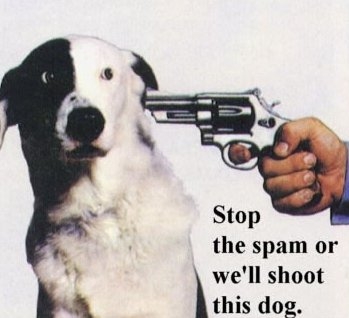
I received an email from Bed, Bath & Beyond this morning, announcing “Online Clearance: These deals won’t last forever.” Before that, I received one from Best Buy, indicating that I had only two days to come in and take advantage of their “special” sale on electronics. Newegg thinks that if I don’t respond by today that I’m going to miss out on great savings. Amazon sends me a message practically every day that tries to convince me, like Barnes & Noble does every other day, that I only have one day to take advantage of outrageous savings.

Look, I get it. You want to sell me shit. And you want me to buy it today, not tomorrow. But I’m going to let you in on a little secret here they probably didn’t teach you in your Overhyped Management 201 Class at Harvard: I don’t care. There is absolutely no priority for me to have to buy a Blu-Ray player by Thursday, or heaven forbid, I might miss out on unbelievable savings. I don’t really need a Blu-Ray player. I have one. And I bought it at a convenient time when I actually felt like I needed one. It happened to be on a day when I was in the mood to go to the store, look at the different choice, and then chose the one that fit me best. I didn’t buy it because some screaming sales pitch indicated that I was running out of time, like some episode of 24 where Jack Bauer has to torture his secretary for information about terrorist activities.

I understand the economy sucks, and you need to make money. But the more I keep being hit by hyped pitches to buy things, the less I want to buy. And no, I’m no fooled by the barrages of letters and emails that indicate that you are responding to my requests for information because I would remember if I was interested in buying a Kia car, which prompted you to send me an email as if you’re answering my inquiry instead of writing me out of the blue, hoping I might be stupid enough to think, “you know, I don’t remember ever thinking about buying a Kia vehicle, but if he says I stopped by and looked at one, it must be true.”

There’s a whole slough of literature written on the attempt to convince people to buy things they weren’t interested in to begin with. It’s the stuff often referred to as “foot in the door” techniques, and there’s an entire shunned practice that evolves from it called “bait and switch” where you advertise one thing and then try to sell us something we weren’t interested in. But this whole hurried approach to sales really needs to end because I’m getting really tired of opening mail and discovering I have twenty seconds to respond or the whole world will explode.

Part of the problem with a lot of marketing today is that there seems to be a lot less interest in matching people with the things they want to buy, rather than mass mailing everyone under the sun in hopes of finding someone who might want to buy something they weren’t interested in at all. But I’ll let you in on a bigger secret and that’s that if you’re really interested in selling to me, you’ll offer something really of good value at a good price and then convince me you’re the only one willing to do that. Don’t try to get me into your store in one day. Just convince me that your selection is better than your competition, and I’m probably going to make it to your business place. An example: I’m really interested in the new game Skyrim, made by Bethesda. But it’s overly expensive for a computer game. Offer it to me for a better price, and I’ll probably buy it. Offer it to me for the same price and add a lot of extra features to the sale, and I might still buy it. But sending me nonstop messages about how I need to buy it immediately or I will somehow miss out on the fun, and you’re not setting up a sale. At all. You see, I can wait you out. You, on the other hand, need the sale. It’s that simple. It is in YOUR best interest to get me to want to buy from you. Hype doesn’t do it. Expiration periods of pretend sales won’t do it. A good sale that seems pretty honest, well, that works wonders.

Businesses are constantly making the mistake of thinking most consumers are stupid, or easily fooled. We’re not. Some are, but they’re really a minority and not a sustainable business model. But smart consumers who will continue to buy your product if you offer value, service and consistency, well, those are the ones you should be going after. But your current model isn’t doing it.

So, take your time because I’m not going anywhere. You, a lot like Netflix that keeps trying to convince me I have a short time to “come back” to their “great deal”, might be. And it may not be where you want to end up.

I’m just saying.

Further Misadventures in the e-Publishing World

There’s a term that e-published authors have been using to describe the old way of doing business in the writing world: Legacy Publishing, meaning that it’s the old way of doing publishing. As one of those who got his start in the legacy publishing industry, where my first two novels were published as physical entities, I’ve slowly been trying to build a writing career by embracing the non-legacy model, i.e., publishing my work as e-books myself. In the process of doing that, something strange has started to happen that I never really anticipated. Let me explain.

When I started publishing some of my completed novels as e-books, I wasn’t really expecting to make a huge profit, or even to sell a whole lot of books. I hoped to sell a few and at least get a few readers interested in my work. Honestly, that’s what every writer tends to want to do. I’m really not that different. Not knowing the first thing about connecting to an audience that I don’t have, I’ve tried all sorts of different marketing, including Facebook ads, google ads, viral marketing, standing on the corner and yelling out loud, and all sorts of other antics that are capable of bringing on all sorts of restraining orders. As a result, a few people have started to read my books, and let’s just say that while I haven’t been extremely successful, it’s proving to be an interesting experiment.

However, a new development has occurred, and that’s what I wanted to talk to you about. I mentioned that some of my earlier work was published by Legacy Publishers. So far, they have done absolutely nothing to sell my work other than orginally publish it. I’m an unknown to them, so why would they be interested in pursuing any marketing on my behalf? So far, there’s been no reason. However, because I’ve been doing a LOT of marketing myself recently, some of my work has actually started to sell. Most of it as e-books, but some of that marketing has actually caused potential readers to go to bookstores and buy physical copies of my novels. Great. This is leading to something, however, and what it’s leading to is the realization by the original Legacy Publishers that I’m capable of actually selling books. It never dawned on me that they’d ever be paying attention to the fact that my marketing would start to pay off. And it has. Which has led them to start paying a bit more attention to me, and that attention has proved to be quite eye-opening.

You see, when I was originally published by them, the whole e-book universe was not even on the radar. So they never bothered to negotiate those rights. Those rights are mine still. Well, they’re now realizing that, and they’re also realizing that because I am self-publishing the rest of my work, it’s pretty obvious that my work they originally published will net them absolutely no profit whatsoever when it comes to the e-book market. So, rather than just contact me and be honest about it, their contact has been the kind you expect from a Shakespearean villain. The kind that goes: “Did you know that people are selling their books as e-books, and they’re making millions? We’re willing to publish your book as an e-book if you’re willing to sign that right over to us.” They also forget to mention (and sometimes they do) that they would like to set up the generous terms that are similar to the ones that happened under the old contract, where they get about 90 percent and I get 10. In other words, rather than have me publish it myself where I get 70 percent and Amazon gets 30, they’d rather they take 90 percent of the 70 percent, leaving me with (doing the math….for every $1.00 a book makes, I get $0.07). So, for a book that normally sells for (if they put it up at the maximum they’re trying to get) $12.99, I’d get 90 cents. Now, if I sold that book for $4.99 by publishing it myself (or even at $2.99), I’d make $3.49 (or $2.09 at the $2.99 rate). In other words, even if my book sold at a massive discount (my pricing), I’d still make 2 to 3 times more than what a publishing company would give me for it. And keeping in mind that the publishing company has NEVER marketed one of my books EVER, I get absolutely no benefit from them being the ones publishing it. None.

So, you might see why many writers are turning away from the normal legacy publishers. It’s not profitable, and unless you’re already a marketable name that they’re willing to throw money behind, you get absolutely nothing out of the deal. Instead, you sign over all of the profit to an entity that doesn’t do anything to deserve it.

It would be different if they actually went out of their way to do something to benefit my name. But they don’t. Or they never have. Now, if I was to find a publisher that was willing to do something to help me sell books, then we’d be talking a completely different story. But the way this model works, they don’t want me until I can already do the job that they won’t do themselves. Once I have the name recognition and the ability to sell my own work, my need for them goes away completely. So, somebody please tell me how quid pro quo thing works here if one side is continuously leeching off the other.