Tag Archives: The Soldier

The Countdown to Being Solo Is Around the Corner

I think I mentioned that I decided to quit my job a few weeks ago. I put in my notice, and I have a little over two weeks left. A couple of days, I almost quit on the same day I was working, but I’ve perservered, and my last date of work will be December 24th, Christmas Eve. There’s no significance to that day, but that will be my last day of work.

So far, no other jobs have lined themselves up for me. And I’m anticipating that it’s probably not going to happen either. This means I really need to make it as a writer, or I’m going to starve to death. Simple as that. I won’t even get unemployment benefits. I kind of screwed myself on this one, but I’m trying to move forward with a positive disposition, no matter how many dark thoughts keep overwhelming me about this decision and its process as its being carried out.

Monday, I have a release for one of my new novels, The Teddy Bear Conspiracy.
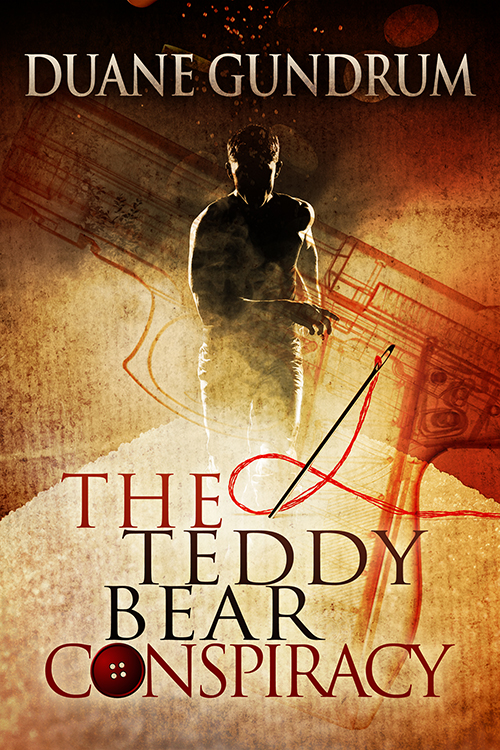
theteddybearconspiracy2a

I ran a 2 month contest on Goodreads for this book, and nearly 600 requested a copy of it. I am giving away 10 copies. There’s still a few more days left in the contest, but I’ve given up hyping the contest. Check one of the older posts, or just go to Goodreads if you’re interested in that. I also listed a giveaway of The Ameriad through Library Thing, which I did this morning, and it has about a month before it will complete its giveaway process. I don’t have an immediate link to that one, but you can definitely find it if you just go to Library Thing’s site and search for it under giveaways.

But anxiety is definitely beginning to emerge for me because so far this month, I haven’t sold a single book on Amazon. I’ve sold a few through Barnes & Noble and Kobo, but Amazon, which is usually the one that does the bulk of the selling, has been dead cold for me this month so far. That is not a comforting feeling. Remember what I was saying about starving? Hunger pains are already starting to emerge, and I’m not even at the no food stage yet.

After the Teddy Bear Conspiracy goes live, my next project involves a romance series I’m writing with a female writing friend of mine, and then I’ll be heading for a “sometime in January” release of the first book of the Tales of Reagul series, A Season of Kings. Actually, it’s not really the first book, as Destiny was the first book, but I did something a little strange with this series that not too many other writers do with a series. The first book, Destiny, starts 3000 years after the Tales of Reagul series begins, which kind of makes it an interesting universe for someone following the saga. To explain:

During the period of the Roman Empire, a small group of villages were snatched up by an alien civilization and placed onto a planet called Reagul, where an experiment was being conducted to see how civilizations handle in different environments (the original Rome being the control group, and Reagul being the experiment group). One of the citizens of the new Reagul is a young man who eventually learns all of the alien technology (to be the shepherd of this planet) and immediately after he learns everything, the aliens are called back to their home system to fight a war that is obliterating their people. The young man becomes the prominent wizard of Reagul, as everyone sees his technology as magic, and with such knowledge, it practically is. This begins the Tales of Reagul. 3000 years later, which is about 1000 years in our future, the human empire has spread across the stars, and a coloony comes under attack from the empire. A survivor of the assault leads a mission to destroy the empire by killing the emperor, which brings her to the planet Reagul, where it is discovered that her abilities (the reason she was chosen for the mission) rival those of the wizards of Reagul, indicating a tie between her planet and the strange alien race that contacted them years before (obviously being the same aliens who started the experiment with Reagul in the first place). That loater story is Destiny.

As you can see, it’s kind of complicated, but it’s a great, fun story. The first of that story (aside from Destiny) is slated for release in January.

The next project is a sequel to Thompson’s Bounty: A Ship Out of Time, my time travel adventure involving pirates and the Coast Guard. The new adventure will take Thompson and his crew into the Greek and Roman eras. That should be a lot of fun to write (and hopefully, read). People have been asking for a sequel to this novel for years now, so I finally started plotting it out.

The other distant project is my Deck Const series, which received a bit of fame from a series of short stories that I published back in the 1990s in some of the pulp magazines of that time. They were often referred to as The Soldier stories, and there was always a hint of something called The Deck Const in every one of them. I’ve finally finished the first draft of three novels that I’m reworkiing for publication. It’s a dystopian suspense series of the last soldier who is trying to rebuild civilization while on the quest to find a mysterious talisman only known as The Deck Const.

That’s kind of an update for now. Not sure if anyone even reads these updates any more, but just in case this is being read by soldiers from the future who are in search of the elusive Deck Const, let this be your clue that it exists and perhaps you are one step closer to finding it and rebuilding civilization again. Until then, sorry life kind of sucks for you right now, but dystopian societies can be that way.
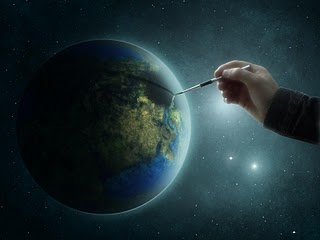
Building Worlds as a Part of the Writing Process

A few years ago, I read a book by Richard Bartle, titled Designing Virtual Worlds. As an avid game designer and player, the idea of building worlds has always fascinated me. As a writer, however, designing a world has always been a process that has existed within me, and it has often made crafting a story one of the more difficult projects. In the beginning, when I first started writing, designing a world was simple. It was essentially Earth with different people in it. Oh, sure, every now and then there’d be a dragon instead of a rhino, but honestly when it came down to it, I wasn’t really designing anything; I was recreating what was already there.

As I matured as a writer, I came to realize that the world one crafts is as important as the story itself. Since then, I’ve created a couple of worlds that have existed as part of my writing. Two of them are important enough to discuss here, so I’ll introduce them now.

Reagul was my first real virtual world that I created. It was originally a part of a science fiction/fantasy hybrid I wrote over a decade ago that takes place in the era of Earth 3000 A.D. The Earth has become an empire, and one of the planets in its sphere of control is the medieval-like planet of Reagul. It was during the writing of the novel Destiny that I started to realize that Reagul was more imortant than just a setting for a large part of this novel. It took on a life of its own, and later it became the centrally located planet for the series of stories that became the book, The Tales of Reagul.

Reagul was a fascinating place because it was an experiment of an alien race known as the Minions, who were testing on human subjects from the young planet Earth. During the first century B.C., the aliens transplant a Roman collection of villages from Earth to the new planet. This series of villages grow up to become the central characters of the stories that take place on Reagul. A large number of short stories I wrote have been published in that series, even though most magazines at the time never knew there was a connection between any of these stories. In it, a whole literature was born that has continuously moved the history of this planet, which has nearly 3000 years of history before it reaches the point where it coincides with the first novel (the previously mentioned Destiny).

I figured that I would probably only write one major series in my lifetime, and it was going to be the Reagul series. And then the Soldier came along.

The Soldier was a character that started showing up in some of my earlier writings, first published in Lost Worlds magazine. That first story was mainly about a soldier who has been traveling since separated from his army, but even as I was writing, I realized there was something wrong with this guy, that he was much more than just a normal soldier. That’s when I started to realize that he was on a quest for something, something for which he was going to be spending the rest of his life looking. This item became the Deck Const, which then became the central talisman in my latest novel Rumors of War.

The Soldier is unique because his story is a world all by itself. He lives in a dystopian future where civilization has crumbled, representing an army of a nation that no longer exists. At the same time, his journey has been chronicled long before he was ever born, and many more people know as much about him as he does about himself, even though they have never met him. He becomes a mysterious character, even to himself, but at the same time is on a linear path, seeking out something that will bring civilization back together, while at the same time giving him a reason to exist.

The world of the Soldier is one of those that I often found myself returning to because it was so interesting. At times, he finds himself in a Hobbesian nightmare of a society that has fallen apart, but every now and then he comes across glimmers of hope in the waste lands, and often he is the instrument that brings forth that hope to others.

The point is that it is not just enough to write about a place and call that a “world”. There is so much more to the process than that. The people within that world are just as important to the world as the world itself. The Soldier couldn’t live in Reagul; he just wouldn’t belong, and he’d change that world into something much different than it is. At the same time, the sorceror/wizard Sarbonn (which is from where the name of this site emerged) could never have existed in the Soldier’s world. Both worlds are products of their people and their environment.

This is why so many science fiction stories set on bizarre worlds just don’t seem to work. The writer was spending so much time focusing on the world, or the character, that he or she never realized that the two needed to fit together somehow, and quite often they do not. Harry Harrison’s Stainless Steal Rat is a product of his environment and fits it so well. Asimov’s Mole fits into the Foundation universe that he created (which by the same measure his robots never fit into the Foundation universe, which is why the end of his Foundation series seems more forced than the earlier part of the series; you can’t force one series into another, or one world into another where they do not belong).

An example of a strong failure of this approach is the Fallout series, especially the recent one (Fallout 3). It was a great universe (or world) with the ultimate Dystopian wasteland, but then in one of the add-ons, they decided to add aliens to a universe where they really didn’t belong. Granted, in each story there was always a mention of an alien crash landing, but it was always a technique to give the player an out of control, overpowered weapon with many questions left unanswered. With the alien add-on, it took a Dystopian nightmare and turned it into an alien blaster story. They just didn’t belong in the story, and it diminished the universe as a result.

As a writer, there’s always that fine line that has to be traveled, and once one goes over it, it’s the literary equivalent of “jumping the shark”, even though I’m using the term incorrectly as “jumping the shark” was never really meant to be about going too far (it was always about trying to regain what you had before by doing something stupid). But that’s for another column.

One thing that’s interesting about building a new world is that sometimes that world can get out of one’s control. Star Trek is a good example, as is Marion Zimmer Bradley’s “Darkover” series. Both were great universes where the author/creator designed something magnificent. Then the fans took over. In Roddenberry’s case of Star Trek, the fans became such nitpickers that Roddenberry couldn’t make a decision without someone quoting a previous episode as to why a new episode was in error. With Bradley’s “Darkover”, the fans started creating sequels to the story, and it got to the point where the universe was somewhat out of Bradley’s creative control.

In the end, what can be said about building worlds is that there must be a reason we do it. Some would say we do it to explore our own universe, while others might say we do it to branch out and see things we can never imagine in our own world. For me, it was just a lot of fun, and the characters sometimes just make it all worthwhile.