Tag Archives: Reagul

The nuance of writing that keeps me going

1 small

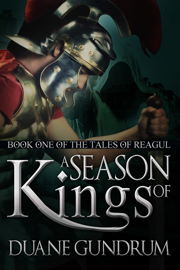
For those interested, I’m putting the final touches on the first book of my series, The Tales of Reagul, of which A Season of Kings is going to be released in the next few days. One of the fun things about this book is that it combines my passion of history with my love of speculative fiction. The land I’m writing about has been colonized by people from the times of the Roman Republic. What makes the book so much fun to write is that when these people start spreading out in this new land, they come across the survivors of previous colonizations from previous civilizations, including the Egyptians and Sumerians. This gives me the opportunity to play with the “discovery” aspect of the people who come to the new land, as they have no idea who these other people are, and when they do discover them, they are even more confused by the fact that they’re dealing with people they know so little about, and those that do know something of their civilizations are even more confused as to why they’re in this land in the first place.

This is the kind of thing that becomes so much fun to the process of writing. As I’ve already developed the historical process of the planet, I know why certain things are happening, but the people who are interacting in that land know so little about it, which makes it that much more fascinating to see it from their perspective and wonder “how would a stranger to this environment handle such a situation?”

Dealing with multiple languages in fiction

In my many space travels as a legospaceman, I never ran into a civilization that didn't speak lego
In my many space travels as a legospaceman, I never ran into a civilization that didn’t speak lego

I came across one of those little struggles that I didn’t anticipate while writing A Season of Kings. For those who have been following the story line of the first book of the epic, The Tales of Reagul, it involves several villages from Roman times that are transplanted onto the planet Reagul. A part of the story line is that previous civilizations have been transplanted to this planet earlier than Rome, so there are hints of people from Sumer, Egypt and many other civilizations of earlier history.

One of the first encounters involves Sarbonn, as the young man Spurias, who comes across some of these people. But it dawned on me that someone from Sumer would be speaking Sumerian, not Latin or some derivation of local Roman languages. So, I’m stuck with that old Star Trek problem of “how do people who have never met in their history actually communicate with each other?” Unlike Star Trek, there’s no actual “universal communicator” that everyone is carrying around with them, which means I either have to establish some communication process created by the original aliens (and some back story as to why they’d use something like that any way), or I have to figure out some way to develop a class of people in their societies that would actually be able to translate. Of course, I could go with the old Star Trek method of just assuming everyone speaks English and figure no one will care either way, but that just seems like such an easy cop out (even Star Trek had to eventually explain this situation to its viewers because people don’t allow “yeah, just let it happen” to provide them with justification.

So, I’m analyzing the different ways I can deal with this situation.

The Realm of Reagul

Reagul2
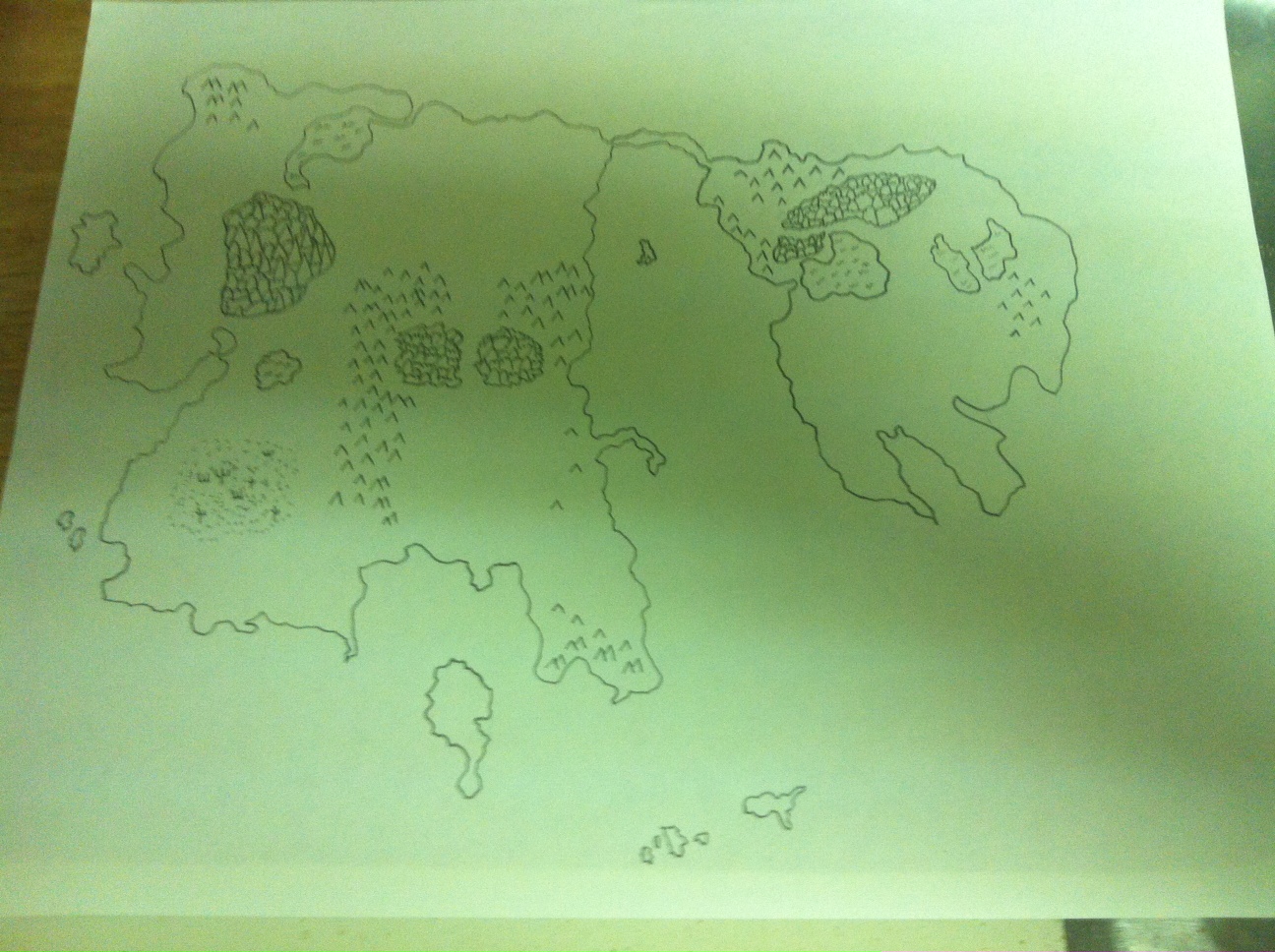
The original concept map for Reagul

The Realm of Reagul

 One of the longest projects I’ve ever worked on has been a world-building one called Reagul. I originally conceived of the land of Reagul in a computer game I designed back in the early days of computer games. It was called Prisoner of Z’anth, which involved an American soldier during the Vietnam War who comes across a mysterious artifact in the jungle that points to a sinister organization working behind the scenes of the war. As he battles his way through enemies, he comes to a portal they are protecting that takes him to the land of Z’anth, a realm completely in Earth’s middle ages but filled with dragons and strange creatures, as well as humans who know nothing of Earth. The story in Z’anth opens up to a revelation that this land was once linked with Earth many years ago, and that an alien race may have been responsible for why all of these people are on this planet. The game itself concludes with a final battle against an evil sorcerer who wishes to control everything around him and is now intrigued to discover there’s a world (Earth) he has yet to conquer.

 A few years later, I created another game called Lessons in Death, which took place in the year 3000, when Earth has been taken over by an emperor who seeks to subjugate the known universe. The peace-loving Eden System comes under attack, and a young female ensign from Eden named Laura begins a quest to destroy the emperor and the empire. It starts out as a space battle and then becomes a medieval sword and sorcery tale on a planet that comes to be known as Reagul. As you might suspect, Reagul is none other than the original Z’anth.

 This game eventually became my novel Destiny, which is basically the introduction to the Tales of Reagul, whish strangely begins 3000 years after the saga actually begins in the first series of the Tales of Reagul. Let me explain.

 During the early days of the Roman Empire, an alien race of beings called the Minions takes a large group of Roman citizens from different locations across the empire and moves them to the planet Reagul. As you start to discover, this is not the first time they have done this to human civilizations, having done this with the Egyptians before and the Greeks soon after. They have also transplanted creatures from other planets, running experiments to see how different species interact with each other.

 At some point, the Minions are called home to fight a war that has been taking place in their home solar system. Realizing they must leave soon, they train a young man in their ways, basically giving him the knowledge of a civilization that is thousands of years ahead of anything ever seen before. His new knowledge makes him so powerful, he becomes the first wizard/sorcerer of Reagul, and his name is Sarbonn.  After the Minions leave, Sarbonn attempts to continue their work of protecting the planet, but he also starts to discover that he’s not the first one they’ve trained, as he begins to discover hints of something referred to as the Dark One, a former trainee who has become so powerful that he has gone insane and seeks to destroy all life through a process of chaos and destruction.

 But Sarbonn, oblivious to this future danger, trains two young sorcerers who become his “children”. Over the years, all is fine, and the kingdoms of Reagul begin to grow with the usual sorts of skirmishes that happen when humans try to create civilizations in different places but are close enough to influence one another. Then the process begins to fall apart.

 One of Sarbonn’s “children” decides that because he is so powerful he should be ruling mankind instead of serving it, so he begins a war of aggression that eventually leads to him becoming the emperor of Reagul. Finally, Sarbonn and his other son must confront this upstart, which leads to a cataclysm like none ever seen before.

 Meanwhile, the shadow of the Dark One continues to spread its tentacles, planning and waiting for the right moment to strike.

1 small

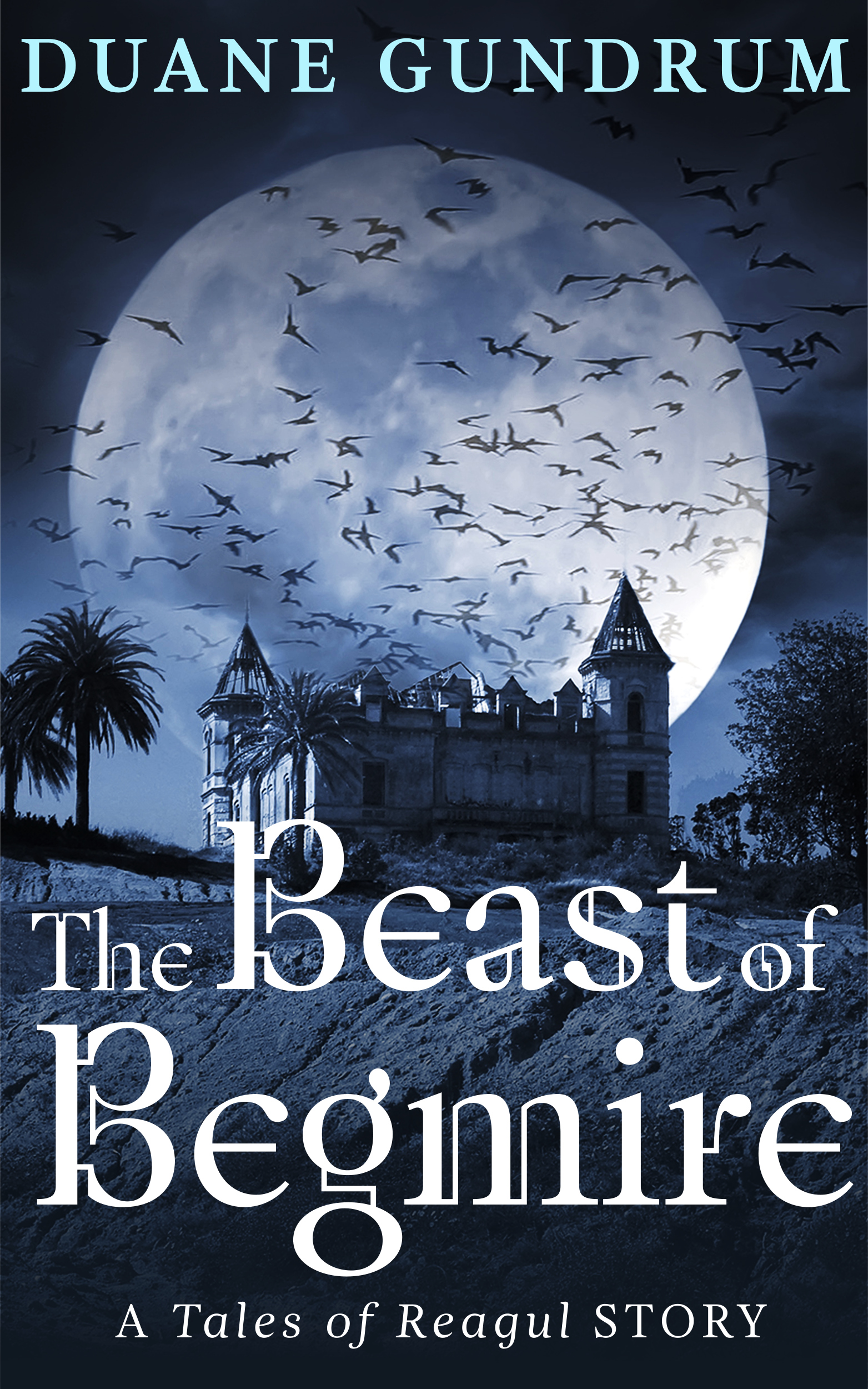
The first novel will be released later next month, and it’s called A Season of Kings. Later this month, the first teaser will be published, which is called The Beast of Begmire, which tells the story of a mysterious sorceress who comes in battle with the Dark One some time after the events of the first three books.


Beast of Begmire - High Resolution

The Countdown to Being Solo Is Around the Corner

I think I mentioned that I decided to quit my job a few weeks ago. I put in my notice, and I have a little over two weeks left. A couple of days, I almost quit on the same day I was working, but I’ve perservered, and my last date of work will be December 24th, Christmas Eve. There’s no significance to that day, but that will be my last day of work.

So far, no other jobs have lined themselves up for me. And I’m anticipating that it’s probably not going to happen either. This means I really need to make it as a writer, or I’m going to starve to death. Simple as that. I won’t even get unemployment benefits. I kind of screwed myself on this one, but I’m trying to move forward with a positive disposition, no matter how many dark thoughts keep overwhelming me about this decision and its process as its being carried out.

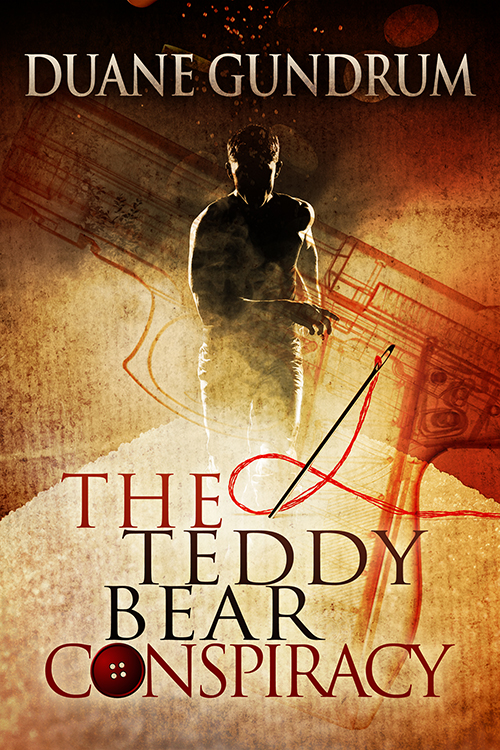
Monday, I have a release for one of my new novels, The Teddy Bear Conspiracy.

theteddybearconspiracy2a

I ran a 2 month contest on Goodreads for this book, and nearly 600 requested a copy of it. I am giving away 10 copies. There’s still a few more days left in the contest, but I’ve given up hyping the contest. Check one of the older posts, or just go to Goodreads if you’re interested in that. I also listed a giveaway of The Ameriad through Library Thing, which I did this morning, and it has about a month before it will complete its giveaway process. I don’t have an immediate link to that one, but you can definitely find it if you just go to Library Thing’s site and search for it under giveaways.

But anxiety is definitely beginning to emerge for me because so far this month, I haven’t sold a single book on Amazon. I’ve sold a few through Barnes & Noble and Kobo, but Amazon, which is usually the one that does the bulk of the selling, has been dead cold for me this month so far. That is not a comforting feeling. Remember what I was saying about starving? Hunger pains are already starting to emerge, and I’m not even at the no food stage yet.

After the Teddy Bear Conspiracy goes live, my next project involves a romance series I’m writing with a female writing friend of mine, and then I’ll be heading for a “sometime in January” release of the first book of the Tales of Reagul series, A Season of Kings. Actually, it’s not really the first book, as Destiny was the first book, but I did something a little strange with this series that not too many other writers do with a series. The first book, Destiny, starts 3000 years after the Tales of Reagul series begins, which kind of makes it an interesting universe for someone following the saga. To explain:

During the period of the Roman Empire, a small group of villages were snatched up by an alien civilization and placed onto a planet called Reagul, where an experiment was being conducted to see how civilizations handle in different environments (the original Rome being the control group, and Reagul being the experiment group). One of the citizens of the new Reagul is a young man who eventually learns all of the alien technology (to be the shepherd of this planet) and immediately after he learns everything, the aliens are called back to their home system to fight a war that is obliterating their people. The young man becomes the prominent wizard of Reagul, as everyone sees his technology as magic, and with such knowledge, it practically is. This begins the Tales of Reagul. 3000 years later, which is about 1000 years in our future, the human empire has spread across the stars, and a coloony comes under attack from the empire. A survivor of the assault leads a mission to destroy the empire by killing the emperor, which brings her to the planet Reagul, where it is discovered that her abilities (the reason she was chosen for the mission) rival those of the wizards of Reagul, indicating a tie between her planet and the strange alien race that contacted them years before (obviously being the same aliens who started the experiment with Reagul in the first place). That loater story is Destiny.

As you can see, it’s kind of complicated, but it’s a great, fun story. The first of that story (aside from Destiny) is slated for release in January.

The next project is a sequel to Thompson’s Bounty: A Ship Out of Time, my time travel adventure involving pirates and the Coast Guard. The new adventure will take Thompson and his crew into the Greek and Roman eras. That should be a lot of fun to write (and hopefully, read). People have been asking for a sequel to this novel for years now, so I finally started plotting it out.

The other distant project is my Deck Const series, which received a bit of fame from a series of short stories that I published back in the 1990s in some of the pulp magazines of that time. They were often referred to as The Soldier stories, and there was always a hint of something called The Deck Const in every one of them. I’ve finally finished the first draft of three novels that I’m reworkiing for publication. It’s a dystopian suspense series of the last soldier who is trying to rebuild civilization while on the quest to find a mysterious talisman only known as The Deck Const.

That’s kind of an update for now. Not sure if anyone even reads these updates any more, but just in case this is being read by soldiers from the future who are in search of the elusive Deck Const, let this be your clue that it exists and perhaps you are one step closer to finding it and rebuilding civilization again. Until then, sorry life kind of sucks for you right now, but dystopian societies can be that way.

The Craft of Creating a World That Doesn’t Exist Yet

One of the few joys of being a writer, especially a science fiction/fantasy writer, is being able to craft an entirely new world. When I first started writing, one of the mistakes I used to make was just to create a generic world that seemed like it could have been any place and then kind of hope that people would gravitate to it like Middle Earth or some brilliantly constructed world like the ones you might read in a series like the Wheel of Time. Unfortunately, it took me some time to realize that it doesn’t do your story a whole lot of good if the land you create is generic and unreal. Unfortunately, it took me numerous stories to start to realize that it needed more than just a generic compass heading.

So, fast-forward a few years later, and one of the worlds I have been constructing for over a decade now is one called Reagul, which for a history lesson is a land that was terra-formed by an alien race and survivors of the Roman Empire were transplanted onto the planet in some elaborate experiment of social species interactions. In this land, magic exists in the guise of advanced science, taught by the founders themselves, and the people who grow up on this planet have knowledge of Earth, but over time begin to talk about Earth as more of a legend than something real.

But to do this, I needed an actual land mass that might make sense. So, years ago, this was the first drawing I created that was supposed to represent the main continent:

Reagul2

It was originally a pencil drawing, and it served as the ground work for a novel I wrote called Destiny, which was a revisit to the land of Reagul 3000 years after the inhabitants founded the civilization there, which if you equate it to our time line, means that it takes place about one thousand years in our future.

Over the last decade, I’ve been wanting to write the story of that land that occupied that 3000 years that I hadn’t yet discussed. So I started with a time line, and slowly incorporated a rudimentary outline to explain what happened over time. This was the birth of Sarbonn, the first great wizard of Reagul (and not ironically, the name of this particular web site where my blog is hosted). Over the years, I’ve written numerous short stories about Sarbonn so that he has become my one great story that kept being told over and over with more and more flesh each time he was revisited.

But the story of Reagul still hadn’t been told. And thus, I created The Tales of Reagul, which was a 400 page novel that built the foundation for where the first three hundred years of history might take place. And then a few years ago, I realized that even that story was more of an outline, which has propelled me to begin writing the trilogy that will fill in the gaps that this first story so desperately needed. In the next few months, the first novel of this trilogy will be released, called A Season of Kings.

1 small

As part of this project, I went through and started to flesh out more map-oriented information:

Reagul1

My latest addition to the project is to hire a cartographer who I hope can turn my weak attempt at a map into something solid, something that gives Reagul the respect it so deserves. I will keep you informed on the progress of this, as it has to happen before the first novel is completed.

Building Worlds as a Part of the Writing Process

A few years ago, I read a book by Richard Bartle, titled Designing Virtual Worlds. As an avid game designer and player, the idea of building worlds has always fascinated me. As a writer, however, designing a world has always been a process that has existed within me, and it has often made crafting a story one of the more difficult projects. In the beginning, when I first started writing, designing a world was simple. It was essentially Earth with different people in it. Oh, sure, every now and then there’d be a dragon instead of a rhino, but honestly when it came down to it, I wasn’t really designing anything; I was recreating what was already there.

As I matured as a writer, I came to realize that the world one crafts is as important as the story itself. Since then, I’ve created a couple of worlds that have existed as part of my writing. Two of them are important enough to discuss here, so I’ll introduce them now.

Reagul was my first real virtual world that I created. It was originally a part of a science fiction/fantasy hybrid I wrote over a decade ago that takes place in the era of Earth 3000 A.D. The Earth has become an empire, and one of the planets in its sphere of control is the medieval-like planet of Reagul. It was during the writing of the novel Destiny that I started to realize that Reagul was more imortant than just a setting for a large part of this novel. It took on a life of its own, and later it became the centrally located planet for the series of stories that became the book, The Tales of Reagul.

Reagul was a fascinating place because it was an experiment of an alien race known as the Minions, who were testing on human subjects from the young planet Earth. During the first century B.C., the aliens transplant a Roman collection of villages from Earth to the new planet. This series of villages grow up to become the central characters of the stories that take place on Reagul. A large number of short stories I wrote have been published in that series, even though most magazines at the time never knew there was a connection between any of these stories. In it, a whole literature was born that has continuously moved the history of this planet, which has nearly 3000 years of history before it reaches the point where it coincides with the first novel (the previously mentioned Destiny).

I figured that I would probably only write one major series in my lifetime, and it was going to be the Reagul series. And then the Soldier came along.

The Soldier was a character that started showing up in some of my earlier writings, first published in Lost Worlds magazine. That first story was mainly about a soldier who has been traveling since separated from his army, but even as I was writing, I realized there was something wrong with this guy, that he was much more than just a normal soldier. That’s when I started to realize that he was on a quest for something, something for which he was going to be spending the rest of his life looking. This item became the Deck Const, which then became the central talisman in my latest novel Rumors of War.

The Soldier is unique because his story is a world all by itself. He lives in a dystopian future where civilization has crumbled, representing an army of a nation that no longer exists. At the same time, his journey has been chronicled long before he was ever born, and many more people know as much about him as he does about himself, even though they have never met him. He becomes a mysterious character, even to himself, but at the same time is on a linear path, seeking out something that will bring civilization back together, while at the same time giving him a reason to exist.

The world of the Soldier is one of those that I often found myself returning to because it was so interesting. At times, he finds himself in a Hobbesian nightmare of a society that has fallen apart, but every now and then he comes across glimmers of hope in the waste lands, and often he is the instrument that brings forth that hope to others.

The point is that it is not just enough to write about a place and call that a “world”. There is so much more to the process than that. The people within that world are just as important to the world as the world itself. The Soldier couldn’t live in Reagul; he just wouldn’t belong, and he’d change that world into something much different than it is. At the same time, the sorceror/wizard Sarbonn (which is from where the name of this site emerged) could never have existed in the Soldier’s world. Both worlds are products of their people and their environment.

This is why so many science fiction stories set on bizarre worlds just don’t seem to work. The writer was spending so much time focusing on the world, or the character, that he or she never realized that the two needed to fit together somehow, and quite often they do not. Harry Harrison’s Stainless Steal Rat is a product of his environment and fits it so well. Asimov’s Mole fits into the Foundation universe that he created (which by the same measure his robots never fit into the Foundation universe, which is why the end of his Foundation series seems more forced than the earlier part of the series; you can’t force one series into another, or one world into another where they do not belong).

An example of a strong failure of this approach is the Fallout series, especially the recent one (Fallout 3). It was a great universe (or world) with the ultimate Dystopian wasteland, but then in one of the add-ons, they decided to add aliens to a universe where they really didn’t belong. Granted, in each story there was always a mention of an alien crash landing, but it was always a technique to give the player an out of control, overpowered weapon with many questions left unanswered. With the alien add-on, it took a Dystopian nightmare and turned it into an alien blaster story. They just didn’t belong in the story, and it diminished the universe as a result.

As a writer, there’s always that fine line that has to be traveled, and once one goes over it, it’s the literary equivalent of “jumping the shark”, even though I’m using the term incorrectly as “jumping the shark” was never really meant to be about going too far (it was always about trying to regain what you had before by doing something stupid). But that’s for another column.

One thing that’s interesting about building a new world is that sometimes that world can get out of one’s control. Star Trek is a good example, as is Marion Zimmer Bradley’s “Darkover” series. Both were great universes where the author/creator designed something magnificent. Then the fans took over. In Roddenberry’s case of Star Trek, the fans became such nitpickers that Roddenberry couldn’t make a decision without someone quoting a previous episode as to why a new episode was in error. With Bradley’s “Darkover”, the fans started creating sequels to the story, and it got to the point where the universe was somewhat out of Bradley’s creative control.

In the end, what can be said about building worlds is that there must be a reason we do it. Some would say we do it to explore our own universe, while others might say we do it to branch out and see things we can never imagine in our own world. For me, it was just a lot of fun, and the characters sometimes just make it all worthwhile.