Category Archives: News

Hate crimes that seem to sneak in under the radar

We all know there are some hateful people out there. We see the evidence in the news each and every day. What often escapes us is the fact that a lot of this stuff is happening around us, or in places we’d least expect it.

Take Thunder Bay, Ontario for an example.

You may wonder why I’m discussing Thunder Bay, as I suppose quite a few of you are probably wondering where is Thunder Bay, as in you probably have either never heard of it, or you just never gave it much thought. For me, however, when I saw a recent article, all sorts of memories came to mind. My family (on my mother’s side) is from Thunder Bay.

Every other summer or so when I was a kid, what little there was of my family used to drive from California to Thunder Bay, Ontario. Each time we took the trip, my mom would point out that it used to be called Port Arthur, and that she was born there after her father moved to Canada from Poland after the war. And then during one summer, she and two of her friends took a road trip across the United States and settled in different locations (her best friend in St. Cloud, Minnesota, her other friend in Florida, and she in Santa Monica, California…where I was born).

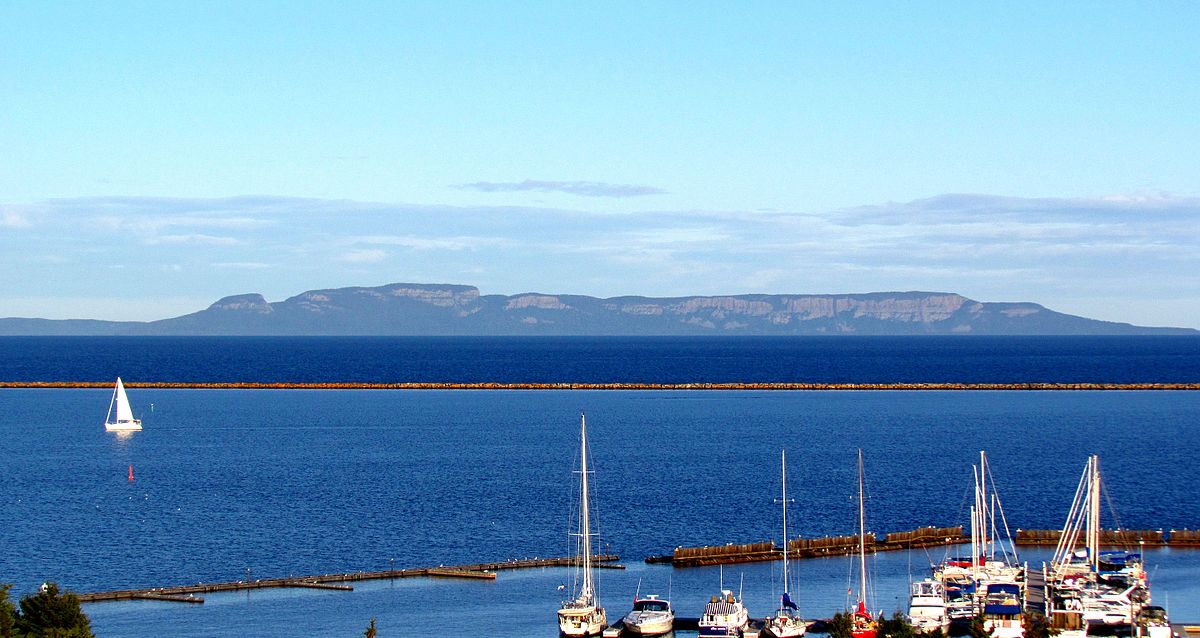
When we used to take this trip, one of the things that used to fascinate me was the local lore, and specifically the tale of “the Sleeping Giant”, which was the story of a giant Native American who fell asleep on a mountain until one day he would be woken up to aid his people again. It’s a natural rock formation that looks like a sleeping giant, and I remember being able to see it from most areas of Thunder Bay.

Anyway, so years later, I’m reading an article and discover that Thunder Bay is back in the headlines. Except, this time, it’s because some racist moron threw a trailer hitch at a Native American woman walking down the street. What the article doesn’t tell you is that the woman eventually succumbed to her wounds and died. The local Native Americans refer to the crime as a “hate crime” but in all that I’ve read, law enforcement is treating it as a general crime that was originally being treated as an aggravated assault, and now that she died, are “considering” changing the charges. There’s a certain amount of dismissing of the crime in the rhetoric, and one can’t help but wonder if it’s because it was “one of them” that died, rather than “one of us” as so often happens in these types of circumstances.

Which brings me to ask the question: What must be going through someone’s mind that thinks this type of behavior in the first place was either acceptable, or that it was something that might be fun to do? I remember when I was young, and I heard that some of the older kids were going to be “heading into town to do some gay bashing”, and never gave much thought (back then, at least) to what that probably meant. Those young people back then thought that was a completely acceptable thing to do, just as much as this guy driving around in the passenger seat of his car thought it was a pretty appropriate thing to do to just throw a trailer hitch out of a car window and laugh when he said “got one!”.

What no one really talks about is that our communities brought these people up to feel that this sort of thing was okay. We defend ourselves by saying that we would never do such a thing, but then we’re shocked when someone who lives next door to us is charged with doing just that.

At what point are the rest of us also responsible? I ask because I really don’t know the answer to that, and I suspect that we’ll never find out because it’s never being discussed, and I doubt it ever will.


The Problem With National Intelligence and Classified Information

One of my pet peeves has been the concept of classified information. It’s commonly used as a gatekeeper to give some people access to information and keep others away from it. When people talk about it and think about it, it’s often considered of significant importance that this information is kept classified and away from other people who don’t have access. Strangely enough, no one really seems to think about it from the perspective of wondering why we keep all of this information classified in the first place.

In the old days, and I mean like the 1940s, classified information was important because it meant keeping it away from the Axis powers who meant to do us harm. During the Cold War, it was to keep the information away from the evil KGB and their cronies who were out to do all sorts of harm to the US people. I guess now it’s being kept from terrorists who, of course, mean to do us harm.

What I find myself asking more and more these days is why is the stuff we keep classified actually being kept classified. And almost always, the reasoning seems to fall short of any test of logic.

I was looking at the requirements for working for the State Department the other day and noticed that to be in practically any position, including a mechanic, you need at least a Secret clearance level. And this immediately started putting my thinking process through the obvious channels of one thing leads to another. I thought, why does a mechanic need a Secret clearance? And then you go through the usual Kevin Bacon approaches to connecting dots and start thinking “well, he might be working in the motorpool one day when some guy with Secret information might be talking about secret things.” And then you realize how absurd that is because the guy with Secret information shouldn’t be talking around people who don’t have clearances in the first place. And that got me thinking, what exactly would someone in the State Department be talking about that should be classified? And basically, it kept coming back to even more questions that bothered me because in each case, the “Secret” information appeared to me to be information that might be embarrassing if it got out but generally not something detrimental to the country itself.

And that’s what I’m starting to realize is the reason for most of our classifications today. We make things Confidential or Secret because we really don’t want anyone else to know what it is we’re tracking or talking about. Yet, the information we’re talking about probably shouldn’t be classified in the first place.

We live in a country that values its freedoms. But in order to truly value those freedoms, the people of that country need to know what their leaders are actually doing. But we don’t. Because they classify everything to make sure that we don’t know what they’re doing.

Does this protect our country? Not in the slight. As a matter of fact, it makes our country even more vulnerable because its people are putting others into power based on limited knowledge of what might really be going on. And we’re told that it’s better this way because what’s really doing on is too important for everyone to know what’s going on. It’s kind of one of those vicious cycles that doesn’t ever get any better.

So, who are we supposed to be protecting this information from? The Russians? The Chinese? The North Koreans? It all sounds good in theory, but in reality, so little of that information that is classified these days would make a difference if any of those entities actually knew what was going on. Well, maybe the schematics of how to build a nuclear device, or something like that, but that’s not really what we’re classifying. We’re classifying conversations between people who couldn’t build a nuclear device if their lives depended on it. They’re bureaucrats who really don’t have a lot of intricate knowledge about anything.

I sometimes think the majority of the stuff they classify is just to appear more important than they really are. And this mentality feeds upon itself and often makes things even worse.

Back when I was in the service and working in that field, I used to see things become classified that had just been printed in the New York Times. But because some bureaucrat read it, he would then type up the same article and then declare “SECRET” or even “TOP SECRET” and make sure only those with high clearances were able to read it. But the newspaper article would still be out there, being read by anyone who bought it, including parakeets who had it lined on the bottom of their cages. And as sad as this seems to admit, people were threatened with being brought up on charges because of disclosing something that they might have actually read in the newspaper but some other bureaucrat only read it in a security briefing (because of that doofus who classified it in the first place).

I’ll come out and just say what I believe here, but I think way too much information is deemed classified in a society that should be a lot more open with its information. We classify farm reports, trade manuals, articles from newspapers (as previously mentioned), financial forecasts, political meetings, patents, treatments for diseases and illnesses, phone call records, as well as so much more information all in the guise of protecting “national security.” And honestly, what’s the benefit?

To be honest, I don’t perceive this changing any time soon because bureaucrats love to think of themselves as more important than they really are. That’s never been different in our civilization. The greatest impediment to evolving knowledge is when we hoard knowledge and evidence, yet we seem to do that more and more these days.

A political media trend I wish would end yesterday

donald-trump-hillary-clinton

I don’t know if anyone else has noticed this, but I’m getting really sick and tired of media portrayals of political people that include unflattering pictures of the politician, mainly because the publication responsible for the article doesn’t like the politician. I don’t mean a one-off picture here and there, but I mean EVERY media outlet using the same image over and over again because it’s the worst picture of the politician they can find. Like the one I’ve included with this post. I hate this picture. I’m sure Donald Trump hates this picture. Yet, media outlets that hate Donald Trump continue to use it nonstop. I imagine we’re going to see several thousand uses of it during this upcoming election.

There are a couple they’ve been using of Hillary as well. Mostly they are the ones that show her laughing as she’s pointing at something. She needs to stop doing that because I have yet to see a flattering picture of her doing that. Ever. But at the same time, media outlets need to STOP USING THOSE PICTURES. I could understand if the article is about the picture, but they never are. It’s usually an irrelevant connection (meaning, no connection) but they use it because it makes the politician look stupid.

hillary-clinton-unflattering-photo-cheering

Please stop doing it. NOW!

The Problem With Our Government and Classified Information

For those of you who already know me or about me, you know I used to be a counterintelligence agent. I worked with and about classified information. It was basically my job. What I’m about to say now is probably going to be taken as a bit of hypocrisy or at least with a sense of strangeness. You see, I don’t think most of what is classified these days really should be classified at all. I’m being nice by saying “most”, but in actuality, I mean none of it.

The first part of the problem is that we classify way too much. If some decision-maker thinks there’s a fear of our “enemies” finding out something about what we’re doing, he or she immediately feels that information needs to be classified. In my time, I’ve seen people feel the need to classify newspaper articles. Yeah, I’m serious. Mass-printed and mass-distributed newspaper articles. Someone in our government (and by someone, I mean a LOT of people) reads an article in a newspaper and then decides that information needs to be classified, so it gets made “Confidential”. Then someone up that chain reads the release, feels it’s even more dangerous if our enemies find ou about it and upgrades it to “Secret” or even “Top Secret.” Meanwhile, some farmer in Utah is reading that exact document with his morning coffee because it came from a newspaper, not from the CIA. Yeah, that happens a lot.

Which brings me to the philosophical part of the argument. If we were an autocratic government, or a dictatorship, or some country that basically lives its existence by doing evil deeds in the shadows, well, then, I would think we need to classify a lot of things. But that’s not supposed to be our government. We’re supposed to be a nation that exists as one where the people make the decisions. The people decide who goes into office. The people decide who creates new laws. And at a lot of times, we vote for a lot of the laws that run our very lives. At no time did we elect a dictator-in-chief, nor did we ever sign up for a Master-of-Secrets. We have a free press because our news people are supposed to be able to tell us what’s really going on so we can properly decide on the right people to keep representing us for the laws we would like to see enacted.

A perfect society should have no secrets. At all.

I know the immediate response to this is “but what about our enemies???” The thought is that we need to keep certain information from our enemies to make sure they don’t know what actions we are taking against them.

Okay, why are we taking actions against anyone to begin with? Cause they don’t like us? Cause they hate us? Cause they do dastardly things targeted at us?

What would change if we were more upfront about the information we collect? We have entire police agencies that operate mostly in the sunlight, yet they are still quite capable of stopping a lot of really bad people. Sometimes, they don’t tell the whole story of what they’re doing, and most of the time when that information has been revealed, it turns into a bit of a scandal, and the Monday Morning Quarterbacks indicate that they probably should have been a lot more honest about what they were doing. And even if that wasn’t the case, our police agencies collect information until they make the arrest. And then the courts are privy to the information. We generally don’t try people with “secret” information. The few times we have tried to do that, it has backfired horribly. And yeah, I know there are a couple of instances going on where we’re doing exactly that. Mark my words: Those will backfire horribly, too.

An important question to ask is why do we have enemies in the first place that we have to keep information from? I think if we dug deep enough, we could probably find some circumstances we did in the past that made things as they are. Some, maybe not. But that still doesn’t indicate a reason for having to keep information confidential from people we generally don’t trust. If the Iranians know that we have lots of cruise missiles on ships parked off their coast, knowing about it is probably not going to do them a whole lot of good. But even so, I’m not advocating telling our “enemies” about our troop movements, but about changing our mindset from one of secrecy to one of sunshine diplomacy. We are a very powerful country. If a potential enemy sees us on their doorstep, classifying stupid memos doesn’t change the fact that they’re going to realize that they’re being watched, and they’re being watched by a pretty powerful potential foe.

You see, the problem I perceive is that our secrecy is being used as a type of cloaked power that it was never designed to be. The press, our check on government, is told that it can’t find certain things out because of “national security” when most people know there’s absolutely no national security at stake in most cases that phrase is used. What’s generally at stake is embarrassing information that certain actors don’t want to reveal to the press because it might cause them to lose their leverage in the cloaked power of secrecy they currently maintain. A fresh slate means that people can make honest decisions based on honest observations. Way too often in the past, someone in power has stated that something cannot be revealed because “government knows better”, which is slang for “some moron in government thinks he knows better than you do.” Sorry, but I call them as I see them.

The biggest problem I perceive in my suggestion is that people will constantly cling to the old adages of Cold War philosophy, thinking that diplomacy is a weapon rather than a tool. We still think in terms of how another country can benefit us rather than how we can use this mega machine of democracy to develop more democracies and, in turn, fix our own. Because in case you don’t realize it, since 911, we’ve moved further away from democracy than we have in decades, and we’re still cascading down that path towards oppression. And most of us don’t even see it because we’ve been blinded by nearly a century of having gone the other way.

Government should never be used as a vehicle to drive over its citizens, but as an implement to take those citizens to somewhere better. Right now, we’re going through a pre-election period where absolutely NONE of the candidates are talking about that better road. Well, one of them maybe, but he’s being cast aside as inconvenient rather than as an actual player. Which means we’re going to have nearly an entire decade of continuing to travel down the wrong path without ever realizing we’re not even traveling to the place we set out to go when we first started.

Why white privilege is the wrong battle to be waged in seeking equality and justice

There’s been a lot of talk lately involving the concept of “white privilege” and how quite often a Caucasian will misunderstand his or her benefits of being white while trying to appear just towards those who do not maintain the same generic status. Some examples are the #alllivesmatter versus #blacklivesmatter, which is often used as an erroneous argument of “I care about everyone, not just a particular race.” And then from there a whole diatribe is usually leveled on the idea that anyone who is born white exists in a world of privilege that others can never reach.

Some of it is correct, but in reality, people with diabolical purposes are using these arguments to create a false dichotomy, something I often equate to a framing issue rather than a normative one. Let me explain.

The argument is that someone born white has certain advantages that are not afforded to someone who was not. Examples include: Cops tend to shoot non-whites more than whites; whites are less likely to be convicted of crimes than are non-whites, a white male with a prison record is more likely to get a job than a non-white person with a prison record, etc. Many of these can be summed up in this comic about white privilege. What people don’t seem to understand when they post these kinds of arguments linking to this type of information is that it doesn’t mean what they think it means.

word means When someone makes that argument about white privilege, it is followed by an insinuation that those are actually benefits, rather than lucky brushes against much worse circumstances. The fact that I’m a white male should not then be met with “well, aren’t you lucky that you don’t get railroaded by the system by cops who might hate you.” It should be met with “cops shouldn’t be railroading anyone anywhere”. It’s like we’re already on top of a slippery slope that is continuing to force us back to unwanted situations rather than we should all be on a flat surface trying to make sure that no one creates the slippery slope in the first place.

This is why #alllivesmatter is not an adequate substitute for #blacklivesmatter. Sure, all lives matter, but all lives are not being targeted. Black lives are. Therefore, a movement to make sure that doesn’t happen became necessary. #Alllivesmatter creates an “issue” that doesn’t actually exist so that if that takes the other’s place, we’re left with the situation we stared with: People doing nothing because it doesn’t affect them.

So, what’s my point? Stop focusing on white privilege because that is not the problem. The problem is the opposite: Minority Disadvantage. THAT is the issue that should be dealt with rather than trying to create a wedge between those being oppressed and those who might actually care that there are people being oppressed. This is why Occupy Wall Street was such a powerful voice that quickly got squelched by those who feared its power. The real oppressors are the ones who actually do have the power, the one percenters who control manufacturing, media and even the police forces. Without turning this into some outdated communist manifesto, the problem is that the people who need to band together aren’t because the people creating the messages for them to follow have done so in a way that only creates an us versus them dynamic but in a way that never actually addresses what needs to be addressed.

So, how do you find answers in a civilization that is so blinded to its actual problems? Well, we could do what my grade school teachers always said: Start at the beginning. How did it happen? If we trace the time back hundreds of years, it’s not hard to figure out that the government we live under was created by rich people who wanted to continue being rich (meaning others would have to be poor). This isn’t the social model people constantly think we’re living under because that social model would actually look at the group of people around us as equal and in need of the same benefits as everyone else. We don’t live in that society. Sure, we pretend to, but when it comes down to it, a person who has little is going to always have little to none, whereas someone with much is probably going to end up with even more. That’s the civilization we live in.

How do you recognize that if you’re currently living within its infrastructure? I can conduct a simple experiment just by walking into a bar and talking to the first woman I see. In the US, the chances are that the conversation will hover on what my job is (and how much I make) before it turns into anything more interesting. I’ve had this same conversation in many other nations, and strangely enough, it was usually me that thought I had to bring up money as apart of what makes me be me. It took years to realize that the further away I moved from centralized capitalism, the less focus there was on income as what someone is worth.

So back to my original question. What steps should we take to lead to a future of equality and justice?

I hate to go all Socratic, but if you want justice what steps are you taking to actually achieve it? Do you hold conversations with people who aren’t like you? Do you comment when someone says things that lead to injustice and inequality? I’ve listened to conversations in mixed demographics where some people have said some awful things about people not present in the conversation. What I find interesting is how many people don’t say a thing, or even worse, escalate the conversation to even worse levels. Speaking up in these circumstances is difficult, and I’ve felt the tug almost every time I have done so. But what bothers me is how often those moments go unremarked, almost as if they’re okay.

The same thing is happening today in our political atmosphere. We have some politicians saying some awful things, and so few people are even casting a light on these moments other than to treat it as a news cycle rather than say: “Hey, by the way, there’s an awful racist running for office. Here’s what he said.” And even in the few circumstances where this has happened, the people listening are responding with the thought process of “yeah, but he’s better than those other guys.” If our canary in the mine is at this level, we’re going to be breathing some pretty toxic fumes sooner rather than later.

So, what’s the answer? Right now, I don’t perceive one because I think we’ve moved so far down this road that we’re not going to turn around. Sure, a nation can adjust, as many have before (I mean, face it, we aren’t ruled by divine kings any more, so eventually we can make huge changes), but I don’t see our current civilization all that anxious to try to make things better for everyone because until someone is scrounging for scraps in the gutter, people aren’t all that focused on change. And when you reach the gutter, people stop listening to you and wait for you to die. So, rational change isn’t to be expected.

Irrational change, however, is a different story. That’s the sort of punctuated equilibrium that no one ever sees coming. Unfortunately, we’re coming closer and closer to having that as our process of change, only because most other methods have fallen on deaf ears or were dismissed by people who are pretty happy with the limited value of the status quo.

But what do I know? If I was truly wise, I’d be a rich entrepreneur and well rewarded in the society in which I live. There’s a joke in there somewhere, if you look hard enough.

The Problem of Dealing With Race By Invoking Historical Ancestors

Race seems to be a big issue these days. I guess that’s a good thing. It means people are thinking about the concept and discussing it with others. At least that’s my hope. In some cases this is massively necessary because it helps deal with oversights that have been going on way too long. In other cases, not so much. What I see is that in those types of cases racism as a concept is used as a process to silence others or to beat people over the head in an attempt to collapse all disagreements under the blanket of racism, even if the individual artifacts we’re discussing may have had little to do with racism (which is why blanket criticism is used).

But this post isn’t really about that. Like I said, I’m glad people are addressing racism. There’s just way too much of it present in this day and age, even though a lot of closeted racists would really like to put forth the idea that racism is gone (so they can stop being rightly accused of being racists, or at least apologists for the same). What this post is really about is one of those commentaries that shows up in these discussions, and quite often this commentary comes in groups of people who don’t actually deal with racism in any way.

I know that sounds confusing, but let me explain. People who address and call out racism are quite often those who are directly affected by it. Racism directed toward race is more often addressed by African-Americans in U.S. society because let’s be honest: African-Americans are far more the targets of racism here than most other demographics. Sure, any minority race and/or ethnicity is a potential target for racists, so I don’t want to make an argument that assumes otherwise. But overall, African-Americans are going to have a better chance of perceiving racism more than a Caucasian because racists are pretty one-sided when it comes to this dichotomy. Sure, an African-American can be a racist, but part of what makes racism as powerful a weapon as it is is because it also has a mechanism of power to be used against the victim. A group of African-American racists standing around the streets of Wall Street aren’t going to chase a non-African-American away from Wall Street because the background of Wall Street doesn’t support such an attempt to alienate the victim, but a group of Caucasians targeting a non-Caucasian on a street of Wall Street might cause someone from that targeted demographic to think that Wall Street isn’t a safe place to hang around. The point is: Racism involves power, but it also requires power in order to be effective.

As an academic, I find myself around a lot of people who quite often invoke specific arguments whenever it comes to the idea of racism. I’m also a moderator on a very active current events message board, so I see all sorts of commentary that comes from that origin as well. And what I’ve come to observe is something I don’t believe a lot of people realize seems to be happening around them. And specifically, this sort of racism that is happening today is also very localized in its temporal vicinity (the time it inhabits right now). As a result, people today who are frightened of being perceived as race-challenged (or “racists” for lack of a better term) will do everything possible to avoid being cast as villains in this dynamic. As such, it’s not surprising to hear someone say something along the lines of “I’m not a racist because I have a friend who is black.” Okay, that one is kind of obvious because we’ve all heard that one and know how it’s almost become a punchline to a joke no one wants to admit making.

No, part of the problem stems from an argument that orchestrates how a lot of people who are a part of the problem that they don’t even acknowledge exists. We all know the argument, even though we don’t think much about it because we discard it because of its simplistic nature when we should have thought about and realized why it makes things worse rather than explain things away. You know you’ve heard this argument whenever you hear someone say “Well, my ancestors are from Europe, so I wasn’t responsible.” It’s one of those arguments made in hopes of closing off conversation (and hoping the topic changes as well). But think about it. If someone’s ancestors were from South Carolina, does that make that particular individual responsible for racism that happened 150 years ago and several generations ago as well? Probably not. But that’s only if you feel that responsibility ends with theoretical people who may or may not have been personally involved. Are people complaining about stuff that happened in the 1860s? I don’t think they are. We all know that horrible things happened back then, and we all pretty much agree today that if we could change things, we would make sure they didn’t happen again. Or would we?

And that’s where that argument that gets made loses its traction. There are problems happening today, and rather than deal with them today, we have people saying they shouldn’t have to be responsible because they weren’t around 150 years ago. But again, the problems exist today. What are any of us doing to change things here and now? I would argue “not a lot” because if we were all doing something to make things better, my belief is that things would be better.

Instead, we have ghettos, slums, income disparities, fenced off housing, more cops than educators, hostility towards certain populations, massive corruption in places that should be making a difference, and finger-pointing rather than any desire for accountability. An example is the City of Detroit. It practically collapsed due to white flight and inner city corruption. Instead of solutions that work to fix these problems, we end up with right versus left rhetoric, race baiting and people who support corrupt leaders because to not do so means giving ground to racist rhetoric. In other words, NO ONE is seeking to fix the problems, and the few who are seem to basically be drowned out by the people who find more importance in criticism and looking for scapegoats.

So, what’s the solution? Well, let’s stop caring about what the color of someone’s skin is and start looking at how we can make the neighborhoods of people prosperous and worth living in. That means also changing our criminal codes so that “crimes” that don’t hurt people stop being crimes. If “drugs” are seen as a problem, convict people to treatment programs rather than criminal institutions. Some aren’t going to be fixed the first time, but a responsible civilization doesn’t give up after the first time. It keeps trying until it works.

We also need to change our financial circumstances to benefit all. Yeah, a lot of very rich people are going to hate that. But having a few pissed off people and a civilization filled with thriving individuals seems like a good trade off. This A. Rand society of doing well and screwing over everyone else needs to end.

We need to stop going to war because some group of people don’t think like we do. Different thinking people should be interesting, not enemies. The reaction is that we need to do this because there are people out there trying to kill us. They’re trying to kill us because we always go to war against people who don’t think like we do. That tends to lead to diminishing returns. Change the thinking; change the outcomes. It can be pretty simple. Of course, the naysayers will say no because they only know the institution that we are currently in and like the frog in a well who sees only the circle of light in the sky, we’re never going to see constellations in the paths of other wells if we never get out of the well we’re currently stuck in. Just saying.

Or we can keep doing the things we’re doing and hope that somehow things get better. But they won’t. So good luck with that. I’ve given up trying, so I’ll be playing video games while the world crumbles around me. At least I can accomplish something with a high score. They don’t give Nobel Peace prizes for that, but I guess that’s just cause I don’t own an army that kills a lot of people. Yet.

The Problem with Bernie Sanders Isn’t Exactly Bernie Sanders

There’s been a lot of talk recently about Bernie Sanders as an alternative to Hillary Clinton for those who really don’t like Hillary Clinton as a candidate. Sanders has done a great job of showing that he’s an “outside” candidate that doesn’t go along with corporate greed and all of that. As someone who basically isn’t all that fond of Hillary Clinton, I was seriously looking at Sanders as an alternative, but then I started thinking. What makes anyone think that Bernie Sanders is going to be that much better of an alternative to Hillary Clinton in 2016 than Barack Obama was a better alternative to Hillary Clinton in 2008?

Think about it. Part of the reason why so many people like me don’t like Hillary Clinton is because she’s as close to a corporate follower as you can get (aside from being a current Republican). When she takes office, she’s going to give Wall Street exactly what Wall Street wants because she needed Wall Street to get elected, and let’s face it: She’s a freaking elite who is going to do for the elites what elites generally do for elites. She’s not one of us. Hell, even Bernie isn’t one of us. We don’t have one of us running for office, and when one does, he or she is so far marginalized that we never hear from that person again.

Obama was going to be the outsider response to Hillary Clinton in 2008. Unfortunately, what happened once he took office was he discovered that Washington doesn’t do anything different than the way Washington likes to do things. Wall Street doesn’t comply. Politicians don’t change their ways. And the rich don’t stop doing what they do in order to embrace new ideas. No, things stayed pretty much the way they have always stayed.

Some things got better. But marginally. Not so that students mired in student loan debt were relieved. Students loans were addressed, mainly to spread more margarine on the butter so that things didn’t really change, but people got to say “hey, look, change!”

That’s what’s going to happen with Bernie Sanders. He’ll get to the White House (if he wins) and see that the Republicans aren’t going to allow any changes. Hell, the Democrats in office aren’t going to allow any changes because they’re filthy rich millionaires that don’t want to rock that apple cart any more than they have to. Wall Street will continue to rape the American people, and politicians will take their payments while pretending to care about doing something about corporate greed.

Change isn’t going to happen until government holds corporate greed hostage, and that’s never going to happen in our system. We live in a capitalist system that rewards greed. How do you change the system from within if everyone who makes change is receiving kickbacks from the system in the first place?

So, we can all vote for an outsider, but he’s either going to become an insider, like Obama did, or he’s going to remain an outsider (more like a Carter) who can get absolutely nothing done. That’s kind of the problem.

Why Has the World Gone Downhill? An Analysis of Violence


One of the common tropes in storylines, especially for fantastical fiction, is the idea of returning to a period of time when things were “the old ways”, kind of like a time travel journey to the 1950s, or even a trip to the ancient past. The main character is seen as a fish out of water as he or she tries to use his or her knowledge of that time (and his or her future time) to get through such an experience. Now, part of me was thinking of focusing this post just on the writing aspects of this sort of speculation, but while I was thinking this through, I started to wonder something, and specifically I was wondering why we became what we are today rather than having continued the way things were “back in the day.”

This was prompted by an article covering a shooting that took place in Denmark and how that community (and that country) is now having to do things to make sure that such a tragedy doesn’t happen again. In other words, they are going to become a lot like other places around the world where violence is somewhat expected. I mean, no one wants to be caught off guard, right?

And that got me to thinking about that infamous line that used to happen in the United States whenever something tragic occurred. If this was the 1950s, the response would be something along the lines of “I can’t believe such a thing like that could happen here.” Or my other favorite: “I can’t believe Bob did that because he always seemed like such a nice guy. That sort of thing just doesn’t happen here.” I think you might be getting the picture.

In the 1970s, that message, while still happening in areas where you wouldn’t expect to hear it (part of the response to gun shootings that were happening in rural areas rather than urban settings) slowly changed to “I can’t believe that happened here. I mean, it’s not like we live in Chicago/New York/Detroit.” In other words, it was starting to happen in urban environments, so we were starting to expect stories like that, but it shouldn’t happen in a place like Wheatfield, Wyoming (if that was a real place). But now, it’s happening all over the United States, so that every new story that happens is treated as a one-off case of an almost expectant event, even if where that event took place might have been speculation before it happened. It’s happened so much in the United States that we’re now starting to be surprised by these stories happening in other countries, rather than by ones that happen in the United States.

So, because of the way these trends work, we’re going to be seeing more and more of this violence happening around the world in places where we’d last expect to see it. And then we’ll have to be surprised by something worse, like the level of violence, the perpetrators of the violence, or some other factor we haven’t considered yet.

Which leaves one important question:

Why?

Why are we seeing this sort of thing becoming a norm for our communities? Are we desensitized to violence so we now accept it as a part of our natural order? Is the human species evolving into a much more violent, chaotic creature that holds little regard for fellow humans? Is that creature devolving into the types of people we used to be before we took the Hobbesian path and developed government around us to protect us from each other? Is it because our means of hurting each other have become much more convenient and useable? Or are there other factors that cause us to do the sorts of things we do to each other these days?

Desensitization

There’s a lot of theory that addresses this possibility, mainly making the point that as people are exposed to more and more sensations of a certain type, they no longer find themselves affected by it and either no longer seek such sensations or have to increase the type of exposure to reach that level of influence again. We see this all of the time with the drugs we take, from cigarettes to alcohol to both legal and illegal substances. Most of the time, the first exposure to the item causes an initial positive reaction which is then transferred into a loss that needs that input again. Continuous exposure acts as a certain punctuated equilibrium, which means we get used to a higher level of usage and continue to have to increase the dosage to provide the same “high” that we had before.

For violence, there’s no reason this wouldn’t work the same way as well. We become comfortable with the amount of violence we’re exposed to and then seek out higher levels of violence. As exposure theory goes, it makes sense.

Or does it? The problem with exposure theory is that the influence might increase for an individual, and it would take more and more violence to affect that person, but why would this somehow translate to people in other areas now experiencing violence where they didn’t have it before? The theory doesn’t explain that, unless the idea of violence is that it’s more of a virus that spreads rather than something that occurs in pockets and then spreads out, affecting those previously exposed to it.

Another possibility involving that theory is the types of violence inherent in the system. An argument is often made about video games, television and movies that might be desensitizing people, and unlike the virus affects of spreading violence, these would feed on subsequent communities just by the appearance to where people would consume these types of media. Again, that’s assuming these activities to be a causal factor rather than as a recognition of the violence (meaning no causal effect at all, or very little at least).

But I don’t want to just ignore the possibility because from first hand experience, I remember being a fan of horror movies when I was growing up. I remember watching the very first Nightmare on Elm Street with a bunch of military coworkers, and I was shocked at the violence in that movie, and it was extremely scary (at that time). Having watched many horror movies during that period of time, I remember watching that original movie again years later and thinking how tame it was in comparison to “real” horror movies. I certainly didn’t feel that way the first time I watched it. So, there’s a bit of desensitization going on there, or it may just be a stimuli adjustment. Or it may have no connection at all to violence because if one sees it as “reaction to being scared” rather than “reaction to violence” there may be absolutely no ties whatsoever. Again, something to keep in mind when analyzing such phenomena.

Evolution of the Species

This is one of those possibilities that truly scares me because with evolution, you have the whole survival of the fittest thing going on, and if the fittest is the most violent, then we’re in for some really bad problems. But what if our dilemma is that the human condition is now one that is favored through violence rather than through cooperation? There’s a strong believe that through our evolution, we have reached a point where social communities are what propel us forward beyond the previous adaptations and around other species that didn’t achieve this level of evolutionary maturity. Okay, if that’s the case, why is violence becoming more and more a response to how we handle these social encounters instead of community and broad cooperation? If our evolutionary process made sense, there would be a strong possibility that people would find ways to get along in diverse circumstances (instead of taking a gun to work and killing the boss during an altercation) and on an even higher level, we should probably see fewer wars and regional conflicts.

But we don’t. Instead, after several wars to end all wars, we’re still as violent towards each other as we’ve ever been. Right now, our Congress is meeting to figure out how to give our president more authority to attack people we don’t get along with. For some reason, no money is being discussed for allocation that will be spent to foster peace with the people we don’t get along with. The response to this criticism is “it would be a waste of money because they don’t want peace”. And we know this why? Because we’re currently trying to kill them while they’re trying to kill us (or at least allies of us). In our present sense, we see what we’re doing as justified, yet we’re still doing the same violent things we were doing in the past, and now we just have more efficient ways of doing it.

So, the question is asked, are continuing to become a more violent people? And I don’t mean just the United States, or the west, or anything like that. I mean humans as a whole. Are we just becoming more violent?

Or were we always this violent? Except we had governments that were capable of keeping us from killing each other (except during national campaigns where they got to send people out to kill in their names)? If you’ve ever been to war, it’s a pretty brutal experience. Oh, we like to fluff it up with 21st century technology and act like we’re doing something much different than how our forefathers fought, but when it comes down to it, you still have people out in the middle of some place they don’t want to be trying to kill a bunch of other people who don’t really want to be out there doing that either. And we pin medals on the ones that come back alive (and sometimes those who didn’t), and then create celebrations for the sacrifices they made. But in the end, we’re rewarding a bunch of people who are doing things that civilized people probably shouldn’t be doing any way.

But of course, someone will say that the others guys MADE us do it, that they were out there doing atrocities. And I’m sure the other guys will say that those of us attacking them were doing all sorts of affronts to humankind, like sleeping with each other on the wrong days of religious texts, eating something that someone’s interpretation of God says people shouldn’t be eating for arbitrary reasons that someone else will defend to the death, and all such other reasons (some good, some ridiculous, and some just straight out confusing, even to the people following them).

Which kind of pushes the whole Hobbesian argument that maybe we’ve been comfortable and safe from the mannerisms of our fellow humans by a simple agreement to follow some arbitrarily chosen noble whose real purpose is to make sure that people don’t go around killing each other all in return for a promise to make sure that those who DO kill each other will be held responsible for such actions (so that might keep them from doing so). If our only reason for avoiding violent tendencies is because of some agreement our ancestors made with each other, then it might not be surprising why a civilization that tends to teeter closer to anarchy might not feel the need to follow preordained orders of a monarchical society that leads for the simple reason that those in charge just feel they should be in charge.

Think of it this way. If you’re a citizen of an order that you don’t believe in any more, because few in that society do, and lump that in with a belief that there’s no reason to live the life that your ancestors did because that’s only going to provide a lifetime of hardship and destitution, there are people in your life (or on the edge of it) you don’t like, and you see violence as an option rather than something to avoid, I wonder if that would explain why a lot of these events are becoming a norm rather than the anomaly they used to be.

I mean, let’s be honest. I don’t have the answers. But I do have a lot of questions, and I’m starting to suspect that people aren’t really asking questions any more but are just pontificating about what they think are the answers to a whole lot of questions that people stopped asking.

The Importance of Dates on Modern Civilization

Yesterday was the official celebration of the late Dr. Martin Luther King, Jr.’s birthday. If you didn’t know any better, you might think that January 19 (yesterday) was the day he was born. He wasn’t. He was born on January 15, 1929. We celebrate it on the 19th because, well, because that’s when we decided to start celebrating it. During the first President Bush’s term, the decision was made to celebrate his birthday on the third Monday of January. The official day because a more convenient day, and that’s why we celebrate it when we do.

The same thing happened to two other U.S. leaders, Presidents Washington and Lincoln. The two were celebrated on their birthdays in February but because they were so close together (a few weeks apart, separated by Valentine’s Day), the decision was made to celebrate Presidents’ Day instead, incorporating both holidays into one on a date that was significant for neither one. Welcome to the way we do things in America.

So, why do we focus on the days anyway? Let’s just put aside the fact that we don’t actually celebrate the specific days, but celebrate somewhere near those days. The question still remains. Why do we acknowledge them in the first place?

You could say that it has something to do with paying respect to our elders, or even our founders. But if that was so, why aren’t we celebrating Jefferson, Adams, Monroe, Henry Ford, Rockefeller and/or Steve Jobs/Bill Gates? I mean, there is no shortage of people who probably deserve some mention, yet we focus only on very specific people and, if lucky, add someone to that list after decades of struggle over whether or not we should be more inclusive.

Perhaps an answer to this question may require us to step away from U.S. recognitions and move towards some of the memorials that happen in other countries and civilizations. In Southeast Asia, quite often certain events in history are memorialized and whenever those dates come around each year, all sorts of future events occur that can sometimes be disruptive to the people living in our time. An example is a peoples’ movement that occurred in South Korea, where protesters were killed on a particular date during an uprising in the 1960s. Whenever that year came around, common citizens would rise up and riot again, almost as if remembrance was a signal to regurgitate protest movements all over again. And then a year later, if the police struck hard enough the year before, those subsequent protests would then be added to he common memory of something to memorialize each year going forward. Kind of cool if you’re a protesting civilian, but must have been hell on the people trying to run a stable government.

So why do we memorialize in the first place? What purpose does it serve? Does remembering bring happiness? If you look at something like the Vietnam Memorials that exist in numerous states and at the national level, happiness is generally not the feeling you get from such memorials. Sadness and regret is often the reaction. But I would say that for the Vietnam experience, perhaps sadness and regret might not be a bad thing because at least then it causes people to think twice before making the same type of mistake again. That would be great if that’s what actually happens. But unfortunately, that’s not what happens. As a matter of fact, I believe that the people who should be focusing on the events are the ones who tend to ignore them most, basically putting on blinders and going forward and doing the same things next time around. It’s like the protest spheres they set up at political campaigns. The people who protested were hoarded into locations that were designed to be out of sight and ear of the people attending the functions, so that the ones listening to the politicians were oblivious to the protests of people who really wanted the people making decisions to be aware of. For a country that modeled itself on free speech, we created a dynamic that did everything possible to avoid any kind of adverse conversation, meaning that people who made decisions never had to listen to anyone who might actually have a problem with those decisions.

Which brings me back to the idea of certain days celebrating certain things, especially in a way that avoids any conversation about those things. Columbus Day is an example of one of those days that could have led to a lot of great conversations about some of the atrocities carried out in our name by our previous generations. But once the conversation started becoming difficult, it stopped being a national holiday, and now no one talks about those instances because there’s no official day that causes us to have to remember what we did. Sure, a few press junkets attempt to broach the subject, but more often than not, the conversation is flat, and we move onto the next holiday celebration quickly so we don’t have to deal with the consequences of the things we might have done. Instead, we’ll go to some foreign soil one day in the future (or maybe just a few years ago), attempt some modern day version of Manifest Destiny, and then claim that we shouldn’t be accountable for our bad actions because there was nothing in our past that should have taught us otherwise.

In other words, my fear is that our national remembrances are no longer being used for the purposes they should have been utilized, and instead we’re coaxing such days with ways to bring profit to our manufacturing and sales sectors. Instead of looking at Martin Luther King, Jr.’s birthday as a time to reflect on how far the civil rights movement went and how much further it needs to go, some company will try to sell us fried chicken, or on President’s Day: beds, or whatever fancies us, and in the end we’re going to learn very little about the mistakes we’ve made and how we can avoid making them in the future.

One day, after I’m famous and have cured the ills of our society, I hope they celebrate my birthday. Unfortunately, it occurred on Lincoln’s birthday, so they’ll probably never celebrate mine. And knowing my luck, I’ll end up dying on the same day as Kurt Cobane or some other known figure, and that day will forever be linked to that individual as well. If I’m truly lucky, people will remember me and some manufacturer will hopefully sell something people can use on that day, like breath mints or condoms. After all, that’s what helps one’s legacy remain within the hearts of people for generations to come.

Solving the School “Costs” Problem

star-wars-darth-vader-senseRecently, President Obama push forward the idea of making community colleges “free” to students. This, supposedly, will give downtrodden students an opportunity to get an education and improve their lot in life.

A nice thought. A nice idea. But again, it does too little and in the wrong place.

First off, I think it’s great that our president is talking about cutting the costs of education and in a roundabout way, talking about cutting down on student loans. But this is another one of those attempts to create savings in an area that is actually not the problem. Community colleges are generally pretty cheap, and if you’re living a normal life, there’s no way that you really can’t pay your way through a community college program. Where the real problem exists is in higher level institutions and in the student loan fiasco that exists in that realm. But as I’m sure you realize, no one is doing anything about the fact that so many people who have student loans are basically screwed for the rest of their lives.

And that’s really the problem they need to address and never will. Instead, what seems to happen is you mention the student debt problems, and you get a sort of Mitt Romney response of “you shouldn’t have taken out the debt if you weren’t planning to pay it back.” Yeah, that’s true, but people took out so much debt to pay for college based on this fantasy that jobs would be prevalent after graduation. And that hasn’t been the case.

So, what should government do?

Well, for one, forgive student loan debt AND then work on making colleges affordable so that people don’t need to take out so much debt. But we’re not doing either one of these. Focusing on community colleges for savings in tuition is like going to a random soda machine and making everything half priced in one place at one time where few people are going to even know it’s happening. If you wanted to make a difference, you go to the original distributor, put all the sodas on an inexpensive rate and then notice as everyone pays less money for soda. Discounting a discounted tuition (which is what community colleges basically are) doesn’t solve anything as no new people are going to be able to pursue education because they’ve already scraped the bottom of the barrel by making those school affordable to anyone who actually has time. If someone can’t afford a community college now, their problems are probably much worse off, meaning they’re focusing on whether or not they should pay the heat bill or the electricity rather than whether or not college is affordable.

What caused the problems of today was that bankers decided that college debt should not be forgiveable, and they made Congress back that up with law. Meanwhile, they allowed themselves to declare bankruptcy if they make stupid financial decisions and had Congress back that up as well. In other words, if you make a stupid mistake like try to get an education, you will never be forgiven for that mistake. If you take billions of dollars of money that you don’t actually own and invest it in blow and hookers, you can declare bankruptcy and five years later you can do it all again. As long as that mindset is part of our dynamic, we’re NEVER going to solve the problems inherent in our system. Mainly because the people who can solve it are benefiting from the problem in the first place. In the end, it all gets paid for by the people who can’t afford to get a good job because their educational goals have stifled any future economic advancement.

So, when I hear a president say he’s REALLY going to solve the student college problem, I need to hear a lot more than “we’re going to trim a few leaves off a tree in hopes of growing a forest.”

And this is coming from someone who actually likes our president. That doesn’t mean he gets a free pass every time he does something like this.