Daily Archives: February 28, 2011

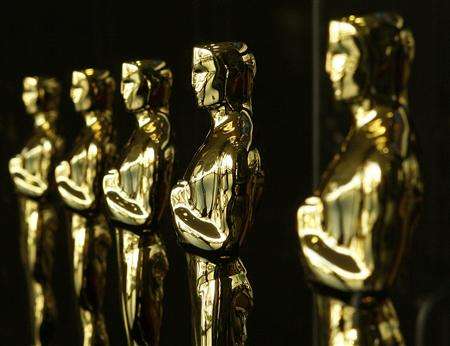
Why I Never Watch the Academy Awards

Last night was the big night for overexposed movie stars to rub shoulders with each other and then give each other awards. The rest of us, sadly enough, weren’t actually invited. And if we showed up, we’d be arrested and escorted off to some place where we would never bother the rich and famous again.

A bunch of movies were up for awards. A bunch of people who were in those movies were up for awards. Supposedly, songs that were sung or played in those movies also got put up for awards. In the end, very rich people rewarded each other on national television and gave speeches about how humble and wonderful they are. The rest of us, because we’re essentially peasants in comparison to the rich and famous, were allowed to watch them on television and cheer them on. If we were lucky, we could go to one of their movies and spend $10 to see how wonderful they were.

That’s kind of why I don’t care about the Academy Awards. It’s a hoo ha kind of show that’s designed around rewarding people who have somehow elevated movies to something more significant than Nobel Prizes every year, where someone’s movie gets more media exposure than a brilliant writer or peace champion who has risked life to make the world safer for others to live in. Movie stars and that crowd have elevated themselves to the new royalty, except they have basically done nothing different than wandering minstrels used to do only centuries before, except the wandering minstrels were usually chased out of town once they used up the local charity.

I don’t hate movies. I love watching good movies, and I recommend good ones to all of my friends. But I don’t worship the people who make them or who star in them. Okay, maybe Woody Allen in his day and perhaps Sean Connery in his, but that’s about it. Today’s stars are somewhat irrelevant to me, as I don’t find any of them to be all that impressive. I find most of them interchangeable, and quite often unrecognizable. Whereas people used to lust after the next appearance of Marilyn Monroe or the next movie starring Humphrey Bogart, that doesn’t happen anymore. Today’s stars are insignificant and overhyped. We spend more time trying to know about their personal lives than we ever did before, mainly because I don’t think people are all that interested in their movie star appearances any longer. None of them have the sustaining power to cause us to jump up for joy as we used to do in Alfred Hitchcock’s day.

This is why I don’t care about the Academy Awards. They’re generic, overhyped and irrelevant. During yesterday’s show, the studio heads tried so hard to hype the show for the youth of the world by showcasing two younger actors, and it fizzled and died. People just didn’t care. The days of Bob Hope or Johnny Carson headlining the Academy Awards are gone, mainly because the interest in the vehicle died a long time ago.

Last night, I watched the last four episodes of the 6th season of Weeds, a show that was so much more enjoyable than anything that might have occurred during the Academy Awards. And this wasn’t even their best season of Weeds.

Part of the problem is that we stopped making great movies and now just make movies. Generic movies. Boring movies. Remakes of remakes of movies. And we pretend its all new and fascinating. We have our “stars” go on talk shows and talk up how great their current projects are, even though they’re talking about a remake of Batman, or whatever generic intellectual property comes to mind. Creativity is gone, mainly because Hollywood tends to think that writers are afterthoughts, something you call in after the “geniuses” run out of ideas. And then every now and then one great glimmer of hope will show up, and then be milked to death before anyone can think of something creative to do with it.

That’s why I stopped watching the Academy Awards. Hopefully, things will get better one day, but I’ve been saying that for a few decades now, and it hasn’t happened.

I don’t have a lot of hope that things will.

The Music Industry Just Doesn’t Get It…They Lied to Us

You would think with the amount of money that goes into music studios that they would have actually hired someone who is capable of telling the executives what is really going on. Instead, we have a bunch of studio heads that are so convinced they understand the pulse of the consuming public that they don’t have to listen to anyone, and for some reason they’re losing more and more money every year.

The problem emerged in the beginning when music went from albums to CDs and then online. The old paradigm consisted of music studios finding talent, packaging it and then filtering it out to radio stations that then opened the doors for people to rush to record stores to purchase the brand new content. Well, somewhere down the line that model fell apart, mainly because a few little promises made never came through, and then the industry changed overnight as a result.

What I’m talking about was a promise that the music industry made to consumers when albums were on the out and CDs were coming in. The simple promise was that CDs, which were cheaper to make than albums, were going to be cheaper for customers. This was the selling point to get people to give up their vinyl albums and welcome CDs. The promise was that CDs would cost $9.99 all of the time. Well, when CDs first came out, that WAS the price, and then quickly they started to increase to $13.99 and other such prices. Now, if you’re lucky, a CD can be found “on sale” for $9.99 off of the retail price of much more.

We were lied to. Oh, the naysayers will claim such a promise was never made, but for those of us who were paying close attention back then, the promise definitely was made. Instead of following the plan, executives realized that consumers are stupid, or so they thought, so they just went back on their word and sold CDs for what they figured they could get, rather than for how much it was promised.

A funny thing happened right after that. The Internet showed up. You see, if that never happened, the music industry would still be the major entity it was a few decades ago. But no one anticipated that a couple of geeks at universities wanting to talk to each other would lead to something so powerful and so overwhelming. But the Internet happened, and the music industry was in the wrong place at the right time.

The consumer population was kind of pissed at the music industry at this time because of the whole lie thing, and then when the next generation realized that it could get all of this expensive technology for free, they jumped on it. So two things happened at once. The music industry cheated the older customers by lying to them while the younger customers grew up with a new paradigm where they got everything for free. You see, if the music industry hadn’t lied to the older generation, they might have actually had powerful allies on their side. Instead, they had a bunch of pissed off customers who decided to just let the music industry fend for itself. Where these people could have been the “moral” guides to the younger generation, who wants to be the moral guides to people who are doing something you figure the bad guys deserve anyway?

Well, the music industry sat it out, thinking things would fall back in place, but their real ally, musicians jumped ship on them as well. Oh sure, the established musicians were in their corner, but consumers are a fickle sort, dumping old artists for new ones because music really doesn’t have standards that are controlled by executives. Music is music and people will seek it wherever it can be found.

And a lot of future musicians realized that if they wanted to make it in the industry, there was a new direction to take, one that required they take their music directly to the people. This opened up the industry to everyone, and as more and more independent artists showed up, the music industry had less and less control over the content.

That’s kind of where we are today. The music industry is trying to save itself by reestablishing the controls, but no one really cares anymore. There was an attempt to force streaming content under draconian rules, but music executives are starting to realize that this isn’t leading to sales. What the music industry never realized was that the future was going to be somewhat of a free for all because if you can’t trust the industry to do what they promise, then you look elsewhere for results.

Recently, I bought a CD for the first time in about a year. Yeah, it’s been that long. I’m still pissed. It was Taylor Swift’s new album, and it was on sale for $9.99. Imagine that. Anyway, it’s a great CD, but it’s probably the only one I’ll buy for at least another year. I’m one of their solid customers, and it’s taken a long time to bring me back to the market. Before I stopped buying music, I used to buy three or four albums a week. They’ll never regain the market share they had before. It’s just not going to happen.

Like I said, the music industry lied back when it needed to win over its customer base. So, hopefully as these executives find new jobs mowing lawns, or whatever it is unemployed music executives are capable of doing, they’ll remember it was really their fault. And they should keep in mind that if they promise to mow someone’s lawn and then go back on their promise, they’re probably not going to get paid. The real world is kind of mean that way.