Tag Archives: greed

Amazon’s Business Practices Discriminate Against the “Out of Money” Class

Often, us poor people have to live in places like this, such as my Summer resort, where cable isn't fee!
Often, us poor people have to live in places like this, such as my Summer retreat, where cable isn’t fee!

Today, I was thinking of buying a book that I don’t really need, but for some reason felt I had to have it right then and there. So, I went onto Amazon’s site, put in the information for the book and found out that I could purchase it used for $7.54. I went through the full process of buying, but when it came to the last stage (well, the stage before I give my address to send it to), I was halted by a statement indicating that my credit card could not process the transaction. So I immediately checked my checking account and discovered that my balance was 32 cents. So I then went back to Amazon, realizing that my bank had no more funds in my account and tried to figure out how they could accommodate me.

It turns out that Amazon has no contingency plan for those who do not have enough money to afford their products. In other words, I was proverbially screwed.

This immediately inflamed me because all companies should have resources in place to assist those of us who are “financially challenged”, which, according to an Internet search I just did that brought up lots of lesbian pornography, I discovered that the financially challenged are quite often the most overlooked disenfranchised class of people in American society. It’s almost as if businesses think that people need to “work” for the things they wish to buy and aren’t too proud to not say so.

So, I contacted several loser friends of mine to inquire whether or not they have ever been discriminated like this before, and four of those five friends indicated they had (the fifth could not answer as he was suffering from a severe case of “Cheetos-overimbibing”). I was shocked to discover this was not just an isolated incident.

This has inflamed me to no end, and I decided that I would send out the word to everyone that these practices must be stopped immediately, or we would use our financial clout in massive protest and show them that without our inability to pay for goods backing up their company, they’d…um…um, you know maybe I haven’t thought this through enough.

Let me get back to you, and when I do, boy am I going to have something for you to rally behind!

How Legacy Publishers Are Killing the Future of an E-reader Market

When the Kindle first came out, I thought it was the greatest thing ever. Actually, that’s not completely true. I was apprehensive because I was a believer in having a hard-copy of the book with me while reading it, but eventually I started to see that this could be a good thing. I went out and bought an Amazon Kindle, and shortly after that I gave up my newspaper subscription and subscribed to an online version of the newspaper (delivered over the Kindle). Then I ended up with an Ipad 2, and with the Amazon Kindle app, I have been able to read the Washington Post every morning by paying for it with that subscription.

But for books, it hasn’t been as wonderful an experience. As a matter of fact, the e-reader experience has gone from “hopeful” to “dismal” and the fault of this situation rest solely on the backs of the publishing industry itself. You see, in the very beginning, Amazon was offering books at the rate of $9.99, which was probably the perfect point for paying for a brand new book on an e-reader. The publisher wasn’t losing out because the manufacturing costs were practically nil, and their books were getting to their readers almost instantaeously. But publishers didn’t like not having complete control over their market, so they forced Amazon to allow the publishers to set the price for books. Now, an entry price is anywhere from $14.99 to $25.00 on an e-reader. As expected, owners of e-readers have practically discontinued buying books as e-books.

So, you’d get the impression that publishers won. Not really. What actually has happened is that two markets have opened up, and this was an occurrence that a smart publisher probably should have seen coming, but like the music industry before, this is an industry populated by egos who are convinced that they are infallible, and that their product is so great that it cannot be replaced or done without. Well, they were wrong.

It seems that Amazon now has two lists of bestsellers, and they are becoming completely exclusive of each other. In the old days, bookselling lists usually listed the highest selling books (physical copies) but because the legacy publishers refused to budge, Amazon has discovered that its bestsellers are actually e-books that have never been published as hard copy books. As a matter of fact, in 2011, only 3 of the top sellers actually were originally published as “normal” books. The rest were dedicated e-books only. What this means is that more and more books are being sold without ever crossing the desk of publishers at all.

Let’s unpack that. What that really means is that more and more publishers are losing out on their own marketplace because they decided they were too elite to participate in it. Instead of working with Amazon and other such e-book companies, they acted with hostility and marginalized their own market. Readers have gone out and started buying books that other readers recommend, and quite often those recommendations have no affiliations with legacy publishers whatsoever.

What this means, or could mean, is that the future for publishers is even worse than if they had participated with e-readers in the first place. Like the music industry, major publishing companies are being seen as in the way and as leeches rather than as particpants and designers of the industry. An example is the simple mathematics of a publishing contract that attempts to give a writer about 2% of the sales for a book, whereas a deal with Amazon gives the writer either 35% or 70% of the sales (depending upon which publishing deal the writer chooses for charging for books). The selling point of using an established publisher was that you got their name behind your book and their marketing team, but with most publishing contracts these days, a writer is usually left to fend for himself/herself after publication because a publisher will spend most of its resources on already established names rather than someone who is up and coming. So, essentially, you end up with a crappy contract, and you end up with a publisher that doesn’t actually do anything for you other than potentially get books into bookstores (which, in my experience, doesn’t always happen). A further example is the publishing company that handled one of my earlier books. It keeps “offering” to make my book into an e-book, and then offers me that same crappy publishing rate royalty as if it was a hard copy book. What they don’t want to reveal to me is that our contract with each other indicates that they don’t own the e-publishing rights, meaning they’re trying to get me to sign with them for e-publishing when in fact I can actually do that myself and get a 70% royalty without ever asking for their help in the first place. The dishonesty factor is the reason I’m mostly pissed at them, because they’re doing everything possible to make it seem like they’re on “my” side, even though they KNOW they can’t publish the book as an e-book without me signing over MORE of my rights that they don’t physically have right now. Again, another publisher doing everything possible to piss off a client in hopes of gaining short term gains in profit.

So, how can publishers regain the upper hand? Well, first they have to realize they lost it in the first place. If they don’t, we’re going to start to see more and more publishers go under in the next few years because they won’t have the money to keep operating. Right now, all they have is their reputations, but they’re being beaten badly by unknown writers who are making names for themselves without actual publishing companies. Once publishers become irrelevant, they’ll disappear.

But publishing companies are probably not going to go down without kicking and screaming. Realizing that they’re not going to do the smart thing, like announce that they’ll adopt the $9.99 model that Amazon first put forth (which would have probably ushered a new age in publishing), they’ll probably respond with legal action, using whatever clout they have left to hire attorneys who will submit confusing lawsuits that will bog down the system for years, further eroding their success in the industry. I wouldn’t be surprised to see a direct legal assault on both Amazon and Barnes & Noble by the publishing companies, as those are the two entities making the largest impact against them. I also wouldn’t be surprised to see it fall into some kind of patent war over technology, where some publishing company gets smart and buys up a patent that allows them to claim ownership over a certain “idea” of e-readers, even though patents were originally designed to NOT be used for that purpose. We’re seeing a lot of this kind of action on the behalf of software companies and the social networking sites, so it would not surprise me to see some enterprising legal maneuver like this.

Because they’re not going to win by going after the hearts and minds of writers and readers. They’ve already demonstrated they don’t have our interets at heart. It’s all about profit and maintaining a dinosaur of a publishing model. Therefore, expect trench warfare and years of interesting battles that lead to an industry that collapses on itself.

They’re Trying Really Hard to Discredit the Anti-Wall Street Movement

I’m really not all that surprised that the people who have the most to fear are doing everything possible to target anyone who has anything to do with the Occupy Wall Street movement. At first, it was an attempt to paint the movement as extreme, something that no one is interested in. Then it became popular, so they had to try other tactics, like attempting to fool listeners into believing OWS was filled with hypocrisy (“OMG! They have Ipads and they’re complaining about big businesses that might make technology stuff!”). That didn’t work because unlike previous movements of the past, the people attracted to the movement aren’t generally stupid. The movement has been appealing to a pretty educated crowd. It’s hard to derail that when those derailing it aren’t that much smarter than the people they hope to discredit.

So, the anti-protest movement, which I define as “people who have an incentive to keep things as the status quo”, is now targeting specific individuals as an attempt to destroy the entire movement. One obvious target has been Michael Moore, who likes to see himself as the everyman complainer, but according to Fox News (not exactly the most objective source, as it was the voice of the Republican Party during the entire Bush Administration), because Michael Moore has an expensive house, he’s really one of the one percenters, rather than one of the many included in the 99%. Here’s where that math doesn’t add up: Yeah, he’s rich, but just because someone is rich does not make them automatically a part of the problem.

Much of Michael Moore’s success has come on the coattails of debunking the myths of the rich, and empowering those without any power. As a result, he has become very wealthy for his actions. That should be seen as a good thing, not something to somehow force his followers to throw him to the wolves. Just because he made a success at pulling the veil back from the hidden excesses doesn’t somehow make him part of the hidden excesses.

The movement is about the fact that there are some really greedy, bad people out there who are trying to pull shell games on the rest of us. For way too long now, corporate entities have cloaked themselves in the shadows while doing all sorts of crappy things to the rest of us, like poison our water supplies, sell us damaged goods, sell wars for profit (not our profit, but theirs only), and allowed the changing of money that served to devalue the work of those who handle the actual work but benefit those who control how the money gets spent. When you have businesses built up with the sole purpose of generating more money from money, there’s seriously something wrong. When scientists are pulled off the assembly line of science and told its a lot more profit to be a businessman instead, there’s seriously something wrong.

There are a lot of pissed off people right now mainly because our education system has been teaching us that the American Way is the best course for the future. But we’re now starting to realize that those who make it rich in this country aren’t the ones who bought into the American Way (work hard and build a great country) but profited off of those who did. The ranks of the 1% should be filled with educators, scientists and innovators, not speculators, bankers, politicians and lawyers. THAT is why so many people are upset.

A lot of those people out on the streets right now are the ones who stood behind Obama when he was running for office in 2008, because his campaign promised a bright, brilliant future. Instead, we got a term of exactly what we had before, No more, no less. Hope and change yielded absolutely nothing but false promises. And the people who put Obama into power are smart enough to realize that no matter who they put into office next (Obama again, or a generic Republican), the promises are still going to be made with the reality that the next four years are going to be exactly what came before.

That’s why people are complaining. And discrediting Michael Moore isn’t going to change that.

Politicians paying lip service to the OWS movement

I was pretty excited when I saw that President Obama was announcing changes to the federal student loan program that would benefit those of us with outstanding student loans. And then I started examining the details before I realized that for the most part, they help practically no one who currently has any student loans. In other words, if you are currently in school and racking up student loans, you might get a bit of a nudge in the way of help, but if you’re one of those saddled with $150,000 worth of student loan debt, well, the government isn’t really interested in helping you. As a matter of fact, every action the government has taken over the last few years concerning student loans has worked completely against helping anyone discharge (or pay) their student loans. The last piece of “help” we received was when the government sided with the credit card and bank lobbyists and made it impossible to use bankruptcy to discharge your student loan debt. You can discharge your debt for killing someone, losing your business, or throwing all of your money into the ocean, but if you took out student loans, you are stuck with them for life.

Students who have been part of the OWS movement have been screaming for some kind of help from the government since the protests began. As a result the Democrats have realized that a huge segment of their voting population are now tying themselves to this movement. So, obviously, they had to do something to look like they’re on the same side. What better way than to pretend to be doing something, which is exactly what President Obama’s action the other day did? As usual, the government response to a popular protest has been to pretend to be doing something and then hope the movement goes away long enough for people in power to get reelected. In other words, let’s continue to ignore the man behind the curtain.

I don’t think our current crop of politicians seems to understand what’s going on in the country right now. People are pissed off that their chances of a good future have been squandered away by corporations, banks and government officials who kept kicking the cans down the road. Sure, you can blame students for taking out loans, but you really can’t do that until you analyze why they took out the loans in the first place. The corporations, banks and government told them that the only way they would ever have a sustainable future was to take out these loans because the corporations, banks and government weren’t going to be picking up the bills for education. Throughout most of our lives, we realized that our economic future was going to be somewhat of a disaster if we tried to go it alone without education (sure, you can argue that a few people managed to make it without college, but they’re really a statistical outlier rather than anywhere near the norm), so we really had no choice. But now we’re finding out that the promise of a future was really a lie, created by people who realized they had to sell us this lie in order to continue making insane profits.

And look at some of the companies who have profited off of our stupidity. Look at the Fortune 500, and you’ll see nothing but lists of corporations that have played the game all the way to the top. And they did it in some pretty shitty ways, too. I look at the misinformation campaigns, and I”m shocked that we continue to allow it to happen. We have fake colleges selling fake degrees to students who think they are providing a future for themselves, yet are really only getting themselves further into debt and will have absolutely no future. Sure, you can point your fingers at the profit colleges, but what no one wants you to recognize is that legitimate, innocent looking companies are also the ones behind them. While we can all point at Haliburton and the Fox Corporation and claim all sorts of evil, there are so many companies like the Washington Post, which really doesn’t want you to know that it’s practically running one of those profit colleges that the government has been “claiming” to want to curtail, but when lobbyists got involved, suddenly the government didn’t want to “hurt students”. This happens in so many different avenues of business that we don’t even pay attention to it any more. And no one reports it because the major news agencies are all part of the same problem that caused our dilemma, and who wants to report on themselves? Certainly not NBC, which is owned by General Electric. And the lists just go on and on.

But right now, there are people out there making themselves heard, and they’re probably not going to last very long. Just yesterday, Oakland Police were tear gassing protesters and then shooting projectiles at Iraqi veterans who have joined the protest. But no one pays attention long enough to really care. And like the Vietnam War protests of the 1960s and 1970s, we’re probably going to condemn the protesters because it’s become really easy to ridicule the protesters instead of actually give them the coverage they really need.

You see, the protesters are out there for more than just themselves. They are out there advocating for everyone who doesn’t have a voice. And for the most part, they’ll be ignored, beaten and ridiculed by everyone else, even though everyone else is part of the 99% they’re there to represent. In the end, they’ll probably give up because we didn’t care long enough to help them make a difference.

And the fault will be ours. But we’ll never know, because we didn’t even take the time to care.

Monopolies, Greed and Treating Your Customers Like Crap

This morning, I was about to leave my apartment building to head to work when I noticed an 8 1/2 by 11 piece of paper taped to the exit door for everyone to read. It was a message from the apartment complex managers, indicating that anyone who was currently using the video services of U-Verse by AT&T must discontinue using it immediately because they are in violation of the apartment’s “contract” with some cable service called Suite Solutions. Not being a user of U-verse, I didn’t give it much concern, but then it had me thinking. What if I was a user of U-Verse and decided to get my television programming that way? What if I decided I didn’t like Suite Solutions (which I don’t) and chose to get my television programming through my phone line? What right does some housing complex or some cable operator have to choose how you get your television programming?

For the longest time, I’ve been receiving flyers in the mail from AT&T, promoting U-Verse as the answer to bad cable companies, and I just ignored the stuff because, to be honest, I don’t think television is all that worth subscribing to in the first place. While some people remained glued to their television screens every night they get home, I don’t think I’ve turned mine on to television programming in over 8 or 9 months, so to be honest, I’m not even sure I even have a television signal these days. And honestly, I don’t really care.

But what started to bother me was this anti-business message that was being pushed on potential customers by the people who manage the place where I live. It’s one thing if Suite Solutions was a good company, but let me tell you about my experience with that company. When I first moved into my apartment over two years ago, I chose that company to get my television and Internet service. At one point, I remember counting on a calendar to see whether or not it my service was down more often than it was actually up. I paid for the highest speed service, and when it worked, my download speeds were atrociously slow. I remember beating a download with my cell phone once (which ironically never actually succeeded with Suite Solutions because the Internet crashed during the download and didn’t come back up for another three days).

This was the company that my housing complex thinks that I should be emboldened to because they signed a contract with them somewhere in the past. Now, I don’t mind this being an option, but if they eliminate all of my other options, so that Suite Solutions is my ONLY choice, I think we have a horrible problem that really needs to be solved by the SEC, the FCC or maybe Elmo and the other characters of Sesame Street (they are notorious for advocating for consumer rights in the fantasies I have about Elmo and the gang).

Of course, no story about monopolies should be complete without a little bit of irony. I mean, we are talking about some unknown cable company using its monopoly to cut out the little guy, specifically a little guy named AT&T, who happens to be going through a little bit of monopoly trouble of its own these days. Now that the government has stepped in and told AT&T that it is creating an unfair monopoly by trying to buy T-Mobile, does anyone see the ridiculousness of some small cable provider shutting out AT&T through its contracted monopolies? I’m sure there are some people who are thinking this is a good thing because they just hate AT&T, but when AT&T becomes your alternative source to a crappy choice, something’s seriously wrong with this picture. I mean, I’m not exactly the poster child, greatest fan of all things AT&T. Just last week, AT&T refused to transfer my Internet service (not U-Verse) to my new apartment because of some flag that showed up with an old bill for $189 that HAD BEEN paid over two years ago; unfortunately, because it was so long ago, they couldn’t find a record of the situation, nor could they offer any way of alleviating the problem because the situation occurred too far back in the past to be solved by any simple transaction (like me just giving them $189 to make the problem go away). That’s the kind of problem you get from a monopolistic company that is so big that it can’t handle its own financial problems that emerge from its own lack of correct record keeping (you can always spot this problem when some customer service person tells you: “There’s nothing I can do about it. The problem seems to be coming from another area of the company that doesn’t exist anymore.”).

So, I ask, are monopolies good or bad for consumers? So far, my experience with them has been nothing but negative. You constantly hear economic pundits talking about how monopolies are good and how they drive innovation (or some other big proclaimed statement that has no basis in reality), but how do they really help us? Okay, there is one area, and that’s price, in that a company with a monopoly has the ability to lower the prices by handling all of the means of production and distribution, but how many times has that monopoly also gone the other direction, to where the only source of a product decides to raise its price because it realizes that no one else can fulfill the need? We’re kind of seeing that right now with Netflix, that erroneously thought that it was a solitary producer of content services so that it could pretty much do whatever it wanted to do by raising prices and splitting its company into two so it could eventually raise prices at its own leisure (possibly by raising it twice as much, as both companies can now raise prices as the same time, and thus, increase profits twice as fast). But what really happened was that Netflix realized too late that its customers WERE its product, not just the users of their product, and without customers, they have no income. I expect to see Netflix become the next Myspace in an era of Facebook.

For me, I have no real solution other than to boycott all of the products of companies that are hostile towards customers, which is why I gave up on Suite Solutions shortly after feeling like I was being cheated month after month. Fortunately, I am not a consumer of U-Verse, so I don’t have to worry about this proclamation from the emperor, but at the same time it also keeps me from ever wanting to do business with Suite Solutions again because instead of trying to compete with AT&T by providing a great customer experience and a good product, they decided to go the punitive route instead.

That companies never realize this strategy is a blueprint for failure is a footprint that forever haunts me. There’s a reason that message was tacked on our door like Luther’s 95 Theses. The company is failing to attract and keep customers, so it needed to crack down on anyone who decided to use alternative choices. Unfortunately, that strategy rarely brings in new customers or business. Instead, it leads you closer and closer to becoming obsolete. That this is 2011 and a company still doesn’t understand that is ridiculous. But why innovate when you can demand business? Need I say more?

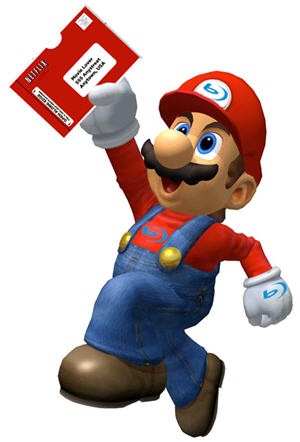
Netflix is starting to realize you can’t be a people business & piss off your customers


Netflix is in a bit of a bind, but you wouldn’t know that from paying attention to anything the company is saying. Earlier in the year, they came up with the brilliant idea of raising their prices by cutting their services in half and charging customers for both (where they used to get both for the same price). Customers got angry. Netflix acted like the knowing parent, coddling children who are upset that they weren’t chosen for the football team (or to be cheerleaders). Customers got pissed because they really don’t like being treated like children when they’re actually customers.

I kind of got pissed, too. The patronizing remarks from Netflix’s leadership surprised the crap out of me to the point where I decided that if it benefited me in the long run, I’d jump ship at the first opportunity. I, too, hate being treated like a little kid, even when I might act like one.

To see it from the viewpoint of all of the analysts, the same point keeps being made: If there’s no viable alternative to Netflix, then Netflix can pretty much crap on its customers, and it’s still going to be all right. The more you read of this kind of stuff, the more you start to wonder if the reviewers are in the same world as the rest of the people who happen to be customers of Netflix.

What no one has addressed, and I find this probably the most significant factor, is that Netflix offers a service that is a luxury, not a necessity. As most Americans are seriously aware of economic constraints in a recession era, the idea that streaming video and mailed dvds are an added luxury might just be enough to cause a potential customer to think that perhaps the money might be better spent on other pursuits. After all, no one really needs movies and television shows. They’re nice and fun, but they are entertainment, not food staples or part of one’s housing needs. On the whole Maslow heirarchy needs thing, Netflix comes long after most of the other needs and desires have been met.

And that’s what I’ve started to realize recently. As I watch through the fifth season of Star Trek Voyager, a series I’ve seen a long time ago when it actually aired on television, I realize that I don’t really need to watch it. It’s an interesting way to occupy time, but I have computer games, writing, my health club membership, an untapped drug habit I could start at any moment, and all sorts of other activities that have been available a long time before television ever emerged. I could even watch network television (or whatever is on the free cable I receive). The need for Netflix is pretty low on the overall scheme of necessities.

So, I’ve been thinking that once Voyager’s run is finished (there were 7 seasons), I’m dumping Netflix completely. You see, Netflix has this belief that people will “respond” by switching to either mailed disks or streaming only (what they wanted in the first place), but there are 12 million people who may choose my option: Cancel completely and never come back. I was charged my first increased charge this month, and while I can afford it, I’m still angry at Netflix for the way it treated me as a customer. Because of that, I, like I’m sure many others like me, will dump Netflix and wish them well. They’ve already indicated in all of their press releases that they could care less whether or not I stay with them (because they expect to make bank based on the rest of the people who will be unwilling to jump ship). Well, fine. I just suspect that they haven’t read the tea leaves well enough to understand that when you cut out your bread and butter, you sometimes go without food.

But what do I know? I’m just a stupid sheep guy who Netflix doesn’t take seriously anyway.

For Whom Would a Default Really Be a Problem?

There’s something people haven’t been discussing about the whole potential default of the United States. We hear lots of economists, bankers, businessmen and politicians talk about how horrific a default might be if our country defaults in the beginning of August. But not once have I ever heard a construction worker, an administrative assistant or the guy who empties the trash from the office ever discuss the default, other than “I heard about it on the news” and even then, they don’t really have an opinion. You might suspect the reason why they don’t comment on it or have an opinion is because they don’t know enough about it, like the really smart economists, bankers, businessmen and politicians. But I’m beginning to suspect that even if the construction workers, administrative assistants or the guy who empties the trash from the office might just not care, even if they knew and understood all of the details.

You see, the people who are shouting all doom and gloom are generally the people who are most affected by the potential doom and gloom. That would be economists, bankers, businessmen and politicians. In case you haven’t really thought about it, those positions I just mentioned don’t actually do anything to contribute anything to society. They handle money, or they handle the policies that deal with money. Physically, they don’t do anything other than figure out how to move money around. In the olden days, they were called the “money changers” and you might remember a story where some guy named Jesus threw them out of a temple, or something like that. Or maybe it was Noah. Or Moses. There might have been an ark. Or was that what Indiana Jones was looking for. Either way, the point is that a bunch of people who deal with money all day are acting like it’s some kind of tragedy that government is about to default on a subject of, yes, money, and it’s important to them because in the end, they’re not getting what they want, which is money.

To the non-banker, or person without major wads of cash, an issue of  money is unimportant, so they’re not really going to care. Sure, you can argue that it will affect them in the long run, as the money markets to eventually affect everyone, but I’m sometimes wondering about that as well, because I have this sneaking suspicion that even if everything that had to do with profit was destroyed, people would still be doing what they normally do, and people would still be out there working, making things and getting things done.

Strangely enough, if you think about it, if our government collapsed financially, the chances of it collapsing politically are not guaranteed. Sure, money wouldn’t be the foundation of the every day decisions, but politics would, and unfortunately we’ve become a finance driven system, to where our very foundation appears to be about money. Not every government is really like that, and in the end, if the strings that tie government and money together were to collapse, I’m not sure it would really be all that bad. Granted, a lot of people right now would probably suffer, and we’d hear all sorts of doom and gloom until people woke up and realized that money really doesn’t make the world go around. People, cooperation and food does. Money just makes it easy to forget that.

But we will never get back to that foundation because someone will panic enough to cause some kind of last minute compromise and the “crisis” will be averted. At least until the next one. And we’ll kick a few more cans down the road.

Is anyone else getting a little tired of the kicking the can down the road analogy? Yeah, it’s getting kind of old.

Why the Class War Has Not Yet Begun

I keep hearing a lot of talk about class warfare these days, but as of this day, I have yet to see an actual class battle take place. But the signs of impending doom seem to be all around, and yet it’s almost as if no one seems to believe such a thing is possible, so they don’t prepare for any such thing. Yet, it’s so hard not to see all of the signs of problems all around us, and then wonder if people are just jumping over backwards to do everything to avoid the inevitability of calamity. I don’t know. It just seems like it should be so obvious, but people are so not interested in changing their status quo, that they’ll do anything to avoid thinking about it.

But things are bad all over. We know that the power and all of the goods are quickly being hoarded by very few who pretend that it’s the “natural order of things”. And whenever people point it out, they’re accused of being socialists, communists or what ever “ist” can be thought of at the time.

But things are really bad. I don’t just mean the economy. I mean the economy ebbs and flows. That’s what economies do. But there are so many people who are falling to a hopeless despair and giving up. At least during the Great Depression, there was a sense that after people hunker through the hard times, at least there will be a sense of good times to come. Now, you don’t feel that. You get a sense that a few very rich people want all of the resources, and if they don’t get it, then they’ll do whatever necessary to put down anyone who gets in their way. The ones who are suffering don’t see a future sense of prosperity. They see either eventual death, a moment of respite that might last until they die, or despair. You don’t really see that much different than that.

In the past, you used to be able to at least see another place you could go where things are better, but when you’re in one of the most powerful countries in the world, where are you supposed to go instead? Europe isn’t doing that well. Anywhere else is a cesspool, filled with people killing each other over stupid, little things that make no sense other than to brutal people who live in brutal times.

It seems like there’s a class war about to begin, but everyone keeps waiting for someone else to make the first move. I’m not even looking for a future leader to make things better. I’ve pretty much given up on that. I’m waiting for something else, something that resembles Mad Max and Tina Turner singing about a place called Thunderdome. At least they had cool cars that chased each other back then. I guess it’s something to look forward to.

This Just In! Duane’s 2011 Spending Plan Extension Has Been Approved!

brucoe 

(Brucoe, the one independent member of Duane’s government. He is still undecided on the budget.) 

Today, after a marathon session involving his partisan stuffed animals, Duane Gundrum has declared that he has come to an agreement to continue his spending plans for the next few weeks. Up until this time, his conservative stuffed animals, led by Scruffy the Bear, were holding out for more cuts in collections from his job at the Piggly Wiggly Convenient Store. However, after promising that Duane would cut back on discretionary spending, specifically Root Beer flavored Laffy Taffy candy bars, the conservative bloc decided it would fund Duane for a short period before he would have to reexamine his finances again.

Liberal leader Elmer the bean bag frog pointed out that Duane has been making numerous sacrifices this year by avoiding payments of his electricity bill, his cell phone bill and normal expenditures of necessary pornography at the Double Juggs Adult Bookstore. In Elmer’s words: “Duane has been suffering greatly during this period of downturn, and thus, we couldn’t see any other areas in which he could cut,” even though conservatives claimed that there were areas of spending that could be curtailed, such as iPhone apps, “special” massages at the controversial Madame Wong’s Swedish Massage Parlour, and random purchases of Twinkies and Ho-Hos.

elmo darth 

(Liberal representative Elmo during a particulary tense negotiation session with the conservative whip.) 

Members of both parties recognize that without a dedicated budget agreed upon by all members, Duane will continue to barely function economically and further discretionary spending may suffer as a result. There has even been a fear of insolvency with gas purchasing and difficult to cancel Netflix memberships.

This is the third time since both parties could not come up with a budget that Duane has been forced to push a spending plan into the new fiscal year. It is hoped that a consensus can be reached by the Stuffed Animal Lobby that is influencing finances in Duane’s government. We will keep you informed of further developments.

In other news, girls still don’t want to date Duane. We go to Angela in Grand Rapids for more on this continuing story…..

women 

(A random selection of women willing to go on the record as “not interested in dating Duane”.)

The Music Industry Just Doesn’t Get It…They Lied to Us

You would think with the amount of money that goes into music studios that they would have actually hired someone who is capable of telling the executives what is really going on. Instead, we have a bunch of studio heads that are so convinced they understand the pulse of the consuming public that they don’t have to listen to anyone, and for some reason they’re losing more and more money every year.

The problem emerged in the beginning when music went from albums to CDs and then online. The old paradigm consisted of music studios finding talent, packaging it and then filtering it out to radio stations that then opened the doors for people to rush to record stores to purchase the brand new content. Well, somewhere down the line that model fell apart, mainly because a few little promises made never came through, and then the industry changed overnight as a result.

What I’m talking about was a promise that the music industry made to consumers when albums were on the out and CDs were coming in. The simple promise was that CDs, which were cheaper to make than albums, were going to be cheaper for customers. This was the selling point to get people to give up their vinyl albums and welcome CDs. The promise was that CDs would cost $9.99 all of the time. Well, when CDs first came out, that WAS the price, and then quickly they started to increase to $13.99 and other such prices. Now, if you’re lucky, a CD can be found “on sale” for $9.99 off of the retail price of much more.

We were lied to. Oh, the naysayers will claim such a promise was never made, but for those of us who were paying close attention back then, the promise definitely was made. Instead of following the plan, executives realized that consumers are stupid, or so they thought, so they just went back on their word and sold CDs for what they figured they could get, rather than for how much it was promised.

A funny thing happened right after that. The Internet showed up. You see, if that never happened, the music industry would still be the major entity it was a few decades ago. But no one anticipated that a couple of geeks at universities wanting to talk to each other would lead to something so powerful and so overwhelming. But the Internet happened, and the music industry was in the wrong place at the right time.

The consumer population was kind of pissed at the music industry at this time because of the whole lie thing, and then when the next generation realized that it could get all of this expensive technology for free, they jumped on it. So two things happened at once. The music industry cheated the older customers by lying to them while the younger customers grew up with a new paradigm where they got everything for free. You see, if the music industry hadn’t lied to the older generation, they might have actually had powerful allies on their side. Instead, they had a bunch of pissed off customers who decided to just let the music industry fend for itself. Where these people could have been the “moral” guides to the younger generation, who wants to be the moral guides to people who are doing something you figure the bad guys deserve anyway?

Well, the music industry sat it out, thinking things would fall back in place, but their real ally, musicians jumped ship on them as well. Oh sure, the established musicians were in their corner, but consumers are a fickle sort, dumping old artists for new ones because music really doesn’t have standards that are controlled by executives. Music is music and people will seek it wherever it can be found.

And a lot of future musicians realized that if they wanted to make it in the industry, there was a new direction to take, one that required they take their music directly to the people. This opened up the industry to everyone, and as more and more independent artists showed up, the music industry had less and less control over the content.

That’s kind of where we are today. The music industry is trying to save itself by reestablishing the controls, but no one really cares anymore. There was an attempt to force streaming content under draconian rules, but music executives are starting to realize that this isn’t leading to sales. What the music industry never realized was that the future was going to be somewhat of a free for all because if you can’t trust the industry to do what they promise, then you look elsewhere for results.

Recently, I bought a CD for the first time in about a year. Yeah, it’s been that long. I’m still pissed. It was Taylor Swift’s new album, and it was on sale for $9.99. Imagine that. Anyway, it’s a great CD, but it’s probably the only one I’ll buy for at least another year. I’m one of their solid customers, and it’s taken a long time to bring me back to the market. Before I stopped buying music, I used to buy three or four albums a week. They’ll never regain the market share they had before. It’s just not going to happen.

Like I said, the music industry lied back when it needed to win over its customer base. So, hopefully as these executives find new jobs mowing lawns, or whatever it is unemployed music executives are capable of doing, they’ll remember it was really their fault. And they should keep in mind that if they promise to mow someone’s lawn and then go back on their promise, they’re probably not going to get paid. The real world is kind of mean that way.