Monthly Archives: May 2011

Why Do Men Cheat?

I was reading today about how Arnold Schwarzeneger cheated on his wife, Maria Shriver and ended up having a child with one of the members of his staff. Now, I’m not going to get into the pro or cons of Arnold, or any of that. I’m not even really going to comment that much on that affair and the child he had with someone else while married. What I will say is that I always found Maria Shriver to be a beautiful woman who is extremely intelligent, and any man should have been as lucky as he could ever be to have been married to her. I don’t care that he’s Arnold and could have probably any supermodel he wanted. He had the one any man would have killed to have had as a wife, and he threw it away on something stupid. That’s all I’ll say on Arnold. That’s not what I wanted to talk about here.

What I did want to talk about is the very nature of cheating itself. It’s something I just don’t understand. I mean, I understand psychology and all of that, but what I don’t understand is why someone would do it when it serves no purpose other than an immediate, stupid need. Now, I’m not the most experienced individual when it comes to relationships, but when I’ve been in them, they were exclusive for me (at least for me), and while I may have had bad thoughts at the time, especially when someone else who was extremely attractive seemed quite interested in me, I never considered cheating as an actual, viable alternative. Yet, I know without a doubt that I”m a rarity at this. People cheat all of the time.

And that drives me nuts. I’m not married, mainly because I’ve never found anyone that could stand me long enough to ever consider doing so. Okay, there were a few in the past that probably could have made that leap with me, but let’s just say that I’m more of a loner, being a writer and all that, so I’ve never succeeded in making something like that work long term. But not once has a relationship ever ended because I decided I wanted someone else. The logic of that completely baffles me.

Which then brings me to the belief that if I ever do get involved with someone, she’s probably never going to be convinced that I’m legit and not cheating, and my supposition of that falls on the obvious fact that so many guys cheat, especially guys that should have no reason to do so whatsoever. You’ve got people like Hugh Grant, with someone like Elizabeth Hurley, and he goes and cheats with a skanky hooker. I mean, I just don’t understand it. The logic makes absolutely no sense.

There’s an argument that goes that men are only as loyal as their options. I hear this one a lot. At first, I used to hear it from comedians, but then I started to hear every day people using the phrase. And if it’s true, that really says horrific things about the average guy, because it basically means that we aren’t to be trusted AT ALL, EVER. I could understand if you’re in some loveless marriage, or that your wife has suddenly decided to become anti you, but those cases are very specific ones, and for all other logical reasons, the marriage should be ended there anyway. Even in those cases I don’t advocate cheating; I advocate divorce. I figure that if someone is going to be that upset by his current circumstances that he’s going to cheat, he needs to be brutally honest and then just end the relationship completely. Living a lie has to be a horrific experience, and I can’t imagine myself ever doing it. How others could do it is beyond me, yet so many people don’t seem to have that much of a problem with it.

Over the years, I’ve come across a lot of people who have stretched the boundaries of relationships. At one point, I hung with a open marriage crowd, and I was fine with that. I mean, in these situations, no one is cheating on anyone because everyone is aware of what is going on, and everyone is consenting to the relationship dynamics. It’s the sneaking around and deceit that I completely do not understand.

I come across it every now and then in my normal daily life, and from time to time, I find myself getting drawn into circumstances that drive me nuts. I’m talking about where someone is a friend who happens to be cheating on his wife or her husband, and then I’m asked to lie because the spouse might bring up a question that could reveal the dishonest behavior. People don’t seem to understand why I get really upset whenever I’m brought into something like that without my approval and any previous discussion. It’s literally asking me to cheat in a relationship where I get absolutely nothing out of it for doing the bad behavior, which not only goes against every fiber in my being, but also doesn’t get me anything out of the dynamic as well.

But back to the question. Why do mean cheat? Is it because they constantly want something forbidden to them? Is it because of a need to constantly fulfill a sexual desire? Is is because they feel a need to do something immoral, dangerous or wrong? I would hate to think that answer is that it’s because they had the oportunity, which makes us nothing less than Pavlovian beings, capable of being manipulated so easily by any manner of incentive. There’s an old joke where a woman claims she’s not a prostitute, but then some businessman offers her an absurd amount of money to have sex, and she relents. He then asks her to do it for the original offer or some nominal amount of money, and she says, “Sir, what do you take me for?” And he says: “Madame, we already established what you are. Now we’re just negotiating the price.” In other words, it only takes one time to be a cheater, and once you are, you are forever condemned to be one, no matter how much you might tell yourself otherwise.

What bothers me is that there are so many people out there who have no qualms about this. And yes, I understand that gender is not necessarily the distinctive factor either, as women cheat as well. That doesn’t make me feel any better, however.

Sidelined Onlookers Documenting the Last Days of the Republic?

When I was working on my Ph.d for political science (how’s that for a first line, name-dropping, “look how important I think I am” opening?), one of the observations I kept making was how so many political pundits of their day were constantly making the prediction that the empire was about to crumble. There would be all sorts of analogies pointing at the fall of Rome, and yet another self-important political pundit of that time and day was convinced that the United States republic was about to collapse upon itself. It got to the point where I started to make predictions about the predicters, figuring that the eventual demise of a political entity is the propensity to fall into the ultimate entropy of political discourse: The belief that eventual destruction has to come on that person’s watch.

So, as I am watching the events of today unfold, I can’t help but find myself making the same mistake that everyone of these Thomas Paines, Mark Twains, Bill Buckleys and Helen Caldicotts kept making. We underestimate the inevitable apathy of the American people to care enough about their own circumstances to ever want to try to make things better.

You see, that’s pretty important, and as a political observant, it’s equally important to understand why people don’t do something as well as why people do the things they eventually do. Political scientists are very good at seeing French Revolutions under every rock, but incapable of seeing Moscovites living in squalor and despair, yet never doing anything to change their personal situation because while the payoff might seem great, the cost of achieving that payoff is sometimes just a bit more than any one man (or woman) is willing to pay. It’s one thing to complain about current events and to demand justice, but when that demand requires that you stand up against oppression by personally risking your own hide, that dynamic changes quickly. Oh, don’t get me wrong. We’re really good about making grandiose statements, like “give me liberty or give me death” or “I may disagree with you but I’ll fight to the death to defend your right to say it” but when it comes down to actually putting up one’s survival against one’s survival instincts, survival instincts win almost every time. We’re really good at complaining and claiming a backbone that we believe we might have, but like every bad war movie there’s that inevitable scene where the cigar-chewing sergeant reveals that a soldier may act all tough, but it’s only on the battlefield when you see whether he puts up or shuts up. In reality, we’re very much like that. We’re often all talk and very little action. I’ve often thought that political science could benefit from incorporating psychology into its discipline (where we put people into a room to see how much their political rhetoric stands up to experimentation…for the record, we don’t do that sort of thing because it’s ethically vacant in social science, but I’m really only talking in semantics right now).

Which brings me to my thesis for today, and that’s that I’m seeing all sorts of “fall of the Republic” activity happening on a daily basis right now, and I wonder how much of it is in place observation that always happens versus actual observations of real implications. In other words, I wonder how much my educated observations are really seeing as opposed to how much my educated perspectives are skewed by that same institutional framework I’ve been talking about since the beginning of this essay. In even more words, am I really seeing what I think that I’m seeing, or am I just another one of those overly observational folk that see things that have always been there but our current paradigm now recognizes it as something less than it really is?

I mean, let’s look at some of the evidence. We’re currently in a budget mess that this country has never been in before. Unlike the past, our solutions were usually to go back to the drawing board and come up with new solutions. Today, we aren’t going back to the drawing board but spitting out rhetoric that doesn’t solve anything but actually makes things worse. People are out of jobs because we may have exhausted the majority of the low-hanging fruit that was once available to us by virtue of our ever-expanding economy and untouched resources. Our economy is no longer expanding, and our resources are essentially tapped, overtapped possibly. The solution was always to find cheaper labor and cheaper resources, but we’ve run out of those options because the former labor solutions have wised up to this act and now controls the labor channels that we used to exploit. Instead, we have lost revenue sources, labor pools, and our own people don’t seem to be able to find the jobs that they used to find that usually existed on top of these other resources and lower income labor pools. If you look to our political leaders, the choices are either to raise more taxes or to cut spending. But neither solution is a solution to the actual problems we seem to be facing. Raising taxes doesn’t do any good if you have no one to raise them on, especially if we have fewer and fewer jobs. Cutting spending is great, but at the same time that only kicks the can down the road again because as we lose that choice labor we used to have, more people end up relying on government to fill in the gaps, yet cutting spending makes that even harder. In the end, we have what’s called the continuous rush to the bottom, and rather than recognize this and try to push back up, we are building infrastructure to make sure the trip to the bottom happens a lot more comfortably.

So what’s the solution to all of this? Well, if you’re a naysayer or a doomsayer, your answer is pretty simple. We let it all collapse and start over again. And sadly enough, we have political leaders that seem to be advocating just that. Oh, they won’t say that exactly, but their solutions are just that. Rather than try to find viable solutions to build prosperity, we seem to have a lot of leaders who are basically just trying to fund the megastupidopoly a little bit longer so they can cash out before it all comes crashing down. The solutions all appear to be named: I’ll get mine and the hell with the rest of you.

Which brings us back to the “people”, the ones who are responsible for fixing it all sans great leaders. But what can we really expect from them when the only input we allow from them is to punch a Yes or No hole on a ballot? We don’t ask for their ideas. To be honest, our political leaders don’t care about their ideas and are really only interested in their money, support and again, what the people can do for their leaders rather than the other way around. Oh, the rhetoric always sounds the opposite of what I just said, but actions speak much louder than words, and those bad actions have been speaking a lot lately.

When the economy started to collapse, our leaders bailed out the car companies, the banks and Wall Street gazillionaires. The common person received zilch. When the common person had his house foreclosed on, the government backed the banks. When it become political impossible to keep doing that, the government stepped in and demanded the banks be slower about taking everything away from their customers. Not that they stop taking everything away. Instead, they gave the banks everything they wanted in practically every area of discourse. Credit card companies received guarantees that people could no longer go completely bankrupt without some kind of continuous debt to the banks involved. When banks were discovered with their pants down involving overdraft charges, government stepped in and did as little as they could there as well. Even with the tiny movement made by government on the people’s behalf, the banks managed to get huge lobbying to soften the changes, and even now are working on reversing some of the impact they have “suffered” as a result of government forcing them to be less greedy and more upfront about their attempts to screw over their customers.

But what it really comes down to is the question of whether or not the common person in America really cares enough to pay attention to what’s happening. President Obama and the minions of government are trying very hard to convince the rest of the country that the budget impasse is important. The media is starting to make comments about how much the debt really “costs” each person and how much in debt EACH person is as a result of the debt ceiling we are currently living under. But what none of them have been capable of doing is convincing the average American that he or she really should care. Oh, they’re trying to make that argument, but it’s falling flat. Let me explain why, using simple logic that the average American is using.

Let’s call me Citizen A. The government tells me that my current debt (as a result of the deficit) is $70,000 (just for the sake of using an arbitrary number because the real number is just that, a number). My first thought is that as a citizen of this republic, I should be concerned, but in reality, I’m more concerned about the $150,000 student loan debt I’ve incurred trying to get a college education, my $350 monthly car payment, and my $500-1000 monthly rent bill I have to pay. Adding in a whole bunch of other expensese I probably have to pay a month, Citizen A really doesn’t care one iota about the personal $70,000 that is part of my slice of the deficit because to be honest, it’s not really my debt. I don’t see it that way. That $150,000 I owe in student loans is my debt, but it’s going to take a lot of rhetoric, a lot of speeches and quite possibly an overweight FBI agent in a bad suit with a crowbar to convince me that the government’s deficit is in fact, MY deficit. Citizen A doesn’t feel a connection to that debt. In fact, he thinks the government squandered that money, and that it’s really the debt of people who work for the government. That, in fact, it’s THEIR debt, not his.

Now, as a rational individual with a bit of education, I understand it shouldn’t be this way, but game theoretics are involved here, and when it comes to payoffs, the average citizen feels just like Citizen A. We don’t feel the debt is ours. It belongs to the government that for years has treated the “people’s” money as its own. When we took away the draft, made voting voluntary, and made presidential state of the union addresses optional television programming, we eliminated the ties between government and Citizen A. People see our government as an entity that exists because it has to exist, but as none of us fought to create this republic, very few of us actually have served to defend it, and most of us are oblivious to what this republic does on a daily basis, it’s very difficult to sell the supposition that government and people are tied to each other.

So, I ask: Are we seeing the end of days, or is this just another hiccup in the usual way things happen? And if it’s the latter, then how do you get people to care enough so that it doesn’t end up becoming the former by eventual default?

Further Misadventures in the e-Publishing World

There’s a term that e-published authors have been using to describe the old way of doing business in the writing world: Legacy Publishing, meaning that it’s the old way of doing publishing. As one of those who got his start in the legacy publishing industry, where my first two novels were published as physical entities, I’ve slowly been trying to build a writing career by embracing the non-legacy model, i.e., publishing my work as e-books myself. In the process of doing that, something strange has started to happen that I never really anticipated. Let me explain.

When I started publishing some of my completed novels as e-books, I wasn’t really expecting to make a huge profit, or even to sell a whole lot of books. I hoped to sell a few and at least get a few readers interested in my work. Honestly, that’s what every writer tends to want to do. I’m really not that different. Not knowing the first thing about connecting to an audience that I don’t have, I’ve tried all sorts of different marketing, including Facebook ads, google ads, viral marketing, standing on the corner and yelling out loud, and all sorts of other antics that are capable of bringing on all sorts of restraining orders. As a result, a few people have started to read my books, and let’s just say that while I haven’t been extremely successful, it’s proving to be an interesting experiment.

However, a new development has occurred, and that’s what I wanted to talk to you about. I mentioned that some of my earlier work was published by Legacy Publishers. So far, they have done absolutely nothing to sell my work other than orginally publish it. I’m an unknown to them, so why would they be interested in pursuing any marketing on my behalf? So far, there’s been no reason. However, because I’ve been doing a LOT of marketing myself recently, some of my work has actually started to sell. Most of it as e-books, but some of that marketing has actually caused potential readers to go to bookstores and buy physical copies of my novels. Great. This is leading to something, however, and what it’s leading to is the realization by the original Legacy Publishers that I’m capable of actually selling books. It never dawned on me that they’d ever be paying attention to the fact that my marketing would start to pay off. And it has. Which has led them to start paying a bit more attention to me, and that attention has proved to be quite eye-opening.

You see, when I was originally published by them, the whole e-book universe was not even on the radar. So they never bothered to negotiate those rights. Those rights are mine still. Well, they’re now realizing that, and they’re also realizing that because I am self-publishing the rest of my work, it’s pretty obvious that my work they originally published will net them absolutely no profit whatsoever when it comes to the e-book market. So, rather than just contact me and be honest about it, their contact has been the kind you expect from a Shakespearean villain. The kind that goes: “Did you know that people are selling their books as e-books, and they’re making millions? We’re willing to publish your book as an e-book if you’re willing to sign that right over to us.” They also forget to mention (and sometimes they do) that they would like to set up the generous terms that are similar to the ones that happened under the old contract, where they get about 90 percent and I get 10. In other words, rather than have me publish it myself where I get 70 percent and Amazon gets 30, they’d rather they take 90 percent of the 70 percent, leaving me with (doing the math….for every $1.00 a book makes, I get $0.07). So, for a book that normally sells for (if they put it up at the maximum they’re trying to get) $12.99, I’d get 90 cents. Now, if I sold that book for $4.99 by publishing it myself (or even at $2.99), I’d make $3.49 (or $2.09 at the $2.99 rate). In other words, even if my book sold at a massive discount (my pricing), I’d still make 2 to 3 times more than what a publishing company would give me for it. And keeping in mind that the publishing company has NEVER marketed one of my books EVER, I get absolutely no benefit from them being the ones publishing it. None.

So, you might see why many writers are turning away from the normal legacy publishers. It’s not profitable, and unless you’re already a marketable name that they’re willing to throw money behind, you get absolutely nothing out of the deal. Instead, you sign over all of the profit to an entity that doesn’t do anything to deserve it.

It would be different if they actually went out of their way to do something to benefit my name. But they don’t. Or they never have. Now, if I was to find a publisher that was willing to do something to help me sell books, then we’d be talking a completely different story. But the way this model works, they don’t want me until I can already do the job that they won’t do themselves. Once I have the name recognition and the ability to sell my own work, my need for them goes away completely. So, somebody please tell me how quid pro quo thing works here if one side is continuously leeching off the other.

Even in America, we have newspapers doctoring the truth

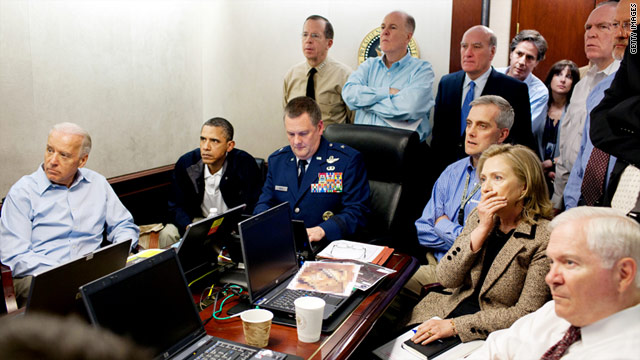
Religious paper cuts Clinton from iconic photo

This is a copy of a newspaper that was printed in New York.

Here is the same photograph on CNN:

President Barack Obama and his national security team watch updates on the mission to capture Osama bin Laden on Sunday.
Notice a difference? Well, in the first picture, someone went through the work of photoshopping all of the women out of the picture. Turns out an ultra-Orthodox Jewish religious organization doesn’t believe that women in a picture should be included, because it would then be “sexually suggestive.” I’m not making this up either. It might have been possible to get away with this if the picture in question wasn’t such a talked about picture in the first place (whether or not Clinton was reacting in a strange way to some mysterious event that could have been about Osama Bin Ladin). You know, without the whole Hilary thing, there wouldn’t have been a story in the first place, SO WHY INCLUDE THE PICTURE IF YOU CUT HER OUT OF IT?
Okay, let me get out front and say this before continuing on. I have nothing against any specific religion, or promote any religious organization (or anti-religious organization either). However, having said that, I think we do a serious blow to any idea of organized religion whenever we try to pull this crap over the eyes of any followers. Censorship, or doctoring the truth, is NEVER a viable alternative to the truth. EVER. Lying means dishonesty. I have yet to come across a religion that advocates lying is the right course towards anything good. Ever.
The sad thing is: Anti-religious folk are now going to use this to cripple religious organizations. And then anti-Jewish groups will use this to insult Jewish religions. In the end, the only thing that was served was we promoted more hatred, more dishonesty and ruined the chances of honest conversations in this country and the rest of the world.
Good job, dishonest newspaper. Score one for Satan. (All apologies to Satanists who weren’t involved in any of this dishonesty)

As we suspected, Size Really Does Matter

I was having a conversation with a female friend of mine, and I stated that no matter how much she says otherwise, size definitely matters. She denied it for a moment, and then after I showed her, she gave in and said that I was right. Size, in fact, does matter. Her exact words were: “Oh, my god. It’s huge!” So the matter is settled. Having a larger computer monitor is DEFINITELY better than having a smaller one.

This weekend, I had been thinking about it nonstop, and then I went to Sam’s Club, and there it was: a 27 inch Samsung monitor. It was huge. It was freaking HUGE, and it was there, just waiting for me. So I put it into my cart, took it to the cash register, wheeled it out to my car, opened the trunk of my car, placed it inside, wheeled the cart to one of those little cart places where they store them so Sam’s Club employees can gather them and make somewhat of a living, but I had to stop halfway because I realized my trunk was still open, so I wheeled the cart back to my car, closed the trunk and then wheeled the cart back to that little cart place where they store them so Sam’s Club employees can gather them and make somewhat of a living, drove back home, stopping to buy an Icee on the way (the Cherry flavored one…can’t stand the root beer one, oh my god, what were they thinking when they invented that), parked my car in the garage, closed the garage door, said hi to the girl who is always crying whenever I see her (that girl really needs to dump that guy…I swear), opened my door, entered my apartment, fought off a rabid band of stuffed animals that were overjoyed to see me again, set up the new monitor, turned on my computer, drank from my Icee, and then embraced the wonder that is a 27 inch computer monitor.

It was kind of nice. The Icee, too. But don’t get me started on that whole root beer flavor thing. I’m just saying.

When it comes to issues of sex, America does not understand redemption

I’m not one to latch onto another story and then write about it, although I admit there are a lot of bloggers who do that sort of thing. But this was one issue that I found to be so significant that I felt that it needed further attention, and perhaps even more perspective. An article appeared today in Salon.com that contained a personal narrative from Melissa Petro, a woman who had previously outed herself as a former sex worker and stripper before becoming a school teacher. As a result, she was hit hard by the conservative channels of the press, and then right after that by practically every other channel of the press as well. Even the governor felt it necessary to chime in demanding that she be fired. In all, she was completely railroaded out of the teaching profession, and by reading her personal story, you can also get the sense that she pretty much has a difficult time today of getting a job anywhere.

Now, I’ve written before about how I used to go to school with a lot of women who were sex workers while paying their way through school. At San Francisco State University, in certain disciplines, it was practically a right of passage. I couldn’t tell you how many friends I had who used to ask me to come see them dance as a stripper because at the time they were actually proud of what they were doing. Not all of them were, of course, but at one point in someone’s life, there is a sense that this is a perspective of freedom that not many other occupations can allow.

Unfortunately, that occupation is now competing against the sense that mainstream America has that anything involving sex is bad. And if you happen to work anywhere near children, it’s almost a given that you should be tarred and feathered and run out of town like the wandering gypsy you are. I won’t even get into the dichotomy issue of how most of the clients of these women tend to be the same men whose wives are horrified that these women did what they did; there’s always this sense that these “bad” women come from some place that has no interaction with the rest of society. And once they show up, they have to be run out quickly, or little Johnny might grow up to be a bad person, or might be forced into sex with her, or whatever bizarre hyper-fictious ridiculousness seems to be the fear that emerges in these situations.

The simple fact of the matter is, these women are all products of our society and civilization. They were churned out by the system at one time or another, and if we all want to go into this “they’re all bad for doing what they did” then we should take some sort of responsibility for putting them into those positions in the first place. We can’t have the luxury of just assuming that people are bad by nature, and therefore it was their fault that they chose to do those kinds of jobs that the rest of ridicule and condemn.

But even saying that, there’s an immediate assumption that stripping or sex work is bad. Is it really? What is so wrong about someone who does that sort of activity? What makes that person any less “moral” or less worthy of normal civilization than any woman who has carnal knowledge with a man as part of a relationship? Discounting the whole “it’s only okay in marriage” sort of nonsense that predates 1950, “moral” people don’t really make all that much of a fuss about people who engage in sex in relationships with each other. Granted, they don’t wanted specific details, but they really don’t care. So why is someone who is engaged in this activity on a normal basis considered someone to be less worthy of belonging to our daily civilization?

Over the years, I’ve known a lot of women who existed as sex workers. For a time, I got my start creating web pages for professional dominatrices, mainly because they were the ones who really fed the business back then when the Internet was started. Strangely enough, my main clientele were professional dominants and churches. And quite often, the references I received crossed both demographics (meaning that quite often my professional dominants contacts came to me from the web sites of churches I created or maintained, and the other way around as well). We’d like to think there’s a serious disconnect or separation between both avenues, but there isn’t.

What’s really concerning parents these days is not the sex worker “problem” but the belief that sexual activity is starting with people at a younger age, and they need a criminal to point to in order to feel better about the situation. But the reality of the situation is that by compartmentalizing sex outside of acceptable parameters, we make it so that younger people see it as something to explore out of the attention of parents, and then families pay for the consequences. Most young people are getting their sex information by watching Hollywood and the music industry sexualize every woman who has anything to do with entertainment so that the expectation is that it’s something good and to be pursued. There is absolutely no connection between a stripper and a music starlett, yet conservative media condemns the stripper and hypes the product of industry. Yet, if you really think about it, the stripper caters to a clientele that is strictly adult, whereas the music industry and Hollywood will take anyone with access to an MP3 player or a dvd player.

And with all that said, I’ve kind of wandered off the topic of the original person herself, Melissa Petro. In her own words, she actually felt herself empowered by her experience as a stripper and sex worker (well, more as a stripper than as a sex worker as she didn’t seem to say too many good things about the latter). Unlike most stories of sex workers, we’re told of horrible conditions and how they were forced into the experience. She came to it on her own, and it was a productive environment for her until she found her way out. And then she made something of her life, becoming a teacher who works with children.

We should have been congratulating her, not condemning her. If we accept the erroneous argument that sex work is bad, she got out of it and came back to us to live a more productive life. She should have been the poster child for how to win through horrible circumstances. But she wasn’t treated that way. She was eventually fired, and she has little recourse of ever working again, in any job. Her own narrative explains how she moved in with her boyfriend to survive.

What bothers me most is that no one else seems bothered by this. We’ll go on with our lives and criticize her for having made the mistake of revealing her past to the rest of the world. In other words, her was a teacher giving us a teaching moment, and none of us learned a thing.

Amazon’s Recommendations Can Become Somewhat Annoying

A few months back, I read a book called Homer’s Odyssey, about a little, blind kitten whose owner wrote about his adventure of life. It was a cute, nice book, and I was happy to have read it. Well, since then, Amazon (where I bought it) won’t stop sending me cat book recommendations. Let me put this simply so it’s understandable. I don’t really like cats. I don’t hate them, but at the same time I’m also allergic to certain breeds of them. So, it might be understood why I don’t really go out of my way to buy books about cats.

The first book was a fluke, mainly because the whole idea of the blind kitty’s struggle really appealed to me. That doesn’t mean that I have a thing for wanting to read about cats. Yet, Amazon doesn’t seem to know this and continues to send me nonstop recommendations that are about cute cat stories. I have yet to figure out how to stop these from happening, even having gone into their recommendation procedure (to change them), and that hasn’t stopped the fact that I stupidly bought a cat book from them once.

Which is why I’m thinking of buying porn from Amazon. I mean, if they’re going to send me recommendations based on my previous purchases, this sounds like a win-win situation to me.

Sony’s Incompetence Just Proves How the Rest of Us Are Screwed

I received an email today from Sony Online Entertainment, indicating that their networks had been compromised and that, as a result, a LOT of my personal information (possibly my credit card information as well) has been compromised as well. It states how sorry Sony is this happened, and that it’s essentially now my responsibility to cover my own ass for the near future because of the complete, utter incompetence of the empire that is Sony. The fact that they waited until they couldn’t sit on the story any longer only makes it worse, because if someone was going to compromise my identity and start emptying the accounts in my name, the damage is probably already done.

What bothers me mostly is that I’ve always felt Sony to be incompetent and really hated the company with a passion. Granted, I own a Sony Playstation 3, which I use mainly to watch blu-ray dvds and Netflix streaming, but because of this whole debacle, I’ve basically lost any ability to do anything involving Netflix. Yeah, I can watch a dvd (at least I think I can; it’s been some time since I’ve actually turned on my Playstation 3), but that’s about it. Thanks, Sony.

But as for me hating Sony, I’ve felt this way ever since I first started playing online games that had Sony Online Entertainment tied to it. Everquest was my first experience. And while I enjoyed it when it first came out, at some point you started to feel that Sony’s only intention was to separate as much money from you as possible before you realized there was a lot of bait and switch going on with that game. You know the kind I’m talking about. They promise one thing, but in the end, they give you something you weren’t really desiring. Everquest was constantly like that from servers that couldn’t handle the capacity of the players (or just constantly failed) or quests that were broken, and no matter how many times you contacted customer service, they would never be fixed. And then they started the whole micro-transaction thing where they tried to sell you a whole bunch of things that you should have been able to get for free within the game (because you were already paying them for access). After time, I started to feel I was a cash cow for the company, and I left.

Then SOE started integrating themselves into other games that really could have been so much better if Sony was never involved, like Star Wars Galaxies. Some of the worst decisions of online computer gaming were made by SOE with this game, to the point of where I began to believe the whole process was some kind of psychological experiment to see how much ridiculousness they could spread to their user community before people threw their computers out the window. Again, I left that game very upset.

Whenever I heard that SOE was going to be involved in yet another game, I decided to pass. Even when I hear they’re only slightly involved, I pass. I just no longer felt like being fleeced by that company.

So, yesterday I receive an email from SOE telling me they screwed up again. Except I’m not even a customer of theirs anymore. No, they screwed up with information that was on file YEARS ago when I was subscribing to one of their games. For reasons that escape any rationality whatsoever, they maintained my information so that someone could break into it and steal it. YEARS AFTER THE FACT. We’re talking half a decade here. Yet, Sony has proven yet again that because I made the mistake of doing business with them years ago, I’m screwed.

Which brings me to my supposition that this proves that no matter what I do in the future, I”m always going to be screwed because it now means that every company I’ve ever done business with is just waiting to screw me because of incompetence. So, because I bought a toaster from the Good Guys (a company that’s been out of business for about a decade or so), someone can break into their records and have all types of personal data on me that they can use to take over my identity. I mean, we haven’t even touched the surface of the crimes against individuals that exist because someone might have your personal information, yet all of us are victims because we can’t do a single, freaking thing to avoid the fact that at some time we trusted a commercial entity with our information because they required it in order to buy a package of Twizzlers.

All we can do is be more suspicious of everyone we do business with in the future, which is great, but it doesn’t change the fact that at one time we were stupid enough to not realize that the future was one where Big Brother isn’t government, but it our own information. Okay, I take that back. I still don’t trust government, but instead of just worrying about them, I have to worry about any dealings I did by paying with a check at Chuck E. Cheese back in 1970.

So what is the common person to do? We have no recourse whatsoever. Sure, we can sign onto a class action suit, but that doesn’t do anything but make a bunch of lawyers rich, and the rest of us get a month worth of coupons for Tide laundry detergent, if we choose not to send in an opt out form. Count on Congress to respond? Yeah, I’ll hold my breath on that one.

Basically, we’re all screwed. And we have Sony to thank for that. And then every other company we’ve ever made the mistake of ever doing business with in the past.

Osama Bin Laden, Terrorism, Being an American and Rejoicing in Death

For some reason, this has been gnawing at me all day. Fortunately, I’ve had one of those days where I’ve sat behind a computer and had to work on meticulous details about a health care module I’m building, so I’ve had little time to really reflect on anything. But when you’re doing that sort of drudgery work, your mind gets to thinking, and no matter what you do, you can’t stop it from thinking the things it does.

Right off the start, I’m left thinking a bunch of random thoughts about the whole situation. A horrible man who hated Americans, just because they were Americans, is now finally dead, reportedly killed by a group of Navy Seals. As I have no reason to doubt the events that took place, I am left with a bit of concern as we went through a lot of work to get rid of the body really, really fast. But I’m going to assume everything went as planned, although it did seem a bit odd to have done the whole “burial at sea” thing without a grandstanding of parading the dead body through Ground Zero first. But I’ll just leave it at that.

What does bother me is the hoo rah’s that are going around by average Americans, including someone who sent out an email to people stating something to the effect of “thank God for protecting America and for blessing us with Navy Seals.” Or something like that. Now, I’m not one to rain on a parade, but I really hope that if there is a god, that god isn’t really going out of his way to make it easy for Americans to kill people for revenge, even if it is the right thing to do. I was as angry as every other American after 911, but something feels really wrong to be celebrating the death of anyone, no matter how bad he is.

You see, part of me wishes for the redemption of man and mankind. When bad people do really bad things, I’m not tied up in a sense of Christian revenge, but if I have to take a page from Christianity, I would like to think that the ultimate redemption of a bad person is probably the best revenge. We seem very tempted by the desire to achieve vengeance in all things, and you can see that in so many things that we do, including our tendency to build more prisons than we build schools. Rehabiliation is rarely our goal; instead, we want to make people pay for their crimes. Sometimes, we’re like the Roman Empire in how it deals with those who trespass against them. Rather than punish the transgressor, we tend to go after the transgressors family, friends, his dog Skippy and anyone who might live on the same block. We use the word collateral damage as an afterthought, and years ago stopped answering for it as an excuse or as an apology. Much like Rome, if this is the tactic we want to take, we need to understand that it has to play to its logical conclusion. We either destroy all of our enemies, including those who are friends of our enemies, or we become destroyed ourselves. The whole idea of “rebuilding Afghanistan” makes little sense if we’re a country that understands only revenge. What we should have done was lay waste to Afghanistan, chase down any of their friends to their eventual deaths and then park an aircraft carrier off their coast to make sure they never join the rest of humanity again. That’s the Roman way, and if we’re going to celebrate like Romans, we need to be a lot more like them.

But I don’t think we want to be the Romans. We have a president in office who is supposedly trying to achieve “peace” in the world, especially in places where we seem to be exacting vengeance upon our enemies. I don’t think we’ve figured out exactly what it is we really want to do. When our enemies, like Al Qaeda, put on Pakistani clothing at night after returning from their day job as a harbinger of terror against all things America, it’s pretty hard to try to achieve a sense of friendship with the same people who have no desire to ever be friends in their lifetimes. But we keep trying to play both sides of the fence, and we’re not very good at doing that.

In all, I’m disappointed that the end to our conflict wasn’t eventual peace and friendship, and maybe a learning moment for some people. The realist in me realizes that maybe such conclusions just aren’t possible. But the little guy inside me that still hold onto hope thinks that we’re doing this all wrong, that perhaps there’s a better way that doesn’t involve either killing someone or being killed by someone. Unfortunately, in our good/bad choice paradigm of American understanding, I don’t think we’re capable of seeing alternative pathways to future avenues of prosperity. For too long, we’ve existed in the “you’re either with us or you’re against us” universe. Honestly, George W. Bush didn’t start that thought process. We’ve been living under that delusion since we first pretended to be Native Americans and threw British tea into the Boston harbor. I don’t thik we’re capable of thinking any other way.

But as an American, I have to feel a sense of “we got our enemy yesterday”, and perhaps leave it at that. As a veteran, I’m proud of what our trained soldiers accomplished. As an American who hated what he observed nearly a decade ago, I can’t help but feel a sense of accomplishment was made here. However, as someone who secretly wished that the world might one day be a better place, I’m afraid we’re continuing to move further and further away from that ever happening.