Tag Archives: Chris Penney

Remembering the days when writer groups used to actually service writers

Cancel-3

A year or so ago, I was a subscriber to Writer’s Digest, a magazine that has been around for a very long time and used to serve the purpose of helping wannabe writers become actual writers. When I was young, I used to tear through the pages of that magazine, reading the fiction process articles written by its editor back then, Lawrence Block. The tidbits and ideas that I received from that magazine used to be wonderful.

This was before the whole Internet revolution came and went. As we all know, the Internet made it so anyone could publish his or her book whenever he or she wanted (regardless of how ready it was), and the need for the mainstream publishers and reputable agents was no longer a necessity. If you understood the market that Writer’s Digest used to serve, you might notice that something has probably had to happen to the magazine as well. All of those people it was helping to train become professional writers are now out there making their own way, and they’ve done it without the need or desire to listen to intricate lessons of how they should learn to write and how to format manuscript pages. The need for a service that Writer’s Digest used to provide have become almost none.

Which means Writer’s Digest probably had to change as well. And unfortunately, what I’ve started to notice is that this magazine has begun to mass saturate my email with continuous “give us money and we’ll help you prepare your manuscript for publication”. Realizing that people no longer need the advice on how to get published, now I’m receiving never-ending offers to help me “prepare” a manuscript for publication. The last one was for a Writer’s Digest “service” that proofreads a manuscript and charges you by the page. The funny thing is: The editors who actually work on self-publishing works out there charge a whole lot less to do the full job than Writer’s Digest is offering to just a portion of the work required.

So, what this means is that another service has popped up that wants to separate the independents from their money under the guise of offering a necessary service. In the old days, this service used to be offered in the classified pages of WD, but now the magazine itself is in on the deal. And while I usually don’t jump on the criticism of WD, I am starting to notice that more and more “independent” services out there are trying to attract the self-publishers to do things that self-publishers have learned to do themselves. I’m talking about formatting services, book cover creators, full editing, line editing, feel of the story editing, punctuation editors, marketing promoters, “how to” books written by people who really haven’t figured anything out themselves other than how to charge people for “how to” books, and so many others. Now, some of those services I take advantage of, like book cover creators, because the people I work with are far better at doing it than I am. But what I’m also noticing is that a lot of bad book cover creators are also advertising their services. This goes back to a conversation I had with independent filmmaker Chris Penney (of DogByte Films), who in making independent films remarked that the people making money off of these films tend to be the organizations that provide services rather than the filmmakers themselves. I’m talking about the color correction people, the film editors, and all sorts of other fields that have sprung up to take advantage of the fact that there are a few visionaries out there trying to turn their ideas into something brilliant. My point is that this same mentality is now finally creeping into the independent book market, as there are people who realize that there’s gold in them thar hills and the gold is the people coming to mine for gold, not the gold itself.

And that’s the problem, in a nutshell. A lot of us are trying to make this business work, yet we’re constantly being inundated by people who are trying to make a quick buck off of us.
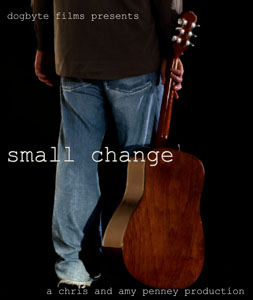
The Struggle of the Independent Film Creator

Small Change Movie 

I have a friend of mine who makes movies. They’re independent films, but at the same time they’re very well done and obviously put together by someone who understands how to make movies. The interesting thing is that he’s relatively unknown, and the chances are pretty good that he will be completely unknown for the rest of his career. But not because he’s not any good. It’s because independent movie makers generally have about zero percent chance of making it these days.

He’s currently in the process of completing his latest film, which he made for about $15,000. Now, if you didn’t make movies, you might think that’s a lot of money. I mean, it’s more money than I have to spend. I mean, let’s face it: With my expenses for online porn, I really don’t have a lot of money to spend on anything else. Oh wait, did I say that out loud?

Anyway, he’s made a few movies before that didn’t do very well because there’s a certain amount of stigma that comes with being an independent film producer. Those of us who watch movies are very critical, and for some reason, we want high-quality, big budget productions, even when the movies being made aren’t big budget productions that can afford to have such high-quality. Yet, we expect it, so if a movie doesn’t blow $15 Million on its budget, we’re probably not going to watch it.

Which means, fewer and fewer independent films get made. Which also means we get more and more crappy remakes because Hollywood has never really been all that innovative when it closes off the spigot of new visions, which often can’t afford such budgets.

Think about one of the biggest independent successes in our time: Clerks. It was made on a shoestring budget that was essentially paid for on the director’s credit card. Granted, he made it back in huge returns, but most independent movie directors don’t succeed that way. Generally, they go into serious debt, pawn the car and then live the rest of their lives in dire destitution.

The old way of breaking into the industry was to do a shoestring budget film and then have it shown at one of the independent film festivals. Well, if you notice the current crop of movies that show up at these independent film festivals, you might be interested to know that the definition of “independent” is becoming very skewed lately. Nowadays, big stars figure on breaking out of their connections to the big studios, so they fund huge independent films, and THAT is what shows up at these festivals. The low budget guy has been forced out by the big names with deep pockets that make movies often with venture capital funding.

Our ability to see new ideas is slowly being turned off so that the future is going to be nothing but Explosion Man VII types of presentations.

My friend is currently trying to do all of the work that big budget films have hundreds of people doing the work. It’s kind of amazing to see how he goes through such stress just to try to get his movie into its first movie theater.

Is it a perfect movie? Probably not. I mean, what film ever is. But it’s probably going to be something different than what you normally get to see. And it’s completely independent, and unfortunately it’s part of an endangered species that we could easily support by actively looking for independent features and supporting them. But we won’t because we’re finicky movie watchers, wanting stuff that’s only perfect and highly produced with lots of Hollywood money. And that’s why we’ll lose in the end. It’s like appreciating a mom and pop store, but never going there, always shopping at the local Wal Mart and talking about how we have to do something to save the local mom and pop stores. Sadly, so many people do exactly that.

So, here’s your chance. I guarantee that somewhere in your community someone is trying to get an independent movie seen. Support that person or lose that creativity forever. I mean, it really is your choice, and in a day where we don’t even get to choose who we get to vote for, you have to grab onto those little opportunities while you can. Or you lose them. But remember, it was your choice.

(the image is of the poster for Small Change, the independent movie that was the impetus of this article)