He was the star of some of Hollywood’s greatest pictures, earning studios more money than they could count. So, why doesn’t Hollywood use him for movies any more? The answer may shock you!
Press Next Page to Find out the SHOCKING reason
He was the star of some of Hollywood’s greatest pictures, earning studios more money than they could count. So, why doesn’t Hollywood use him for movies any more? The answer may shock you!
Press Next Page to Find out the SHOCKING reason

As much as it saddens me to say this, I’m more and more convinced every day that Twitter has failed as the communication vehicle it originally set out to be. You see, the original idea for Twitter was that it was going to create an atmosphere where people could communicate with lots of people AND as a result, give those people an opportunity to communicate back. Whereas television, radio and rallies tended to present one sided conversations, Twitter was going to offer the opportunity for the channel to go back and forth. Granted, it would be mostly pointed out from the person being followed, but that feedback was an essential part of the dynamic.
Fast-forward a few years, and what we have is a social networking system that has become mostly one-sided. For an absurd example, but one that points out the problem first-hand, look at the account of Kim Kardashian West. She has 58.4 million followers. But more significantly, she follows exactly 131 people. While she does retweet people from time to time, the chances of actually getting a specific reply from her are about as likely as getting a date with Taylor Swift (translation: not likely). If you look at the most retweeted account, that of our current president, it’s interesting to note that he is followed by 47 million and only follows 45 accounts. If you look through some of the most popular accounts on Twitter, you see something very similar to just that.
What this means is that Twitter is not a communication process but a megaphone for people who are popular entities already. Some entrepreneur still needs to invent the process for people to actually have a voice in conversation with others, but Twitter is not it. If you look at the average account, people tend to have at most 100 followers and generally follow a few more than that.
The moral to this story is that quite often people follow the individuals they respect because they wish to interact with that person. But Twitter doesn’t really make that a part of its process, even though it often acts like that’s exactly what is supposed to happen. An example is a celebrity like William Shatner who has 2.57 million followers, follows about 500 and generally has somewhat of an adversarial relationship with anyone who would like to converse with him.
That’s not to say that there aren’t those who don’t communicate with their fans. I’ve followed Marina Sirtis (Counselor Troi from Star Trek the Next Generation) for some time now, and she’s very friendly to her fan base. From time to time, she responds directly to things people say to her. But to be honest, she’s a rarity, whereas most celebrities treat it as a segment of their entourage that they allow tiny morsels of information.
Unfortunately, it’s all we got right now, but it’s so inferior to what I really wish it could be. So, that’s for someone else to invent and bring to the masses. I’ll wait.
Earlier today, I was examining the statistics on my website and realized that I have about 1.5 million hits on my site since I started it. That appears to be a lot, but then I started to think to myself that not a lot of people comment on it or send me messages based off of my web site (or its blog). So, this tells me that I seem to get a lot of traffic but apparently nothing seems to be going on with it. And yes, that opens up a lot of thought on a subject I’ll probably take up at another time (what do to with traffic when it gets to your site, as I don’t seem to be doing a whole of good with that area).
Last night, I was watching the latest episode of Law & Order: Special Victims Unit, which is still one of my favorite police procedural types of shows. And in this episode, an Instagram star hooked up with a MMA fighter and was raped, but it turns out the whole thing had been set up by a young woman who was a follower of both of their Instagram feeds. The prosecutor mentioned that a motive for the set up was that the Instgram model had tens of thousands of followers, the MMA fighter had 2 million, and the young, geek girl had 6. Therefore, this was vengeance against the two well known Instagram stars from someone who felt that she had an important voice but no one was listening to her.
That resonated quite a bit with me because I think a lot of us who aren’t big stars often feel the same way. Not that we’re about to set up someone famous like the plot line of this story, but at the same time the realization that there are people who are seriously famous for a sex tape, or for just looking good in pictures, can be a hard thing to face when one is trying really hard to become known as well, but doesn’t have that advantage those pseudo celebrities have.
Recently, I’ve been following a bunch of ASMR artists who I find to be very good at their craft. In case you’re not familiar with ASMR, it stands for Autonomous Sensory Meridian Response, which according to Wikipedia is “is a term used for an experience characterised by a static-like or tingling sensation on the skin that typically begins on the scalp and moves down the back of the neck and upper spine. It has been compared with auditory-tactile synesthesia.” And even with that definition, you’d be amazed (or maybe you wouldn’t) at how many news agencies just don’t understand it, which you can see when they start to make statements that suggest watching President Trump gives “ASMR tingles” or when some celebrity posts a Youtube of her just staring at the screen and the media goes ga ga over her “ASMR video.”
In reality, ASMR is difficult to achieve and very few artists succeed at it. There’s a reason that there are a few very popular ASMR artists out there, and almost none of them are celebrities known for other things.
Which brings me back to my original subject, and that’s that viral popularity has a bad habit of creating an atmosphere that wasn’t intended in the first place. For those not completely familiar with ASMR, it’s pretty easy to fall into the trap of thinking ASMR is nothing but people whispering and making sounds with inanimate objects. And that’s because a lot of it comes from doing exactly that. But it also comes from a stronger understanding of how those actions can trigger the audience into feeling something more than just simple reactions. As a result, quite a few artists sometimes push the envelope and create what I’ve started to characterize as PG-13 ASMR. What I mean by that is ASMR that is designed to arouse rather than “tingle”, and for those not initiated in what ASMR, it can be very easy to mistake one for the other.
This happens quite often because the models who do ASMR are almost always attractive. Both male and female ASMR artists are generally above average in attractiveness and in their social tools for attracting others. This should be expected because this is a video environment where an unattractive artist is going to be avoided or ignored, and an attractive one is going to cause people to click the image being presented on the Youtube reception screen. This often resonates in the comments section of their videos where the anonymous nature of the Internet can cause trolling behavior you’d expect in a darkened strip club environment. To make matters worse, a number of ASMR artists chase the elusive crown of traffic and subscriptions (people subscribe to their personal channels), which leads to a revenue stream from Youtube. This causes the perpetrators of the more adult environment to keep pushing the adult envelope and the non-sexual artists to feel the need to participate because of loss of viewer clicks.
Youtube has somewhat cracked down on this phenomenon, but has done so with broad strokes that hurts mostly the non-sexual artists because they demonetize mostly based on viewer feedback, and the business has become somewhat cutthroat with an almost mob mentality towards those who are actually trying to comply and do the right thing. As usual, those are the ones who suffer the most, whereas the ones who are crossing the line are rewarded because none of their fans are ever going to turn them in for breaking any of the rules.
Which kind of brings me full circle in what I was originally talking about, and that’s the problem of trying to achieve any level of popularity in a bread and circuses environment where controversy, sex and violence are the things that attract the largest audience. How does the unknown artist achieve notoriety in a mostly celebrity driven world? In a free market mentality, one would think that the quality rises to the top and everything else remains at the bottom. But that’s rarely the case. Quite often, celebrity status is more than enough to create buzz so that its products remain at the top and everything else is left grasping for scraps. As a writer, I find this problem emblematic in the field because some really bad celebrity fiction gets serious attention when it’s not very good and it’s written by people who have about twenty years before they’ll actually ever write anything significant (if they were to work on it full time and not just in between movies or photo shoots). But the people who put in the work in hopes of one day becoming discovered may do so their entire lives and never get a nibble beyond a table scrap thrown their way.
So, the question is: Is there a balance, or is it just not worth the effort? I’m kind of on the cusp of this myself, as I’ve been writing for most of my entire life, creating computer games that were popular but too early for the industry to ever recognize, wrote music back in the day when such music was seen as too experimental, and any number of other creative tasks that have fumbled, fizzled or just never took off. People keep saying “Just keep at it and your day will come”, but part of me wonders if it’s just a crap shoot and my time might better be spent catching up on the latest season of The Walking Dead.
One of the common refrains heard from people who skirt the field of writing is that of someone who suspects that if he or she writes a book and no one reads it, is that person actually a writer. And there are numerous schools that try to answer this, much like a zen master talking about whether trees falling in the forest actually happen if no one hears them.
Lawyer and writer, Susan Wolfe, writing for Writer Unboxed, asks that same question and comes up with the inevitable answer of yes, you are a writer, which isn’t really that much of a surprise. But what does comes as a surprise to me is that her article goes on about how whether or not her second book sold was enough of a hit to allow her to want to write her third. That hit me kind of hard because it’s been a very long time since I wrote my third book, so it’s almost like I don’t ever remember having that conversation with myself.
You see, my biggest problem back in the day was whether or not to write my second novel. I had finished Innocent Until Proven Guilty early in my military career. And it was such a lot of fun to write. Then, I started imagining my second novel and decided to go with science fiction instead of mystery/suspense. And that got me to start wondering: Was the first time a fluke? Am I really a writer? Who am I trying to fool?
So, I sat down and started to write the second novel. And let me tell you: It was freaking hard. I kept second guessing myself, convinced that the first time was that one book everyone has inside of him (or her), and a second one meant you were really trying to be a writer. And about halfway through that novel, I can’t even begin to tell you how many self-doubts started flying around me. Yet, like all stories, this one had an ending, and I managed to muddle through it. That book became Leader of the Losers. Without a doubt, that was the hardest book I ever wrote. My third one, and those after, were never as hard as that second book. I’ve written 14 of them now. I’m writing my 15th.
But getting back to the original question of whether or not someone considers himself/herself a writer based on a particular book’s success seems almost irrelevant to me. I’m a writer because I love to write. I was writing stories for several decades before I wrote my first novel for actual publication. I had written hundreds of short stories that had been published during that time as well, which I suspect is a bit of a problem these days as not a lot of writers get their start that way any more. Instead, they’re expected to write their great opus out the gate, which is why so many self-published books read like someone’s very first thing they’ve ever written. Because it is.
To Susan Wolfe, I would say relish the act of writing more than the business of writing. If you’re doing this to “sell books” rather than to tell stories, I suspect you’re probably never going to find true happiness. You might find financial success, but that’s such a sad way to find one’s place in art. I’ve had moments where a turn of a phrase I came up with has lightened my entire day. I’ve had others where I’ve been seriously pissed off at a character of mine for doing something that I hadn’t expected. Writing finds those paths that logic can’t travel because each sentence is part of a journey, and a writer should constantly be trying to find new roads.
By now (September 8, 2017), most people have heard that there was a data breach at Equifax that has made over 143 million Americans vulnerable (about half of the entire country). Read more about it here.
Equifax hasn’t done itself any favors since the breach. First, it waited a month to let anyone know that their security was compromised. Second, 3 of its executives decided to cash out stock in the company a few days after discovering the breach. And third, in order to sign up for the “free” protection services, you have to agree to their Terms of Service, which basically say that you agree to arbitration and lose the right to participate in any class action lawsuit. None of those revelations sound good for the company.
But what makes this breach most annoying to the average American is that there was no way we could have avoided being involved. Most of us don’t do business with Equifax. We don’t open accounts with them. They open accounts ON us. We are their product, and we don’t have a choice in the matter.
Yet, we’re the ones affected. We’re the ones who will be cheated out of our money and thrown into the poorhouse if this runs the course it most likely will run. Equifax will protect Equifax long before it protects any of us. It’s entire model is not built on protecting consumers, but in reporting on consumers to big companies that give them business.
This is a lot like Facebook, even though you may not realize it. Facebook’s product is us, not its web site. Without us, Facebook has no business. Equifax is exactly the same way. The big difference is: Most of us choose to be on Facebook to take advantage of its use of us. So very few of us EVER chose to do business with Equifax, aside from the few people who wanted to monitor their credit before this all happened.
So, let this be another example to you that there are those companies out there who see YOU as a their product and aren’t willing to give you a single cent in order to exploit you. Feel good about that because it’s only going to get worse. Nuff said.

One of the problems of being political or taking a political stance is that chances are pretty good that you’re going to end up pissing off someone when you didn’t intend to do just that. As a writer, my goal is always to entertain as many people as possible, so whenever I deal with political issues, I get scared that whatever I’m going to say is bound to cause an audience member to dislike me. And these days, when someone dislikes you, that person tends to stop following and you never hear from that person again.
Therefore, it becomes a dilemma.
Because if one focuses on this type of fear then a writer is bound to water down whatever he or she has to say and only say the things that he or she hopes the audience is interested in hearing. And I can only imagine how bland and boring that might turn out to be.
The other day, I posted a tongue in cheek comment about something, and one of my politically correct “friends” corrected me and told me that I had to be careful, because saying such things can be construed to be wrong. I didn’t respond, but part of me was thinking: “Hey, I said what I said because it was something I wanted to say. If it bothers you, just ignore it or go frack yourself.” I didn’t say that because I’m a complete coward, but it did cause me to think.
And then the next week, that same person posted something that was completely one-sided, told in a tone that she knew best and anyone else who disagreed was obviously stupid. Basically, she did exactly what she told me not to do and then didn’t think anything of it. I then started to notice she does that all of the time.
Some people are like that. They are good at criticizing, but not so good at avoiding the behavior they criticize in the first place.
But then, she’s not a writer worried about people not continuing to read what she writes, and I am. So, there’s the dilemma.
Which kind of brings me to wondering how it is possible for polemic people to write the types of articles they do, knowing that people are going to be annoyed at what they write. I’m thinking about people like Ann Coulter, Michael Moore, and Tomi Lahren. The first two have completely established audiences that they’re probably never going to lose, but like the latter one, it leaves me wondering what kinds of risks is someone like Lahren willing to make in order to remain somewhat relevant in a very hostile media atmosphere. And part of me is also constantly wondering if part of the appeal is physical attractiveness as well, because if there wasn’t that, I kind of wonder at how many followers someone like her would have if the audience isn’t already cemented.
Social media seems to be one of those weird animals in that some people just come to it naturally and do really well right out the gate, whereas others, like me, take to it slowly and never really seem to reach the audiences they dream of achieving. It’s like the market for writing novel e-books. I’ve been writing for decades, and the readers I have tend to be the same readers who found me some years back. Others, I’ve seen them publish their first book and suddenly they’re selling them faster than Amazon can print them. Okay, Amazon doesn’t exactly print them, but you get the idea. I hope.
Some people just do really well with little effort while others succeed without trying. I’m starting to believe that that is how social media works for some people as well. While some people have the added benefit of being attractive to, well, attract others, those of us like me, toad-like in appearance, pretty much have to fight for each stride of existence. Okay, not toad-like, but I will admit that when my picture is put next to Brad Pitt’s, people tend not to stop and think: “Wow, I can’t tell them apart.” Definitely not. Brad’s got nothing on me!
Anyway, so the point is that getting an audience can be pretty tough and then once you do, it’s like walking on egg shells to make sure that you don’t lose any of your listeners. People can be pretty fickle about such things, and once you’ve lost a member of your audience, you tend to never get that person back.
So, if this bothers anyone who happens to be reading this, understand that it was someone else who said it, not me. I would never say anything to piss you off. Really. I’m just that kind of guy.
Please don’t go!
So, a couple of months ago, I was having trouble falling asleep at night, so after a bunch of frustrated attempts to sleep, I did what any 21st century geek would do: I turned on my computer and Googled something that had to do with sleep. And that was how I came across a video of a woman on Youtube who whispered and made unique sounds while trying to help the viewer fall to sleep. That was also the first time I had heard the term “ASMR”.
ASMR, or lesser known as “autonomous sensory meridian response” is a really niche segment of the Youtube population that caters specifically to people filming videos of themselves talking to the camera while making various sounds that are supposed to activate “tingles” in audience members. So, this could be anything from scratching a piece of paper to extremely elaborate presentations of mixing jugs of water back and forth. Sometimes, the purpose is to help someone sleep or relax, and other times it’s just to evoke some kind of response from the person watching the video. And those responses can be all sorts of different types.
After a bit of time of crawling down this rabbit hole of ASMR, a couple of things start to become apparent.
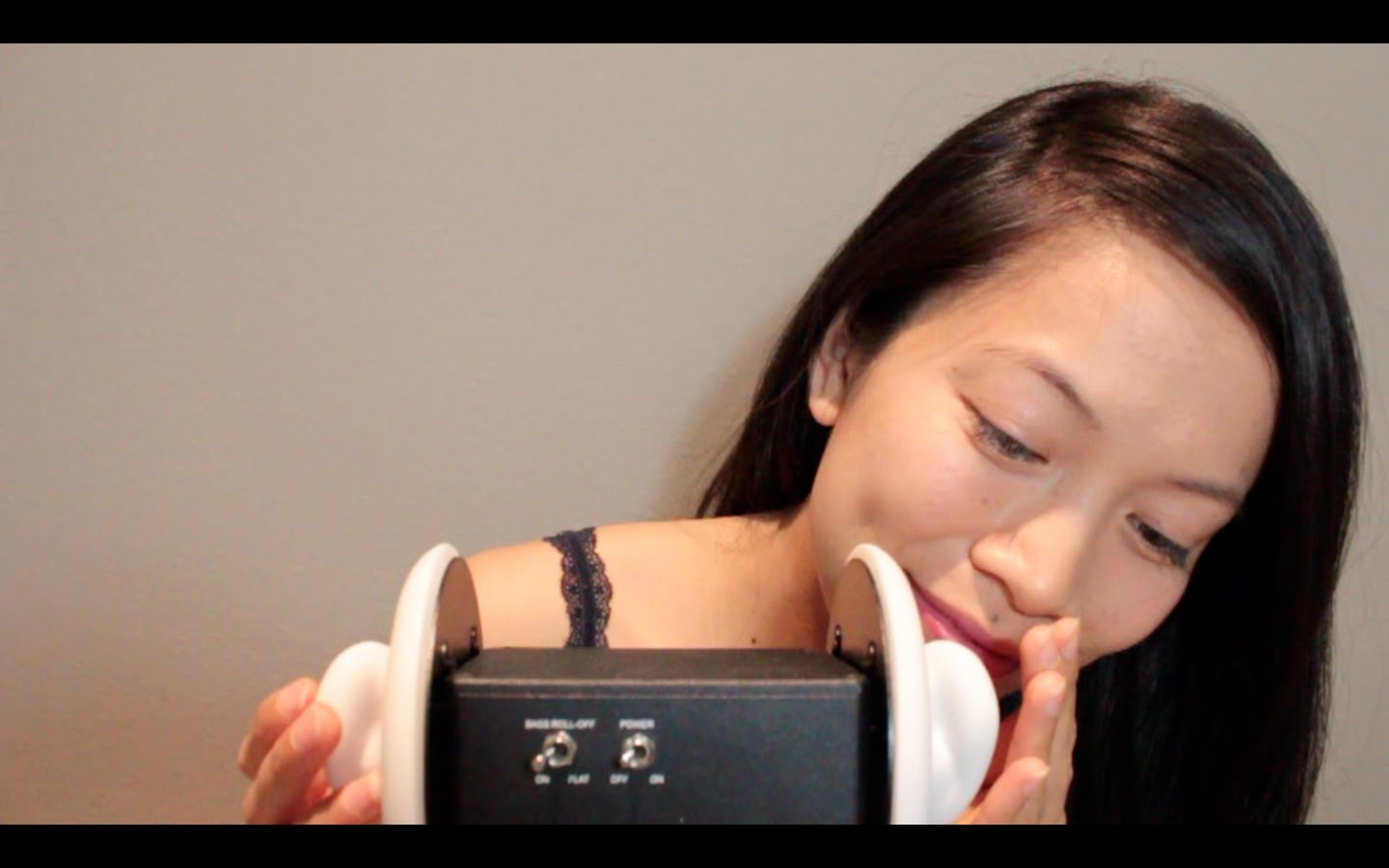
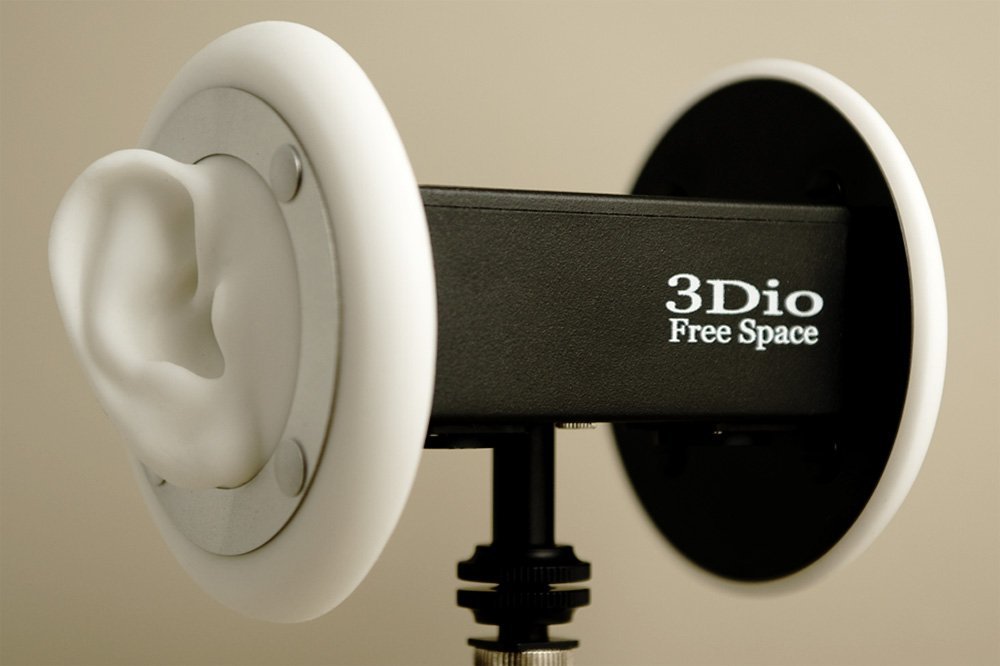
The microphones themselves are quite unique. Before studying this are of Youtube, I thought I knew something about microphones. But I was wrong. I knew nothing, Jon Snow. What they use in a lot of ASMR videos is this type of microphone I have here as a picture. It is almost like a person that the artist is speaking to (including ears). Quite a few artists play with the “ears” and it can sometimes be a bit weird (well, to me). However, the microphones are extremely expensive and are set up to handle stereo recordings, which means that when the artist moves to the left side of the screen, if you’re listening with headphones, you are going to hear her voice come out of the left speaker, so that it can actually feel like the person is walking around you as she is two dimensional on the screen. This microphone in the picture is about $600. I’ve seen some of the microphones (including one that’s a representation of a person’s head) run for close to ten thousand dollars. Obviously, some of these artists are extremely invested in this activity.So, this has been my adventure so far in studying ASMR. I got into it once because I was having trouble sleeping, and then the communication scholar in me started to see this as an untapped area of exploration that I believe more people should be aware is happening around them. The phenomenon is relativity new (still pretty much in its infancy in comparison to other phenomena), but I suspect its continued evolution might lead to all sorts of interesting perspectives and insights.
Yesterday was the official celebration of the late Dr. Martin Luther King, Jr.’s birthday. If you didn’t know any better, you might think that January 19 (yesterday) was the day he was born. He wasn’t. He was born on January 15, 1929. We celebrate it on the 19th because, well, because that’s when we decided to start celebrating it. During the first President Bush’s term, the decision was made to celebrate his birthday on the third Monday of January. The official day because a more convenient day, and that’s why we celebrate it when we do.
The same thing happened to two other U.S. leaders, Presidents Washington and Lincoln. The two were celebrated on their birthdays in February but because they were so close together (a few weeks apart, separated by Valentine’s Day), the decision was made to celebrate Presidents’ Day instead, incorporating both holidays into one on a date that was significant for neither one. Welcome to the way we do things in America.
So, why do we focus on the days anyway? Let’s just put aside the fact that we don’t actually celebrate the specific days, but celebrate somewhere near those days. The question still remains. Why do we acknowledge them in the first place?
You could say that it has something to do with paying respect to our elders, or even our founders. But if that was so, why aren’t we celebrating Jefferson, Adams, Monroe, Henry Ford, Rockefeller and/or Steve Jobs/Bill Gates? I mean, there is no shortage of people who probably deserve some mention, yet we focus only on very specific people and, if lucky, add someone to that list after decades of struggle over whether or not we should be more inclusive.
Perhaps an answer to this question may require us to step away from U.S. recognitions and move towards some of the memorials that happen in other countries and civilizations. In Southeast Asia, quite often certain events in history are memorialized and whenever those dates come around each year, all sorts of future events occur that can sometimes be disruptive to the people living in our time. An example is a peoples’ movement that occurred in South Korea, where protesters were killed on a particular date during an uprising in the 1960s. Whenever that year came around, common citizens would rise up and riot again, almost as if remembrance was a signal to regurgitate protest movements all over again. And then a year later, if the police struck hard enough the year before, those subsequent protests would then be added to he common memory of something to memorialize each year going forward. Kind of cool if you’re a protesting civilian, but must have been hell on the people trying to run a stable government.
So why do we memorialize in the first place? What purpose does it serve? Does remembering bring happiness? If you look at something like the Vietnam Memorials that exist in numerous states and at the national level, happiness is generally not the feeling you get from such memorials. Sadness and regret is often the reaction. But I would say that for the Vietnam experience, perhaps sadness and regret might not be a bad thing because at least then it causes people to think twice before making the same type of mistake again. That would be great if that’s what actually happens. But unfortunately, that’s not what happens. As a matter of fact, I believe that the people who should be focusing on the events are the ones who tend to ignore them most, basically putting on blinders and going forward and doing the same things next time around. It’s like the protest spheres they set up at political campaigns. The people who protested were hoarded into locations that were designed to be out of sight and ear of the people attending the functions, so that the ones listening to the politicians were oblivious to the protests of people who really wanted the people making decisions to be aware of. For a country that modeled itself on free speech, we created a dynamic that did everything possible to avoid any kind of adverse conversation, meaning that people who made decisions never had to listen to anyone who might actually have a problem with those decisions.
Which brings me back to the idea of certain days celebrating certain things, especially in a way that avoids any conversation about those things. Columbus Day is an example of one of those days that could have led to a lot of great conversations about some of the atrocities carried out in our name by our previous generations. But once the conversation started becoming difficult, it stopped being a national holiday, and now no one talks about those instances because there’s no official day that causes us to have to remember what we did. Sure, a few press junkets attempt to broach the subject, but more often than not, the conversation is flat, and we move onto the next holiday celebration quickly so we don’t have to deal with the consequences of the things we might have done. Instead, we’ll go to some foreign soil one day in the future (or maybe just a few years ago), attempt some modern day version of Manifest Destiny, and then claim that we shouldn’t be accountable for our bad actions because there was nothing in our past that should have taught us otherwise.
In other words, my fear is that our national remembrances are no longer being used for the purposes they should have been utilized, and instead we’re coaxing such days with ways to bring profit to our manufacturing and sales sectors. Instead of looking at Martin Luther King, Jr.’s birthday as a time to reflect on how far the civil rights movement went and how much further it needs to go, some company will try to sell us fried chicken, or on President’s Day: beds, or whatever fancies us, and in the end we’re going to learn very little about the mistakes we’ve made and how we can avoid making them in the future.
One day, after I’m famous and have cured the ills of our society, I hope they celebrate my birthday. Unfortunately, it occurred on Lincoln’s birthday, so they’ll probably never celebrate mine. And knowing my luck, I’ll end up dying on the same day as Kurt Cobane or some other known figure, and that day will forever be linked to that individual as well. If I’m truly lucky, people will remember me and some manufacturer will hopefully sell something people can use on that day, like breath mints or condoms. After all, that’s what helps one’s legacy remain within the hearts of people for generations to come.
Just recently, I moved across the country from Michigan to Texas. In the process of moving, I started to liquidate a lot of the stuff that I had at he old apartment, including numerous computers and electronic equipment. So I went onto several selling sites to get rid of some of this stuff, and what I discovered is that the trolling scammers are practically everywhere now, and they’re pretty bold and not all that concerned with being caught either. So, having been through a bunch of attempts to scam me, I thought I would point out some warning signs for those who might think that selling something is a good idea, and also make the mistake in believing that the majority of people who respond are actually people you can trust and not annoying asshats that are going to do everything possible to separate you from you money.
1. The Responder in a Hurry: This is usually someone who needs to take care of this transaction right now. Not tomorrow, or even in a couple of hours. He or she needs to take care of this right now and you should understand his or her need for speed because of some really badly doctored rationale that even my college student slackers know better than to attempt to try to get over with me using. One standard one I received no less than a half dozen times was “my son (or whatever relation) is in Iraq/Afghanistan and I’m buying this for him/her, and because he needs it quickly, I need to take care of this right now. Now, if this was the only situation involved, it might be somewhat believable, but quite often it’s coupled with one of the other examples as well.
2. The Paypal Only Guy: One of my stipulations in m ads is that the deal must be carried out in person, and in cash. I don’t take checks (people will offer to pay with a check) or any other weird currency, including “can I trade you something for your item?” Look, if I wanted something else I couldn’t sell, I’d take you up on your offer, but as I’m trying to sell something to get it out of my house, I don’t want your junk, too! Anyway, the paypal guy is the one that says that he has no way of paying you in cash (usually he’s “out of town”) so it has to be done over Paypal. I turn these down each and every time as almost always they are coupled with another one of the scamming activities, which tells me that there’s a lot more going on than just a legitimate exchange over Paypal. I haven’t figured out the nuances of what they do to scam you through that process but as so many scammers have offered to pay me over Paypal, I’m extremely apprehensive. Now, I’ve done business using Paypal in the past, but it’s usually with legitimate businesses or entities I trust, so there’s that.
3. “I’m not local to you” guy: This is the most definite scammer of all the ones I keep running across. Years back, I was scammed by an Ebay buyer who did the infamous “I will send you the money through (name some nefarious process) and I need you to send it to me in some weird place that has no jurisdiction over legal matters, but I promise you it will be all okay.” Yeah, I’m kind of exaggerating about it, but you get the idea. Almost always this “offer” promises to send a few hundred dollars over the cost of the item (to handle my inconvenience) and things start to go downhill from there. Now, whenever someone says “I need you to send it to….” I respond, no, I don’t send anything anywhere. Sorry.
Those are the three main ways that I know a scam is involved. In addition to that, I thought I would mention one of the other problems that occurs with online selling in these matters, and that’s the concept of texting. I can’t tell you how many people have responded to my ads with a text, basically repeating exactly what I wrote in my ad (as if that’s a question somehow). Example: I type in “Selling a computer for $700. Call this number.” The text response is “Selling a computer for $700. Call this number.” Basically, it leaves me just staring at my phone thinking, did I just get contacted by one of those alien races that sends back messages of those they intercepted, convinced that this will lead to a future of conversation between two civilizations in the galaxy? What this has finally done to me is to pretty much give up on any instance that starts with someone who texted me. Almost always, anyone that continues the conversation and says he or she is interested, it ends up in a flake situation where I’m waiting somewhere for the person to show up, and they never do. And I never hear from them again. Now, I’ve gotten to the point where I say “call me when you reach the location” mainly because I don’t believe they’re going to show up to begin with.
In addition, I write in EVERY ad, “do not text me as those do not get answered” and almost always they text me as the only way to contact me. I almost threw my phone into a wall the last time because I stupidly wrote back and said, “DO NOT TEXT ME. PHONE ME INSTEAD.” So he texted me as a response. I ignored him after that, even though he wrote a few times asking for more information.
So, those are my thoughts on scammers. It’s almost made it not worth selling anything online any more. However, a few people were pretty good, but when you’re inundated by stupid scammers, it sometimes makes the whole thing not worth it.