Tag Archives: innocent until proven guilty

Why You’ll Probably Never Finish the First Book…or the 2nd one either

From the Chronicles of Stickman & the Unemployed Lego Spaceman
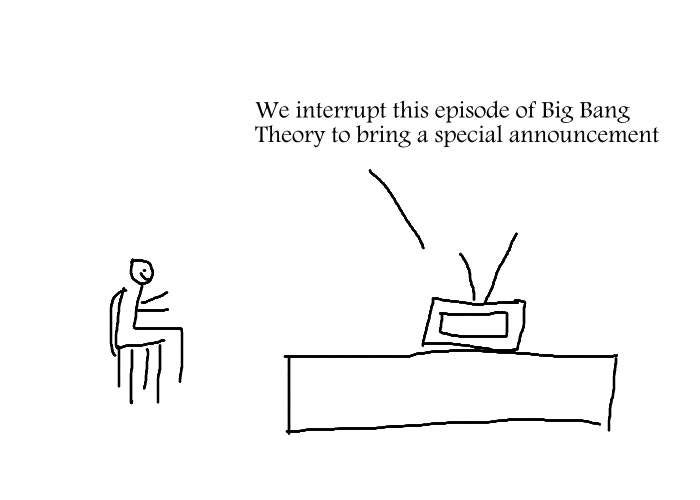
Several decades ago, I was writing my first book. It was one of those stories that had been percolating in my head for years. It was about a murder that takes place in a major corporation where one of the executives frames one of his competitors, and because of the various incentives of several members of the media and organized crime, the hero finds himself competing against the man who framed him, the media itself, misinformation, and even distrust within his own family. Add in a bunch of gunfights and car chases, and I was on my path to writing this first novel.

At the time I write this, the places to explore the research were very limited (the Internet was still a decade or so away from infancy) and, as I’d never worked for a corporation before, having been serving in the Army after attending the United States Military Academy after high school, I pretty much had to do most of my research through letters to industry leaders, conversations with people who had served in corporate leadership and lots of guesswork on my part. The fact that I got more right than wrong still amazes me to this day.

In the writing of this novel, I ran across all sorts of problems, including losing the last 50 pages even after I completed it, forcing me to rewrite that stuff again. But after a couple of years of constant writing, editing and filling in information, Innocent Until Proven Guilty was completed and in the hands of people who were finally able to read it.

You’d think that once that novel was completed, the field of writing would then become my oyster (okay, not really sure what that means but I’m sticking with it), but let’s just say that the obstacles were only beginning, and even to this day there are things that are constantly part of the struggle of one trying to be a professional writer.

Now, over the years, I’ve mentored quite a few writers, which is somewhat of a daunting concept considering that this mentoring has occurred over a period that has encompassed both the days of writing when there were dogmatic gatekeepers who held the entire productivity of the industry at their fingers up until today, a period where all you need to be published is a computer and an Amazon account (or whatever gatekeeper you prefer instead).

In the early days, the type of help I used to assist with had more to do with sentence and form and then more industry-related concepts, such as where to get published, or even what to send to whatever publisher, editor or magazine. The point was that there were certain things you had to do in order to get through or past the gatekeepers. Now, we’re in a cycle of publishing where anything can be published, but the gatekeepers are no longer the professionals, but the readers themselves. Strangely enough, the skills needed haven’t really changed, but the process has changed just how people approach the possibilities of being published.

But one thing that has never changed is that no matter how good you write, chances are pretty good that you’re going to struggle with the reality that finishing a book is one of the more difficult things you’ll ever attempt. And then once you’ve achieved that accolade, you run into an even more daunting experience: Finishing the second novel. But we’ll get to that second problem later. First, let’s deal with the one that you’re probably facing right now, and that’s completing the very first novel. All professional writers have been there at one point or another, but no matter what you do, you’re never going to be a successfully published author if you don’t actually finish that very first book (assuming we’re talking about novelists here; I’m not really quibbling about writers who are attempting to complete projects other than books, like short stories, poetry, lyrics, haikus, or whatever other form that comes to mind).

But I thought I’d mention a couple of problems I experienced over the years in my own writing. And, as I mentioned, I’ve mentored quite a few people, I’ve come across a lot of other problems that I never would have imagined, and perhaps it might help some struggling writer out there who might be thinking of plowing through his or her first novel and hasn’t decided to start just yet.

SOMEONE MIGHT STEAL YOUR IDEA: This is one of my favorite quandaries that beginning writers often bring up. Let’s just say that you came up with a brilliant new idea to write about in your novel, and then you start to put it together into a working manuscript. That’s great, but you’d be shocked at how many writers then come to this “problem”.

One of the first novelists I was mentoring was at first very apprehensive about showing me any of her work, even though she had approached me originally asking for help with her writing. Part of me suspected she thought that the mentoring relationship was just going to be me spouting out random pieces of awesome knowledge that she would start incorporating into her writing process.

I explained to her that if she wanted my help, I’d have to actually see her writing to see what might need work, what might be on the right track (so do more of that) and what things just really aren’t working for her. But it took a very short time to realize we were never going to come to that point if she didn’t first trust that the person mentoring her wasn’t planning to steal her plot ideas and turn them into writing gold.

The way I eventually did this was to explain that every writer has a plethora of ideas that he or she comes up with, and what makes that writer significant is how he or she develops those ideas into prose. By the same token, two writers choosing the exact same topic will almost always end up writing two separate novels that have absolutely no correlation with each other because the mind creates something that only that mind could foster and grow. Therefore, even if her idea intrigued me, there’s zero chance I would end up writing the same book she would write.

It reminded me of a story of my own back when I still hadn’t even written anything more than a few short stories at the time. I had this great idea for a behind enemy lines war story that involved special forces units going back to Vietnam to free prisoners of war that were kept after the conflict. I had even gotten to the point where I was outlining chapters that I was going to write.

And then out of nowhere, a movie was released called Uncommon Valor, and strangely enough, it was pretty much the idea I had been developing for several years at that point. I had that same feeling that young woman I was mentoring probably was feeling about her “idea”, feeling that anyone could steal the idea once they knew what it was.

The reality is that whatever I would have ended up writing would never have been the same story as Uncommon Valor. My proto-novel was going with the title Missing in Action, and what I quickly learned after that moment was that a whole bunch of authors had the same idea, and then once Uncommon Valor came on the scene, a bunch of similar movies, including one with Rambo, showed up soon after.

None of them were the same story.

YOU MIGHT NOT HAVE ENOUGH INFORMATION TO FILL A BOOK: This is a very real fear, but it’s not as bad as it sounds. What it basically means is that you started writing your novel on an initial idea, not a book premise. What that means is that you had a catch, but nothing to go with that catch (or at least very little).

What often happens is that someone realizes that he or she doesn’t have enough material for a book and then just quits. And that’s usually the completely wrong approach. When you hit that point, and you suddenly realize that you don’t have enough information, the best approach is to then sit back down and begin to outline what you have for your novel. At a certain point in the outline, you’re going to realize that you’re missing a suspenseful element that needs to be found and added. So, you add it to your outline then. But rather than just jump right in and continue writing, this is a good time to finish that outline and see if you have a solid story to continue towards your conclusion.

I once wrote an entire novel, realizing something was missing but just not knowing what that something was. YEARS later, I pulled that novel out of a drawer and read it over again, before realizing that about half of the story was there, and all along I was telling it from the wrong narrator. I then sat down, outlined the novel that I should have written and then had a much more interesting story than I wrote decades earlier. It’s still not completed, as I also discovered that I was missing some location information (I had written the original novel in a specific time line, but the rewrite required a completely different time period, and that initial outline forgot that some of the elements filled in from the original story didn’t actually make sense for the new time period we were in. So, it’s back to being a work in progress.

AT THE HALFWAY POINT, THE BOOK NO LONGER FEELS RIGHT: This is one of those weird situations that happens with a LOT of books. As you’re writing it, you hit a point where you start to question the very nature of the project itself. The original idea doesn’t seem as exciting as it originally was when you first started.

Quite often, the writer will just jettison the project completely and hope for inspiration to hit again on a new project. This is also a similar problem that a lot of new writers have because a technique that seems to occur with a lot of them is to write only when achieving inspiration, and when that ends, wait until it returns. But it rarely does, because it’s a lot like love (it’s very intense in the beginning but tapers off the longer you experience it).

There are two ways to combat this problem. One, just bite the bullet and continue to write through until you reach the end. I will agree that this is probably the most difficult approach to take because you’ve grown attached to the story you liked, and you might have a hard time maintaining that same commitment to a story that doesn’t thrill you as much any more. This first approach tends to work a lot more successfully when you start to realize why you’re experiencing the sensation in the first place. The longer you work with a project, the more you grow tired of it because you’re practically living and breathing that story every day. A reader only experiences it that one moment while reading, but you run over every nuance of the story so many times in your head and while rereading what’s there in front of you. It’s very easy to grow bored of something you’ve been exposed to for so much time.

Which brings me to the second way of combatting he problem. And that’s to wait a certain amount of time until you feel ready to address the story and continue on.

My novel The Ameriad: the Untold Founding of America By the Survivors of Troy was my very first attempt at writing a straight out comedy novel. It was told in the voice of a Greek/Roman historian, much like Homer, and it was basically the retelling of America if the story had been told by a Homeric writer. I tackled this project soon after grad school when my head was filled with political philosophy, but as you may suspect, I got halfway through the story when I realized I had no funny left in me. So I put the project in a drawer and worked on other novels.

5 years later, I dusted off the project and realized what I needed to do in order to finish the novel. And now it’s a published novel, and I’m probably as proud of it as I am some of the previous work that I tackled in the past.

What was important was to give it some time so the ideas could grow and that a funny story could start to become funny again. I’m very happy with the results.

So, those are some of the initial problems you might have when writing that first novel. But I did mention that were a little more to the story, and that’s the revelation that once you’ve written your first novel, that doesn’t make the next one any easier. As a matter of fact, when I was writing my second novel, I came across a problem I never would have imagined.

COMPLETING THAT SECOND NOVEL IS SOMETIMES HARDER THAN THE FIRST: As I was stating, you might think the second novel should be easier because you now have both the skill of the first book behind you and the confidence of having completed it.

My second novel was Leader of the Losers, a futuristic science fiction novel. When I started writing it, it went quite smoothly. Until about the halfway point. And then, suddenly, I started to question everything about the novel. While I didn’t have an actual problem with anything I’d written, there was this horrific voice in my head constantly challenging me with thoughts like: What gives you the nerve to think you could pull this off a second time? Your first book was a fluke. You’re not really a writer.

What I was experiencing was a sense I used to get from one-hit wonders in the literary world. You know, the people who wrote one decent book but could never manage to write another one that didn’t ever do as well as the first because people recognized it was never anywhere near as good.

I started to think that Innocent Until Proven Guilty was my fluke, that I was never really meant to write anything else. And part of the problem with most writers is that you do this activity alone. Your support group is often just you.

So, when I was questioning my own abilities, there was nowhere in the room to say good things, to feed me positive affirmations about the writing process. It was just me telling myself that I got lucky once.

Aside from lots of therapy, which I could not afford at the time, the only real solution to this dilemma is to just shut yourself up and continue writing the novel until you finish it. And I did.

I’ve written 16 novels now, plus more short stories than even I can count (which either means it’s a large number, or I should have studied more when I was taking basic math classes). I don’t even count the hundreds of articles I’ve written over the years as part of my writing collection, but not because I’m not proud of them, but because at some point I just stopped counting.

The main point I want to share is that quite often we’re the obstacle in the way of our writing. We’re very good at creating hurdles where there shouldn’t be any. And no one’s better at questioning ourselves than, well, ourselves.

But be proud of every achievement and know that chances are pretty good there’s someone out there that likes something you’ve written. Our real job is to reach them, and sometimes that means getting through ourselves first.

But I promise. It’s always worth it.
Whether an unread book constitutes someone being an actual writer

One of the common refrains heard from people who skirt the field of writing is that of someone who suspects that if he or she writes a book and no one reads it, is that person actually a writer. And there are numerous schools that try to answer this, much like a zen master talking about whether trees falling in the forest actually happen if no one hears them.

Lawyer and writer, Susan Wolfe, writing for Writer Unboxed, asks that same question and comes up with the inevitable answer of yes, you are a writer, which isn’t really that much of a surprise. But what does comes as a surprise to me is that her article goes on about how whether or not her second book sold was enough of a hit to allow her to want to write her third. That hit me kind of hard because it’s been a very long time since I wrote my third book, so it’s almost like I don’t ever remember having that conversation with myself.

You see, my biggest problem back in the day was whether or not to write my second novel. I had finished Innocent Until Proven Guilty early in my military career. And it was such a lot of fun to write. Then, I started imagining my second novel and decided to go with science fiction instead of mystery/suspense. And that got me to start wondering: Was the first time a fluke? Am I really a writer? Who am I trying to fool?

So, I sat down and started to write the second novel. And let me tell you: It was freaking hard. I kept second guessing myself, convinced that the first time was that one book everyone has inside of him (or her), and a second one meant you were really trying to be a writer. And about halfway through that novel, I can’t even begin to tell you how many self-doubts started flying around me. Yet, like all stories, this one had an ending, and I managed to muddle through it. That book became Leader of the Losers. Without a doubt, that was the hardest book I ever wrote. My third one, and those after, were never as hard as that second book. I’ve written 14 of them now. I’m writing my 15th.

But getting back to the original question of whether or not someone considers himself/herself a writer based on a particular book’s success seems almost irrelevant to me. I’m a writer because I love to write. I was writing stories for several decades before I wrote my first novel for actual publication. I had written hundreds of short stories that had been published during that time as well, which I suspect is a bit of a problem these days as not a lot of writers get their start that way any more. Instead, they’re expected to write their great opus out the gate, which is why so many self-published books read like someone’s very first thing they’ve ever written. Because it is.

To Susan Wolfe, I would say relish the act of writing more than the business of writing. If you’re doing this to “sell books” rather than to tell stories, I suspect you’re probably never going to find true happiness. You might find financial success, but that’s such a sad way to find one’s place in art. I’ve had moments where a turn of a phrase I came up with has lightened my entire day. I’ve had others where I’ve been seriously pissed off at a character of mine for doing something that I hadn’t expected. Writing finds those paths that logic can’t travel because each sentence is part of a journey, and a writer should constantly be trying to find new roads.

What I Talk About When I Talk About Drinking

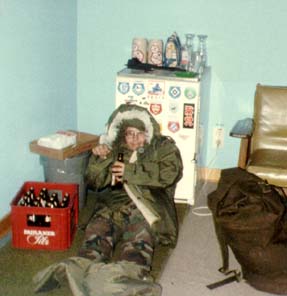
This is me during my drinking days in the Army

During the late 1980s, going into the 1990s, I was in the U.S. Army, and all things considered, I probably had somewhat of a drinking problem. This was the latter part of the era of drinking before people started getting serious about the ramifications of the problem, meaning that we started enforcing drunk driving laws (unlike the past where we swept things under the rug) and Alcohol Anonymous was no longer just a light at the end of tunnels that no one would ever travel through. To understand my perspective on the whole situation, let’s visit the late 1980s and let me share a bit of a story with you.

You see, back then I drank a lot. Every night. It was almost a ritual of service at that time. Work hard during the day and then get plastered at night. Wake up the next day, run PT (most likely throwing up alongside the other soldiers who were all suffering hangovers) and then by the time evening came along, we’d go out and do it again. THAT was pretty much a part of the military lifestyle back then.

I think the apex of this whole situation occurred when a colleague and I decided to take a trip to the Canary Islands. On the plane, we both got plastered, and then when we got to the hotel, we got smashed. And then for the next week, well, I know I had a really good time because I have pictures of me and a lot of very beautiful women cavorting together, but to be honest, I have figments of memories of what actually happened during that week long trip. All I remember was being greeted at the airport on the way back by my fellow GIs, and they had brought beer with them, so we got obliterated on the trip home, too.

A couple of weeks later, I was driving my car back to post (in Germany), and I was extremely inebriated. Some friends were in the car behind me, and they drove up behind me, hitting my bumper and then trying to push my car forward with their own acceleration. I was at an intersection, and as they pushed me forward, or tried to do so as I held down on the brakes, I suddenly sobered up. I was probably still quite drunk, but right at that moment, it suddenly dawned on me that there were other people on this street, that if I just gave in to the fun, who knows what damage (or lives) could have been affected.

Driving home slowly (the other car rushed by me and continued on towards the post), something came over me that made me realize something was wrong. I just was too drunk to really figure out what it was.

The next day was Saturday, so I didn’t have to be at work for a few days, but instead of my usual routine, I decided to skip the club that night. Instead, I sat at home and read a book. My fellow party buddies thought something was wrong, but the next night, I skipped partying again and did something else (don’t remember what it was at the moment but I do know it didn’t involve drinking).

A few days later, I sat down at my computer (one of the early ones…this was the 1980s) and started writing my first novel. In case you’re wondering, it was Innocent Until Proven Guilty, and it was the first work I completed where there was absolutely no alcohol involved. Shortly after that, I began work on my second novel, Loser.

I was reading an article today in Salon, about how alcohol is targeted at women through intricate manipulation and advertising, but I’ll have to be honest that when I was drinking, it just seemed like the thing to be doing. There were no great football beer ads that i remember during this time. Sure, there was peer pressure, but I’ve never been all that susceptible to that sort of thing. For me, all there ever really was involved the “you have to be old enough to drink it” mindset so that when I hit that age, I started imbibing because it felt like a chronological ritual of growing up.

I’ll admit that when I quit partying, it wasn’t the end of alcohol for me; that would come years later, but it did change things for me because that pleasure I received of getting smashed no longer seemed to be of interest to me.

What used to fascinate me was how many of those tests in books I would take that indicated I was most definitely an alcoholic. Do you often drink to excess? I sure did. Do you wake up the next day and not remember moments of the night before? I woke up one morning and couldn’t remember much of what happened the entire week before. Do you ever blackout? When didn’t I? Do you often crave alcohol? And that’s kind of where it breaks off for me, because to be honest, I’ve never craved alcohol. Actually, kind of hate it the more I think about it. I liked the buzz I got, but to be honest, I wasn’t all that excited about the buzz either. I drank back then because it was something to do. I really didn’t like my life back then, and it seemed like a good crutch to fill in the gaps of what was going on and not going on. I’m one of those kinds of guys who never really has romantic relationships, even when I was in the middle of a romantic relationship (if that makes sense). So, drinking filled a void that I basically needed to fill with something.

Fortunately, writing kind of fills that void now. The “thrill” of drinking was the ability to turn off my mind and allow this other sense to overwhelm me. Believe it or not, I get that (and more) from writing. I take myself to another world, and I get to live in that world during the time that I’m writing. It helps me to forget that my current life kind of sucks. Sorry, but it does. I still don’t have romantic relationships, and that part of me has never changed. So, I spend a great deal of time trying to find some way of filling the gaps that basically never get filled.

When I got out of the service, I didn’t quit drinking completely, although I became more of a social drinker. My friend Kat would drink from time to time, so I would drink with her. When we parted ways, I basically just stopped drinking completely because like I said before, it never really gave me anything that I was lacking anywhere else.

And that’s been years for me now. A friend of mine visited me for a week a few weeks ago, and when we were at the store shopping for groceries, she asked me if I wanted any alcohol, and it never even crossed my mind that I might be interested. Alcohol has no value in my daily life, and it’s not something I seek out. At one time, I was going to start drinking red wine, but only because I heard that it had certain heart benefits. Never did get around to buying any though.

So I guess what I’m trying to say is that I suspect that alcohol serves a purpose for everyone that consumes it, and what’s important is finding if that purpose is strong enough and whether or not it can be replaced with something else. For me, writing served as my alternative. But then, I’ve never been addicted, even though I can’t even begin to tell you how many people over the years said I must have a problem because of how I answered some of those questions. One person I know who is an alcoholic thinks I have some kind of strength to stop as I did, but I never saw it that way. I have my own vices and my own things that need to be dealt with (we all do). Alcohol just doesn’t seem to be one of them. Others, unfortunately, can’t say the same thing.


The Hardest Book You’ll Ever Write: Book Number Two

Some years back, after I finished my first novel, I was faced with a daunting question: Could I possibly write another? For anyone who has never written a first novel, this probably sounds like a no-brainer, but believe it or not, when I came face to face with the blank sheet of book number two, I found myself realizing that I was facing an enemy I had never imagined before.

When I was writing the first book, I had lots of bravado behind me. I mean, I had written a bunch of short stories, and inside me, I knew I had a book in me, so no matter what happened, I knew I was going to finish that first book. But when it was done, after a few months had gone by, I actually came up with the idea for the next book. And then I realized I would actually have to write it.

When faced with the second book, you find yourself in a very interesting dilemma that seems to go something like this: Well, the first book was a fluke, and everyone has at least a book in him or her, but am I really capable of sitting down and accomplishing the second book? The first book was a mystery/suspense novel that was kind of hard to pin down to its exact genre (you can see for yourself as it can be found here). The second novel was going to be a science fiction book, and although I had written a few short stories that had been published in fanzines (not having yet published in larger magazines), I was trying to convince myself that I was capable of pulling off a brand new genre on the second outing.

For days, I sat down and tried to outline the book, but nothing would come to me, because even though I had the basic idea of this novel, which I was going to call LOSER, I had no idea how to create a world that was so bizarre to me that I would have to invent it from the ground up. Yet, each day, I sat down and tried to tackle it.

And failed.

At one point, I convinced myself that this book wasn’t possible, that my first one had been a fluke. I was sure that I might be able to do another suspense book, or maybe an espionage adventure, but science fiction was definitely out of my capabilities.

At the time, my editor was the wife of a colleague of mine who sat down with me and asked me to explain what the story was about. And for hours on end, I sat down and crafted this amazing story of what I wanted to write. As I talked to her, I kept imagining all sorts of great things that would happen. And then, at one point, she told me to just sit down and make it happen.

So, for the next four months, I sat down in my chair and typed away. My first novel had been written on a typewriter, so this one actually got written on a computer with a word processor that we’d probably laugh at today. But by the time I was done, I had crafted my second novel. And even as I typed THE END, I stared at it, still not sure it had actually completed its journey.

A year later, I sat down and started work on that suspense novel I thought might have been the next novel, and it became my third novel. But each time I wrote a novel after the second one, I never imagined for a moment that I would have trouble finishing a novel again. That second one was the one that broke me of the belief I was never going to be a writer.

And I’ve been writing ever since.

Time for Another Round of Current Events and Happenings

1. The Assassination Attempt in Arizona. Okay, there’s really no way of walking around this topic without having to address it head-on. It’s pretty much the main story of what’s going on in the country, and like most current events, it’s yet another one of those that seems to be so out of context practically everywhere it gets reported. What everyone can agree on is that it was a tragic event, and most of us wish such a thing had never happened. However, I suspect that it’s only been a matter of time because there are a lot of crazy people out there, and if John Lennon’s death wasn’t a warning decades ago, we really should have been paying a lot more attention.

You see, there are a lot of people who are not playing with a full deck out there. We run across them each and every day. If you live in a big city, you can’t step over enough of them without running into another. Some are homeless, who stand on the street corners and do all sorts of bizarre behavioral activities, like yell at you, try to pee on you, beg from you, and pretty much anything else you can and cannot imagine. We had to be nuts ourselves if we honestly thought that they’d stick to their little corners and not start to bother the rest of us. I teach at a community college, and in the years that I’ve been teaching, you run across a lot of people who sometimes don’t seem like they’re all there. And you get really worried and concerned. But for the most part, no one really cares, because as long as it doesn’t affect them, why should they care?

The event turned into a bit of a surreal experience when suddenly people thought it was supposed to be a wake-up moment for the problems that have been occurring in our society. There’s a lot of anger and hate speech going back and forth between the different sides of the political spectrum, and for some bizarre reason people actually thought that this event might lead people to talk about these problems and do something about it. Not going to happen because no one wants to admit there’s anything wrong. Well, at least not with themselves. They’ll point fingers and say something’s wrong with YOU or someone else, but never with themselves. But that’s been the problem from the start, and as long as we’re never going to engage that, we’re never going to change the hostile discourse happening in this country.

Sure, it’s easy to blame Sarah Palin, Glenn Beck or (pick any politician or pundit), but the odds of actually opening up a real dialogue so that people actually listen to each other is practically impossible. It’s a nice pipe dream, but pipe dreams are just that. Dreams.

2. Verizon is Getting an Iphone. Good for them. I had one with AT&T and I’ve been very upset with AT&T and Apple for awhile now because of the fact that I can’t stop people from calling me, especially when they’re people I don’t want calling me. Neither Apple nor AT&T were very helpful here. So I left and joined Sprint, adding on a Samsung Epic phone instead. Pretty happy with it. Be happier if it had a battery life like the iPhone, but you take what you can get. Now that Verizon has an iPhone, I don’t really care. It’s still a phone from Apple, and Apple requires that it maintain control over its walled garden. Not a selling point for me.

3. Golden voice Ted Williams. I saw this coming a million miles away. The media jumped on this rags to riches to rags to riches story and thought he was the next best thing to sliced butter. Well, I kept wondering, “when is the other shoe going to drop” meaning when is the media going to turn against him? Well, now he’s kind of gone of the deep end because of personal problems, which no one could have ever expected would happen with a guy who has been living on the streets after throwing away his previous life. I mean, who would have thought something like that could happen? Anyway, sarcasm aside, he’s now heading to rehab and was arrested in Los Angeles. We’ll see how this story plays out, but I’m not expecting a lot of happy endings.

4. Unemployment has gone up again. Of course it has. And last month, it went down. The month before, I think it went up. We need to stop reporting these numbers and then providing commentary after it. Each time they do it, some pundit makes an argument that fits his world view of what he thinks should happen, rather than what is really happening. We’re in a recession right now. The market is going to be flying all over the place on a month to month basis. Stop trying to figure out long term strategies based off of short term notifications. It never works. Which brings me to my next one:

5. The Stock Market Fluxuates. Yes, it does. But one thing that needs to be constantly brought up, and it never is, is that the stock market really has very little connection to what’s really going on. It’s the Las Vegas for rich people. People buy based on speculation, and they think they have an idea of how the market is going to change in the short term. NONE OF THESE FIGURES has anything to do with what’s really going on. Companies are selling products, people are working for these companies and get paid whatever wage they normally get paid, and then some people buy some of these products. But because the stock market price of a company went up or down does not always reflect what’s going on in the real world of that particular company. Quite often, these fluxuations come because some executive did something stupid, like embezzled money, or had dinner with a celebrity. If the stock market goes south over the span of a week, it may not really mean anything to the real world as an implication. It may just mean a whole bunch of people panicked because they stopped living in the real world and see the market as the real world. Man, I hate the stock market.

6. Middle East Talks Aren’t Going Well. They never are. The two sides of that conflict are probably NEVER going to get along. Each new administration comes to the table convinced it’s going to make a difference but rarely ever does. That’s because the two sides hate each other. They have no incentive to be friendly to each other. Each side wants the other dead. That’s their international policy towards the other side. And it’s been that way for so long now that generations of their people grow up hating people they may never have met. If you want to fix the problems there, you have to do it generationally, and you have to do it by a completely different set of characteristics than our current process of diplomacy allows. Tit for tat and carrot diplomacy does not work on countries that live their entire lives to kill each other as their one foundational value. I could go at length on what would work, but NO ONE CARES OR LISTENS, so I’m going to stop caring, too.

7. Tablets Are the New In Thing. I’ve said this before, but it requires repeating. Tablets aren’t new. When the iPad was announced, suddenly a whole bunch of people who never wanted a tablet suddenly thought they needed one. We were like Eskimos being told we needed freezers and refrigerators by Don Draper and whatever fictional agency he might be working at. But shortly before this announcement, tablets were already out there trying to get us to buy them. And we didn’t. Why not? Because we didn’t need them, and they seemed kind of stupid to have. Well, now we all need them because Don Draper Steve Jobs told us we needed one. So now every other company under the sun is now releasing their tablet computer to compete with the Ipad. And I won’t be surprised if we start buying them this time around. We’re such sheep.

8. Myspace laid off half its staff. So what? Myspace has been irrelevant for years now. It used to be the “in” thing, and then Facebook came along and turned Myspace into an ugly sister of the hot cheerleader. Ever since Facebook, Myspace has been struggling to appear relevant. But its not. There’s nothing about Myspace that causes people to care. When it was told to sit at the kiddie table of technology, they tried to appear relevant again by pretending that it was the place to go for music. But Facebook was already there doing that, so Myspace continued to become even more irrelevant. At one point, I thought I might use it to hype my writing, but then realized that they were really only interested in doing so if I was already big time famous, which I wasn’t. So it wasn’t useful to me. And then I figured that if I was already big time famous, I probably wouldn’t need them. I’d just have a million facebook friends instead. Then, add to the mix that no one seems to be using Myspace anymore, and you realize why it’s probably going to be sold one of these days to someone like Murdoch who keeps buying up properties that are already irrelvant and trying to somehow make it seem like he bought a very relevant purchase.

9. Seth Rogen is Upset About the Hate Towards his Green Hornet Movie. So what? It’s a movie, not anything relevant. Make a really good movie that causes people to take notice, and maybe it won’t get the hate. Just saying. Then again, no one’s actually seen the movie, so perhaps the condemnations are a bit early.

10. Two of my novels are now on Kindle and the Nook. Innocent Until Proven Guilty, my first novel, is available on the KindleThompson’s Bounty, which is a science fiction, time-travel novel I wrote involving pirates, is available on the Barnes and Noble Nook, and it is available on the Kindle as well. I would not be very upset if you chose to read my novels. Really.

11. The people of Haiti still seem to be suffering, even though most of the world has left this area because it’s not a photo op any more. Just saying. Some people gave up on it because they don’t like how the Haitians are continuing to follow corrupt leaders who continue to cheat them out of international aid. Some people gave up on it because they only have the capacity to handle concern for a certain amount of time (usually the time between football season and American Idol finalist run-offs). And then some people just don’t care.

That’s all I have for today. My stuffed animal Brucoe thinks people should do more to care about other people, but he’s just a stuffed animal, and what does he know?