Monthly Archives: July 2010

Vote for Elmer, my stuffed animal frog, for office

I’ve been noticing that there are a lot of political signs up on the sides of the road these days, all instructing me to vote for people I’ve never heard of, promising me that these unknown people somehow have my best interests at heart. But whenever I read the newspaper, I read nothing but bad things about the people we elected, and the bad articles go on for days, never ending until the next corrupt person enters office and starts the cycle again. I read the letters to the editor section of every newspaper, and there are so many people trying to convince me that some  unknown dweeb has the best qualifications to be elected for some random position.

Then someone will come on the news and berate me for not wanting to vote. In some sanctimonious tone, some rich, privileged individual will tell me, matter-0f-factly, that by not voting for a bunch of people I know I can probably never trust, that I’m somehow responsible for the bad state of affairs in this country, in my county, my state, my district or wherever. It’s always my fault. If I vote for someone, it’s my fault. If I voted against someone, it’s my fault. If I don’t vote, it’s my fault. Not once has anyone ever thought of the possibility that maybe the fact that we’re voting for people in the first place means it’s THEIR fault.

That’s why I’m proclaiming Elmer my choice for every political office under the sun. Oh, I know you won’t vote for him, because you’re so convinced that Joe Politician has your best interests at heart, even though he’s never done anything personally for you, has been accused of all sorts of crimes of stealing OUR money, but because he’s actually a living, breathing person, he’s a much better candidate in your opinion.

Well, let me tell you about Elmer. He’s never cheated on his taxes. Not once. He’s never even thought about it. Not once did he vote to send troops into harm’s way. He’s never even written a letter to the editor claiming that would be a good thing to do. Not once has he ever taken money that didn’t belong to him. He’s never been friends with anyone who did either. He’s just that good.

Let me tell you what he has done. He’s ALWAYS been a good friend no matter what happens. When I came home drunk from that party and didn’t score with that girl I was trying so hard to win the heart of, he was there for me. He didn’t say anything. He didn’t have to. He’s just that kind of guy. Instead, he sat there and let me figure out how to get ready for the next day without any condemnation. A politician would have thought less of me. But not Elmer.

Elmer has also never lied. Not once. Whenever he speaks, he speaks the truth.

He also cares about everyone. He’s willing to let everyone hug him and be his friend. And he’s never taken back that friendship from anyone. He’s just that way.

So, when the next politician starts lying to you to gain your vote, think about Elmer. Would Elmer do that? No, he wouldn’t.

So vote for Elmer next time you vote. You’ll have to write him in, but that’s okay. He’s not proud. He’ll take whatever he can get. And he’ll even work for free. Or hugs. Whatever you want to give him.

Let’s see another politician promise that, and mean it.

Independent Productions and How They May Be the Survival of the Future

Over the years, there has been a tendency to avoid the big budget productions of numerous fields and focus on independent producers. This has helped us find some really innovative creators out there in numerous areas, including film, writing, software development and music. But part of the problem has always been twofold: First, an independent producer has very little money to draw upon, limiting the outcome of the product being produced, and second, because the production has little marketability due to a lack of a budget to handle that, almost no one knows the production is happening in the first place.

But several little productions have managed to go big time regardless of the obstacles placed in their way. Although we know that the big studios make the big bucks, every now and then a little guy creates something so good with almost no budget that that person becomes one of the big guys almost overnight. We saw that with Kevin Smith and Clerks. With music, it’s happening every day with overnight sensations showing up and overwhelming the studio produced big names. What’s so cool about it is that it happens so fast that the big guys can’t do anything about it, and it’s always nice when the underdog wins big time.

But this isn’t about underdogs becoming big. There’s enough of that in every Slumdog Millionaire story out there. What I do want to talk abut is how we’ve sort of forgotten that a lot of these big studios that control everything really were nobodies a short time ago, yet because they managed to rise to the top, they want to control pretty much everything else in their realm of creativity. Let’s talk about a few of them.

Apple and Microsoft. Go back twenty years, and they were both essentially operations created in someone’s garage. While they may or may not have made their mark stealing technology from other people, discounting that as significant, what is important to point out is that they are now the big boys on the block, and they are doing everything physically possible to control the marketshare when it comes to their corners of the software and hardware universes. Think about it for a moment. These guys started from nothing and are huge colossus behemoths now. Why can’t someone else come along and replace them? Well, aside from patent control by these entities, there’s really nothing stopping anyone else from rising up just as well.

The big book companies appear to have been around forever, but they haven’t been. They rose up not that long ago, and they’ve been trying to control the market ever since. Amazon is probably the biggest book seller in the world right now, and it came along after Apple and Microsoft, and is competing against them. I still remember Amazon’s first ads where they tried to play like they were this really, really big bookstore and were looking to lease space to hold all of their books. It was a cute joke, but they have become nothing but massive since those days. But why can’t someone else show up and do it again?

Game software development is probably the one area I know the most about because I was in this business from the beginning, and surprisingly a second generation is now on the scene that doesn’t remember how things actually took place. In the 1980s, software developers were creating games on floppy disks, copying them, and then selling them in little plastic sandwich bags. I’m not kidding. That’s how the gaming software industry was created. Some of the largest companies of today were doing that sort of thing, including Electronic Arts and a whole group of others that have risen and fallen (and quite a few have been bought by EA). But what’s interesting is that as more and more of these software behemoths keep announcing that PC gaming is dead. what I don’t think they realize is that as they do more and more to piss off their customers (which they are doing a lot of these days), the more likely they are going to make it that people are going to go back to the beginning and start creating their own games and distributing them much like we used to do before (although probably through easier online distribution). Look at Zynga. This is a company that came out of nowhere, and now is one of the big boys.

The point of this post is that I don’t think the big guys realize how vulnerable they still are, even as they try to completely control the market they currently dominate. A friend of mine recently made a full length movie for about $20,000. I was watching a special on independent movies, and some small studio guy said that it was impossible to make a movie for less than a few million these days. Even the guy who made the $20,000 movie keeps saying almost the same thing. But people are doing it. And I think that’s what’s going to completely change the industry because what we’re seeing is a lot of studio people who don’t know anything different. They’ve been taught that you have to have millions to make a movie, or it can’t be done. But then someone comes along and makes one for thousands, and everyone just shakes their heads and says, “wow, never saw that happening.” That’s what happens with revolutionary change. No one ever sees it happening.

And I suspect that this is going to be happening a lot more soon. Book companies are about to be hit big time by e-readers, and innovative people with little money are going to see a way to get rid of the producer middlemen and make the industries brand new again. But no one will see it coming because they’ll be so focused on RIAA lawsuits and maintaining control over their little fiefdoms, that they’ll never realize how insignificant they’ve become.

So keep your eyes open, or start producing independently, because it’s going to happen. Unfortunately, everyone is so tied into the current paradigm that they’ll never believe it until they’ve become completely replaced and discarded.

Relative Probabilities and Why the World Is Incapable of Second Level Analysis

Yeah, the title sounds a bit complicated but it’s not. The premise is simple: People are capable of simple logic, but whenever it comes to the leap level of complication concerning logic, most people tend to fail, leaving most issues bogged down in simplistic thinking, and stupid generalizations. Think about it. How many times have you heard the start of a great argument on a subject you already know a lot about through daily exposure, like something new on immigration, but then before that new perspective can be explored, the argument gets bogged down in the old arguments with no attempt to look at the issue from the new direction? I know it happens to me all of the time. Years ago, I was watching a debate take place between two really good university debate teams from the USA and Ireland. The issue just so happened to be about immigration, and the US team looked like they were going to win by default alone (I mean, who knows more about immigration in the US than people from the US?), but then out of nowhere, the Irish team took a completely different perspective and pretty much wiped out the US team by analyzing the subject from a contributive perspective (how much immigration actually improves the economy rather than bogs it down), and it was obvious that the US team had never even considered such possibilities. In the end, after the debate (there was no real “they won” narrative after it as it was a friendly debate), one American student who was watching said: “Yeah, they had a good argument, but immigration is still bad. It takes away our jobs.”

Yes, a long story to get to the point that sometimes people just aren’t capable of handling a higher level construction of a conversation. In the end, people tend to bring things back to what they already know, so that newer breakthroughs of knowledge of rare, and quite unlikely to be achieved.

But let’s look at it from the simple method of probability. In the very beginning of the study of math, once you got past algebra. Um, we did all get past algebra, right? I hope so because there’s going to be a quiz after. Make sure you get out a pencil and some scratch paper….

Say you have a coin and decide to flip it. What are the possible outcomes? Heads or tails, right? So your probability is 50/50, or you have a 50 percent chance of achieving a head or tail on the flip of the coin. That’s pretty simple. The next step in cognitive probabilities is to use two coins. What are the outcomes with two coins, and what is the percentage chance of getting a heads twice?

The math: 1/2 x 1/2 = 1/4. Basically, the formula is pretty simple. You use the original probability of 1/2 and then factor it by whatever number of coin throws you intend to do. So, 3 coins would be 1/2 x 1/2 x 1/2 = 1/8. But here’s where it falls apart. If you know that your odds of getting 3 heads in a row are 1/8, and you throw the first two coins and get a head, what is the chance of getting a heads on the third throw? The mathematician will say 1/2, because that would be right, but depending upon someone’s faith, belief in karma, desire for justice and whatever, that last prediction can be quite interesting. If you went by math, you’d know your answer. But I tried an experiment where I told people I was flipping a coin, and asked them what were the odds I’d get a heads. Most answered 50 percent. But then I said that I had flipped that coin twice alredy and got a heads each time. So I asked them what was the percentage chance of a heads on the “third” try. Surprisingly, quite a few of them thought about it a bit and while some of them said 50 percent, there were a few who said that it was “bound to happen” that I’d end up with a tails on the third try, so they answered with different statistics and guesses. It was almost as if there was a belief that the next throw of the coin would end with a result that was necessary rather than logical.

It is this thinking that I am referring to today when I talk about second level analysis. Most people are capable of thinking of that first coin toss, but after the logic wears off, these same people start to think with other motivations, specifically faith and belief. I’m not talking about religion here, although it can go that way, but an inate tendency to push towards a sense of justice in the universe, so that if logic dictates a coin has a 50 percent chance of going on way or another, eventually it has to correct itself if it has been drawing too many heads. There is no logic to this, but there are people who believe this because it just seems like it SHOULD be that way. This isn’t belief in a higher being but in the basics of probabilities that people tend to believe right themselves after time.

Now, let’s bring this back to arguments of a higher level. Because people believe in these intrinsic values of logic, it becomes that much harder to argue towards a philosophical understanding of complex issues. The more math involved in the decision-making, and quite often logic involves a geometric processing of common sense (using proofs and situational constructs), the less likely someone is going to be willnig to change ones original foundation of thinking. I’ll demonstrate using a common argument that comes up in pretty much any nation, the burning of the country’s flag.

There are those who believe that it is sacrilegious to burn the flag, that is means complete disrespect for one’s country. Yet, at one point during the protests of the Gulf War, a group of former combat veterans burned the US flag to point out that they were part of a country so free that it could burn its own flag. This caused all sorts of right-wing commentators to condemn these veterans as traitors to the country, being completely incapable of seeing that there was a higher level argument being made here. In the end, very few people changed their minds over the issue. Today, if someone talks about burning a flag, there’s a good chance that person is going to be considered an enigma to the country, and in some cases there has been talk of charging such persons with a crime. The enlightened protests of such veterans meant little when it came to discerning higher level analysis over complex issues.

Which brings me to a couple of comments that I think are important to make. If most people are not capable of handling higher level analysis, we are in a bit of trouble when it comes to solving a lot of current problems, including the current economic state of affairs in the world. The solutions to our economic problems require higher level analysis and complex solutions, but unfortunately, the people who put forth such ideas are limited to having to explain such processes to people who are easily influenced by tactical politicians who are interested in immediate goals, not long term stabilization and growth. So, until people actually start explaining complex issues in a way that most people can understand, WITH THE NECESSARY PATIENCE, we’re going to have serious problems in the future, unless we can come up with simple answers to very complex problems.

The Girl From Yesterday

Once in everyone’s lifetime a critical moment is reached with a significance that has a life-impacting effect.  For some, it is a bush with death that brings about this feeling; for others, it is the realization of something previously unknown; for me, it was the moment I asked out the girl of my dreams.

For over six years Anne and I worked in separate departments of the same hotel, yet we always seemed to share lunch or dinner together in the hotel’s employee cafeteria.  During these meal breaks, we shared intimacies with each other few other people had ever shared with either of us.  Many times, these breaks went over their allotted times because we were too deep into the conversation of that time.  Whenever I left her, I went back to my job wishing I could have spent just one more moment, even one instant, with her before having to part from her company.

Over those six years, I agonized over the realization that I could never garner up the courage that was required for me to ask her out.  Over the years I made simple, yet believable, excuses that served to convince myself that the timing had in fact been wrong each time I let an opportune moment pass me by.  Sometimes I told myself that she wasn’t really interested in me; other times I told myself that there had to be someone else involved with her because she was way too beautiful to be going home alone each and every night; and then there were times when I convinced myself that she was worth waiting for just the right moment.

But that moment never came.  We continued to have long, interesting conversations where I found myself fascinated by anything she had to say, even if she was reading to me from the phone book.  For those six, long years, I never made a move or said the words that reflected how I truly felt.

It was at the end of this waiting period, at this nexus of false hopes, that I realized why I could never truly ask her out.  I was so scared of being turned down by her, of discovering she truly didn’t want to become involved with me.  I was living in this make-believe world where my fantasy woman was waiting for me to say the words that would bring us together forever.  Calling her on my fantasy just might show me how little I really meant to her.  Then I would not only lose our intimate conversations, but my fantasy would die right along with them.  I would be left with nothing but a shattered, six-year dream.

However, after six years, I told myself I could wait no longer.  I was only fooling myself with this illusion, and it needed to be fleshed out or dissolved once and for all.  So, in one of our friendly conversations, I took the big step and asked her out.

There’s no denying the fact that this was the most difficult thing I had ever done.  I was a military veteran who had stared death in the eye on more than one occasion, but I would have gladly gone back to those moments rather than to have been there staring into those beautiful eyes as they looked deeply into my own as I asked the question.

My palms were sweating, my stomach was turning, and I could barely form coherent sentences.  She appeared so natural before me as I came to believe I was talking to her from another planet through a tunnel that seemed to stretch forever.  Even when I said the words I had to say, I couldn’t be sure I was saying them in the right language.

But at that moment, I fulfilled a destiny that I had been considering for over six years, a destiny that would have haunted me the rest of my life if I had not taken that simple, yet brave step.  I had asked out the girl of my dreams, and no matter what happened, I would never live to regret the fact that I had let the opportunity of my life get away from me, that I had wimped out where I needed to be strong, even if I didn’t feel that way when I accomplished the task.  Planets could form or die, but the mission of my life was completed; I had done the one thing I might never have attempted, and my future could only be an easier task for it.

In the end, Anne never did go out with me.  She told me she would get back to me with an answer, even sounding positive as she said it.  But in essence, she never did get back to me, and we did grow further and further apart after that moment.  The one thing I did fear might happen, that she would turn away from me and I would lose our precious moments together, actually did happen.  However, this didn’t bother me as much as I thought it might.  When I first considered this possibility, I still believed that there was a chance between us, the fantasy still going strong in my mind.  Yet, when she didn’t respond positively, I no longer craved those moments together; our precious time no longer seemed precious to me.

On that fatal day, a large part of my life died.  For six years, I had dreamed and faltered, always hoping for the opportunity to make my dream come true.  However, my only regret was not that I had asked her out and lost her companionship for the rest of my future but the fact that it had taken me so long to ask her and bury a dream that had no substance in reality.  Even as I still see those beautiful eyes in my memories, I can look to the future and the belief that there is someone else out there who will find me the suitable choice.  I can only imagine the tragedy of having waited another six years only to discover much later that I was waiting for a dream that wasn’t going to happen.

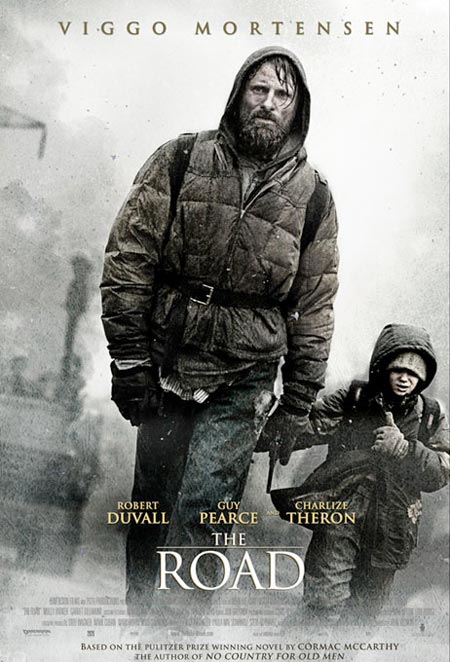
The Road–a movie that shows that they can still make decent films

Last night, I finally got around to seeing The Road. For those of you who don’t know, the movie is about a dystopian future that stars Viggo Mortensen (best known for The Lord of the Rings) as a man who has survived some type of holocaust with his son. Together, they are trying to reach the coast where the father believes better chances of survival exist. The world as they know it is bitter, cold, dark and unforgiving. People are predators to the point where you really can’t trust anyone, even if they appear to be trustworthy. The story becomes one of survival and family, in a way that the much earlier, yet similarly like premise 1975’s A Boy and His Dog, staring Don Johnson, attempted to portray. Whereas the earlier movie became campy, The Road never falls into that childish type of narrative, maintaining throughout the Cormac Mcarthy vision of the future being a surviving daffodil in a desert of horrific surroundings.

It was one of those movies where I kept waiting for “Hollywood” moments, but they never appeared, and I was so glad to see that. The hero’s wife/girlfriend (never made clear) was played by Charlize Theron in a very demure role that shows both how important and insignificant it was all in one cloak. She only appears in flashback scenes, but it was so obvious that her character is with the hero throughout the entire movie, and her lack of appearance throughout any of the present moments makes her character all that more powerful. There is a scene involving the finding of a piano in an abandoned home where her presence in a previous scene playing the piano becomes so much more poignant because of that earlier moment. I’ve rarely seen a movie that is capable of pulling off such a juxtaposition so that the viewer is so aware of the importance of the symbolism of a few played musical notes.

The scenery of the movie is practically a character all on its own. I was seriously reminded of a computer game, of all things, and I’m thinking specifically of Fallout 3, where you wander the wastelands of what’s left of an alternative reality’s dystopian Washington, D.C. It’s hard to describe to someone who hasn’t played that game, but there are moments in the game when the day starts to turn to evening, and the world starts to turn very grey. That is the sense one has of this movie, in that every scene was of that eternal evening from the game, where things can pop out at you at any moment, yet remains centered in reality, where the fear is all that does show up, and mostly the wilderness is empty and uninviting.

There are a couple of cameo actors who show up in the movie that really feed into the narrative. One of whom is Robert Duvall, who plays a very old man (claims he’s 90, even though the main hero doesn’t buy it). It’s a very small part, but with so few actors appearing in the movie, it becomes that much more powerful. Another cameo that shows up is a gang member played by Garret Dillahunt, who is known in sci-fi circles from the various roles that he plays, most significant being The 4400 and Terminator: The Sarah Connor Chronicles. He has a very small part in the movie, but it was probably the one moment where I couldn’t help but notice who the actor was, something that doesn’t happen with any other character. I guess he’s a little too typecast from his previous roles because I had a hard time separating him from the other characters I’ve come to know. But such recognition did not take away from the fact that Dillahunt is a very good, seasoned actor, and the part that he plays is very important for that moment of the film, and I honestly don’t think too many other actors could have pulled off that one, crucial scene.

What was most important about this movie is that it is probably one of the few movies ever made that has been capable of portraying the emotional feeling of despair, because that is the one thread moving throughout this entire movie. The future the movie inhabits is a horrible one, but the main character never gives up, convinced that he will bring his son to a better world, even if he has to travel the length of the world to find it. There is a huge scene between the hero and his son where the whole “don’t you know what I’ve done for you” gets rightfully translated into “we’re both in this, not just you” from a crucial dialogue delivered by the son, Kodi Smit-McPhee. Up until this moment, I just saw him as “the kid”, and it was this moment where you realized that the stellar acting was not just limited to the adults.

Sadly, they don’t make movies like this any more, or at least they don’t make enough of them. The last few years have been dismal in movie-making, with some of the crappiest movies ever released being thrust upon the viewing public with outrageous ticket fees. This movie goes up against the blockbusters of this era and promises great things, while the reality of our own dystopian present reveals something much worse because the movie did not do very well. It was almost a footnote in the releases of movies, with people avoiding it like a bad Megan Fox movie (okay, any movie with Megan Fox would probably qualify as a “bad” Megan Fox movie). One can hope that more movies like this one get made, but unfortunately, I don’t think it made enough money to cause Hollywood to think twice about the tripe that it tends to release as major releases.

I highly recommend it as it’s one of those movies you probably won’t get to see very often.

What Really Bothers Me About Facebook

Surprisingly, privacy is not one of the things that actually bothers me about Facebook. Sure, it concerns me at times, but I understand Facebook is a business that really wants to make money. That people, including me, are stupid enough to give them all of the information to profit of our identities should really be the concern of those “concerned” about privacy. But I digress.

No, here are some of the things that cause me to use Facebook so little these days, almost to the point of where I sign on just to check to make sure my friends are still alive, and then I go do something else.

1. Annoying Games. These Facebook games bother me the most. Sure, I can avoid playing them, and that’s what I do, but they’ve managed to become equally annoying by incorporating themselves into every friend update that occurs within Facebook. I don’t care that someone adopted a virtual pig and it’s hungry. I really don’t care. Let it starve. Or become bacon. Or whatever virtual pieces of shit do when they die. Stop bothering me with that crap. The problem has gotten to the point where I’m seriously thinking of dumping friends that spam me more than once with this nonsense. I haven’t done it yet, but it’s on my dashboard of things I’m about to do because it’s practically made Facebook’s ONLY redeeming feature completely useless. By redeeming feature, I mean the ability to see what’s going on with my friends. It makes it so that on some days any useful information has been relegated to cyber oblivion because so many updates have come across from people about their new farm, their new virtual make up store concession, or latest mob hit. I don’t care. And if that’s all Facebook ends up being good for, then it’s not good for anything further.

2. The machinery of Facebook. For the longest time, one of the positive things about Facebook was that no matter how stupid the rest of the site got, contributed to by the stupid people who use the site (yes, including me), at least the site ran well. Recently, my blog posts have taken to showing up WEEKS after I post them because something in Facebook wants me to physically remove my blog posts and then reset them again, so that it will start pulling blog posts. That’s just stupid. That’s like buying a brand new cell phone so that you can walk to someone’s house and talk to them in person. Unfortunately, this is caused by the fact that Facebook is more interesting in trying to figure out how to make money off of its members than actually making the system work best for those members. If this doesn’t get fixed soon, anothe reason to dump the service.

3. Fake friends. This is one of my pet peeves that I’ve pretty much fixed by turning down practically all people who send me a friend request. Way too many people send me a friend request, and I’ve never heard of them before. I accept and then next thing I know I’m getting plastered with their friend messages that are designed to be continuous spam. Now, this is going to be a problem for me because my main reason for having a Facebook account is no longer to keep up with friends, but to promote my writing business should that career ever get jumpstarted. I’m going to have zero ability to stop this from happening in the future, so unless they set up some feature to only allow specific message to come through, Facebook will make itself irrelevant for known celebrities. And if that’s the case, I won’t close my account, but I’ll stop signing on forever.

4. Friends stop communicating. This is a footprint of the system itself that I see as being caused by the phenomenon of Facebook itself. A person starts posting stupid comments as status updates (“went to Chiptotle to eat. Yum yum” or something irrelevant of this nature), so they actually stop communicating with their real friends because they start to think that they ARE communicating with their friends. I have one friend who has stopped calling me completely, who used to talk to me on a weekly basis. I guess seeing a status update is supposed to be the replacement for that. What really happens is the friend stops being a friend, and it’s only a matter of time before we both unfriend each other because we don’t communicate any more. Sad, but that’s a footprint of how this sort of social media works.

5. Overall detachment syndrome. As people tend to recognize each other from only their Facebook postings and updates, they stop communicating with each other. But because they think they’re actually “communicating”, they don’t realize that they’re slowly eliminating their network of friends.

6. Groups you can’t get rid of. There’s a group I joined back when I was in grad school that was an organization that focused on a specific social issue. That issue was fought and lost in California. But for some reason, this group won’t die. It’s membership turned nutty, and I no longer care what they’re sponsoring these days. I even pulled myself from their membership. But that doesn’t stop them from continuing to send me messages. I don’t even know how they do it as I thought that once I was out of their group, I’d be off their list. Nope. Not the case. Happened with a couple of shows that I used to watch. With those, I”m still a fan of the show, like Monk, but the show ended. Yet, every now and then they want to tell me about something that’s going on concerning that show. But the show ENDED. So NOTHING is going on with that show. But the company that made it still thinks that they’re relevant, which they’re not. Yeah, I can probably remove myself from that list, but I’m still a fan of the show, so I always thought it was nostalgic by keeping my name on that list. Didn’t realize that I’d never stop hearing from them over really stupid pieces of information that aren’t important or interesting to anyone, even to people who used to be strong fans.

Part of the problem for me with Facebook is that it’s one of those social venues that wants to be a lot cooler than it really is. The thing that makes it cool is the people who inhabit it, but honestly I’m not that cool, so anything that has anything to do with me, really isn’t going to be all that cool. So Facebook serves to continue to remind me of that because it tries to treat my uncoolness as being somewhat cool. And that’s just depressing.

When a GREAT book is made into a movie

I have always been a fan of espionage writer Ken Follett. Although he’s written a few books I didn’t care for, like the Modigliani Scandal, which is a horrible book in my opinion, he’s also written some of the greatest thrillers of our time, like Eye of the Needle and Key to Rebecca. But a few years back, after a hiatus where we didn’t see much from Follett, he came out with an unassuming book called Pillars of the Earth. Unlike any of his previous work, this was an historical novel that follows the adventures of a mason who has the solitary desire of building a cathedral in medieval England. The characters he creates in that story are brilliant, and the long-reaching arc he employs in the craft of the story is masterful. It has easily become one of the t0p books on my list of books to recommend ovre the years. Recently, he released a sequel to the book, World Without End, and it, too, was a wonderful book.

Well, they’ve finally come around to making a TV movie out of the first book, and I’ve been torn about this. Some books I’m fine with being turned into a movie because they were okay books, and I was curious to see what they would do with it. But when a masterpiece is turned into a movie, I’m very apprehensive about watching it, because no amount of casting, screenwriting and cinematography can do justice to a masterpiece.

Now, I’ve been wrong with this a few times, like with the Lord of the Rings trilogy. Great movies, and they complemented the great books and didn’t diminish them in any way. Other than Excaliber, which isn’t really a movie about a book but of an entire concept, I’m torn on finding another one that was as successful an adaptation as Lord of the Rings was. I don’t think there’s a single movie out there based on a book where I haven’t been disappointed. Okay, maybe Star Wars, but the book was more based on the movie (even though I know the book was written first), so it didn’t really have that sort of problem.

On the other hand, I know there are so many people out there who will never take the time to read a book that is over 1000 pages long, no matter how good it is. So this might be the only chance for them to ever experience the world that Follett created. But it leaves me thinking that so many people will come away from the experience thinking they read the book, or managed to do enough, that the book is no longer necessary to read. It reminds me of the dorks in school who would be assigned to read a book in a literature class and then at the last minute watch the movie, thinking they got the whole experience of the book. And they would write their report on the movie, pretending they read the book. And it was so obvious they got a limited interpretation of the book (the screenwriter’s interpretation). It used to really bug me because they’d think they “got away with it” when they really missed the reason the book was assigned in the first place.

So, I’m torn as to whether or not I’ll watch the movie. But secretly I want to see what they did with it, but internally I keep feeling that if I see it, and I hate it, then it might forever taint my enjoyment of the book that I once had. Probably not, but it’s always something to think about.

USDA Race Problem Shows That Racism Still Has a Lot of Work Ahead of Itself in America

I don’t know if you’ve been following this recent story, but every now and then a story of racism hits the main story lines, and then suddenly everyone starts acting like they’ve just discovered anything race-related can possibly exist. And then people act horrified, shocked, angry and intellectually assaulted that such a thing could be happening in this day and age. In this case, a woman working for the USDA told a group of people at an NAACP Freedom Fund banquet meeting that she, an African-American government employee, took great pleasure in NOT helping a white man who DARED to come to her for assistance at her government office. So, she went out of her way to make sure that she made his request both painful and impossible for him to gain any success. And she took great pleasure in it.

Well, obviously the people now discovering this You Tube video of her exploit are now going nuts distancing themselves from her, firing her and doing all sorts of posturing about how evil this really is, which is all understandable, but what needs to be acknowledged is that this really isn’t all that surprising. What it tells us is that racism still exists, and it doesn’t matter what side of the coin people hail from, there are still people who treat others with disdain mainly because they can. Instead of dealing with this as an actual issue that needs some kind of resolution, we’ll deal with it as a unique occurrence, as if it doesn’t happen all of the time, and when the next one gets discovered, it gives us room to keep compartmentalizing such incidents and never do anything about fixing them.

Face it. Some people are dicks. It doesn’t matter what color they are, what nationality they are, how much intelligence they have, how much money they have, whether they voted Republican or Democrat, or anything else. People are still dicks. What we need to do is get together as a collective and talk about this type of behavior in a clear-cut fashion so that everyone hears our voices. But we won’t. Instead, we’ll treat it as a one case wonder, and we’ll allow others to continue to hide in the shadows, doing this sort of thing over and over again, until they get found out and we repeat the cycle yet again. We’ve never really been all that good at bringing bad circumstances to light. It would mean discussing difficult topics, and if we can’t act holier than thou, we really don’t want to talk about it.

Racism is all over the place. So is ethnic profiling. So is reverse discrimination. But what should be focused upon is not that these things exist, which is important to know about, but to figure out why. Why are people still treating other people with disdain, placing some people in subcategories of humanity in comparison to others?

I say it has a lot to do with the complex intricacies of identity politics. People like to think of themselves as part of a collective, but at the same time, they’re incapable of indentifying themselves as part of a group without identifying others as outliers from their group. As long as there are people who don’t belong, their justification for all of the things their “group” believes in become all that much stronger. What good is a group of white males if they can’t look at another group of non-white males with some type of ridicule or condemnation? Think about wars we have fought. World War II was all about identifying the “evil Jap” or the “violent Kraut”, or whatever derogatory name one can remember. By doing so, we were able to rally around ourselves and fight against “foreign” aggression. It helped in that situation that those opposing forces ALSO saw themselves with identity that conflicted with us as well. But not always does it happen that way, and that’s where our problems are really starting to emerge.

Look at the War on Terror. It started after 9/11 with condemnations of anyone who was Arabic. And then immediately there was a realization that there were a lot of Arab-Americans who AREN’T our enemies, and that is still pretty hard for a lot of people to grasp. When you are so good at creating identity distinctions and placing people in another camp, it is very hard to realize that your enemy is a lot like Pogo first proclaimed: “We have met the enemy and he is us” or some variation of that phrase.

An interesting example of this problem hails from an unlikely source, and that’s a computer game, the most popular one around, World of Warcraft. In that game, without having to learn much about it, all you have to know is that there are two sides, the Alliance and the Horde. You choose one side or other based on your choice of race you pick for the character you are going to play. From that moment on, everyone who is automatically allied with the other side is your enemy, and you are automatically identified with the races that you were allied with as well. Think of it as living in a country where you were born, and everyone in that country hates the people from another country. You may never have a single dealing with a person from that other country, but one day you’re going to meet one somewhere, and you’re expected to hate him or her, and if possible, kill him or her, or contribute to that person’s personal demise. That is the kind of thinking that the game sets up, and it’s not that much different than how we deal with other countries in the world today.

When I was younger, I was working for a hotel chain as its investigator, and I befriended a young man from Iran (who happened to always refer to his country as “Persia”). He wanted to be an American, and he was as pro-US as you could be, including a fascination for all things Madonna (including a long protracted attempt to get me to buy for him the new “Madonna book” because he was too embarrassed to buy it from a store himself). But whenever her talked about Iran, he would then immediately start drawing sickles and pointing at the US, as if he understood that he had to hate the United States whenever identifying himself as an Iranian. No amount of common sense conversation ever broke him from this thought process, and even though he was good friends with every American he came across, when it came to national identity, I would not have been surprised to see him turn against those same friends and take up arms at a moment’s notice.

This is the kind of mentality we have to deal with whenever we discuss the ideas of ethnicity and race. Some people are locked into their beliefs because of an entire life, or a societal set of lives worth of time, spent thinking one particular way, automatically thinking bad thoughts towards people they know nothing about, nor have they ever had the opportunity to even gain a single negative action that would cause them to feel that way from a logical perspective.

In this country, we really need to discuss race because the only people talking about it right now are race-baiting people who see the world in, for lack of better terms, black and white. I watched an interview the other night with Al Sharpton about his response to the NAACP’s rift with the Tea Party and the NAACP’s allegations of racial tensions stemming from the Tea Party. At first, Sharpton sounded logical, and then he fell into talking points, where he wanted the Tea Party members to automatically have to condemn their own members in order to be taken seriously by Sharpton. Sharpton didn’t like racism from the Tea Party, but he had no problem condemning an entire organization because of their membership, effectively arguing that membership in the Tea Party meant you were a racist unless you were willing to codemn everyone else in the Tea Party as a racist. Use that argument to say that you if you’re a member of the NAACP, you must condemn all racist members of the NAACP, of which they do exist, or you’re a racist yourself, and look at where that might get you.

The problem is people want to equate posturing with logical actions, and no one wants to be baited into a stupid battle of words. And that’s what keeps happening.

Which brings me back to the original point of this post. I don’t think calling this woman a racist solves anything. Sure, she probably is one, but who cares? What is more important is to use her really stupid mistake (whether or not she would do it again is irrelevant to me) and try to open up a dialogue on this whole issue. Otherwise, we miss a great opportunity just so we can make stupid, irrelevant, political points. Unfortunately, that’s all that’s going to come from this moment. That, and that woman being out of a job for doing and saying something really stupid. It’s sad that we can’t get a better result that just that.
Why E-Readers Just Won’t Take Hold in America

There’s been a lot of hype over the last couple of  months because of the emergence of the IPAD, which has been predicted to usher in a new age of reading. This has caused all of the other e-reader makers to ramp up their business models, each one of them vying for the ultimate control of this incoming market. But I have bad news for all of them. That market’s not coming. Sorry, but it’s not.

You see, there’s a funny thing happening on the way to the the emerging market. There’s been an interesting fantasy that’s been playing out in the American public that is somewhat identical to the reason why so many Americans are fat. Every now and then, we look in the mirror and realize we’re fat, so we tell ourselves (and everyone around us) we’re going to go on a diet. And for a few days, we feel good about ourselves. And then we order that hot fudge sundae for dessert, and well, the diet kind of goes away. Oh, we rationalize it with promises of future exercise, but we know deep down that we’re going to go back to our old ways. And we do. Then we continue to get fat, and then we suddenly wake up, look in the mirror and then announce we’re going on a diet. Rinse. Repeat.

That’s what’s happening with E-readers. For the longest time, the majority of Americans stopped reading. We started watching TV, playing video games and doing anything but anything intellectual. Our reading output in this country is abysmal, and we know it. But every now and then, we promise to start reading again, and we go to the bookstore and buy lots of interesting books that we put on a shelf and never read. Oh, we might start reading, but then something else comes along and we stop. Rinse. Repeat.

So, when the E-reader came along, we all jumped up with joy and said we’d start reading books now because they’d be easier to read. So people went out and bought IPADs. I’m guessing that after the new car smell disappeared from the devices, they stopped being the most important carry item for those planning to read. Or they started using them for other reasons.

In a few months, publishers are going to start wondering what happened to that emerging market of electronic books. Sure, some will sell, but nowhere near the amount that was promised when this new technology was going to usher in a new era of reading.

You see, on the surface and deep down, we’re kind of lazy. Some of us read a lot. Most of us don’t. But we won’t tell you that because everyone wants everyone else to think we’re all little Einsteins walking around with encyclopedias for brains.

Maybe I’m wrong, but I suspect I’m not. But one can hope for better results than the usual expectations. As a writer, it bothers me that more of my country folk don’t read. But what can I do? Our medium of communication is movies and television. And even in those areas we aren’t all that impressive as we tend to focus more on reality programming and sports programming than anything else.

But that’s why E-readers probably won’t take hold in America. We’re too busy pretending to diet while watching people getting voted off the island.

The Plight of the Hopeless Cause

Recently, there’s been a lot of talk about Haiti. CNN has been reporting a lot about it recently, including a bunch of reports of its reporters showing up there and “discovering” that things are still very bad. Not that long ago, when Haiti was all the talk, I mentioned that once Americans got over the initial shock of the disaster, we’d go back to not caring about that island nation again. And sure enough, that’s where we are.

But it is kind of important to understand why that might be. The CNNs of the world want us to think the problem is inherent in us, as if we’re responsible for the horrible conditions there. But fortunately, that’s not really the case. While we are often guilty of not caring about a certain geographical location (East Timor, Somalia, South Central LA, or wherever), this time it’s not really something to put squarely on the shoulders of those of the USA. What no one wants to face is the possibility that the problem might be a lot closer to home…their home, not ours.

Haiti is one of those places, like Liberia, where a lot of people outside of the area really care, but once we start caring, the people themselves don’t seem to care about their own plight, often neglecting all attempts to help them, either by destroying their own farmland for short term gains, or by continuing to support destructive leaders who tend to keep them locked in their plight of despair.

Americans care about people who are suffering, but there’s only so much we’re going to do before we start to think that the problem is yours, not ours. I’m sorry to say that but after awhile, we start to treat a wayward country as a family member who just can’t seem to get his crap together, who keeps knocking off liquor stores, even though we keep getting him a job at the Quickie Mart. Lots of money was raised for Haiti, but immediately after this process started, we started to see the old ways of corruption falling right back into place, so that the aid wasn’t getting to the people who needed it, but was going into the coffers of people who tend to make things worse. I’m sorry, but we’re not willing to keep giving money to destructive dictators who hold out their hands, “promising” to fix things even though they never do. Or corrupt leaders who don’t seem to understand that eventually they have to stop taking EVERYTHING and trying to do something to help their own people.

Haiti has been a cesspool ever since they cast off the reins of slavery while the rest of the world was still embracing the evil that was going on back then. It would be nice to think things might have gotten better, but they haven’t. Unfortunately, the rest of the world started to notice them again because there was an environmental disaster that cast them into the light again. Unfortunately, they didn’t do anything better AFTER it happened, so it makes it really hard for people to want to do anything when the people themselves aren’t interested in helping themselves.

It’s a lot like Somalia where the west showed up to help feed the people and then found the pirate, criminal element that was there waiting for us. If we show up with all intentions of helping and then find that the people there are more interested in playing local games and hoping to profit off of the outsiders, we’re out of there, and we’re not coming back to help. You notice how few Americans are interested in helping Somalia today? Well, that’s what happens.

It’s why North Korea is quickly pushing itself into a no help situation. The west isn’t interested in helping when the people are stupid or acting stupid. And that’s what’s happening in Haiti. Sorry, but we’re not interested in helping if the people themselves are going to act stupid. Yeah, a lot of people are suffering, but we’re not the world’s police, no matter how much George W. Bush tried to make that happen.

I’ll be honest. I hate what’s going on in Haiti. But at the same time, there’s only so much energy you can expend before you start to realize that no amount of energy is going to make things change.