Monthly Archives: August 2012
Schools have become much more dangerous yet politicians are arguing about abortion
Another student at a high school brought a shotgun to school and killed another student. The week before, some other student decided to air out his grievances using guns against random strangers. A short while before that, yet another gunman brought guns to a Batman premiere and erupted in violence there.
What’s going on these days? Why have people in Random Town, USA showing up with guns and killing people for whatever twisted reasons they can concoct at that particular moment?
When I went to high school, I remember being scared for my life at times, but that was because I went to Santa Monica High School (my first year) and there were violent gangs that were quickly taking over the outskirts of campus. Even so, campus was considered somewhat safe; it was just dangerous when you walked off campus, including the one time I got mugged for $15 by an entire gang of black street thugs (who also happened to be students at my school). Back then, the gangs fought amongst themselves (black gangs versus Hispanic gangs, but slowly the rest of us were being singled out for violence by these carefree criminals living in our society. Things were getting worse, but they hadn’t reached the point where I think they’ve become today.
Keep in mind, I went to school in a large city, where that kind of violence seemed to become the norm. But what we’re seeing now is violence on an unscaled comparison that is taking place in those communities where news stories begin with: “And we never imagined such a thing might happen here.”
Yet, the politicians in this country, all running for office, seem mostly interested in talking about abortion and other inane topics that really have no relevance to the majority of people on a daily basis.
I’m sorry, but abortion is a fringe topic, and while some people may find it significant as an issue, that’s one of those things that really needs to be decided between people who are faced with that issue, not by every fly by night politician who wants to pretend to be an advocate for family values or some other nonsense. What has happened is that it has become one of those issues that appears to have meaning but is really smoke, mirrors and air. It’s like saying you’re against crime. We’re all against crime. But that doesn’t make the issue go away. Abortion is a lot like that because the real issue shouldn’t be about abortion; it should be about the causes of prenancy, because THAT is the issue that progressives and fundamentalists are REALLY arguing over. They just don’t want to admit it. Instead, they make grandiose gestures about saving lives (either the unborn child or the life of the mother), when in reality both sides are really wanting to be arguing about promiscuity and free choice decisions for men and women. It’s just so much easier to go the other direction with the argument.
In reality, conservatives have a great opportunity to punish a woman for her “promiscuity” by taking away her rights to decide for herself what is best for her and/or the child she may or may not have. On the other side, the progressives argue that it’s about free choice, when it’s free choice that got the particular couple into the mess in the first place.
In other words, there’s no real easy answer to the children issue, and trying to “solve” it gives a great opportunity to ignore that the REAL issues of America can’t be solved either. And I’m talking about crime and poverty. Because if you trace all of the problems that seem to come into the disagreements, THOSE TWO are the issues that fuel pretty much everything else.
If there was no poverty, there would be no need for crime (other than just crazy people doing crazy things). But poverty leads people to do all sorts of things that they wouldn’t normally do, right or wrong. Then we have to allocate resources to stopping them, putting them in prison, and maybe even trying to rehabilitate them. Without poverty, you probably wouldn’t even have an abortion issue, because even if conservatives got everything they wanted, every child could be born and put into adoption. But that rarely happens today because quite a few poor women who have children have all sorts of problems that stem from the fact that they’re poor. Pushing aside the obvious desire of a mother to keep her child, there’s also the possibility that the child is going to be born with problems because of the fact of poverty that existed when the mother was pregnant. There is drug use, crime infested areas and abuse issues that are inherent in a lot of these cases. In some cases, a mother may not have access to any of the services she needs because a) she may not even realize the services are available because no one ever told her they might be, b) she may be in a home situation that forces her into making decisions that she doesn’t want to make but lives in an environment where she really doesn’t have the freedom to make choices like she should be able to (either through an oppressive partner or any number of other factors, and c) she may have access to nothing to help her, including information. Some areas see the indigent as problems and have very little desire to assist them.
I’ll give you a good example. Me. My mother was uneducated and forced to work in very low-paying jobs in the 1960s. She had few skills, which meant she wasn’t capable of doing a lot of things. She probably should have aborted me or sent me off for adoption as that would have probably increased her survival. She already had a teenage daughter at the time I arrived. Yet, she didn’t do that, and we lived through some very harsh times. And she died very early as a result of destructive diseases that took her down fast. Had I not been around, there’s a pretty good chance that things might not have been so bad for her. For most of her life, whenever she attempted to access governmental benefits, she was turned down and sent away. Instead, we went without, a lot.
Poverty is probably the one basic factor behind why most of the problems exist in America today. Yet, we do absolutely nothing to alleviate it, other than flash in the pan treatments that only continue to make things limp on as they have before. We’ve done more to eradicate poverty and hunger in other countries than we have in our own country, somehow relying on charities at home as a solution that has never actually solved anything.
But this whole conversation started as a discussion about random violence at schools and in our communities. On the surface, poverty and those events may not seem related, but they are. You see, violence brought on by poverty has fueled a thought process amongst the youth over the last few generations where the belief is that in order to achieve what you need, it may take violence and guns to do it. I mentioned before that one day when I was mugged walking home from school in Santa Monica. Shortly after that, I started imagining what I could have done if I had had a gun that day. I realized I might not have been a victim, but I could have gotten the upperhand and killed a bunch of them before they ever stole from me again.
Fortunately, that moment never came, and fortunately I channeled a lot of that aggression into a military career instead. Today, I don’t feel the same way as I used to, prone to moments of nonviolence rather than the other way around.
But I can see how years of this kind of institutional abuse would start people down a path that makes more sense to them than might have made sense years earlier to a previous generation. And meanwhile, we’re watching the gladiators perform in the coliseum while Rome burns, wondering why its getting so hot.
Felicia Day and the Strange World of Geek Girl Gamers

The other day, I was following an argument about one of the comic book conventions when the subject turned to girl gamers, and at first was as I expected: Every guy on the forum was for them. And then the conversation turned sour, really sour. And that’s when it started to attract my attention. At one point, the conversation turned to the subject of Felicia Day, which started out positive, and then it, too, turned negative. And that’s when I started to realize there was something going on that might get missed by a lot of people. Let me explain.
For those of you who don’t know, Felicia Day is an actress who stars in her own web series The Guild, which is about a bunch of really nerdy people who play an Everquest/World of Warcraft-like online, persistent universe game. The characters are quite funny, including an always out of work guild leader, a slacker who works at a run-down fast food place, an overweight housewife who loves the game more than her family, an Asian temptress woman who has no actual skills other than the game, a second generation Indian-U.S. citizen who has a crush on Felicia Day, and of course, Felicia as a semi-employed, overthinking teenage (or older) girl who is addicted to the game but can’t seem to make her real world work out in spite of the online world. Their adventures are somewhat expected, and funny, and every now and then a somewhat famous actor will show up as a bit character in the series (like Wil Wheaton from Star Trek: The Next Generation fame as Wesley Crusher).
Anyway, now that you know a little bit about the web series, it’s probably significant to point out that before this series became famous, Felicia Day was in a few other shows, most notably a small character arc in Buffy: The Vampire Slayer series. However, since Guild fame, Felicia Day has started showing up in a lot of other geek-related shows like a prominent part in the last few seasons of Eureka, and Dragon Age: Redemption. For those who are fans of Felicia Day, there’s never been a debate over how her attractiveness has attracted a lot of guys to her banner, especially when she has a tendency to star in geek-related types of shows.
And this is where the debate headed when I caught onto the discussion. One individual pointed out that while Felicia Day may be funny at parts in her series, he also suspected that without the appeal to geekness, there’s a strong chance that Felicia Day would have been ignored as just another semi-attractive female actress when there are so many more attractive ones out there instead. So, the argument morphed into a belief that Felicia’s appeal to geekness is for audience value, not because she happens to be an actual geek/nerd who loves all of the things that geeks/nerds like. Basicallly, the argument goes that she found a niche she could fill and is trying hard to bankroll it as much as she can before someone else more attractive comes along.
Recently, there’s been a pretty large backlash against attractive women who try to make a living off of geek-related appearances, such as comic book conventions where infamous “booth babes” are there to convince horny geek guys to buy the wares of their benefactors. But this has been a complaint for many years, and yet it hasn’t stopped major companies from hiring voiceless babes to sell products to average guy gamers out there.
But the complaint isn’t really even about those types of women. The complaint is about a fakeness of the women who pretend to be geeks in hopes of becoming THE geek girl that guys are interested in. There used to be an old joke at geek venues, where a semi-attractive woman would be considered a goddess at a geek convention but not get a second look at the local mall where so many other attractive women would get even more attention. And there’s something to be said for that.
What’s interesting is that there have been massive appeals to geeks these days in hopes of winning them over with “geek girls”. A lot of television shows are centered around this premise. An example is The Big Bang Theory, which is a semi-humorous show that basically tells the same joke over and over again but changes the wording. It has one generally attractive woman named Penny who immediately becomes the love lust of one of the main characters. And then it becomes the infamous: How can such a geek ever win the love of such a beautiful woman? This subject has been covered ad nauseum by so many other shows and movies in the past, yet the laugh track tries to make it appear as if they’re breaking new ground. The girl who plays Penny is now on the level of supermodel fandom, and to be honest, she’s really not all that attractive, nor is she really all that great of an actress.
We’re starting to see a lot of this concept played over and over again, and each time it happens it becomes more annoying than the last time. Summer Glau, who was the young girl who played the crazy young girl in Serenity (and the series Firefly) has made a name for herself by showing up in all sorts of geek types of shows. At some point, if you were watching something very geeky, it almost became an expectation that she was going to show up at some point. I remember thinking that while watching the abysmally bad The Cape once, and then the next moment, there she was. Attractive girl. Semi-okay actress. But there’s this expectation that somehow she’s now the go to girl for geek shows.
I think that’s becoming somewhat problematic. It’s almost as if really hot actresses are thinking that they can build a career for themselves if they appeal to geek guys that they would never date in the real world. And then when those guys try to approach them at comic book events, they shun them as leppers, proving that they really only wanted the money and fame but really aren’t the geek girls they claimed to be.
With television trying to appeal to the lowest common denominator, we’ll probably see a lot more of this n the future. It’s always been my impression that there are actresses out there who would rather skip the hard work of entertainment and just jump into the winning circle, which they seem to think that appealing to geeks will allow them to do. However, when more and more keep trying to become part of the dynamic, it makes it that much harder for the ones who actually are part of that original circle (actual geek girls).
Now, I don’t know Felicia Day personally, but she’s always appeared, at least to me, to be on the surface about being a geek, or part of the geek environment. But the comments of others make it hard to escape the possibility that she might just be part of that cadre of people who saw an easy audience and went after it, while biting their lips about how disgusted they are at the members of that particular audience.
The Strange World of Free to Play (F2P) Games
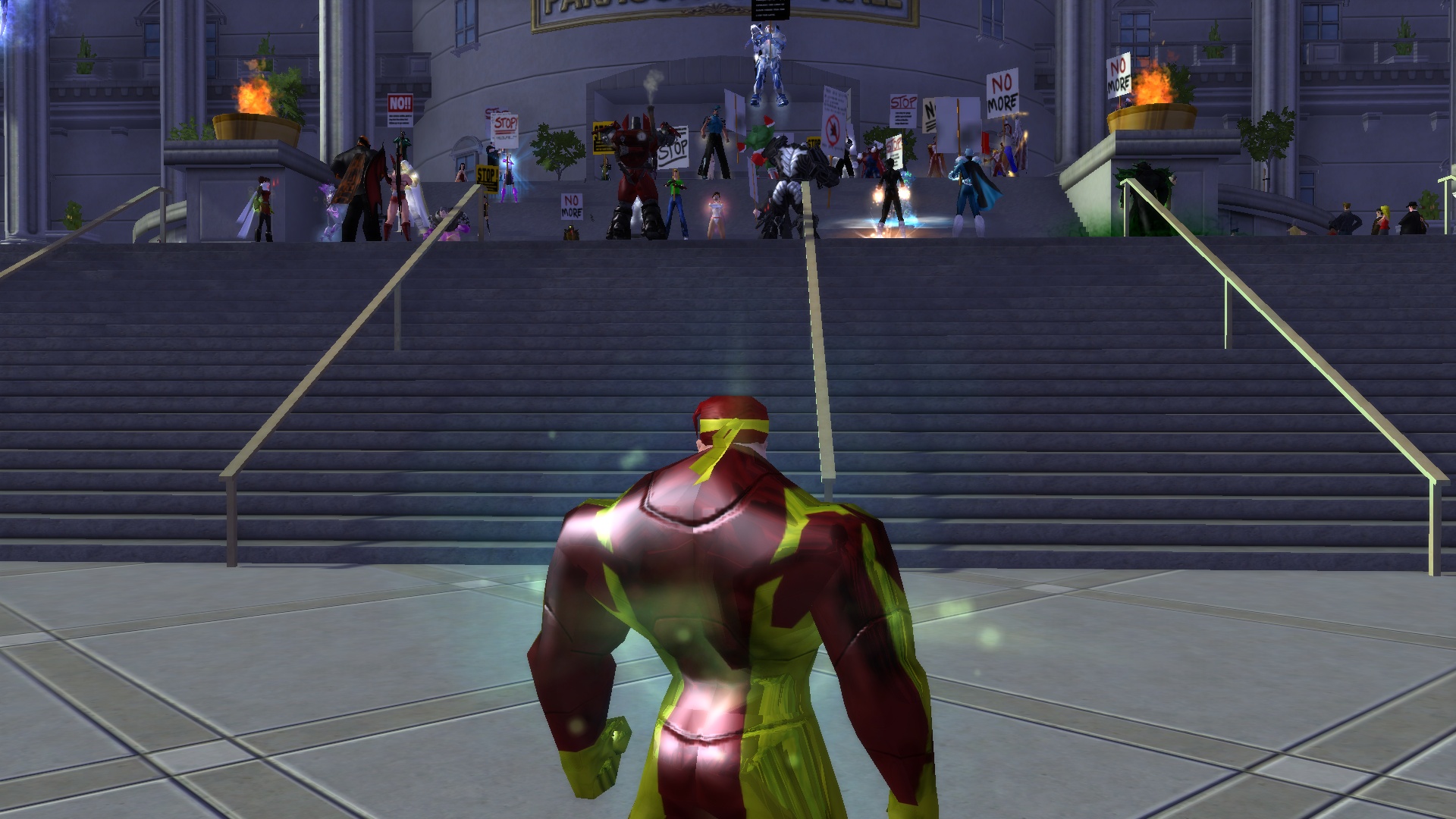
Lately, I’ve been playing City of Heroes, which for those who don’t know it, is a massively multiplayer online persistant world game, often referred to as an MMO, or an MMORPG (for role playing game). Years ago, I started playing the game, when I was bored with whatever other MMO I was playing at the time, and recently, I installed it again and decided to pursue its new play model.
You see, in the old days, the game used to cost $15 a month to play. Now, in order to attract more players, the game has turned into a Free to Play (F2P) game, much like the previous success of Lord of the Rings Online, which went to a F2P model in hopes of avoiding going backrupt. And it succeeded, which has breathed new life into other games that don’t want to go the route of Star Wars Galaxies (which closed shop after not being able to maintain a consistent player base.
The way a F2P model tends to work is that you are allowed access to certain areas, and maybe certain characters, but some parts of the world/universe are off limits or you have to pay a little bit more in order to access those areas or use extra characters. Not really wanting to do the barter thing with every little thing in the game, I subscribed to a VIP membership, which is essentially the same sort of $15 a month I was playing before. This gives me complete access to everything, although I have noticed that every now and then I still buy something that is “extra” in the game.
Which brings up a thing that has kind of bothered me about this model. If I’m someone who is a willing subscriber, I really should be given 100 percent access to everything. Yet, I still feel a bit nickle and dimed in this type of environment. But I appreciate the game, so I have been willing to shell out a bit more money just to contribute to the game I hope to be playing for some time.
Which brings me to how this sort of model doesn’t work. And Blizzard, the makers of World of Warcraft and Diablo 3 comes to mind. World of Warcraft is a pay to play game (P2P), and that’s fine. But the developers (or owners) have become somewhat greedy. They have continued to insert things into the game that they want you to pay for outside of the game. So, even though they’re making a crapload of money for their product, they’re still trying to nickle and dime people beyond the quarters they’re already getting. And don’t get me started on Diablo 3, which is a game that cost me $59.99 to buy (or was it $69.99?), and then they launched the game with all intentions of adding a “pay Blizzard’s greed” auction house, where you will pay real money to buy things in the game.
Years ago, Blizzard was seen as the good guy when it came to games, but lately, I can’t say the same. Diablo 3, for sake of clarification, sucked. It was a crappy game that wasn’t worth the money, the time, or even the energy. The fact that it had the name of two of the greatest games in history as what it was supposed to be a sequel made it even worse. Diablo and Diablo 2 were both great games. They even made the game required to be online at all times, which I suspect had more to do with hoping to get people to feel comfortable with giving money to the auction house model (single players would have never gone online where they’d have to see the auction house every time they signed onto the game) than it was for security or any other stupid reason.
A recent major name in online games is Star Wars: The Old Republic, which I played when it first released and enjoyed it for the first month or so. The game was missing a lot of needed content, so I gave up on it. Now, it’s supposedly going to be going F2P, mainly because they milked every nickle and dime they could get out of the subscription model. I doubt I’ll ever play it again, even though I had fun with it when it first released. The problem with the game was that it was completely on rails the entire time, and an MMO requires a world where you can go anywhere and do anything. That was never part of the very linear model of SWTOR.
Which brings me back to City of Heroes. I enjoy the game and play it a lot. But I fear that there’s this attempt to make all games so-called F2P, when in reality the companies are hoping to rake in dollars through this model. Bioware has announced that Command & Conquer: Generals 2 is going to be released as a F2P game, yet be online all of the time, and there will be no single player game. I suspect it’s going to be a major failure, but that’s just my opinion. I see the reason for such a release is not because that’s the way the market is going but because executives of gaming companies see this as an easy way to separate people from their wallets. Unfortunately, what they don’t realize is that most people who opt into these dynamics are of the older gamer base, and we’re not stupid or as gullible as they’d like us to be. That’s why several versions of this model will fail.
What a lot of these games are forgetting to realize is that what makes people pay to play these games is that they are designed to be fun, not because there’s a free model that they’re attracted to first. That’s why companies like Zynga and anything affiliated with Facebook is struggling these days. People don’t want to be fleeced by companies using them to make money. They want to have fun. And AFTER they have fun, if they perceive that there’s MORE fun to be add by contributing to the company, they will. But holding out a carrot and then giving nothing but expecting everything is going to be the reason why so many of these future properties fail.
And then we’ll start to read all sorts of articles about how no one is buying computer games any more, kind of like the music industry lamenting about how people aren’t buying music. They are buying music; just not from you.
And that’s our lesson for the day. Now, it’s time for me to get back to my superhero Desktop Support Girl, the savior of all broken computer systems in Paragon City.
What is the rationale for charging the poor more than everyone else?
I was dropping off a friend of mine at a car repair place on the other side of town last night when I decided to pick up some McDonald’s chicken mcnuggets on the way home. I’d never stopped at any place in this neighborhood before, but this was one of those ethnically diverse areas where most of the signs were in Spanish, bordering on an African-American-based population area. This was the kind of area where a lot of economically struggling families live, although not so bad a neighborhood as to constitute a fear for anyone visiting the neighborhood.
I’m a creature of habit. I tend to buy the same thing constantly, so the meal I always get costs me $6.46 at the McDonald’s I normally frequent. This time, however, the charge came to $6.66. For some reason, a few miles from the other McDonald’s, my cost was twenty cents more than what it normally cost me. I paid it, but it left me thinking, why is the charge more here than in the nicer area where I normally get my food?
It’s not like the people in this area can afford more. Economically, they are less well off than the people who frequent the McDonald’s in my neighborhood. Yet, because they are figuratively in a completely different universe than the other McDonald’s, the pricing is completely different.
I remember when I lived in San Francisco, and I worked at the Hilton downtown. The people at the Hilton liked to say they were in the “financial district”. In reality, they were in the Tenderloin, one of the lowest of the economic areas in San Francisco.
Across the street from the hotel, I used to grab a carton of milk every day. It was one of those habit things where I never thought much about it. However, one day, I was a paying more attention than usual, and I noticed that the Arabic clerk always looked at a sheet of tax prices that was centered under a glass sheet on the main counter. My milk cost 99 cents, but the clerk looked on his list and then told me my price for the milk (with tax) was now $1.35. Right then and there, I thought, wait, nowhere in the country is the local sales tax 36 percent. NOWHERE. So, I inquired about this. The clerk said, “tax.” I informed him that 36 percent is outrageous.
His response wasn’t “Wow, you’re right” and then charged me the correct amount. Instead, he took the milk out of the bag and proceeded to kick me out of his store. When I protested, I actually saw his hand moving towards a spot under the counter, where I noticed there was a revolver. Taking my losses, I left the store.
What this taught me is that there’s an outright intent to screw people over whenever you can. In the Tenderloin district, I suspect that store owners figure the people are too stupid to realize they’re being cheated, and they’re dimed and quartered (as opposed to being nickle and dimed) endlessly.
So, what are your thoughts? Is this capitalism at its norm? Is this corruption? Or do people just generally not care because it’s happening to the poor, and they’re supposed to be victims any way?
One day soon, I hope Taylor Swift writes a song about me
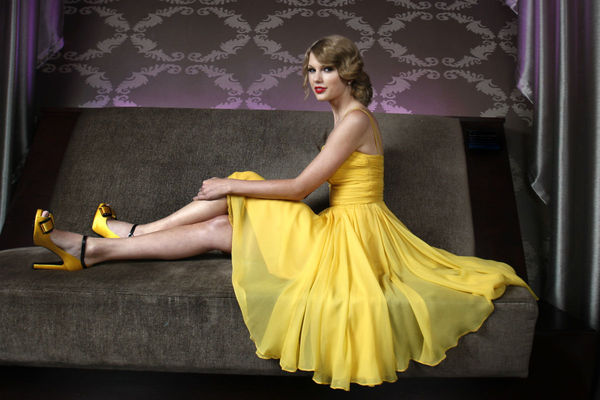
I was just reading that Taylor Swift appears to be in a relationship with one of the Kennedy kids. Last week, I think she was dating one of the Schwarzeneger kids. The week before that John Mayer was complaining about how her song about him (“Dear John”) wasn’t really fair. According to the media, practically all of Taylor Swift’s songs appear to be about ex-boyfriends who dumped her, or were dumped by her.
Therefore, I am now convinced that it is about time that Taylor Swift think about writing a song about me. On the surface, her relationships don’t last very long, so for all jokes and giggles, we can say she and I have already run the course of our tumultuous relationship, and I’ll even accept that she dumped me. I mean, she’s Taylor Swift, and I’m just Duane Gundrum. So, I’m okay with that.
Now, it’s time for the inevitable song about our whirlwind relationship and eventual break up. Which leaves me wondering what great poetry she’d use to explain what went wrong with our romance. I’m thinking (just for some ideas to help her muse build upon):
You always leave the seat up
Never clean the bath tub
And always watch reruns of Star Trek.
Woooooooah!
Or something like that. Whatever she goes with, it will be a big hit and then I’ll finally have served my purpose in life.
So, Taylor, why you always leave me waiting?
Woooooooah!