Tag Archives: republicans

Taxation Gurus Just Don’t Seem to Get It

CNN Money ran an article today from Jeanne Sahadi advocating the need to raise taxes “because the looming debt problem is just too big”. Her argument goes on to say that Republicans are misthinking the whole issue because as long as the debt remains large, the country can never go forward.

Well, my response is twofold. First, we need to stop putting taxation into a partisan framework. That never solves anything but makes the issues so tied to other agendas that there’s no way to have a rational conversation about the issue in the first place. By making it partisan, any response of negativity to Sahadi immediately gets lumped into a “he’s a Republican, and therefore he is only limited to Republican talking points.” Whenever the conversation moves to the next level of analysis, the responder can immediately throw it, “oh yeah, but Republicans also believe (fill in the blank, and you realize why no rational debate is then possible).”

Second, and this is really my more important point, at what point did government become so important that it became the elephant we SEE in the room rather than the one hiding in the background? In other words, why is government always the most important factor for the debate? Why isn’t the individual considered more important?

Think about it this way. If we go back to the original foundation theories of government and agree that people came together in a Hobbesian fashion to escape from our evil surroundings, we understand that we then gave up a little bit of our freedom to achieve security. Now, no matter whether you buy Hobbes, Locke or Rousseau, at no point did we ever really give up the original reason for getting together, meaning that we got together because it was mutually beneficial to us, NOT because we were all desiring to create a government. At no point did the foundation of government ever supercede our reason for creating government. In other words, those who create a government are always more important than the government itself, not the other way around. Yet, in every one of these arguments, especially the one put forth by Sahadi, government is the reason we do the things we do, so that we are required to sacrifice at the altar of government, instead of the other way around.

I pay taxes. I’m not rich, but because I am low middle class, I pay money into taxes that really makes an impact on my daily life. The majority of people who pay taxes are like me, lower middle class people who don’t make a lot of money. Any increase in taxes to us hurts big time, yet we’re rarely ever represented in these conversations about taxation and government. Instead, the Republicans represent the interests of the very rich, and the Democrats represent government attempting to fund more money for governmental programs. In a fair world, we’d have another party that actually represented a social class of common people, but we don’t have that in this country. Oh, both sides claim to be that representative, but they never are. They represent their own interests and those interests are never ours.

What it comes down to for the majority of us is a question of how much we value government. I, personally, don’t value government all that much. I see it as a mechanism to keep gangs and drug dealers from killing me on a daily basis. And to be honest, government doesn’t even do that very well. Serious amounts of money are spent on a drug war that fuels this continuous battle between mean streets and the common person, and the common person is rarely seen as the one to which government answers. An example: A few years ago, I was beaten and robbed by gang members who targeted me because of my color. Instead of a serious response to the victim, which you would expect in a case like this, or at least might see on television played by actors who don’t represent real police officers, I ended up in a bizarre situation where two police agencies argued IN FRONT OF ME over which one was responsible for taking the report. Neither one of them wanted the responsibility. Of course, after all was said and done, the culprits were never caught, and I suspect they were never even pursued. Over the next few weeks, before I finally moved across the country to get away from the cesspool that is Hayward, California, I read the blotter reports in the newspapers about how the same individuals were continuing to target citizens in the EXACT SAME AREA EVERY DAY, and even escalating to public buses, convenient stores and train stations. In other words, government didn’t care one bit whatsoever.

Yet, when it comes to taxation, Sahadi believes that if government is starting to fail financially, it is within our requirements to respond immediately and fix it. Sorry, I don’t buy it. Right now, we spend so much money on things that have very little to do with the average American who does pay taxes. Let’s go over a bit of that list.

Wars in Afghanistan, Libya and Iraq: Who benefits from this? Me? I don’t think so. Did I care about freedom in Iraq to begin with? No, not really. I’ve never had contact with anyone from Iraq before. Nor have I had contact with anyone from Afghanistan or Libya. Sure, I buy gas, and some of that comes from some of those places, but if we weren’t fighting a war in these places, we’d still be buying gas from these places regardless. I don’t even suspect it would cost that much more because prices are controlled by OPEC, not tin foil hat dictators.

That pretty much translates to our entire military budget. Yes, it is responsible for protecting America from foreign enemies, but honestly, we’re not actually doing that with our military. We are located in countries that are not ours, fighting for issues that have nothing to do with freedom in the United States. And in order to conduct these wars, we have had presidents (the last two specifically) advocating to suppress our freedoms, which means we’re fighting to lessen our freedoms, which is ironic in its own cynical way. If we were defending America specifically, I’d be happy, but we’re not. We’re pushing agendas of people who are not the lower middle class. And we’re backing up those issues by sending young lower middle class soldiers into wars to support people who rarely serve in the military themselves.

Most governmental agencies that the common person desires are usually handled by the states. My education is handled by the states. The federal government does nothing but institute standards that no one ever achieves. Our federal government has no idea how to educate the youth of America, yet they feel worthy of forcing their standards on the states regardless. I don’t see the value in this. Sure, I can see the value of making sure we don’t teach creationism in school, but nowadays, federal government isn’t even doing that; it’s doing the exact opposite and then fighting with itself over those specific, political standards. Not necessary and not helpful.

Heath care seems like it’s important, but when you threw it into politics, it starts to get useless. Tylor Cowen, in his excellent article, The Great Stagnation, points out that even though the United States spends more money than most countries on health care, we have some of the lowest levels of life-expectancy and our health success rates are dismal at best in comparison to nations that actually spend less of their GDP of health care. Like most governmental issues, we do horrible with our money because we keep believing in American exceptionalism, when we don’t realize that exceptionalism doesn’t always mean better. Part of our problem is that we have a lot of money already in the mix that should be spent better, not a need for more money to be spent on doing the wrong things more often. That last sentence is probably the most significant of this essay but will echo with no one.

In the end, it will come down to partisan drivel politics again where we have people who have a stake in winning an argument over issues that should never be decided by partisan politics. But we don’t seem to care because we’ve gone way beyond caring about what’s important and care more about winning arguments that don’t benefit us even when we do.

As a taxpayer who pays what he believes to be enough taxes, I don’t subscribe to the theory that more money is necessary to fix the problems of bad spending. Unfortunately, the people we have in government are not the best people when it comes to spending wisely; they never have been. Instead, we have the people who are best at convincing people to vote for them because they’re good at making people feel better about themselves, especially when we live in a country of people who should be a lot more critical of their own shortcomings. We’re educating ourselves horribly, we’re grossly overweight, and we let ourselves be ruled by foolish passions over issues that require serious contemplation. But this will fall on deaf ears because we’re a nation of people who likes to hear that we’re great, and when that person comes along who strokes our ego, we’ll vote for him, and we’ll wonder why no one ever does anything about fixing our country. We certainly won’t get the answers from anyone who is paid to tell us what we already keep hearing, but then we’d stop paying them if they didn’t. We’re pretty good at creating vicious circles in this country. Another thing we’re good at, eh?
A Conversation with Conservatives About that Whole Midterm Thing that Just Happened

Hey, Conservatives. I just thought I would take a moment to talk to you about the midterm elections, because for some reason you’re getting the idea that events happened for reasons completely absent of reality. Therefore, as I know that you always listen to rational people explaining rational theories, I thought I would chime in with a little rationality.

There are some things you got right and some things you’re getting wrong. Let’s start with what you got right because everyone likes to hear good things about themselves. First, you are right that America was angry, pissed off and frustrated with politics as usual. In droves, people went to the polls and voted to “throw the bums out”. That anger was their way to show that they were angry, and if Washington wasn’t going to listen, they were going to make them listen, or at least stop paying for their hearing aids.

Lots of Democrats were thrown out of office, and lots of Republicans were given a chance to run the government. Okay, we’re on the same wavelength here.

Unfortunately, this is where reality sort of spins off on its own axle and falls apart. While the American people were angry, we need to kind of revist exactly what they were angry about.

First, Americans weren’t angry about social programs in America. Republicans tend to always be angry about these things. But it wasn’t Republicans that really voted the Democrats out of office. It was both Democrats and Republicans, meaning average Americans. The average American wasn’t upset that people were getting health care and the opportunity to survive through the Winter. They also weren’t upset that the government was spending money to get people back to work.

No, Americans were pisses off at government because government was helping out the wrong people. Who are these wrong people? The rich, the selfish, the people who don’t care one iota about the common folk of America. Americans saw the government spend a lot of money to bail out Wall Street, to help out banks and to rescue multi-millionaires from losing more money than they were already losing. The fact that almost none of the stimulus money actually went to help out the average American, other than through the usual trickle down crap theories, that upset Americans a lot. While the average American was trying to find a job, government was spending weeks arguing over how much money to protect from millionaires and billionaires with expiring tax cuts. The government seems willing to go into shut down just to make sure that the rich are taken care of, and the poor really don’t mean much to those who occupy office. Except in conversation, which doesn’t mean a lot when people have to actually pay their bills.

When the midterm elections came along, the American people were pissed that government was catering to the rich only. Yes, both Democrats and Republicans were bending over backwards to make sure the rich weren’t inconvenienced in any way, shape or form. The poor, well, they needed to fend for themselves because that’s generally how government feels they should have to handle their own affairs.

Most people didn’t even recognize what was going wrong with the Democrats in office when they had control of the entire government. Not once did they even act like Democrats, being almost indistinguishable from Republicans. THAT is what pissed off the American population that went through a previous election putting every Democrat they could find into office. When the American people discovered that it didn’t matter which party was in office, they kind of revolted and threw those people out, figuring the Republicans weren’t probably any worse.

Well, the Republicans need to figure out that the American people didn’t send them into office with a mandate to do things Republicans tend to do when they aren’t discussing politics. You know, the kinds of things they do surreptitiously behind the backs of everyone else, like reward the rich and screw over the poor. No, the American people sent the Republicans to Washington to remind the Democrats who they were supposed to be working for. That’s really it. The mandate the Republicans received from the American people was “do something different, but if you piss us off, too, expect to be accepting your own unemployment check.”

And the way things are going, there’s going to be a lot more unemployed politicians in 2012. Unfortunately, this will cause the Democrats to pull a Sally Field, thinking people like them, when in fact the people are still pissed off. The only difference is, they’ll realize they have nowhere else to turn.

And a pissed off electorate that has given up on both sides is a very dangerous animal. Once you give up on your government, there’s really not much else to do. Just ask all those Middle Eastern countries right now that are throwing out their leaders. They might have something interesting to say about it, if you could stop them long enough while they’re rioting in the streets.

My Take on the Really Important News Stories Currently Happening

The post isn't about the movie, but the picture definitely works

As I know I’m the one everyone turns to for on topic news reporting, I thought I’d give some opinions on what’s currently happening. Okay, no one reads me, so I’m ranting to the wind, but it’s my blog, so I’m going to do it anyway.

1. Obama Takes Credit for Lame Duck Victories. Um, okay. It seems that our current president seems to think that he has done great things by using the lame duck Congress to get a lot of legislation pushed forward before the end of the year. A couple of thoughts: First, Obama didn’t really do anything. The lame duck members of Congress did. So it was really them that succeeded in doing what they did. Second, while it’s wonderful that a lot of gridlocked legislation got pushed through (DADT, Bush Tax Cuts, START treaty, Adoption of Stickman as Ambassador to Iceland [okay, the last one didn’t happen, but it really should have]), when the new year starts up, we’re back to where we were before, except now we’re going to have a lot of pissed off Republicans who still think they have some kind of mandate to provide gridlock to the presidential agenda. Basically, the Democrats rammed through a whole bunch of legislation that required them to use their majority that is going to disappear at the start of the new year. That can’t lead to positive relations in Congress for the next year. Expect a lot of political partisanship to get much worse in the very near future, all of it blamed on the lame duck stuff. Lesson: You really don’t get a free ride when the odds are stacked against you for the future. Even the Bush Tax Cuts, which the Republicans are all happy about being passed, are going to be seen as Obama’s lame duck stuff that will cause immediately cause Republicans to blame Obama and the Democrats for anything that comes out negative, even as Republicans use the money to fuel their own desires.

2. Rahm Emanuel is Cleared to Run for Emperor of Chicago. Or Mayor, or whatever it is he’s running for. Basically, an Obama Administration guy is running on that name connection alone, even though everyone who had anything to do with Obama was thrown out of office during the last election. Supposedly, this might work in Chicago, which is Obama’s former backyard. But how does this affect the rest of us? It doesn’t. It means absolutely nothing to us. For all I know, he’s probably going to lose because he’s not actually Obama. The people of Chicago aren’t voting for Obama; they’re voting for some guy who once worked for Obama. He has to run on that. No one outside of people who might gain from any connections to this guy really cares in any way, shape or form. So, everytime I see an article about this, which is practically every day even though I don’t subscribe to any papers that have anything to do with Chicago, I want to claw out my eyes with a rusty spork. Please make him and his personal desire to be god of Chicago go away. Please, even if it’s just for the children.

3. Steven Spielberg is not going to advise Democrats on how to win over the voters. Thank God. It’s not that I don’t like Steven Spieldberg. His movies are great. But they’re movies. And as we learned from World War II, when a movie director like Kapra is making movies for the country, they’re not movies; they’re propaganda. Having a famous filmmaker try to change the perception of Americans about the Democrat Party is a disaster just waiting to happen. What’s wrong with the Democrats right now is that they’re constantly running on a platform of being for the people when they’ve been so out of touch of what the people want and need that they need education, not propaganda. But they’re not going to get that education because they don’t seem to realize what’s wrong. People are pissed at the Democrats right now because they came in with a plan to give the people what they wanted and then and went and did things that politicians have been doing for decades (filling their own pockets). We saw Rangel and Conyers and all sorts of shenanigans that benefited none of the people, but only the people in power. THAT is what they need to fix, and trying to get a famous movie director to advise them to change their public image is never going to work because it’s not their public image that needs fixing. It’s their actions they conduct in the name of the public interest. But I doubt they’re going to figure that out because the people who advise them are the same people who have been advising them while they were holding $1000 a plate fund-raisers to get elected.

4. Facebook is a networking program, not a lifestyle. Recently, Mark Zuckerberg was voted as Time’s person of the year. I really don’t care. He’s a rich, elitist, misogynist who happened to be at the right place at the right time to steal the right idea at the right time. Ever since then, he’s been trying to become important, but he heralded the creation of a platform for people to find their old friends and keep touch with their current friends in ways bordering on stalking, but only if the victim was sending texts to her stalker to announce where she’d be going next. Yes, I have a Facebook account. But it’s not my only means of oxygen or survival. It’s an interesting tool. And that’s it. For me, the person of the year would have been Julian whatever his name is who was running Wikileaks. That person really made an impact last year. Facebook didn’t. Neither did that rich billionaire, irrelevant sack of shit owner of Facebook either. It’s almost as if Time went out of their way to create the easiest winner of the award, realizing that if they chose the guy who should have got it, the government would have actually shut down Time Magazine as a threat to the country. I honestly don’t think it’s that much of a stretch to realize that this had to have been part of their discussion the night before they made their decision.

5. 2010 Kindle Sales will reach 8 billion. So what? Oh wait, I mean 8 million. Whatever. I mean, it’s kind of cool that Kindle will sell that many, but as expected, this kind of announcement fails to mention what’s really important: How many books are being sold, and how many are available? You see, it’s one thing to sell a bunch of devices, like Barnes & Noble is doing with the Nook Color, but when they don’t tell you how much information is available for the device, it’s really doing a disservice to the buying public. An example: I bought a Color Nook from B&N, and I’ve been nothing but pissed about my purchase ever since. I bought it, expecting the market to be represented in books, magazines and newspapers, but so far the selection has been abysmal at best. I have yet to see a justification for the color device because the magazine selection for the device is horrid. I have yet to see any new magazines sign up, other than really crappy ones that I would never flip through at the bookstore for free. When they start getting the marketplace to respond to their product, I’ll be happy. And don’t get me started on prices. The price for practically every book I’ve seen with the Nook has been either exactly the same price as the Kindle or much higher. Computer books are ridiculous in that they’re sometimes more expensive for the Nook version than they would be if I bought it in a physical copy. Not a good sign if they’re trying to capture a market. Or even tap into one.

This is the same problem, I have with the Kindle. The prices for books just don’t seem to justify the device itself. When books are $9.99, it might be worth it, but there’s a mindgame being played here that they don’t want to own up to. A lot of these books are now out in paperback and available from some retailers for much cheaper than $9.99. Yet, the price for these books doesn’t go down. They remain at $9.99 or recently, $12.99, which seems to be some bizarre sweet spot the book companies think they can get. In other words, they’re making the market reliant on the hardbook, brand new price model when most people haven’t even really been reliant on that model in the real bookstore of the past. I bought a few books that were “discounted” at the $7.00 range, and I realized while buying them that I could probably get these books for less than $5.00 because they’ve been out in paperback forever. Kindle is trying to take the Apple approach of “people are suckers who will pay anything for something digital, and if we capture that market, they’ll always pay us full price”. Kindle started out well with their price model, but then they caved in against the book publishers, and that bit of working together has managed to screw the average customer who is now faced with paying stupid prices or going back to the old model of waiting for physical books to go down in price. Without even trying, the e-reader market is doing a good job of killing its own future marketplace.

6. The iPad. The hype over this product has completely overwhelmed me. Not enough to buy one, but enough to cause me to wonder if people really are that daft. I mean, it’s not like the technology was really all that new. We’ve had tablets on the market for a few years now, but they never sold because people didn’t see a need for them. And then Steve Jobs announced the iPad during his yearly announcement meeting, and suddenly everyone had to have one. I’ve looked at it, and almost even bought one, because I’m a stupid Internet geek who buys stupid things like the Nook Color. But I waited a day and then realized I didn’t want OR NEED one. It didn’t do anything I couldn’t already do with devices I already had. I mean, it’s got a bookstore so I can read e-books. They’re more expensive than any other store, because it’s Apple, and I already have a Kindle and an Amazon Nook. Not worth it. It does some word processing. So does my laptop. Much better, too. It looks like a Star Trek datapad. That’s cool. But that’s about as useful as it gets. It doesn’t actually do anything my iPhone doesn’t do. It’s just that my iPhone is smaller.

7. Which brings me to my iPhone. I bought an iPhone when they were first released. And it rocked. Back then, I had a crappy cell phone that was not very smart, and the move to a phone that did everything was great. But it’s been some years since I first bought that phone, and the marketplace has finally caught up to it. You see, there are some things that the iPhone won’t do, mainly because of Apple and because of AT&T. I have been getting a lot of phone calls from telemarketers lately, including one that calls me every day. I can’t block their calls because AT&T won’t let me do it without paying for a special service that does just that. Apple won’t let me get an App to block calls because for some reason Apple just doesn’t seem to think that’s a good App. So I’m left having to be innovative and work around my phone in order to get my phone to do what I want it to do. So a few days ago, I bought an Android phone that lets me do all of the things an Apple phone won’t let me do. And I’ve been really happy with it since. I had to move to Sprint PCS instead, and well, it’s working out like a first date with a supermodel who only orders off the children’s menu to watch her weight. Apple managed to push itself out of my market when I used to say nothing but wonderful things about them and their phone.

8. The Spiderman Musical. Now, as much as I love a train wreck like everyone else, I’ve kind of hit my saturation point with this story. Okay, they tried to make a musical that was too innovative to actually be done successfully. Fix it or move on. It doesn’t really matter to me.

9. Sony launched a model to compete with iTunes. Yeah, good luck on that one. You’re a day too late with a model that’s not innovative. Sprechen Blockbuster versus Netflix?

10. South Korea is trying to rile up North Korea with live fire exercises. Um, poking a tiger is not always the best way to entertain the kids. But what do I know?

That’s all for now. Have fun and avoid eating the yellow snow. Just cause it looks like lemon flavoring doesn’t mean it’s going to work out that way.

Watching the Right Television Shows to Come up with the Right Political Answers

The current state of these United States of America shows us not very united in the states of America. It’s pretty sad because for the last two hundred and some years, we’ve weathered some pretty strong storms that should have only made us that much stronger. You know the old line of “whatever doesn’t kill me only makes me stronger” which ironically is the only thing I have left from the woman I once loved named Marisha; it used to be her favorite line for reasons that are neither important nor all that interesting. Well, that line isn’t working anymore. We seem to be much more about divisive politics than any concept of working together for a better solution.

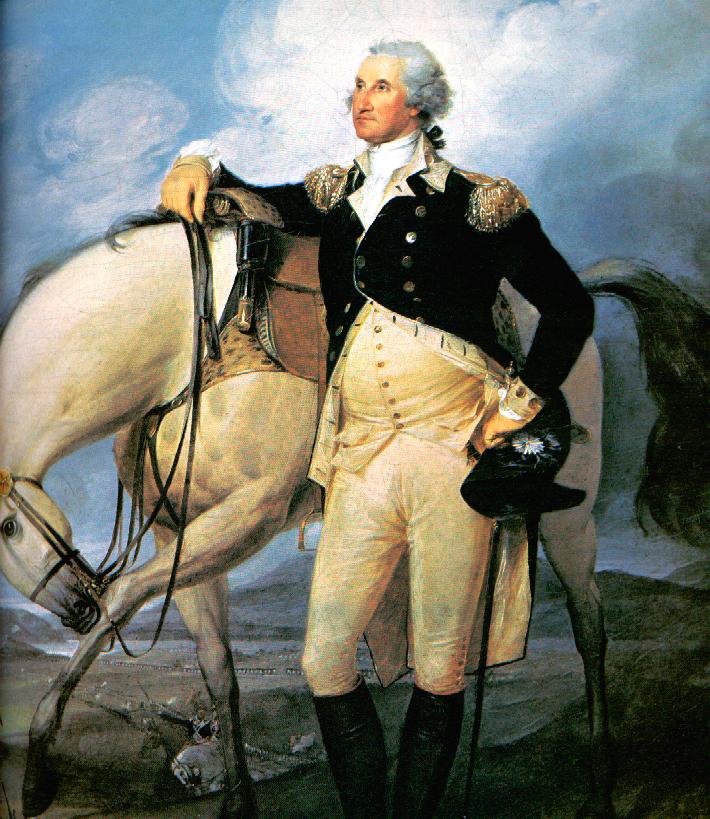
George Washington is the one on the right

The political writer, Morris Fiorina once wrote a brilliant book called Divided Government. In this book, he argues against common sense in that he shows through statistical examples that when our government has been divided, we’ve actually accomplished more in Congress than when we’ve been under united government. Unfortunately, his analysis wasn’t forward thinking enough to project what might happen when divided government becomes an unworkable government, when the divisions between both sides might turn out to be the destruction of government, rather than the process that allows time for “cool and deliberate reflection,” a concept once deemed that would lead to the “real voice of the American people” by George Washington in a letter to Henry Knox on September 20, 1795. Right now, we’re in a weird political process that is completely destructive and causes very smart people to act petty and stupid. When looking for leadership, which is what people do when surrounded by annoying destructionists, we’re finding all of our leaders have become ten year old children who think that pointing at the other kids and saying “he did it” is somehow what America is looking for in its leaders.

If one were to look for allusions and metaphors to explain what is going on today, I can find no better example than that of television, which is often referred to as either the “idiot box” or the mind-numbing device that causes people to stop thinking. Why should we be surprised that what we’re receiving from our leaders is nothing less than the ridiculousness that comes from stupid television shows anyway? Unfortunately, the metaphors that make sense indicate that we’re watching the wrong television shows in hopes of finding some kind of mechanism to lead us to a better tomorrow.

Right now, we seem to have leaders who have latched onto some of the worst television metaphors to dictate the types of actions they are emulating in our government. If you watch any type of television news, like CNN, MSNBC or Fox News, basically all you’re getting from commentators and pundits is analysis that sounds like Howard Cosell or John Madden describing some kind of football game where players are trying to create brand new plays by doing stuff that people have been doing for decades, yet seem to think that it’s all original. During the election, it was like watching professional wrestling, where oversized behemoths yelled “I’m going to get you, Hulk-man!” as they rip off their t-shirts and promised bloodshed of the like never seen before. But we have seen it. It’s called bad politics, and it leads to bad government and horrible representation. What these types of metaphors really show us is that our leaders are playing another zero sum game with each other where no one actually wins because each side is only focused on winning, not on what they get out of winning in the first place.

I’m going to include another television reference that can explain where we need to be going and how we should be looking at our current political dilemma. Before I do so, I apologize because I’m going to be calling on my geek nerd credentials to do so. But in the end, it will be worth it, so stick with me on this. I promise. It will be worth it.

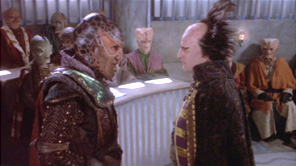
The show I’m referring to is one that was developed by J. Michael Straczynski called Babylon 5. Without getting into all sorts of geeky crap about the show, I’m mainly interested in one of the races that was developed during the series, called the Minbari, a race of balding aliens who were also deeply spiritual. What made them significant in the show was that they were running around the galaxy for thousands of years before humans took to space, so they had a lot more time to really mess things up. Their government was run by a 9-member council that was made up of 3 members from the religious caste, 3 from the warrior caste and 3 from the workers’ caste. During the seires, the Minbari ended up in a civil war between the two more powerful castes, the religious and warrior. Why I’m discussing them is because their spiritual leader realizes at the end of their war (and the way to solve it) is that the religious and warrior castes had completely forgotten the most important caste to their civilization: the workers’ caste, the one that created all of their ships and buildings and was the one caste that suffered the most during the war fought between the two vying for power. As a result of this realization, their leader then elevated the workers’ caste to more positions on the council so that they would then be the dominant caste from that point forward.

These aliens didn't get along either, so their people ended up killing each other. Nuff said.

We have the same problem right now. We have two political parties who are fighting amongst themselves for power in our government, yet the ones suffering the most are the workers, the common citizens who don’t actually have a seat at the table, yet are the ones who are victimized by whatever decisions the two political parties make in their name. But these two parties have stopped being representative of the people a long time ago and now only really represent themselves, but claim to represent everyone else. But they do so in name only. Look at the events that have transpired over the last decade and that should be readily apparent to everyone. We’re fighting two wars that were picked by people in power who cared zero for what the common person thought about these wars. Yet the people fighting these wars are the common folk who make up the entire organization of the military that has no voice in the decisions the government makes for them. During this last election, the people were angry and spoke by using the only voice they have (the ballot box) and threw a whole bunch of people out of office because they haven’t been listening but speaking rather than listening. So a new group of people are now moving into office, and they don’t seem to get it either. Rather than realize the people sent them to Washington to get things done, their leadership thinks the people sent them to Washington to continue fighting with the government and again, getting nothing done.

So, let’s look at this from a different angle and treat government as a hospice where our goal is to treat the situation as triage. Perhaps if we look at it that way, we might realize what needs to be done to fix this problem. But I suspect that even with such an easy allusion, they still won’t get it. Or they just won’t listen. They’re pretty good at not doing that. But this triage is a blueprint to what people actually want done, even though I realize no one is interested in actually listening to the people. Think of this triage as Maslow’s Hierarchy of Needs, where we take care of our basic needs first and then work our way up to actualized desires once our struggle to survive is taken care of.

1. Our people need jobs. That’s been hurting us from day one. This means that the first thought should be to getting people to work. This doesn’t mean fast food jobs or retail jobs. We are a post-industrial nation that has a high-end technologically driven citizenry. This means that we need manufacturing jobs that develop high-end concept materials, like electronics, medical needs and computerized knowledge. This means government needs to help these types of industries grow and grow in our own country, not by farming out the manufacturing to third-world countries so only executives of these countries have jobs. We’ve done enough outsourcing as it is. We need stabilized positions in this country, which requires a serious focus on technological education for a workforce that has grown stagnant in building 20th century technology that is now being taken care of elsewhere. We need to focus on the 21st century and beyond by satisfying that market in a way that only our workers can do it. That means constantly being at the forefront of these markets like we used to do back in the early part of the 1900s with the previous markets of technology.

2. Once jobs are stabilized, we need to focus on making sure that people have money to spend. I’ll let you in on a little secret that government right now has no clue about (because they certainly don’t seem to get it). People don’t care about the budget. Politicians and government wonks do, but the average person doesn’t care about the budget. What the average person cares about is that the government doesn’t keep taking more of what they bring home from the jobs that they do have. This means that this whole budget mess that Obama, the Republicans and the suddenly backbone finding Democrats are fighting over is pissing off the average American. Right now, those out of work are about to lose their unemployment benefits that were about to be stretched out further. The fighting means they will now receive nothing. That pissed off a lot of people who still can’t find jobs (see number one). The second plank of the problem is the Bush Tax Cuts. People don’t really care that the rich are getting them, too. They only care that when January comes around they don’t end up paying hundreds of dollars more in taxes that they weren’t paying before. If you want to piss off the bulk of the American people, let those tax cuts expire.

This is the wrong time for the Democrats to suddenly rise up against their own president. They somehow think that people are going to believe they’re now on their side because they want to punish rich people. The average American isn’t going to agree with that. He or she is only going to see a smaller paycheck and then be really pissed off at the government. If you want to lose any mandate you think you have, that’s going to do it.

3. People want to see their government getting along. They don’t care that one side wins over the other. Most Americans aren’t that tied to the fight that they care. When they are suffering and see infighting, they see a system that doesn’t work. That makes them go nuts during elections, kind of like the last one. If nothing happens as we move towards the next election, people are going to revolt again. And when they start to realize that revolting doesn’t actually change anything, they’re left with one of two choices: Ignore it and become apathetic, or revolt the way people have done historically. That second choice seems like such a wild card that no one in government believes it will ever happen. Almost every revolution that destroyed a previous government came from nowhere and happened almost overnight. NO ONE sees it coming. And that’s what makes them so scary. So, continue to ignore the problems and hope they’ll go away, or do something about it.

What that means is our government representatives need to start looking at how to govern rather than how to zing the other side. If that doesn’t change, our government probably will. Just not as anyone wants, because changes of that magnitude rarely turn out as anyone actually wants.

How Do Anarchists Vote During an Election?

There’s been a lot of talk about elections lately, and whenever that happens the topic of voting tends to rear its nasty head as well. For people living in western societies, where they tend to be heavily weighted towards voting, there is a certain satisfaction that comes from the concept of enfranchisement (voting). Unfortunately, the concept of not voting is rarely given the respect it deserves, and quite often the idea is seen as horrific and counter-productive. I’d like to take a moment to talk about just that.

It’s understandable why not voting isn’t given a whole lot of respect, and we don’t have to go much further than history to figure out why. Throughout most of the history of us as a people, we’ve been struggling for the ability to make our voices heard. More often than not, the people in power have done everything to control who gets a say in the bigger picture, and the years have been a series of steps towards allowing everyone the ability to be properly represented when it comes to making decisions. In the olden days, kings made all of the decisions, and the people who chose kinds were the rich, elites who controlled pretty much everything. Fortunately, we don’t live in that sort of dynamic any more.

Or do we?

In the old days, a group of elites would get around and decide amongst themselves who should be the next king. Sometimes, they emphasized these decisions with violence, but in the end it was usually a class decision, often supported by economic clout. Today, anyone can run for office, and those people are decided by the whims of the people. However, it should be pointed out that so few of us have any say so in any of these decisions whatsoever. Quite often, to even be considered, a candidate must already be known by enough people to make it onto the ballot. In order to do that, the potential candidate must already be part of the elite class itself, because so few others have even a smidgen of a chance of being recognized by others when it comes to elections. This means that economic clout is necessary to get a person recognized, and before you know it we’re right back where we started with economic elites pretty much deciding who gets to run for office, and even more important, who gets taken seriously. We’ve even gone so far off the deep end that a number of our future leaders are choosing themselves based on their own economic clout, buying their ways onto the ballots, and because they have such connections already, we’re left to choose between them and other people considered viable by other economic elites.

Now, let’s take the argument even further, and let’s look at it from the perspective of someone like me, someone who hates the very nature of power itself. You see, I have a real problem with people who want to be considered the elites over the rest of us. I don’t see my elected officials as people who are trying to help me, but I see them as people who see themselves as special, who see themselves as individuals who think they deserve to rule over others. Because elected office is simply that, a vie for power. No one ever took a position of power because he or she was trying to be one of us, but quite often someone will pretend to be one of us in order to become lord of us (the recent debacle of Christine O’Donnell is exactly an example of that where she has been trying to say that she is “us” in hopes of ruling over “us”). Sure, every now and then you get an enlightened, potential leader, but most of the time it is some person who has felt that his or her education and experience makes him or her worthy of vying for power. And then once in that position that person becomes untouchable and set apart from the rest of us.

Don’t get me started on the eventual move towards dishonesty and corruption, but that seems like a natural progression that I think psychologists could easily link between the typical behavioral patterns of someone who seeks power and someone who abuses one’s position. I’m not surprised that so many of our leaders of government come from the professions of law and business.

But what this means to me is that I’m not a fan of anyone who purports that he or she should be representing me because honestly, no one can best represent me but me. And I wouldn’t in a million years ever say that I would be the best person to represent other people because I only know how to represent my own interests, and yes, I would be just as corrupt as everyone else out there in politics, because I would mainly be looking out for what I consider my own best interests. Sure, I would want to help people and do good things, but that doesn’t mean I deserve to be in power any more than the guy who sweeps the street outside where I work each day. What makes me more worthy of power than that guy?

Yet, a whole bunch of people think they deserve to go into government to make decisions for the rest of us. I find this wrong. I feel that any time someone decides to vie for power, that person should be feared because I have yet to come across a politician who was really interested in the desire to help another person by personally sacrificing one’s own well being, because that is what would be necessary for me to believe that a politician can best represent me. Instead, I find almost everyone of them to be much more interested in assisting themselves, and if you’re lucky enough to be part of the rising tide of those boats, then you’re going to benefit as well.

So, I find myself not wanting to participate in elections. Yet, I’m constantly condemned because I say I don’t believe in voting for the people running for office. People heard me complaining about the Bush Administration, so they tell me I should be voting for Democrats. But Democrats aren’t all that interested in doing anything specifically for me, unless I happen to be lucky enough to benefit in specific things THEY want for themselves. The last two years haven’t been all that great for the country, but then that doesn’t mean that the Republicans are going to make things any better for me either. They’re interested in taking care of their own, much as my definition of any politician would fill. So, voting for any of them is a useless cause because I don’t believe any of them should be in power to begin with.

So what is a quasi-anarchist to do? There are no solutions to this problem other than to compromise and give up on what one believes because the status quo isn’t going to offer anything better.

What would make things better, in my opinion? A lottery of elections. I don’t have a problem with people serving in government. I have a problem with people wanting to be in power. But a lottery would make it available to everyone, and anyone. But that will never happen because the people who want power will never give up power to the masses.

You see, I believe in democracy. If we lived in one, I think it would be the greatest government we could ever have. I just don’t believe in the fantasy we try to sell ourselves about what we think is our democracy.

But I do vote. I vote every election. I just don’t vote for people. I go into the booth and choose the yes and no votes for issues I find to be important enough for me to want to decide. That’s democracy to me. But whenever I see a name behind a position, I ignore it.

I just wish people would stop condemning me every election because I don’t want any of the people that want me to vote for them.