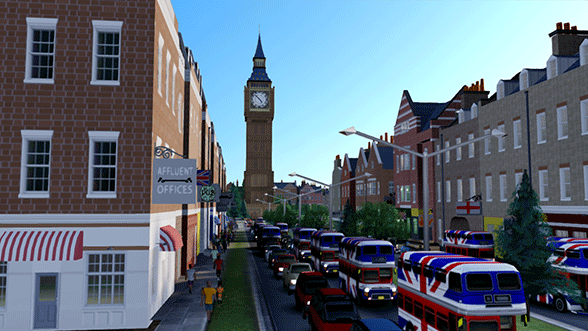
Last year or so, EA/Maxis released the latest version of Sim City, the continued offspring of one of the originally wonderful games to come out on PC. Unfortunately, it had some things wrong with it. Okay, I’m being nice. It had a LOT wrong with it. So much that after a week of trying to play it, I deleted it from my hard drive. But that wasn’t enough. I then burned my hard drive, pulled it out of my computer, threw the hard drive out the window, installed a brand new hard drive and even replaced my operating system so that there would be no hint of that game ANYWHERE near my computer. Okay, not exactly the events that happened, although all of the events DID happen. But the rest of that had nothing to do with Sim City. My hard drive crashed for another reason, but I hated Sim City so much that I’m now blaming all of that on Sim City. It’s kind of like how I blame all of my bad relationships that I’ve had with women on Anne. Not because Anne did anything wrong, but she gets blamed and happened to be at the right place at the wrong time when it came time to forever blame every bad relationship on someone.
But I digress….
The problem with Sim City was that it was designed with great mechanics but horrible mathematics. Let me explain. Imagine a town where its population is made up of tens of thousands of people. And then you throw a big party so that lots of other people come to your town. Well, and then after the party was over, instead of leaving town and going back to their own towns, all the people stay and then move into any available house that happens to be located anywhere nearby. If someone already lives there, that’s okay. They’ll just stay there and the person who lived there before can drive around the town all day, making it impossible for fire trucks to get to fires because everyone’s on the road without an actual place where they actually live. Then add more people (cause they called everyone on their cell phones and told them about the grate party), and then you have a cluster**** of people driving around and walking down the streets all day long, and anyone can work in any job because education no longer is important. Just people.
And you get an idea of why the game kind of goes nuts once you start to actually get any decent population.
But the biggest complaint was that the game forced you to play online (on EA’s servers). And quite often, they’d crash. Or just stop working. Or whatever.
People demanded an offline mode (because that’s what every previous version of Sim City was), but EA said that was impossible. And then people abandoned the game. So EA has announced that is NOW going to allow offline play, which by the way I did mention they said was completely impossible, right? All along, I got the idea that EA was trying to sell us stuff in real money, and the only way to do that was to make sure everyone had to play online, kind of like Blizzard is doing with its current crap load of games, like Diablo III, another game I abandoned shortly after a few weeks of realizing it was a shadow of its original versions.
So, will this cause me to go back to Sim City? No. Not a bit. I own the game and haven’t reinstalled it on my computer mainly because they screwed it up enough that I saw no reason to ever do so again.
What I do know is that I will NEVER buy another Sim City game again. And I’ll let you in on a little secret: I used to work at Maxis and used to love everything about Sim City and the Sims. Not any longer.
One of the new trends in online computer gaming is the free to play model, which shouldn’t be confused with the Buy to Play model. Let me explain the differences in where computer gaming is today.
Buy to Play: The Buy to Play model is where you buy the game, and then you get to play it forever for free. Usually, the game is expensive, like $59.99 for both Diablo III and the same price for Defiance. The upside to it is that you continue to play the MMO forever, but you had to pay the full price for the game beforehand. How the company makes money is both from the initial sale and from any purchases you make in the game after that. Also, if they create an expansion pack, they’ll charge you for that. Almost every Buy to Play MMO I’ve bought has been a waste of money. Diablo III was the first of the lot, and it sucked badly. It was fun in the very beginning, but after a short while you started to realize that the whole game was designed around Blizzard’s desire to get you to spend money in their auction house. There was little value, and the game got stale really, really fast.
Defiance was a bit more fun, in my opinion, but it was mainly an unfinished game that kept promising to be so much more. I paid extra money for the downloaded content that they were going to be providing, but they’ve been really slow at doing that, so basically I stopped playing and lost the money I spent for downloaded content that they never got around to providing. They keep promising it, but promises are nice fantasies that don’t generally pan out.
The third of the buy to play games out there was Sim City, which was the latest version of a very popular franchise. The beginning of the game was a lot of fun, almost like playing Sim City 3000 again for the first time. And then the game sort of collapsed on itself because it was designed badly so that once your city hit a certain size, it basically just imploded on itself and became a nightmare to fix (translation: not fun). They keep putting out fixes for the game, trying to win back the very pissed off customer base, but as I was very pissed off with the game, all I noticed them doing was trying to port the bugged game over to Mac while ignoring addressing any of the issues that were wrong with the game, almost as if not admitting it would make the problems go away. I have no intentions of going back to the game any time soon.
Another version of the Buy to Play model was Guild Wars 2, which was a lot of fun going from Level 1 to about 30, and then the game just became tedious (at least for me). Others are still playing it and having a great time, but it never did much for me after a certain time. The game relies on other people playing with you, and as the game becomes less and less populated, the game becomes that much more difficult.
But Guild Wars 2 falls into the main reason I decided to make this post. You see, now that the game has been bought, the developers rely on the player base to continue making purchases to keep the game afloat. I’ll talk about that in a second. This can work if you offer something of value to the customer playing the game, but what I’m seeing is that game companies are becoming very greedy, wanting to charge you for all sorts of stupid stuff, which makes paying for it that much more tedious. An example: in Neverwinter, the latest of the free to play games, if you want to buy a bag to carry things in, you can’t ever make one but have to actually buy one from the “Zen” store, which basically has translated to $10 for a bag to carry around 24 items. A bit expansive for something that should have some way in the game to create, which it basically doesn’t. You might be able to buy a bag from another player through the auction house, but essentially, that player bought the bag through the Zen store first, so Neverwinter always gets its money. All mounts cost money, as do most companions (your partner in the game) that’s decent enough to rise above Level 15 (a purpose companion can rise to Level 30).
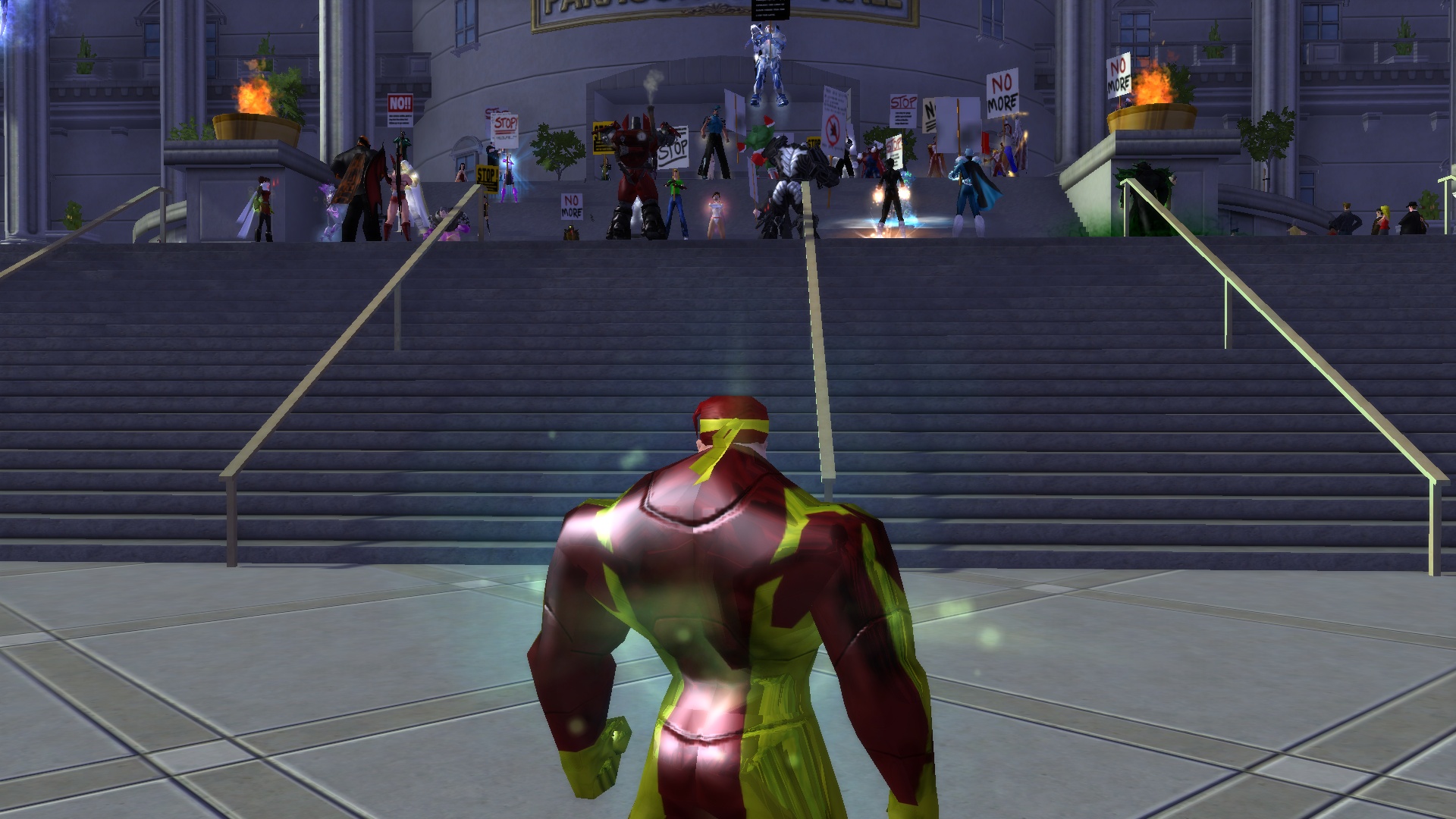
Some of the MMOs that used to be pay to play have become free to play, or buy to play after having failed as a pay to play type of game. These are games like City of Heroes (which closed its doors a short while ago), Star Wars The Old Republic, Lord of the Rings Online, The Secret World, Rift, Star Trek Online, and several others that used to be regular pay to play games. A few have remained dirhards, refusing to change to a free model, like World of Warcraft and I think Everquest (although I haven’t checked on that game in years, so who knows what happened).
The moral of the story is that these games exist mainly because there are players like me who are willing to pay for incidentals in the game. Now, before I go any further, I just wanted to say that I’m quite willing to pay for items in a game, if that keeps it going. I paid for a lifetime membership to Star Trek Online, mainly because I felt I wanted to support what was a very entertaining project. But when I feel like I’m being targeted for crappy sales tactics, I start to get annoyed. Guild Wars 2 did that to me, and it’s why I finally left the game. I had bought a hundred or so dollars worth of items, and mainly got annoyed at how crappy the items were in lines of cost. Star Trek Online and Neverwinter, both owned by the same company, have one of the most annoying pay items in the game, which are boxes you open with keys you have to buy, and the hope is that you might one day get a great item (a cool ship in Star Trek or a Nightmare mount in Neverwinter). Having opened several dozen boxes in Star Trek Online and about 30 boxes in Neverwinter, I”ve gotten nothing but junk, which means I’ve spent $30 on each game getting absolutely nothing of value. The fact is: You can’t buy a nightmare mount on the Zen Store, so you have to play their rigged lottery in order to actually try to get something decent. It’s the sort of thing that keeps me from wanting to spend money on a game, especially when I’m exactly the kind of player they want: Someone willing to spend money in a game.
That, to me is why the free to play model is not working. As long as you give crappy value to your products that people have to pay to get, your game is going to fail. City of Heroes suffered this way. I spent money in that game, sometimes just wanting to support a game I really enjoyed. But the value for the things I paid for were atrociously one sided (leaning towards them, not me). While the failure of that game had more to do with NCSoft being a shitty company than the game failing, their market could have probably gone a great deal of distance to have done better.
Some of the pay features of these games are really bad. I’ve heard nothing but bad things about Star Wars The Old Republic, in which they didn’t add any value by the pay store, but actually took value away from processes already in the game and then charged you for them if you wanted to get them back. That’s a crappy model for a pay store in a game. I used to play the game back when it was pay to play, and the game’s failure, to me, was that it had nothing to do at the higher levels. My understanding from others is that they haven’t done a great job of fixing that, figuring they’ll get a whole bunch of new players to run through the levels before getting bored (ignoring the players who left due to lack of content).
So what’s the solution? Start producing goods in the game that are both interesting and have value. Star Trek Online does get a bit of this right by creating new ships you can buy. Unfortunately, they don’t do enough to distinguish those new ships from the ones that used to be in the game. But it’s the right track. Neverwinter can do better by discontinuing the stupid drop boxes or by making the items that come in those drop boxes be worth a lot more value to the player. Right now, it’s like gambling at a casino where the slot machines are stuck on losing readouts each time you play them. No one wants to pay for that.
Unfortunately, like City of Heroes, I doubt the developers even care, or they may care but aren’t willing to put forth the effort to make the changes needed, convinced people will keep paying long enough to get them what they need as a payout. Defiance is an interesting variable to watch as the game was a lot of fun, but needed so much more. People tell the developers this on the game’s message boards, but you get the immediate thought that the devs just don’t care. Or they care but it’s too much work to implement change. It probably doesn’t help that Trion fired a great deal of the staff to “save money”, but that’s a subject for another post..
In my never-ending search for an online computer game to play, I ended up trying out Star Trek Online, a game I panned because I was much more interested in Star Wars Online: The Old Republic (SWOTOR). Having grown bored of that game, and recently grew bored of Guild Wars 2, I decided to take a spin on this game, just for the nostalgic factor of playing something involving a franchise I know way too much about.
And that’s probably why I like it as much as I do (right now). The gameplay is very basic. In space, it’s great, and you have great space battles. On land, it’s like playing a dorked down version of World of Warcraft, or Lord of the Rings Onlline, or any other variation of Everquest that has ever existed. Mostly, it seems like they added the ground stuff as an afterthought, even though it appears to be very much a part of the whole package.
So, here are some of the immediate thoughts I had after an entire weekend spent going where no man…I mean ONE…has gone before.
The GOOD:
1. It’s Star Trek. It is a universe that trekkies know well and love.
2. The lore seems to be very well catered to, meaning that important events in the Star Trek universe show up in the game. An example is the epic battle of Wolf 359, where the Federation’s fleet was decimated by the Borg in the movie, Star Trek: First Contact. There’s a memorial placed over the Wolf 359 system, constructed by Star Fleet engineers. As you fly through the system, you fly by the MANY starships that were destroyed in the battle. It’s kind of an impact-like experience to fly through there in a system that seems to have no other purpose in the game than to remind the players of the sacrifices that were made that day (in this make-believe universe).
Another example is the finding of important characters in the show’s history. The game is narrated by Leonard Nimoy, who I understand had a bit of history with Star Trek, although I don’t know what exactly that history is. Okay, obviously I’m being facetious here, but it’s kind of nice to hear Ambassador Spock telling us about all sorts of things in the Star Trek universe. At one point, however, while hearing a voice over from Nimoy, I remembered that his voice is also the voice over for Sid Meier’s Civilization series (think it was IV, although I could be wrong on that, and maybe it’s V). One of the first characters I came across (besides the voice of Spock) was Naomi Wildman, who in Star Trek history is the little girl who was born on the USS Voyager during Star Trek Voyager. She is now the commander of Starbase K-7. The grandson (think that’s what it was) of Lieutenant Sulu is a Starfleet leader in the new game and talks about how he spends most of his life having to live up to a lineage of Starfleet heroes. The nice thing is that I’ve just started the game, so I’m sure a lot of others will show up as well, considering the game takes place only about 30 years after our current knowledge of the Next Generation’s timeline. One thing they are hinting at is that the events that occurred in the reboot of the Star Trek movies is kind of on the edge of about to happen. The Romulans lost their homeworld, and the universe is in flux right at about that period of time.
3. It’s a space game. Too many MMOs are fantasy genre games, and they get really old after you’ve played yet another WOW clone, realizing that WOW was an Everquest/Dark Age of Camelot clone.
4. The Starships. My first starship was a light cruiser that didn’t really seem all that impressive. When I became a lieutenant commander (about level 10), I received an escort class fighter (my choice) that just seems so much cooler and more powerful. Although I was sucked into a battle once, and I died after one hit. So, it only seems powerful, I guess. There are so many different types of ships, and I’m looking forward to exploring that further.
5. There are a lot of players and ships flying around. That’s always cool. Of course, there’s only one server (that I know of), but that’s not a problem.
6. You can be a Klingon. After level 25. So that might take awhile as it takes forever to get levels in this game (my opinion). But when it happens, you can bet I’ll be starting up a Klingon and fighting for the empire! And honor! And all sorts of other geeky sorts of things!
7. It’s free to play (or you can do a membership at $14.99 a month). I went the membership route, although I can see how it mimics other free to play models in that it’s costly to add any extra features you’re going to want, so it ends up costing you a lot more, even if you subscribe. Oh well.
BAD
Nothing really. It didn’t sell well, so it’s lifetime might be limited, and that’s too bad.
So, I say give it a try, if you’re into Star Trek. If you’re not, chances are pretty good that you’re not going to understand the many geeky references that occur throughout the game. But for someone like me, it’s graet. And honestly, what’s more important than my personal needs being fulfilled? Ka’plah!