Category Archives: Books

Free promotion for newly released book

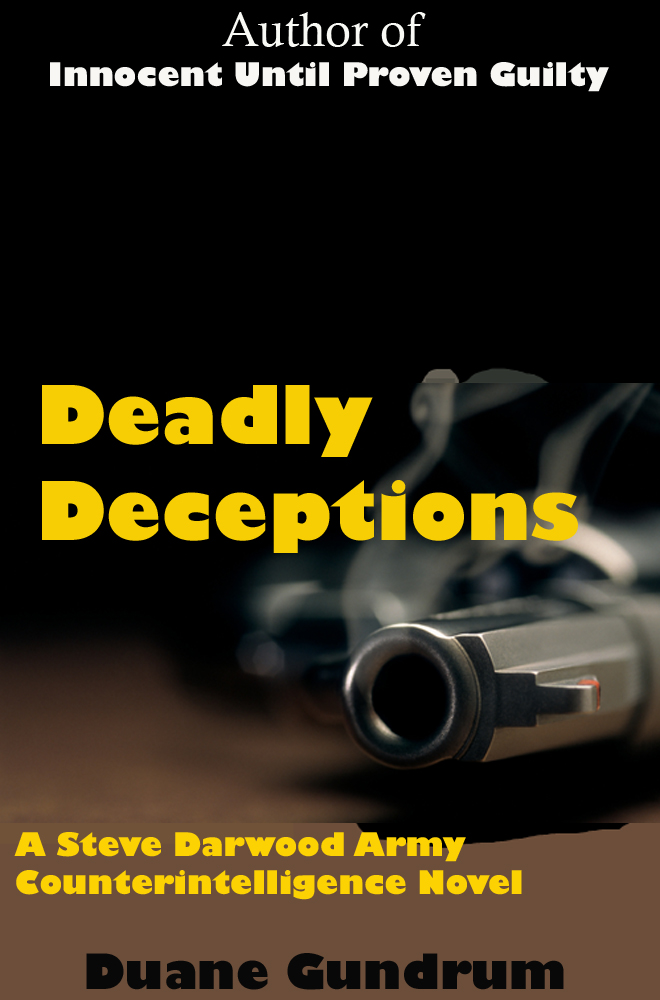
For the following week, Monday through Friday, Amazon is offering my books Darkened Passages (a new dark fantasy short story collection released over the weekend) and the book that was previously published before it, Deadly Deceptions (a mystery/suspense novel published last year) for free if you have Amazon Prime. So, hopefully people take advantage of it.

If you do, please do me the courtesy of leaving a review. It’s amazing how many of my novels are bought but then no one leaves a review. Hopefully, no one thinks they suck. 🙁

The World Until Yesterday by Jared Diamond; a book no MA grad student could have gotten by a thesis committee

The World Until Yesterday: What Can We Learn from Traditional Societies?The World Until Yesterday: What Can We Learn from Traditional Societies? by Jared Diamond

My rating: 3 of 5 stars

Diamond does a great job analyzing primitive societies from the perspective of an up-close observer, but one of the problems he suffers from is a massive case of anecdotal evidence that may or may not apply to larger populations. His examples are great, and some of his conclusions are interesting, but he has a really bad problem of writing as if he’s the expert on all things because of his experience with limited populations.

Where I saw this mostly lacking was whenever he was discussing an issue and then drawing a conclusion. The academic in me kept saying to myself while reading: “And your source for this conclusion?” But there was rarely sources brought up as any type of back-up to the arguments he was making. It made me suspect that he’s become so famous for his earlier work that I started to think he felt he didn’t have to back up his evidence with…well, evidence, because it wasn’t evidence; it was mainly a guess based on his years of experience out in the field.

The problem with this kind of conclusion he kept offering is that he’s relying on his own knowledge and guesses and then figures that it should be good enough because of his massive volume of work that preceeded him. Unfortunately, that’s not how science works, and he should know that as he is one of the people who has been in the trenches when this type of requirement was founded.

The problem with all of this is that he does have a lot of very interesting information, and when your information gathering process is criticized by others (and believe me, I’m not going to be the first or last one to make this criticism), it has a tendency to negate ALL of your evidence, which is probably the one tragedy in his shoddy attempt to provide good information.

View all my reviews

Yet another job slips through my fingers

I applied for a job where I currently work. I was totally qualified for it, and I would have done a great job with it. Made it to the second interview. And the interview went great. The next week, I was informed that I was “second” in the running, so the job went to someone else.

I can’t tell you how many times I’ve heard this sort of thing in my life. I keep applying for things, and way too often end up being the “other” person behind the person who actually gets the job. It doesn’t matter how much education I have, how smart I really am, how innovative I am, what skills I hav e, or whatever. I keep coming up as the second in line for whatever thing I’m seeking. I have news for those who aren’t following: Second place doesn’t get a job or anything else. You get to start over and look forward to coming in second some other time.

I can’t even begin to tell you how many times this keeps happening in my life. And it’s not even jobs. It happened with my writing career where I came so close to finally making it and then something gave me that second place treatment again. An example is that years ago I landed a very well known literary agent who ended up in a car accident soon after signing me on as a client. She had a brain injury where she basically didn’t even remember I was her client. I mean, come on. This shit isn’t supposed to happen outside of bad television shows. I had a second agent years later who felt he could sell my espionage fiction. Then he called me to inform me that he was going to be representing some other writer who would take too much time, so as suspected, I got dumped.

And I am getting older (had a birthday a few days ago) that reminds me that I’m probably less desirable as a future employee than all of the younger people coming out of school.

So, without sounding dramatic or whatever, I give up. It’s not worth trying any more.

Why I won’t be buying the new Kindle Fire HD or whatever it’s called

For some bizarre, masochistic reason, I have bought practically every version of the Kindle that has been made. The last one I bought was the Kindle Fire when it first came out. And that device is the reason I have decided to pass on anything in the future made by Kindle.

My needs are pretty simple. What I wanted was a device that could allow me to read books (which it does), maybe listen to a bit of music (which it kind of does, as long as you put your entire music library on Amazon’s cloud), and can place certain documents I need to read onto it as well (that one completely fails). For days, I have been trying to get my Kindle Fire to recognize a pdf document that I need to refer to quite often at work. It can’t. Or it won’t. Not really sure if it has a mind of it’s own, but it won’t read the document, no matter how many times I have tried to make it do so. I sent it using the email address they gave me to upload documents. After establishing that the email account I sent it from was legit, it should have been a breeze. I mean, my old Kindles did it just fine.

But no, it doesn’t see it no matter what I do. The document shows up on my “Manage Your Kindle” page, but my Kindle Fire just pretends it’s a stupid rock whenever I try to upload it/download it/pray to the Gods of Shaniaism, or whatever. It just won’t do it.

The truly sad thing is that my Kindle app ON MY IPAD 2 reads it just fine. But I bought the Kindle Fire so I could use these documents that can’t be read.

And don’t get me started on wifi access. It has the ability to connect with wifi, but 9 out of 10 times, it can’t seem to do anything once it connects. It doesn’t matter if I’m at work, at home, at the Pentagon, in the front lobby of Amazon. When it comes to wifi, they need to stop using a ten year old child hacker to develop their infrastructure.

Which tells me that whatever NEW Kindle they created is as fubar as this one. I mean, this was the expensive baby that the Kindle was selling as the be all Kindle. If they can’t make their best model do something simple, then I’ve given up on them. I’ll still use a kindle app, but I’ll be doing it on other devices, because, to put it succintly, Amazon sucks big time when it comes to making products.

Author’s Guild gains class action status vs. Google but do they really represent all authors?

There’s an interesting case that’s making headlines right now about how Google was attempting to push the Author’s Guild out of the suit to sue Google for its Google Books initiative (where they would be the end all source for practically everyone’s book material with their all-inclusive Google Library). Yesterday, a judge determined that Google can’t push the Author’s Guild out of the picture. On the surface, this isn’t all that big a deal, but there are a couple of things that are probably important to point out.

First off, most of the critics have already addressed the fact that not every author really wants to be part of this lawsuit, as quite a few independent authors have zero problem with what Google is doing. However, unless they personally choose to opt out of the action, the Author’s Guild is going to go forward pretending it has a lot more power and influence than in really does. And most people tend to ignore these sorts of things, so they’re now going to be “included” in this action even if they’re not really interested in what’s happening. This is one of those things that always bothers me with class action lawsuits because in cases like those against Apple and their antenna for the 4G debacle, a lot of us who owned Apple iPhone 4s didn’t really care that much for taking action against Apple. We were kind of happy with our products. Yet, a class action lawsuit moves forward as if it is representing a lot of people who may never actually be a part of the settlement. There’s a lot of presumptuousness that takes place with class action lawsuits, but that’s a completely different story.

A more important issue to me is the one that isn’t getting any attention yet, and that’s the fact that the Author’s Guild, a writer’s advocacy group, is an extremely exclusive club that lets very few actual authors into its ranks. According to their guidelines for eligibility, if you want to be a member of the Author’s Guild, don’t even think about it unless you have been published by an established American publisher, and I mean VERY established. Using a subsidy publisher, Amazon Kindle direct services and such, or anything along those lines, and you’re guaranteed to be turned down by the Author’s Guild that keeps a tight hold on its allowance for membership. While their elitism has dwindled a bit over the last year (Matt Paust, who regularly publishes to Open Salon, updated us with an article on April 27, 2012, in which he pointed out that their new requirements indicate that you can gain membership if you’ve received at least $500 from publishing in the last year, although their web site is still heavily leaning towards pointing out its old archaic standards of exclusivity).

As a writer myself, I’ve been on the fence about the whole Google books thing. I sell books through Amazon Kindle as well as Barnes & Noble’s Nook, so I haven’t been all that focused on Google, as most things Google does tends to be overly complicated and often unusable (like their advertising service that I finally gave up trying to figure out one day after I ended up getting charged $5.00 to make a listing that could never be approved and then left me unable to even remove the ad that wouldn’t ever run). So, I’ll be interested to see what happens with this, as I’m sure a lot of others will as well.

Mainstream Smut & the Future of Cooperation Between Legacy Publishers and E-Books

There’s a book story that’s been making the rounds lately. It’s a book called Fifty Shades of Grey by E.L. James (a pseudonym). It started out as an ebook and then went through a huge bidding war before it was bought by a major publishing house. It’s been compared to the Harry Potter series and the Hunger Games series, which is why the big bidding war took place. But the history of this book is a little, well, um, interesting.

You see, the book isn’t a young adult book. It’s an adult book. A very adult book. It’s basically a book about bondage and discipline, where a young woman gets drawn into a world where some dominant guy becomes her master. Most of the time, a book like this ends up being marginalized and sold as ebook smut. Such a book is very, very difficult to sell mainstream.

Yet, it happened. It became that “book” that adults bought (most often the demographic of housewives, which is another story itself) but didn’t really reveal they were reading. Now, the big publishing companies AND movie companies, see this as the next big thing and are looking to market it because of its success as an ebook.

Well, that’s going to be interesting, to say the least. You see, the book did really well because it was an ebook. Think about that for a second. When you buy an ebook, you can read it in public, and almost no one has a clue what you’re reading. But bring a book onto the train (an actual book) and everyone knows what you’re reading. That’s going to make it really difficult to get people to want to read this book in public. That’s going to kill a lot of chances of selling it to the mainstream public because it’s going to be the equivalent of reading erotica in public. Good luck on that one.

Yet, the publishing industry it’s got the next Twilight on its hands.

What this is actually showing me is that the Legacy Publishers (the ones who still print books and then ebooks as an afterthought) are starting to realize that ebooks are a viable market that might slowly overcome the old style market. Yet, I don’t think they understand the nuances involved in ebooks versus mainstream books.

I’ll let you in on a little secret: I also have an adult book out there somewhere being sold as an ebook. It’s written under a completely different name, mainly because I chose a long time ago to distance my writing name from that other stuff. It’s not that I’m not proud of the other novel, or even ashamed of it. I just realized that for simple, rational (and sometimes irrational) reasons, people are often more comfortable separating the two names for the types of books that are published under those names. Throughout history, mainstream writers have done this as a precaution to keep the two camps of readers apart.

An example: Some years back, there was a series of books written by John Norman (the pseudonym of John Frederick Lange, Jr.) about a mythical land called Gor. It was one of those series that had a huge following, basically taking a complete life of its own. The premise of it centered around a civilization of highly structured slavery. This series has spawned into a lifestyle culture of people who partake in the culture of living a Gorean lifestyle, which generally revolves around a strong master/slave society. Sometimes the genders are mixed (as in sometimes its female controlled, but most often it tends to gravitate towards a male dominant household). Anyway, because the ideas of his novels were so against the mainstream thought, Norman remained the header on all of these stories and Lange made every effort to keep his secret identity. During the 1970s, as the series was at its zenith, a woman I knew named Laura figured out who the author was, including where he was teaching and confronted him directly about it. For years, he protested his involvement but then eventually he gave in, realizing that secret was quickly catching up with him. Today, pretty much everyone who has ever read these books knows exactly who was the author. Fortunately for him, he was already so famous as a writer that it didn’t actually affect his teaching career.

The same kind of thing happened when vampire-story writer Anne Rice was revealed to be writing under a number of names that published books on male and female lifestyle slavery. Because she was already so famous as a novelist, these revelations didn’t hurt her career, and then soon after her identity was discovered, she started writing religious fiction, and her career has really never returned to the power career it once was.

What is interesting to note about all of these cases is that the stories themselves never really became mainstream. Even Rice’s book, Exit to Eden, which became a major motion picture some years ago starring Dan Ackroyd and Rosie Odonnell, never really became the hot seller as a mainstream novel. And the reason is simple: It was perceived by mainstream America as smut. Which is sad because it’s a brilliantly written novel (and a horrible movie adaptation that has absolutely nothing to do with the plot of the book).

So, as this “new” series moves into mainstream writing, I’m wondering how it is going to do in that realm. All attempts to bring S&M into mainstream have never succeeded. Madonna tried to do it for years, and every time she did, she continued to remain famous, but those attempts (including a picture book, several songs and videos and even a major motion picture) continue to remain obscure in her collection of mainstream releases. Recently, even Rihanna tried to present such material to a mass audience, and she was criticized for responding badly to her scandal of how she had been beaten by her boyfriend (which makes absolutely no sense whatsoever, as her adventures in that realm only served to be used as continued criticism…making some kind of weird connection to PTSD from being beaten by Chris Brown as her motivation behind why she’d do a move into S&M music video…yeah, the argument didn’t make a lot of sense to me either at the time).

The upshot of the whole thing is that no matter how hard people try, fringe sexual activity is rarely ever going to be seen as acceptable by sex-obsessed Americans who pretend to be shocked when they secretly covet all sorts of different sexual material. It’s like a politician who screams “sinner” at random strangers while having an affair with another woman to hide his predilection for having sex with children. America has never really made a lot of sense.

But expect to see a lot of shocked faces when people start to realize what they actually bought into now that everyone has jumped on the popularity of a bdsm book that publishers are convinced is ready for the mass public. I think they’re ready, but I’m pretty sure I’m wrong.
The Amazon Kindle Fire…first impressions

Over the weekend, I went to Best Buy to purchase a new keyboard that I didn’t actually need. It was to replace a gaming keyboard I have that works great, but I decided that because their new gaming keyboard (by the same company) was on sale, I wanted to buy it. It does absolutely nothing new that the old one doesn’t already do, nor is it more stylish or have any extra buttons the old one lacked. But it was on sale, and it was new. So I went and bought it. Yes, I am aware that I am Best Buy’s proverbial wet dream of a client, and I understand that.

To make matters worse, I found my keyboard I didn’t need, started walking to the register and then decided out of the blue that I was going to buy a brand new Kindle Amazon Fire. Already owning a Kindle and having the Kindle app on my Ipad 2, I obviously didn’t need one, but it was there at the store, staring at me, so I felt I had to buy it. So I did. And then I bought the extra pack with it, that cost me an extra $100 for a $50 Amazon gift card, a case and ear phones, all of which I didn’t need either. But happy with my purchase, I took it home.

I’ve had the weekend to play with Amazon Kindle Fire, or the Kindle Amazon Fire, or the Amazon Kindle on fire, or whatever it’s actually called, and I can say that it’s kind of cool. It lets you access the Internet, like my computer and Ipad 2 already do. It lets you download your music library, which Amazon first forced me to upload to its “cloud” first, taking about a day and a half to do so. But then I got to download my music, which I already had on my computer and Ipad 2 in the first place. I mean, convenience knows no boundaries, right?

Then I downloaded some of my books which I had already bought on the previous Kindle and put them on my new Kindle so I can ignore them and not read them there, much like I did with my original Kindle. Then I sat down and read a hard copy book (Haruki Murakami’s What I Talk About When I Talk About Running) that didn’t need the Kindle or the Ipad 2 at all.

Joking aside, the Amazon Kindle Fire is kind of nice. Negatives: It doesn’t have 3G, so you have to use it over wireless only. Kind of a down side. It also makes it difficult to do certain things, like add my Amazon $50 gift card. I had to actually sign onto Amazon with my regular computer to have that $50 gift card registered. There really should have been a simplistic way to do it on the Fire, but there wasn’t. Granted, there may have been some convoluted and difficult way to do it on the Fire, but that sort of defeats the purpose of having the convenient device in the first place. I certainly couldn’t figure it out, other than using their web browser, which isn’t really the greatest browser of all time, even though they called it Silk.

Positives: It can finally read comic books on the Kindle. I downloaded several issues of  Y: The Last Man and was pretty satisfied with it. Down side to that? Yeah, the text is really small because of the 7 inch screen, so I had to really struggle to read the text on the screen. Not a very comfortable way to read a comic book (or graphic novel), but sometimes you get what you get.

Overall, I think it’s pretty cool if you don’t already own an Ipad 2. If you do, then the only real advantage is that there are some magazines and newspapers that refuse to release on anything BUT the Kindle Fire, which is a travesty of an economic plan. In the end, it’s going to kill those magazines because people aren’t going to buy the Amazon Kindle Fire just because Macworld refuses to let Amazon release it to the Ipad 2 Kindle app (which CAN read it just fine). Again, the biggest draw back to the whole Amazon Kindle model is that book publishers aren’t playing along. I refuse to buy a book published by a major publisher that plays games with the Kindle at their outrageous prices of $14.99 and up. Instead, I often choose not to buy the book at all, which is why I haven’t bought the new biography of Steve Jobs, even though I wanted to read it. The publisher is being a complete asshole to readers, so they can go screw themselves, and I’ll buy it when it gets released as remainder issue stock.

Instead, I’ve been buying books that are showing up at the below $9.99 price, unless I can find it cheaper as a paperback, like is happening with The Girl Who Played With Fire, which is still being priced as if it’s a brand new hard back book for the Kindle. As long as publishers refuse to do proper business with Kindle customers, then I say they can go screw themselves and their legacy models. Instead, I bought four other books that were decently priced, and I’ll avoid reading them (due to laziness)  instead of the books I would have bought and avoided reading as well.

How Legacy Publishers Are Killing the Future of an E-reader Market

When the Kindle first came out, I thought it was the greatest thing ever. Actually, that’s not completely true. I was apprehensive because I was a believer in having a hard-copy of the book with me while reading it, but eventually I started to see that this could be a good thing. I went out and bought an Amazon Kindle, and shortly after that I gave up my newspaper subscription and subscribed to an online version of the newspaper (delivered over the Kindle). Then I ended up with an Ipad 2, and with the Amazon Kindle app, I have been able to read the Washington Post every morning by paying for it with that subscription.

But for books, it hasn’t been as wonderful an experience. As a matter of fact, the e-reader experience has gone from “hopeful” to “dismal” and the fault of this situation rest solely on the backs of the publishing industry itself. You see, in the very beginning, Amazon was offering books at the rate of $9.99, which was probably the perfect point for paying for a brand new book on an e-reader. The publisher wasn’t losing out because the manufacturing costs were practically nil, and their books were getting to their readers almost instantaeously. But publishers didn’t like not having complete control over their market, so they forced Amazon to allow the publishers to set the price for books. Now, an entry price is anywhere from $14.99 to $25.00 on an e-reader. As expected, owners of e-readers have practically discontinued buying books as e-books.

So, you’d get the impression that publishers won. Not really. What actually has happened is that two markets have opened up, and this was an occurrence that a smart publisher probably should have seen coming, but like the music industry before, this is an industry populated by egos who are convinced that they are infallible, and that their product is so great that it cannot be replaced or done without. Well, they were wrong.

It seems that Amazon now has two lists of bestsellers, and they are becoming completely exclusive of each other. In the old days, bookselling lists usually listed the highest selling books (physical copies) but because the legacy publishers refused to budge, Amazon has discovered that its bestsellers are actually e-books that have never been published as hard copy books. As a matter of fact, in 2011, only 3 of the top sellers actually were originally published as “normal” books. The rest were dedicated e-books only. What this means is that more and more books are being sold without ever crossing the desk of publishers at all.

Let’s unpack that. What that really means is that more and more publishers are losing out on their own marketplace because they decided they were too elite to participate in it. Instead of working with Amazon and other such e-book companies, they acted with hostility and marginalized their own market. Readers have gone out and started buying books that other readers recommend, and quite often those recommendations have no affiliations with legacy publishers whatsoever.

What this means, or could mean, is that the future for publishers is even worse than if they had participated with e-readers in the first place. Like the music industry, major publishing companies are being seen as in the way and as leeches rather than as particpants and designers of the industry. An example is the simple mathematics of a publishing contract that attempts to give a writer about 2% of the sales for a book, whereas a deal with Amazon gives the writer either 35% or 70% of the sales (depending upon which publishing deal the writer chooses for charging for books). The selling point of using an established publisher was that you got their name behind your book and their marketing team, but with most publishing contracts these days, a writer is usually left to fend for himself/herself after publication because a publisher will spend most of its resources on already established names rather than someone who is up and coming. So, essentially, you end up with a crappy contract, and you end up with a publisher that doesn’t actually do anything for you other than potentially get books into bookstores (which, in my experience, doesn’t always happen). A further example is the publishing company that handled one of my earlier books. It keeps “offering” to make my book into an e-book, and then offers me that same crappy publishing rate royalty as if it was a hard copy book. What they don’t want to reveal to me is that our contract with each other indicates that they don’t own the e-publishing rights, meaning they’re trying to get me to sign with them for e-publishing when in fact I can actually do that myself and get a 70% royalty without ever asking for their help in the first place. The dishonesty factor is the reason I’m mostly pissed at them, because they’re doing everything possible to make it seem like they’re on “my” side, even though they KNOW they can’t publish the book as an e-book without me signing over MORE of my rights that they don’t physically have right now. Again, another publisher doing everything possible to piss off a client in hopes of gaining short term gains in profit.

So, how can publishers regain the upper hand? Well, first they have to realize they lost it in the first place. If they don’t, we’re going to start to see more and more publishers go under in the next few years because they won’t have the money to keep operating. Right now, all they have is their reputations, but they’re being beaten badly by unknown writers who are making names for themselves without actual publishing companies. Once publishers become irrelevant, they’ll disappear.

But publishing companies are probably not going to go down without kicking and screaming. Realizing that they’re not going to do the smart thing, like announce that they’ll adopt the $9.99 model that Amazon first put forth (which would have probably ushered a new age in publishing), they’ll probably respond with legal action, using whatever clout they have left to hire attorneys who will submit confusing lawsuits that will bog down the system for years, further eroding their success in the industry. I wouldn’t be surprised to see a direct legal assault on both Amazon and Barnes & Noble by the publishing companies, as those are the two entities making the largest impact against them. I also wouldn’t be surprised to see it fall into some kind of patent war over technology, where some publishing company gets smart and buys up a patent that allows them to claim ownership over a certain “idea” of e-readers, even though patents were originally designed to NOT be used for that purpose. We’re seeing a lot of this kind of action on the behalf of software companies and the social networking sites, so it would not surprise me to see some enterprising legal maneuver like this.

Because they’re not going to win by going after the hearts and minds of writers and readers. They’ve already demonstrated they don’t have our interets at heart. It’s all about profit and maintaining a dinosaur of a publishing model. Therefore, expect trench warfare and years of interesting battles that lead to an industry that collapses on itself.