Tag Archives: short stories
Free promotion for newly released book
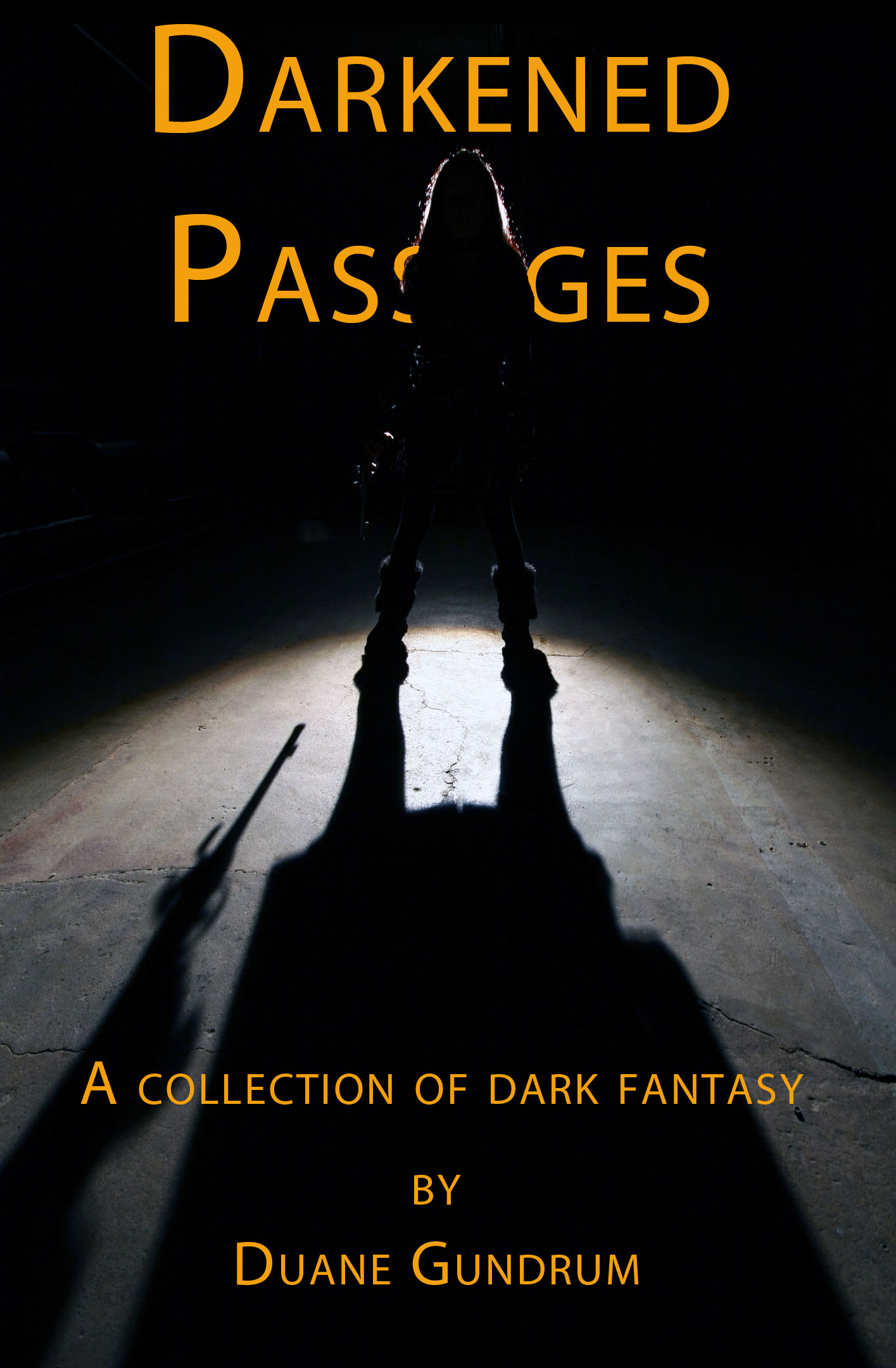
For the following week, Monday through Friday, Amazon is offering my books Darkened Passages (a new dark fantasy short story collection released over the weekend) and the book that was previously published before it, Deadly Deceptions (a mystery/suspense novel published last year) for free if you have Amazon Prime. So, hopefully people take advantage of it.
If you do, please do me the courtesy of leaving a review. It’s amazing how many of my novels are bought but then no one leaves a review. Hopefully, no one thinks they suck. 🙁
Darkened Passages, my book of short stories, will be released tomorrow for Amazon Kindle
The Hardest Book You’ll Ever Write: Book Number Two
Some years back, after I finished my first novel, I was faced with a daunting question: Could I possibly write another? For anyone who has never written a first novel, this probably sounds like a no-brainer, but believe it or not, when I came face to face with the blank sheet of book number two, I found myself realizing that I was facing an enemy I had never imagined before.
When I was writing the first book, I had lots of bravado behind me. I mean, I had written a bunch of short stories, and inside me, I knew I had a book in me, so no matter what happened, I knew I was going to finish that first book. But when it was done, after a few months had gone by, I actually came up with the idea for the next book. And then I realized I would actually have to write it.
When faced with the second book, you find yourself in a very interesting dilemma that seems to go something like this: Well, the first book was a fluke, and everyone has at least a book in him or her, but am I really capable of sitting down and accomplishing the second book? The first book was a mystery/suspense novel that was kind of hard to pin down to its exact genre (you can see for yourself as it can be found here). The second novel was going to be a science fiction book, and although I had written a few short stories that had been published in fanzines (not having yet published in larger magazines), I was trying to convince myself that I was capable of pulling off a brand new genre on the second outing.
For days, I sat down and tried to outline the book, but nothing would come to me, because even though I had the basic idea of this novel, which I was going to call LOSER, I had no idea how to create a world that was so bizarre to me that I would have to invent it from the ground up. Yet, each day, I sat down and tried to tackle it.
And failed.
At one point, I convinced myself that this book wasn’t possible, that my first one had been a fluke. I was sure that I might be able to do another suspense book, or maybe an espionage adventure, but science fiction was definitely out of my capabilities.
At the time, my editor was the wife of a colleague of mine who sat down with me and asked me to explain what the story was about. And for hours on end, I sat down and crafted this amazing story of what I wanted to write. As I talked to her, I kept imagining all sorts of great things that would happen. And then, at one point, she told me to just sit down and make it happen.
So, for the next four months, I sat down in my chair and typed away. My first novel had been written on a typewriter, so this one actually got written on a computer with a word processor that we’d probably laugh at today. But by the time I was done, I had crafted my second novel. And even as I typed THE END, I stared at it, still not sure it had actually completed its journey.
A year later, I sat down and started work on that suspense novel I thought might have been the next novel, and it became my third novel. But each time I wrote a novel after the second one, I never imagined for a moment that I would have trouble finishing a novel again. That second one was the one that broke me of the belief I was never going to be a writer.
And I’ve been writing ever since.
I’m Suspecting Amazon Doesn’t Actually Understand Writing
For a bit of time now, Amazon has been trying to herald the move towards electronic books, essentially ushering in a new medium for which books will eventually become the primary method of production. The Kindle, which is not a new story, was supposed to be their attempt to usher in this new era, and so far, it is doing a pretty damn good job of leading the industry. Sure, the iPad is an attempt to steal back some of that thunder, but it doesn’t take a rocket scientist to figure out that right now Amazon is in the driving seat with the capability of calling a lot of future shots.
Which is why I found it shocking that Amazon released the following statement:
Generally speaking, writers have two options when they sit down to create a new piece that can be distributed through conventional channels. They can author a short, attention-grabbing magazine-length feature that doesn’t require the reader to invest more than a few minutes of their time, or they can craft a long, 50,000-plus word novel that is meant to be absorbed over multiple sittings.
Now, if you’ve never been a professional writer before, this may sound quite innocent, and maybe even informative, but if you have any knowledge of the publishing business, and I mean ANY, you know that there are far more than two options an author has when sitting down to write a new piece. Basically, Amazon is stating a writer can choose from a short story or a novel, and now they have somehow managed to invent something in between that.
Writers have been writing all sorts of variations of those two models for centuries. Publishers have been publishing variations of far beyond those two models for centuries as well. Just recently, the whole unmentionable (by me, mainly) epic of Twilight released a novella, which just so happens to be a book that is too small to be a 50,000 normal novel and too big to be a short story. Sounds vaguely familiar, doesn’t it? Yes, writers have been tackling this genre long before Amazon came onto the scene.
To me, it appears that Amazon is attempting to somehow create a new category to invent a brand new revenue stream, even though that category has existed long before Amazon became a web site, back in the days when an Amazon was often referred to women I dated who used to beat me up when I didn’t comform to their expectations (but that’s a completely different article, of course). We don’t need this new category, especially when Amazon already charges different prices for different books based on the expectations and demands of the specific publishers.
To indicate they are somehow inventing a brand new length of writing after 4000 years since the first human scribbled some carvings on a cave is somewhat insulting to the rest of us. It’s not like they need special programming to release an e-book that has fewer pages than a “normal” e-book. The whole announcement sounds like a non-announcement to me, but more of an attempt to remain in the news now that everyone and his brother is releasing an e-reader and selling it at Best Buy.
(sources: TMC Net, Amazon’s web site)
What is the future of the literary magazine?
I’ve been wondering this question for a bit of time now with the emergence of the Internet as the place where everything seems to be centered in writing these days. In the old days, to be a writer, you first finished your education (generally), then you started publishing in literary magazines, then to commercial, high paying magazines, and then you started to work your way into getting that novel published. Granted, some people took an easier path, but mostly this was the formula for success.
The Internet has kind of changed all of that. Now, anyone can claim to be a writer and try to make his or her way without any previous work. This has developed a whole sense of a lot of junk that has been thrown into the mix, making it almost impossible for a writer to get recognized and even worse, that much harder for a reader to figure out what is worth reading. Bookstores start to gravitate away from the old formula, and the next thing you know (or we currently know) bookstores only publish commercial fiction that is churned out by publishers who are only willing to invest in already established names or, even worse, celebrities who are now writing books. Like Nancy Grace’s new book. Or Glenn Beck’s. Or the autobiographies of unimportant important people which were really written by other people. This leads to events like Tyra Banks announcing she’s writing her new book Modelland, which really excited only about four people, all of them employed by Tyra Banks.
Which brings it back to me. It’s my blog, so why not?
At one point, I was actually making a name for myself in the literary magazine marketplace. Editors started to know me. Sometimes they even commented on my published work when they saw me in another magazine. It used to be a really close-knit community, and I was breaking into it.
And then I stopped writing for about a decade and a half due to a really strange relationship I had with a woman. It took me that long to realize I needed to get back to writing, and here I am. But no one remembers me any more, so it’s like I’m starting over again.
Recently, one of those editors contacted me and published one of my later pieces of work in his literary magazine, a science fiction one. A success. Yay. But it leaves me wondering if this old model of publishing is still viable today. Don’t get me wrong. I’ll include it on my vita like I normally would, but I wonder if the publication of this story in this ‘zine is really going to contribute to my eventual success. Oh don’t get me wrong. I’d still have it published there cause I like the editor and support his continued attempts to build an audience for what he does best. But I’m still wondering if there’s a career out there for me because there are so many writers these days, and basically you’re competing with anyone who has access to a computer today.
It makes me wonder if the age of being a writer is somewhat over, unless you already made it famous before or you’re some kind of marketing genius capable of making a name for yourself in the sea of endless writers.