Tag Archives: Business

They’re Trying Really Hard to Discredit the Anti-Wall Street Movement

I’m really not all that surprised that the people who have the most to fear are doing everything possible to target anyone who has anything to do with the Occupy Wall Street movement. At first, it was an attempt to paint the movement as extreme, something that no one is interested in. Then it became popular, so they had to try other tactics, like attempting to fool listeners into believing OWS was filled with hypocrisy (“OMG! They have Ipads and they’re complaining about big businesses that might make technology stuff!”). That didn’t work because unlike previous movements of the past, the people attracted to the movement aren’t generally stupid. The movement has been appealing to a pretty educated crowd. It’s hard to derail that when those derailing it aren’t that much smarter than the people they hope to discredit.

So, the anti-protest movement, which I define as “people who have an incentive to keep things as the status quo”, is now targeting specific individuals as an attempt to destroy the entire movement. One obvious target has been Michael Moore, who likes to see himself as the everyman complainer, but according to Fox News (not exactly the most objective source, as it was the voice of the Republican Party during the entire Bush Administration), because Michael Moore has an expensive house, he’s really one of the one percenters, rather than one of the many included in the 99%. Here’s where that math doesn’t add up: Yeah, he’s rich, but just because someone is rich does not make them automatically a part of the problem.

Much of Michael Moore’s success has come on the coattails of debunking the myths of the rich, and empowering those without any power. As a result, he has become very wealthy for his actions. That should be seen as a good thing, not something to somehow force his followers to throw him to the wolves. Just because he made a success at pulling the veil back from the hidden excesses doesn’t somehow make him part of the hidden excesses.

The movement is about the fact that there are some really greedy, bad people out there who are trying to pull shell games on the rest of us. For way too long now, corporate entities have cloaked themselves in the shadows while doing all sorts of crappy things to the rest of us, like poison our water supplies, sell us damaged goods, sell wars for profit (not our profit, but theirs only), and allowed the changing of money that served to devalue the work of those who handle the actual work but benefit those who control how the money gets spent. When you have businesses built up with the sole purpose of generating more money from money, there’s seriously something wrong. When scientists are pulled off the assembly line of science and told its a lot more profit to be a businessman instead, there’s seriously something wrong.

There are a lot of pissed off people right now mainly because our education system has been teaching us that the American Way is the best course for the future. But we’re now starting to realize that those who make it rich in this country aren’t the ones who bought into the American Way (work hard and build a great country) but profited off of those who did. The ranks of the 1% should be filled with educators, scientists and innovators, not speculators, bankers, politicians and lawyers. THAT is why so many people are upset.

A lot of those people out on the streets right now are the ones who stood behind Obama when he was running for office in 2008, because his campaign promised a bright, brilliant future. Instead, we got a term of exactly what we had before, No more, no less. Hope and change yielded absolutely nothing but false promises. And the people who put Obama into power are smart enough to realize that no matter who they put into office next (Obama again, or a generic Republican), the promises are still going to be made with the reality that the next four years are going to be exactly what came before.

That’s why people are complaining. And discrediting Michael Moore isn’t going to change that.

For me, Black Friday is Just the Day After Thursday

I noticed that retailers are starting to send me their “Black Friday” advertisements, telling me of all of the great savings they will be offering on the day after Thanksgiving. I’m going to let you in on a little secret: I don’t care. Black Friday is one of those “holidays” that comes once a year that I completely ignore as much as possible, no matter how much hype keeps coming my way concerning the pseudo holiday. You see, I’ve discovered that over the years almost always one of two things happen with a Black Friday sale for me: It’s either sold out by the time I get to it, or it wasn’t really much of a deal to begin with.

The first problem is easy to understand. There are people who stay up late at night and rush the store the second it opens. People fight each other in the aisles, trying to get at that on sale sweater that they never would have bought on any other day, but they’ll kill you for the chance to get that sweater to the cash register. Sure, every now and then you hear about someone getting a “great deal” on something they bought, but for the most part, every person who raves about Black Friday to me usually tells me about some red and green sweater she bought “for only five bucks!” or some electronic item that they managed to pry from the dead hands of a child they beat like a baby seal for the pleasure of paying for it. And I nod, like I’m supposed to do, and I think about how I’m so glad I didn’t have to deal with the crowds that day.

You see, I hate crowds. Especially the kinds of crowds that come out on a Black Friday. These aren’t people watching crowds, flocks of friendly people partaking in holiday cheer, or even underfed supermodels who might be interesting to stare at as they shop for diet Yogurt, but these are crazed, ravenous creatures who seem to equate sales with a necessity on Maslow’s heirarchy of needs, and I just don’t buy into it. For me, dealing with hellbent people who are after sales is a lot like fishing with zombies. It might be interesting to experience in theory, but I’m not sure I’d want to spend the day throwing a line into the water around a bunch of people who want to eat my brains.

So, this year, when Black Friday comes around, I’ll stay at home and do something different, like anything that’s not shopping. For the rest of you, good luck on finding your sales. I’ll listen to your fascinating stories of beating up a school kid who was after that pair of shoes you just had to have, but that doesn’t mean I really care.

What Political Issues Should Be Focused On?

Every time we come close to a major national election, I’m left scratching my head at the innane subjects that end up becoming “important” politically. You know the things I’m talking about. Stuff like abortion, stem cell research, soccer moms and legalizing marijuana. Sure, some people find them important, but for the most part, they’re fringe topics that tend to get people galvanized around unimportant issues that end up costing votes for elections. And we fall for it every time. So, I decided to look into a couple of topics I thought SHOULD be issues, and then ask if you have any thoughts or ideas of your own.

1. While the economy is an important subject, just focusing on “the economy” or “jobs” are useless endeavors because they really don’t get down to the point of actually doing anything. Sure, I could run for office and say “Duane is FOR a good economy and believes we SHOULD put people to work! So vote me for me!” Sadly enough, a bunch of politicians are probably already preparing their campaigns to say almost that. In rhetoric, it works great. In substance, well, not so much. Mainly because it doesn’t mean anything. Killing puppies is bad, but no one is actually advocating killing puppies, so getting on the side of the pro-puppy crowd doesn’t lead anywhere but to banal arguments that don’t lead anywhere. That’s the economy problem.

So, if I was going to talk about fixing the economy, I could probably focus on taxes, even though those often fall into banal areas as well, because then we end up in a pro-left “more taxes” or pro-right “taxes are bad”. Instead, I say that we k now that taxes are inevitable, so why don’t we focus on what exactly we’re taxing in the first place. And I don’t mean whom, such as rich versus poor. Yeah, I think the rich could probably afford to pay more taxes, but let’s be honest and think about the possibility that perhaps that’s not exactly right either. While they CAN afford more taxes, is it really right to say they SHOULD be paying more taxes? While I could argue that they’ve probably benefited more from capitalism than someone who is poor (which WOULD be a good argument), I’m going to take a different tact and focus on what should be taxed, because I think there are avenues where we are completely missing the boat.

Here me out here. What I propose is that we legalize prostitution and then tax anything and everything that has any ties to sexual barter exchanges. Right now, there is a HUGE blackmarket industry that is nothing but this type of behavior, and the only reason we don’t tax it is because the people who would pay those taxes are afraid to report it because they’d probably then get arrested for all sorts of blue laws we have instituted in our scared of sex morality that exists in our society. Face it. There are people paying other people for sexual behavior, some of it pretty innocent and some of it pretty damn bizarre involving all sorts of devices, machines, trapeze-apparatus mechanisms and some involving things that still shock the crap out of me. But I know it takes place because there are people out there doing it and enjoying it. None of them are evil, bad, dishonest or any other letter-wearing designation either. They’re normal people who have decided that that is how they interact with each other. And some people throw a fit because it doesn’t fit into their sense of morality.

Get over it. If you don’t like it, don’t participate in it. But that doesn’t mean we shouldn’t be acknowledging it and taxing it. Believe me, there’s a LOT of money that changes hands here in this area, and once it becomes legal, you start to clean it up as well. Sure, people are still going to do their naughty things, but legalizing it gets organized crime, gangs and predators out of the business. It also allows women to have an easier avenue to protect themselves from some of the problematic people out there who prey on them because they figure the illegal nature of the business keeps them from every having to face justice.

Now, we could also legalize drugs, but at the same time I realize there’s a more health-related problem involved here that needs to be dealt with. Perhaps if we went into it with all eyes open, we might see drug behavior as a problem that needs to be dealt with through therapy and positive actions, rather than having someone try to get off drugs while in lockdown, waiting for his court case for possessing illegal substances.

2. International Diplomacy. We haven’t gotten this right in over a hundred years now. We’re still dealing with foreign entities as if we’re still part of the Napoleonic era. Governments aren’t that way any more. Major powers don’t really deal with each other on the international stage as they used to with detente and brinkmanship. What is needed is a different perspective, involving a more game theoretic foundation of tit for tat and compliance understanding than “the enemy of my enemy is my friend” nonsense. If you look at the problems the US is having with Middle Eastern countries, almost all of them stem from brinkmanship and religious intolerance (from both sides) than it does from actually attempting to engage with people as part of a give and take relationship. Right now, our foreign policy has more to do with where we might get our next barrel of oil than it does with how we get along with people who like types of music you can find on iTunes, yet much of our actual engagement comes from those avenues through social networking sites than they ever will through economic business ties being handled by corporate entities trying to corner the market on petroleum.

Years ago, I used to have disagreements with a young man who was fresh from Iran (shortly after the Shah was deposed). He was a strongly ideological Persian who believed in east versus west superiority (for whatever reasons, which surprisingly were not religious), but we actually became friends and arguments and conflicts practically ended overnight when I discovered he was a fan of Madonna, and I managed to get him a copy of Madonna’s “Sex” book that he so wanted but couldn’t bring it to himself to buy for himself. To be honest, I never heard an anti-western comment from him after the day he received that book. While I can’t verify he still didn’t feel that way, it was amazing what a sea change was made over such a simplistic gesture.

That our government has NEVER figured this out shocks me more and more as the world becomes a much more dangerous place while still moving towards some bizarre sense of a global economy.

3. Education. This, to me, is probably the most important issue that our country should be dealing with on a daily basis, almost with the same sense we gave to putting men on the Moon. Our whole country should be rallied around the idea of improving our educational system not so that we somehow obtain minimal standards, but that we start to surpass the very dreams we had back in the 1960s about the great civilization we hoped to one day become. Children should be taught calculus by sixth grade as a standardization and expectation because it should be almost second nature. Parents should be irrate that their children don’t know more than they did at their age and do everything possible to make sure that we don’t continue to churn out stupid people. Reality show programming should be seen as the embarrassment to America that it really is, instead of some kind of ideal that people look up to. My god, there are people who want to be Snooki and the Situation, and somehow seem proud of that. College should be an expectation for all, not because it’s an enlightened goal of the few, but because it’s necessary to build a society of free thinkers who should be challenging everyone about practically everything. I would like to see a presidential debate that is moderated by the audience who shows up to the event wanting to know the answers to real questions, not just packaged answers to questions pre-screened by candidate panels beforehand.

That’s all I’ll go with for now, because now I’ve depressed myself as I realize we’re never going to achieve any of this, and we’re doomed to go another century with people striving for the lowest standards possible, mainly because they never learned to challenge themselves.

The Problem of Relying on a Dying Technology Company

For the longest time, I have had trouble finding an Internet company that both works and is somewhat affordable. A long time ago, I went through Comcast, and aside from atrocious customer service and a product that worked 33% of the time, it wasn’t half bad. But when I moved away from the place where Comcast served my apartment building, I no longer had access to that dismally somewhat okay service. Upon moving to Grand Rapids, I was stuck in an apartment complex that did some kind of sweetheart deal with a company called Suite Solutions, which I discovered had atrociously bad Internet service. I was lucky if I got a stable signal four days out of a week, and there were so many weekends where it went down on Friday and didn’t come back up until Sunday after midnight. I shut off Suite Solutions and never looked back.

As a result, I had to be a little more creative about finding an Internet service provider. Because this company was the one with the sweetheart deal, that meant you couldn’t go through any of the standard Internet companies. Therefore, I looked for other places where I could try to get my Internet service. My two choices really ended up being AT&T’s DSL service, which is generally a lot slower than most other Internet offerings, and a company called Clear Wire, which runs a satellite Internet service on the backs of the Sprint network.

For the last year or so, I’ve actually been using Clear, and even though they’re not the greatest service in the world, I’ve also started to realize that I’ll be lucky if the service remains working for another year or so. Clear has been losing money big time since it first started, and it just doesn’t have the ability to compete with any of the big boys out there. Also, for some reason their management seems to do pretty much everything wrong, and their ability to attract new customers has been horrid. Sprint has been talking about closing them down almost since the day I first signed on to using them.

As a result, the service has been kind of spotty. I suspect that the service is getting worse because they’re closing down their lines, but they don’t want to lose any of the revenue they already have coming in through the door. I suspect that they’ll keep going until they squeeze every dollar out of their customers and then they’ll pull the plug (probably the day after the last charge goes through my credit card account).

I’m kind of sad about this because it’s been kind of nice having an Internet company that was somewhat off the grid and pretty fast (it was a decent speed). But they need, or needed, more customers, and they had a horrible process of making that happen. If I wasn’t already a customer, I probably would avoid them like the plague, because they have really draconian policies about shutting off the service. An example is that even though I bought the modem outright, meaning there’s no leasing and no amount of money they’ve invested, they still force you to sign their entry agreement where they rake you over the coals when you try to leave, charging you a disconnect fee, like a cell phone does when you leave before finishing out a two-year contract. You really don’t attract people with policies like that, and even though the clerk promised me that I wouldn’t end up having to pay the separation fee if I left (because I bought my own equipment instead of using theirs), I know better, and know that when I finally leave, it won’t be without a fight.

But slowly, my Internet is going away. I’m probably going to switch to AT&T as a result, but that doesn’t mean that I’m not upset that this company couldn’t make it on its own. It’s one of those cases where a company that could have done great things was led into the ground by people who just didn’t get it. And I saw it happening. I would have said something if there had ever been anyone willing to listen, but you know how those things go.

The other day, I was driving by the office where I first looked at the service they were offering. The storefront was empty. On the door was a notice from the landlord, threatening Clear with legal action for not paying its rent. Not a good sign. Not, not a very good sign at all.

Netflix drops Quikster but Duane really doesn’t care

I received an email today from the CEO of Netflix. How nice. Not long ago, I received another email from him, indicating that he was raising the price of Netflix by a LOT. And then he sent me another email explaining that he was going to be splitting up Netflix into Netflix and Quikster, basically forcing me to have to use two different services to get the same service I get in one place previously. And then he went on the news and started talking to Netflix customers like a mother talking to a five year old kid who doesn’t understand why mommy and daddy are splitting up, and then decides to explain it by saying that daddy is leaving mommy because you were bad.

Anyway, so this latest email was explaining to me that he decided NOT to split up Netflix into two companies, but sorry about the price increase. That’s sticking because Netflix needs to make a profit, and I’ve been getting too good of a deal from Netflix. Well, he was right. But when he sent me those rude emails a few months back, I did what came naturally. I cut off Netflix for good and decided while it used to be a good deal, I kind of wanted to do business with companies that don’t make me feel like a five year old kid. Yeah, I threw a temper tantrum, like a five year old kid. And I left Netflix. Not coming back, so their CEO can send me all sorts of emails about how he’s changed and isn’t going to hit me any more, but our relationship is over.

I moved on. It’s not me. It’s you. Sorry. And please stop hitting mommy. The neighbors are getting tired of banging on the walls.

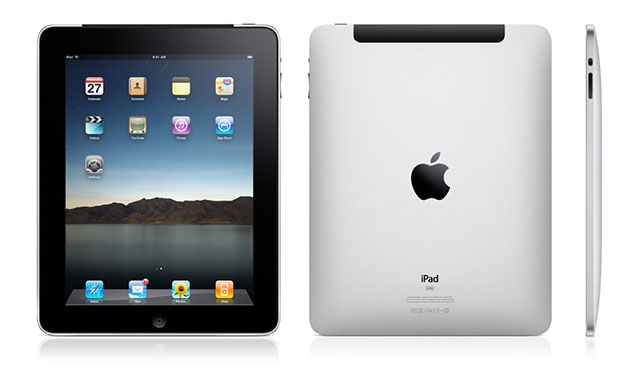
Comparing the Ipad 2, the Kindle Fire and a block of wood

I know everyone has been wondering about the similarities and comparisons of these three media devices, so I’ve decided to devote a column to examining just that. Now that Apple has had its Ipad 2 out for some time, Amazon announced its Kindle Fire to be released in November, and Home Depot has chopped up a block of wood into the size of a cube, I figured it was time to see how they differ from each other.

The Ipad 2: It’s a lot like a Star Trek data pad, and it runs on some kind of processor that may or may not have powered the space shuttle. It has been known to make really geeky guys very popular with hot supermodels, and the first time I turned it on, it made my IQ go up a whole 25 points.

Specs: It has a color screen, it has some funky icons on the screen that don’t make a lot of sense, but you can touch them and they do all sorts of weird things. Sometimes, when you’re not paying attention, it plays music, sometimes even from your own music library. One person who worked at the Apple Store referred to it aptly as “magical”, and that’s about all the information I have on it.

The Kindle Fire, of which I don’t have an actual picture because it hasn’t appeared in flesh yet, is a lot like the earlier Kindle, except more expensive and it does more stuff. It is also in color and from the picture seen, beautiful women have them on the beach, pretending to read them while they really sit there looking pretty, knowing that I’m watching and they’re not going to talk to me no matter what sort of line I come up with, like “Hey, Baby, I saw you over here, and I was over there, so now that I’m over here and, um, well, I, uh….” yeah, that’s how most of my pick up lines end up. Yeah, I’m not really proud of that.

Specs: Like the Ipad 2, it’s magical. It has little gnomes inside it that retrieve information for you from the Internet, and if you feed them well, they get you more information that you can use at a later time.


A Block of Wood. Surprisingly, this doesn’t compare well to the Ipad 2 or the Kindle Fire. It’s only value is the fact that it’s been around a very long time, and you can make things with it, like wooden Ipad 2’s and wooden Kindle Fires. But it doesn’t retrieve information from the Internet. It just sits there, doing nothing, like a stupid block of wood.

I really hate it. I wish I never bought it. Stupid salesmen and their Mad Men approach to selling crap I don’t need!

Will the Amazon Kindle Fire Defeat the Powerful Apple Ipad 2?

I’m reading a lot of blogging that is exactly this subject: Will the Amazon Kindle Fire defeat the powerful Apple Ipad 2? I’m going to go out on a limb and just say no. It won’t. But instead of treating this as an either/or situation, I’m going to talk about why the question shouldn’t be asked in the first place.

You see, the Apple Ipad is in a class of its own, a class to which no tablet has come close yet. The Motorola Xoom was released as the potential “Ipad killer” but it did no such thing. As a matter of fact, shortly after releasing the Motorola Xoom, the Motorola Xoom became the Motorola Xoom killer. It was decently constructed, had no apps made for it and relied on an app market that is woefully inadequate. To this day, I have a Xoom but I don’t use it for anything other than checking email at night (while my Ipad charges). Even when you found an app that might work for it, quite often it didn’t, and instead you ended up having to uninstall something you paid for (and couldn’t get paid back for if it didn’t work).

For months now, the talk has been all about the new tablet that was going to be released by Amazon. And it looks like it’s about to be released. Here are some of the particulars:

It has only wifi, it’s in color, and it has some apps it can run but they come mainly from Amazon’s online app store. It only has 8 gigs of RAM, and they’re not planning to up that on this particular model (although they might on subsequent versions of the model to be released later). Like I said, it has wifi only, so there’s no 3G, like you get for the main Kindle. And it will cost about $199.

Thoughts? The price is great. It serves as a great replacement for a Kindle if you already have one. It will do a few more things than a Kindle can do, like check email, and maybe play some music and videos (not sure on that last one yet, although details seem to point in that direction). What I really like about it is that now I can read books on a Kindle that has color (whereas I was reading my Kindle books on a Kindle app on my Ipad, because it was the only way to see color on a Kindle-bought book).

It’s not a replacement for the Ipad because it’s not as powerful as an Ipad, doesn’t do as much as an Ipad, and well, it’s just not an Ipad. It’s another Kindle, which will do what normal Kindles do, but be more like a Barnes & Noble Nook Color but not as dysfunctional as that product.

I’ll probably buy one. Do I need one? No. Not really. But I have a Kindle, and I like my Kindle. This will be a Kindle capable of doing more things than my current day Kindle, and I sort of like that. But it won’t replace my Ipad, which is still the one device I carry with me everywhere.

Monopolies, Greed and Treating Your Customers Like Crap

This morning, I was about to leave my apartment building to head to work when I noticed an 8 1/2 by 11 piece of paper taped to the exit door for everyone to read. It was a message from the apartment complex managers, indicating that anyone who was currently using the video services of U-Verse by AT&T must discontinue using it immediately because they are in violation of the apartment’s “contract” with some cable service called Suite Solutions. Not being a user of U-verse, I didn’t give it much concern, but then it had me thinking. What if I was a user of U-Verse and decided to get my television programming that way? What if I decided I didn’t like Suite Solutions (which I don’t) and chose to get my television programming through my phone line? What right does some housing complex or some cable operator have to choose how you get your television programming?

For the longest time, I’ve been receiving flyers in the mail from AT&T, promoting U-Verse as the answer to bad cable companies, and I just ignored the stuff because, to be honest, I don’t think television is all that worth subscribing to in the first place. While some people remained glued to their television screens every night they get home, I don’t think I’ve turned mine on to television programming in over 8 or 9 months, so to be honest, I’m not even sure I even have a television signal these days. And honestly, I don’t really care.

But what started to bother me was this anti-business message that was being pushed on potential customers by the people who manage the place where I live. It’s one thing if Suite Solutions was a good company, but let me tell you about my experience with that company. When I first moved into my apartment over two years ago, I chose that company to get my television and Internet service. At one point, I remember counting on a calendar to see whether or not it my service was down more often than it was actually up. I paid for the highest speed service, and when it worked, my download speeds were atrociously slow. I remember beating a download with my cell phone once (which ironically never actually succeeded with Suite Solutions because the Internet crashed during the download and didn’t come back up for another three days).

This was the company that my housing complex thinks that I should be emboldened to because they signed a contract with them somewhere in the past. Now, I don’t mind this being an option, but if they eliminate all of my other options, so that Suite Solutions is my ONLY choice, I think we have a horrible problem that really needs to be solved by the SEC, the FCC or maybe Elmo and the other characters of Sesame Street (they are notorious for advocating for consumer rights in the fantasies I have about Elmo and the gang).

Of course, no story about monopolies should be complete without a little bit of irony. I mean, we are talking about some unknown cable company using its monopoly to cut out the little guy, specifically a little guy named AT&T, who happens to be going through a little bit of monopoly trouble of its own these days. Now that the government has stepped in and told AT&T that it is creating an unfair monopoly by trying to buy T-Mobile, does anyone see the ridiculousness of some small cable provider shutting out AT&T through its contracted monopolies? I’m sure there are some people who are thinking this is a good thing because they just hate AT&T, but when AT&T becomes your alternative source to a crappy choice, something’s seriously wrong with this picture. I mean, I’m not exactly the poster child, greatest fan of all things AT&T. Just last week, AT&T refused to transfer my Internet service (not U-Verse) to my new apartment because of some flag that showed up with an old bill for $189 that HAD BEEN paid over two years ago; unfortunately, because it was so long ago, they couldn’t find a record of the situation, nor could they offer any way of alleviating the problem because the situation occurred too far back in the past to be solved by any simple transaction (like me just giving them $189 to make the problem go away). That’s the kind of problem you get from a monopolistic company that is so big that it can’t handle its own financial problems that emerge from its own lack of correct record keeping (you can always spot this problem when some customer service person tells you: “There’s nothing I can do about it. The problem seems to be coming from another area of the company that doesn’t exist anymore.”).

So, I ask, are monopolies good or bad for consumers? So far, my experience with them has been nothing but negative. You constantly hear economic pundits talking about how monopolies are good and how they drive innovation (or some other big proclaimed statement that has no basis in reality), but how do they really help us? Okay, there is one area, and that’s price, in that a company with a monopoly has the ability to lower the prices by handling all of the means of production and distribution, but how many times has that monopoly also gone the other direction, to where the only source of a product decides to raise its price because it realizes that no one else can fulfill the need? We’re kind of seeing that right now with Netflix, that erroneously thought that it was a solitary producer of content services so that it could pretty much do whatever it wanted to do by raising prices and splitting its company into two so it could eventually raise prices at its own leisure (possibly by raising it twice as much, as both companies can now raise prices as the same time, and thus, increase profits twice as fast). But what really happened was that Netflix realized too late that its customers WERE its product, not just the users of their product, and without customers, they have no income. I expect to see Netflix become the next Myspace in an era of Facebook.

For me, I have no real solution other than to boycott all of the products of companies that are hostile towards customers, which is why I gave up on Suite Solutions shortly after feeling like I was being cheated month after month. Fortunately, I am not a consumer of U-Verse, so I don’t have to worry about this proclamation from the emperor, but at the same time it also keeps me from ever wanting to do business with Suite Solutions again because instead of trying to compete with AT&T by providing a great customer experience and a good product, they decided to go the punitive route instead.

That companies never realize this strategy is a blueprint for failure is a footprint that forever haunts me. There’s a reason that message was tacked on our door like Luther’s 95 Theses. The company is failing to attract and keep customers, so it needed to crack down on anyone who decided to use alternative choices. Unfortunately, that strategy rarely brings in new customers or business. Instead, it leads you closer and closer to becoming obsolete. That this is 2011 and a company still doesn’t understand that is ridiculous. But why innovate when you can demand business? Need I say more?

Netflix Just Doesn’t Seem to Get It

Netflix’s CEO Reed Hastings seems to think that if he offers a fake apology, somehow his insulting rhetoric will somehow get replaced with applause. You see, a short while ago, Netflix had this “brilliant” idea of increasing revenue by splitting its company into streaming and DVD sending entities. What it didn’t do is actually consult any of its customers beforehand. Instead, it talked to them patronizingly, like an adult to a child, and told them that raising prices was somehow a good idea for all. And then out of the blue, yesterday, Hastings offered the infamous “fake” apology that companies are getting very good at offering these days.

What am I talking about? Well, you see when a company doesn’t really want to apologize, but wants everyone to think it has apologized so we can all see them as sensitive, it offers what’s referred to as the “fake” apology, which is a lot like breaking up with a mate by saying something like: “It’s really best for both of us that I dump you by stopping the car, letting you out in the middle of the most dangerous part of town and have you walk home alone. I’m sure you understand that I’m doing it in the interests of both of us.”

Hastings did that by indicating that he was “sorry” for how his message was received, not that he was actually sorry for raising prices, and pissing everyone off by treating customers like ten year olds being told it’s for their own good.

Now, Netflix has decided to up its apology to absurd proportions by completely splitting the company into two, creating some stupid-named company called Quikster, almost as if they polled the audience to find out what would cause the most people to jump ship, and the pot-smoking guy in the back yelled out: “Dude, Quikster would be so rad!” and they went with it.

I’ve been talking about the hemorrhaging of customers that Netflix has been suffering ever since they started turning stupid as a corporate business strategy. Years from now, the actions of Netflix will be taught in business management schools as the poster child of how to completely destroy your company overnight. The fact that they can’t see this is amazing to me. Yet, they keep making these types of moves, convinced that somehow its a sustainable process for growth.

As I mentioned before, as soon as I finish watching the television show I’m watching on streaming video through Netflix, I’m going to cancel my account completely, and I will never join again. I have to believe that I’m not the only person who feels this way, and at the same time there’s a sense of regret because a long time ago, I used to hail Netflix as the rebel child it was, thumbing its nose at corporate America and offering the public exactly what it wanted and felt it needed. And then it stopped doing that, and turned into Circuit City. If ever a study on anthropology was needed, the destruction of Netflix (or Quikster) so needs its own chapter.

With that said, I wish Netflix good speed at achieving whatever bizarre plan it is attempting to fulfill. Unfortunately, this time around, I will not be around for the ride. And unfortunately for them, most of their customers will probably resonate the same response as well.

Netflix is starting to realize you can’t be a people business & piss off your customers


Netflix is in a bit of a bind, but you wouldn’t know that from paying attention to anything the company is saying. Earlier in the year, they came up with the brilliant idea of raising their prices by cutting their services in half and charging customers for both (where they used to get both for the same price). Customers got angry. Netflix acted like the knowing parent, coddling children who are upset that they weren’t chosen for the football team (or to be cheerleaders). Customers got pissed because they really don’t like being treated like children when they’re actually customers.

I kind of got pissed, too. The patronizing remarks from Netflix’s leadership surprised the crap out of me to the point where I decided that if it benefited me in the long run, I’d jump ship at the first opportunity. I, too, hate being treated like a little kid, even when I might act like one.

To see it from the viewpoint of all of the analysts, the same point keeps being made: If there’s no viable alternative to Netflix, then Netflix can pretty much crap on its customers, and it’s still going to be all right. The more you read of this kind of stuff, the more you start to wonder if the reviewers are in the same world as the rest of the people who happen to be customers of Netflix.

What no one has addressed, and I find this probably the most significant factor, is that Netflix offers a service that is a luxury, not a necessity. As most Americans are seriously aware of economic constraints in a recession era, the idea that streaming video and mailed dvds are an added luxury might just be enough to cause a potential customer to think that perhaps the money might be better spent on other pursuits. After all, no one really needs movies and television shows. They’re nice and fun, but they are entertainment, not food staples or part of one’s housing needs. On the whole Maslow heirarchy needs thing, Netflix comes long after most of the other needs and desires have been met.

And that’s what I’ve started to realize recently. As I watch through the fifth season of Star Trek Voyager, a series I’ve seen a long time ago when it actually aired on television, I realize that I don’t really need to watch it. It’s an interesting way to occupy time, but I have computer games, writing, my health club membership, an untapped drug habit I could start at any moment, and all sorts of other activities that have been available a long time before television ever emerged. I could even watch network television (or whatever is on the free cable I receive). The need for Netflix is pretty low on the overall scheme of necessities.

So, I’ve been thinking that once Voyager’s run is finished (there were 7 seasons), I’m dumping Netflix completely. You see, Netflix has this belief that people will “respond” by switching to either mailed disks or streaming only (what they wanted in the first place), but there are 12 million people who may choose my option: Cancel completely and never come back. I was charged my first increased charge this month, and while I can afford it, I’m still angry at Netflix for the way it treated me as a customer. Because of that, I, like I’m sure many others like me, will dump Netflix and wish them well. They’ve already indicated in all of their press releases that they could care less whether or not I stay with them (because they expect to make bank based on the rest of the people who will be unwilling to jump ship). Well, fine. I just suspect that they haven’t read the tea leaves well enough to understand that when you cut out your bread and butter, you sometimes go without food.

But what do I know? I’m just a stupid sheep guy who Netflix doesn’t take seriously anyway.