Tag Archives: Internet

Me, the Internet & I

From Adobe Stock

Once upon a time, in an alleyway far, far away, there was a little boy named Duane who desired to have a web page of his own. Web pages were rare back then, kind of like squirrels, and birds, which aren’t real, so when little Duane decided to make this web page, he enchanted it with a special power, one that both told the truth and spelled words corectly. This was a great achievement, kind of like when Bob dated the head cheerleader during the senior prom game. We all remember what we were during on that night…crying and complaining that we weren’t Bob. Now, while Bob went on to such greatness as 5 to 20 in the county prison, and managed to get all 20 years of that sentence, including two extra years because the Warden just felt it was needed, most of the rest of us never achieved such greatness of Bob; most of us becoming doctors, lawyers, plastic surgeons and other made-up occupations we tell to girls when we meet them at bars and disreputable locations.

But little Duane wanted a web page of his own. He knew he couldn’t afford one, because to buy one took hundreds, and possibly thousands of dollars. So, little Duane bought a book instead. Actually, he bought four books: The Wolloping Wollaper, Fifty Shades of Grey, The Little Boy Who Bought Candy For His Neighbors (specifically as it was big enough to hide the first two books), and How to Make Your Own Web Page. When little Duane got home, he tossed all the other books and began reading How to Make Your Own Web Page almost every day he was awake. Not so much on the days he wasn’t home. He read it from page one to the very end. And then he read from the very end to the front and realized it didn’t make as much sense in that direction. But he read it that way because he suspected there were going to be secrets, and there were, but it was mostly secrets like .tnetnoc dooG .ti no tnetnoc tup dna egap bew a teG

Years later, little Duane created his renowned web page, the one read by famous people and criminals of all walks of life, revealing that there was a species of life walks that actually read. But that’s for another article.

Anyhoo, so I’m kind of getting off track here. What I really wanted to talk about was stuffed animals. (looks around) No one into that? Okay, I’ll try to continue with what I was talking about: Web pages.

My web page was online for close to twenty years now, almost as soon as the Internet was invented by Al Gore and Elon Musk in their laboratory next to their garage. It would have been by Steve Jobs but that loser was working in his garage trying to invent computers. Man, such losers.

But little Duane invented his web site and everyone around the world was simply amazed. I emphasize: Simply. So, if I did have something to tell you, it’s that two years ago, after 14 years and 599 posts, everything disappeared. I’d like to say the whole world disappeared because that would make one hell of an awesome novel. Come on, Stephen King, we need you now more than ever. But yeah, I went onto my web site one everning, and everything was gone. My web page, my Internet’s access, and I was staring at zero content. Nothing saved. Nothing to recall back on.

I was pissed, but I called my Internet company and told them the problem. The guy working customer service from India had both no idea how it happened and no idea what I was saying. I know that mostly the customer service at least speak English but after about ten minutes I started to suspect that this guy couldn’t even speak his native language. Cause I speak quite a few languages and I suspect that his was one of those. He couldn’t understand me, and I couldn’t understand him.

Finally, I got someone who did speak a language I understood (hint: it wasn’t English). I explained the whole dilemma to him that when I went to my web page (http://www.duanegundrum.com), there was nothing there.

So, I gave up. I would never have a web page again. I loved this web page, but it just wasn’t worth it. So I cancelled the auto renew feature and three months later, they charged me any way. How, I don’t know. And then they fought me through the payor service. I just couldn’t win.

A year later, for the fun of it (as I was still paid up for this web page, I contacted their customer service and got someone who actually spoke English, was really kind and friendly, and helped me fight crime wearing his own personal Batman costume. Okay, one of those three wasn’t real; man, he was mean and unfriendly.

He managed to get my web site running again. I think it sunk to a strange level of one of the nine hells. Possibly an unknown tenth levell that even Thor didn’t want to visit. But this guy did. Not only could he fight as Batman, but he found my web site.

So, what all of this is meant to say is that my web site is up and running again, and hopefully, none of Thor’s enemies are intending to knock it off line again.

I mean, why would they try. I got Batman on my side. You don’t f’ with Batman, even if you think you’re the Joker.
OnlyFans Backtracks on Its Plans to Ban Porn

When I first found out that OnlyFans decided to allow pornographical material to continue, yet subscribers are still deciding to jump ship, my first thought was: It’s amazing what happens after everyone decides to jump ship after you make a stupid, horrible decision. This is a lot like that one time I told my billionaire, bikini supermodel astrophysicist girlfriend we should probably see other people. Didn’t go the way I planned.

The point is: OnlyFans has a spotted history as it is, and then once it revealed it was pursuing the dollar in hopes of becoming more mainstream, and then losing practically all of its subscriber base, they retracted, they did pretty much what ever critic of the site has believed was going to happen as a natural stage of evolution. At some point, they were going to stab themselves in the foot and then wonder why it hurts so much to keep on walking.

What’s interesting is that OnlyFans didn’t start out as a site geared around promoting sex workers. It was designed as one of those sites that hoped to attract celebrities who would use it to communicate with their fans. And then a guy who ran a cam girl site bought a controlling interest and then pimped it out to the cam girls who used his site. In a very short amount of time, it became known as a sex-friendly site, and then the pandemic hit. The rest is, well, history.

The site would probably continue to grow (and still might) on the backs of sex workers, but as often happens in this kind of situation, the owners ran afoul of payment processers who refuse to have anything to do with this industry. And thus, the situation that emerges today (after the backlash of starting to realize that its bread and butter was starting to jump ship and those that they wanted to attract still consider the site to be one that is cloaked in porn.

But this isn’t the first time this has happened in the Internet era. Pornhub went through this problem before (and survived) as did, and might even again, Patreon. Similarly, years back, during the early days of the Internet, I was a web designer for an adult bookstore, and the Internet service company they used had been sex positive, as was the manufacturer of the bookstore’s shopping cart. Well, one weekend in the middle of the night, the bookstore owner received an angry communication from the company that made the shopping cart, calling her all sorts of derogatory names and indicating that his company could no longer continue doing business with a purveyor of filth, immediately cutting off all access to the shopping cart. Shortly after that, the web site provider also contacted her and said something similar, stating that their company refused to do business with a porn business. Keep in mind, both of these companies had been profiting from an association with her company for over four years before these announcements and there had never been any concerns in the past. As a matter of fact, they had actually gone through lengths to get her business in the first place.

So, almost overnight, I had to find her a new Internet web site provider and then ran into a wall of companies that couldn’t promise not to take the same action one day concerning hosting her shopping cart. So, I sat down for two weekends and crafted a shopping cart for her from scratch, coding it in PHP.

The point is: She took care of her business regardless of the resistance she encountered because she was both patient and had perseverance. On a slightly amusing front, the two companies (the Internet web site provider and the company that made the shopping cart) both went out of business a few years later due to lack of clientele.

So, that’s kind of where OnlyFans is right now. I’ve been reading very interesting asides from those in the sex worker community who have vowed to move their content to other sites, while a few others seem willing to stick it out. This action by OnlyFans may prove to be a make or break incident, but either way, it should serve as an excellent wake up call for other companies in the future that dare to buck trends. The market corrects, but it doesn’t always correct in a favorable fashion.

OnlyFans to Block Adult Content

Unless you’ve been living under a rock, the adult content site OnlyFans has made a decision to ban future content that is adult in nature. Taken on the surface, this seems like a logical step for a company that is trying to appear more mainstream, but after unpacking this story, it appears there’s a lot going on under the surface, and the results may vary and the owls may not be what they seem.

For those who deal with these types of subjects on the surface only, it seems very straight-forward, but if you listen to the responses from those in the industry, the rhetoric ranges from “the sky is falling” to “this doesn’t change anything from the status quo.” However, there are changes coming, and yes, they are going to affect some people more than others. So, exactly how?

Let’s just put it this way: If you’re already a sex worker content creator with a huge following, the change means very little. Most of the traffic for OnlyFans rarely came through the platform itself; people didn’t find content creators by searching the site (the site was never designed to cater to that process). Instead, sex workers who already had a strong following just advertised they were on OnlyFans and then the people who were already interested in their content went there for an easy process to access more of their material. For those types of creators, there are other services available that not only replace OnlyFans, but they were there long before OnlyFans emerged on the scene. So, those content creators will make do and continue to strive as before.

Where this change makes the largest impact is on the newest demographic: Young women who gravitated towards OnlyFans after the emergence of the pandemic. At first, the large swell of creators joining the platform were mostly adult workers who had very little (or no) Internet presence. As their physical, in person business model was drying up due to the fact that men were not as easy to translate into customers while people were dying from Covid-19, much of their “activity” they would normally charge for could now be converted to virtual interactivity that they could then share for monetary rewards. And what they quickly discovered was that because OnlyFans made it possible to build a lucrative following (as the customers weren’t just someone they met on the street who might never return), they now had repeat customers who could access their content at all times without them having to actually physically maintain proximity to their clients in order to provide services and then get paid.

Because this was both lucrative and quick income, it should not surprise anyone that young women who were probably never planning to become sex workers themselves realized that there could be a lot of money to be made if they, too, hung out their shingle in this marketplace. And almost overnight, starting with strippers and cam girls and then leading to moms and repressed librarians, women were actively engaged in selling promiscuous content to horny guys (well, to anyone, but mostly guys).

The one negative that always seemed to be in the background was the stigma of doing sex work, which for naive reasons young woman seemed to believe might never happen. But as their content was on the Internet, and there is no class amongst the people who subscribe to this type of content, they started to become very surprised when their content became widespread, and future aspirations (and that wasn’t sex work) because almost impossible because of the stigma attached to this occupation. Women, with occupations ranging from doctors to school teachers, lost their jobs when their employers found out they were previously sex workers, even though the women would often try to make the argument that selling pictures of themselves naked was not sex work and then disappointed when such protests fell on deaf ears.

There was a very interesting episode involving Kevin Samuels who confronted a group of OnlyFans girls about how they needed to start banking their money soon because the cash cow of OnlyFans was not going to last forever, and those girls treated him like a moron because this Internet celebrity obviously didn’t understand the business world as well as they did. Well, this announcement from OnlyFans just yesterday indicates that he knew exactly what was going to happen, and one can only imagine how panicked these girls must be right now due to such an announcement.

What makes this somewhat tragic is that such an announcement was inevitable. It happened with Paypal, it happened with Tumblr, and it has happened with so many types of business applications that started out by appealing to the sex worker industry just to get their foot in the door before abandoning that demographic and “going legit”. And as tends to happen with most of these companies, that act of going legit will end up being their downfall because they, too, are tainted by the stigma of being a platform for sex, which is why people will avoid it like the plague if they’re not actually attracting the element that made it famous in the first place. Imagine going to an exclusive club because it always had the hottest women and let those women in free (realizing that was going to bring in customers) and then decided “we’re big enough now that we don’t need to do that” and stopped letting attractive women in for free. So they stopped coming. So would their clientele because the reason they go to those clubs is because of the overabundance of attractive women in the first place. And then the business closes.

This is why nightclubs NEVER do that.

So, it will be interesting to see if OnlyFans goes the direction of Myspace as another company takes its place, or if it somehow morphs itself into something sustainable by hosting celebrities and cooking shows. As for the many women who made their future successes contingent on the platform, hopefully they prepared for this future, already were a sex worker to begin with and can compensate by finding incoming from other revenue streams, or bite the bullet and try to re-enter the workplace environment, hoping beyond all prayers that no one ever finds out about their steamy past. In this digital age, the integration of digital technology has become crucial for success in various industries.

All I know is that I won’t be their lifeline. I’m a lot smarter these days than when I was young and stupid.

That Whole Windows 10 Thing All the Kids Are Talking About

So, after about 10,000 notices from Microsoft telling me that my need to upgrade to Windows 10 is necessary to keep the planet from exploding, knowing that the infamous Jor-El might have doomed Krypton by not upgrading to Windows 10 himself, I decided to finally do it on my laptop. I’m not excited about it. And I’m not really anxious to use the new Windows 10, especially considering how every time I hear about Windows 10, it’s because either Microsoft has decided to go all NSA on its customers (recording and using all of their personal information, plus recording everything you do) or for some reason Microsoft decided to only support some drivers (basically whatever drivers that aren’t ones you need to run critical components that use the power of your computer). But I was getting tired of Microsoft “automatically” scheduling yet ANOTHER attempt to install Windows 10 on my computer. So I said fine. Let’s get this over with.

An aside: The last time I said “fine” over this matter, my laptop was incapable of downloading the new install, so the whole process failed. Not a good sign. This time, however, was much better as it didn’t even get to downloading the install file because it was incapable of getting past the “downloading updates” to reach the install phase of Microsoft Failure 2.0.

So, working my way around it, it is now downloading the upgrade (even though the install has downloaded the new operating system about 70 times while it was threatening to just install it without my permission. I guess when I give it permission, it then has to go through and download it again. Again, not a lot of confidence building on Microsoft’s part.

So, I’m now at 68 percent completion of just downloading the install. So, if my operating system gets replaced with Linux by some bizarre coincidence during this install, then I won’t be extremely surprised. A bit amused, maybe, but not all that surprised.

If Windows 10 installs, I look forward to wading through all of the advertisements that Microsoft thinks should now be a natural part of my operating system. I assume it will also delete my windows media player and offer to install a new one for about fifty bucks as well. I so wish to return to the days when you actually had to type C:\ and then “windows” or “win” in order to run Microsoft Windows, meaning it was your choice, not a default setting on your computer. I so miss those days.

Were We Really That Aware of History When It Happened–The Americans

the americans

One of my favorite television shows is The Americans, which tells the story of two deep cover KGB agents working in Washington, D.C., posing as a husband and wife. It details the happenings of the 1980s, during the Reagan Administration, which just so happens to be the final hurrah of the Soviet Union right before it collapsed and became a non-entity. One of the passions I have when watching the show is observing little things that I wonder if they got right, based on the time period where the story takes place. The other week, I was watching one scene where a covert agent was in a room with a bunch of telephones, and I started to wonder “when did the push button phone come into being?” According to a Wiki article, the push-button phone was starting to gain popularity in 1979, which means the show got that one right as well, as there were mainly rotary dial phones, but on the shelf there were a few push button phones. That sort of continuity and clarity constantly intrigues me on a show like this.

What I discover is that they get more things right than I’ve been able to figure they got wrong. But one thing that has been bothering me is a central premise of the whole show, and that’s that the secret stuff the KGB was after might not have been on the radar as much as the show would like us to believe. An example of this is the Internet, or better known as Arpanet back then. The thing about Arpanet is that while it was the forerunner of what was to become the “Internet”, at the time of its creation. For some clarification, the Arpanet started out as a four placed link between  the University of California, Los Angeles, Stanford Research Institute’s Augmentation Research Center, the University of California, Santa Barbara and the University of Utah’s Computer Science Department. Over the next few years, it reached the East Coast of the United States by linking to a bulletin board network (BBN) in Cambridge, Massachusetts in March 1970 and then in 1973 it made its first connection to the Norwegian Seismic Array. In 1975, it was declared operational when the Defense Communications AGency took control of it to handle advanced research. This is kind of where The Americans come in, as in 1983, the U.S. military developed (as a part of Arpanet), the Military Network (MILNET), which handled mostly unclassified communications.

The part I’ve had a problem with The Americans during this part of their focus is that I really don’t think even up to this point anyone took Arpanet all that seriously. Sure, we know what it is today, and the world couldn’t possibly turn again without the realization of how important the Internet is, but even in the 1980s, the people who were “embracing” the future Internet were mostly geeks who were experimenting with a different form of entertainment. The whole beginning of the Internet was a lot of bbs operations with little understanding of how this was going to lead to business, globalization and the future of immediacy politics. The birth of the Internet is the desire of computer scientists to link their networks with each, and until it went mainstream, there was little understanding how this was going to change the world.

Which is why I have a hard time believing that the Soviet Union was jumping in on the rise of the Internet back then. Even our own country didn’t know what it had until it was way out of its own control.

The other “technology” that The Americans have dealt with is “stealth” technology, which is what eventually became the invention of the stealth bomber and fighter. While I can see how the Soviets might have been interested in such a technology, it is important to point out that this technology was first introduced in 1945 when it was revealed that the German U-boats operated under “diffused lighting camouflage”, which is the introduction to dealing with this kind of technology, although the later versions tended to veer more towards fooling radar than people on the ground. As a former intelligence agent myself, I have to say that the one part of the equation that The Americans kinds of glosses over is how difficult it would have been for an operative to understand what he or she was seeing when dealing with this type of technology. Basically, you would need a physics master or an engineering trained agent to be able to recognize what it was he or she was looking at before he or she could figure out if it was ever worth stealing. Chances are pretty good that two scientists staring at the same evidence might have come up with completely different conclusions as to what it’s purpose actually was. We kind of run into the same thing today when we hear “weapons of mass destruction” and a nuclear scientist looks at a chemical weapons dump and thinks it’s relevant, but because of specialized training, he becomes the expert they rely on and he hasn’t a clue what he’s looking at. Same kind of thing.

One thing the show does get right is probably the opposite of what I just said a second ago. There was a great moment where the Soviet spies were looking at schematics and basically were clueless as to what they were looking at. More stuff like that would make the show so much more believable, but they went from that moment to somehow recognizing everything they saw as critical and I kind of lost that great feeling of seeing something done extremely well.

So, I guess my question I’m left with is whether or not we’re reinventing history when we see shows like this, because one thing I’ve noticed in historical narratives is that the narrator often wants to make the characters of his story appear much more knowledgeable about the subject than they might have been. Having dealt with the intelligence field, I can tell you that quite often people don’t get it. They make clueless conclusions because they try to fit everything to a paradigm they already understand, and quite often when dealing with these subjects, you have to go in with a blank slate and tabula rasa everything. But people don’t do that. They want to feel like they have the answers, and they’ll pretend to know until they’re proved otherwise, and sometimes even after that they won’t admit they’re wrong. That’s kind of the problem with science in general and why we have people to this day who still think the Earth is the center of the universe and everything else revolves around it. We think that because we rely on the science of an age when people didn’t know better, and there are too many people today who should know better but never will.

The Problem with Investing in Imaginary Goods

Today, Zynga’s stock kind of went into a tailspin downwards. Zynga, in case you’re not aware, is famous for building software that used to consist of games you could play specifically on Facebook. Then they went public, making lots of money and continued to try to make games (sometimes in Facebook and sometimes outside of it). At the time of their IPO, all I could think to myself was “this is a company that doesn’t really make anything that’s profitable.” Their profit comes from trying to get people to pay for virtual goods IN A FREE ONLINE GAME. While pay for play works in some venues, like MMO’s like City of Heroes and Lord of the Rings Online, people didn’t go to Zynga because they were interested in playing a specific game. Zynga, on the other hand, tries to interest people in their site and THEN trying to get them to play some of their games. And then if that works, they try to get them to pay money for the game they’re already getting for free.

Does anyone see a problem here?

Well, their stock is continuing to go down, mainly because their “hits” are very old, and they’ve never really done anything to convince potential customers that they have something just as good. Farmville was their famous property, and even though I played it at the time, I never invested a dime in the game, and after I grew bored with it, I stopped playing it and anything else Zynga had to offer.

Facebook, however, has been interlinked with Zynga since the beginning. Facebook gets a bit of profit from anything that Zynga makes from its transactions.

Which means I should probably talk about Facebook, too. This is another online company that has absolutely no value whatseover. Basically, it’s value is to get people to sign on and then tell other people who are signed on what they’re doing. Facebook offers nothing other than being the park bench where people are sitting.

When Facebook went public, it was already feared that there was no real revenue stream available from the company. All it really did was advertise, and it doesn’t do it very well. In its early days, I paid for an ad to sell one of my books on their site, and the results were horribly bad. I never paid for the service again. Instead, I got much better returns from places like Goodreads.com. Facebook, as people have started to realize, has a customer base that shows up, looks at traffic and then goes away. Some stay online forever, but they NEVER press any of the buttons that take them to the ads. In other words, Facebook has absolutely no revenue stream whatsoever when it comes to advertisements. The only way they could make money is to charge people for using the service, but once they did that, their service would become a graveyard.

This is the problem with companies that sell imaginary goods. Some, like Lord of the Rings Online, which actually offers something tangible (a lot of fun and a strong customer base that has remained with them for years, first as paying customers), Facebook and Zynga offer nothing really tangible. Zynga doesn’t even offer very good games. They’re casual games, which means that they’re meant to be played as you’re doing something else. Think of their games as almost an afterthought. Whereas, Lord of the Rings Online is a game meant to be played with your full attention.

Facebook, as well, offers nothing but a place for people to report their happenings. If you’re not a celebrity, chances are pretty good that not a lot of people (aside from really close friends and maybe family) really care. Even Google Plus, which does appeal mainly to following celebrities, isn’t all that popular, no matter how much Google wishes that weren’t so.

Facebook has a few days until its reckoning emerges. You see, they have to reveal to stockholders just how well they’re doing. I suspect they’re not doing well. With Zynga’s loss reported today, it’s only a matter of time before we hear that Facebook isn’t doing any better. And then their stock is going to go down really fast.

It’s unfortunate, but then we’re dealing with companies that have no actual value, other than perceived value and fantasies of being more than they really are. I like to think that their value is comparable to my ability to date Jessica Alba. Sure, it’s very possible it might happen, but she’s really an imaginary good (a really, really GOOD good), but the reality of my dating her is pretty dismal. That’s how I see Facebook and Zynga. Slowly, I’m noticing more and more people are starting to feel the same way.

Stupid Passwords

Years ago, when I was first learning a programming language (BASIC for back when it was practically the only language you could learn on the first personal computer, the TRS 80), I created a program and established a password system, because I thought this would be the wave of the future, where everyone would need passwords to get into programs. Turns out I was right, even though that doesn’t mean I was really all that forward-thinking, as it did seem kind of obvious at the time. Well, my first program I designed was a computer game called U.S. Air Force’s Strategic Air Command, and part of the beginning of the game required you to enter a password (yes, really exciting gaming I was making back then). I chose something I figured no one else would ever guess.

Well, another one of the kids learning computer programming with me tried out my program, spent a few seconds thinking about me, looked at the blinking interface asking for a password and then typed OMEGA. He guessed my password on the first try. Yeah, I felt really stupid, and to this day I still haven’t figured out how he did it, other than the possibility he was actually watching me when I coded it in back when I wasn’t really paying attention to who was stranding behind me while I was typing.

The point is: It was a stupid password.

Fast-forward to today, and Mashable has printed an article telling us just that: People still use stupid passwords. Their list (from Mashable) of the top overused passwords is:

  • 1. password
  • 2. 123456
  • 3.12345678
  • 4. qwerty
  • 5. abc123
  • 6. monkey
  • 7. 1234567
  • 8. letmein
  • 9. trustno1
  • 10. dragon
  • 11. baseball
  • 12. 111111
  • 13. iloveyou
  • 14. master
  • 15. sunshine
  • 16. ashley
  • 17. bailey
  • 18. passw0rd
  • 19. shadow
  • 20. 123123
  • 21. 654321
  • 22. superman
  • 23. qazwsx
  • 24. michael
  • 25. football

Yep, believe it or not, people are still using PASSWORD as the number one stupid password. The others are equally obvious, which basically make the point for us that people generally use things they can remember to be their passwords, which means that quite often the average user, being a nimrod, is going to use something that is going to be massively easy to crack.

For years, my own password process has really evolved, then devolved and then re-evolved after one of my overused passwords got broken into, and my email sent to everyone as spam mail. It’s amazing what people choose for their reasoning behind passwords, which is why for the longest time I was using the name of a password used in a movie about computers a long time ago. I even named one of my stuffed animals after that password, and for years, I kept using that, or variations of that name, as a password. Stupid idea, and let’s just say that my eventual evolution didn’t come soon enough.

Some of the other names on that list are ridiculous, and I’m embarrassed that people would actually make such mistakes. “123456”? Really? Or “abc123”? I can see “Superman” just for the nostalgia factor alone, but “qwerty” and “654321”?

Okay, part of me also has to look at this from another angle. Sometimes, I think companies we do business with create password situations for us that really don’t make any sense. I’m a lot more careful about my email and my banking information than I am with my Netflix queue or a password I’m required to make up for a job search service I’m only ever going to use once in my entire lifetime. The other day, I was required to fill in additional information AFTER my password that was completely irrelevant to me, meaning that if I ever had to challenge my information (to get my password back), I’m never going to remember the answers to those other questions they wanted me to come up with. I’m talking about stuff like “What is your wife/significant other’s favorite color?” As I don’t have a wife or a significant other, I’m mainly making shit up there when I have to come up with an answer. In one the other day, it gave me six different questions to choose from, and to be honest, anyone who had to answer one of those questions has a much different kind of life than I do because I don’t have a favorite sports team, a significant other (which was the subject of three of the six choices I could use), a maiden name, or even the middle name of my best friend (haven’t had a best friend in quite a few years now). What would make those kinds of challenge questions better is to let me make up my own question and then present my own answer. Otherwise, chances are pretty good that I’m going to be clueless whenever it comes to trying to figure out a one-time password that I am not going to remember, and no, I don’t write them down somewhere because that’s the one thing you SHOULDN’T do with passwords.

I think I’ve said about enough on that subject. Please enter your password, writing it in iambic pentameter, to continue to my next irrelevant point.

The Problem of Relying on a Dying Technology Company

For the longest time, I have had trouble finding an Internet company that both works and is somewhat affordable. A long time ago, I went through Comcast, and aside from atrocious customer service and a product that worked 33% of the time, it wasn’t half bad. But when I moved away from the place where Comcast served my apartment building, I no longer had access to that dismally somewhat okay service. Upon moving to Grand Rapids, I was stuck in an apartment complex that did some kind of sweetheart deal with a company called Suite Solutions, which I discovered had atrociously bad Internet service. I was lucky if I got a stable signal four days out of a week, and there were so many weekends where it went down on Friday and didn’t come back up until Sunday after midnight. I shut off Suite Solutions and never looked back.

As a result, I had to be a little more creative about finding an Internet service provider. Because this company was the one with the sweetheart deal, that meant you couldn’t go through any of the standard Internet companies. Therefore, I looked for other places where I could try to get my Internet service. My two choices really ended up being AT&T’s DSL service, which is generally a lot slower than most other Internet offerings, and a company called Clear Wire, which runs a satellite Internet service on the backs of the Sprint network.

For the last year or so, I’ve actually been using Clear, and even though they’re not the greatest service in the world, I’ve also started to realize that I’ll be lucky if the service remains working for another year or so. Clear has been losing money big time since it first started, and it just doesn’t have the ability to compete with any of the big boys out there. Also, for some reason their management seems to do pretty much everything wrong, and their ability to attract new customers has been horrid. Sprint has been talking about closing them down almost since the day I first signed on to using them.

As a result, the service has been kind of spotty. I suspect that the service is getting worse because they’re closing down their lines, but they don’t want to lose any of the revenue they already have coming in through the door. I suspect that they’ll keep going until they squeeze every dollar out of their customers and then they’ll pull the plug (probably the day after the last charge goes through my credit card account).

I’m kind of sad about this because it’s been kind of nice having an Internet company that was somewhat off the grid and pretty fast (it was a decent speed). But they need, or needed, more customers, and they had a horrible process of making that happen. If I wasn’t already a customer, I probably would avoid them like the plague, because they have really draconian policies about shutting off the service. An example is that even though I bought the modem outright, meaning there’s no leasing and no amount of money they’ve invested, they still force you to sign their entry agreement where they rake you over the coals when you try to leave, charging you a disconnect fee, like a cell phone does when you leave before finishing out a two-year contract. You really don’t attract people with policies like that, and even though the clerk promised me that I wouldn’t end up having to pay the separation fee if I left (because I bought my own equipment instead of using theirs), I know better, and know that when I finally leave, it won’t be without a fight.

But slowly, my Internet is going away. I’m probably going to switch to AT&T as a result, but that doesn’t mean that I’m not upset that this company couldn’t make it on its own. It’s one of those cases where a company that could have done great things was led into the ground by people who just didn’t get it. And I saw it happening. I would have said something if there had ever been anyone willing to listen, but you know how those things go.

The other day, I was driving by the office where I first looked at the service they were offering. The storefront was empty. On the door was a notice from the landlord, threatening Clear with legal action for not paying its rent. Not a good sign. Not, not a very good sign at all.

Comparing the Ipad 2, the Kindle Fire and a block of wood

I know everyone has been wondering about the similarities and comparisons of these three media devices, so I’ve decided to devote a column to examining just that. Now that Apple has had its Ipad 2 out for some time, Amazon announced its Kindle Fire to be released in November, and Home Depot has chopped up a block of wood into the size of a cube, I figured it was time to see how they differ from each other.

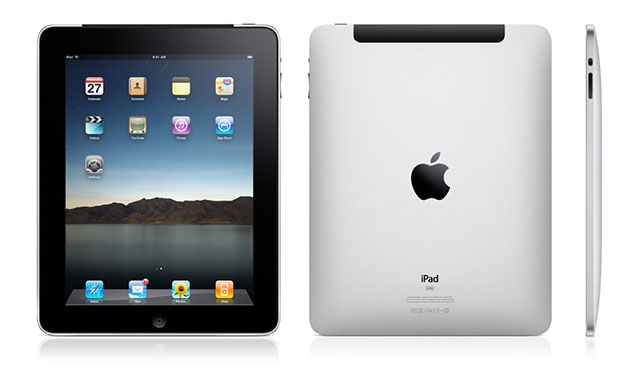
The Ipad 2: It’s a lot like a Star Trek data pad, and it runs on some kind of processor that may or may not have powered the space shuttle. It has been known to make really geeky guys very popular with hot supermodels, and the first time I turned it on, it made my IQ go up a whole 25 points.

Specs: It has a color screen, it has some funky icons on the screen that don’t make a lot of sense, but you can touch them and they do all sorts of weird things. Sometimes, when you’re not paying attention, it plays music, sometimes even from your own music library. One person who worked at the Apple Store referred to it aptly as “magical”, and that’s about all the information I have on it.

The Kindle Fire, of which I don’t have an actual picture because it hasn’t appeared in flesh yet, is a lot like the earlier Kindle, except more expensive and it does more stuff. It is also in color and from the picture seen, beautiful women have them on the beach, pretending to read them while they really sit there looking pretty, knowing that I’m watching and they’re not going to talk to me no matter what sort of line I come up with, like “Hey, Baby, I saw you over here, and I was over there, so now that I’m over here and, um, well, I, uh….” yeah, that’s how most of my pick up lines end up. Yeah, I’m not really proud of that.

Specs: Like the Ipad 2, it’s magical. It has little gnomes inside it that retrieve information for you from the Internet, and if you feed them well, they get you more information that you can use at a later time.


A Block of Wood. Surprisingly, this doesn’t compare well to the Ipad 2 or the Kindle Fire. It’s only value is the fact that it’s been around a very long time, and you can make things with it, like wooden Ipad 2’s and wooden Kindle Fires. But it doesn’t retrieve information from the Internet. It just sits there, doing nothing, like a stupid block of wood.

I really hate it. I wish I never bought it. Stupid salesmen and their Mad Men approach to selling crap I don’t need!

Will the Amazon Kindle Fire Defeat the Powerful Apple Ipad 2?

I’m reading a lot of blogging that is exactly this subject: Will the Amazon Kindle Fire defeat the powerful Apple Ipad 2? I’m going to go out on a limb and just say no. It won’t. But instead of treating this as an either/or situation, I’m going to talk about why the question shouldn’t be asked in the first place.

You see, the Apple Ipad is in a class of its own, a class to which no tablet has come close yet. The Motorola Xoom was released as the potential “Ipad killer” but it did no such thing. As a matter of fact, shortly after releasing the Motorola Xoom, the Motorola Xoom became the Motorola Xoom killer. It was decently constructed, had no apps made for it and relied on an app market that is woefully inadequate. To this day, I have a Xoom but I don’t use it for anything other than checking email at night (while my Ipad charges). Even when you found an app that might work for it, quite often it didn’t, and instead you ended up having to uninstall something you paid for (and couldn’t get paid back for if it didn’t work).

For months now, the talk has been all about the new tablet that was going to be released by Amazon. And it looks like it’s about to be released. Here are some of the particulars:

It has only wifi, it’s in color, and it has some apps it can run but they come mainly from Amazon’s online app store. It only has 8 gigs of RAM, and they’re not planning to up that on this particular model (although they might on subsequent versions of the model to be released later). Like I said, it has wifi only, so there’s no 3G, like you get for the main Kindle. And it will cost about $199.

Thoughts? The price is great. It serves as a great replacement for a Kindle if you already have one. It will do a few more things than a Kindle can do, like check email, and maybe play some music and videos (not sure on that last one yet, although details seem to point in that direction). What I really like about it is that now I can read books on a Kindle that has color (whereas I was reading my Kindle books on a Kindle app on my Ipad, because it was the only way to see color on a Kindle-bought book).

It’s not a replacement for the Ipad because it’s not as powerful as an Ipad, doesn’t do as much as an Ipad, and well, it’s just not an Ipad. It’s another Kindle, which will do what normal Kindles do, but be more like a Barnes & Noble Nook Color but not as dysfunctional as that product.

I’ll probably buy one. Do I need one? No. Not really. But I have a Kindle, and I like my Kindle. This will be a Kindle capable of doing more things than my current day Kindle, and I sort of like that. But it won’t replace my Ipad, which is still the one device I carry with me everywhere.