Tag Archives: Politics

No End to the Misery that is the City of Detroit

On Sunday, in Detroit, a man walked into a police station and opened fire, injuring four officers before being killed by the rest of the officers who returned fire. As of the next day, there has been no motive, explanation or even bizarre justification for his actions, other than he was some guy who walked in off the street and decided to pursue “suicide by cop.” Since then, there have been all sorts of commentaries, ranging from the expected to the outrageous. But what hasn’t been discussed at length is how much this should have been expected. I mean, no one expects these things, and when they should, they rarely do.

Detroit is one of those cities that ends up on practically every bad list that gets reported about cities in the United States. Literacy is lowest, crime is highest, murder is highest, corruption is constant, racism is everywhere (from expected racism to reverse racism), gang activity is amongst the highest in the nation, and the city is pretty much a cesspool and an example of what should not be done with a city if you want to achieve some sense of normality and progress.

The former mayor of the city is in jail, as are numerous members of its former governments. Crime is so out of control that people don’t even think about moving there; it’s on the lowest of the low lists for people moving to a city. Whenever a television show has something to do with Detroit, it’s almost always a gritty police procedural where people die, cops are on the edge, and there’s lots of gang violence. I have yet to see Meg Ryan looking for love in Detroit, although I wouldn’t be surprised to see some random hood beating the crap out of a suspect with a baseball bat because “dat’s how we do tings in da Troit!”

What’s interesting is that Detroit is one of those cities where if government really cared, it could actually use the city as a petri dish of improving urban despair all over the country. Other than Washington, D.C., and maybe parts of Los Angeles and New York, Detroit has pretty much everything going wrong for it so that a concentrated effort might actually make a very significant difference.

But no one seems to care about places like Detroit, except for the people who live in Detroit, and for some reason they don’t seem to matter. If you follow the politics of a place like Detroit, you notice that quite a few of the people running for office all run on the same types of platforms, about improving Detroit so people can be proud of it. But then a few years down the line, people throw those bums out because it turns out they weren’t interested in helping the city, but in helping themselves, usually to the coffers and whatever they can lay their hands on before they’re either caught or voted out of office. Even when they’re caught, quite often the masses will rally around the culprit, somehow claiming that going after a public official the people elected is wrong, that even though the person is corrupt and stole millions of dollars, he’s “their” thief, so the government should leave him or her alone. It’s often enough to cause one’s head to spin continuously at the ridiculousness involved.

Detroit is very much becoming one of those Mexican provinces where government has collapsed, and the drug gangs have taken over. The police are fighting a never-ending battle to regain control of the city, but like a proud parent, they just refused to believe that they’re really not in control. It would not surprise me to discover the culprit in this current case is some drug dealer who felt slighted by the police, and this is his way of striking back, or that he’s some trigger man for a drug gang that has decided to send a message to the cops.

Or he’s some delusional man who decided life wasn’t worth it, and suicide by cop was the easiest way out. Either way, there are problems in Detroit that need some serious attention. Unfortunately, the experts IN Detroit are obviously not the ones who are capable of handling the problem. They’ve been doing the same things over and over, hoping for different results (the Internet definition of insanity).

I used to drive through Detroit a couple of times a month, and it’s like entering a different world when you do. You go from the nice, grassy landscape, and then the journey on the freeway turns into dirtied concrete, and you realize that this is not a place that has any respect for itself. And why should it? It’s just getting worse and worse.

What’s going to happen over the next few days, and possibly weeks, is locals will point their fingers at what they’ve always pointed their fingers at, blaming unions, gangs, politicians, big government, little government, the auto industry, drugs, guns, overzealous police, underzealous police, and they’ll come up with the same conclusions they always do. But in the end, they’ll do nothing, hoping it was an anomaly that will never happen again.

Until it happens again, and then some reporter will start off a story with some ridiculousness like: “They never believed it could happen here.”

Watching the Right Television Shows to Come up with the Right Political Answers

The current state of these United States of America shows us not very united in the states of America. It’s pretty sad because for the last two hundred and some years, we’ve weathered some pretty strong storms that should have only made us that much stronger. You know the old line of “whatever doesn’t kill me only makes me stronger” which ironically is the only thing I have left from the woman I once loved named Marisha; it used to be her favorite line for reasons that are neither important nor all that interesting. Well, that line isn’t working anymore. We seem to be much more about divisive politics than any concept of working together for a better solution.

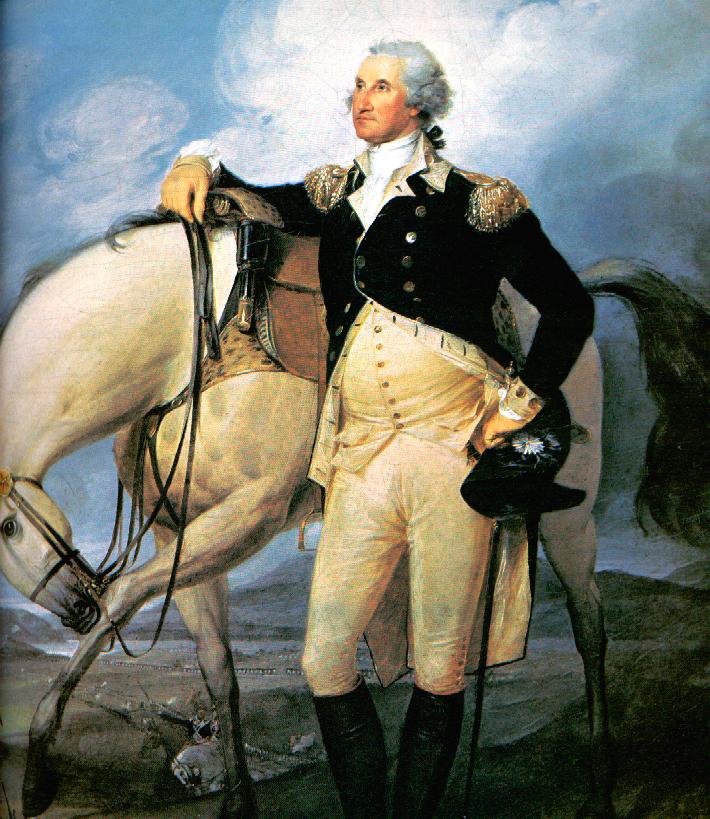
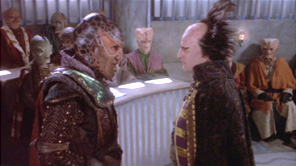
George Washington is the one on the right

The political writer, Morris Fiorina once wrote a brilliant book called Divided Government. In this book, he argues against common sense in that he shows through statistical examples that when our government has been divided, we’ve actually accomplished more in Congress than when we’ve been under united government. Unfortunately, his analysis wasn’t forward thinking enough to project what might happen when divided government becomes an unworkable government, when the divisions between both sides might turn out to be the destruction of government, rather than the process that allows time for “cool and deliberate reflection,” a concept once deemed that would lead to the “real voice of the American people” by George Washington in a letter to Henry Knox on September 20, 1795. Right now, we’re in a weird political process that is completely destructive and causes very smart people to act petty and stupid. When looking for leadership, which is what people do when surrounded by annoying destructionists, we’re finding all of our leaders have become ten year old children who think that pointing at the other kids and saying “he did it” is somehow what America is looking for in its leaders.

If one were to look for allusions and metaphors to explain what is going on today, I can find no better example than that of television, which is often referred to as either the “idiot box” or the mind-numbing device that causes people to stop thinking. Why should we be surprised that what we’re receiving from our leaders is nothing less than the ridiculousness that comes from stupid television shows anyway? Unfortunately, the metaphors that make sense indicate that we’re watching the wrong television shows in hopes of finding some kind of mechanism to lead us to a better tomorrow.

Right now, we seem to have leaders who have latched onto some of the worst television metaphors to dictate the types of actions they are emulating in our government. If you watch any type of television news, like CNN, MSNBC or Fox News, basically all you’re getting from commentators and pundits is analysis that sounds like Howard Cosell or John Madden describing some kind of football game where players are trying to create brand new plays by doing stuff that people have been doing for decades, yet seem to think that it’s all original. During the election, it was like watching professional wrestling, where oversized behemoths yelled “I’m going to get you, Hulk-man!” as they rip off their t-shirts and promised bloodshed of the like never seen before. But we have seen it. It’s called bad politics, and it leads to bad government and horrible representation. What these types of metaphors really show us is that our leaders are playing another zero sum game with each other where no one actually wins because each side is only focused on winning, not on what they get out of winning in the first place.

I’m going to include another television reference that can explain where we need to be going and how we should be looking at our current political dilemma. Before I do so, I apologize because I’m going to be calling on my geek nerd credentials to do so. But in the end, it will be worth it, so stick with me on this. I promise. It will be worth it.

The show I’m referring to is one that was developed by J. Michael Straczynski called Babylon 5. Without getting into all sorts of geeky crap about the show, I’m mainly interested in one of the races that was developed during the series, called the Minbari, a race of balding aliens who were also deeply spiritual. What made them significant in the show was that they were running around the galaxy for thousands of years before humans took to space, so they had a lot more time to really mess things up. Their government was run by a 9-member council that was made up of 3 members from the religious caste, 3 from the warrior caste and 3 from the workers’ caste. During the seires, the Minbari ended up in a civil war between the two more powerful castes, the religious and warrior. Why I’m discussing them is because their spiritual leader realizes at the end of their war (and the way to solve it) is that the religious and warrior castes had completely forgotten the most important caste to their civilization: the workers’ caste, the one that created all of their ships and buildings and was the one caste that suffered the most during the war fought between the two vying for power. As a result of this realization, their leader then elevated the workers’ caste to more positions on the council so that they would then be the dominant caste from that point forward.

These aliens didn't get along either, so their people ended up killing each other. Nuff said.

We have the same problem right now. We have two political parties who are fighting amongst themselves for power in our government, yet the ones suffering the most are the workers, the common citizens who don’t actually have a seat at the table, yet are the ones who are victimized by whatever decisions the two political parties make in their name. But these two parties have stopped being representative of the people a long time ago and now only really represent themselves, but claim to represent everyone else. But they do so in name only. Look at the events that have transpired over the last decade and that should be readily apparent to everyone. We’re fighting two wars that were picked by people in power who cared zero for what the common person thought about these wars. Yet the people fighting these wars are the common folk who make up the entire organization of the military that has no voice in the decisions the government makes for them. During this last election, the people were angry and spoke by using the only voice they have (the ballot box) and threw a whole bunch of people out of office because they haven’t been listening but speaking rather than listening. So a new group of people are now moving into office, and they don’t seem to get it either. Rather than realize the people sent them to Washington to get things done, their leadership thinks the people sent them to Washington to continue fighting with the government and again, getting nothing done.

So, let’s look at this from a different angle and treat government as a hospice where our goal is to treat the situation as triage. Perhaps if we look at it that way, we might realize what needs to be done to fix this problem. But I suspect that even with such an easy allusion, they still won’t get it. Or they just won’t listen. They’re pretty good at not doing that. But this triage is a blueprint to what people actually want done, even though I realize no one is interested in actually listening to the people. Think of this triage as Maslow’s Hierarchy of Needs, where we take care of our basic needs first and then work our way up to actualized desires once our struggle to survive is taken care of.

1. Our people need jobs. That’s been hurting us from day one. This means that the first thought should be to getting people to work. This doesn’t mean fast food jobs or retail jobs. We are a post-industrial nation that has a high-end technologically driven citizenry. This means that we need manufacturing jobs that develop high-end concept materials, like electronics, medical needs and computerized knowledge. This means government needs to help these types of industries grow and grow in our own country, not by farming out the manufacturing to third-world countries so only executives of these countries have jobs. We’ve done enough outsourcing as it is. We need stabilized positions in this country, which requires a serious focus on technological education for a workforce that has grown stagnant in building 20th century technology that is now being taken care of elsewhere. We need to focus on the 21st century and beyond by satisfying that market in a way that only our workers can do it. That means constantly being at the forefront of these markets like we used to do back in the early part of the 1900s with the previous markets of technology.

2. Once jobs are stabilized, we need to focus on making sure that people have money to spend. I’ll let you in on a little secret that government right now has no clue about (because they certainly don’t seem to get it). People don’t care about the budget. Politicians and government wonks do, but the average person doesn’t care about the budget. What the average person cares about is that the government doesn’t keep taking more of what they bring home from the jobs that they do have. This means that this whole budget mess that Obama, the Republicans and the suddenly backbone finding Democrats are fighting over is pissing off the average American. Right now, those out of work are about to lose their unemployment benefits that were about to be stretched out further. The fighting means they will now receive nothing. That pissed off a lot of people who still can’t find jobs (see number one). The second plank of the problem is the Bush Tax Cuts. People don’t really care that the rich are getting them, too. They only care that when January comes around they don’t end up paying hundreds of dollars more in taxes that they weren’t paying before. If you want to piss off the bulk of the American people, let those tax cuts expire.

This is the wrong time for the Democrats to suddenly rise up against their own president. They somehow think that people are going to believe they’re now on their side because they want to punish rich people. The average American isn’t going to agree with that. He or she is only going to see a smaller paycheck and then be really pissed off at the government. If you want to lose any mandate you think you have, that’s going to do it.

3. People want to see their government getting along. They don’t care that one side wins over the other. Most Americans aren’t that tied to the fight that they care. When they are suffering and see infighting, they see a system that doesn’t work. That makes them go nuts during elections, kind of like the last one. If nothing happens as we move towards the next election, people are going to revolt again. And when they start to realize that revolting doesn’t actually change anything, they’re left with one of two choices: Ignore it and become apathetic, or revolt the way people have done historically. That second choice seems like such a wild card that no one in government believes it will ever happen. Almost every revolution that destroyed a previous government came from nowhere and happened almost overnight. NO ONE sees it coming. And that’s what makes them so scary. So, continue to ignore the problems and hope they’ll go away, or do something about it.

What that means is our government representatives need to start looking at how to govern rather than how to zing the other side. If that doesn’t change, our government probably will. Just not as anyone wants, because changes of that magnitude rarely turn out as anyone actually wants.

It Takes a Village Idiot & Other Self-Serving Nonsense

Another election period is upon us, which means an endless stream of attack ads, empty promises and commercials about politicians who claim to be just like us but would never cavort with any of us unless it was during an election cycle. But what gets my goat the most is not the election pandering itself but one of the common refrains that just won’t go away. The one that says we’re doing it for the children.

You know the appeal I’m talking about. Someone will go off half cocked (or full cocked, or because someone did something involving a cock), and then state that he or she is doing what he or she is doing “for the children”. What they are really saying is that they’re doing for themselves, but they really need to sound like they’re doing it for a much higher purpose, and what purpose is higher than the generation that is coming up next?

In 1996, Hilary Clinton, who was First Lady at the time, wrote a book called It Takes a Village: And Other Lessons Children Teach Us. During the Bill Clinton Administration, it became a major talking point, and in 1996, H. Clinton went on a nationwide, ten-city book tour where she advocated that it takes a village to raise a child. I won’t get into the quandary that was the fact that H. Clinton really didn’t write this book, as it was actually ghostwritten by Barbara Feinman, but I did want to talk about a fundamental foundation of the book itself, and why it still continues to provide problems for modern day America.

One of the problems I have always had with the book is that it makes a specific claim that it never really backs up. Drawing from a spiritual African folklore idea, the book projects a belief that in order to raise a child in modern society, it requires everyone in the society to participate to make that child better. It also demands that all of the society’s resources be combined to bring forth the best children we can raise. That’s all fine and dandy if you have children, but it also makes a major assumption that a childless adult cares one iota about someone else’s children.

The book’s idea has been used a lot lately in projecting itself in political issues. Whenever there’s a debate about adult values being considered, quite often the argument gets placed back into the nursery sphere, and we’re arguing whether or not children should be subjected to influences they may not be ready for. Examples are music, videogames, television and movies.

Let’s look at those examples a bit. The first example was music, and look at how we’ve handled these issues in our modern day brush with this issue. It should not be surprising that one of the first avenues of contention occurred right about the same time rap music became a mainstream phenomenon. Next thing you knew, we had political commentators all over the country arguing that musicians (rap stars) were advocating all sorts of violence against police and state run institutions. In order to “protect” the children, we had to separate this horrific music from their ears. As such, people like Elizabeth Dole and Tipper Gore started advocating that music needed to be controlled because if it was not, then we might risk the future development of our children. That alliances occurred between such strange bedfellows as Dee Snider of Twisted Sister and John Denver against such actions is a testament to how deranged the attacks were in the first place.

Since then, there have been all sorts of continued attacks on the arts by all sorts of different “for the children” advocates. Computer games are constantly attacked by Jack Thompson, a disbarred Florida attorney, who has continued a Quixotic campaign against videogames that is so futile that he is continuously ridiculed by the Penny Arcade comic strip duo of Tycho and Gabe, even though he continues to threaten to sue them, causing them to humiliate him even further.

I could go on for hours about this sort of stuff, but the point of this post was to emphasize how fallacial the argument is that a village must respond to the needs of the few who advocate it takes a village to raise a child. And that’s where I wish to continue.

You see, the whole “it takes a village” crowd has managed to force itself into the decision-making process of a lot of things that directly affect adults who have nothing to do with children, and that’s just wrong. Part of the reason we formed a society in the first place wasn’t to protect the children, but to protect the adults from each other. As critical as it is that Hobbes, Locke and Rousseau compete against each other for why we formed in the first place, not a single one of them advocates that we formed for the purpose of raising kids but that our formation was for the purpose of how adults interact with each other. Somehow, with this whole “it takes a village” nonsense, we’ve kind of forgotten this.

Because of “it takes a village”, I now have to jump through hoops just to play a videogame. Now, I don’t have too much of a problem with most of the rules, such as having to be of a certain age to play a certain game, but those rules have developed other problems that do directly affect me. Because of these draconian rules for games, it is very possible that some of the games I would like to play aren’t even being carried by specific retailers. Wal Mart doesn’t carry anything that has the NC restrictions, because it figures that if kids can’t buy it, then it’s not worth stocking. But even though we’re talking about games, it should be pointed out that the majority of the customers who buy computer games aren’t kids, but adults. Yet, because of rules that exist because of kids, we’re limited in our selection by what kids would actually be able to buy.

According to the Entertainment Software Association, in a 2008 report, the latest one conducted, the average age of a gamer is 35, and only 25 percent of the player base is 18 or younger. So, we’re creating draconian rules for a small segment of the gaming population, yet 75 percent of the population is an adult who is limited in selection by these rules. To make it even more bizarre, it’s significant to point out that the average age of a purchaser of games is 40. I probably shouldn’t have to make the mention of the significance of that.

The significant assumption of the whole “it takes a village” thing is that everyone in society is required to contribute to the upbringing of a child. That’s relatively new and something that has been forced upon society by some people who I don’t think are revealing the whole story. When politicians use this mantra to get elected, and then turn around and don’t actually do anything that contributes to the upbringing and well-being of children, there’s a real problem here. Think about this. How often do women and children foundations have to struggle against any administration for a pittance of a budget when very adult endeavors get funded nonstop? After the Depression, married women convinced their elected husbands to start up a Women and Children’s Bureau, but once men in office set it up, they did everything possible to unfund it and eventually remove all of its teeth and capabilities. It only took a decade to completely destroy the foundation, and even though there’s a similarly named organization today, it is a shadow of its original purpose and is maintained more as a donations seeker than an actual organization that does the kinds of things it was imagined it would do back in the 1930s.

Which brings me to a very important subject to me: Me. Why should I care about the upbringing of someone else’s children? Because if you think about it, that’s exactly what’s being demanded of me. Sure, I like kids, but that doesn’t mean I want anything to do with them. I’m kind of like the hunter and gatherer guy from the Stone Age period (and not that much more intelligent sometimes). As the hunter in the tribe, my only interaction with little Johnnie is when little Johnnie is learning to become a hunter. Until then, little Johnnie is kept as far away from me as possible. He doesn’t get to go to the grub shop, or the ale house, and if he sees me on the street of our village, he should have been taught to say: “Greetings, good sir, Grokk” and then continue on down the street. He and I have very little interaction together. His father, whoever that is, is the one who actually raises him with his mother. Had I wanted a child, I would have had one, and then it would have been my responsibility.

You see, what I’m getting at is that Hilary Clinton’s book (that was written by someone else) argues that I’m supposed to present my resources and my time to raise her child. I’m sorry, but Chelsea Clinton doesn’t need Duane Gundrum raising her, or having anything to do with raising her. As a matter of fact, as a sidebar of this whole “it takes a village” crap, if I ever show up at Chelsea Clinton’s school to help raise her, the school administrators are probably going to call the police and make sure that I’m no longer allowed within 100 feet of a school, church or Chuck E. Cheese establishment. The point being: I’m only desired as long as I can provide resources. I, personally, am never invited into the rearing process.

So, if you get the point, the “it takes a village” is all about using my resources but doesn’t really want “me” to assist in any way. It’s all just a big shortcut at gathering resources for those who have children, like H. Clinton, and taking them directly from those who do not. That’s all “it takes a village” was really meant to mean. If I was ever invited to assist in the education of the child, it might be different.

The origination of “it takes a village” comes from an African source that actually wanted the village to participate in the raising of a child. The US version of the phrase never advocated for that. We’re really good at using some parts and discarding the parts we don’t like.

That’s why I think our version is really “it takes a village idiot” to raise a child because that’s what I’d have to be in order to participate without being allowed to ever participate in the first place. Like the reason I never got married, I’ve always felt it’s all about money, and I’d rather keep mine where it is.

Who Judges When the Government Goes Too Far?

In the northern, midwest part of the country there’s an interesting battle that has been taking place between citizens and government that most people don’t even know anything about. To be honest, I didn’t know anything about this until a colleague of mine was swept up into the bizarre, bureaucratic red tape and forced into some pretty draconian adventures with government and immovable government employees who are incapable of seeing two sides to any issue.

I’ll give you a link to an interesting article that was written in November of 2009. Imagine if you were planning to rent a room out of your home, and you were looking for a specific type of roommate. Well, as my colleague discovered, be very careful about how you designate what type of roommate you’re looking for.

In my friend’s case, he has a large home that costs a lot of money to heat it. Well, he had rented a room in his home to a family that brought in a lot more people than they indicated they were going to when signing the agreement to stay there. As a result, the heat was turned on constantly as there was always someone in the house, and the costs to heat his place went literally through the roof. He found himself almost unable to pay his bills each month because the heat bill was off the charts. And then the family left and decided not to pay the money owed for the heat, leaving him pretty much holding the bag.

So, when he decided to rent out the space again, he put forth a Craigslist ad and wanted to make sure this didn’t happen again, so he said he was only interested in renting to individuals, not families. If you know anything about how the system works from there, you probably know what happened next.

There is a group of people who must literally sit at home and read each new ad that goes up on Craigslist because immediately they contacted the regional branch of the National Fair Housing Alliance, which immediately declared my colleague guilty, requiring a cash payment and then a mandatory attendance at a discrimination seminar, which also cost about $300 and took place in Ohio, even though he lives in Michigan. So, imagine how my friend must have felt when he was now out about $700 for listing a room on Craigslist, when all he was trying to do was avoid someone cranking up the heat and literally forcing him out of house and home.

My colleague tried to get anyone to listen to him, but generally people don’t care. He, and I agree, felt he was railroaded through a system that didn’t even give him an opportunity to present his own side. He was literally guilty without a chance to even prove innocence, which in my opinion, should never happen in this country, but it does almost every day.

Well, something interesting just happened that puts an interesting wrench into his phenomenon. In Grand Rapids, Michigan, a 31 year old nursing student put up an ad on her local church’s bulletin board asking for a “Christian roommate”. As I’m sure you’re suspecting, she was turned over to the Fair Housing Center of West Michigan, a regional branch of the National Fair Housing Alliance. And, of course, the government treated her as a criminal without even considering any other possible circumstances or potential outcomes.

The difference this time is that unlike my colleague, this isn’t something that’s being taken without a fight. Remember, this was a religious act of “discrimination” so it should not come as a surprise that major entities are now responding in anger at a government entity that has no intentions of backing down. Nancy L. Haynes, executive director of the local Fair Housing Center, offers: “Our interest really lies in her getting some training so that this doesn’t happen again.” But as this is starting to become an issue that is getting the attention of some very powerful religious organizations and groups, one wonders if the government is really going to have the last word on this.

And I guess that’s the point of this. My colleague had no recourse, nor did he have anyone that was willing to advocate on his behalf. Basically, he was told he was in the wrong, and that under no circumstance would he be able to respond in any way that was not exactly as the government directed. Well, if the government caves on this, and they most likely probably will once very powerful entities get involved, then it’s important to look at this and start asking some important questions, like:

Is government answerable to the people, or is it as all powerful as it claims to be (at least in this case)?

If a powerful organization can change the dogmatic approach of government, then why isn’t there some kind of recourse for the average American?

And most important: How come these governmental entities do not have oversight that keeps them from acting as judge, jury AND the enforcement mechanism.

No one likes to be railroaded by government, but what’s even worse is being railroaded right before someone else gets treated completely differently because of powerful friends. That’s the origin of the pool corruption, even though most people won’t recognize it when they’re swimming in it.

Why the Democrats Are Having So Much Trouble in This Election

If you read the newspapers or watch that silly contraption all the new kids are talking about called a “television” set, you might discover that a lot of people think the Democrats are having a bit of a problem heading into the midterm elections. The blame is interesting. Some say it’s the fault of Obama for not living up to his expectations, or because he did things he shouldn’t have done (like that whole Health Care thing I keep hearing about from the intellectual minds of our time, like Sarah Palin and Christine O’Donnell). Others say it’s because the president’s party tends to lose seats any way during a midterm election, even though two of our recent presidents didn’t (but who pays attention to recent facts when it comes to spouting off statistical information that is out of date?).

But I have a different perspective that might explain why the Democrats are losing seats, or at least are heading into the election with the prospect of losing both the House, and possibly the Senate. I say this knowing that both sides will completely disagree with me, even though I’m right, but this happens every election, and then when it comes to me saying, “I told you so”, everyone lies and says they knew it already, even though they were saving the complete opposite right until what I predicted actually happened. I’m not even going to make a prediction here. I’m just going to tell you what’s already happened, which is pretty funny because people are so good at putting their fingers in their ears and singing “lalalalala” no matter how much they should just listen.

The Democrats are heading into this election losing seats because of two factors. The simple one is obvious. People are pretty pissed, and they need to lash out at someone. The Democrats are in charge of the presidency, the Senate and the House, so who do you think the people are going to lash out at? The Republicans who aren’t actually in charge? Even if the Republicans are responsible for EVERYTHING that’s wrong right now, the people don’t see that. They see who has power and that’s who they’re pissed at.

Now, having said that, I should also point out that the statistical phenomenon of people voting locally but being angry nationally should have actually saved the Democrats from a massive retribution from the people. Unfortunately, another vector is involved in the equation, and that’s the one that I think is making all of the difference.

You see, when Obama ran for president. he was swept into power by a dynamic force of change that was promised by a lot of his biggest fans. I’m not talking about his own team, or even Democrats in general. I’m talking about a lot of people who were so pissed off at the US because of the Bush Administration that they were so enamored by an outsider that they started to invent godlike status to his name. When Obama was swept into office, it was less of an election and more of a piety-filled coronation. People who wanted him were so in love with him that they made it out like he was no only going to do good things, but he was going to usher in a new age for America so that we would be the new Camelot on the hill, and every nation would worship this nation, and its new messiah for all of its greatness.

The media fell into it as well. The articles that were written about him were so gushing that I was beginning to be sickened by the coverage, and I was actually a fan. It was this admiration of him that completely threw Hilary Clinton under the bus, leaving her almost a roadkill on the way to the White House.

Well, those people who bought into this illusion started to wake up when they started to realize there was nothing glowing about Obama but the fantasy of what he was going to be doing. None of the great things happened. Even his biggest legislative achievement has been seen to be so controversial that almost everyone who ushered it in wants absolutely nothing to do with taking credit for it. Right now, Obama is helping his fellow Democrats by sending out his wife because she’s more popular than he is.

The problem the Democrats have right now is that they have a sobering electorate that now needs to be mobilized the last few weeks before the election. How do you do that? How do you convince a bunch of formely drunk drinkers that they need to go out and do it all again, except this time they have to pay for their own beer, and we’re going to be carding everyone going in and breathalizing everyone on the way out? You really can’t.

Instead, they’re facing an election where everyone is having to fend for themselves, and the only record they have to rely on is the one that everyone realizes was part of the drunken party atmosphere. Let’s face it. The Democrats haven’t done anything to gain the advantage going into November other than to not be the Republicans. That’s a pretty shitty herald to have to hang on your head going into an election.

The bigger problem is that the country is waking up to the fact that our elected leaders are a bunch of lawyers who are really only interested in what’s best for themselves. The promises don’t yield results, and the business of politics has shown itself to be a pretty sick animal.

Unfortunately, the people also realize that they’re left with a choice of two candidates in most races that are pretty crappy. And people aren’t really excited about yet ANOTHER election where the better of two evils is the electoral choice. There’s a very poignant Simpson’s episode where two evil aliens are discovered to be the real Clinton and Bob Dole during the 1992 election. Someone yells out: “I’m voting for a third party” and one of the aliens laughs at him, saying: “Sure, throw away your vote!” That’s where Americans are today, and it’s probably not a great position to be in if you’re walking to a voting booth in November.

Now, a voting critic would probably then say, don’t vote, but that’s not my advice. If you find that you abhor the candidates, go into the booth and vote for the issues that are of interest to you. Not every issue in an election is a vote for a candidate. Take advantage of your right to vote, go in there and vote for the issues that mean something to you and then leave the candidate crap blank. When someone here’s you complain and asks you if you voted, you can say you did; you just didn’t vote for any of the shitty choices that you were given. Until this country enacts a law that says you have to have 50 percent of the population vote for you, and not just the majority of the people who bothered to show up, then we might have people in office who realize they have to do something to actually earn a vote. But I don’t anticipate that happening any time soon.

My Blueprint for Fixing the American Political System

One of the problems inherent in trying to fix the American political system is figuring out what’s wrong with it that needs fixing in the first place. Often, these arguments get bogged down in partisan politics that end up with someone claiming that getting rid of the other side, or something equally as ludicrous, is the solution. I’m not going to argue any of that nonsense. Instead, I would like to tackle this subject as objectively and as usefully as one can.

First, the political system in the United States is not broken. There. I said it. Which might make you think that this discussion should be over, and then we can all get back to our Dancing With the Stars and Lindsay Lohan meltdown watching. But no, there’s more that needs to be said here.

I’ll repeat: The political system in the United States is not broken. It works just as it was designed. This should not be surprising to anyone who understands politics. Political systems are designed to work in a certain way, and even the most corrupt systems are designed correctly. It’s what’s done with them that matters the most. And that’s where the problem with our system comes in.

I’ll let you in on a little secret. The US system was not designed to work with this many people. It was the perfect system when we designed it because our government was really small. So was our population. But both have grown over the last two hundred years and some change so that our ability to do a lot of the things it was intended to do has diminished. When we first started, a member of Congress represented about 30,000 people. Today, a member of Congress represents about 703,0001 people. There have been no indications that anyone in government has any intentions of increasing the number of representatives, nor in addressing this particular issue. The main reason for this is because if more representatives were added, it would cut down on the power that current representatives yield. Asking a politician to give up power is like asking a child to give up his or her toys. It’s not going to happen.

And that’s where our problem starts. No one in government is willing to do anything about changing the problems, and I mean most problems, not just the first one listed here, because it would threaten their current bases of power.

So, let’s look at a few ideas I have for how we could make changes to make our system work, and then after I go through and tell you why it won’t happen, I’ll then address how we can actually make it happen, something no one seems to ever want to discuss. Unfortunately, most of these issues tend to get bogged down in the first two thoughts (what needs to be done and why no one will do it) and rarely do we entertain the actual process of how we can actually make it happen.

So, here we go.

1. Term limits. The biggest problem we have in government is the corruption of those who have the most power. The way to end the corruption is to remove people from the ability to overuse that power, especially for their own benefits. Term limits do just that. Why don’t we go there? Well, politicians who don’t want to lose power are very good at convincing people that the system stops working if their expertise is not involved. Yet, if a politician dies, a politician replaces that politician almost overnight. That argument has no merit whatsoever. What they’re really telling you is that they need you to believe they are expendible, but they’re not. Get rid of the incentive to pay off someone who is going to be in power for decades, and you end the ability for that person to become entrenched in a power base.

But that’s only a small start.

2. Lottery elections. Remove the elective influence of lobbyists, and you end their power forever. A lottery is a system where anyone can be chosen for a job. Politicians love to try to convince people that you need to have skill to be a politician. You don’t. Anyone can be one. That’s why the qualifications are so low. When we started this whole government, we put people into power who had very little political experience. Political experience is gained quickly once in office. Once you remove the throngs of politicians from the political mess, you no longer need experts capable of navigating through the mess because the mess disappears when the “other” politicians aren’t there to have to be cajoled to do what needs to be done. You don’t need an expert to maneuver through a series of amateurs if there are no longer political experts to have to worry about. Term limits eliminates the experts. Lottery elections make it so anyone can serve in government.

And that’s the important part. Serving in government should be a service, not an occupation.

3. More representatives. That should be a no brainer. As long as you don’t have people protecting power bases, you send more people to government to represent you better. Right now, my congressman has no clue about me, nor does he care. Nor will he care, even if I try to get him to care. I’m not already powerful, nor am I rich. Therefore, I am unimportant to him. That needs to change, but it won’t as long as we continue doing the things we’re doing. Being a representative should be like jury service, except it lasts for a few years. If you can’t afford to leave your occupation for a few years, you can take your name out of the election hat. Simple as that. Except, unlike juries, people tend to want to serve in government (which is why we have elections right now), so we’d probably actually have a lot more people willing to put their name in the hat. Well, let’s fix juries as the same time. If you want to serve in government, you also have to serve on juries. You don’t get out of one if you want to serve on the other. Might make the country a bit more interesting.

4. Change our system of government to that of proportional representation. Our winner take all system doesn’t work with so many people right now. We need proportional representation. We’re one of the only democracies, or representative democracies that doesn’t have PR. I find it pretty funny that when the US goes to a foreign country and helps them establish a new government (like we did with many Eastern European countries after the fall of communism, and during the Cold War itself after World War II), we almost always install a PR system, not our own. Why is this? Well, because ours is too complicated, and as diplomats have argued over the years, a winner take all system like ours is too easy to lead to corruption and dictatorship, or a dictatoral oligarchy (Aristotle’s aristocracy that has turned corrupt).

An interesting story, but when New Guinea was switching from a winner take all system to a PR system, they were suffering from horrific apathy of voting. After the switch, numbers that were in the 20 percentile, went up to the 90 percentile of voting participation. It dropped back down to the 80s and 70s, but that’s still well over twice the percentage we get in the US.

Okay, so what are the problems of converting to these simple little ways? Well, the people already in power today won’t do it. The two political parties say they represent the rest of us, but the second you threaten them with a potential loss of power, they argue that they are the true representatives and won’t even discuss it. PR is not even on their radar. Nor is lottery voting. If it threatens their power, they aren’t interested.

That’s why it will never happen by trying to install change from within.

This means you have several options for the future.

1. The first option is business as usual where nothing changes. People will continue to have less control over their political lives and will constantly be voting for the lesser of two evils. The only change that will ever take place is if some demagogue comes along and rallies the country to move in his or her direction. This is the kind of thing that has led to Hitlers and Mussolinis. Not really the best directions. It should be said that when you move towards a dictatorship, only two have ever really been considered enlightened and beneficial towards the people. One ended when the leader gave up government freely and went back to plowing his farm. The other never ended and led to dynasties that lasted nearly a thousand years, and the benefits were really only received by the aristocratic class anyway.

Without the dictatorship, things will continue to move forward as they are, and eventually the system will collapse through economic ruin. But if we’re lucky, it won’t happen in our lifetimes.

2. The second option is revolution which causes an immediate, violent change. I’m not a real advocate of this direction, although some revolutions, like the Velvet Revolution, were not very violent, but there’s no way to know how that’s going to happen until you let things run their course, and once a mob goes on its own, no one has control of it to keep it civil. So, you get whatever happens.

3. This is the option I think is probably the best, and that’s change through government. We have two ways of changing the Constitution, because in order to do anything of this magnitude, that’s what’s going to have to happen. One way is a constitutional amendment, but that requires getting those in power to actually change things. Probably not going to happen.

The other way is a constitutional convention, which is a huge gathering where everything is put on the table. With a huge grass roots movement that gains enough steam to call for one of these, the changes can happen. But this would be the only way to do it.

Unfortunately, there are two obvious problems. One, is that you don’t know that you’d have enough of a following to create the change you want, and the second is tied to the first in that a constitutional convention is a dangerous vehicle that might change things far more than you originally intended. We’ve only ever had one constitutional convention in this country, and that managed to completely change the government as we knew it (we used to be under the Articles of Confederation…the constitutional convention created our current system of government). So, you could be opening up a whole big can of worms.

But as things are right now, perhaps a new can of worms is exactly what is needed. To let things go on as they are is foolish.

But I suspect that’s exactly what we’ll do.

1(source: Reporternews.com)

A Few Comments That Need To Be Said

I thought I would take a moment and just make a few comments that need to be said. Unfortunately, only my stuffed animals read my blog. Well, my stuffed animals and my imaginary girlfriend…from Canada…and maybe that mysterious group of government assassins who have been trying to replace my nonfat milk with soy products, but you probably get the point.

1. If a news article is ever written about me that includes the phrase, “and police searched the wood chipper for signs of the body” then let’s just say that I’ve probably reached a saturation point of relevance and should immediately be put to sleep. Or if police were searching the wood chipper for signs of ME, then let’s just say that I’ve probably got worse problems than anything I might complain about on my blog.

2. I’m convinced Craigslist has no further relevance or importance now that they have removed the adult ads. I’m sorry, but it has no purpose any more. I attempted to put up a personal ad the other day, and it never showed up. The system said I did everything right, but it just never made it to the production side of the house. This has convinced me that all the site was ever really good for was advertising fake personal ads that were really a cover for underage girls selling sex to dirty old men and local law enforcement. Or it was local law enforcement trying to pretend to sell potential sex to dirty old men to put them in jail for wanting sex with underage girls. Or it was NBC trying to snare dirty old men trying to find sex with underage law enforcement officers, or something like that. Either way, underage girls were involved and so were dirty old men, so do the math, and you can probably figure it out. Let’s just shut down Craigslist for good. It doesn’t make sense any more.

3. No politicians are honest. At all. Oh, they talk a good game, but they’re really only interested in pretending to be something they’re not so they can get a job they probably don’t deserve. We should force them to create Craigslist ads instead, and then we can hire the underage girls to run our government. I’m just saying….

4. The “check engine soon” light on your car is a boldface liar. It doesn’t want you to check your engine. It wants you to bring your car back to the dealer so they can charge you $99 to tell you that they need to charge you $299 to replace a sensor that tells you to check your engine soon. What they’re really doing is replacing the light in the sensor so that it will go off two days after you leave the dealer’s shop. Mine did. And now it goes off for a week, goes on for a week, and then repeats the cycle. There’s nothing wrong with the engine, other than it has a faulty sensor that keeps telling me to check the engine soon. Or perhaps my engine is just lonely and wants friends. Maybe I should get a sensor that goes off whenever I’m in public that says “check duane soon…he needs friends”. And then people can pay me $99 for me to tell them they need to pay me $299 so that I’ll tell them to pay me $99 very soon.” I’m just saying….

5. The lives of celebrities aren’t important to the rest of us. It’s one thing to follow the news and be interested in celebrities. It’s another to have it thrown in our faces nonstop as if it’s important. I was tuning into the news the other day, and the point-counterpoint was all about Lindsay Lohan and Paris Hilton. I’m sorry, but there’s the economy, the wars in Iraq and Afghanistan, the election around the corner, and all sorts of actual news stories that are really news. We really don’t need too political partisans going back and forth about what kind of role model Lindsay Lohan is presenting for young girls who don’t even know who she is because she hasn’t been relevant in about a decade now. Same with Paris Hilton. Since her last actual television reality show, she hasn’t been relevant, significant or even interesting in a very long time now. The people who remember her are no longer capable of being influenced. The ones who are capable of being influenced really have never heard of her and probably think she’s some old woman who their parents might have found interesting. It’s amazing how socially irrelevant celebrities become in a few years.

6. The publishing industry sucks. No two ways about it. I get so discouraged trying to make it as a published novelist, only to find out that Snooki or Tyra Banks is being given a huge publishing contract to churn out drivel that my pack of monkeys (who write Shakespearean sonnets…remember them? The ones who if they write enough gibberish will eventually duplicate a Shakespearean sonnet) could have written just as well. Bah, I get so upset at this sort of thing.

How Do Anarchists Vote During an Election?

There’s been a lot of talk about elections lately, and whenever that happens the topic of voting tends to rear its nasty head as well. For people living in western societies, where they tend to be heavily weighted towards voting, there is a certain satisfaction that comes from the concept of enfranchisement (voting). Unfortunately, the concept of not voting is rarely given the respect it deserves, and quite often the idea is seen as horrific and counter-productive. I’d like to take a moment to talk about just that.

It’s understandable why not voting isn’t given a whole lot of respect, and we don’t have to go much further than history to figure out why. Throughout most of the history of us as a people, we’ve been struggling for the ability to make our voices heard. More often than not, the people in power have done everything to control who gets a say in the bigger picture, and the years have been a series of steps towards allowing everyone the ability to be properly represented when it comes to making decisions. In the olden days, kings made all of the decisions, and the people who chose kinds were the rich, elites who controlled pretty much everything. Fortunately, we don’t live in that sort of dynamic any more.

Or do we?

In the old days, a group of elites would get around and decide amongst themselves who should be the next king. Sometimes, they emphasized these decisions with violence, but in the end it was usually a class decision, often supported by economic clout. Today, anyone can run for office, and those people are decided by the whims of the people. However, it should be pointed out that so few of us have any say so in any of these decisions whatsoever. Quite often, to even be considered, a candidate must already be known by enough people to make it onto the ballot. In order to do that, the potential candidate must already be part of the elite class itself, because so few others have even a smidgen of a chance of being recognized by others when it comes to elections. This means that economic clout is necessary to get a person recognized, and before you know it we’re right back where we started with economic elites pretty much deciding who gets to run for office, and even more important, who gets taken seriously. We’ve even gone so far off the deep end that a number of our future leaders are choosing themselves based on their own economic clout, buying their ways onto the ballots, and because they have such connections already, we’re left to choose between them and other people considered viable by other economic elites.

Now, let’s take the argument even further, and let’s look at it from the perspective of someone like me, someone who hates the very nature of power itself. You see, I have a real problem with people who want to be considered the elites over the rest of us. I don’t see my elected officials as people who are trying to help me, but I see them as people who see themselves as special, who see themselves as individuals who think they deserve to rule over others. Because elected office is simply that, a vie for power. No one ever took a position of power because he or she was trying to be one of us, but quite often someone will pretend to be one of us in order to become lord of us (the recent debacle of Christine O’Donnell is exactly an example of that where she has been trying to say that she is “us” in hopes of ruling over “us”). Sure, every now and then you get an enlightened, potential leader, but most of the time it is some person who has felt that his or her education and experience makes him or her worthy of vying for power. And then once in that position that person becomes untouchable and set apart from the rest of us.

Don’t get me started on the eventual move towards dishonesty and corruption, but that seems like a natural progression that I think psychologists could easily link between the typical behavioral patterns of someone who seeks power and someone who abuses one’s position. I’m not surprised that so many of our leaders of government come from the professions of law and business.

But what this means to me is that I’m not a fan of anyone who purports that he or she should be representing me because honestly, no one can best represent me but me. And I wouldn’t in a million years ever say that I would be the best person to represent other people because I only know how to represent my own interests, and yes, I would be just as corrupt as everyone else out there in politics, because I would mainly be looking out for what I consider my own best interests. Sure, I would want to help people and do good things, but that doesn’t mean I deserve to be in power any more than the guy who sweeps the street outside where I work each day. What makes me more worthy of power than that guy?

Yet, a whole bunch of people think they deserve to go into government to make decisions for the rest of us. I find this wrong. I feel that any time someone decides to vie for power, that person should be feared because I have yet to come across a politician who was really interested in the desire to help another person by personally sacrificing one’s own well being, because that is what would be necessary for me to believe that a politician can best represent me. Instead, I find almost everyone of them to be much more interested in assisting themselves, and if you’re lucky enough to be part of the rising tide of those boats, then you’re going to benefit as well.

So, I find myself not wanting to participate in elections. Yet, I’m constantly condemned because I say I don’t believe in voting for the people running for office. People heard me complaining about the Bush Administration, so they tell me I should be voting for Democrats. But Democrats aren’t all that interested in doing anything specifically for me, unless I happen to be lucky enough to benefit in specific things THEY want for themselves. The last two years haven’t been all that great for the country, but then that doesn’t mean that the Republicans are going to make things any better for me either. They’re interested in taking care of their own, much as my definition of any politician would fill. So, voting for any of them is a useless cause because I don’t believe any of them should be in power to begin with.

So what is a quasi-anarchist to do? There are no solutions to this problem other than to compromise and give up on what one believes because the status quo isn’t going to offer anything better.

What would make things better, in my opinion? A lottery of elections. I don’t have a problem with people serving in government. I have a problem with people wanting to be in power. But a lottery would make it available to everyone, and anyone. But that will never happen because the people who want power will never give up power to the masses.

You see, I believe in democracy. If we lived in one, I think it would be the greatest government we could ever have. I just don’t believe in the fantasy we try to sell ourselves about what we think is our democracy.

But I do vote. I vote every election. I just don’t vote for people. I go into the booth and choose the yes and no votes for issues I find to be important enough for me to want to decide. That’s democracy to me. But whenever I see a name behind a position, I ignore it.

I just wish people would stop condemning me every election because I don’t want any of the people that want me to vote for them.

Poverty is getting worse in America, but no one seems to care

It was reported again today that poverty is getting worse in America. The info came from the Census Bureau this time. Seems that in 2009, poverty jumped to 14.3 percent from 11.3 percent in 2000. Unemployment is also worse. Yet, you wouldn’t know this from the pundits who want to do everything to convince us that everything’s fine, or everything’s just on a downswing, just waiting to start swinging back up to prosperity.

But there’s no evidence of that. We’ve had a couple of HUGE stimulus packages and MAJOR bailouts of industries and banks. Hasn’t done anything but make a few more millionaires into mega millionaires, and the job outlook doesn’t look any better, and poverty looks like it’s becoming more of the norm.

So what are we supposed to do with this information? Riot in the streets? Jump off the nearest bridge? I’d like to know because I don’t really have an answer. There are two political parties in power that will continue to be in power NO MATTER WHO GETS ELECTED, and these two parties are acting like it’s no big deal. Oh sure, they’ll complain if it might get more of their people into office, but in reality, they don’t care. Because everyone of them have jobs. We’re paying for them. They have jobs pretty much for life because the system is designed to keep them in power and to allow them to decide how much we get to pay them. We, on the other hand, have little to no power, and we have to listen as they argue about how much they should be able to charge us for the privilege of letting them serve on the government payroll.

Oh, we can get upset, but it won’t do any good. They’ll still be in power no matter how mad we get.

And people will still continue to get poorer, and the jobs will continue to disappear from us because the corporate heads of most companies have discovered there’s profit in not paying people. There’s even profit in bankrupting your company, cheating all of your customers, and in some cases, pretending you have a real company and charging people to rip them off before they go bankrupt themselves and the criminal gets even wealthier.

No, there are no jokes in this post because there’s really nothing funny about it. Those who might actually be reading this will just file it away to never be used again and then go back to wondering about whether or not Lady Gaga will wear something bizarre during her next television appearance. Instead of paying attention to who really runs the country, they’ll think about who they want to vote for on the next American Idol, or who to vote off the island.

Meanwhile, the poverty rate will continue to rise, and unemployment will continue to dip, while someone in government (doesn’t matter which party) will spin it to make it seem like everything’s better, even though everything’s not.

Kind of sad. I’ll close with a picture of cute puppies because that’s probably more important to people anyway.

Solving the Middle East Problems is like Dating a Supermodel Who Sees You Only as a Friend

It’s 2010, and politicians are still trying to solve the “Middle East Crisis”, and they’re doing so by doing exactly what everyone has done before and hoping for different results. As we all know by now, by the overused analogy by Einstein, doing the same thing over and over and hoping for different results is the definition of insanity.

We really need to face it: We’re not going to solve the crisis in the Middle East by doing what everyone has tried to do in the past. Getting people to talk is not a solution. It’s not even a stop-gap until we come up with a solution. One side hates the other so much it wants to kill everyone on the other side. The other side is so angry at the other side for hating it throughout history that they’ve pretty much resorted to the same tactics of killing those guys as well. Everyone involved remembers EVERYTHING bad that ever happened, and wants justice and retribution for every bad thing that happened. Neither side remembers a single bad thing they have done, so they don’t seem to see any problems but the ones being caused by the other side.

A major part of the problem is that everyone who tries to negotiate peace does so as if everyone involved has the goal of actually achieving peace. That’s not what they want. Maybe 60 years ago that might have been the case, but some decades ago, it became much more about achieving small, specific goals. All peace negotiations were centered around not achieving those goals in hopes of achieving peace. Bad idea. Not sustainable. Obviously, because now they’re back to killing each other again.

So, how do you solve the problem? Well, here’s what you don’t do: Don’t act as if getting them back to the negotiating table is actual progress. Both sides are usually willing to talk. Neither side is actually willing to do anything to create an atmosphere of peace. They both want their own gains and the demise of the other side. You really don’t have much room to negotiate when it comes down to that.

So, again, what is the solution?

Work it out over time by investing in the future of both entities. This means just giving up on the current actors involved because face it: They’re not going to do anything to further peace. But that doesn’t mean their offspring can’t be influenced. But you have to do it by setting a new paradigm and a new way of looking at things. You also have to go out of your way to not engage the parents in any way, to show future generations that we don’t reward bad people for doing bad things. Until we start to engage this way, we’re always going to be stuck with the current generation that is only going to continue to think in the ways of the erroneous past.

So, how do you do this? I mean, the parents are still around. You can’t just ignore them, right? Actually, I think you can. That’s not to say we can’t still engage them in the hopes of getting them to see the light, but we should go into every negotiation with the belief that the parents are really the problem, so we’re probably not going to achieve any success from them any way. However, we should constantly let it be known that we’re investing in their future, not in them because we’ve already seen that no matter what we do, they’re just going to screw up the future regardless.

This doesn’t mean we just disengage. What it means is that we take a different approach in all things foreign affairs. Our goal should be to start influencing neighbors everywhere by a process of dealing with foreign countries on an honest, straight-forward approach. I know this is a lot different than the old CIA-overthrowing dictators technique we used before, but it may take a generation or two to convince people of our resolve, but once on that path, we’d have a chance of influencing the rest of the world in a new way of handling international affairs. This might also bring to the table the future generations of these countries in the Middle East whose parents we gave up on after realizing that they are never going to understand anything but hate.

I know I’ve made a lot of jokes on how to handle international affairs (Puppy Diplomacy and the Elmo Theory of Containment), but I’m pretty serious about this. I originally called this approach the Friendship Over Time (FOT) Theory, and it’s a mathematics-based foreign affairs approach that involves iterative contacts with countries rather than incremental approaches and our current method of unilateral tit for tat (but never following it up) diplomacy.

As the title of this post indicates, our current process is a lot like dating a supermodel who is only capable of seeing you as a friend. It sounds like a great idea, and it might make you look good when you’re out on a date, but in the end, you’re going to go home every night hating yourself, wondering why she can never see you as anything better. For women, it’s a lot like dating me. Okay, that doesn’t make sense, but I assure you there’s a really funny joke in there somewhere.

Right now, Secretary of State H. Clinton is trying to make a name for herself by deluding herself into believing that bringing the Middle East heads of state to the table is actually accomplishing something. Instead, what it is going to do is set up a new process of disappointment that will most definitely lead to hostilities, broken promises and further deterioration of potential peace in the Middle East. I really wish people could see that instead of leading us down a false path of hope, thinking that somehow people who hate each other are somehow going to change their natural way of being.