Tag Archives: new technology

Battling Through the Trenches of Publisher’s Row

"I read all of Duane Gundrum's books because he's so dreamy...."

In case you aren’t aware of it, there is a war taking place. I’m not talking about Libya, Afghanistan or Iraq. I’m talking about the war that is currently waging over the publication of books. What war? You say. Well, let me explain.

For years, in order to get published, you sent out your work to a publisher (or an agent in hopes of getting a publisher), and if you were very lucky, you might get a bit of an advance. Sometimes, those advances were for decent money. Around the 1970s and on, they started getting really small. Kind of dismal, actually. Unless you were already a famous author, like Stephen King. So, you would get about $5,000-$10,000, and then the publisher would take 18 months or so to create your book. Then it would get released. If it started to sell, great. You would receive about $1.67 for a $20 book for each sale, the publisher keeping pretty much everything else. After all, they were the publisher. That $1.67 would continue to knock down the amount of the advance you received until you actually started to make what are called royalties, which would be additional money the book made after you paid off the advance. Most books tended to not even make back the advance, so you were generally lucky enough if you made somewhat of a decent advance.

Well, recently, the publishing industry has kind of been turned on its side. E-books are becoming the new “in” thing, and strangely enough, publishers are still maintaining their dominance in the industry, because they are still the power brokers they used to be. In other words, in order to gain any attention whatsoever, you really needed the publisher to get the attention out that you had published a book. So, not surprisingly, publishers have been publishing e-books, too, and still taking that outrageous amount off the top, leaving writers with very little profit, even though the costs for publishers have diminished to almost nothing.

Something new has started to happen, which is turning the whole industry on its side now. Writers are going directly to the readers and selling their books without the publishers. And needless to say, this is causing a bit of a stir in the whole industry. Publishers need the writers to survive, and so they are doing everything possible to diminish the positive experience for writers, so that publishers still remain the power brokers that they have always been. Unfortunately for them, that model isn’t going to last that much longer.

The publishing industry is a lot like the music industry, and its current dynamic is going through a revolution much like the music industry has recently gone through as well. While there are still seriously powerful music leaders in the industry still calling shots, a lot of artists have gone directly to the Internet with their work, and are bypassing the profit model previously established by the RIAA and other such top-down industry leaders. This has caused all sorts of problems for the industry, but it has done wonders to present new opportunities for artists who may never have received an ounce of attention before.

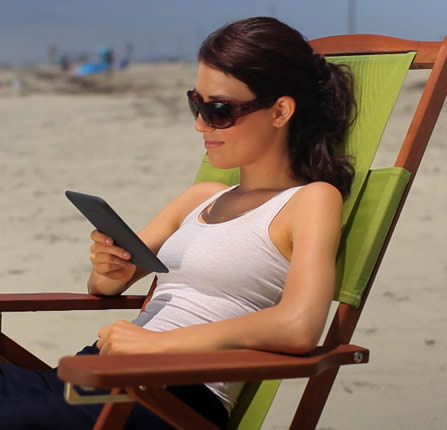
Move this into the publishing world, and you see the same sort of thing happening there. The publishing industry is still in control right now, mainly because the model hasn’t completely developed yet. Online booksellers, like Amazon, Apple, and somewhat Barnes & Noble, are producing their own e-readers that allow writers to push their content to eager subscribers. However, the battle currently waging is who is going to control the process flow from this point forward.

The publishing industry is counting on its enormous clout to push their agenda forward. They have already pushed back against Amazon (which has forced the others to comply) where they forced the increase in the cost of books being sold on the Kindle. You used to be able to get brand new books for $9.99, but now you’re lucky if you can get one for $12.99. The game changer in the first battle was Ken Follett’s new book Fall of Giants, which publishers forced Amazon to sell at $19.99. The backlash against the book has been interesting as Kindle users included all sorts of bad reviews for the book based on the price alone, taking what would have probably been a five or four star reviewed book down to an average of about 3 stars. What’s interesting is that his reviews on this book tend to resemble an upside down bell curve, with 301 5-stars and 327 1-star reviews, with a tiny amount filling in for 2, 3, and 4-star reviews. In other words, the critics either really liked it or really hated it, and there’s no doubt that the really hated reviews come specifically from people who are pissed off at the price.

If this was the end of the fight, you’d think that the publishers pretty much won, but like most great stories, a new sliver has been added to the mix, with writers being that added variable. Writers, realizing that they need to somehow be able to take advantage of this new technology, have started to show up sans publishers (being their own publishers), and they’re starting to include their own novels at much lower cost than the publishers are forcing down the e-market’s throat. Rather than stick it out at $9.99 (or push it up to the publisher’s price of $12.99), writers are now starting to introduce their books at the $2.99-$4.99 range, providing a more comfortable area for readers to purchase on impulse alone. Some of the more prominent writers, instead of using their fame to push for $12.99, like the gas station economic model the publishers are following (one raises the price, the rest follow), are listing their books at $0.99. According to some of the better known writers doing this, they’ve pointed out that because of the amount of people willing to buy a book at that low price, their profit has actually been better than if they tried to sell their books at higher prices. The economic implications are staggering, the more you think about it.

The biggest problems facing the writers right now is how to actually get anyone to pay attention to them in the first place. The one thing publishers have going for them was that their clout actually got books into bookstores, and without that clout, an unknown writer is essentially that, an unknown writer. If no one knows you exist, the chances of selling a book are dismal, at best. So, right now, the battle has halted, as both publishers and writers realize they’re at an interesting crossroad where both can benefit, but neither seems willing to budge. Publishers aren’t interested in giving up their high percentages they receive for “publishing” books while writers are no longer interested in giving up the entire store just to get their work out there. Which means that once writers figure out how to jumpstart the system in their favor, the whole publishing industry is going to go the way of the recording industry.

But what can a writer do to become marketable without already being a famous writer who was selling books already? That’s an important question and one that I’m spending a lot of time studying.

I’ll let you know once I figure it out.

Twitter: The Technology Everyone Uses Yet So Many People Hate

Recently, I’ve gotten into the whole Twitter thing. Before that, I was strictly a blog guy who swore he would never really get into Twitter. But a few years back, I opened up a Twitter account because I’ve always been one of those “well, everyone else is doing it, so I should, too” kind of guys. Like most people who join Twitter, I followed a few people, waited for the throngs to follow me, realized no one was going to follow me and then just stopped using it. I figured, like so many other people do, that it obviously doesn’t work because it wasn’t working for me.

Yet, since then, a few nations, including Egypt, collapsed because of the use of Twitter. No matter how I tried to ignore the story, it was HUGE, and the fact that this strange technology was used to bring down a powerful dictator really was hard to pretend it wasn’t this massively large elephant in the corner, practically taking up the whole room. So, recently, I decided I would go back into the technology to see if maybe I might have been missing something.

What I have discovered is that there’s a lot of very interesting information that gets shared on Twitter, but you have to be patient to realize it. If you go into the game with the thought that you’re going to get instant satisfaction or quick results, you don’t understand Twitter. And I didn’t understand it. Now that I’ve started to follow a bunch of people, I’m starting to realize that it’s a pretty interesting way to view the world. Therefore, I’ve decided to give some advice to those of you who may be thinking about getting into it yourself.

1. Follow people you are really interested in knowing more about. This is really important because one of the mistakes I was making was trying to “sell” me and then getting people to start following me. It rarely happens. It actually looks desperate, and who wants to follow someone who is the equivalent of the loser in a bar trying to pick up on anything that walks in? No one does. However, what I did start to discover is that because I’m a writer, and I’m interested in all things writing, I’m going to find a lot of interesting people to follow who actually might have useful information. You also quickly discover who is just there to use it as a marketing tool and who is there to use it as a communication vehicle. Some writing Twitterers I followed, like Publisher’s Weekly, have interesting information they share with their followers. Others, which I won’t name cause this isn’t really a “diss” kind of article, weren’t all that helpful and turned out to be really annoying more than anything else. The hardest thing I found myself having to do was unfollow someone, but sometimes, you need to just because the amount of spam that someone clutters up your channel with can be overwhelming, especially when it’s not helpful.

2. Some people are on Twitter because their egos need to be checked. A lot of celebrity Twitterers are like that, and it’s unfortunate. But it also tells you a little more about them and lets you realize that you’re probably better off avoiding them. One person I started following in the beginning was Felicia Day, who is the creator of the series The Guild. She doesn’t Twit that often, but when she does, it’s usually interesting and worth following. About half of what she has to say is interesting. Mindy Kaling, however, who is the girl who plays the Indian girl on The Office, I thought would be interesting and funny to follow. Personally, she’s not. I found her attempts at humor to be really attempts to try too hard to be cool, and pretty soon I’m probably going to unfollow her. An interesting celebrity I’ve been following has been Wil Wheaton, who is the man who played Wesley Crusher on Star Trek: The Next Generation. I haven’t come to a decision on him so far, as I’m suspecting he’s still looking for validation, as I noticed when some of the senior members of the Star Trek franchise were twittering and left him out, and he actually made a bit of an appeal last night, practically begging for attention. He’s an interesting case because he tends to float between a Felicia Day (interesting to follow) and Mindy Kaling (not worth the time). So the jury’s still out on him. However, it should be pointed out that if you’re hoping to be followed by a celebrity, or even have one actually pay attention to anything you write in response, it rarely happens. I used some of my best funny material in responses to Felicia Day, and I was pretty much ignored, which is probably no different than it would have been had I met her in public. Unfortunately, the lowly among us remain lowly.

3. If your goal is lots of marketing potential, then yes Twitter is a great tool to use, but you’re going to have to put in a lot of work and a lot of time before it ever pays off. If you spam your messages into the channel, people will dump you in a heartbeat, which means you have to use the technology to actually communicate. And like most avenues of communication, if you’re only projecting and not listening, people stop listening to you. Granted, the celebrities still get attention because they’re celebrities, but the average person, like me, is only really going to get attention as long as he has something interesting to say. So if you’re just there to build followers, you’re going to have a hard time unless you can provide something interesting to say. I started off with very few followers, and slowly, I’m building a bit of a following, but I’m not fooling myself into believing I’ve somehow tapped into the Duane-amaniacs. Therefore, I have to make sure that what I have to say is as interesting to me as it is to them, kind of like regular writing is. People avoid spam and really want something interesting to read. Otherwise, why follow you?

4. The social implications of Twitter are huge and have already proven themselves to be excellent. Like Egypt discovered, Twitter gives the average person a voice he or she might never have had before. When people were looking for information about Egypt and the revolution, well, that was an audience just waiting to hear what had to be said. Twitter was perfect for that. What happens to that Twitter audience now is probably even more interesting, but I doubt too many people will study that as researchers always look for that pivotal event, not the continued ramifications of a pivotal event that has run through its play in the media.

5. The complainers and the critics. There was an interesting article today on CNN’s site about the 5 ways Twitter changed how we communicate. What was even more interesting were the comments from the readers. Most of them were from what I like to call the old grandfather who lives in the house that no kid likes to go near, constantly yelling, “damn kids, get off my lawn!” Rather than read the article and be interested in the new technology, the haters showed up and posted responses like Shawn777: “Twitter? I don’t even use that crap” and Guest119 ‘s “200 years from now, provided humanity doesn’t blow itself up with nukes, Twitter will not even be a footnote in tech history.” My personal spin on this is that the majority of the complainers are people who tried it out on a weekend, didn’t get a million followers and then figured it was a dead technology.

6. What is the future of Twitter? Who knows? Certainly not me. I’m pretty late getting on the bandwagon as it is anyway. I do know that somewhere down the line another technology will replace it and be the next “in” thing. I’ll probably be late for that one, too. But right now, Twitter is serving as an interesting way to communicate, and as a writer and a communications professor, it’s hard for me to continue to ignore it.

For the record, if interested, follow me on twitter at DuaneGundrum.

Finally, Pornography Will Have a Presence on the Internet

Yes, after years and years of nothing but clean, wholesome information, pictures and overt religiousness, the Internet is FINALLY going to be able to show pornography. Up until now, as we all know, there’s been a huge dearth of porn-related information on the World Wide Web, but thankfully forward-thinking individuals have figured out how to bring us smut, sex and all things of the prurient interests. It seems that the .com addresses have made it so difficult for pornography to make it way to the mainstream, so entrepreneurs designed what’s called the .xxx address to showcase specifically porn-related information.

In all seriousness, what’s interesting is the current debate over whether or not the inclusion of this address for online pornography will just provide an ability for companies and nations to just block the .xxx site completely, which will lead to x-rated content being pushed right back to the .com and whatever other addresses they can think of to circumvent the censors of various governments and private individuals.

However, what’s also significant to point out is that those who advocate pornography on the Internet are also quick to mention that by adopting the .xxx address feature, this will allow adult websites to operate in an area where they can circumvent a lot of the negativity that also tends to migrate aongside pornography sites, like trojans (be nice…you know what I mean), pop-ups and a lot of other illegal activity.

Years ago, when I was first designing web sites, back in the days when there weren’t a lot of web sites yet created, the first group that moved onto the World Wide Web was the adult industry. A few of my early clients were tied to that industry, ironically enough attracted to my work that I had done designing a few church sites (the porn people came from those churches, seeing the advantages of this new technology). Ever since those days, there has been a tendency for unsavory types of tag alongside the adult community (not necessarily because they were part of it), and it has been very difficult to separate such folk from those who were just interested in providing adult content without the illegal activities as well (the gangsterism, not the illegal stuff that is deemed bad because of moral beliefs).

Personally, I don’t see the .xxx feature being all that productive, as that industry is constantly mired in bad behavior from the lazy criminal elements that see it as easy money. Believe it or not, there are two groups of individuals who make up that industry, and quite often the good people who are just interested in providing material for consenting adults get overwhelmed by the illicit behaviors of those who are out to separate people from their money at any cost. Unfortunately, that unsavory element is the one that always provides a bad name for those who are not like that, and no matter what the good people do, they’re always tainted by the crap pulled by those who have no qualms about cheating, stealing and doing whatever it takes to make a fast buck.