My friend Jason has an interesting discussion going on about politics, the media, and the rest of us sheeple. Read it here.
Monthly Archives: March 2013
A couple of new covers I created for the fun of it

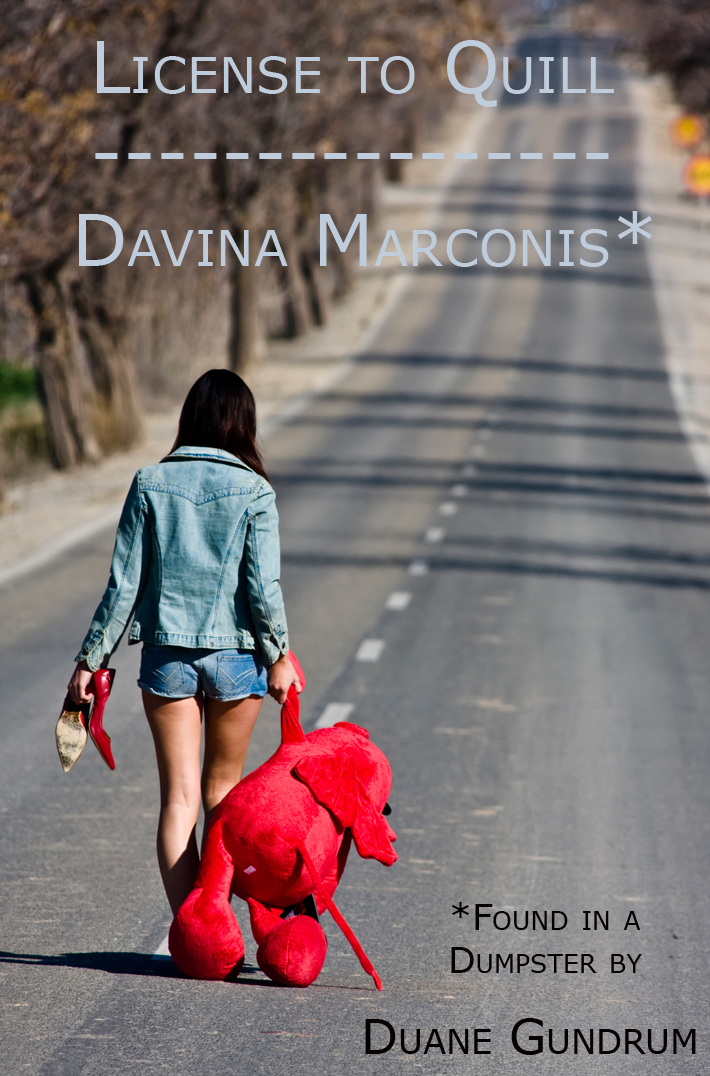
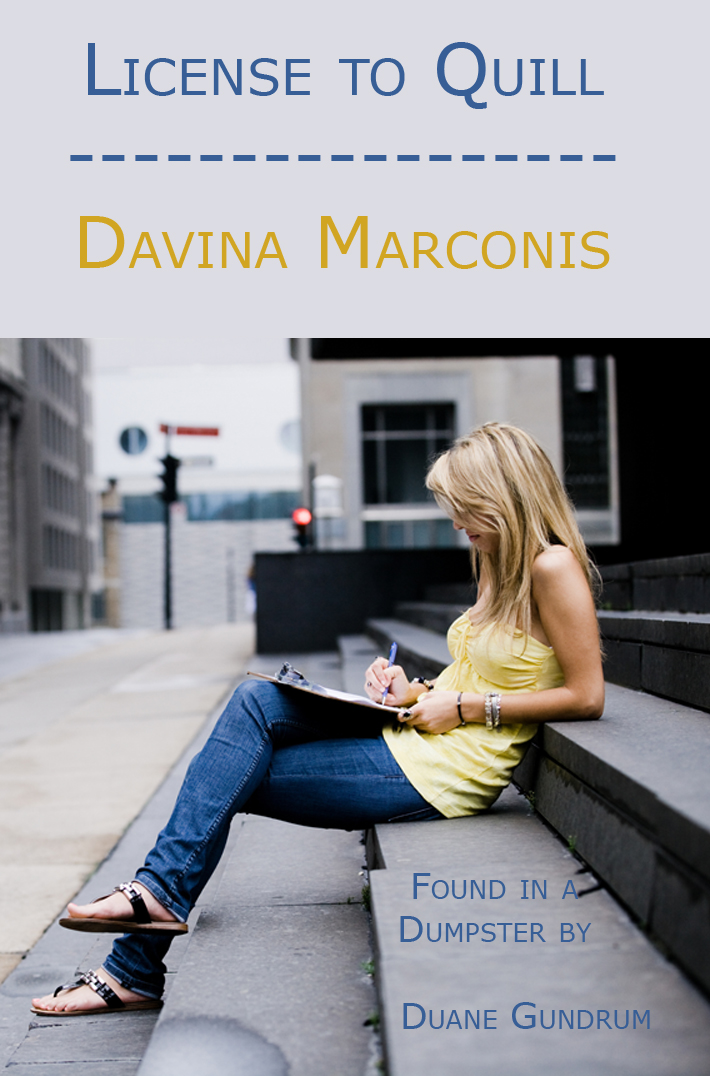

The Struggles of an Independent Writer
Most people generally don’t give independent writers a lot of attention or thought. Oh, they think about the famous writers and the ones that are publishing with the big companies. But the struggling, independent writer, who everyone talks about as the new future of writing is really a very difficult person to be.
To begin with, getting people to buy my books is almost a ridiculous battle that has no positive resolution. Friends don’t buy them. Family don’t buy them. Strangers don’t buy them. Oh, every now and then one of those people will say “Oh, I’m going to pick up your book” and then months go by and they never do. I have a colleague I work with who looked at the cover of my latest book and said she was going to pick it up. I smiled and realized right then and there: Wasn’t ever going to happen.
One of the biggest parts of the struggle involves how a writer gets attention. Social networking is great if you’re willing to spam your friends to death with novel information. I don’t do that. Otherwise, they probably wouldn’t be my friends any longer. I’ll read all of their updates about baby pictures and all that stuff, but I get the impression they mostly ignore mine. A few don’t, but they are the exceptions.
But in order to make it as an independent writer, especially one writing ebooks as well as regular books, you have to garner lots of positive reviews. That has never happened for me. I don’t even get reviews at all. People read my books, buy them at Amazon and all that, but they NEVER leave a review, let alone a positive one. So, I languish in unknownability (if that was a word).
So, I pay for Facebook ads that people click and then ignore. I pay for Goodread ads that people click and ignore. Maybe it’s my ads. Maybe it’s the fact that people just don’t support independent writers. I don’t really know. All I know is that I keep trying, and it’s not moving forward. Three steps back and then one more step further backwards.
But for all those who promised, or just care a little, how about picking up one of my books, reading it and then giving me a review. It might actually help.
Well, one can dream, right?
Chekhov’s Gun in Modern Day Writing…Tales from the TV Show “Justified”
For those who don’t know it, I’m a big fan of the television series “Justified”, which is in its fourth season and going strong. It stars Timothy Olymphant, who made his name as the star of “Deadwood”. He plays a federal marshal named Raylan Givens who is probably one of the few badass lawmen left on television. He’s definitely one of the good guys, and bad guys cross him at the risk of their own quick demise.
Anyway, the reason I’m talking about him is that one of the reasons I’ve always liked this show is that the writing is top notch, which is often rare for a television series. Oh, they’ll have decent writing from time to time, but mostly the plots are contrived, and the outcomes expected, but they rarely ever really move things along to get an audience thinking, wow, that show really grabs people by the jugular and doesn’t let go.
It was in a recent episode where I truly saw this happen, and it involves an old writer’s construct called “Chekhov’s Gun”, which is an old adage from the writer who indicated that if you bring a loaded gun on stage, at some point you need to have someone fire it. That’s the simple definition that a lot of amateur writers MIGHT get. However, it is actually discussing something much more insightful, and that’s the concept of foreshadowing.
Foreshadowing is to put something into the narrative that will have significance at a later time. Chekhov argued that you shouldn’t be putting elements into the fiction if they have no use for the story or to drive the story further. A lot of bad writers do this, creating plot holes that don’t get followed up, writing certain characters so they move off stage and then forgetting they’re still waiting in the wings for some kind of resolution.
The opposite of Chekhov’s Gun is a Red Herring, which basically means to introduce variables into a story that aren’t going to be followed up, but make the audience think that they’re important for some reason or another. Quite often, murder mysteries will do this, and some better than others. But in a drama, sometimes it’s hard to do this well. Unfortunately, a lot, and I do mean a LOT, of television does this because the writers are thinking of filling up time rather than producing new arcs for their characters. So you’ll see a lot of mediocre television series that produce all sorts of Chekhov’s Guns that end up being absurd Red Herrings.
But back to Raylan Givens and Chekhov’s Gun. In the most recent episode (and yes, this is a spoiler warning if you’re watching the show and haven’t seen the episode yet), a secondary character started to receive a lot more screen time. The name of the character is Bob (played brilliantly by Patton Oswalt), and he was a portly middle aged guy who was an elected constable in the area where Givens polices. Bob was the typical overweight cop with aspirations to be so much more than he currently was. He complains about how his elected job receives no respect whatsoever, as he has to buy his own car, fix it up with cop gear, and even his own gun and equipment. Most of the other police forces treat him as a joke, and he’s constantly aware of how little respect he has from everyone else. But he’s a good guy, and Givens, who has been burned by bad cops so many times in this series, half-heartedly trusts Bob. But he’s always trying to gain Raylan’s respect. At one point, he shows him this arsenal he keeps in his car for “when the shit gets real”, and he shows Raylan how if a suspect has a gun, he can pull out his knife quickly and seriously mess him up. When he acts out how he would do it on Raylan, who is sitting next to him in the police car, it is so obvious that Raylan is just laughing inside, because Bob’s actions wouldn’t have deterred Raylan (or anyone) from doing whatever they were going to do to Bob in the fictitious situation he was enacting for him.
But then at one point, Bob becomes responsible for information on the location of a fugitive that Raylan is trying to get out of town with while big bad criminals are doing everything possible to keep Raylan from escaping. One of the bad guys (a mafioso from Detroit) captures Bob and tortures him, but no matter how much pain and bad guy tactics the guy uses, he can’t get Bob to reveal that he even knows who Drew Peterson is (Bob keeps responding with different variations on the name Drew: “Drew Mama?” “Drew Bacca?”). As the bad guy looks as if he’s finally going to kill Bob for not cooperating, Bob manages to pull out his knife and in an extremely intense moment of television, manages to kill the bad guy right before Raylan and team arrive to where he was being held. The knife, as foreshadowed, was used almost exactly as Bob said he was going to use it when he showed it to Raylan days before in Bob’s cop car. When it happened, even I was surprised because Bob was thrust into a situation that no normal man could have ever survived, and the drama was made that much better for it.
Which then leads to possibly the greatest line of the entire episode (if not the season), when a bad guy has cornered Raylan (and Bob who is acting as Raylan’s back up), and Raylan tells the bad guy that Bob killed the man the mafioso sent to interrogate him. So the mob guy says: “Him?” Raylan responds with: “People underestimate Bob at their own peril.” Although Raylan isn’t the kind of guy to say “Good job, Bob.” Bob heard him and realized he had the respect he had always been seeking.
This is what I’m talking about when I talk about good writing. They could have gone with a typical Die Hard-like scenario and then a “Yipee ay oh Kiyaay” dialogue, but that’s the difference between popcorn writing and dramatic writing. For the record, I like both kinds of writing, but I’ll be thinking about dramatic writing for days and weeks after I experience it. I can’t say the same for popcorn writing.
Dear Credit Collectors: Please Stop Calling Me As I’m Not the Droids You’re Looking For
Okay, here’s my little piece of advice for credit collectors: If you’ve been calling a phone number for the last two years for “Munro, Alexander” and the person who answers the phone is NOT Munro, Alexander, doesn’t know Munro, Alexander, and has never heard of “Munro, Alexander”, STOP CALLING BACK. Statistical analysis indicates that the probability of finding said Munro, Alexander is not going to increase if you call 300 times, 700 times, or never. The reality of the situation is that Munro, Alexander DOES NOT LIVE HERE. So stop calling for him.
Unfortunately, I do not have a phone that can be blocked, so they call it nonstop. I get two to three phone messages on my phone for this same guy. I’ve talked to them and told them to stop calling (they promise not to), called up their offices and said same, but nothing seems to make a difference. They won’t stop calling me.
This wouldn’t be as bad if this was the only one, but I also get calls for all sorts of other random people who may or may not have had my phone number somewhere in the past. I am so sick and tired of wanting to answer my phone only to get another one of these morons on the other end of the phone.
The Munro, Alexander one is even worse now because they no longer have a person on the other end of the line but a recording that says: “If you are not Munro, Alexander, please hang up. Otherwise, you are indicating that you Munro, Alexander, and this call is for you.” This is a message that is left on my answering machine, so of course NO ONE HUNG UP. No one was on the freaking line to hang up.
Government keeps saying they’re going to do something about this, but they never do because I suspect these companies have lobbyists that keep any normal politician from passing legislation that ships them to Siberia for the rest of their natural lives, a punishment overly warranted by the abuse the rest of us have to go through.
I’m just saying.
Sim City: A Game You’ll Learn to Love and Hate
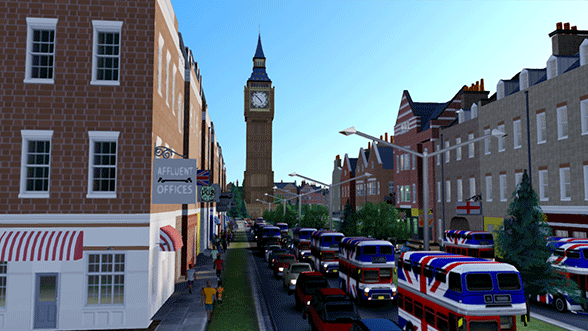 I recently bought the new release of Sim City (from Electronic Arts, using its subsidiary Maxis Software, which is bought some years back). Maxis used to be one of the greatest companies on the planet, creating Sim City, the Sims and then Spore (which was a little after they were bought by EA). However, Sim City has always been the bread and butter of Maxis, and most likely the reason EA bought the company in the first place (The Sims was released under EA’s ownership, even though it was the last project begun under the Maxis only name).
So what are my thoughts on Sim City? It’s a lot of fun, at least until you get really involved with the game. Let me explain. When you first start playing the game, you get overwhelmed by how much there is to do. You build a road from the highway through your patch of land, you then zone residential, then industrial and commercial. Soon after, someone complains they have no power or water, so you build some kind of power plant and a water pump. This goes on for awhile, until someone else complains that there aren’t enough people to work the zones (so you zone more residential), and then you start to realize your city is lacking in fire support (you build a fire house), police (you build a police station), health care (you enact Obamacare…oh wait, I mean you build a clinic), and you continue until your little patch of land starts to become a thriving city. There’s always something to do, so you’re never going to get bored with it.
And then, eventually, you start to build a major city. And unfortunately, that’s where you start to hate it. The reason you hate it isn’t because there’s not a lot of fun things to do, but because the game was designed badly, almost as if they realized they didn’t have the ability to handle AI as they needed to, so they dumbed down the simulation to be less of a simulation and be a compromise instead. Here’s an explanation of that:
Your Sims (the citizens) are disembodied people who don’t really have a specific place in your city. The people who work at the health care clinic are not doctors. They’re just arbitrary Sims, meaning that when people get up in the morning, they might be a doctor, a fireman, a ditch digger, or a protesting hippie who hates government. The way they find their jobs is through a process I like to call “first come, first serve”. A Sim wakes up in the morning, at the same time as every other Sim, and walks out the door of his apartment to find that there’s a business next door selling donuts (so he decides to work there). The next day, he’s not so quick to the donut shop, so he ends up being a neuro surgeon instead, because the clinic or hospital is located next door to the donut shop. He’ll work his entire day in whatever place he’s in, and then he’ll come home–to any home, because he doesn’t live anywhere; he just occupies the first building that’s built for housing. When visitors come to the city because of your tourism stuff you’ve added (like a building that holds mega super concerts), the Sims will fill up the buildings on their way out, or may or may not leave the city. There’s really no rhyme or reason for what different people end up doing when they’re in your city because they’re all interchangeable. Which brings up the problems that destroy your city.
If your traffic was bad before, it becomes a nightmare when everyone is out on the street trying to get to whatever place they need to go. Your firemen, stuck in traffic stops aren’t putting out fires, and your city starts to burn down, even if the buildings are across the street from the firehouse. Your police can’t stop crime, so you have Sims moving out of town because there’s too much crime (caused by cops not being able to maneuver through traffic (or by cops choosing to be donut makers that morning)).. You probably get the picture.
The city’s infrastructure works the same way. If you have water running through your city, it gets bogged down by the fact that the designers of the game didn’t design water (or electricity) any better. Your power gets clogged and randomly just kind of moves around the town so that you can end up with an important set of buildings just not getting power or water because the AI is too stupid to deliver it now that your city has become a lot more complicated. Even if your water pump is across the street from the building that needs water, it waits until the water fills in some cycle that makes no sense to common sense and has as much simulation value as whack a mole does to international diplomacy.
I had a great city that turned into ruins because these problems just blew up at one point where I became too big to fail, but failed miserably. All attempts to fix it were useless because nothing could move through the city. This wasn’t because I was using weak roads; it was because there was so much going on at one time that the Sims pretty much just sat in traffic, water wouldn’t flow, and the city kept complaining that I needed to provide more power, even though I had about 2x the capacity of power that just kept clogging itself up. Even putting a power plant next to the one building lacking power didn’t work because of the previously mentioned random traveling that everything in Sim City does.
This problem is now being noticed by a lot of players, needs to be fixed, or the game is going to be the most successful failure of all time (although it will compete with Diablo 3). EA has the ability to fix this, but I suspect that they’ll do the corporate thing and basically take the money and run, chalking it up to a good experience for the bottom line, even though it may provide the final nail in a coffin that doesn’t need to really happen.
The next move is for EA to do something. The question is: Will they do it or just screw over its player base?
Free promotion for newly released book
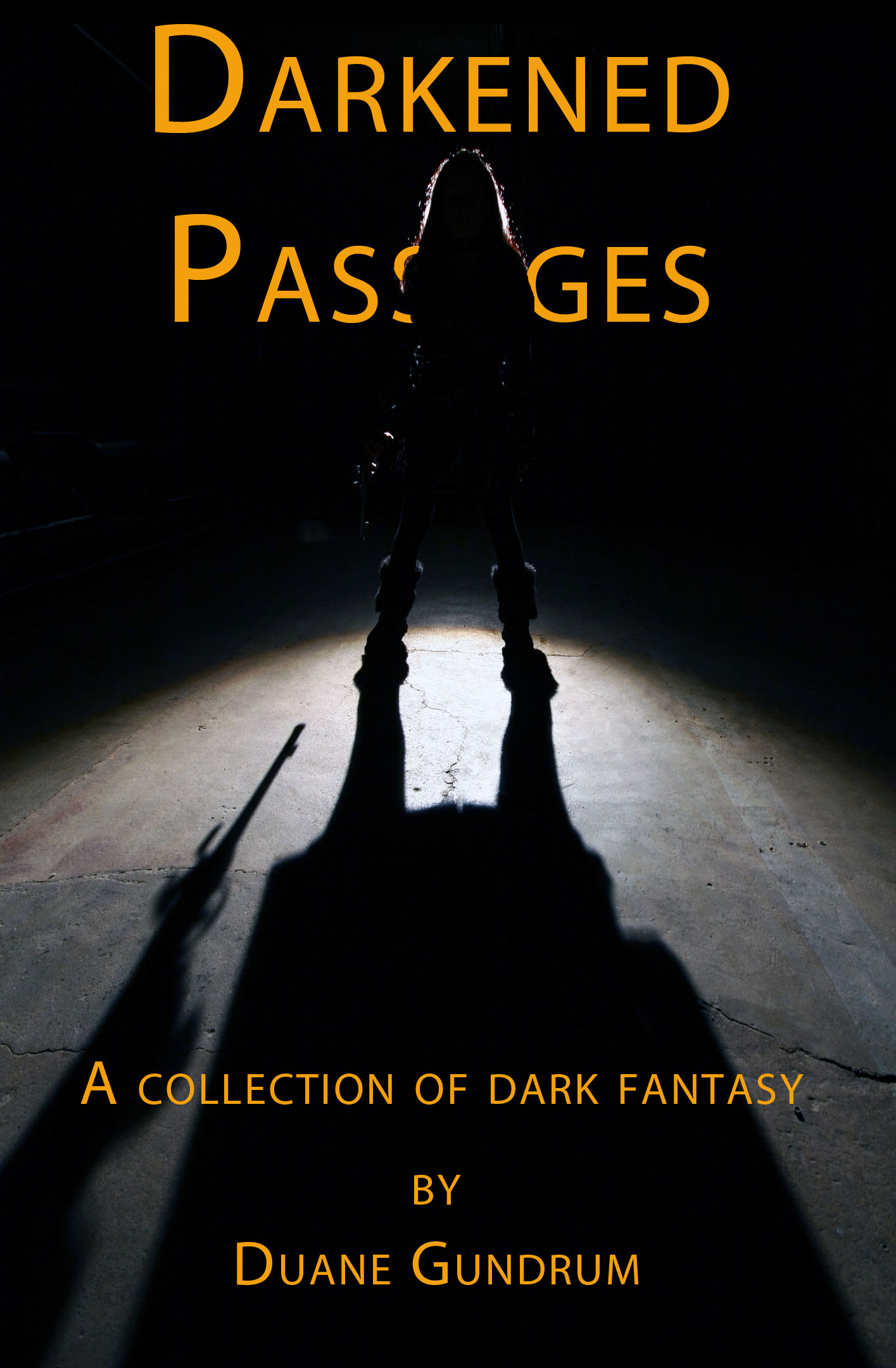
For the following week, Monday through Friday, Amazon is offering my books Darkened Passages (a new dark fantasy short story collection released over the weekend) and the book that was previously published before it, Deadly Deceptions (a mystery/suspense novel published last year) for free if you have Amazon Prime. So, hopefully people take advantage of it.
If you do, please do me the courtesy of leaving a review. It’s amazing how many of my novels are bought but then no one leaves a review. Hopefully, no one thinks they suck. 🙁
Darkened Passages, my book of short stories, will be released tomorrow for Amazon Kindle
EA’s Sim City Reboot Isn’t Going As Planned…unless you’re one of the disasters that destroys the cities
On the third day of the release of the new Sim City by EA’s Maxis studio, things have gone from reviews of “best game ever” to “what a crappy piece of s4#&!”
The problem isn’t the game itself, although some complaints have started to come in on that level as well (like how small the cities are in comparison to any previous incarnation of Sim City). The problem is the servers because this was EA’s attempt at forcing every single player to have to play on EA’s servers, requiring an always on internet connection. Another company with a more stellar reputation, Blizzard, tried doing the same thing with Diablo 3, and let’s just say that the result was a lot of people claiming Diablo 3 to be the worst game put by Blizzard in a very long, esteemed career of putting out great games.
So everyone is complaining about EA right now because not only do they have to be online all the time, but EA doesn’t seem to know how to run their servers so that the servers are on all the time. 3 days in, players who paid for the game can’t even play the game. So people on numerous game boards are attempting to cash their games back into EA, complaining about how badly the game was implemented.
I should point out that I was working for Maxis when EA took over it. As we were moved from Walnut Creek to Redwood City, you could see the company of Maxis being gutted out by the new owners. The last project I worked on was The Sims, and you could see how things were slowly going downhill for those at Maxis. Working on Sim City 3000 was a pleasure. Seeing what was happening after The Sims was awful and I felt bad for anyone that was sticking around.
If anything, hopefully other companies will learn that just because a bigger company has money to buy you out doesn’t mean that they’re going to continue to make your quality product with actual…well, quality.
Killing a Character
Some years ago, I was writing my novel The Teddy Bear Conspiracy. One of my main characters was named Tina, and there came a time in the book where her character had to be killed off. I found this really hard at the time because prior to this moment in the writing, I had really put a lot of life into this character, making her almost as important as the main protagonist and any other character in the novel. But I had hit that point where she had to go, so I gave her the glorious, heart-wrenching death she deserved. And then I was finished for the night.
The next day, I was in my writing office, continuing the novel. My office was located on the second floor of my apartment and somewhat isolated, so it gave me the space to write and not be bothered. And that was when I heard a whisper of a knock on my front door. Not one to answer the door while I’m writing, I kept going. Then the knocking stopped, and my doorbell rang. I still wasn’t planning to answer the door, but then the doorbell started ringing over and over, as it does when some very impatient person is on the porch, not easily dissuaded by someone not answering the door on the first ring.
I realized I had to answer the door because the person wasn’t going to stop ringing the doorbell. So I opened my office door, descended the stairs and then opened the door.
I discovered a tiny woman standing there, someone I had never met before. “Can I help you?” I said.
She said, in broken English: “My name is Tina. I have come back.”
I just stared at her, not sure if she was serious. I mean, she didn’t look like the Tina I imagined in my book, nor did she talk anything like her. But here she was, this woman named Tina saying she was back.
My immediate thought was that I was in some rejected Stephen King novel, or one he wrote when he wasn’t feeling well. Characters didn’t come back from novels. Well, at least not so they’re standing at the author’s door planning all sorts of evil that only killed off characters might do if they were to return the day after they were ritually killed in their prospective stories.
But why was she back? I thought. Did this mean I was mistaken in killing her off?
“What do you want?” was all I could think to say, while imagining all sorts of awful things that you’d see in horror movies. If only I was a horror writer, I might have had a better sense of what was about to happen.
And then she spoke, looking at my bewildered stare as if I was the one out of place here. “I said my name is Tina. I used to live here months ago. I just wanted to check if there was any mail that was still being delivered.”
And suddenly, I realized where I had come up with the name Tina in the first place. It was on a letter that had been mistakenly delivered here a few months back. I had given it back to the postal carrier and thought nothing of it since. Although the name had stuck and reappeared in my mind when looking for the name of that character.
“I am sorry,” I said. “I sent all mail back to the post office that might have been for you.”
She thanked me, and then Tina was out of my life forever.
But ever since then, I think twice before I kill off a character, always wondering if it’s the right thing. Because you don’t want that character showing up at your front door if you didn’t kill him or her right. Or justly.