Tag Archives: memoirs

The Depressing Part of Being a Writer

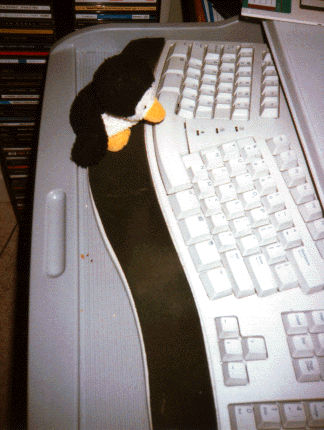
Joshua had a few things he needed to say

There are a lot of writers out there who haven’t been that successful. Yet, they keep on plugging away, convinced that one day it’s all going to work out for them. I’m kind of in that same boat, but unlike the others who never had their chance, my chance came several times…and sort of fizzled away. Let me explain:

Years back, I was shopping my first book. I was in my early twenties, and I had written it while in the Army. It was a really good book called INNOCENT UNTIL PROVEN GUILTY. And it was published. Not to great fanfare, but it was published.

So, I started shopping my second novel, LOSER (which would eventually become LEADER OF THE LOSERS). Nothing. Not even a whimper from anyone wanting to sell it. One editor pointed out that perhaps it was the depressing title. Publishers didn’t want to publish books with such a negative title. So, it sat there, forever.

Then I wrote my next novel, the infamous The Armageddon Project, which was a story that took place during the Cold War. Keep in mind, it was written during the Cold War. But at the time, the Cold War was ending, so I quickly rewrote it to match the new events taking place in the world (much of the action takes place in East Germany and Western Russia). And then those regions kept changing, so I kept rewriting it. At some point, the title changed to match the main character (known as “the Unicorn”), so the title became TO TOUCH THE UNICORN. And then a publisher told me that the title was too much like a fantasy novel, but the novel was corporate/government espionage. He also said that it was hard to figure out what exactly the main character’s job was. At the time, I had created the concept of an economic hit man, but the concept was completely unknown in the 1990s, so it just couldn’t catch on. Years later, after Germany and Russia have settled into the republics they are, the story changed massively and is now being rewritten for about the 90th time, and it now takes place in 1991 during the August coup in the former Soviet Union. It’s now called 72 HOURS IN AUGUST, but it’s on the back burner for a rewrite.

Anyway, somewhere around this time, I was starting to make a name for myself as a writer. I had been writing tons of short stories and they were published in a bunch of different magazines. At first, they were published in mostly literary magazines, but then the larger presses started picking them up, and several prominent magazine editors started recognizing my name from previous things I had written. Things were kind of going pretty nice for me back then.

And then one of my novels was bought for publishing by a prestigious book publisher. And then I got an agent who once represented one of the greatest science fiction writers in modern times before he passed away. All was looking great.

And then the publishing company folded. Overnight. Without a single warning.

My agent got into an accident and severely injured her head. She dropped out of the business for a while to recover, and when she did, she seriously didn’t even remember who I was. I gave up trying to re-establish our working relationship.

And then the Internet exploded. Amazon became the biggest thing in independent writing, and the industry changed overnight. If you weren’t already established, you were basically an unknown, and if you were an unknown, you had to now start building a social following in order to even sell a single book. Not being really good at social networking (just has never been my thing), my career kind of just fizzled and died. Sure, I sell a few books here and there, but I might sell more just standing on the corner and asking people to give me a buck for a hand written copy.

Fast-forward to today, and I’m the middle of writing an epic novel series that I suspect might not be read by more people than this blog post. I say this with trepidation because of the amount of time invested in this project. I’ve already spent seven years researching this thing, and I’m about to start putting actual physical work into writing it. Keep in mind that my last two projects took me each half a decade to produce, and my stuffed animals get more attention when they’re pulled over for drunk driving. My previous project took me six years to complete the first book (of a three book project). The research involved was extensive. It was called The Deck Const. Doesn’t matter what it was about because no one’s going to read it any way.

The project before that is probably the one piece of work of which I am most proud. When people talk about a crown achievement in one’s life, that book would probably be mine. It is a humorous novel that tells the story of the last hero of Troy who comes home to found a little civilization called America. It’s called THE AMERIAD, and it was so much work, and it involved so much research. But to someone reading it, one gets the sense that it’s a simple, fun story that seems very familiar. It’s told in Iliad/Odyssey format, and the main character is actually the translator who has interpreted this found epic in the only way the worst translator could possibly ever do. The book was so hard to write, especially in a way that made it feels so natural.

That’s the dilemma I find myself in as I finish up the last stages of research to begin constructing my Arthurian epic. And part of me wonders if my time might better be spent playing a video game instead.
My Run-In With the Klan in the Mid1980s

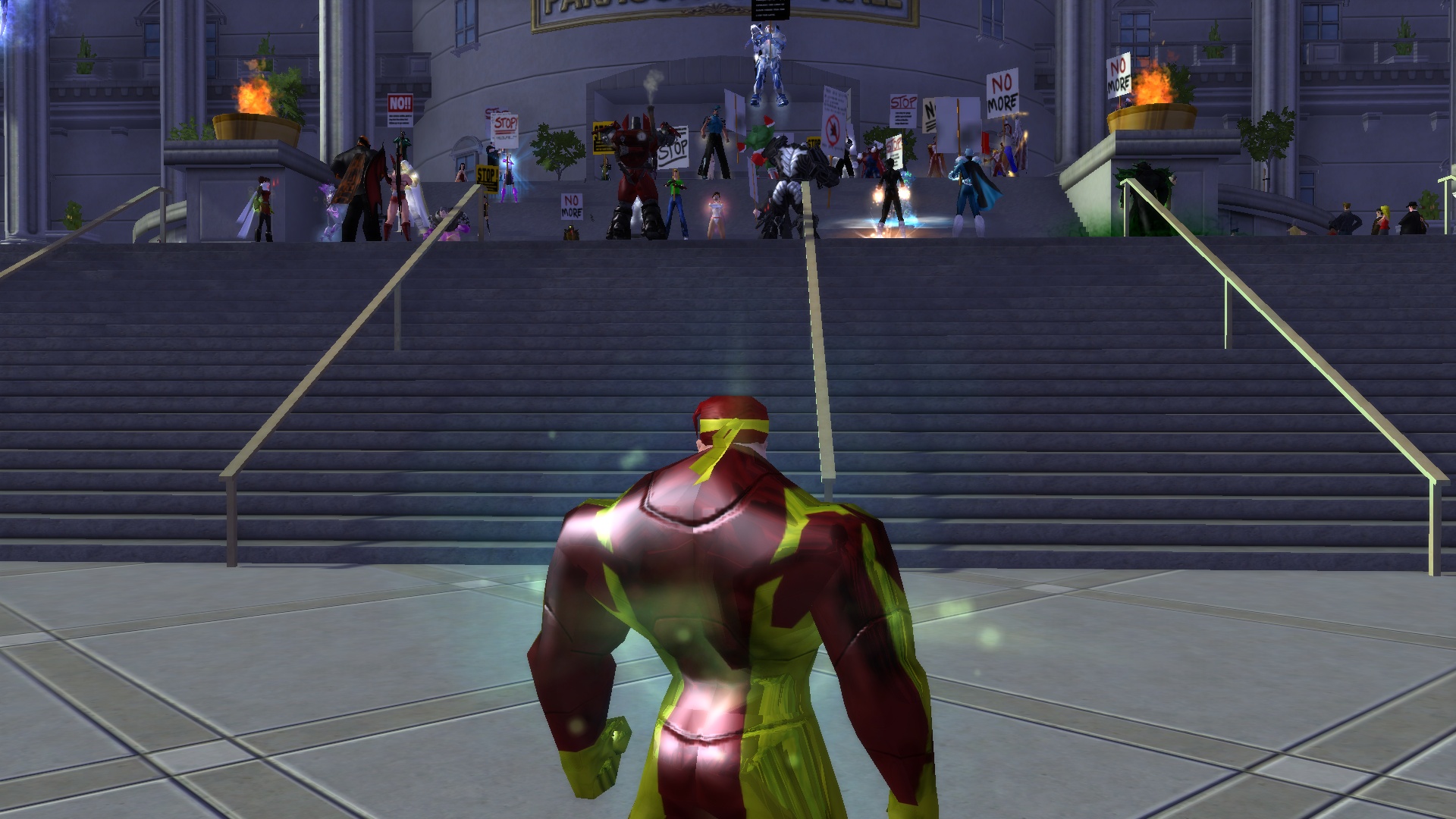
The protest is getting out of hand
The protest is getting out of hand (image from in game screen shot of City of Heroes)

It was shortly after West Point, and I was stationed at Fort Knox, Kentucky. One weekend I had time off, so a few soldiers and I decided we were going to take a trip to Nashville for a concert that was taking place there. This was in the middle of the 1980s during a period of time when the United States was starting to regain some of its image around the world, as much of the 1970s was spent recovering from the disastrous Vietnam War era. Reagan was president, the Soviet Union still had years until it collapsed, Star Wars had finished its original trilogy, the Cosby Show taught us values from someone who still had a lot of respect throughout the country, and there was a sense that things in the future were going to be improving because so many technologies appeared to be in our headlights, like microwaves, cell phones, the Internet and some device called a Rubik’s Cube.

So we hopped into my Mercury Capri, all five of us, and made our trip south. In case you’ve never taken the trip by car before, it’s a really nice drive through beautiful country.

Anyway, somewhere around the border of Kentucky and Tennessee (to be honest, I don’t remember which side of the border when this happened), we came to a huge intersection that was kind of bogged down with traffic. It felt kind of out of the ordinary because traffic had been moving so smoothly only moments before. And then I discovered why.

On all four corners of the intersection were people dressed in white robes handing out pamphlets to people in their cars. For some reason, this spectacle seemed to slow traffic down to a standstill. It took me a couple of moments to realize what was happening, but traffic was moving slowly because each driver was having somewhat of an impassioned conversation with whatever person in robes showed up alongside that driver’s car. Unfortunately, I couldn’t hear any of their conversations, but part of me to this day hopes that the words exchanged were not friendly, but I honestly don’t know any of those details.

This was the Ku Klux Klan handing out their pamphlets to the people who were driving through their county.

Now, I’d never seen one of those people before in real life. Sure, I’d heard all of the stories about them, watched films of some of their notorious deeds in the past and knew that since the early days of this country they represented some of the most vile sentiments people could possibly have. But seeing them in person, I had no clue what their intentions might be, or even how much of the past history the group made was part of what they might be doing on that particular day.

Then I reached the position where they were located. They were blocking traffic, one person standing in front of a car to make sure you had to stop while another came over to the window to speak and offer their pamphlets. I was kind of oblivious to what was really going on, but the person who came to my window knocked on it and gestured for me to roll down the window. Somewhat curious, I did.

Okay, two things are important to this story. First, the person who knocked on my window was a female Klan member. Second, well, I should have probably mentioned a little bit more about the group of people in my car.

There were five soldiers in my car, tightly packed into it. The guy in the middle back seat was white, and so was I. The guy sitting next to me and the two men seated near the doors in the backseat were all African-Americans. Every person in the car was a seasoned veteran and currently serving in the Army.

So I rolled down my window, and I was not known for holding back on anything I had to say, so the first thing out of my mouth was: “So, they’re letting women into the Klan now?”

The woman stared at me for a second and responded with: “Women have been in the Klan for years.”

On instinct, I said: “Wow, how progressive of them. I guess they let anyone into it these days.”

To that, the guy seated next to me crouched over to the window and said. “That’s so cool. How long until I get to join?”

And I think that’s the moment that she realized the car was packed with a mixture of people she was probably not all that comfortable with seeing. The two guys in the backseat yelled out: “Can I have a pamphlet?” and “What time are your meetings, cause most of my mornings and afternoons are kind of busy these days with Army shit?”

The woman turned to her partner who was blocking my car and pointed to the car, I guess trying to figure out what she should do. I helped them make a quicker decision instead.

I said: “If he doesn’t move, I’m running his ass over.”

The guy in front of my car motioned for one of other partners, kind of trying to motion him over to the car or at least to assist him in blocking the car. Now, I don’t know what they were intending to do, but let’s put things into perspective. We were all trained killers and even without guns could do some serious damage to someone if we needed to, so if they would have stopped us and forced us out of the car, even if they were armed, the chances are there would have been three fewer Klan members alive that day.

I also noticed that one of the guys in the backseat, a part time power lifter who people used to call “The Tank” (which is someone ironic because he was an armored division officer) had his hand on the door handle and was about to step out and start an encounter that wouldn’t end well for anyone. In my rear view mirror, I could see the whole group was already transitioning into the “fight” of fight and flight mode.

Instead, I gunned the engine and just lurched forward. The woman at my window jumped back and the guy directly in front of me saw me coming and literally dived to the side of the road. The other guy that was heading towards the car also jumped back, realizing that I was flooring it and had no intentions of remembering my car had a brake pedal.

So we continued driving until I stopped a few miles out so the adrenaline could subside. One of the guys n the back yelled: “Let’s go back and fuck them up!”

But we didn’t. We continued on and made it in time for the concert we went to see. A good time was had by all.

That was my one and only encounter with the Klan. But I never forgot it.

Why I Never Quit Writing

Me writing
Me writing

There’s an interesting post from Konrath’s site, in which he explains why he never quit writing. Basically, years ago, he was making about 25k a year from writing and felt it wasn’t enough, and now he’s making a ton of money from writing, but felt that if you can’t hack the writing challenges, you might be better off just quitting. And he’s right. But his post also hints at something else: The people who basically are driven to write, and therefore need to make it part of their professional life, if not their entire professional life.

I’ve been thinking a lot about the same sentiment because let’s be honest, my writing career has never taken off the way it was supposed to. When I was a kid, teachers used to tell me that I was a brilliant writer, that they could see a future for me as an intense writer. I loved telling stories, whether in person or on paper. Writing came naturally to me. It felt inevitable as a future career for myself.

Early in my writing career, I latched onto an agent who was going to sell my first novels. She was a well-known, highly placed agent. Everything was looking great. And then she had a brain injury and left the business. And then came back to it years later, but honestly couldn’t remember who I was. Yeah, sounds like a bad soap opera plot. I then secured a second agent who tried for about six months to sell my stuff (or just thought about it and never did anything about it) and then fizzled. Since then, finding another agent has been almost as easy as climbing Mount Fuji by starting in Texas.

And then the ebook revolution took place, and the whole industry fell apart. There are still publishers out there, but connecting with them has become almost impossible, and agents don’t seem to be interested in anyone any more, and everyone that has ever wanted to be a writer, even if it was just for fun, is now a published author selling their own stuff through Amazon and others. Now, the model has changed from good writers getting attention to the best marketers getting the most attention, even if the writing is awful (i.e., Fifty Shades of Gray, although people tell me that once you get past the really bad beginning writing, it actually becomes a much better writing enterprise).

Which brings me back to my original question in the subject line of this post. Why I never quit writing. You see, I really can’t stop. I love to write, and the only way I’ve ever been able to understand and then explain the world is through writing. For me, the act of writing is an exercise in learning more about the universe and why we’re here. Through continuous experiments in writing, I find myself learning more about myself and more about the world around me. Each new novel is an exploration into the process of writing for me, and each new novel is something completely different than what I wrote before. It’s more of a Murakami type of writing, although it’s my own journey, not one scripted out by someone else.

But the business of writing has been the thorn in my side since day one. I’ve never made it successfully, which often leaves me wondering if I should even be able to consider myself a professional writer when my books are read by so few people. Sure, I can take any title I like, but what good is a false accolade in the long run?

But getting back to the question, what I have discovered is that writing is basically all I have. I don’t have a family. I don’t even have a girlfriend. I don’t have a job that I go to where I think “those people would suffer if it wasn’t for me coming in each and every day.” The people where I work wouldn’t notice at all if I wasn’t there tomorrow. They might notice the desk not being occupied, but that’s about it. I don’t do anything of enough significance that it matters to anyone, nor will it ever.

I don’t have a lot of friends, so I don’t have a large group of people who rely on me as their social hub person. I have very few friends, to be honest.

I don’t even have a pet that relies on me for its meals. Not even a goldfish swimming around, thinking, “where’s that strange human who puts food into my bowl?”

For me, writing is all that I have. I construct fantasy worlds, and sometimes I create scenarios where people do horrific things that force them to do all sorts of things they wouldn’t have normally done. I write about people who question their reason for being, their relationships, their place in the grand scheme of things, while I meanwhile ask none of the questions of myself because I have no ties to the material world that my characters inhabit.

So, for me, if I didn’t have my writing, I’d have nothing. Which brings me to the conclusion that if I ever finally realize that my writing is a joke, that my purpose actually has no purpose, I’d probably end everything right then and there.

That’s why I never quit writing. It’s all I have.

What I Talk About When I Talk About Drinking

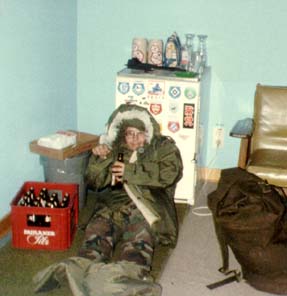
This is me during my drinking days in the Army

During the late 1980s, going into the 1990s, I was in the U.S. Army, and all things considered, I probably had somewhat of a drinking problem. This was the latter part of the era of drinking before people started getting serious about the ramifications of the problem, meaning that we started enforcing drunk driving laws (unlike the past where we swept things under the rug) and Alcohol Anonymous was no longer just a light at the end of tunnels that no one would ever travel through. To understand my perspective on the whole situation, let’s visit the late 1980s and let me share a bit of a story with you.

You see, back then I drank a lot. Every night. It was almost a ritual of service at that time. Work hard during the day and then get plastered at night. Wake up the next day, run PT (most likely throwing up alongside the other soldiers who were all suffering hangovers) and then by the time evening came along, we’d go out and do it again. THAT was pretty much a part of the military lifestyle back then.

I think the apex of this whole situation occurred when a colleague and I decided to take a trip to the Canary Islands. On the plane, we both got plastered, and then when we got to the hotel, we got smashed. And then for the next week, well, I know I had a really good time because I have pictures of me and a lot of very beautiful women cavorting together, but to be honest, I have figments of memories of what actually happened during that week long trip. All I remember was being greeted at the airport on the way back by my fellow GIs, and they had brought beer with them, so we got obliterated on the trip home, too.

A couple of weeks later, I was driving my car back to post (in Germany), and I was extremely inebriated. Some friends were in the car behind me, and they drove up behind me, hitting my bumper and then trying to push my car forward with their own acceleration. I was at an intersection, and as they pushed me forward, or tried to do so as I held down on the brakes, I suddenly sobered up. I was probably still quite drunk, but right at that moment, it suddenly dawned on me that there were other people on this street, that if I just gave in to the fun, who knows what damage (or lives) could have been affected.

Driving home slowly (the other car rushed by me and continued on towards the post), something came over me that made me realize something was wrong. I just was too drunk to really figure out what it was.

The next day was Saturday, so I didn’t have to be at work for a few days, but instead of my usual routine, I decided to skip the club that night. Instead, I sat at home and read a book. My fellow party buddies thought something was wrong, but the next night, I skipped partying again and did something else (don’t remember what it was at the moment but I do know it didn’t involve drinking).

A few days later, I sat down at my computer (one of the early ones…this was the 1980s) and started writing my first novel. In case you’re wondering, it was Innocent Until Proven Guilty, and it was the first work I completed where there was absolutely no alcohol involved. Shortly after that, I began work on my second novel, Loser.

I was reading an article today in Salon, about how alcohol is targeted at women through intricate manipulation and advertising, but I’ll have to be honest that when I was drinking, it just seemed like the thing to be doing. There were no great football beer ads that i remember during this time. Sure, there was peer pressure, but I’ve never been all that susceptible to that sort of thing. For me, all there ever really was involved the “you have to be old enough to drink it” mindset so that when I hit that age, I started imbibing because it felt like a chronological ritual of growing up.

I’ll admit that when I quit partying, it wasn’t the end of alcohol for me; that would come years later, but it did change things for me because that pleasure I received of getting smashed no longer seemed to be of interest to me.

What used to fascinate me was how many of those tests in books I would take that indicated I was most definitely an alcoholic. Do you often drink to excess? I sure did. Do you wake up the next day and not remember moments of the night before? I woke up one morning and couldn’t remember much of what happened the entire week before. Do you ever blackout? When didn’t I? Do you often crave alcohol? And that’s kind of where it breaks off for me, because to be honest, I’ve never craved alcohol. Actually, kind of hate it the more I think about it. I liked the buzz I got, but to be honest, I wasn’t all that excited about the buzz either. I drank back then because it was something to do. I really didn’t like my life back then, and it seemed like a good crutch to fill in the gaps of what was going on and not going on. I’m one of those kinds of guys who never really has romantic relationships, even when I was in the middle of a romantic relationship (if that makes sense). So, drinking filled a void that I basically needed to fill with something.

Fortunately, writing kind of fills that void now. The “thrill” of drinking was the ability to turn off my mind and allow this other sense to overwhelm me. Believe it or not, I get that (and more) from writing. I take myself to another world, and I get to live in that world during the time that I’m writing. It helps me to forget that my current life kind of sucks. Sorry, but it does. I still don’t have romantic relationships, and that part of me has never changed. So, I spend a great deal of time trying to find some way of filling the gaps that basically never get filled.

When I got out of the service, I didn’t quit drinking completely, although I became more of a social drinker. My friend Kat would drink from time to time, so I would drink with her. When we parted ways, I basically just stopped drinking completely because like I said before, it never really gave me anything that I was lacking anywhere else.

And that’s been years for me now. A friend of mine visited me for a week a few weeks ago, and when we were at the store shopping for groceries, she asked me if I wanted any alcohol, and it never even crossed my mind that I might be interested. Alcohol has no value in my daily life, and it’s not something I seek out. At one time, I was going to start drinking red wine, but only because I heard that it had certain heart benefits. Never did get around to buying any though.

So I guess what I’m trying to say is that I suspect that alcohol serves a purpose for everyone that consumes it, and what’s important is finding if that purpose is strong enough and whether or not it can be replaced with something else. For me, writing served as my alternative. But then, I’ve never been addicted, even though I can’t even begin to tell you how many people over the years said I must have a problem because of how I answered some of those questions. One person I know who is an alcoholic thinks I have some kind of strength to stop as I did, but I never saw it that way. I have my own vices and my own things that need to be dealt with (we all do). Alcohol just doesn’t seem to be one of them. Others, unfortunately, can’t say the same thing.


Killing a Character

Some years ago, I was writing my novel The Teddy Bear Conspiracy. One of my main characters was named Tina, and there came a time in the book where her character had to be killed off. I found this really hard at the time because prior to this moment in the writing, I had really put a lot of life into this character, making her almost as important as the main protagonist and any other character in the novel. But I had hit that point where she had to go, so I gave her the glorious, heart-wrenching death she deserved. And then I was finished for the night.

The next day, I was in my writing office, continuing the novel. My office was located on the second floor of my apartment and somewhat isolated, so it gave me the space to write and not be bothered. And that was when I heard a whisper of a knock on my front door. Not one to answer the door while I’m writing, I kept going. Then the knocking stopped, and my doorbell rang. I still wasn’t planning to answer the door, but then the doorbell started ringing over and over, as it does when some very impatient person is on the porch, not easily dissuaded by someone not answering the door on the first ring.

I realized I had to answer the door because the person wasn’t going to stop ringing the doorbell. So I opened my office door, descended the stairs and then opened the door.

I discovered a tiny woman standing there, someone I had never met before. “Can I help you?” I said.

She said, in broken English: “My name is Tina. I have come back.”

I just stared at her, not sure if she was serious. I mean, she didn’t look like the Tina I imagined in my book, nor did she talk anything like her. But here she was, this woman named Tina saying she was back.

My immediate thought was that I was in some rejected Stephen King novel, or one he wrote when he wasn’t feeling well. Characters didn’t come back from novels. Well, at least not so they’re standing at the author’s door planning all sorts of evil that only killed off characters might do if they were to return the day after they were ritually killed in their prospective stories.

But why was she back? I thought. Did this mean I was mistaken in killing her off?

“What do you want?” was all I could think to say, while imagining all sorts of awful things that you’d see in horror movies. If only I was a horror writer, I might have had a better sense of what was about to happen.

And then she spoke, looking at my bewildered stare as if I was the one out of place here. “I said my name is Tina. I used to live here months ago. I just wanted to check if there was any mail that was still being delivered.”

And suddenly, I realized where I had come up with the name Tina in the first place. It was on a letter that had been mistakenly delivered here a few months back. I had given it back to the postal carrier and thought nothing of it since. Although the name had stuck and reappeared in my mind when looking for the name of that character.

“I am sorry,” I said. “I sent all mail back to the post office that might have been for you.”

She thanked me, and then Tina was out of my life forever.

But ever since then, I think twice before I kill off a character, always wondering if it’s the right thing. Because you don’t want that character showing up at your front door if you didn’t kill him or her right. Or justly.

Struggling to Find a Purpose

Well, after the whole losing a crown on my tooth thing and the identity theft incident, I’m now back at work and moving forward into another day. It sucks that there are thieves out there who will steal you blind (just because they can), and it sucks that random health concerns can really mess with your day. But really, what can you do about it other than just get through it and move onto another day?

Which brings me to another day. And realizing that, I’m back to the same quandary in that I really don’t know what to do with my “other” day now that I’m there. My life still sucks. And I really don’t have anything to look forward to, other than more days of dealing with the fact that there are more sucky days after this one.

My life isn’t bad. Or horrible. I mean, I don’t live in an environment where evil, brutal masters are flogging me on a daily basis while I work in the salt mines. My biggest dilemma on a daily basis is deciding between paper and plastic, and I’ve sort of solved that by buying reusable Meiers bags that I bring to the supermarket with me. Basically, my day consists of figuring out whether a colon, a semi-colon or a gerund phrase are used correctly. And even then, who really cares?

The real dilemma is that I don’t have a purpose. Nothing I do really matters. No one cares. Oh sure, someone might throw a fit if a memo doesn’t go to the correct audience, or another person might somehow come unglued if the wrong font was used to explain an osteometric procedure. But in the grand scheme of things, it really doesn’t matter. No lives will be saved, made better or worse, or otherwise seriously inconvenienced.

And personally, besides not having a purpose, I don’t have really anything going on in my life. And I’m not under-exaggerating here. There’s NOTHING going on. My writing career is not a career. It’s not even a glorified hobby these days. I have no girlfriend, mistress, or flirting affair with the girl down the hall who thinks I’m somewhat okay but would rather date anyone but me. I don’t even have that. I don’t party. I don’t even have a drug problem, which ironically might be something to bide the time as people who do drugs at least have something to occupy their time.

I sometimes think I grew up during the wrong period in US history. The amount of technology we have today has made interaction with other people almost inconsistent or nonexistent. Sometimes, I think it would be really fascinating to just up and walk off, wandering the lands as a Kwei Chang Caine or Jack Kerouac, starting over at practically every “Welcome to….” city sign. It’s like there’s a whole world out there to experience, and I’m sitting at home playing Star Wars: The Old Republic.

Years back, I kept thinking I was going to be changing the world. Then I learned that’s not likely to happen. The world doesn’t want to change. And you know, I’m sort of fine with that. However, perhaps it’s time to change me, and being what I am really kind of sucks.

Whatever I’m doing right now certainly isn’t working.

The Energy to Post New Blog Content Just Isn’t There

I haven’t posted anything in awhile, mainly because I rarely get any actual responses on my blog itself. A couple of my feeds move onto places like Open Salon and other such places, and they get a few responses there, but overall, my own web site sometimes feels like a graveyard.

Not really a lot going on these days. I’ve been voraciously trying to find a decent teaching job, but I’ve completely failed at almost every attempt. If lucky, I get a form letter rejection thanking me for applying. Otherwise, I get nothing. Not a damn thing. It’s not like I’m not qualified. It’s not like I’m not a damn good teacher either. I just get no response whatsoever. Or I’ll get a nibble, and then that nibble will run away, convinced that there is probably tastier bait out there somewhere else.

Lately, I’ve been working on a writing project with a former friend/romantic interest/really hard to define but always a positive attribution regardless. Our project is something that’s definitely up our alley, but our schedules don’t really seem to be all that copacetic, which means that I’m suspecting that as good of an idea as it is, it’s probably going to end up not working out in the long run. And that’s too bad. I’m slowly putting work back into energy towards one of my previous novels, mainly because I don’t feel right unless I’m working on something that’s moving forward. And I’ve been meaning to rewrite one of my old novels for many years now, especially now that I have the proper time and place for it.

I recently read Stephen King’s book on the JFK assassination, and I have to say that I was pleasantly surprised at how well he carried that book through its entire process. He sometimes has a habit of becoming too wordy and sometimes “too Stephen King”, but this was one of his rare wonders. I can say that I’m very happy I read it. I immediately recommended it to Rick, and he read it too, thinking pretty much the same thing I did. I haven’t read too many great novels recently, and I was glad this one came along.

Which got me thinking about my own writing again, because it’s always a continuous work in progress that never seems to go anywhere. Unlike other writers who want to be writers but never write, I’m one of those who wrote a lot but never got anything for doing it. And I still continue to write. My writing has probably evolved to a point where I’m pretty much at the top of my game right now, and it’s almost completely useless. It’s like pissing in a fan, for lack of a better (or graphic) metaphor.

Relationships are still a dead zone for me these days. I live in Grand Rapids, which seems to be the furthest place of finding anything I’m seeking. I’d move anywhere else, but I’m like some unemployable crazy guy that will never get another job no matter how hard he tries. So I’m kind of stuck here. And stuck is probably a very apt description.

Not much else going on. Another semester is almost over here at GRCC, and my students probably couldn’t care one way or another if I was teaching them. It’s not like they’re bad students; they’re fine. It’s just that I don’t seem to be making much of an impact or a difference these days. That’s generally the story of adjuncts everywhere.

Well, have to head to class for the night. What fun.

An Update of Current Events with Duane

Figured it’s been a little time since I’ve done an update on me, so here goes:

1. I moved. Yes, I’ve been planning a local move for quite some time and finally did it this last weekend. I found a two bedroom apartment owned by the same management company where I’ve been living for the last two years and decided to move there. I’ve turned one of the bedrooms into an office and moved two desks and all of my bookshelves into it). I still haven’t set up my computer yet, but it’s all there and waiting for me to start plugging everything back together. My other laptops are there already (I never realized how much computer equipment I had, but wow, I have way too much). The new apartment also has a gas fireplace, although I think they have to light the pilot light or something because I can’t figure out how to get it working yet. Mostly, I’m completely moved in and pretty happy about that, although my arms are really tired as I’ve done nothing but move for the last four days (plus a few days the previous week, when I actually took possession of the place).

2. Writing. I’m preparing myself for National Novel Writing Month (NaNoWriMo) next month. Usually, I start November by free writing something and hoping it goes somewhere, but this time around I’m actually going to be working on a specific project. I’ve been putting together the background for the new novel, which is a tragic romance that’s told through time as a characterization mechanism. Like a lot of my more recent works, this project involves attempting to challenge my usual writing abilities by doing something that hasn’t really been done before and seeing how I pull it off. I’ve always felt that a writer should be trying to stretch himself beyond his normal abilities, to push the very boundaries of genre and skill. Otherwise, I feel that writing is just a casual thing that doesn’t really have much of a purpose. I’m still planning to work on my historical novel of the 1991 August Coup in the Soviet Union, which right now sounds almost impossible to accomplish, but I’m hoping that by learning new techniques with each of my latest projects, I might build the ability to finally write the projects I’m hoping to accomplish in the future.

3. Teaching. It’s going fine. I teach two classes a week (a political science class and an interpersonal communication course). Sometimes, I feel that I’m running on autopilot with both classes, as I’ve taught them so many times before, but unfortunately, as an adjunct, I’m never going to be offered the opportunity to build a curriculum or even a course on my own. I thought about going back to school to finish another Ph.d, but honestly my passion is writing, and as much as I love teaching, I still feel my greatest accomplishment is going to be in the creative sphere.

4. Work. I’m finding the ability to be a bit more creative these days. Having learned a little more with instructional design, I’ve been able to create a few more modules in a different direction, involving a more interactive approach. It’s not extremely satisfactory, but at least it gives me a chance to stretch my brain a tiny bit. The job is really not designed to be all that intuitive or that much involved intellectually, and that makes it really difficult sometimes to try to manage when I really want to be stretching the boundaries of what’s possible. Oh well.

That’s really all that’s going on right now. Guess I’ll get back to talking about politics and stuff because my own personal life is somewhat boring.

The Hardest Book You’ll Ever Write: Book Number Two

Some years back, after I finished my first novel, I was faced with a daunting question: Could I possibly write another? For anyone who has never written a first novel, this probably sounds like a no-brainer, but believe it or not, when I came face to face with the blank sheet of book number two, I found myself realizing that I was facing an enemy I had never imagined before.

When I was writing the first book, I had lots of bravado behind me. I mean, I had written a bunch of short stories, and inside me, I knew I had a book in me, so no matter what happened, I knew I was going to finish that first book. But when it was done, after a few months had gone by, I actually came up with the idea for the next book. And then I realized I would actually have to write it.

When faced with the second book, you find yourself in a very interesting dilemma that seems to go something like this: Well, the first book was a fluke, and everyone has at least a book in him or her, but am I really capable of sitting down and accomplishing the second book? The first book was a mystery/suspense novel that was kind of hard to pin down to its exact genre (you can see for yourself as it can be found here). The second novel was going to be a science fiction book, and although I had written a few short stories that had been published in fanzines (not having yet published in larger magazines), I was trying to convince myself that I was capable of pulling off a brand new genre on the second outing.

For days, I sat down and tried to outline the book, but nothing would come to me, because even though I had the basic idea of this novel, which I was going to call LOSER, I had no idea how to create a world that was so bizarre to me that I would have to invent it from the ground up. Yet, each day, I sat down and tried to tackle it.

And failed.

At one point, I convinced myself that this book wasn’t possible, that my first one had been a fluke. I was sure that I might be able to do another suspense book, or maybe an espionage adventure, but science fiction was definitely out of my capabilities.

At the time, my editor was the wife of a colleague of mine who sat down with me and asked me to explain what the story was about. And for hours on end, I sat down and crafted this amazing story of what I wanted to write. As I talked to her, I kept imagining all sorts of great things that would happen. And then, at one point, she told me to just sit down and make it happen.

So, for the next four months, I sat down in my chair and typed away. My first novel had been written on a typewriter, so this one actually got written on a computer with a word processor that we’d probably laugh at today. But by the time I was done, I had crafted my second novel. And even as I typed THE END, I stared at it, still not sure it had actually completed its journey.

A year later, I sat down and started work on that suspense novel I thought might have been the next novel, and it became my third novel. But each time I wrote a novel after the second one, I never imagined for a moment that I would have trouble finishing a novel again. That second one was the one that broke me of the belief I was never going to be a writer.

And I’ve been writing ever since.

Memoir Books Are Being Slowly Replaced by Lazy Writers


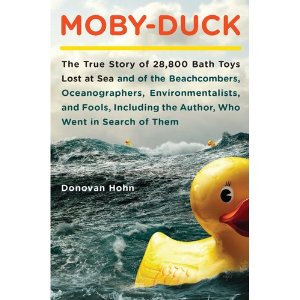
I was in the bookstore the other day looking over the selections of books when I came across a really interesting book of which I had heard nothing so far. But it looked intriguing. It was called Moby-Duck, and as you can see from the picture with this article, it is about a man who goes on a quest to discover what happened to 28,800 bath toys that were lost at sea.

So, why am I talking about this book? Well, think about the story involved in this book. The author, Donovan Hohn, actually put forth a lot of work to find out what happened to these rubber duckies and bath toys after the disappeared. In essence, he went on an epic quest, like the infamous Moby Dick to find what happened to these items. In other words, he went through a hell of a lot of work to get the story that he later transposed to paper so that the rest of us could experience his adventure.

My point is that so few people who write memoirs these days actually go through this amount of work in their adventures before sitting down and writing their “memoirs”. Instead, they suffer one bad relationship, have a bad drinking problem, or do something singularly simple and then try to convince the rest of us that it was actually an epic journey to get from one place to the other. I guess you could say I’m getting a little sick of these kinds of stories that really have no great master journey to them, no odyssey, yet are treated as if they are the epic adventures of a lifetime.

We need more writers out there who are willing to go through a little bit of work to actually come back with the story they need to tell. Instead, we get lazy writers that try to profit off of their innane adventures. And we keep buying this crap because none of us are willing to demand more from the writings that we read.

I felt this way some time ago when I was writing one of my earlier science fiction novels, Thompson’s Bounty, which was about a Coast Guard cutter that gets sent back into the 17th century. When I first started writing the novel, I actually tried to just crank it out without really knowing much about my subject, other than having watched a few old movies about pirates. Then it dawned on me that I wasn’t ready to write the novel. So I contacted the Coast Guard and requested some in person information, which led to going out with a cutter crew for several days over several weekends. It also led to a bunch of long conversations and tours on a Coast Guard base where very knowledgeable people gave me first hand information about the subject I was writing. In the end, I wound up with a book that told the story I wanted to tell instead of one that was peripheral and out of context.

Recently, I’ve been working on a novel that I originally wrote decades ago that takes place in Eastern Europe during the Cold War. Originally, I kind of winged it through the story, but after doing my thesis work on the August Coup in the Soviet Union, I finally had the premise, place and event that really made up the background of the novel I wrote years before. So, I’ve been sitting down and tackling that book from the start, realizing that I now know a lot more information than I first did when I wrote that book back then.

That’s sort of the thing I’m talking about with the kind of reading I’m coming across these days. So much of it can be so much better than it is if authors would take the time to actually do the research that would make their books that much better. I remember a great scene from Billy Crystal’s Throw Mama From the Train when a woman in his creative writing class is describing a submarine story she wrote, and he comments that maybe she should actually know the name of the device she’s describing if she wants to be taken seriously in a story that involves submarines. I take his advice a bit further and say that maybe some time should be given to exploring the lifestyles and events that lead people to the moments that occur in novels so that the reader believes the author is the right person to be writing the story.

We seem to have a lot lazier writers these days with a lot of the stories and memoirs I read, but that doesn’t mean we have to settle for that. We can demand more substance, research and work. We just generally don’t. And we’re the ones who suffer as a result.