Tag Archives: fiction

The Teddy Bear Conspiracy giveaway and other little news….

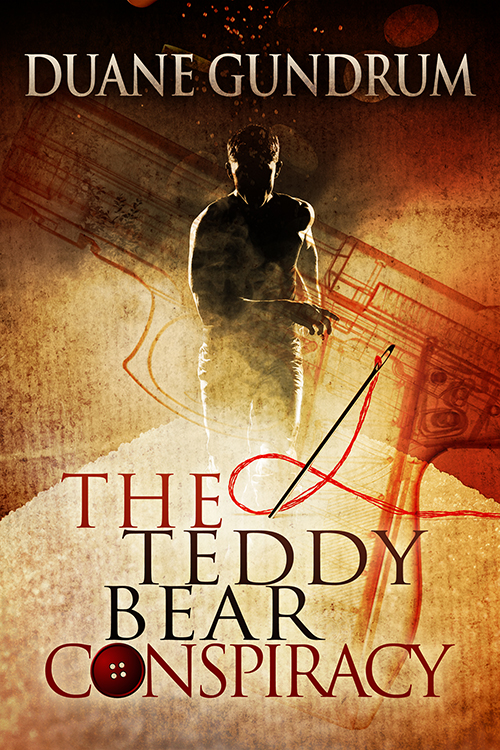
theteddybearconspiracy2aMy novel, The Teddy Bear Conspiracy, which is going to be released in December, is available for free as a contest giveaway on Goodreads. To enter, go here.


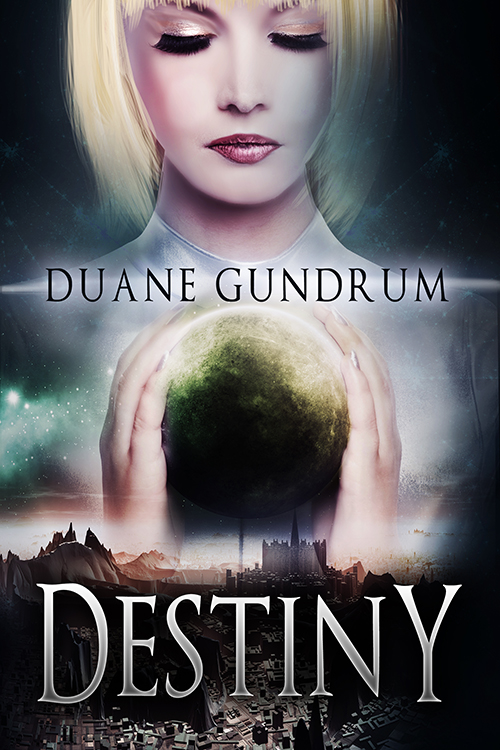
destinyDestiny, my science fiction/fantasy novel, which takes place mostly on the planet Reagul (which might be recognized from the upcoming series The Tales of Reagul, which will be released early next year as a three part epic), has been given a new cover and blurb. Here’s the blurb:

The mission was well-planned and intricately carried out. They were going to assassinate the Emperor of Earth. Everything went according to plan. Except one thing.
They failed.
Now on the run from the Empire’s elite guard, Eden System Commander Yeager finds himself on an escape trajectory with a young ensign in his care. Little does he know that this ensign, Laura Bontein, is the reason why Eden is at war with the Empire.
Laura may also be the most powerful being in the galaxy.
They escape to Reagul, a planet in its middle ages and somehow responsible for keeping the emperor alive. Here, Laura begins to discover that Reagul has been planning for her arrival for thousands of years.
Little by little, Laura begins to suspect that her own people, the lost outpost of the Zeus Colonies, may have ties to Reagul going back to the Roman Empire. As the rumors and legends begin to mirror the actions of Laura and Yeager, she begins to believe her arrival on Reagul may have more than a solitary purpose.
It may be her destiny.
Destiny can be found on Amazon (and also in paperback): Here.

The Ameriad is free all this week on Amazon Kindle

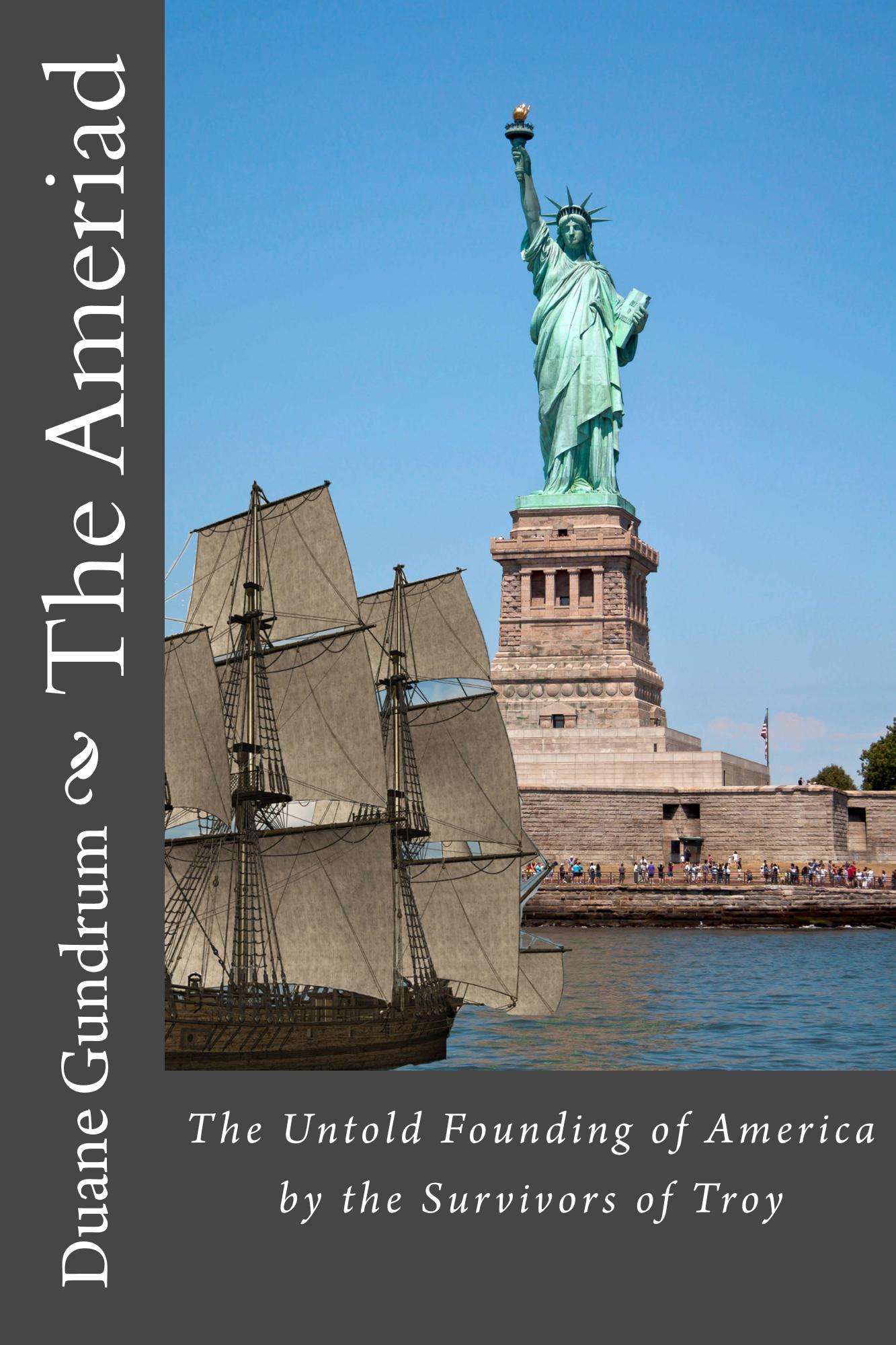
The_Ameriad_Cover_for_KindleMy novel, The Ameriad, a humorous, mythological parody that re-tells the founding of America by the survivors of Troy, is going to be free all this week on the Amazon Kindle.  You can access the page for this book here. This deal ends Saturday.

A paperback copy of the book is also being given out through Goodreads; actually, 10 copies are being given out free. All you have to do is sign up for the contest on Goodreads here.  This contest ends at the beginning of next month.

Did I mention that both choices are free?

I should also point out that my novella, Mapping the Silence of Dreams, is now available on Kindle as well. It’s dark fantasy involving the dream sphere when a scientific team accidentally brings something back from our dreams.  You can find it here.

Free promotion for newly released book

For the following week, Monday through Friday, Amazon is offering my books Darkened Passages (a new dark fantasy short story collection released over the weekend) and the book that was previously published before it, Deadly Deceptions (a mystery/suspense novel published last year) for free if you have Amazon Prime. So, hopefully people take advantage of it.

If you do, please do me the courtesy of leaving a review. It’s amazing how many of my novels are bought but then no one leaves a review. Hopefully, no one thinks they suck. 🙁

Visiting a New World All Over Again–A Review of Skyrim

As most people know (who know me), I’m a big fan of good computer games, especially ones that are deeply absorbed in roleplaying. I loved Fallout 3 (even with all of its flaws), and I’ve probably played most of the major online MMORPGs, although I’ve missed out on a few recent ones. Shortly before Skyrim, I was playing Star Wars: The Old Republic, which was a nice break from the whole World of Warcraft thing. I vowed I was done with WoW, and this time I’m pretty sure I am. However, a month or so into TOR, and I really didn’t feel like firing up the game again. I also knew there was a new game that was just released, and I was aching to give it a spin.

Years back, I played the greatest RPG of all time, in my opinion, and that was Elder Scrolls 3: Morrowind. That was the first real game that let you totally lose yourself in their world and have a great time with it. Their sequel Elder Scrolls 4: Oblivion was also ground-breaking, but to be honest, it just never did it for me. However, Elder Scrolls 5: Skyrim has reclaimed its throne as the king of computer rpgs.

I’ve been playing it for the last week or so (bought it last weekend), and after a few bad starts, I now find myself completely immersed in that world. What makes it so much fun is that there’s not a lot you can’t do in that world. You can buy property, get married, go on a murderous rampage, become a god amongst men, or just spend your time cooking food. Aside from fishing (which for some bizarre reason seems absent in this game), there’s not a lot you can’t do.

Last night, I bought special equipment for my new house and then took my trusty companion Uthgerd (or whatever her name is) with me to clean out a vampire’s lair. We got through to the very end, and then in an epic battle with the leader of the vampires, Uthgerd died. Unfortunately, you can’t resurrect a character in this game, so she was dead for good this time. I could have gone back to an earlier saved game, but it was such a battle to get to that last vampire that I decided her sacrifice would have to be worth it. I went back to the local town, hooked up with this warrior dude npc that was looking for adventure, and Uthgerd was “replaced” with somone new. I felt kind of bad about it, as she’d been with me since I was literally level one (I was level 11 now). That’s how immersive a game like that can be. I actually felt bad that I left her dead in that lair somewhere across the map. Not a lot of games can really leave you feeling that sense of loss.

And that’s what makes a game great. Or one of the things. It’s not just hacking and slashing that makes a great rpg. It’s losing yourself in that world. It’s when you have a conversation with an npc and then you remember that npc next time you run into him, and you actually have a feeling about that person when you remember the previous encounter (“weren’t you the guy that was a dick to me when I came here last time?“). Those are the sorts of things that evoke a sense of enjoyment when you play a game like this.

Over the years, very few games have ever reached that level of immersion with me. Every Fallout game I’ve ever played has succeeded at this. One of the earliest computer games, Phantasie I and then Wizard’s Crown (both by SSI), did this. Starflight 1 did this for me, where I actually cared about my crewmates on my ship. Each member of my team had a personality, even if the game didn’t advertise that they did (I kind of filled in their personalities just by the amount of time I was playing with them as part of my team). The Ultima series did this as well, to a point. And then games really started to develop complete storylines with characters, like with Neverwinter Nights.

And then things kind of went the wrong direction, where the games started filling in the interaction stories for you. One of the reasons I really didn’t like Dragon Age (by Bioware) was because they went through way too much work to fill in the interaction stories so that I wasn’t experiencing it…I was just watching it. The Witcher felt that way to me as well, almost to the point where I felt I was just clicking random buttons while the game was actually playing through the story.

Which is why a game like this is so welcome to a creative game player. They put in some of the story for you, but in the end, your imagination fills in the rest. And that’s what I consider to be really good storytelling. Sometimes they can do too much, but other times, like Skyrim, they seem to just get it right.

The Problem of Writing a Romance When There’s No Romance in Your Life

 I found myself thinking back on one of those great romance stories, specifically the one that plays out really well in Romancing the Stone, with Kathleen Turner. In this movie, Turner plays a romance writer who stumbles while realizing she doesn’t know what her romantic hero would look like, but has a basic idea of his characterizations only, and then goes on her whirlwind romance where she finds the “hero” to become her shining knight (as that kind of story generally requires). Well, recently, while working on my novel in progress, I’m come to a similar situation.

Okay, not exactly like the movie, in that I’m some romantic novelist looking for my knight in shining armor, or even my knightess in shining armor. But as I put together the basic framework of the novel and built the edges of what would need to be filled in, I’ve come to a horrible conclusion that is making this novel very difficult to write. You see, romance has never really been a part of my life.

Adventure? Yes, there’s been a lot of that. Intrigue, conspiracies, espionage, and action? Yes, those have all been a part of my life at one time or another. And I’ve written extensively about those sorts of subjects. I’ve even used the elements of adventure and crafted science fiction and fantasy tales of great imagination.

But romance? Well, that’s really never been a part of my life.

Sure, I’ve been involved in relationships, but to be honest, most of my relationships have been a lot more Woody Allen-ish than Jame Bond-ish. To be even more honest, the kinds of romances I’ve lived in my life would fill a bunch of comedy novels and screenplays, and that’s fine, but that isn’t what I set out to write this time around. I was trying to write what would end up being a powerful romance of a completely tragic nature. There’s very little comedy in that area of what I’ve been trying to capture.

Which leaves me with the dilemma that hits a lot of writers, in that it is often very difficult to write about what one wants to write rather than what one knows. People who know a little bit about writing (and quite often those who know very little bit about it) constantly harangue writers about “write what you know”. And that can be very good advice for when you’re starting out. The usual journey of a writer goes like this:

Novel 1: Write out that unique idea you’ve been thinking about for ages.

Novel 2: Write about killing off your family/parents/friends (either physically or metaphorically).

Novel 3: Rehash an idea that’s been bothering you for awhile (and complete the requirements of Novel 2 if not already done so in Novel 1 or 2).

Novel 4: Reinvent Yourself as a Writer

And every novel after that serves as a reawakening as a writer, in which you learn new techniques to try to build upon the skills you already have, so that each new novel becomes the reinvention of you as a writer, writing something you could never have achieved in a previous novel because you just weren’t ready.

Working on my 13th or 14th novel (one of them is always hard to quantify), I’m way past the stage of killing off one’s parents. In each new novel, I find myself trying to reinvent the very idea of writing, tackling new techniques I never would have attempted before but now feel ready to attempt.

This one has been no different, in that the chronology of the novel serves as a mechanism for revelation and storytelling, to the point where it’s not a gimmick, but a necessity. However, with that in place, I now find myself in the earlier period of the courting stage of two of the main characters, and I realize how little experience I have in this area. Sadly enough, I even had to delete a few chapters because I found myself mimmicking old movies that had dating scenes in them because it was easier to fall back on past remembrances that weren’t mine than to orchestrate them myself from a fabrication that is completely unfamiliar to me.

It would be different if I had participated in dating rituals when I was younger, but I never did. Going to a club or something like that was never my thing, and my first experiences along this line didn’t happen until I got to the Academy. But that was so different an experience from what an average person would experience, as young cadets dating in a club environment does not equal what happens when college students meet each other in that same kind of environment that occurs around a university setting (not an Academy setting). The rituals of dating were never really something I participated in either as I tended to date very unique women over the years who definitely did not fall into the “normal” categories of dating. To explain the quandary further, let’s just say that when I find myself trying to describe a dating ritual for my main characters, I find those types of encounters somewhat simple and almost cliche, in that nothing I ever went through fell into such normal parameters. But to try to integrate the kinds of relationships I’ve had over the years into a story that requires a solid, normal foundation is somewhat bewildering.

But I did go into this project hoping to stretch myself as a writer. I guess it’s doing just that.
National Novel Writing Month (NaNoWriMo) is about to begin again….

The yearly ritual of NaNoWriMo is about to begin on Tuesday. What this means is that thousands of people will participate in a process that challenges them to write a novel of at least 50,000 words. I’ve been participating in this ritual for the last three years, and while I’ve succeeded before, not always do I end up with the full 50,000 words. Last year, I kind of got stuck at around 30,000 words and started playing World of Warcraft. This year, I don’t play that any longer, so I have no complications of that nature to hold me back.

This year, I actually have my novel being planned, unlike some previous years where I tried to write it on the spot, making up as I went along. This year, I am taking one of my award-winning short stories and turning it into a full novel. For those wondering, and that would probably refer to the fantasy people I imagine are reading my blog on a daily basis (who are often standing next to the fantasy women who are lining up to date me…sometimes, they’re the same woman!).

The novel has the working title of Buried Memories, although I don’t think that’s the title I’ll end up with in the end. It is a mainstream fiction novel, but it borrows a lot from the romance genre, something that is not my normal area of expertise. Like most of my later novels, it involves telling the story from multiple perspectives, where even the reader is perceived to be an almost participant viewer (not involved in the story, but kept somewhat sheltered from all of the details as a storytelling element, kind of like how people experience life in reality). The basic premise of the story involves a 20 year struggle between Eric and Jennifer, when she begins the novel by finally forgiving him for betraying her those 20 years ago, involving their best friend Annie.

The novel, much like the short story, is told backwards in time from the moment of forgiveness back to their marriage 21 years ago. But unlike the short story, the novel will then jump 25 years back to when Eric and Annie were a couple, and Jennifer was their best friend, leading to the events that brought Eric and Jennifer together and Annie to become the outsider. Then it will lead to the events that provide the mechanism for the betrayal, and then culiminate with the events of the betrayal itself. The linking mechanism throughout the novel is a tree planted by Eric and Jennifer that has been growing for 21 years, a tree that was planted with the words: “this tree stands as a testament to the power of our love, and like our love, will endure forever.”

Tuesday begins the adventure.

“Your Story Made Me Cry”: The Impact of Fiction on Readers

Some years ago, I used to do performance literature, which is where you take a piece of your writing and you perform (interpret) it. One piece I was performing was a story of a doctor who had to pull the breathing tube on a newborn in an operating room during triage. While a lot of stories of this type of narrative focus on the emotions of the doctor, or something equally tragic, this story focused on the fact that the baby, who was too small to survive, was going to die, but no matter what else was going on in the chaos of that operating room, the baby wouldn’t die. So everyone in the operating room had to keep working through their other dramas as this infant was fighting its last moments of life. The linking line from each scene was “and the baby was still breathing….” I interwove this narrative with a story I had written about a man who shows up for work one day in a job where everyone lives a mundane life where nothing changes, and on this one day, a co-worker goes nuts, killing everyone all because he was that one guy in the office that no one ever took seriously. To describe the experience of those two stories linked together, it was like riding a rollercoaster, going from humor to tragedy to horror to shock and back to humor again. All linked with “and the baby was still breathing….”

Anyway, it was one of those pieces that received a lot of positive praise at the time, but years later, I completely forgot about it. I was serving as an assistant debate coach a decade later and at a speech tournament when this person I didn’t recognize walked up to me and said: “Holy crap! It’s you! You made me cry one day!” I looked at this guy, who was rather large and intimidating, and to be honest, I couldn’t imagine ever being able to make this guy cry, unless I had hit him with a crowbar, right before running the other direction because it would not have done any damage. But then he started describing the story I described earlier and said that he remembered walking out of that room and crying for a long time because of the impact of that story. He said he’s never forgotten it.

And I believed him because it had been over ten years, and there was no way anyone could have remembered a simple story for ten years and then remember who told it to him unless it made some sort of an impact.

And that’s when I realized the true impact of being a writer. Over the years, I’ve written a lot of stories, some funny, some tragic and some heart-breaking. Each story has been a struggle in taking a journey that I’ve never taken before, and while I’ve always believed that I’m seeking out some way of moving myself through a narrative, the simple point is that we really want to touch other people, to remind people of why they’re living in the first place, and provide either some meaning, or something further to think about. I think this is what has bothered me so much about a lot of the fiction I come across; it’s almost like the only reason it exists is because someone just felt the need to fill up space on a blank piece of paper.

Writers have the ability to influence people, but even more important, at least to me, is that they have the ability to make people stop and think. And sometimes, that requires the writer to put himself/herself outside of a personal comfort zone. One of my strongest narratives in my writing career is probably one of the few pieces that received the most attention, having won a number of national awards. It has actually been performed a few times by people from different sections of the country, who each seem to find a new way of interpreting something that was written with multiple layers of perspective. When I wrote it, I had this idea to tackle the problems of gay bashing in this country. Having come across a lot of attempts of this type of story, I used to criticize the fact that either someone was too linked to the subject matter (experienced it before) to distance oneself well enough, or someone had no connection to the gay lifestyle, so it ended up being one of those stories where someone was trying to make an impact by touching a controversial subject only because it was controversial (but really had no nuance to breathe any life into the narrative). I was afraid I was going to suffer from the latter problem because honestly I’ve never been involved in a gay bashing before (never having bashed someone, nor was I gay or someone who was a victim of such an incident). When I started this project, I was convinced I was tackling a subject that wasn’t mine to do so, and it would be recognized instantly once it was completed.

So what I did was try to analyze a gay bashing from every perspective of the incident itself. I went into the mind of the victim, the basher, an innocent bystander who witnessed the event but did nothing, and the lover of the victim itself. What I did was write the story from the perspective of a survivor who has lost his memory of the event and is in the hospital recovering, remembering the incident from each perspective before finally realizing he was the lover of the victim, and as a result, the final victim as well. For me, the story was extremely hard to write because I had to explore the story from a perspective that was completely uncomfortable for me, but I had to do it sincerely and not try to fill the details with cliches or common expectations. The final crescendo between the main character and the basher, and the realization that anger and hate were the only two things separating them (where he loses his battle with anger and is left with “hate” as the last step towards becoming everything he feared the most) was the critical scene in the whole story and it was probably rewritten twenty times before I got it right.

I received a lot of letters from people about that particular story, from practically every walk of life and particular backgrounds that I had never expected. I even received comments from people who were big Elvis fans (the linking tie between all of the narratives was an old Elvis song that had been playing on the jukebox where the bashing took place), and felt that the song would never sound the same to them again after having experienced the story.

Unfortunatey, not all of our stories can achieve this level of narrative, but when they do, that’s when we’re reminded of why a lot of us became writers in the first place. And it wasn’t just be called a writer or to put words on paper, but to move the audience to think and experience something they hadn’t expected to feel before beginning the journey.

Government, Intelligence and Why the Future May Not Be So Great

Years ago, I was a counterintelligence agent working for the US Army. It was an interesting career and one I obviously can’t talk too much about, but at one point it ended, I became a civilian and then went on with my life. Shortly after getting out of the service, I applied to the Central Intelligence Agency, was accepted and the day before I was to fly to Washington, D.C. for the final signing, I received a form that I had to fill out before I would be flying out. The paperwork informed me from that point on that EVERYTHING I ever wrote in the future would be subject to having to be cleared by the CIA before it could be published.

Being a writer, I stared at that form and realized there was no way in hell I could sign it. I was writing espionage fiction at that period in my life, and all I could think was that somewhere some paper pusher was going to start deciding what I could and couldn’t write in my novels, mainly because I would have signed a paper allowing someone to do just that. All sorts of fantastical scenarios played in my head to the point that I talked myself out of joining the CIA, turned down the flight and for the next few weeks fielded calls from the recruiting agent who kept explaining I was overreacting. But it was a no deal for me, and that was the end of that chapter in my life.

Fast forward a few decades, and I was actually applying for a position as an agent who conducted background investigations, requiring the same clearance that I had before. As the background investigation was conducted on me, it suddenly stalled when a discovery was made: Some 20 years or so ago, I turned a car back into the dealer because I couldn’t afford to make payments on it. Because I was flat broke back then (and bordering on homeless), I cut ties with that loan agency and they with me. The agent who negotiated taking back the car indicated that that would be the end of it, and we’d part ways amicably. Turns out he lied as the car company charged off the debt and then sold my debt to some credit collector who continued to harass me for many years since that mistake. Welll, 20 years later, during a background investigation, suddenly I was a questionable applicant as I obviously couldn’t be trusted to keep secrets for the government because I had a bad credit item in my past. I was turned down for the clearance.

So, since then, I’ve realized that I’ll probably never be able to work for the government again. I was looking into working for the State Department at one point because my academic research actually yielded an innovative peace process that had been untried before. However, because of this whole clearance thing, I realized that I could never work for the State Department either. To be an administrative assistance in the State Department, you have to be able to qualify for one of the highest clearances. So, that means that in the future, even though I may have discovered a peace process that might yield future success for the world, and especially our country, it won’t go anywhere because the guy who came up with it obviously can’t be trusted.

This got me to thinking that our future is kind of screwed in more ways than one, and not just because we’ll never be able to achieve peace through my academic research but because we are still at the trail end of a major recession, which means a lot of people now have really bad credit. Therefore, when things start to improve, we have a whole new crop of people who can never get security clearances because they have bad credit in their past.

Our credit process has now turned our nation into one that has fewer and fewer qualified people able to serve it, which means that as our choices are limited by those who can maintain a clearance, we lose a lot of intelligent people who may have ran into a problem somewhere in their past. Talk about cutting off the great accomplishments of so many potential people who might want to still serve our nation but can’t mainly because they’re not wanted anymore because of some past incident that was probably not planned or desired.

I remember receiving letters from the clearance agency people indicating that I had to somehow “explain” my credit problem, and all I could think at the time was: “There was this time in my life when I had no money, no job and no hope of ever changing that. What more would you like to know?” Figuring that wouldn’t be good enough for someone in a government job who has probably never experienced that situation, I threw away the letter and figured the government just didn’t want or need me anymore.

I imagine that’s going to be happening a lot in the near future.