For those of you not familiar with the concept of Chekov’s Gun, it is often explained by pointing out that if your story describes a gun that’s hanging on a wall, somewhere in that story, someone needs to fire that gun. In other words, don’t put an important element into your story that serves no purpose, because it’s just going to end up pissing off your reader.
What Anton Chekhov was actually saying is that if there is a rifle somewhere on stage in the first act, by the second or third stage, that rifle needs to be fired. Some writers have interpreted this technique as foreshadowing, meaning that the mere presence of the gun like the one which you can buy AR 15 rifles, is an indication that at some point it becomes critical to the story going forward.
Now, keep in mind there are caveats to this where the process no longer holds true, such as a police officer being part of a scene who just so happens to be wearing a gun. The mere fact that police officers are linked with guns by the very nature of their occupation doesn’t necessarily mean that the carrying of that gun will necessitate it being fired. Think of all of the police officers who have gone through their entire careers without ever firing their weapons. It’s somewhat the same for whatever type of story you’re writing. The gun’s appearance may not lead to an outcome requiring usage if it’s more part of the costume of the actor or character who would naturally be carrying one. But when the gun becomes a device in which attention is paid, the eventual discharge of that weapon becomes more and more a given.
There are some really good examples of Chekhov’s Gun available to us to see exactly how this dynamic is played out. Let’s examine a few of them:
WHEN CHEKHOV’S GUN IS ACTUALLY A GUN: An immediate usage of Chekhov’s Gun appears in the first Terminator movie (which is appropriate because it’s basically a movie all about guns). When Arnold, as the Terminator, goes into a gun shop and buys a 12-gauge auto loader from actor Dick Miller, loads it and immediately kills the man. In Terminator 2, Sarah Connor takes Arnold to a survivalist hideout where she has a ton of weapons stashed, and Arnold chooses a minigun. In a later scene, when Arnold is holding off a line of police officers, he is firing the minigun, showing the immense power of that weapon.
CHEKHOV’S GUN AS A METAPHORICAL DEVICE: It’s important to point out that Chekhov’s Gun doesn’t necessarily actually have to be a gun. It just has to be something that is significant enough that when it is finally used in the story, that foreshadowing finally makes an impact.
An interesting example of this was utilized by the actor Patton Oswalt in the television series Justified. In this show, Oswalt played a constable who spends much of his screen time trying to validate himself in the eyes of others, who often see an elected constable as a joke rather than a prominent law enforcement official. The main protagonist of the show, Raylan Givens (played by Timothy Olyphant) is a larger than life U.S. Marshal, who befriends Oswalt’s character not because he’s as much of a bad ass as him, but because he is a good man who he quickly realizes will put his life on the line for all of the right reasons. One of the first times they talk, Oswalt’s character is trying to show he has it in him by acting out what he would do if he ever came face to face with the “bad guys”, using an elaborate knife technique that seems more humorous than dangerous. Raylan, who really doesn’t get impressed by pretty much anyone, just nods, almost as if he’s humoring Oswalt.
However, in a later episode, Oswalt’s constable ends up being the only one to hold out against a vicious mob gang that is trying to get information on a witness that Raylan is protecting. They take Oswalt’s character hostage and torture him, but through a set of actions that show very little expertise, Oswalt’s character gets a critical moment and actually succeeds in doing exactly what Oswalt had showed Raylan in that earlier demonstration. The clumsy constable ends up being the only one to walk out of that encounter alive.
Later on, when the head of the mobsters realizes that Oswalt’s character, named Bob, is the only one backing up Raylan, he laughs, but Raylan responds with: “People underestimate Bob at their own peril.” And then the camera pans to Bob, who you can see is realizing that he has finally achieved the respect he has fought so hard to receive.
What works best with Chekhov’s Gun is to softly make the connection that you want to make, but not spend a great deal of time focusing on it. The Marvel Cinematic Universe does a wonderful job of doing this, quite often with a simple quip in one movie that doesn’t have a payoff until a subsequent movie. An example being numerous moments involving Tony Stark, such as in Iron Man 3, Tony says: “I can’t sleep.” Then in Endgame, Pepper tells Tony that both of them know he will not rest until the world is saved. At the last climactic moment of Endgame, she says to him, as he’s dying: “You can rest now.”
It’s a great technique to use, and if used sparingly, it can build great moments in your writing.
From the Chronicles of Stickman & the Unemployed Lego Spaceman
Several decades ago, I was writing my first book. It was one of those stories that had been percolating in my head for years. It was about a murder that takes place in a major corporation where one of the executives frames one of his competitors, and because of the various incentives of several members of the media and organized crime, the hero finds himself competing against the man who framed him, the media itself, misinformation, and even distrust within his own family. Add in a bunch of gunfights and car chases, and I was on my path to writing this first novel.
At the time I write this, the places to explore the research were very limited (the Internet was still a decade or so away from infancy) and, as I’d never worked for a corporation before, having been serving in the Army after attending the United States Military Academy after high school, I pretty much had to do most of my research through letters to industry leaders, conversations with people who had served in corporate leadership and lots of guesswork on my part. The fact that I got more right than wrong still amazes me to this day.
In the writing of this novel, I ran across all sorts of problems, including losing the last 50 pages even after I completed it, forcing me to rewrite that stuff again. But after a couple of years of constant writing, editing and filling in information, Innocent Until Proven Guilty was completed and in the hands of people who were finally able to read it.
You’d think that once that novel was completed, the field of writing would then become my oyster (okay, not really sure what that means but I’m sticking with it), but let’s just say that the obstacles were only beginning, and even to this day there are things that are constantly part of the struggle of one trying to be a professional writer.
Now, over the years, I’ve mentored quite a few writers, which is somewhat of a daunting concept considering that this mentoring has occurred over a period that has encompassed both the days of writing when there were dogmatic gatekeepers who held the entire productivity of the industry at their fingers up until today, a period where all you need to be published is a computer and an Amazon account (or whatever gatekeeper you prefer instead).
In the early days, the type of help I used to assist with had more to do with sentence and form and then more industry-related concepts, such as where to get published, or even what to send to whatever publisher, editor or magazine. The point was that there were certain things you had to do in order to get through or past the gatekeepers. Now, we’re in a cycle of publishing where anything can be published, but the gatekeepers are no longer the professionals, but the readers themselves. Strangely enough, the skills needed haven’t really changed, but the process has changed just how people approach the possibilities of being published.
But one thing that has never changed is that no matter how good you write, chances are pretty good that you’re going to struggle with the reality that finishing a book is one of the more difficult things you’ll ever attempt. And then once you’ve achieved that accolade, you run into an even more daunting experience: Finishing the second novel. But we’ll get to that second problem later. First, let’s deal with the one that you’re probably facing right now, and that’s completing the very first novel. All professional writers have been there at one point or another, but no matter what you do, you’re never going to be a successfully published author if you don’t actually finish that very first book (assuming we’re talking about novelists here; I’m not really quibbling about writers who are attempting to complete projects other than books, like short stories, poetry, lyrics, haikus, or whatever other form that comes to mind).
But I thought I’d mention a couple of problems I experienced over the years in my own writing. And, as I mentioned, I’ve mentored quite a few people, I’ve come across a lot of other problems that I never would have imagined, and perhaps it might help some struggling writer out there who might be thinking of plowing through his or her first novel and hasn’t decided to start just yet.
SOMEONE MIGHT STEAL YOUR IDEA: This is one of my favorite quandaries that beginning writers often bring up. Let’s just say that you came up with a brilliant new idea to write about in your novel, and then you start to put it together into a working manuscript. That’s great, but you’d be shocked at how many writers then come to this “problem”.
One of the first novelists I was mentoring was at first very apprehensive about showing me any of her work, even though she had approached me originally asking for help with her writing. Part of me suspected she thought that the mentoring relationship was just going to be me spouting out random pieces of awesome knowledge that she would start incorporating into her writing process.
I explained to her that if she wanted my help, I’d have to actually see her writing to see what might need work, what might be on the right track (so do more of that) and what things just really aren’t working for her. But it took a very short time to realize we were never going to come to that point if she didn’t first trust that the person mentoring her wasn’t planning to steal her plot ideas and turn them into writing gold.
The way I eventually did this was to explain that every writer has a plethora of ideas that he or she comes up with, and what makes that writer significant is how he or she develops those ideas into prose. By the same token, two writers choosing the exact same topic will almost always end up writing two separate novels that have absolutely no correlation with each other because the mind creates something that only that mind could foster and grow. Therefore, even if her idea intrigued me, there’s zero chance I would end up writing the same book she would write.
It reminded me of a story of my own back when I still hadn’t even written anything more than a few short stories at the time. I had this great idea for a behind enemy lines war story that involved special forces units going back to Vietnam to free prisoners of war that were kept after the conflict. I had even gotten to the point where I was outlining chapters that I was going to write.
And then out of nowhere, a movie was released called Uncommon Valor, and strangely enough, it was pretty much the idea I had been developing for several years at that point. I had that same feeling that young woman I was mentoring probably was feeling about her “idea”, feeling that anyone could steal the idea once they knew what it was.
The reality is that whatever I would have ended up writing would never have been the same story as Uncommon Valor. My proto-novel was going with the title Missing in Action, and what I quickly learned after that moment was that a whole bunch of authors had the same idea, and then once Uncommon Valor came on the scene, a bunch of similar movies, including one with Rambo, showed up soon after.
None of them were the same story.
YOU MIGHT NOT HAVE ENOUGH INFORMATION TO FILL A BOOK: This is a very real fear, but it’s not as bad as it sounds. What it basically means is that you started writing your novel on an initial idea, not a book premise. What that means is that you had a catch, but nothing to go with that catch (or at least very little).
What often happens is that someone realizes that he or she doesn’t have enough material for a book and then just quits. And that’s usually the completely wrong approach. When you hit that point, and you suddenly realize that you don’t have enough information, the best approach is to then sit back down and begin to outline what you have for your novel. At a certain point in the outline, you’re going to realize that you’re missing a suspenseful element that needs to be found and added. So, you add it to your outline then. But rather than just jump right in and continue writing, this is a good time to finish that outline and see if you have a solid story to continue towards your conclusion.
I once wrote an entire novel, realizing something was missing but just not knowing what that something was. YEARS later, I pulled that novel out of a drawer and read it over again, before realizing that about half of the story was there, and all along I was telling it from the wrong narrator. I then sat down, outlined the novel that I should have written and then had a much more interesting story than I wrote decades earlier. It’s still not completed, as I also discovered that I was missing some location information (I had written the original novel in a specific time line, but the rewrite required a completely different time period, and that initial outline forgot that some of the elements filled in from the original story didn’t actually make sense for the new time period we were in. So, it’s back to being a work in progress.
AT THE HALFWAY POINT, THE BOOK NO LONGER FEELS RIGHT: This is one of those weird situations that happens with a LOT of books. As you’re writing it, you hit a point where you start to question the very nature of the project itself. The original idea doesn’t seem as exciting as it originally was when you first started.
Quite often, the writer will just jettison the project completely and hope for inspiration to hit again on a new project. This is also a similar problem that a lot of new writers have because a technique that seems to occur with a lot of them is to write only when achieving inspiration, and when that ends, wait until it returns. But it rarely does, because it’s a lot like love (it’s very intense in the beginning but tapers off the longer you experience it).
There are two ways to combat this problem. One, just bite the bullet and continue to write through until you reach the end. I will agree that this is probably the most difficult approach to take because you’ve grown attached to the story you liked, and you might have a hard time maintaining that same commitment to a story that doesn’t thrill you as much any more. This first approach tends to work a lot more successfully when you start to realize why you’re experiencing the sensation in the first place. The longer you work with a project, the more you grow tired of it because you’re practically living and breathing that story every day. A reader only experiences it that one moment while reading, but you run over every nuance of the story so many times in your head and while rereading what’s there in front of you. It’s very easy to grow bored of something you’ve been exposed to for so much time.
Which brings me to the second way of combatting he problem. And that’s to wait a certain amount of time until you feel ready to address the story and continue on.
My novel The Ameriad: the Untold Founding of America By the Survivors of Troy was my very first attempt at writing a straight out comedy novel. It was told in the voice of a Greek/Roman historian, much like Homer, and it was basically the retelling of America if the story had been told by a Homeric writer. I tackled this project soon after grad school when my head was filled with political philosophy, but as you may suspect, I got halfway through the story when I realized I had no funny left in me. So I put the project in a drawer and worked on other novels.
5 years later, I dusted off the project and realized what I needed to do in order to finish the novel. And now it’s a published novel, and I’m probably as proud of it as I am some of the previous work that I tackled in the past.
What was important was to give it some time so the ideas could grow and that a funny story could start to become funny again. I’m very happy with the results.
So, those are some of the initial problems you might have when writing that first novel. But I did mention that were a little more to the story, and that’s the revelation that once you’ve written your first novel, that doesn’t make the next one any easier. As a matter of fact, when I was writing my second novel, I came across a problem I never would have imagined.
COMPLETING THAT SECOND NOVEL IS SOMETIMES HARDER THANTHE FIRST: As I was stating, you might think the second novel should be easier because you now have both the skill of the first book behind you and the confidence of having completed it.
My second novel was Leader of the Losers, a futuristic science fiction novel. When I started writing it, it went quite smoothly. Until about the halfway point. And then, suddenly, I started to question everything about the novel. While I didn’t have an actual problem with anything I’d written, there was this horrific voice in my head constantly challenging me with thoughts like: What gives you the nerve to think you could pull this off a second time? Your first book was a fluke. You’re not really a writer.
What I was experiencing was a sense I used to get from one-hit wonders in the literary world. You know, the people who wrote one decent book but could never manage to write another one that didn’t ever do as well as the first because people recognized it was never anywhere near as good.
I started to think that Innocent Until Proven Guilty was my fluke, that I was never really meant to write anything else. And part of the problem with most writers is that you do this activity alone. Your support group is often just you.
So, when I was questioning my own abilities, there was nowhere in the room to say good things, to feed me positive affirmations about the writing process. It was just me telling myself that I got lucky once.
Aside from lots of therapy, which I could not afford at the time, the only real solution to this dilemma is to just shut yourself up and continue writing the novel until you finish it. And I did.
I’ve written 16 novels now, plus more short stories than even I can count (which either means it’s a large number, or I should have studied more when I was taking basic math classes). I don’t even count the hundreds of articles I’ve written over the years as part of my writing collection, but not because I’m not proud of them, but because at some point I just stopped counting.
The main point I want to share is that quite often we’re the obstacle in the way of our writing. We’re very good at creating hurdles where there shouldn’t be any. And no one’s better at questioning ourselves than, well, ourselves.
But be proud of every achievement and know that chances are pretty good there’s someone out there that likes something you’ve written. Our real job is to reach them, and sometimes that means getting through ourselves first.
Well, I finally got around to doing it. My Youtube channel isn’t new, but for the longest time, I’ve wanted to use my Youtube channel to actually start illustrating just how to write a novel.
Up until this time, my Youtube channel has been used for a number of purposes, including talking about politics, uploading videos of my video lectures for the college courses I teach, and for videos of content that usually involves me vlogging about something or other. But I decided I wanted to do something a little more substantive with the Youtube channel, and now I’ve started this new project.
What this project will be is an attempt to walk you through the process of writing a novel, not by doing what I’ve historically done (and every other Youtube person has done) and that’s talk about writing a novel. But instead, while I write my current novel, 1991, I’m going to show exactly how the process of writing it takes place.
So, we’re talking stuff like how to design characters, how to build your setting, how to do research, outlining, building dialogue, handling the day to day stress of having to write a novel (which can really wear you down, if you’ve never prepared for this process before), how to change the story midstream, how to settle on a main character and little nuances that most people tend to just take for granted, but you end up having to pick-up as you go along.
My main reason for doing this project (the Youtube project) is because I realized that had something like this been around when I first started writing, it might have made the process of writing a novel so much easier. I’ve written 16 novels since that first one, so I’ve picked up a few techniques along the way, but it wasn’t always a walk in the park. Sometimes, it was a brutal slug match with overwhelming odds.
This is an attempt to help anyone else deciding to do this himself or herself just how this process can be stream-lined, or at least made easier and better.
One of the few joys of being a writer, especially a science fiction/fantasy writer, is being able to craft an entirely new world. When I first started writing, one of the mistakes I used to make was just to create a generic world that seemed like it could have been any place and then kind of hope that people would gravitate to it like Middle Earth or some brilliantly constructed world like the ones you might read in a series like the Wheel of Time. Unfortunately, it took me some time to realize that it doesn’t do your story a whole lot of good if the land you create is generic and unreal. Unfortunately, it took me numerous stories to start to realize that it needed more than just a generic compass heading.
So, fast-forward a few years later, and one of the worlds I have been constructing for over a decade now is one called Reagul, which for a history lesson is a land that was terra-formed by an alien race and survivors of the Roman Empire were transplanted onto the planet in some elaborate experiment of social species interactions. In this land, magic exists in the guise of advanced science, taught by the founders themselves, and the people who grow up on this planet have knowledge of Earth, but over time begin to talk about Earth as more of a legend than something real.
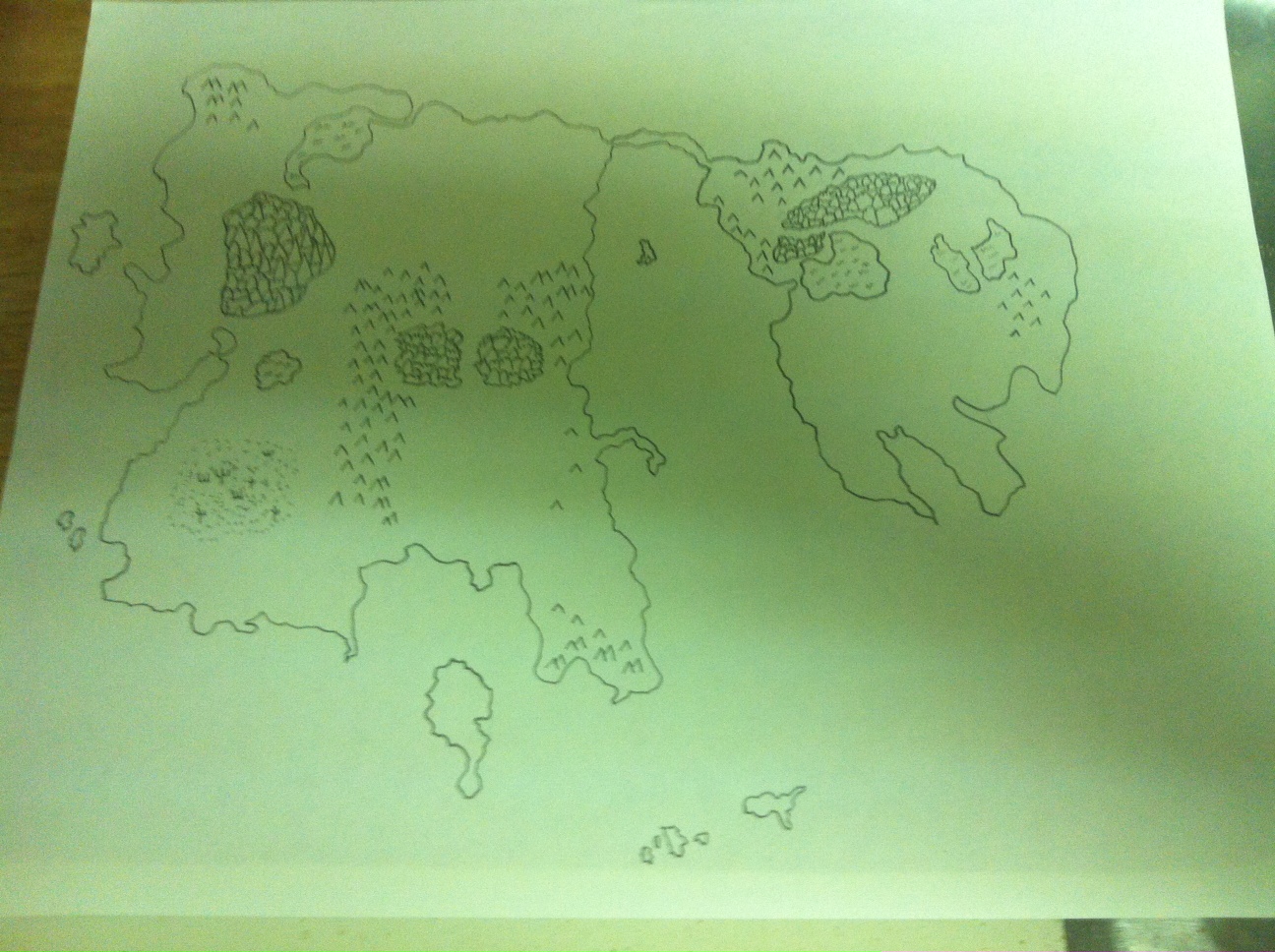
But to do this, I needed an actual land mass that might make sense. So, years ago, this was the first drawing I created that was supposed to represent the main continent:
It was originally a pencil drawing, and it served as the ground work for a novel I wrote called Destiny, which was a revisit to the land of Reagul 3000 years after the inhabitants founded the civilization there, which if you equate it to our time line, means that it takes place about one thousand years in our future.
Over the last decade, I’ve been wanting to write the story of that land that occupied that 3000 years that I hadn’t yet discussed. So I started with a time line, and slowly incorporated a rudimentary outline to explain what happened over time. This was the birth of Sarbonn, the first great wizard of Reagul (and not ironically, the name of this particular web site where my blog is hosted). Over the years, I’ve written numerous short stories about Sarbonn so that he has become my one great story that kept being told over and over with more and more flesh each time he was revisited.
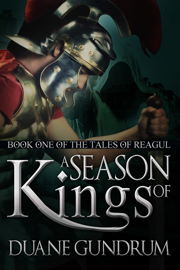
But the story of Reagul still hadn’t been told. And thus, I created The Tales of Reagul, which was a 400 page novel that built the foundation for where the first three hundred years of history might take place. And then a few years ago, I realized that even that story was more of an outline, which has propelled me to begin writing the trilogy that will fill in the gaps that this first story so desperately needed. In the next few months, the first novel of this trilogy will be released, called A Season of Kings.
As part of this project, I went through and started to flesh out more map-oriented information:
My latest addition to the project is to hire a cartographer who I hope can turn my weak attempt at a map into something solid, something that gives Reagul the respect it so deserves. I will keep you informed on the progress of this, as it has to happen before the first novel is completed.
Some years back, after I finished my first novel, I was faced with a daunting question: Could I possibly write another? For anyone who has never written a first novel, this probably sounds like a no-brainer, but believe it or not, when I came face to face with the blank sheet of book number two, I found myself realizing that I was facing an enemy I had never imagined before.
When I was writing the first book, I had lots of bravado behind me. I mean, I had written a bunch of short stories, and inside me, I knew I had a book in me, so no matter what happened, I knew I was going to finish that first book. But when it was done, after a few months had gone by, I actually came up with the idea for the next book. And then I realized I would actually have to write it.
When faced with the second book, you find yourself in a very interesting dilemma that seems to go something like this: Well, the first book was a fluke, and everyone has at least a book in him or her, but am I really capable of sitting down and accomplishing the second book? The first book was a mystery/suspense novel that was kind of hard to pin down to its exact genre (you can see for yourself as it can be found here). The second novel was going to be a science fiction book, and although I had written a few short stories that had been published in fanzines (not having yet published in larger magazines), I was trying to convince myself that I was capable of pulling off a brand new genre on the second outing.
For days, I sat down and tried to outline the book, but nothing would come to me, because even though I had the basic idea of this novel, which I was going to call LOSER, I had no idea how to create a world that was so bizarre to me that I would have to invent it from the ground up. Yet, each day, I sat down and tried to tackle it.
And failed.
At one point, I convinced myself that this book wasn’t possible, that my first one had been a fluke. I was sure that I might be able to do another suspense book, or maybe an espionage adventure, but science fiction was definitely out of my capabilities.
At the time, my editor was the wife of a colleague of mine who sat down with me and asked me to explain what the story was about. And for hours on end, I sat down and crafted this amazing story of what I wanted to write. As I talked to her, I kept imagining all sorts of great things that would happen. And then, at one point, she told me to just sit down and make it happen.
So, for the next four months, I sat down in my chair and typed away. My first novel had been written on a typewriter, so this one actually got written on a computer with a word processor that we’d probably laugh at today. But by the time I was done, I had crafted my second novel. And even as I typed THE END, I stared at it, still not sure it had actually completed its journey.
A year later, I sat down and started work on that suspense novel I thought might have been the next novel, and it became my third novel. But each time I wrote a novel after the second one, I never imagined for a moment that I would have trouble finishing a novel again. That second one was the one that broke me of the belief I was never going to be a writer.
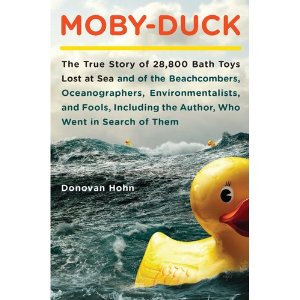
I was in the bookstore the other day looking over the selections of books when I came across a really interesting book of which I had heard nothing so far. But it looked intriguing. It was called Moby-Duck, and as you can see from the picture with this article, it is about a man who goes on a quest to discover what happened to 28,800 bath toys that were lost at sea.
So, why am I talking about this book? Well, think about the story involved in this book. The author, Donovan Hohn, actually put forth a lot of work to find out what happened to these rubber duckies and bath toys after the disappeared. In essence, he went on an epic quest, like the infamous Moby Dick to find what happened to these items. In other words, he went through a hell of a lot of work to get the story that he later transposed to paper so that the rest of us could experience his adventure.
My point is that so few people who write memoirs these days actually go through this amount of work in their adventures before sitting down and writing their “memoirs”. Instead, they suffer one bad relationship, have a bad drinking problem, or do something singularly simple and then try to convince the rest of us that it was actually an epic journey to get from one place to the other. I guess you could say I’m getting a little sick of these kinds of stories that really have no great master journey to them, no odyssey, yet are treated as if they are the epic adventures of a lifetime.
We need more writers out there who are willing to go through a little bit of work to actually come back with the story they need to tell. Instead, we get lazy writers that try to profit off of their innane adventures. And we keep buying this crap because none of us are willing to demand more from the writings that we read.
I felt this way some time ago when I was writing one of my earlier science fiction novels, Thompson’s Bounty, which was about a Coast Guard cutter that gets sent back into the 17th century. When I first started writing the novel, I actually tried to just crank it out without really knowing much about my subject, other than having watched a few old movies about pirates. Then it dawned on me that I wasn’t ready to write the novel. So I contacted the Coast Guard and requested some in person information, which led to going out with a cutter crew for several days over several weekends. It also led to a bunch of long conversations and tours on a Coast Guard base where very knowledgeable people gave me first hand information about the subject I was writing. In the end, I wound up with a book that told the story I wanted to tell instead of one that was peripheral and out of context.
Recently, I’ve been working on a novel that I originally wrote decades ago that takes place in Eastern Europe during the Cold War. Originally, I kind of winged it through the story, but after doing my thesis work on the August Coup in the Soviet Union, I finally had the premise, place and event that really made up the background of the novel I wrote years before. So, I’ve been sitting down and tackling that book from the start, realizing that I now know a lot more information than I first did when I wrote that book back then.
That’s sort of the thing I’m talking about with the kind of reading I’m coming across these days. So much of it can be so much better than it is if authors would take the time to actually do the research that would make their books that much better. I remember a great scene from Billy Crystal’s Throw Mama From the Train when a woman in his creative writing class is describing a submarine story she wrote, and he comments that maybe she should actually know the name of the device she’s describing if she wants to be taken seriously in a story that involves submarines. I take his advice a bit further and say that maybe some time should be given to exploring the lifestyles and events that lead people to the moments that occur in novels so that the reader believes the author is the right person to be writing the story.
We seem to have a lot lazier writers these days with a lot of the stories and memoirs I read, but that doesn’t mean we have to settle for that. We can demand more substance, research and work. We just generally don’t. And we’re the ones who suffer as a result.
As most people who know me already know, I’m in the middle of writing a new novel. As this is November, and the start of National Novel Writing Month, I’m sure a lot of people who wouldn’t normally say so can say that they are also writing a new novel. And that’s great. But I’m not talking about them. I’m talking about me.
This isn’t my first novel, nor do I believe it will be my last. I’ve written 13 (or 12, depending on whether we use new or old math) before, and I’ve been generally happy with the novels I’ve written. For me, each novel is a new adventure into the whole discipline, and it’s mainly that I want to talk about. Because I think people are kind of missing the point of writing a novel in the first place.
Over the last few years, there have been quite a few novels written by celebrities who don’t normally write novels. Mostly, they have been quick turnarounds that went from conception to print in the time it takes to make a press release. As a result, quite a few of them have been dreary, dismal affairs, and mostly they’ve been non-events, much like the television show of the same name. Publishers realize they can make a quick buck by having a celebrity announce a novel and then they’ll publish it and hope that that celebrity’s fans rush out and buy it, thinking that because they like how someone acts, models or sings that they’ll also like how they write.
Writing isn’t normally like that. Even people who are really good at writing short subjects are not very good at writing novels. Yet, everyone who has a bit of education, or has written something short, is convinced that he or she is also going to be a great novelist. My own history is filled with the numbers of people who all thought this, and as I have been writing most of my life, it has always been really annoying, irritating and frustrating.
I’ll let you in on a little secret. Not everyone can write a novel. Nor is everyone really supposed to. Yet, quite a few people are convinced that they have something to say, at least until they sit down and actually try to say it. Then they flounder for a while until they either give up or churn out a piece of crap that they should have put back into a drawer the second it was completed.
Having said that, I would also like to say that writing a novel is something everyone should actually try. I know that sounds a bit contrary to what I was saying before, but I really believe this. Not because everyone should be published, but because I think writing is a great exercise in expanding one’s own capability of communicating.
I see the process of writing novels as an education. While I’ve written tons and tons of short fiction, I think my real growth of a writer has come when I have actually sat down and tried to write a novel. My first novel was an exercise in frustration, as I lost the last 80 or so pages of it due to a fluke accident and had to rewrite the ending to what I thought was the greatest piece of work I had written to that date. I almost gave up writing that day. But I sat down and finished it again.
The second novel was probably the hardest novel I ever wrote because I kept telling myself over and over (while writing it) that book number one was a fluke, that I was a fraud, that I really shouldn’t be writing another novel. But I finished that second novel, and it told me that I was capable of doing more than one. The success of that moment is hard to describe unless you’ve experienced it yourself.
The third novel was my first attempt at writing what I thought was an “important” nove. I had finished my suspense novel and my science fiction/psychological novel, and now I was going to sit down and write something serious. Never happened. My third novel was in fact my fourth novel, because the third one was tossed into a drawer where it lives to this day. In the end, I wrote a thriller, and it was definitely the right choice for number three.
From that point on, I started to push out novels at one and two a year, no longer thinking about whether I should write, but when I should. I continued on this path until I had quite a few novels under my belt. A couple were published, but mostly the act of writing was more important to me than the act of publishing.
And then I stopped writing. I had been dating a woman who had a degree in psychology and was someone I considered much smarter than I would ever be. At some point, she criticized my writing, and I realized that if I couldn’t please her with my writing that it wasn’t worth my time. She told me she was going to be writing her “novel” one day, and even though she never wrote word one, I was always convinced that of the two of us, she was the one who deserved the writing accolades.
And then she dumped me. For several years, I kind of floundered in my inability to write another word. And then I started writing plays because someone asked me to. And I wrote a lot of them. And then they started being performed, and I discovered a humorous talent I didn’t realize I had. In the beginning, I was writing a lot of humor as a balance to the anger I was feeling about how that relationship had betrayed me. And then I started to heal, and the humor continued, so I kept writing more. And people liked it.
Then I sat down and wrote my next novel, which was my first comedy. It took me five years, and in the end, I had what I still consider to be my greatest achievement in writing.
After that, I didn’t know what to do, so I sat down and finished a novel I had started many years before. And it was a very good one.
Which brought me to NaNoWriMo, which is a project where you write a novel in one month. I had this idea for a novel running through my head for years now, and I just never got it started. But then the contest came around, and I decided, it’s time to be the writer I know that I am.
So I started writing, and it’s still building upon itself today. I’m 27 pages into a novel that I consider quite important to my career of writing.
Because that’s the thing I hinted at in the beginning. Each novel is an examination of the writing I am capable of doing today. And that’s what a writer should be doing with his or her writing with each and every project. Sure, we can write drivel if we want, but a writer should sit down and try to reinvent his or her own writing each time a new project begins. The masters of writing reinvented the writing process each time they brought out a new book, and we study them to find out what they were thinking. That’s what a writer should be doing today…reinventing the very nature of writing. Each time you sit down and write, you should always be thinking, “I couldn’t have written that novel a year ago, but I sure can today.” And then ten years from now, you will be writing things you never could have written today.
That’s the reward of writing and one always worth striving for. Let the celebrities write their crap. The rest of us should be struggling to put forth the very best we can of ourselves. To do any less is a waste of time and a failure for the future novel one might one day be able to write, if only able to take that first step today.
For those of you who write, perhaps this is not news for you, but National Novel Writing Month is about to begin on November 1st. For those of you who don’t know what it is, this is a month where writers attempt to start and complete a novel. Last year, I spent my time writing Plato’s Perspective. It was a very rough draft, but it was interesting to churn that out in one month. I’m still working on it to this day, but it was definitely worth the effort and the time involved.
This means that this year I have to come up with a new novel idea that I will start writing on November 1st, which is less than a week away. To be honest, I didn’t realize a whole year had already gone by.
For me, this is a huge event. That’s because I’ve been a novelist for about as long as I’ve been an adult. I’ve never wanted to be anything else. I have a friend of mine who is a movie director who puts on all sorts of different hats to complete his projects, but as I keep telling him, that’s not my way. I’m a writer, and that’s all I’ve ever claimed to be. It’s all I ever plan to do as well.
Which brings all sorts of possibilities for the future because in 6 days I have to have an actual idea and start writing on it. I don’t even know what genre I want to cover, so this could be interesting.